





In the end, Israel has broken the deadlock: the country will participate in the sixty-first edition of the Venice Biennale, scheduled to run from May 9 to November 22, 2026, although its participation can hardly be said to have started in the most favorable situation, although its intention to take part in the exhibition has never waned. So, after a 2024 edition marked by the symbolic closure of the national pavilion, the Jewish state has confirmed its official presence. The news initially leaked out through insider statements and social media posts, before finding confirmation in the words of the artist designated to represent the country, sculptor Belu-Simion Fainaru (Bucharest, 1973). Although the Israeli Ministry of Culture has not yet issued an official note, the organizational machinery for 2026 seems to be already fully operational.
One of the most significant novelties of this participation concerns the exhibition venue. For the first time in decades, the Israeli representation will not find space in the historic Giardini pavilion, but will be housed within theArsenal complex. This decision, as explained by Fainaru himself, is dictated solely by technical necessity: the modernist building located in the Giardini is currently undergoing extensive renovations that prevent its use for the upcoming season. The artist welcomed this move, noting how exhibiting in an old building can offer different stimuli than in a modern structure.
Belu-Simion Fainaru, who was born in Romania and has already represented his native country at the 2019 Biennale, is a prominent figure in the contemporary art scene, a recipient of the prestigious Israel Prize. For Venice 2026, the artist will collaborate with curators Sorin Heller and Avital Bar-Shay, with whom he has already shared the experience of the Mediterranean Biennale in Haifa in 2024. On that occasion, Fainaru had presented a work featuring a clock whose hands rotated backward, symbolizing the collective desire to return to the time before the tragic events of Oct. 7.
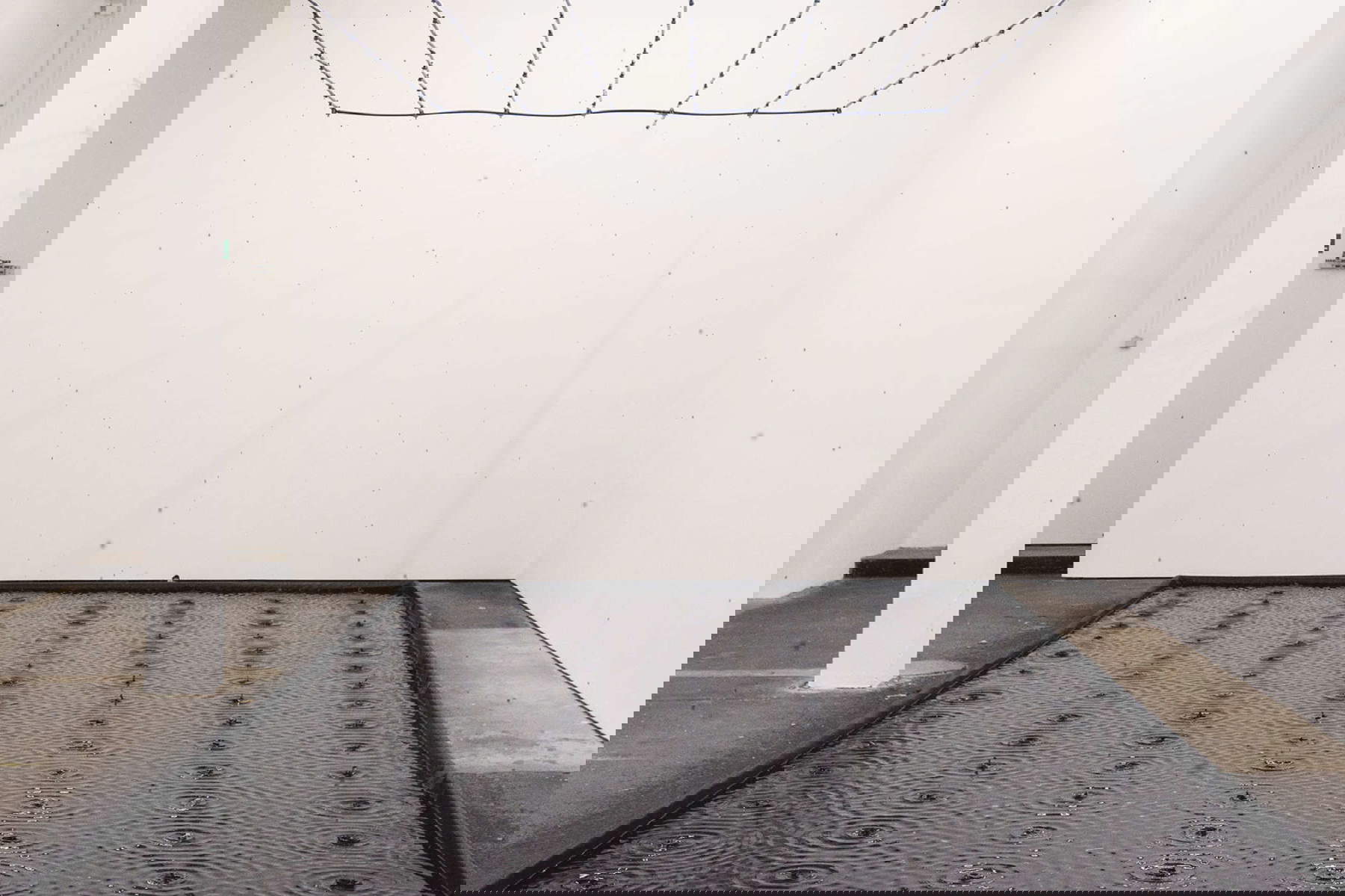
The work chosen for Venice is titled Rose of Nothingness, a project dating back to 2015, however, and is a monumental installation centered on the element of water. The project draws inspiration from the poetics of Paul Celan, particularly the concept of “black milk,” and uses a complex network of sixteen pipes that will drip black water into a pool below. The number sixteen is not random, but refers to the symbolism of the Kabbalah, where it represents the concept of transformation. According to the descriptions provided, the installation intends to configure itself as a kind of spatial Talmudic page without letters, where the meaning lies not in the written text but in the viewer’s attention and presence. The work plays on the tension between presence and absence, inviting the viewer to reflect on themes such as memory, consciousness, and the passage of time.
Despite the artist’s poetic intentions, the confirmation of Israeli participation immediately triggered a harsh reaction from activist groups. The Art Not Genocide Alliance (ANGA) collective, which had already led protests against Israel’s exclusion in 2024, renewed its call for the Biennale to remove the pavilion. Through its social channels, ANGA called the Israeli participation the presence of a “genocide pavilion,” arguing that there can be no room for cultural dialogue until justice is served for the actions taken in Gaza. The group also threatened a total boycott, which would involve both the artists and the public, if the Biennial does not accommodate their demands.
The reasons given by ANGA are based on the continuation of Israeli military operations, which, according to the collective, would continue despite a cease-fire declared in October 2025. Sources cited by activists report the deaths of hundreds of Palestinians since the beginning of that ceasefire, while Israeli authorities claim to be responding to Hamas violations of agreements. ANGA, following the principles of the Palestinian Campaign for the Academic and Cultural Boycott of Israel (PACBI), specifies that it is not aiming at the exclusion of individual artists as individuals, but to challenge official state representation.
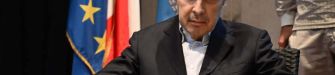
In the face of these pressures, Belu-Simion Fainaru has expressed a stance of clear opposition to any form of boycott. The artist reiterated that art should, by its very nature, be a space dedicated to dialogue and overcoming political barriers. In his view, the politics of exclusion represents a defeat for humanity and for culture itself. Fainaru described his installation as the antithesis of the boycott: a work designed to offer a vision of hope and humanity, capable of providing space for anyone, regardless of political or national affiliations.
The precedent of 2024 casts a significant shadow over the next edition. Two years ago, artist Ruth Patir, although she set up the Israeli pavilion, decided not to open it to the public on the opening day. Hers was a choice of personal protest: Patir declared that the doors would remain closed until a ceasefire agreement was reached and the hostages captured on Oct. 7 were released. Although many of the hostages were later released as part of the truce agreements, the wound in the art world remains open. At the time, then-Minister of Culture Gennaro Sangiuliano strongly opposed calls for a boycott, dribing the right of any nation recognized by Italy to participate in the exhibition.
The official position of the Venice Biennale has remained consistent over time. The organization has repeatedly made it clear that it does not possess the authority to exclude nations that enjoy diplomatic recognition from the Italian government. This principle of institutional neutrality has in the past allowed the participation of countries at the center of bitter international criticism, such as Iran. The case of Russia is a partial exception, since its absence in recent editions, following the invasion of Ukraine, was presented by the Biennale as a voluntary choice on the part of the Moscow authorities rather than a formal expulsion. As for Palestine, since it is not recognized as a sovereign state by Italy, it has no official national pavilion, although its artistic expressions often find space in collateral events authorized by the Biennale.
|
| Israel will participate in the Venice Biennale. And there is controversy |

Warning: the translation into English of the original Italian article was created using automatic tools. We undertake to review all articles, but we do not guarantee the total absence of inaccuracies in the translation due to the program. You can find the original by clicking on the ITA button. If you find any mistake,please contact us.
























 IT
IT FR
FR DE
DE ES
ES CN
CN


