



by Redazione 16/12/2025



Categories: News / Disclaimer
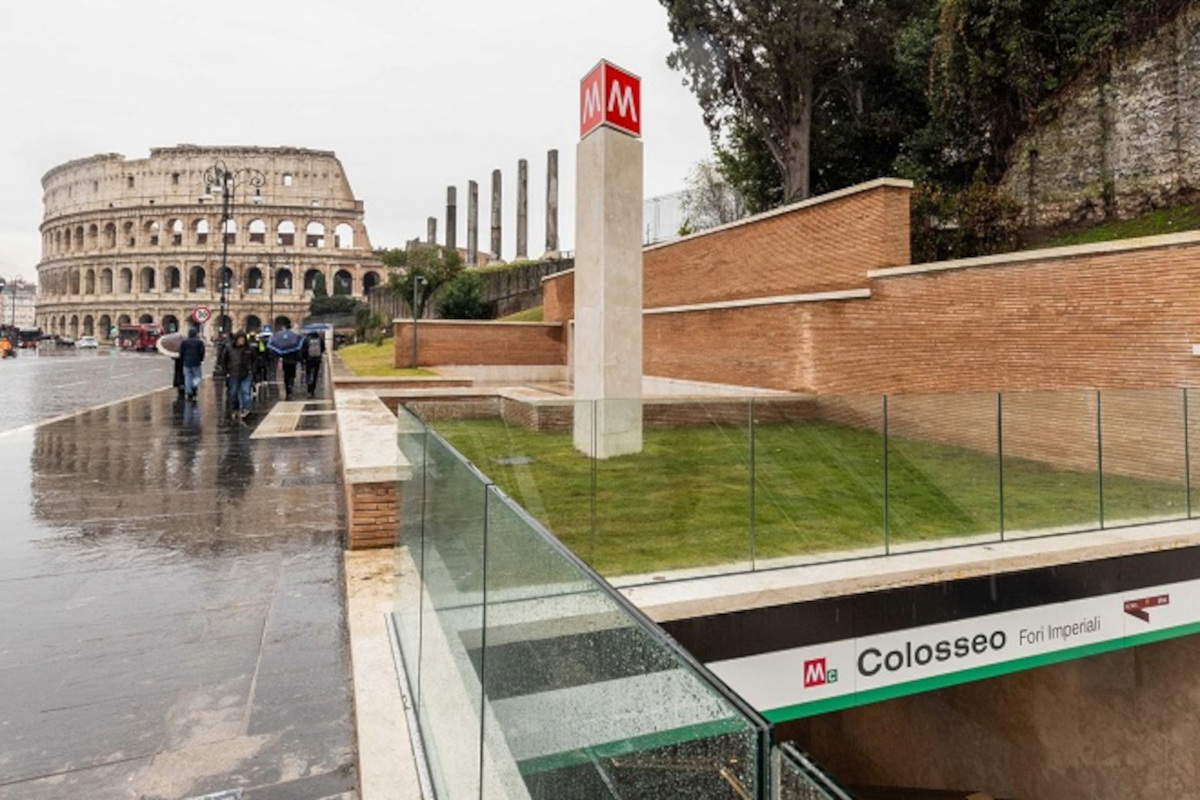
The two new museum stations Colosseo/Fori Imperiali and Porta Metronia of the new section of Rome's Metro Line C have been inaugurated in Rome. Significant archaeological discoveries also emerged during construction work.
Inaugurated in Rome are the two new museum stations Colosseo/Fori Imperiali and Porta Metronia of the new section of the Rome Metro C line. Two museum stations along 4 kilometers of track, which are also intended to enhance the discoveries uncovered during excavations, commissioned by Roma Metropolitane, on behalf of Roma Capitale, and built by the Metro C consortium company, formed by Webuild Group, Vianini Lavori, Hitachi Rail, CMB and CCC.
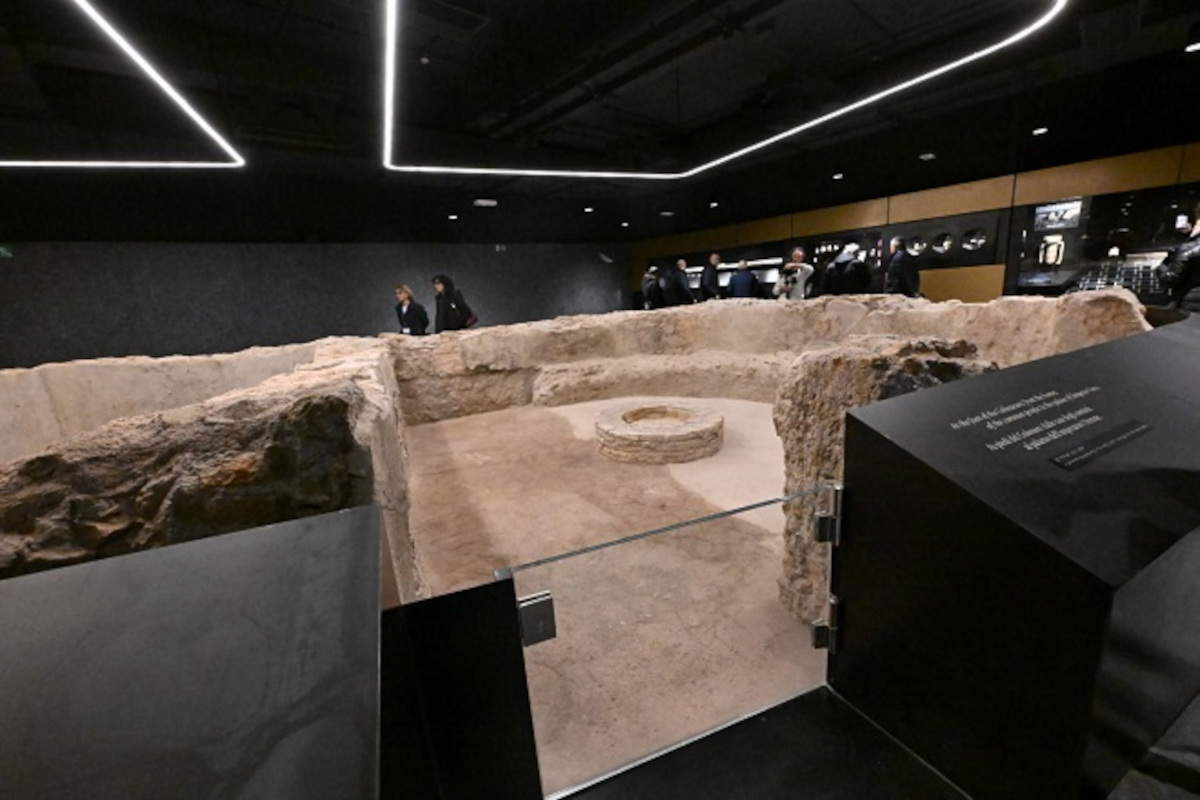
During construction work on the Porta Metronia station, an exceptionally important archaeological complex emerged: a Roman barracks with a commander ’s house. The structures, dating back to the second century AD, along with some six hundred extraordinarily valuable artifacts, will be transformed into a museum curated by the Ministry of Culture’s Special Superintendency of Rome, scheduled to open next spring. Although physically connected by an underground plaza, the museum and station will maintain separate entrances. Metro passengers will be able to view the remains of the barracks through large windows overlooking the underground plaza, while the station spaces will be enriched with large images of the excavations and reproductions of some emblematic artifacts, such as the golden glass depicting the goddess Rome. The museum, designed with the help of virtual reality and three-dimensional reconstructions, will offer an immersive narrative of the history of the area, from the stages prior to the construction of the barracks in the Republican era to contemporary times.


Inside the Colosseum-Fori Imperiali station takes shape an articulated museum itinerary promoted by the Ministry of Culture’s Colosseum Archaeological Park, which traces more than two thousand years of history, from the Rome of Kings to Imperial Rome. The site is presented as an authentic archaeological palimpsest, restored by finds of exceptional importance, including twenty-eight wells from the Republican age, a balneum belonging to a domus datable between the first century B.C. and the first century A.D., and another domus decorated with frescoes from the Imperial age. An oculus located in the connecting corridor between Line B and Line C also allows a novel and evocative view of the Colosseum from below. The exhibits, coming both from the excavations carried out during the construction of the station and from the collections of the Colosseum Archaeological Park, build a narrative that accompanies the visitor along the route, from the downhill entrance to the platform level, in constant dialogue with the imposing central stairs.
The exceptional consistency and value of the finds prompted the Colosseum Archaeological Park to support the preliminary project for the museum layout, developed under the scientific direction and care of Alfonsina Russo and Elisa Cella and subsequently approved by the funding bodies. This process enshrined the birth of a true “museum station,” in which functions related to urban mobility coexist harmoniously with spaces dedicated to the enhancement of archaeological remains.
With the exhibition design and museographic layout, curated by Filippo Lambertucci and Andrea Grimaldi, the well theme has become the narrative focus of the entire intervention. In the new interchange station between Line B and Line C, this metaphor has guided the conception of a space that, like a well dug into the ground in search of water, accompanies the visitor into the depths, bringing to light the evidence of the past. The relationship between light and shadow is emphasized by the color and material choices of the layouts, which signal the exhibition areas through precious materials and a reticular structure that wraps around the walkways and the station’s large central void.
On the concourse level, freely accessible before the turnstiles, is the first exhibition area, which uses three-dimensional video installations and dioramas to narrate the evolution of the area between Hadrian’s Auditoria and the Colosseum. This space makes it possible to compare the past and present of Via dei Fori Imperiali, following its diachronic development from Roman times to the present day. Architectural elements from the Park’s historical collections and archival materials guide the visitor in understanding an urban context of extraordinary complexity and value. Once past the turnstiles, on the opposite side, wells from the Republican period built between the fifth and second centuries B.C., which once guaranteed water supplies to the inhabitants of the Velia hill, are on display. Tufa lining slabs have been relocated near the site of their discovery, while the original operation of the structures is illustrated through three large cylindrical glass cases and a video documenting their construction techniques and use.
On the intermediate floor, showcases and luminous openings that descend from the ceiling or emerge from the floor evoke the architecture and depth of the shafts, enhancing the original location of the structures and the materials recovered from within them, which have come down to us in an exceptional state of preservation. A selection of found objects testifies to the second life of the wells as ritual deposits between the 4th and 1st centuries B.C., when they were used as part of complex ceremonies related to the worship of water, chthonic deities and the cycle of the seasons.
On the same level, on the opposite side, was relocated the private balneum belonging to one of the domus found in Colosseum Square, datable between the 2nd century B.C. and the fire of 64 A.D., which occurred under Nero. The stepped basin and laconicum were excavated, removed and reinstalled inside the station, accompanied by the materials found and explanatory apparatus accompanied by reconstructions that restore its original appearance and function. A large circular glass window, placed in the passage connecting the two subway lines, marks the exact spot of the discovery and returns the same view of the Colosseum that accompanied the work of archaeologists and workers during the discovery and documentation phases.
Accessible from Via dei Fori Imperiali is the Clivo di Acilio Information Center, where the structures of the Imperial-era domus have been relocated. Through large windows, passersby can observe the frescoes and, beyond these, find a space dedicated to reception and information for visiting the Colosseum Archaeological Park.
Attention to the urban and historical context goes hand in hand with the enhancement of some exceptionally important finds, including a marble head of Medusa from the Temple of Venus and Rome, a reconstruction of the decorations of the worship hall of the Templum Pacis, materials from the domus of the Clivo of Acilius, a rare wooden weaver’s sword and a bronze fistula with inscriptions attesting to the co-regency of emperors Marcus Aurelius and Commodus.
The archaeological investigations were conducted by the Colosseum Archaeological Park with the collaboration of the Archaeology Cooperative, which also oversaw part of the restoration work, joined by the Central Institute for Restoration and Studio Laura Rivaroli. The Colosseum Archaeological Park’s working group for the Colosseo-Fori Imperiali station museum layout includes Elisa Cella, Valentina Mastrodonato, Angelica Pujia and Federica Rinaldi, while for the Porta Metronia project the working group includes Special Superintendent Daniela Porro, Simona Morretta, Chiara Scioscia Santoro and Roberto Tomaino, in collaboration with the architectural firm Abdr.
Statements
“Today we connect a very large piece of Rome, from its farthest suburbs to the center of the city and, at the same time, we give the world and the Romans wonderful places of culture. These stations represent the pride of know-how, of the ability to design of the Italians, who have once again shown great quality in building infrastructure and in meeting the challenge of how to make complex works, from an engineering point of view, coexist with the extraordinary historical stratification of our city,” said Rome Mayor Roberto Gualtieri.
“What you are seeing is the product of an extraordinary collaboration between the public and private sectors, it is the result of a great work of workers, architects, archaeologists, anonymous officials to whom we owe the greatest thanks,” said Culture Minister Alessandro Giuli. “It has been said too many times that archaeology is the enemy of growth. Well, here we have a tangible demonstration that with sophisticated technology and a prospect of great development, the Ministry of Culture, can best exercise its duty related to the protection of cultural heritage, but at the same time put its expertise at the service of growth, of citizenship, of the community. The future is impatient, we must hurry, because Rome needs to have connections that live up to the blazon it carries. Today’s day is a sign of solid relationships between ministries, local authorities, companies, and it shows that when we work in unison, having as a goal to put ourselves at the service of public affairs and citizens, here come the results. And here is that the millennial city, Rome, is transformed, remaining itself, into the city of the future.”
“This is the culmination of intense and painstaking work,” commented MiC Department Head for the Enhancement of Cultural Heritage Alfonsina Russo, former Director of the Colosseum Archaeological Park, “which has combined the needs of protection of the extraordinary archaeological heritage with those of the development of the Capital. The investigations, conducted from 2015 to 2020, saw archaeologists, restorers, architects and engineers working together for the future of Rome by preserving the memory of its past. Indeed, the archaeological excavations have made it possible to retrace the most significant phases of its evolution, from the sixth century B.C. to the imperial age, providing a glimpse of the daily life that characterized it. This is an important intervention of cultural heritage enhancement within a key infrastructure for the mobility of citizens and tourists, an example of how preventive archaeology can turn into an opportunity to share new knowledge with the community.”
“On the basis of preliminary investigations and ’predictive’ documents,” noted Colosseum Archaeological Park Director Simone Quilici, “the regulatory tools and skills of the various entities involved were deployed to manage the challenges posed by a city looking to its future, including through the definition of practices that would allow for the reconciliation of protection needs with those of extraordinarily complex construction sites in contexts of the highest historical-archaeological value. Thus we have gradually moved from the concept of archaeological risk to that of archaeological potential, uniting preventive archaeology with public archaeology in a single process.”
|
| Rome, Metro C: inaugurated the two new museum stations Colosseo/Fori Imperiali and Porta Metronia |
Warning: the translation into English of the original Italian article was created using automatic tools. We undertake to review all articles, but we do not guarantee the total absence of inaccuracies in the translation due to the program. You can find the original by clicking on the ITA button. If you find any mistake,please contact us.