




by Redazione 31/01/2026



Categories: News / Disclaimer
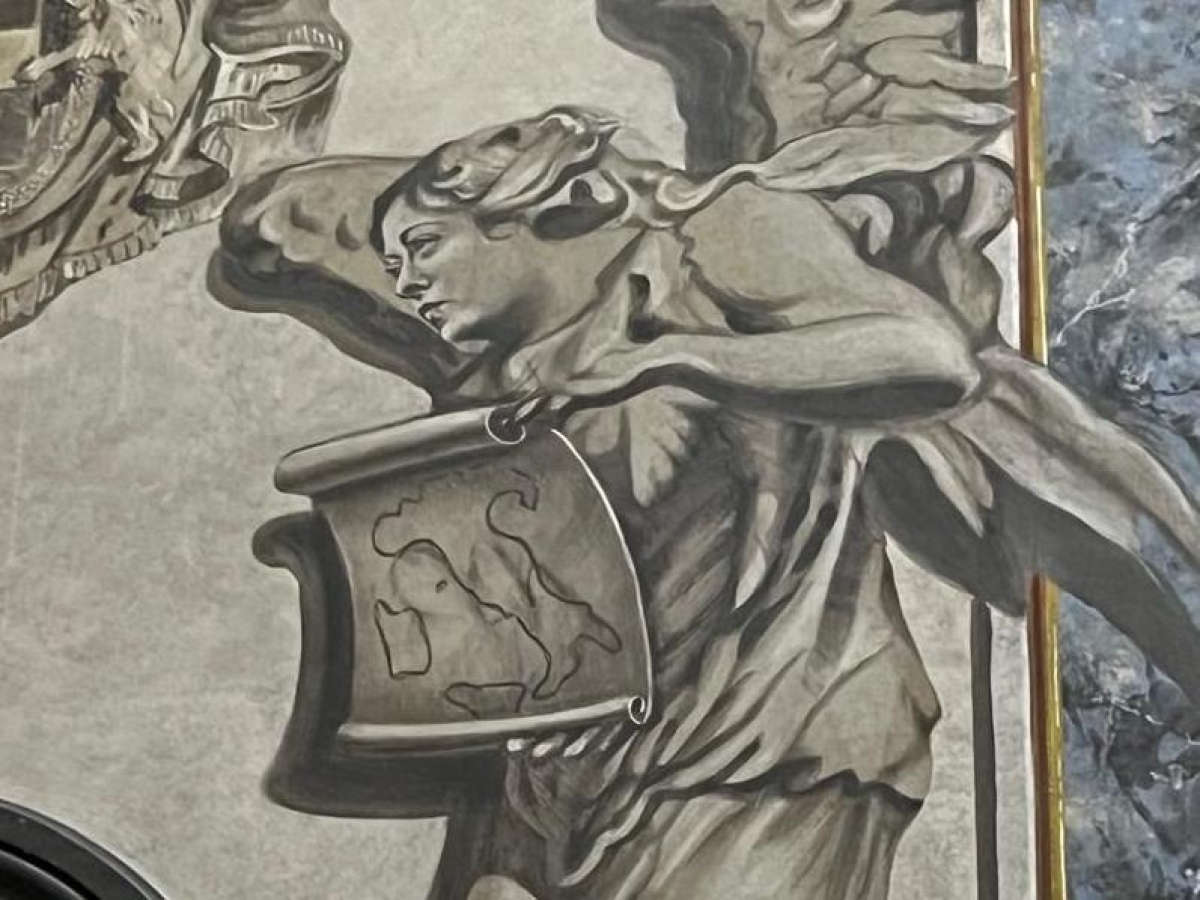
In the basilica of San Lorenzo in Lucina one of the angels next to the bust of Umberto II seems to have taken on the features of Giorgia Meloni after a restoration. What happens now? The ball is in the Superintendence's court: here is the legal framework.

The restoration of the wall dedicated to Umberto II in the Basilica of San Lorenzo in Lucina in Rome, where one of the angels flanking the bust of the “King of May” has now taken on the facial features of Prime Minister Giorgia Meloni, or at any rate has become very similar to the prime minister, is causing a stir. The episode was revealed by Repubblica , which opens its digital edition this morning with this news. These days, as the newspaper reports, the church is undergoing some restoration work, conducted by professionals: however, the part where the face familiar to many appeared was taken care of by a sacristan and decorator, Bruno Valentinetti, who also signed on a cartouche his intervention (“Instauratum et exornatum Bruno Valentinetti AD MMXXV”). “In the parish,” reads the Courier, “he is described as a volunteer present daily in the morning. Online, references to other decorative works attributed to him emerge, including the same chapel back in 2002, and collaborations in extra-ecclesial contexts, such as interventions at Silvio Berlusconi’s Macherio residence. It also turns out that he was a political candidate in the past with La Destra - Fiamma Tricolore in Rome’s I Municipio.” The artisan, however, reached by Repubblica, denies the resemblance and denies his candidacy with La Destra in 2013, saying he was perhaps a candidate with the right without his knowledge.
The resemblance, however, is quite obvious. And now the question that many are asking is: are we facing a case of arbitrary restoration, like, for example, Borja’s famous Ecce Homo in Spain? And above all: what happens now? The ball is now in the court of the Soprintendenza Speciale di Roma Capitale, a ministerial body, which will carry out, probably as early as next week, an inspection to assess the outcome of the restoration. The Cultural Heritage Code (Legislative Decree no. 42 of January 22, 2004), in Article 9-bis (introduced in 2014), stipulates that “the operational interventions for the protection, preservation and conservation of cultural heritage as well as those related to the enhancement and enjoyment of the same assets [...] are entrusted to the responsibility and implementation, according to their respective competencies, of archaeologists, archivists, librarians, demoethnoanthropologists, physical anthropologists, restorers of cultural heritage and collaborators restorers of cultural heritage, experts in diagnostics and science and technology applied to cultural heritage and art historians, possessing adequate training and professional experience.” Under the Code, “cultural property” is considered to be “immovable and movable things that [...] are of artistic, historical, archaeological, ethno-anthropological, archival and bibliographic interest and other things identified by or under the law as evidence having civilizational value.” In order for a “immovable or movable thing” to be considered a cultural asset, a measure is required from the competent bodies of the Ministry (the superintendencies), which verify the cultural interest of an asset and, if the interest is established, issue a declaration of cultural interest that subjects the asset to the constraints prescribed by law.


The basilica of San Lorenzo in Lucina was declared an asset of cultural interest as far back as 1951, and the wall under dispute is located in a chapel near the high altar (on which one can see Guido Reni’s Crucifixion , the basilica’s most valuable work), just past the Fonseca Chapel, where there is an important sculpture by Gian Lorenzo Bernini, the bust of Gabriele Fonseca, from 1668-1674. This is the Chapel of the Crucifix (or Nataletti Chapel, from the name of the family that had it built) built in 1850 and then modified a few years later during the restoration of the church commissioned to one of the most important Roman architects of the time, Andrea Busiri Vici (Rome, 1818 - 1911), who for the new frescoes availed himself of the collaboration of Roberto Bompiani (Rome, 1821 - 1908). The dedication of the right wall to Umberto II of Savoy dates back to 1985: it was an initiative of parish priest Pietro Pintus, who was also chaplain to the House of Savoy (a singular character, who also worked for the beatification of Grace Kelly, as the chronicles of the time recount), and he had a plaque added to the chapel in honor of the sovereign who had died two years earlier and a bust of him.
If, therefore, the Umberto II wall in the basilica is subject to constraint like the rest of the church, restoration must be conducted only by a suitably trained and experienced restorer, identified on the basis of precise criteria established by law, and must be authorized by the Superintendency. Therefore, the Superintendence carries out inspections to ensure that the restoration (or conservation or maintenance: by law, there are important differences between these terms) has been conducted in a professional manner and with respect for the historic asset. Voluntary interventions are also allowed, as long as they are authorized by the Superintendency and carried out by professional restorers. In the event that the Superintendence determines that there has been a violation of the obligations of protection and preservation, according to the law the property has suffered damage , and the Ministry orders the person responsible for the restoration to carry out, at his own expense, the necessary operations for reinstatement. If reinstatement is not possible, the person responsible must pay the state a sum equal to the value of the lost property (or the decrease in value suffered by the property).
Not only that, particularly “creative” restoration could amount to wrongdoing. If the Superintendency determines that the face with Meloni’s likeness falls under Article 169 of the Cultural Heritage Code, which talks about the demolition, removal, modification, restoration or execution of work of any kind on cultural property, the person responsible for the offence risks arrest from six months to one year and a fine from 775 euros to 38,734.50.
So now it’s up to the Special Superintendency of Rome to make its own checks: if the original frescoes are listed and if it is found that the restoration went too far, the property will have to be restored to its original appearance. Provided that the restoration has been carried out, as is the practice, according to the principle of reversibility.
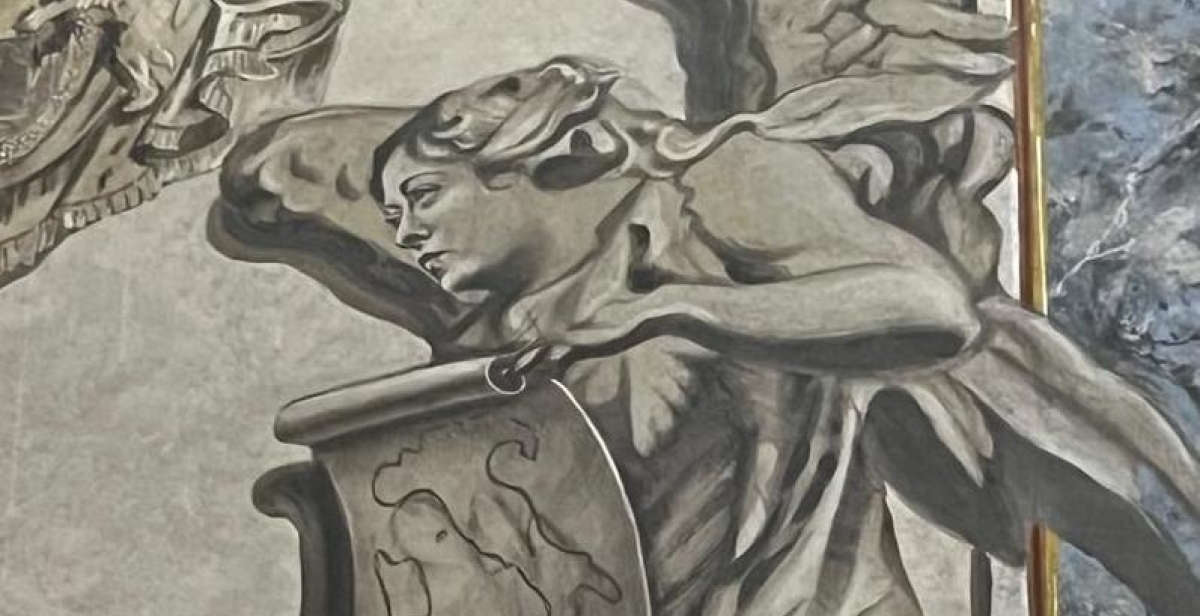 |
| The angel with Meloni's face: what happens now to the restoration that has Italy debating? |
Warning: the translation into English of the original Italian article was created using automatic tools. We undertake to review all articles, but we do not guarantee the total absence of inaccuracies in the translation due to the program. You can find the original by clicking on the ITA button. If you find any mistake,please contact us.