





A few days ago, in the Financial Times, Bendor Grosvenor produced himself in that frivolous exercise in style for facetious people that is imagining the future of a profession, moreover in the light of the achievements, real or presumed, of artificial intelligence, and the idea is that among the professions that will be replaced by machines there is also that of connoisseur (which, incidentally, will also be one of those we will miss the least, says Grosvenor.artificial intelligence, and the idea is that among the professions that will be replaced by machines is that of the connoisseur (which, incidentally, will also be one of those we will miss least, says Grosvenor): nonetheless, connoisseurs, he says, should try to delay the arrival of AI as long as possible, if only because handing over one’s expertise and discernment into the hands of a machine would mean giving up the most enjoyable aspect of art history, namely looking.
True: we can imagine a more or less distant future in which artificial intelligence will replace the connoisseur. In any case, for now it seems a rather distant future: In order for a machine to reach a level of depth comparable to that of a human being, it would be necessary to feed it the entire catalog of an artist, preferably with high-resolution images (both black-and-white and color) and all in the same lighting conditions (which would mean making all the works agree in one place, which would probably be impossible), a sufficient number ofimages of outline artists to enable her to make comparisons by exclusion, and perhaps even images that reproduce the contexts (since it is crucial for a connoisseur to see the works live and where they are before even seeing them reproduced in photos). Of course, a proponent of artificial intelligence might object, there is not nor will there ever be a human being who is capable of seeing an artist’s entire catalog under the conditions that should be required of the machine, and who moreover has mnemonic faculties comparable to those of a computer: the machine party would be right, but the human being would be left with experience, prior knowledge, understanding of contexts, workshop dynamics, relationships between artists, relationships between originals, replicas, variants, copies and fakes, provenances, documents, and so on. Again, all elements that in the future machines will be able to master with an ease equal to that of a sentient being. Costly investments will be needed, however: then the connoisseurs, those few who still exist, can safely pull their handkerchiefs out of their pockets and wipe their sweat, since the lords of artificial intelligence probably have better things to think about, and ancient works of art may not yet be a priority for them. And by the time we have the machine-connoisseur that can guarantee attributions to prove anything, the connoisseurs will probably have killed themselves, or died of natural causes.
And they will have died of natural causes because the really interesting point of the whole thing is not so much the replaceability of the connoisseur: it is, if anything, the transformation that this profession is undergoing. Says Grosvenor, “Artistic expertise is already almost completely extinct. Until the 1980s, art history revolved largely around identifying who painted what. Art historians spent their careers building mental databases of paintings by particular artists, enabling them to recognize similar traits in other paintings. Recognition is the essence of expertise [...]. But these older generations of connoisseurs are disappearing. A surprising number of historically important artists no longer have a universally recognized expert, including figures like George Stubbs and Thomas Lawrence.” Now, Grosvenor is writing from England, and I don’t know the state of health of the Albionic Old Masters , but in Italy the situation is not so bad, only that compared to the 1980s, the subject matter, as indeed is normal, has changed profoundly. Perhaps we are exaggerating to say that in the future we will find ourselves celebrating the funeral of the connoisseur. But we will certainly witness its metamorphosis. Indeed: we are already witnessing it.
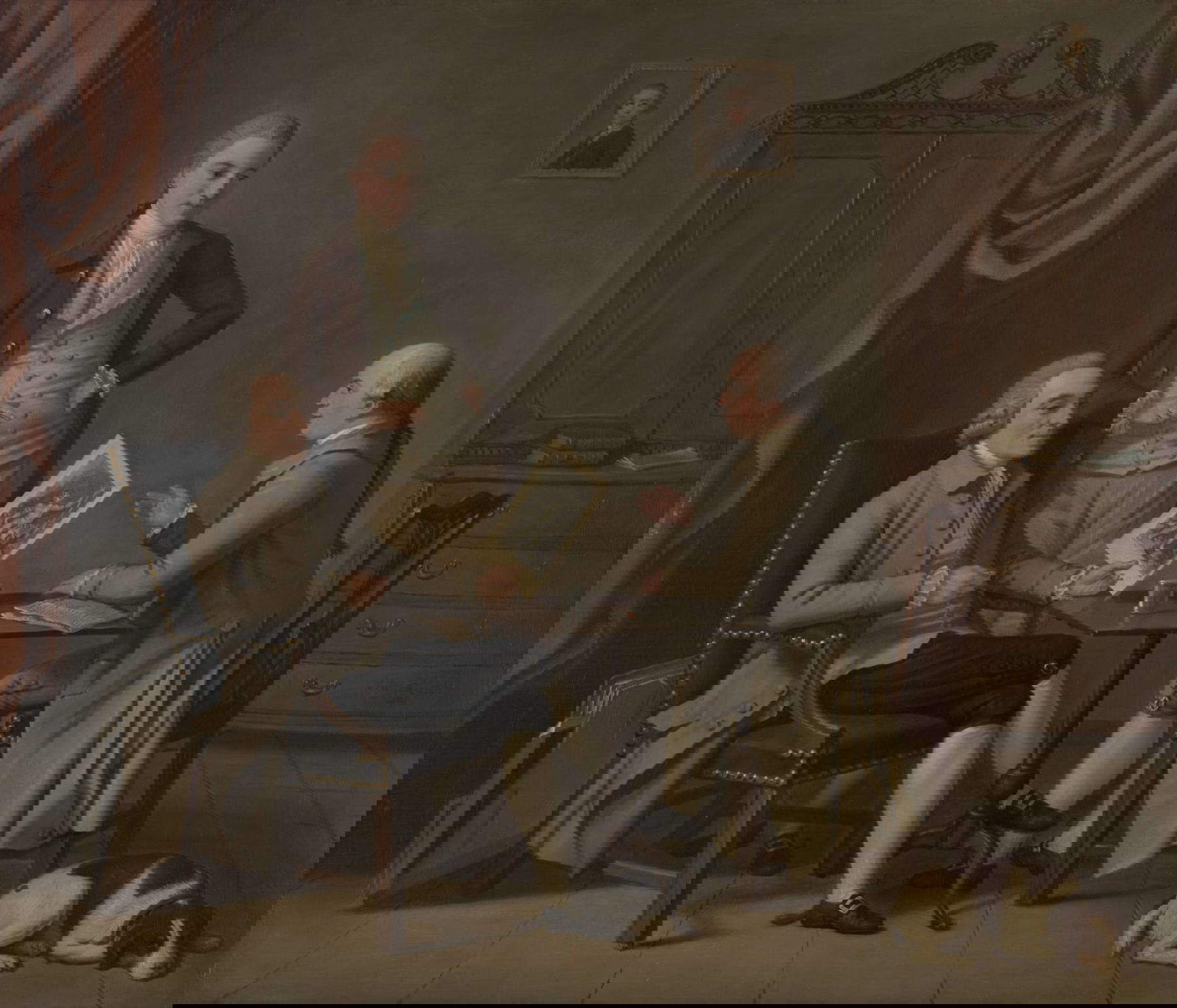
First, the principle of authority no longer exists. Gone are the days of the Holy Trinity (Berenson, Longhi, Zeri). And fortunately. There is that now an ancient work is no longer bought on the basis of a single authoritative opinion. Collectors today are a bit more unscrupulous than they were forty, fifty, sixty years ago. No one is happy to pull out money to buy a piece whose value, perhaps, within a few years is reduced to one-tenth of what it was paid for because it turns out that it was not that masterpiece they thought it was, but was a more modest work of craftsmanship. And then collectors, possibly, want pieces of evidence. That is: opinions of other scholars, historical documents, reconstructions of provenance, previous passages. Uncertainty is the enemy of the market, and this also explains why works by artists of the fifteenth, fifth, and seventeenth centuries never reach on the market the quotations of, say, a Picasso or a Matisse. Consequently, second point: today there is probably no longer the connoisseur as we have been accustomed to know him in history books, that solitary genius who was immersed in photographs, had no contacts with the academy (or if he did, they were minimal: Zeri, for example, never taught), and whose work stopped at formulating his opinion after seeing the painting. Today the connoisseur according to the historical meaning is progressively being replaced by a figure that perhaps a few years ago we would have called hybrid, but which in fact is not hybrid: he simply masters more skills. The art historian today is not reducible to an anatomical function, assuming it ever was (which is why, by the way, I prefer not to use the term “eye,” as so many do, in place of connoisseur): after recognizing the author of a painting, the contemporary art historian needs to know how to rummage through the bibliography, needs to know how to do archival research, needs to be able to stitch together contexts, needs to have technical-scientific knowledge, needs to understand something about iconography and iconology, and perhaps in the future will also need to know how to handle artificial intelligence. Take the most interesting discovery of the last year, the Nativity by Mathias Stomer that was presented the day before yesterday at the Diocesan Museum in Genoa and that was fortuitously found a year ago by Giacomo Montanari: Montanari first trusted his visual skills and at a glance sensed the strength of the work, already imagining that he was in front of a work by Stomer, after which he compared himself with other colleagues, after which set out to find something that might say more about that work, found documents that were able to suggest a connection to a historical Stomer patron from the Sicilian area, and then signed off on the scholarly published study. The connoisseur of the 1980s would probably have stopped, at least in most cases, at the first step. Then again, it is true that today many, too many have reduced the art historian’s profession to that of the gray finder of notarial deeds, the bureaucrat of payment records, the sounding board of other people’s diaries, but it is also true that the profession, in the third millennium, is much less romantic than it once was.
Anyone with even a minimal professional interest in art history will surely have read Philippe Costamagna’s Adventures of an Eye : to get a sense of how the profession has changed (for the worse for those who are art historians by trade, for the better for city councilors), one might linger on theanecdote of Costamagna who, in order to see Piero della Francesca’s Madonna del Parto , had to find a way into the little cemetery chapel that guarded it, whereas today anyone can admire it in a very convenient and well-lit museum, all one has to do is pay a ticket (if one does not fall into the categories entitled to free admission). Of course, it is not that viewing certain things is any less practical today: there are churches in hamlets frequented only by locals and wolves and yet they preserve rich fresco cycles, and if you want to see them you have to find someone to open the door or you have to inquire about Mass times (the writer has been through both: Chains of contacts to find the sacristan who would do you the favor of opening that church where there is that altarpiece or that fresco you want to see, or Sunday mornings in winter spent on an icy bench warming your hands while you had to listen to that one South American or Filipino priest willing to climb to the top of a remote hamlet in the Apennines to say Mass to the five or six elderly women in the village). And let’s not even talk about private collectors. The fact is, however, that these are mostly things that are perceived as marginal: the bulk of what you have to see to have at least a basis today is accessible in rather practical ways. Besides, let’s face it: social media and Whatsapp have greatly shortened the distance between the specialist and the private collector or mountain priest, there are photographs everywhere, an artist’s bibliography is just a click away, and often you don’t even need to go to the library to look up a title because you can already find everything on Academia or Google Books. The profession, in short, is much less adventurous than it once was. And therefore probably less glamorous as well. But it has changed because the world has changed. There’s nothing you can do about it.
Third, let’s keep in mind that knowledge does not reset. The further one goes, the more knowledge increases. The more time passes, the more the catalogs settle down. And the art historians of the future will camper on the work that others have done before them. The advantage is that they will have to work less. The disadvantage is that it will no longer be a profession for the ambitious. That is: the various Guercino, Guido Reni, Federico Barocci have already had their Mahon, their Gnudi, their Emiliani who built the foundations of the relevant catalogs. The generation that came after them, the generation of art historians, let us say, born between the 1940s and the 1970s, straightened out what remained to be straightened out, straightened out some things, untied the knots that there were to be untied, built solid walls around the artists, often made important, even sensational discoveries. Of course, then, that around ancient artists there is still so much to discover. Last year, for example, Giulia Iseppi made some rousing and important discoveries about Guido Reni and seventeenth-century Bolognese art. But, likely, those coming out of the university now will have to be content with coming second or third if not even fourth or fifth (incidentally, it is also the reason why, when one discovers a painting in the odor of’being attributed to some great artist, there is a paraphernalia to head the primacy of the find, as happened with the unseemly race to see who came first on theEcce Homo Ansorena). Sooner or later we will reach a point in history when everything that there was to be discovered will have already been discovered, with the consequence that the art historians of the future (I have no idea how far away it may be: let us be content to think of it as an indefinite future, which I hope will be as far away as possible) will be like the clerks of the land registry, that is, they will simply search through the material that has already been produced. It will not be tomorrow, because there is still so much to investigate and find: archives are chock-full of documents that no one has opened in decades if not centuries, private collections are overflowing with unknown works, new technologies may emerge that will allow us to return to problems that seem solved to us today but that tomorrow may turn out to be more open-ended than we thought, discoveries may come along that will force us to, I don’t know, rewrite the history of a local school. We are, however, inevitably moving toward the end of the age of great discoveries. For new generations, the chances of making the “big one,” to use a sports term, will diminish year after year. But this is not necessarily a bad thing either: art history will probably change its objects, become much more interdisciplinary, and manage to fascinate in different ways than in the past. In short: knowledge will not end, but the space of exceptionalism will shrink. The Mahons and Zeros of the future will probably not emerge for their discoveries about a given artist, but for perhaps orienting the discipline toward horizons now unknown, for changing paradigms, for finding original ways to seriously democratize knowledge.
By the time we get to this point, in short, the adventurous art historian of the early twentieth century will already be dead and buried, and will have died, as we used to say, of natural causes, regardless of artificial intelligence, which, if anything, may accelerate the process. The first to become employees of the art cadastre will be those who deal with the most important artists, their reference experts, while those who choose to focus on petit-maîtres will surely have a longer life, simply because they will work on less material, with the advantage that they can still hope to become the main reference experts of that obscure provincial artist whose date of birth we do not even know. For those who want to work in art history, it will be (and to some extent I think it already is) much more fulfilling to have the prospect of working elsewhere, for example as conservators of museums or collections, or in enhancement or the digital humanities, fields in which the art historian’art historian of the future may be more easily remembered, partly because of the fact that museology, museography, valorization, and the study of local contexts are subjects that are currently experiencing greater evolutions than those of connoisseurship. The art historian of the future will be less and less investigator and more and more organizer, manager of knowledge. The space of attribution hunting will shrink, but other terrains will open up. The eye, in short, will no longer be a metonymy: it will be a component of a professionalism that is perhaps less fascinating but certainly more structured. And artificial intelligence will have little to do with it. Unless it will amaze us, and that is highly likely: after all, only three years ago no one could imagine using the generative AI that has now become commonplace. And the speed of change is astonishing. So not a word is said of what has been seen so far: perhaps the machine-connoisseur really will arrive more quickly than expected. But we’ve said it that imagining the future of a profession is the stuff of facetiousness.

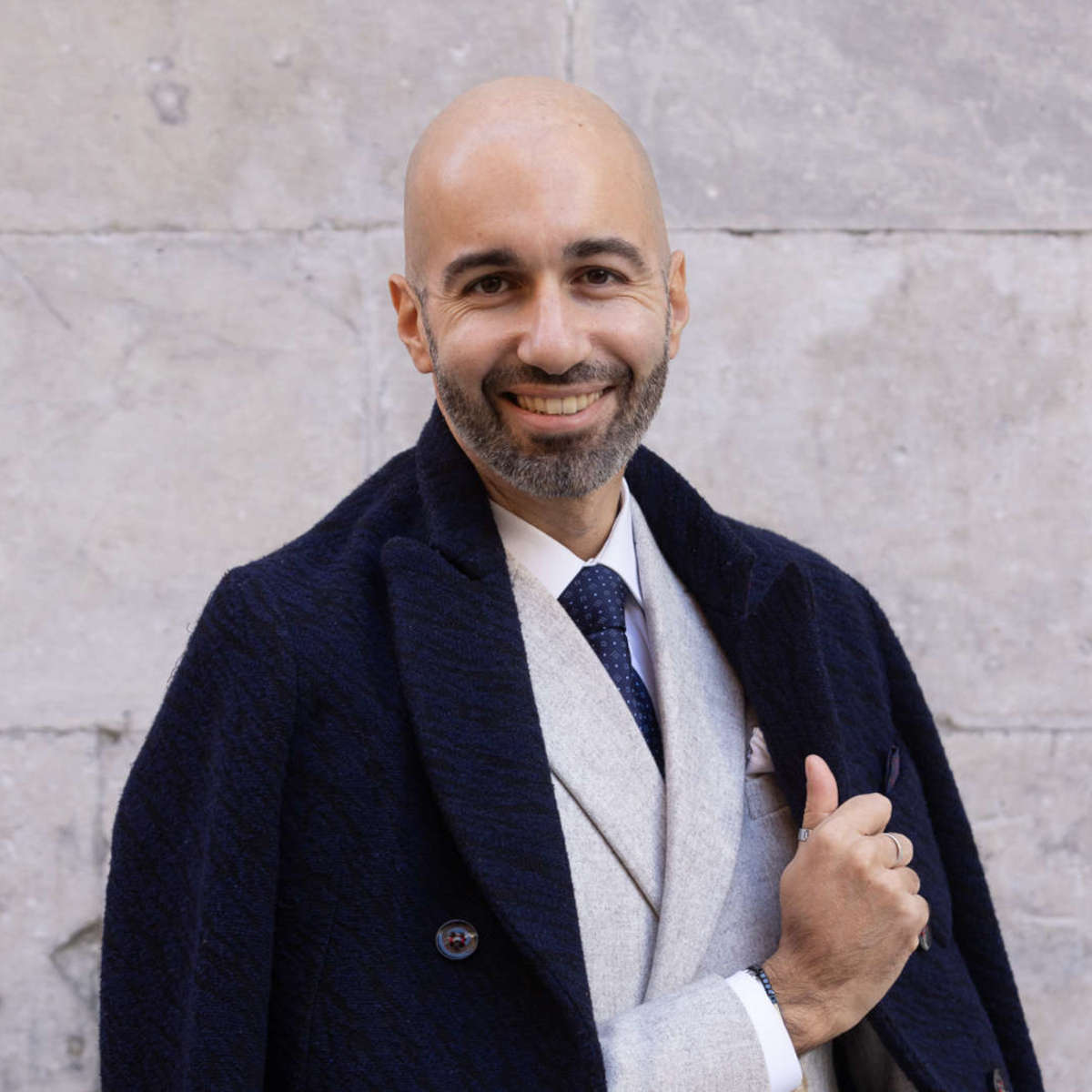
The author of this article: Federico Giannini
Nato a Massa nel 1986, si è laureato nel 2010 in Informatica Umanistica all’Università di Pisa. Nel 2009 ha iniziato a lavorare nel settore della comunicazione su web, con particolare riferimento alla comunicazione per i beni culturali. Nel 2017 ha fondato con Ilaria Baratta la rivista Finestre sull’Arte. Dalla fondazione è direttore responsabile della rivista. Nel 2025 ha scritto il libro Vero, Falso, Fake. Credenze, errori e falsità nel mondo dell'arte (Giunti editore). Collabora e ha collaborato con diverse riviste, tra cui Art e Dossier e Left, e per la televisione è stato autore del documentario Le mani dell’arte (Rai 5) ed è stato tra i presentatori del programma Dorian – L’arte non invecchia (Rai 5). Al suo attivo anche docenze in materia di giornalismo culturale all'Università di Genova e all'Ordine dei Giornalisti, inoltre partecipa regolarmente come relatore e moderatore su temi di arte e cultura a numerosi convegni (tra gli altri: Lu.Bec. Lucca Beni Culturali, Ro.Me Exhibition, Con-Vivere Festival, TTG Travel Experience).
Warning: the translation into English of the original Italian article was created using automatic tools. We undertake to review all articles, but we do not guarantee the total absence of inaccuracies in the translation due to the program. You can find the original by clicking on the ITA button. If you find any mistake,please contact us.



























 IT
IT FR
FR DE
DE ES
ES CN
CN


