





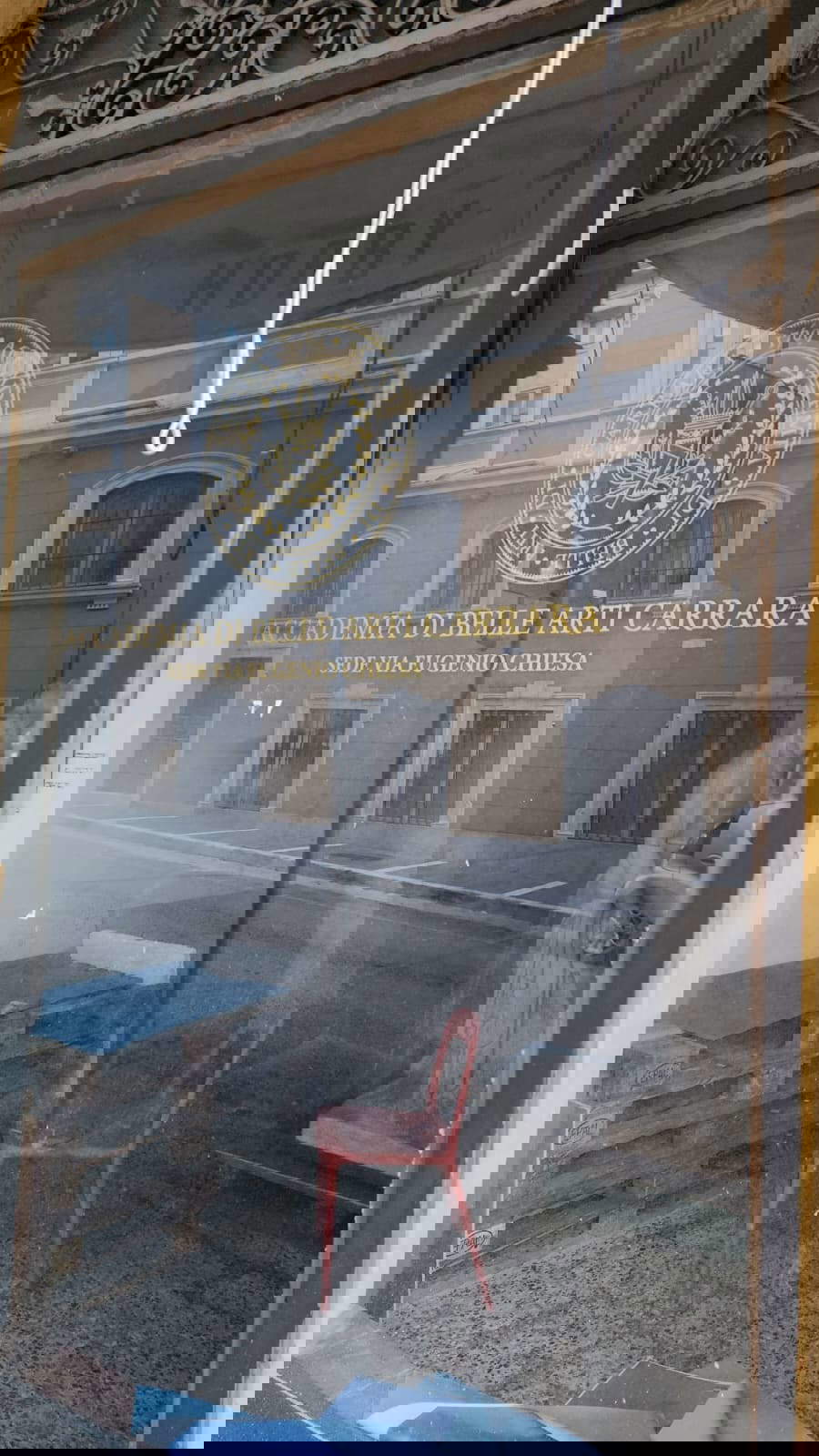
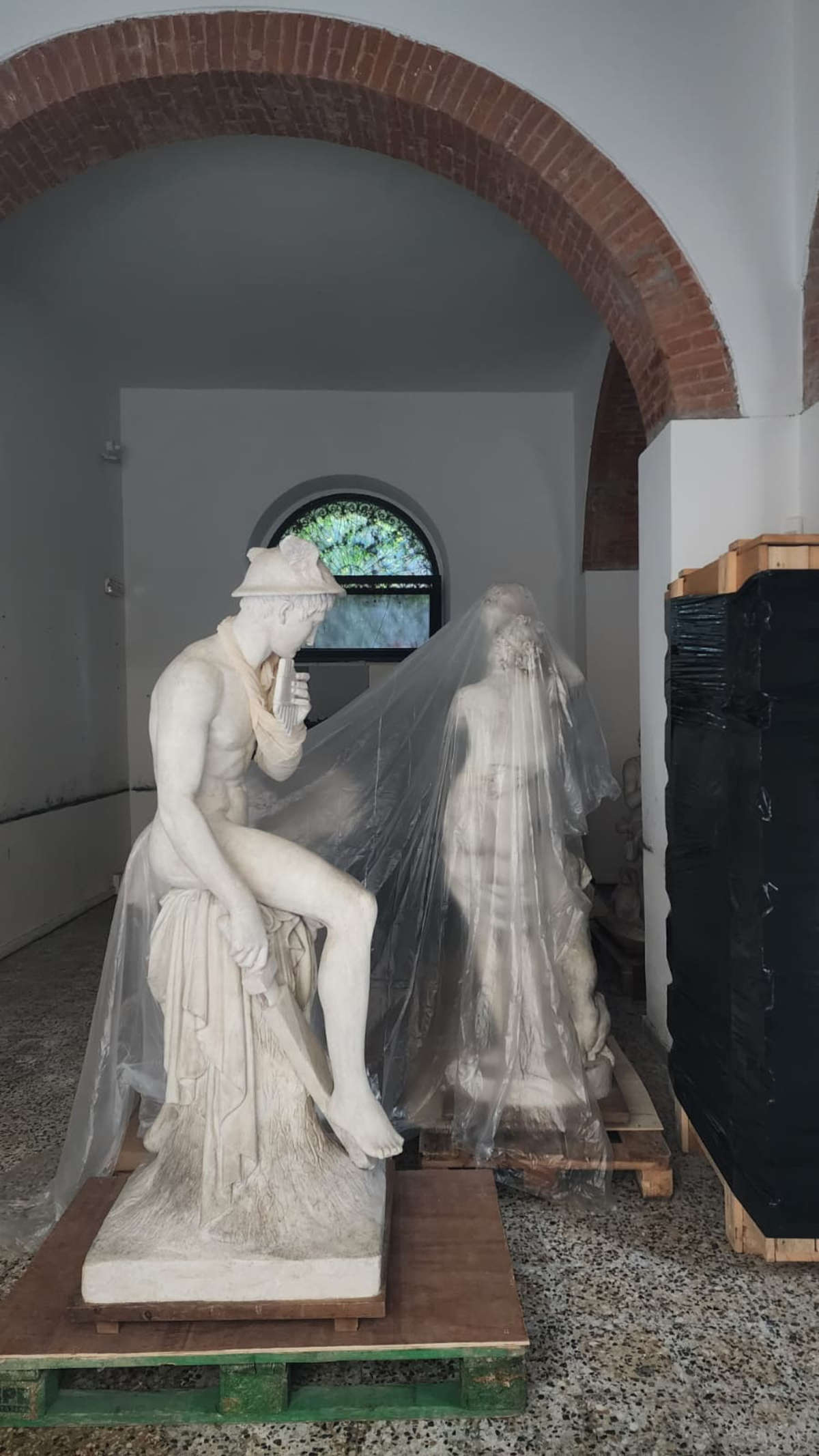
For decades in Carrara, there has been an ongoing attempt to find an exhibition venue that can permanently house one of Italy’s most important plaster cast collections: the plaster cast collection of the Academy of Fine Arts. Retracing, albeit briefly, this troubled history means going through a discouraging affair made up of wrong political choices, carelessness, guilty indifference, and painful insensitivity. The latest chapter in the story of the Academy’s plaster casts was just a few weeks ago, with the institute’s management letting it be known that it had identified an exhibition venue for the plaster casts gallery that, apparently ... cannot be used. Nor has an alternative solution been proposed. However, before continuing, it is worth providing the reader with a little context. Until a few days ago, those in Carrara who had passed by Via Chiesa would have noticed, behind the window of a fund marked with the logo of the Academy of Fine Arts, the presence of a small assemblage of sculptures, some packed, others covered by transparent sheets. Nothing can be seen now because the glass has been covered with some posters, but at least since this summer and until the end of December anyone would have been able to observe some of the historic plaster casts that make up the rich collection of the Academy of Fine Arts’ gypsotheque: from the street one could easily make out Canova’s Venus and Adonis group, Thorvaldsen’s Mercury , and a case with Penitent Magdalene (Canova’s) written on it. Three plaster casts of the nearly three hundred (265, according to the official catalog published in 1996) that make up one of Italy’s most important gypsotheques, a valuable collection divided into four main nuclei (the casts from theantiquity, the plaster casts of modern artists, the bas-reliefs of competitions and the works of sculptors from Carrara) and in which are preserved twelve plaster casts by Antonio Canova, and other models and casts of some of the most relevant sculptors who worked in Italy between the eighteenth and nineteenth centuries (Bertel Thorvaldsen, Lorenzo Bartolini, Giovanni Antonio Cybei, Benedetto Cacciatori, Christian Daniel Rauch and many others). The collection today is scattered among the various venues of the Academy: some of the plaster casts are in the Aula Magna, others in the corridors, there are some in the laboratories, and others languish in warehouses and storage rooms such as the one in Via Chiesa.
There has long been talk in Carrara about the possibility of giving a more or less permanent arrangement to the gipsoteca: for as long as the writer can remember, the people of Carrara have nurtured the dream of sooner or later seeing a museum opened made from the plaster casts of their Academy, which is moreover one of the oldest in Italy, founded in 1769 by Maria Teresa Cybo Malaspina. To give an idea of how coveted this goal is, as well as of the importance of the gipsoteca of the Academy of Fine Arts of Carrara, it will suffice to recall that Severina Russo, concluding her essay in the 1996 regest, wrote that that was the “catalog of a museum that is not there but which, if it were ever to be set up, would certainly be a point of reference for the knowledge and appreciation of much of nineteenth-century sculpture.”
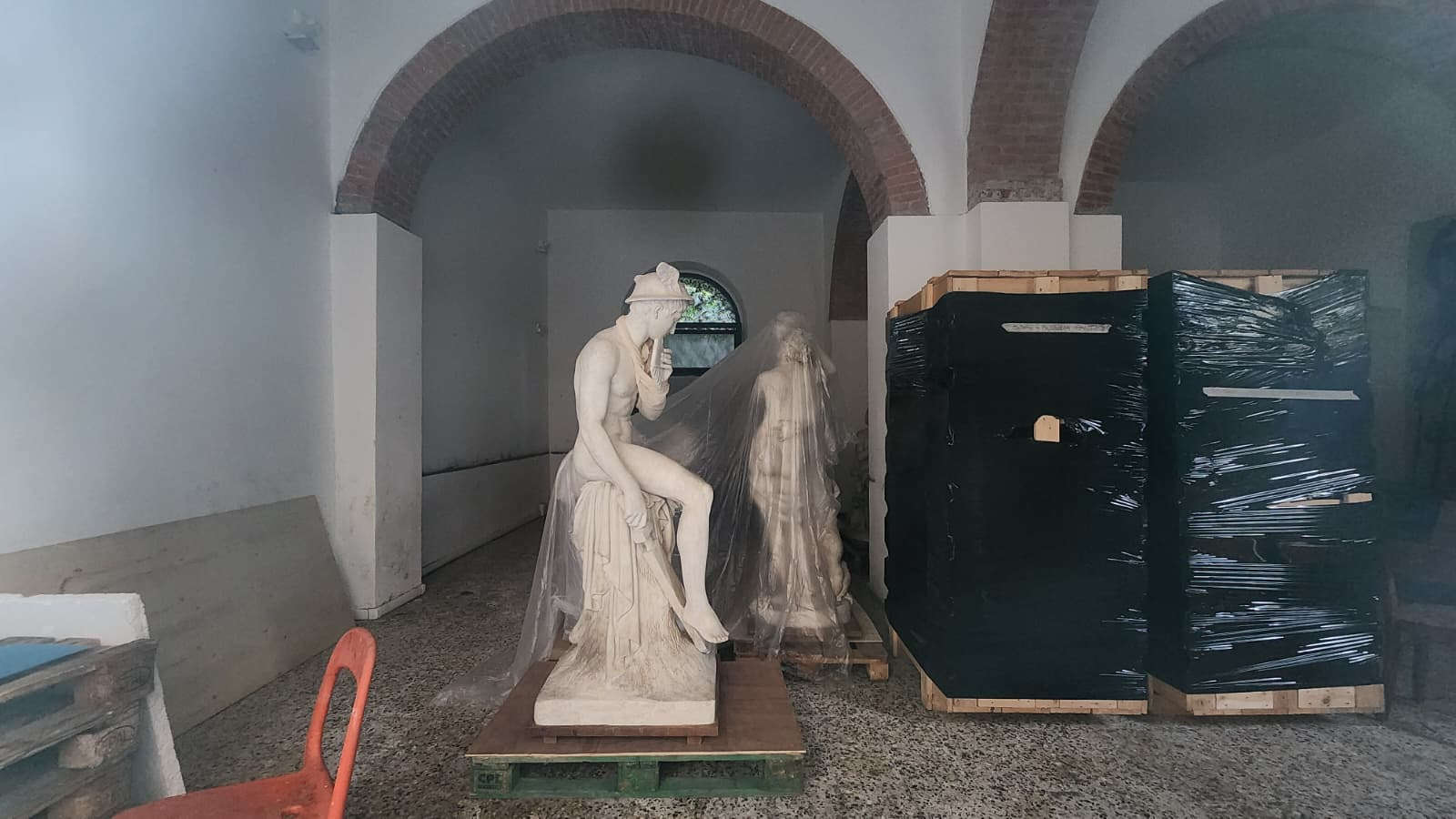
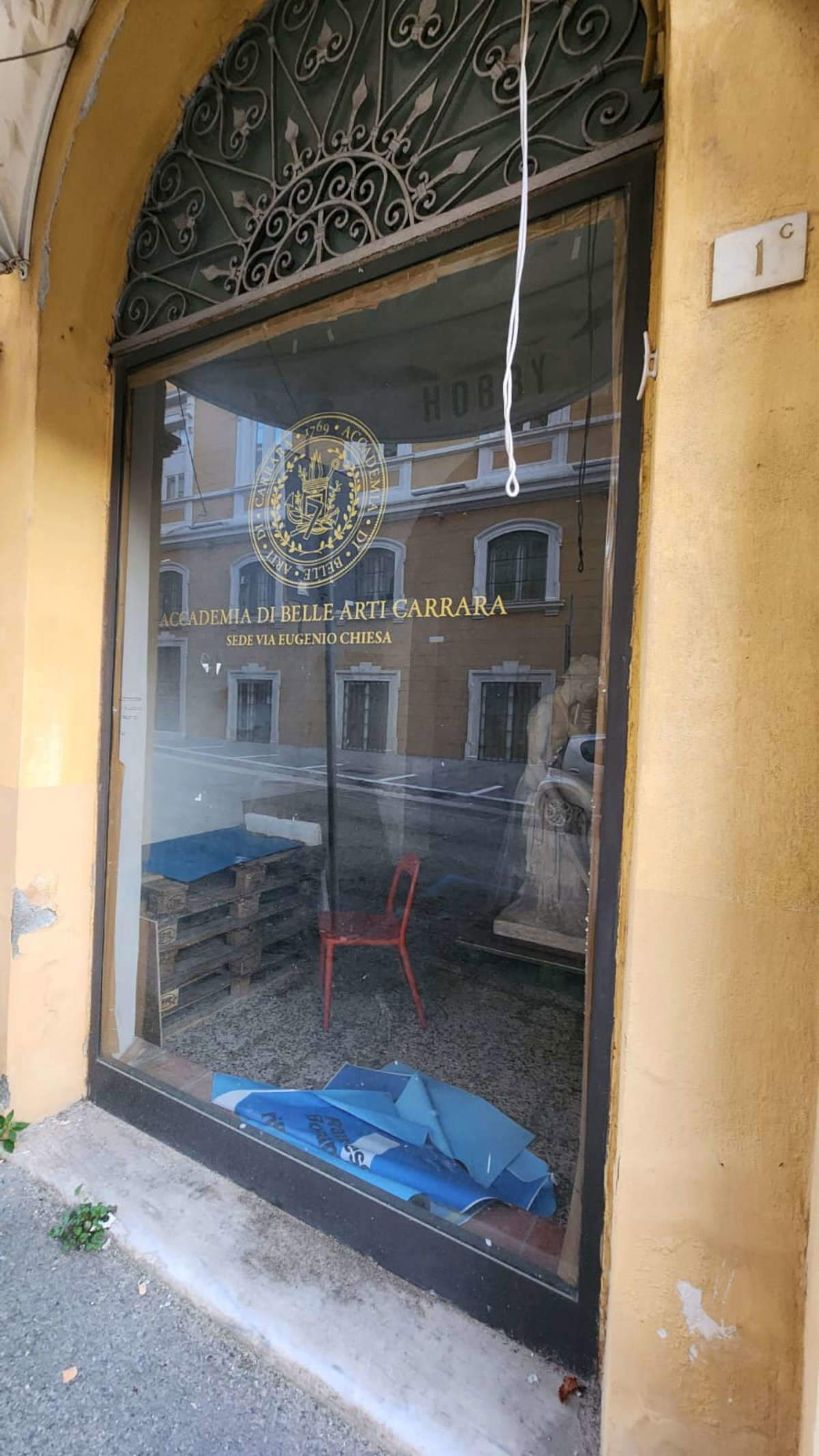
There was recent talk about the gipsoteca at a press conference that the Academy of Fine Arts of Carrara convened last Oct. 27: On the subject of plaster casts, the director of the Prince’s Palace institute, Marco Baudinelli, first informed reporters that within two, maximum three months, a small exhibition “both physical and virtual” would be set up in the premises on Via Chiesa., the director said, anticipating that at that time the digitization of some plaster casts and the definition of the project of setting up an exhibition that will have to “enhance the sculpture of Carrara,” around the figures of Carlo Finelli and Pietro Tenerani, who are also well represented in the gipsoteca. And then, Baudinelli advanced his hypothesis for the gipsoteca’s final location, declaring that the exhibition scheduled in the Via Chiesa fund will be a preview of the future museum: “If the municipality,” the director said at the press conference, “has not changed its mind since the time of Zubbani [ed: mayor of Carrara between 2007 and 2017], for which the main floor of Palazzo Rosso had been earmarked for the gipsoteca, and if the municipality is always available, that would be the ideal location to put on display at least a good part of the heritage we have: the heritage is substantial, there are about 300 plaster casts, so it will not be possible to exhibit them all, however, it could already be [something].” The idea of setting up the plaster casts gallery in the rooms of Palazzo Rosso, the elegant 18th-century building located next to the Accademia, formerly home to the Biblioteca Civica, dates back several years, was revived in 2017 when director of theAccademia was Luciano Massari and Carrara was led by a pentastate junta, then again in 2023 (with new center-left administration, and Palazzo del Principe still led by Massari), when it seemed the project was on the verge of starting, but it was finally scuttled shortly thereafter, in 2024. Indeed, Palazzo Rosso would not be a suitable venue to house the Academy’s plaster casts, for reasons of statics that emerged as a result of the structural analyses included in the executive project for the building’s renovation, which evidently suggested caution to the City Council: “as far as the structural part is concerned,” explained Daniele Rosi in an article published in the local edition of La Nazione on September 21, 2024, “for the municipality, it is no longer feasible to hypothesize hosting a gipsoteca in Palazzo Rosso [given] the very high weight that any installations could have on the floors of the building.” Words repeated in an article dated April 6, 2025: “for the City Council it is no longer feasible to host a gipsoteca in Palazzo Rosso, as was first assumed, especially given the very high weight that any installations could have on the floors of the building.” For some time, therefore, the offices of Piazza 2 Giugno have shelved the idea of hosting the gipsoteca in Palazzo Rosso. The building is currently a construction site, and upon completion its destination will be consistent with the object of the procedure by which the contract was awarded: it will therefore accommodate “cultural services.” The municipality at the moment has not specified what the services will be in fact, but certainly in the main floor will not find space for the plaster casts of Canova, Thorvaldsen, Bartolini, Tenerani, Finelli, Cybei.
It is somewhat peculiar that the management of the Academy of Fine Arts was not informed of the City Council’s plans and that the last updates about the intended use of Palazzo Rosso even dated back to the Zubbani era projects (i.e., more than a decade ago). It is also true that, for some time now, the Prince’s Palace has become a kind of foreign body to the city and the dialogue with City Hall has probably reached an all-time low: that does not detract from the fact that, when the destination of one of Italy’s most important gipsoteche is being hypothesized, perhaps the least that can be done is to dialogue with the municipality to sound out the feasibility of the options on the table. Especially if then, in fact, the option is only one: in fact, it seems anomalous beyond measure that a plan B has not been elaborated, at least according to what was stated in the press conference, when the Palazzo Rosso hypothesis was presented, in fact, as the only possible one, since no further ideas for displaying the plaster casts were formulated. What, then, to do with the Academy’s collection of plaster casts? It is not known.
At this point, it would be desirable for the Academy to take a step back and perhaps decide to entrust the plaster casts to one of the many companies that organize exhibitions so as to have a review designed that would succeed in giving value to this heritage, with the indisputable advantage that it could be made known outside Carrara. And perhaps to the Carrara people themselves, who could benefit from a trip to see what they have not seen in their city for almost fifteen years, when a selection of plaster casts animated two exhibitions(D’après Canova and Il tempo di Elisa) held at Palazzo Binelli between 2011 and 2013. Also because (and at this point it has to be realistic) the Academy, alone, does not seem to have the strength to set up a gipsoteca. Mainly because it does not have the space: the Palazzo Rosso solution, after all, would have been shared with the City Council. And successive city administrations over time have certainly not distinguished themselves by forward-looking choices: from the idea of separating the Padula Sculpture Park from the civic collection of contemporary art by placing it in the convent of San Francesco and inaugurating the former Plastic Arts Center (now Mudac) in 2006 (when its natural home, at least that of the less bulky sculptures, would have been Villa Fabbricotti), to the stunt of ’opening a useless museum on Michelangelo, strongly desired by the former councillor for culture Giovanna Bernardini and which one hopes will be dismantled sooner or later, passing through the project of dismembering the Marble Museum, fortunately foiled, and the project of setting up a civic museum in Palazzo Pisani by taking material from the Marble Museum (two projects, the latter, supported by the Pentastellata administration). The list of brainstorms about Carrara’s museums could be limited to these, and that would already be a lot.
Years ago, when hypotheses were being formulated about the destination of the Convent of San Francesco, a proposal circulated to place the gipsoteca here (at the time, the Academy was directed by Baudinelli himself, who held the position from 2003 to 2011 and then returned to the helm of the institution in 2024): it would indeed have been the most suitable location, but the City Council opted for the Museum of Contemporary Art. Then, between provocations (such as the one, put forward to tickle the parochial instincts of the people of Carrara, of bringing the plaster casts to Massa) and creative proposals (a crystal cube at the side of the Prince’s Palace) the most disastrous, namely that of opening the Carmi, or rather the museum on Michelangelo, in Villa Fabbricotti, a choice moreover contested by Baudinelli himself after the end of his term, as well as by a large part of the city’s cultural milieu . A choice that sent the arrangement, which had been discussed several times in the six years that Simone Caffaz was president of the Academy (i.e., from 2009 to 2015, a fundamental era for the Carrarese museum system since those years the projects that later led to the current conformation were established, and also because it was in those years, thanks mainly to the two Palazzo Binelli exhibitions, that the peak of enthusiasm for the gipsoteca was registered), which would have seen the contemporary art museum in Villa Fabbricotti and the gipsoteca in San Francesco. It ended up as everyone knows: the contemporary remained at San Francesco (and the museum was moreover turned upside down in 2022 with a pejorative rearrangement, conducted under the Pentastasi administration, when councillor for culture was Federica Forti: therefore, at such a short distance, it becomes difficult to justify in the eyes of the people of Carrara an eventual new move, with the result that touching Mudac will not be discussed again for who knows how long), a museum of reproductions was opened at Villa Fabbricotti that is not visited by anyone and is mainly used as a small container for exhibitions (moreover, often completely unrelated to Michelangelo), and the plaster casts of the Accademia remained scattered. And it ended up with an Academy that became increasingly estranged from the city. But, rereading the story, it also becomes difficult to argue that the City Council avoided counterproductive choices, made even more evident now by the impossibility of using that building which, despite bombastic declarations a few years ago, of the Accademia’s plaster casts will not even see shadows. Of course: one could not have known that it would end this way. But one could have foreseen, for example, that setting up a museum on Michelangelo in Carrara and remounting the museum of contemporary art with an unsuitable project. Today then we reap the bitter fruits of the past’s improvident choices, especially of the years when the city was called upon to give itself a coherent and adequate museum system, a goal that can hardly be said to have been achieved.
So, with Palazzo Rosso that cannot be used, with Palazzo Pisani perhaps equally unusable and that in any case, according to the mayor’s declarations, will house archives, associations and conference rooms, and in the absence of other proposals, as of today the gipsoteca is still waiting for a definitive home, and evidently it will have to wait much longer, since there is no well-founded hypothesis on the horizon. Except that of setting up a small exhibition in the Church Street fund, which, however, is useful environment to house probably a dozen plaster casts at most. In any case, almost three months after the press conference, unless there is tireless work going on behind the now-darkened showcase, there does not seem to be even a trace of a possible staging of this exhibition, despite the fact that the time horizon coincides with what washad been hypothesized by the director (although, to be fair, it must be said that Baudinelli did not clarify whether in two-three months from the press conference we would have been able to visit the exhibition, or whether, on the contrary, work should start these days). Basically, the plaster casts of Canova and Thorvaldsen are continuing to gather dust in a room for now set up as a warehouse instead of an exhibition. At least passersby for some time have been able to see them from the street.


The author of this article: Federico Giannini
Nato a Massa nel 1986, si è laureato nel 2010 in Informatica Umanistica all’Università di Pisa. Nel 2009 ha iniziato a lavorare nel settore della comunicazione su web, con particolare riferimento alla comunicazione per i beni culturali. Nel 2017 ha fondato con Ilaria Baratta la rivista Finestre sull’Arte. Dalla fondazione è direttore responsabile della rivista. Nel 2025 ha scritto il libro Vero, Falso, Fake. Credenze, errori e falsità nel mondo dell'arte (Giunti editore). Collabora e ha collaborato con diverse riviste, tra cui Art e Dossier e Left, e per la televisione è stato autore del documentario Le mani dell’arte (Rai 5) ed è stato tra i presentatori del programma Dorian – L’arte non invecchia (Rai 5). Al suo attivo anche docenze in materia di giornalismo culturale all'Università di Genova e all'Ordine dei Giornalisti, inoltre partecipa regolarmente come relatore e moderatore su temi di arte e cultura a numerosi convegni (tra gli altri: Lu.Bec. Lucca Beni Culturali, Ro.Me Exhibition, Con-Vivere Festival, TTG Travel Experience).
Warning: the translation into English of the original Italian article was created using automatic tools. We undertake to review all articles, but we do not guarantee the total absence of inaccuracies in the translation due to the program. You can find the original by clicking on the ITA button. If you find any mistake,please contact us.























 IT
IT FR
FR DE
DE ES
ES CN
CN


