




by Redazione 20/03/2026



Categories: Ancient art / Disclaimer
The first full restoration of Giovanni Bellini's St. Job Altarpiece starts at the Gallerie dell'Accademia in Venice. For the first time, the work will be carried out inside the museum and will be visible to visitors with an open construction site.


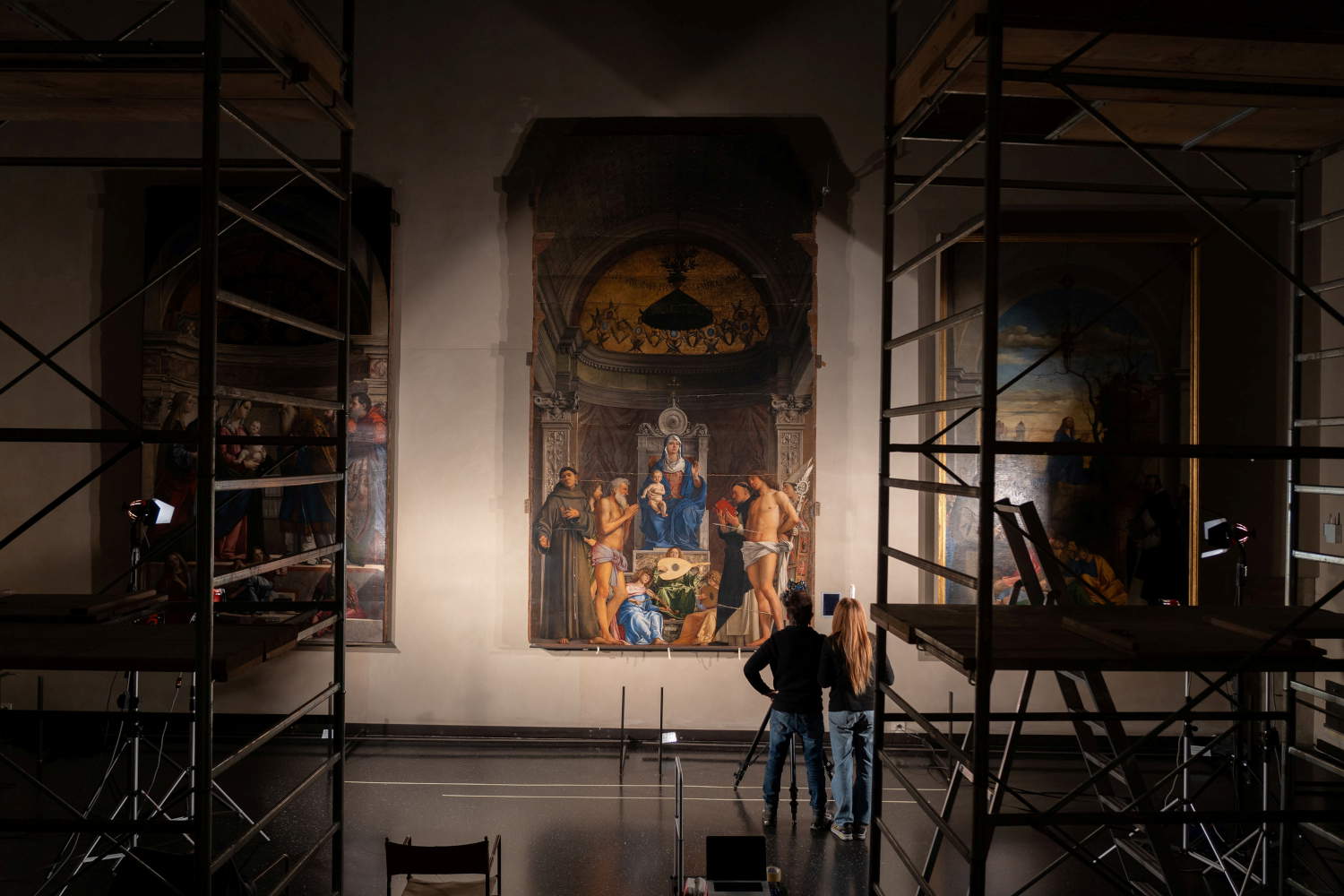
The first full restoration of Giovanni Bellini’s St. Job Altarpiece, considered one of the greatest masterpieces of the Venetian Renaissance, is kicking off at the Gallerie dell’Accademia in Venice. For the first time, the intervention will be carried out inside the museum and will be visible to visitors: in fact, an open construction site will allow visitors to closely follow every phase of the conservation process of this work.

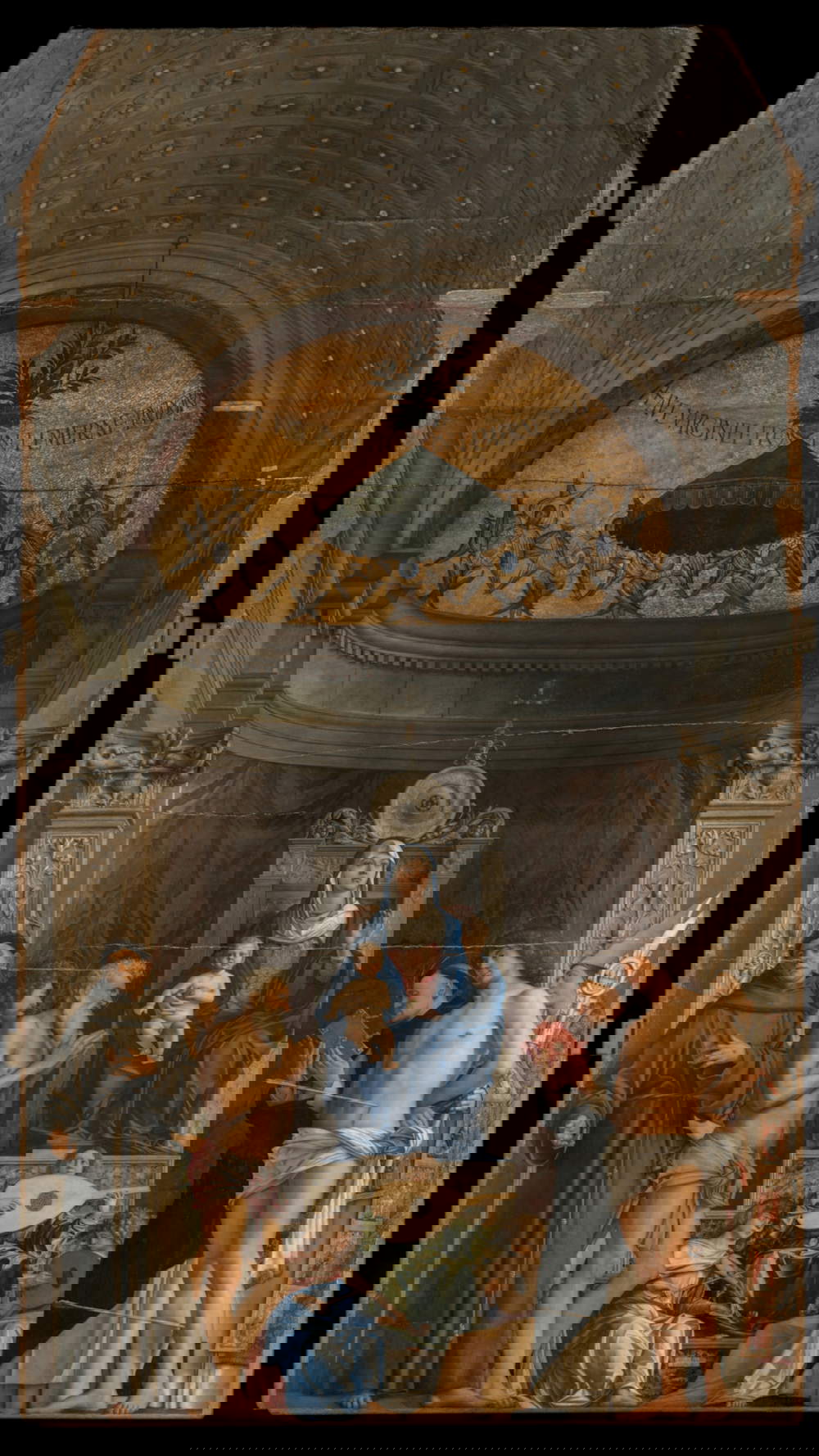
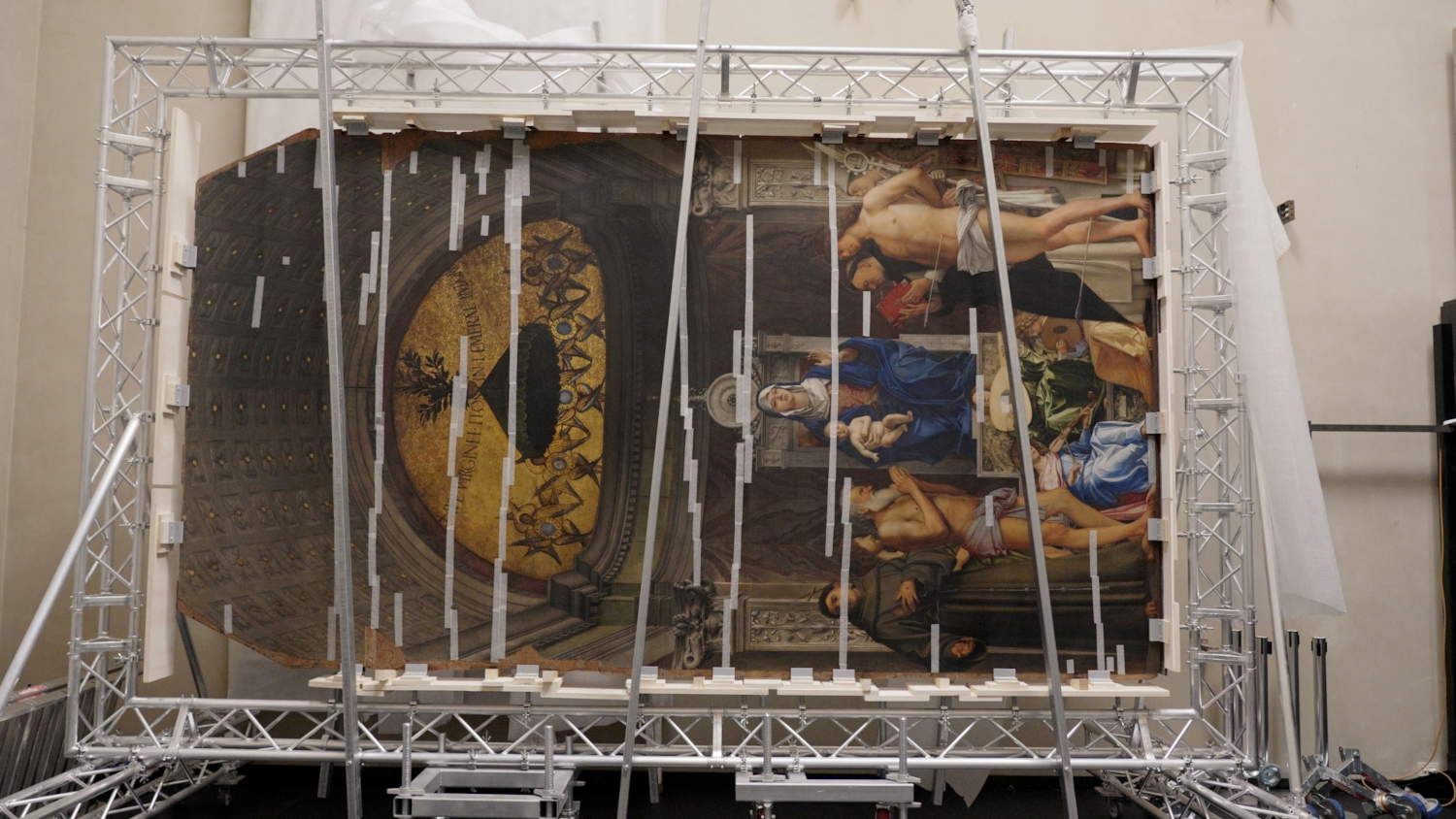
Created in the 1580s for the Venetian church of San Giobbe, the altarpiece depicting the Madonna and Child Enthroned, Musician Angels and Saints Francis, John the Baptist, Job, Dominic, Sebastian and Ludovico da Tolosa marks a turning point in the history of the Venetian altarpiece. Bellini abandons the traditional subdivision of the polyptych to create a unified space: an illusionistic apse covered by a coffered vault, within which the Madonna and Child sits enthroned surrounded by saints from different eras, gathered in a suspended, contemplative dimension, out of time. The precision of the perspective construction, the low vantage point and the solemn monumentality of the figures help generate a pictorial space that seems to extend beyond the painting, directly involving the viewer.


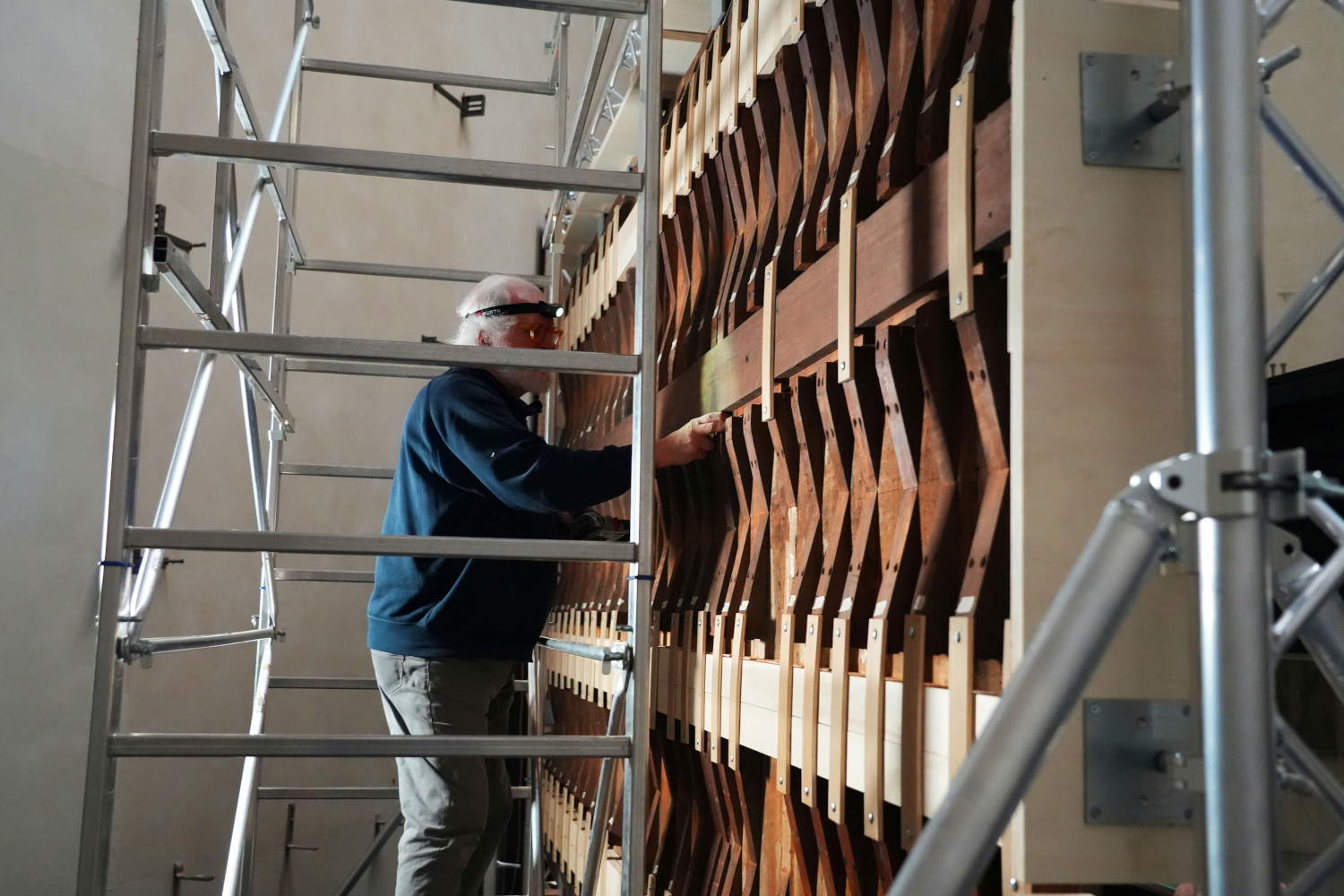
Becoming part of the public collections in 1815, after being removed from the church for conservation reasons, the work is now housed in the Gallerie dell’Accademia in Venice. It is considered one of the pinnacles of Bellini’s mature production and is cited with great admiration already by historical sources such as Marcantonio Sabellico, Marin Sanudo, Giorgio Vasari and Francesco Sansovino. Over the centuries, the large wooden support, consisting of thirteen poplar boards joined horizontally, has shown several structural problems, including cracks, stresses and weakening, which have also compromised the stability of the pictorial surface. The interventions carried out between the nineteenth and twentieth centuries, while meeting the conservation needs of the time, progressively generated further critical issues. The current restoration therefore stems from the need to address these problems in a comprehensive manner, intervening both on the support and on the pictorial film, while fully respecting the original.
Diagnostic analyses carried out in recent years, including infrared reflectography, which made it possible to identify the preparatory drawing, and stratigraphic studies, have revealed the great refinement of Bellini’s painting technique: a preparatory base of chalk and glue, a thin light imprimitura based on white lead, and the use of a rich and sometimes precious range of pigments, applied with an apparently simple technique but capable of producing effects of extraordinary luminosity.
Given the size and complexity of the work, it was decided not to move it to the laboratory. The room that houses it has therefore been temporarily reorganized to accommodate a specially designed restoration site that can guarantee adequate working conditions without interrupting the exhibition itinerary. The laboratory is thus transformed into an open and visible space where visitors can directly observe the work of the restorers.
The project is being developed under the guidance of director Giulio Manieri Elia, with Francesca Bartolomeoli and Roberta Battaglia directing the restoration work, while Maria Antonietta De Vivo and Francesca Bartolomeoli are in charge of the technical coordination of the laboratory set-up and the painting handling phases. The restoration is co-financed by the Gallerie dell’Accademia and Venetian Heritage thanks to contributions from Roger Thomas and Arthur Libera. The total cost of the project is 500,000 euros.
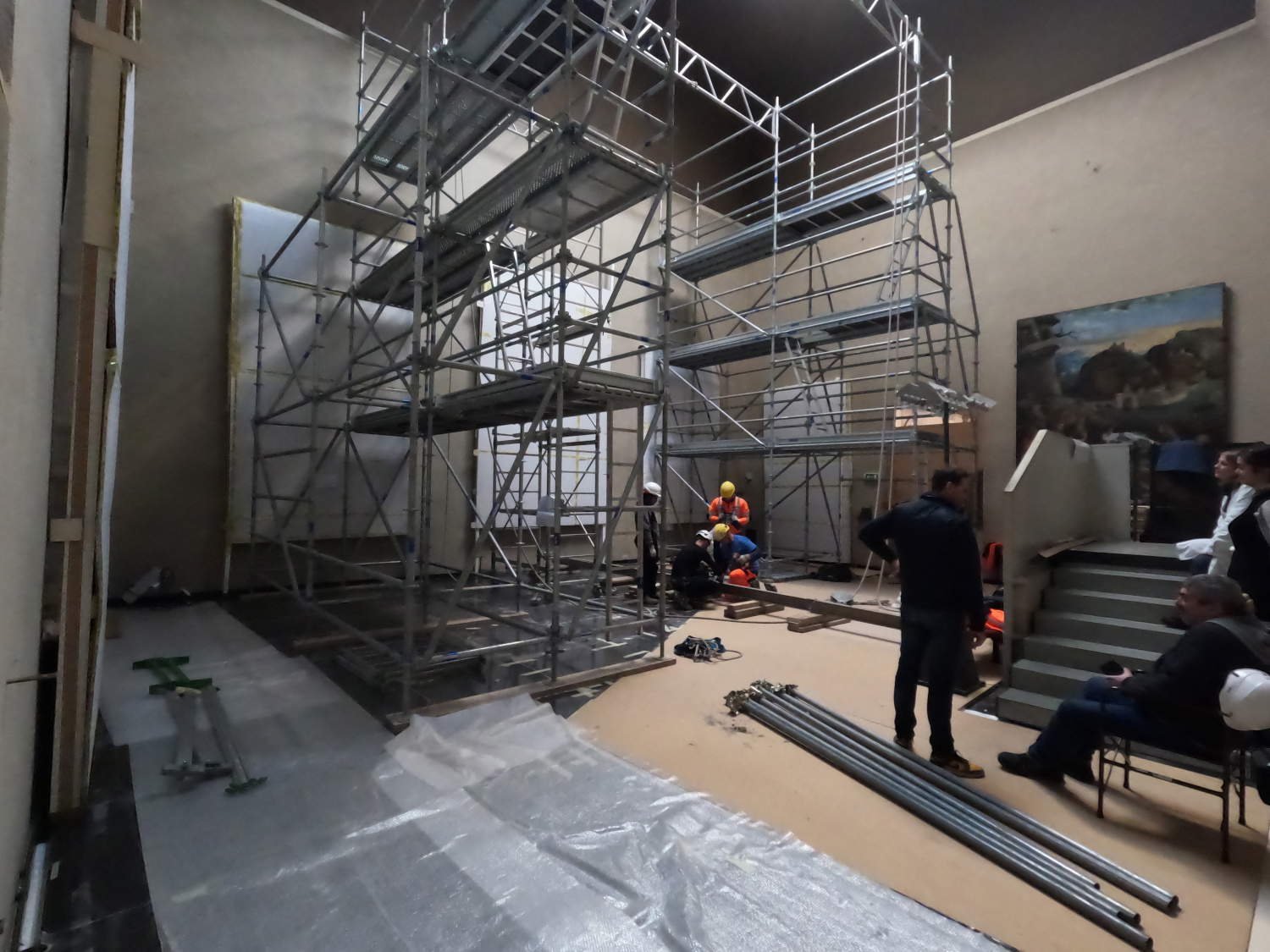
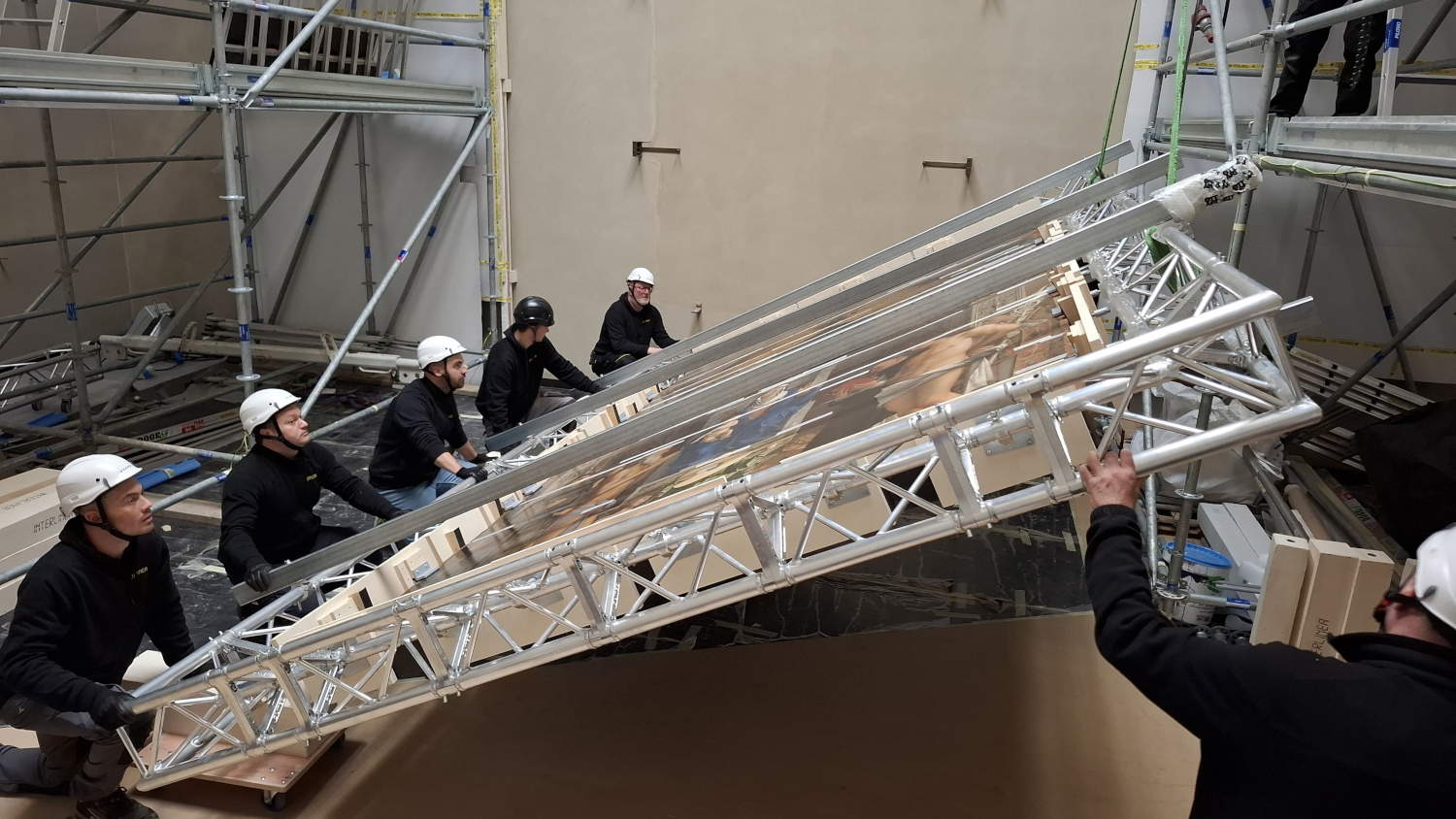
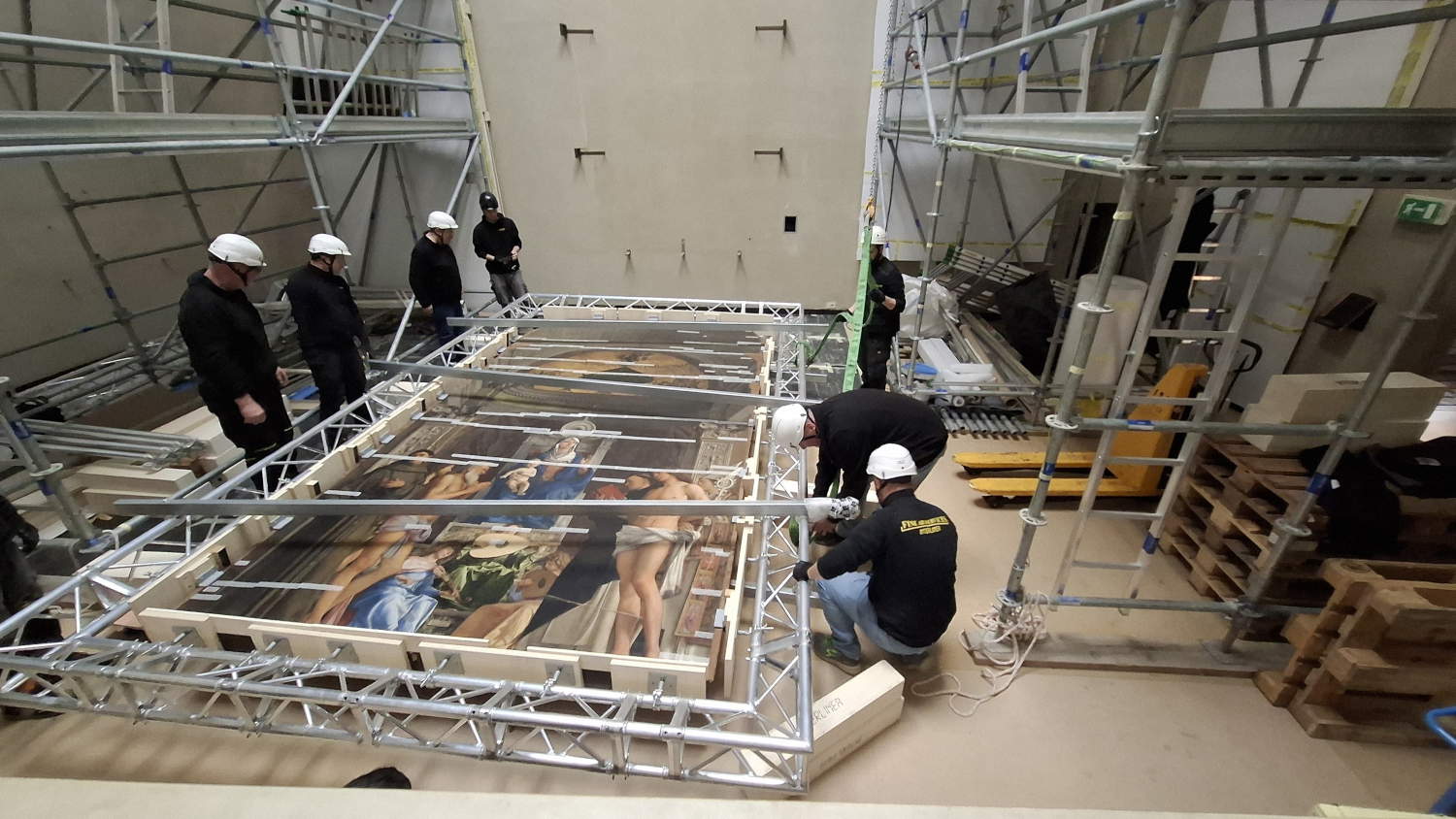
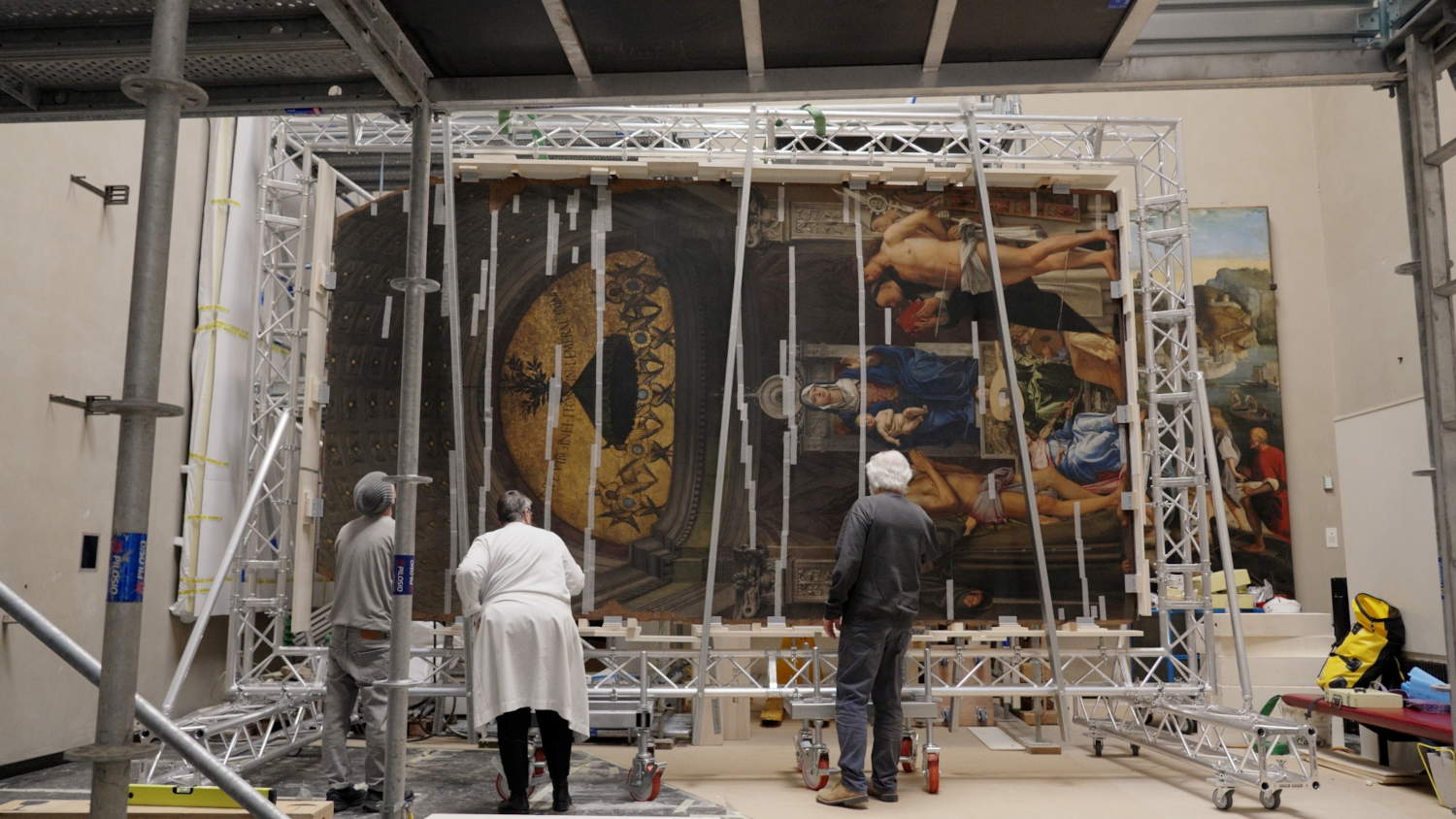
“With this project,” said the director of the Gallerie dell’Accademia, Giulio Manieri Elia, “the museum takes an important step in the direction of transparency and sharing of museum work. Restoring the Saint Job Altarpiece in front of the public means not only taking care of one of the absolute masterpieces of our collection, but also showing how scientific knowledge, responsibility for conservation and dialogue with visitors can become an integral part of the museum experience.”
“Supporting the restoration of the St. Job Altarpiece,” said Venetian Heritage Director. Toto Bergamo Rossi, “means contributing to the preservation of a work that is fundamental to the history of Venetian art and to the understanding of Giovanni Bellini’s pictorial evolution. The collaboration with the Gallerie dell’Accademia testifies how much the dialogue between public institutions and international patronage can generate projects of great scientific and cultural value.”
|
| At the Gallerie dell'Accademia in Venice the first full restoration of Bellini's St. Job Altarpiece |
Warning: the translation into English of the original Italian article was created using automatic tools. We undertake to review all articles, but we do not guarantee the total absence of inaccuracies in the translation due to the program. You can find the original by clicking on the ITA button. If you find any mistake,please contact us.