




by Redazione 16/12/2025



Categories: Ancient art / Disclaimer
The Smithsonian in Washington returns three sculptures stolen from Cambodia during the conflicts between 1967 and 1975. The return, the first application of the Smithsonian policy of shared stewardship and ethical restitution, stems from years of joint research.
The Smithsonian ’s National Museum of Asian Art in Washington , U.S., has announced the return of three Cambodian sculptures to the Kingdom of Cambodia, marking the museum’s first repatriation under the “Shared Management and Ethical Return Policy” adopted in April 2022. The initiative, initiated by the museum itself, followed an extensive internal assessment that began in August 2022, based on years of research conducted by curators and provenance specialists in close collaboration with the Cambodian Ministry of Culture and Fine Arts. The investigation confirmed that the objects had been smuggled out of the country during a period of widespread looting following civil conflicts between 1967 and 1975, before entering the U.S. art market.
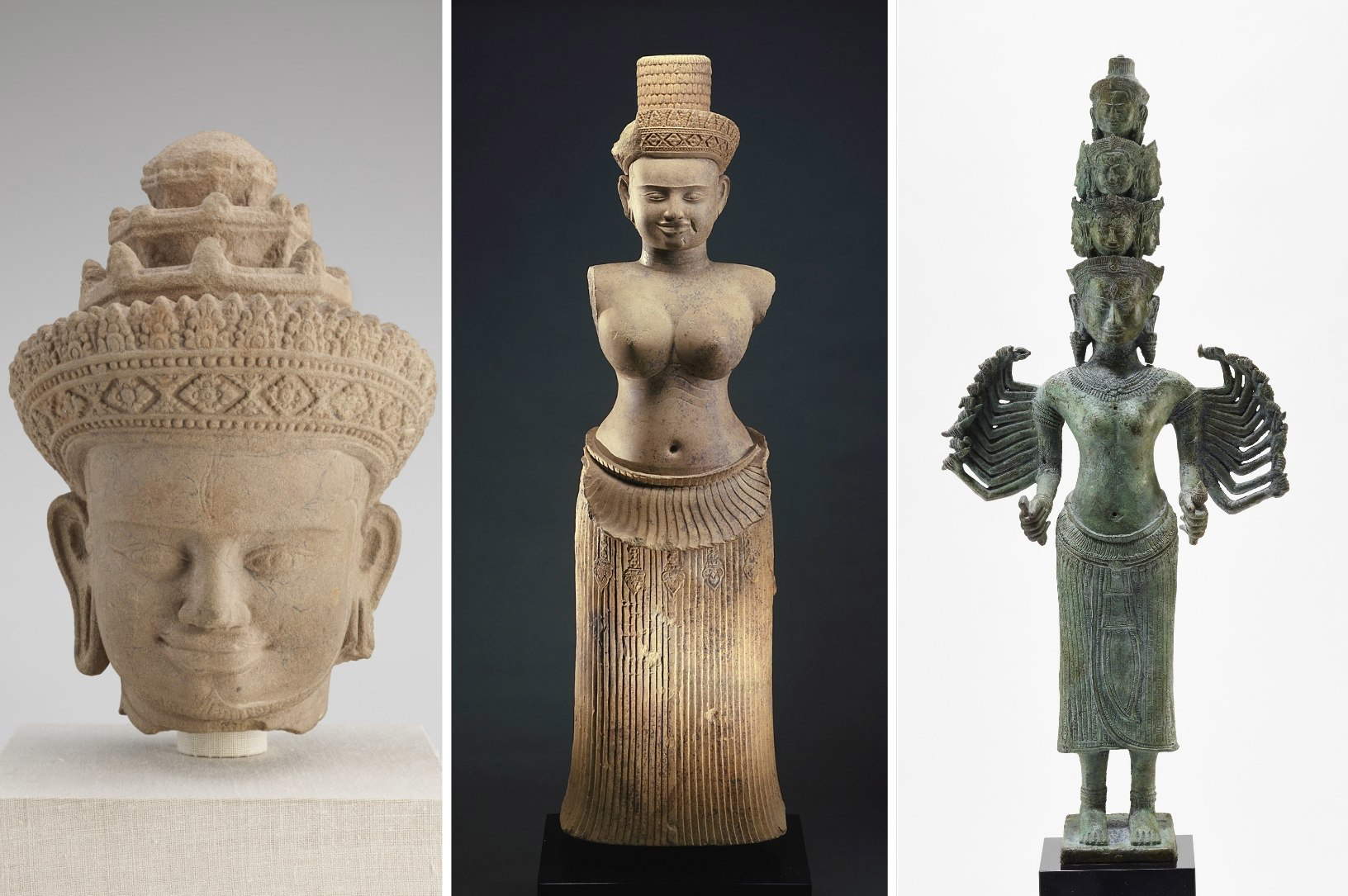
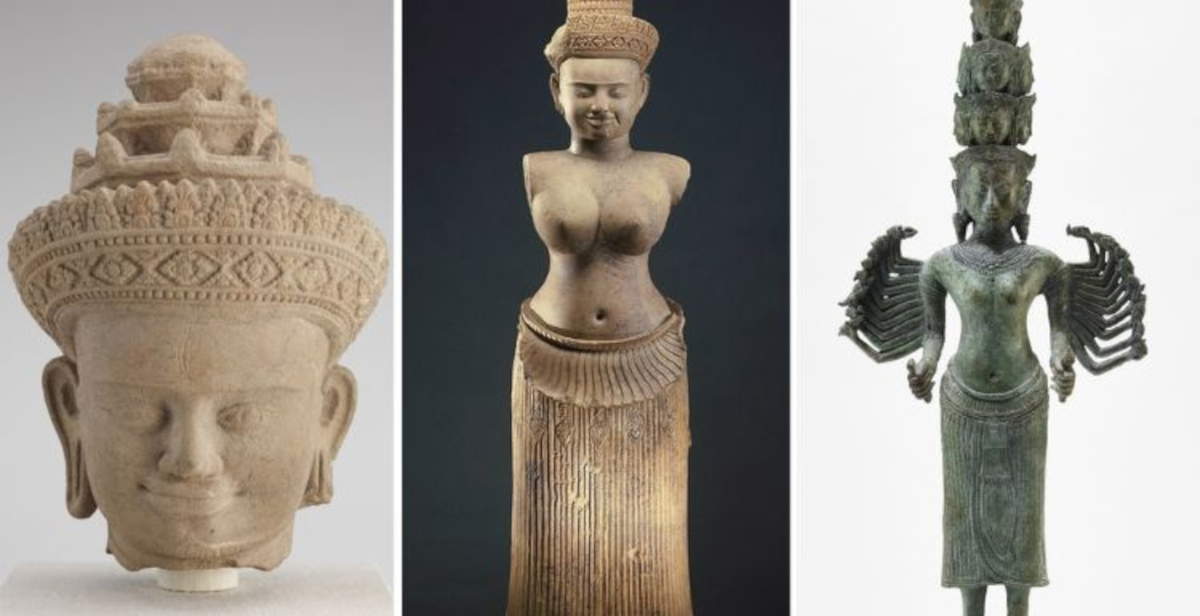
The three works involved Head of Harihara (mid-10th century) , Goddess Uma (10th century) and Prajnaparamita (Perfection of Wisdom) (c. 1200), had entered the museum’s collection through donations without documentation of export from Cambodian territory. Each of the pieces turns out to be linked to traders suspected of trafficking antiquities from Southeast Asia. Linkage to specific temples and dates of appearance on the international market revealed ethical issues sufficient to warrant voluntary return. The Smithsonian’s Shared Stewardship and Ethical Return Policy (unique among U.S. museums), allows for voluntary ethically-based returns without the need for a formal request for return from the country of origin. As a result of this framework, the museum has completed the process of removing the objects from the museum holdings and will continue its collaboration with Cambodia through joint research aimed at learning more about the histories of the works.


The works and their stories
The HariharaHead depicts a composite deity combining Shiva and Vishnu, with half of Shiva’s third eye visible and an elaborate three-tiered headdress decorated with floral motifs corresponding to those at the temple of Pre Rup, evoking Cambodian temple towers and Mount Meru, the mythical center of the universe. The sculpture was probably acquired by William Wolff Inc. before 1968, passed to Arthur Sackler, and was donated to the museum in 1987. The work was on long display in the South Asian and Himalayan Sculptures section from 1988 to 2017.
Goddess Umais presented in an elegant frontal pose, with a columnar base formed by her pleated skirt and a torso shaped to emphasize femininity and fertility. Carved floral motifs on the headdress and belt recall reliefs from the Phnom Bakheng temple, to which the sculpture is closely related. This work was also probably purchased by William Wolff Inc. in 1972, entered the Sackler collection, and was donated to the museum in 1987. It had been exhibited in South Asian and Himalayan Sculptures (1988-2017) and later in the section Power in Southeast Asia (2017-2020).
Prajnaparamita (Perfection of Wisdom) depicts the goddess of transcendental wisdom in the esoteric Cambodian form. The complex bronze figure, dating from the Bayon period under Jayavarman VII, reflects the growth of esoteric state Buddhism and the ritual need for portable devotional icons. The work was part of Christian Humann’s Pan-Asian Collection, passed through Robert Ellsworth, was sold by Sotheby’s in 1990 and donated to the museum in 2015. It has been on display in The Art of Giving (2015), Encounter with the Buddha (2017-2022) and in The Art of Knowledge since 2023.
“This return marks an important step in the museum’s commitment to ethical stewardship, reflecting both the strength of our provenance research program and the values that shape our work today,” said Chase Robinson, director of the National Museum of Asian Art. “As the museum’s first return under the Smithsonian’s shared stewardship and ethical restitution policy, it is more than an institutional action. Rather, it is the product of a collaborative and sustained process with our Cambodian partners, combining research conducted by both Cambodian authorities and our team to build a reliable and comprehensive picture of each object’s history.”
An official ceremony for the return of the sculptures to Cambodia’s Ministry of Culture and Fine Arts is also being prepared. The ministry has also agreed to a long-term loan of the works, allowing the museum to continue sharing Cambodian art heritage and provenance research, demonstrating the mutual benefits of collaboration in protecting cultural heritage. The return represents a new milestone in a multi-year collaboration between the museum and Cambodia, solidified by more than three years of joint work on this assessment and a memorandum of understanding signed in 2023 to deepen cooperation in all areas of museum practice, from staff exchanges to conservation, research and exhibition planning. In the same year, the museum hosted the public forum Reclaiming Cambodia’s Cultural Heritage: provenance research in action, highlighting efforts to identify and return Cambodian heritage. With the support of the Henry Luce Foundation, a multi-year program was launched in April 2025 with the Cambodian government dedicated to the reintegration and presentation of returned objects, particularly those from Koh Ker, a UNESCO site, with an international exhibition planned in Cambodia in 2030 and in Washington in 2031.
 |
| USA, Smithsonian returns three Cambodian sculptures to their country of origin |
Warning: the translation into English of the original Italian article was created using automatic tools. We undertake to review all articles, but we do not guarantee the total absence of inaccuracies in the translation due to the program. You can find the original by clicking on the ITA button. If you find any mistake,please contact us.