




by Noemi Capoccia 30/12/2025



Categories: Archaeology / Disclaimer
What archaeological finds were most striking in terms of interest and importance during 2025? Here is a selection of the most relevant ones.

What were the most interesting and surprising archaeological discoveries of 2025? We have selected some of the most significant finds.
Archaeology continues to prove itself to be a constantly evolving discipline, capable of returning fragments of ancient histories that have remained buried for centuries. Each new excavation campaign adds vital pieces to the reconstruction of the civilizations that have preceded us, presenting unprecedented perspectives on cultures, social practices and crucial moments in human history. The year 2025 also confirmed this vitality, with a series of major discoveries emerging in very different contexts.
Unexpected findings, scientific confirmations and new material evidence continued to push forward the boundaries of research. In this article we offer a selection of the most relevant archaeological discoveries of 2025 that show how the study of the past remains an essential tool for understanding the present. Here, then, is our selection.
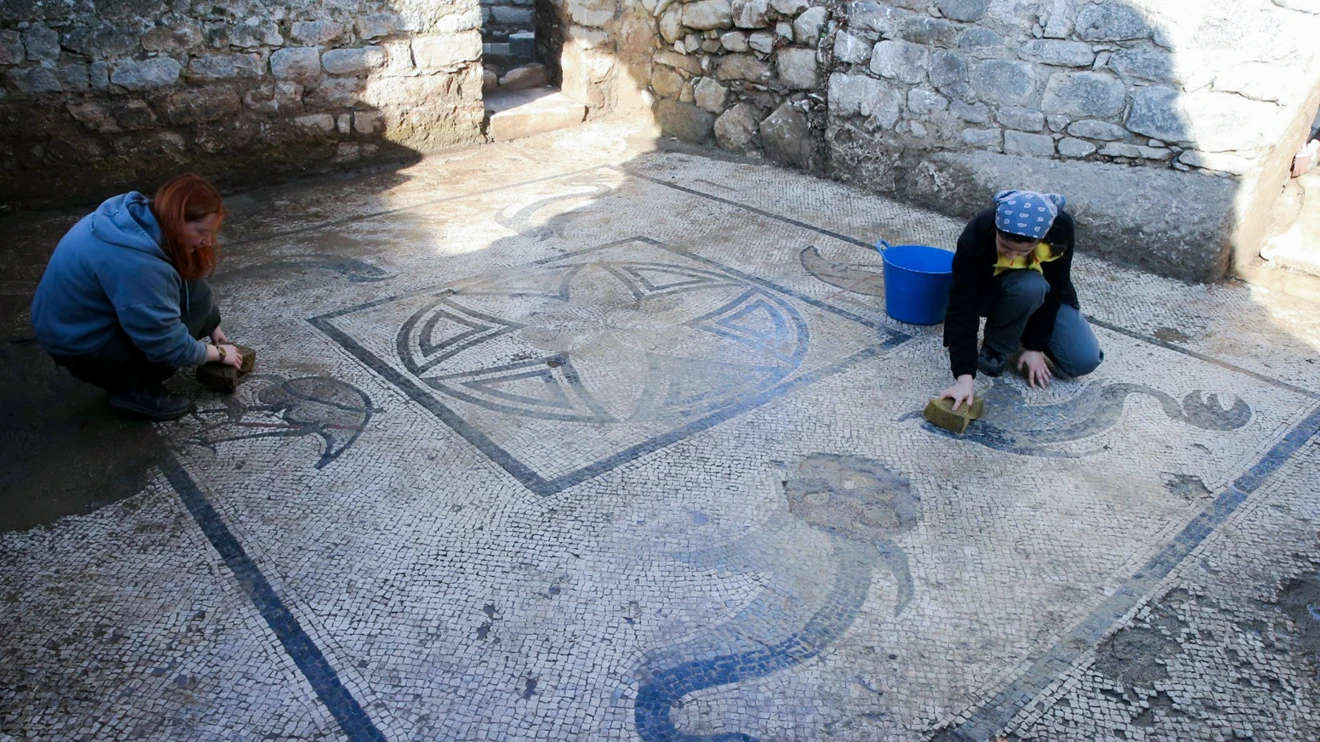
1. The mosaics with crocodiles and flamingos at Heraclea al Latmo in Turkey.
In January, archaeologists from Selçuk University in Turkey discovered mosaics with animals, crocodiles, dolphins, flamingos and eels, in the Roman baths of Heraclea al Latmo. The discovery enriches knowledge about art and life in the Greco-Roman city. The mosaics offer new details about the depiction of animals in antiquity.


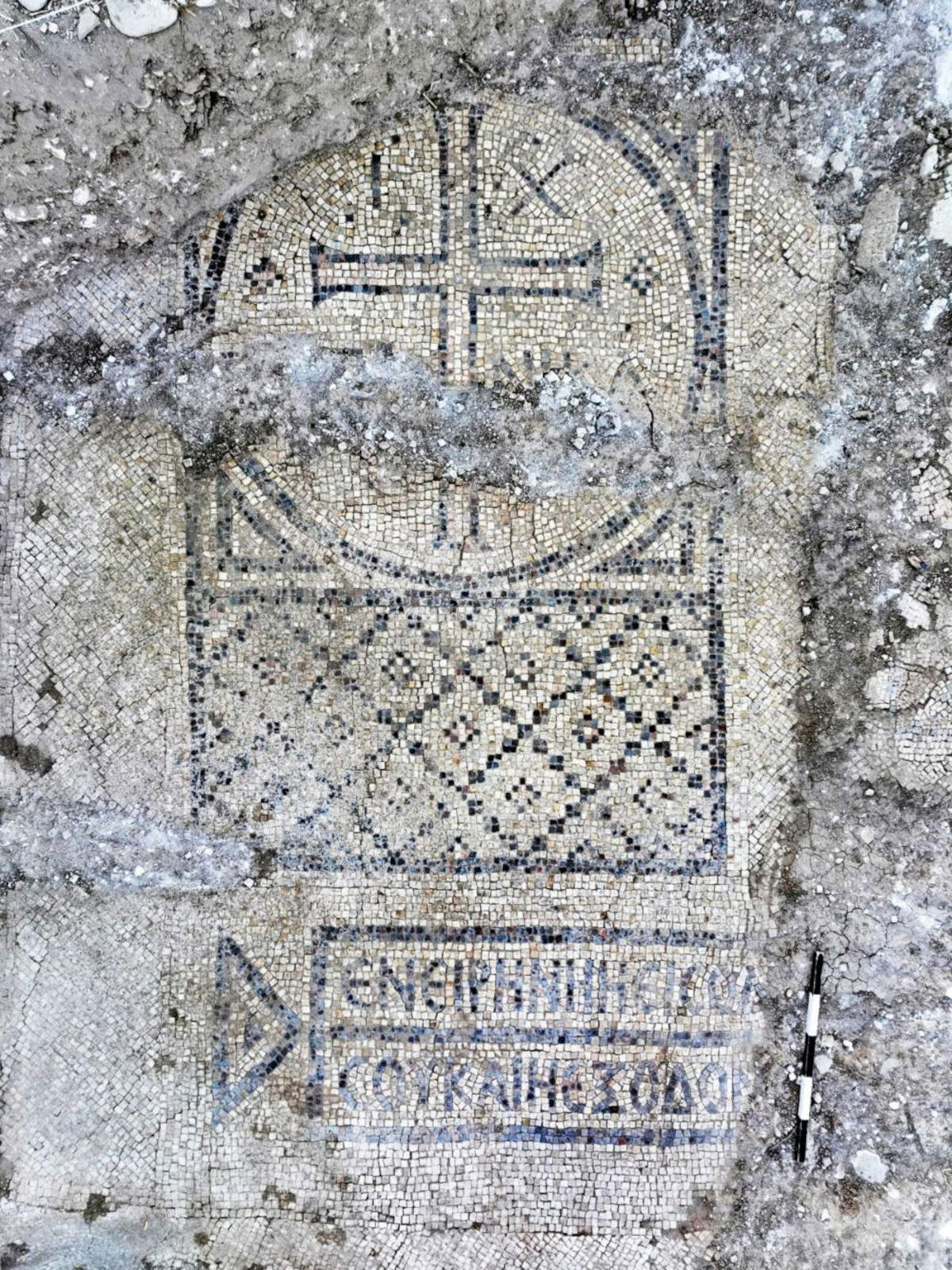
2. A Byzantine monastery with mosaic floor and Greek inscription in Israel
Also in January in Israel, archaeologists discover a Byzantine monastery with a multicolored mosaic floor and Greek inscription in Kiryat Gat. The site includes a wine press and Roman and Byzantine buildings. The mosaic, from the 5th-6th centuries, depicts crosses, lions, doves and floral motifs.
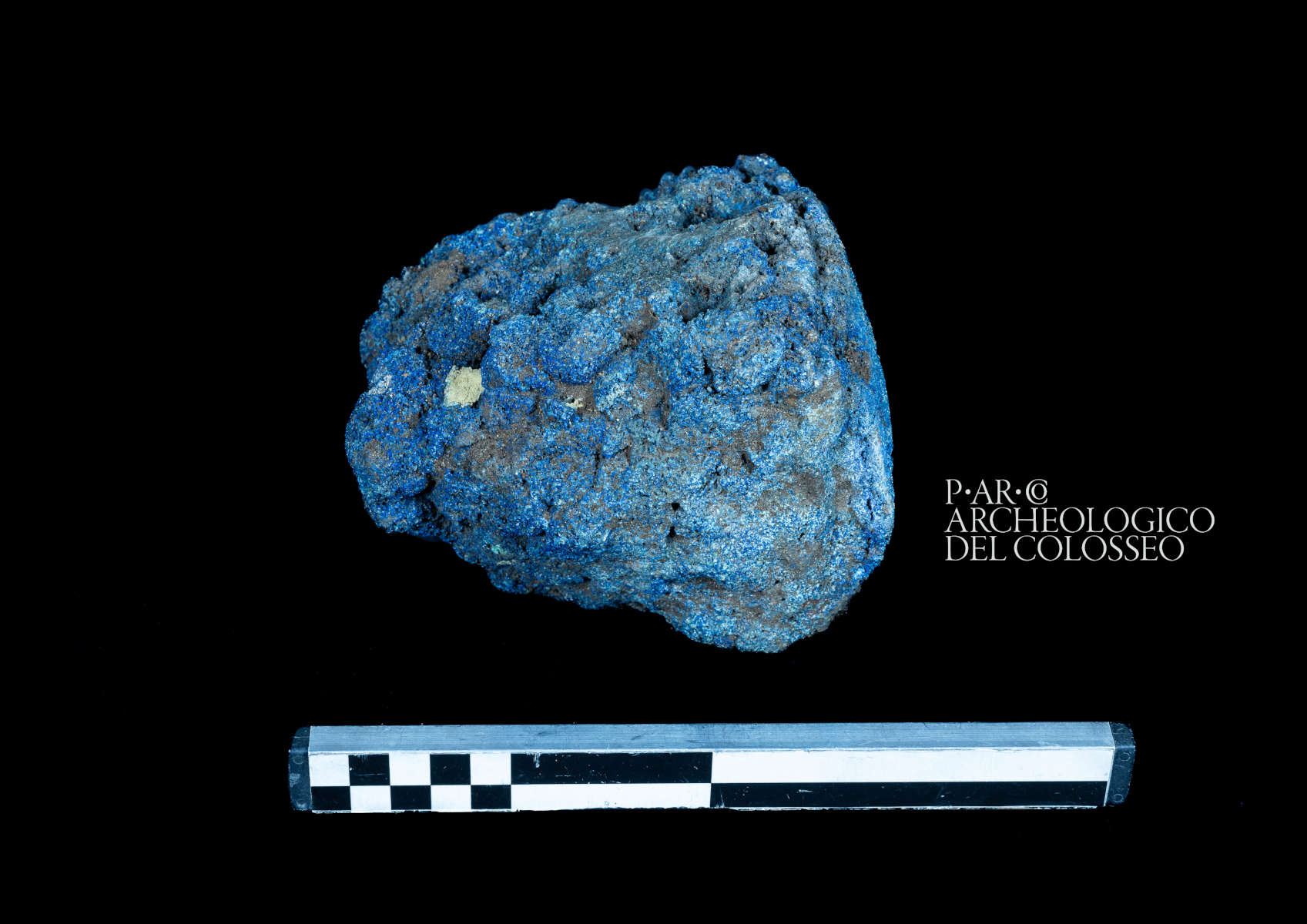
3. The Egyptian blue ingot found in Rome.
Also in January in Rome, at the Domus Aurea, archaeologists discover two vats used to quench lime and process pigments for frescoes from Nero’s time. The materials include yellow ochre, realgar and red earth in jars and an amphora. The most extraordinary find is an ingot of Egyptian blue 15 cm tall and weighing 2.4 kg.
4. The tomb of Thutmose II, the last royal of Egypt’s 18th dynasty
In February, in Luxor, after a century of research, archaeologists discovered the tomb of Thutmose II, the fourth pharaoh of the 18th Dynasty. The ruler reigned between 1483 and 1479 BCE. The discovery represents one of the most important archaeological finds in recent years.
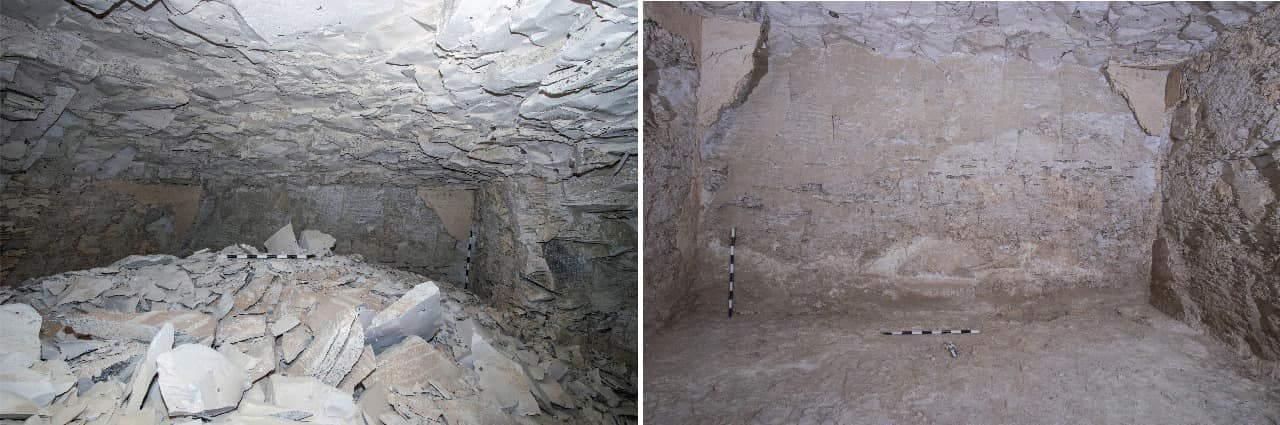
5. The large banquet hall frescoed with megalography dedicated to the procession of Dionysus at Pompeii
In February, at Pompeii Archaeological Park, excavations in insula 10 of Regio IX reveal a large banquet hall. The walls host a monumental frieze with almost life-size figures, a megalography. The decoration depicts a lively Dionysian procession. The fourth wall of the room opened onto a garden, integrating the space with nature.
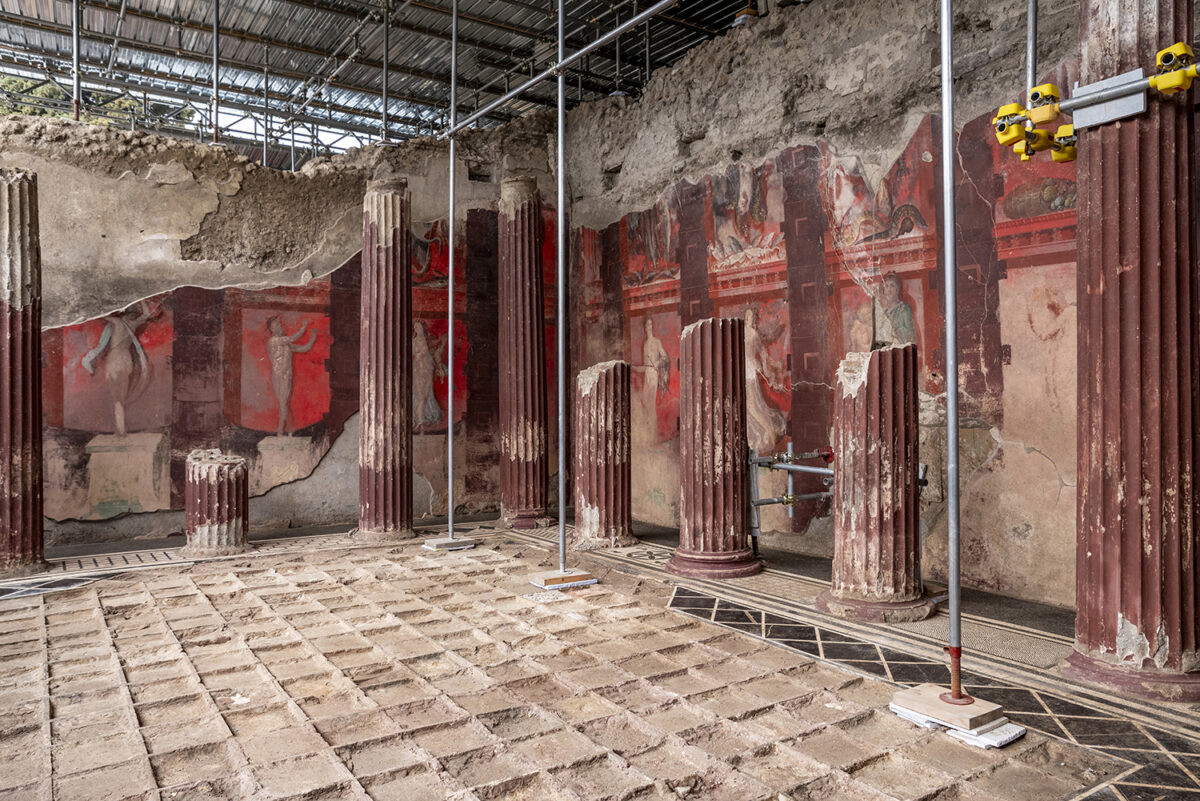
6. Funerary relief with a life-size couple in Pompeii
In April in Pompeii, at the Porta Sarno Necropolis, archaeologists discovered a funerary relief with a man and woman carved almost life-size. The work belonged to a monumental tomb in the area. The excavation is part of the Universitat de València’s Investigating the Archaeology of Death in Pompeii project.
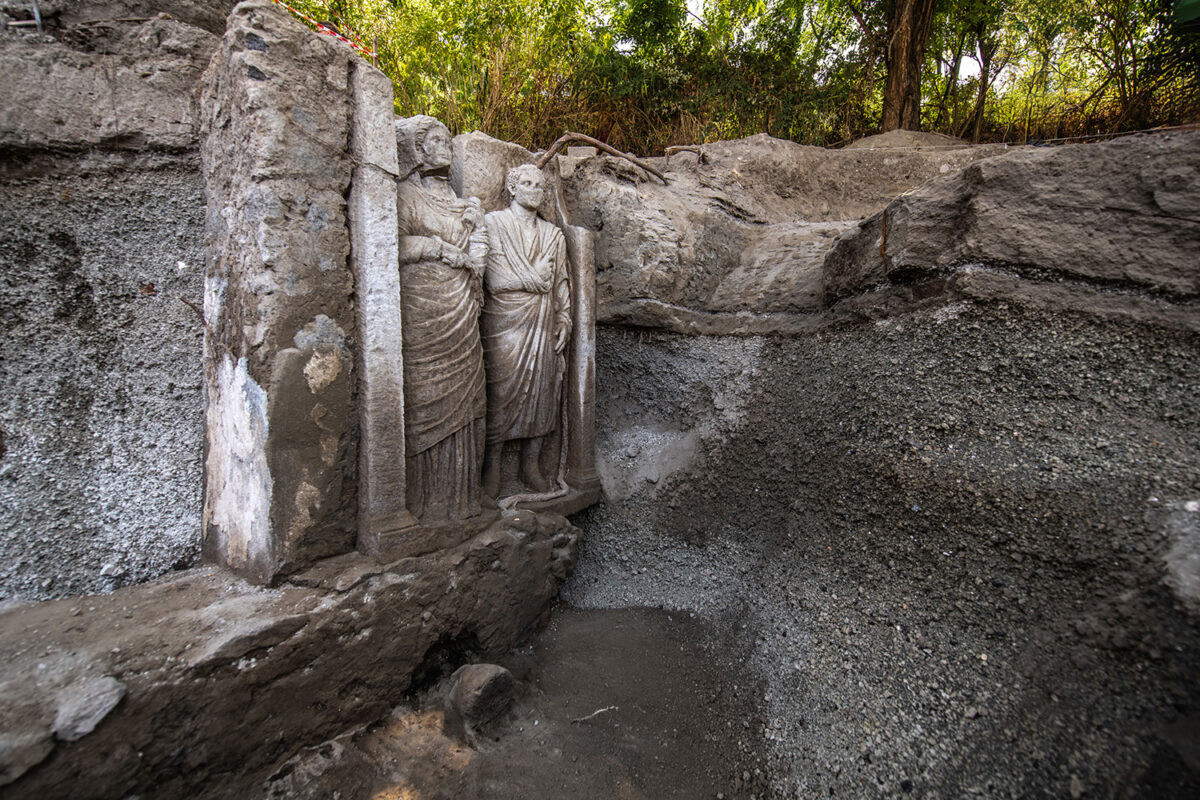
7. The tomb of Prince Userefra in Egypt.
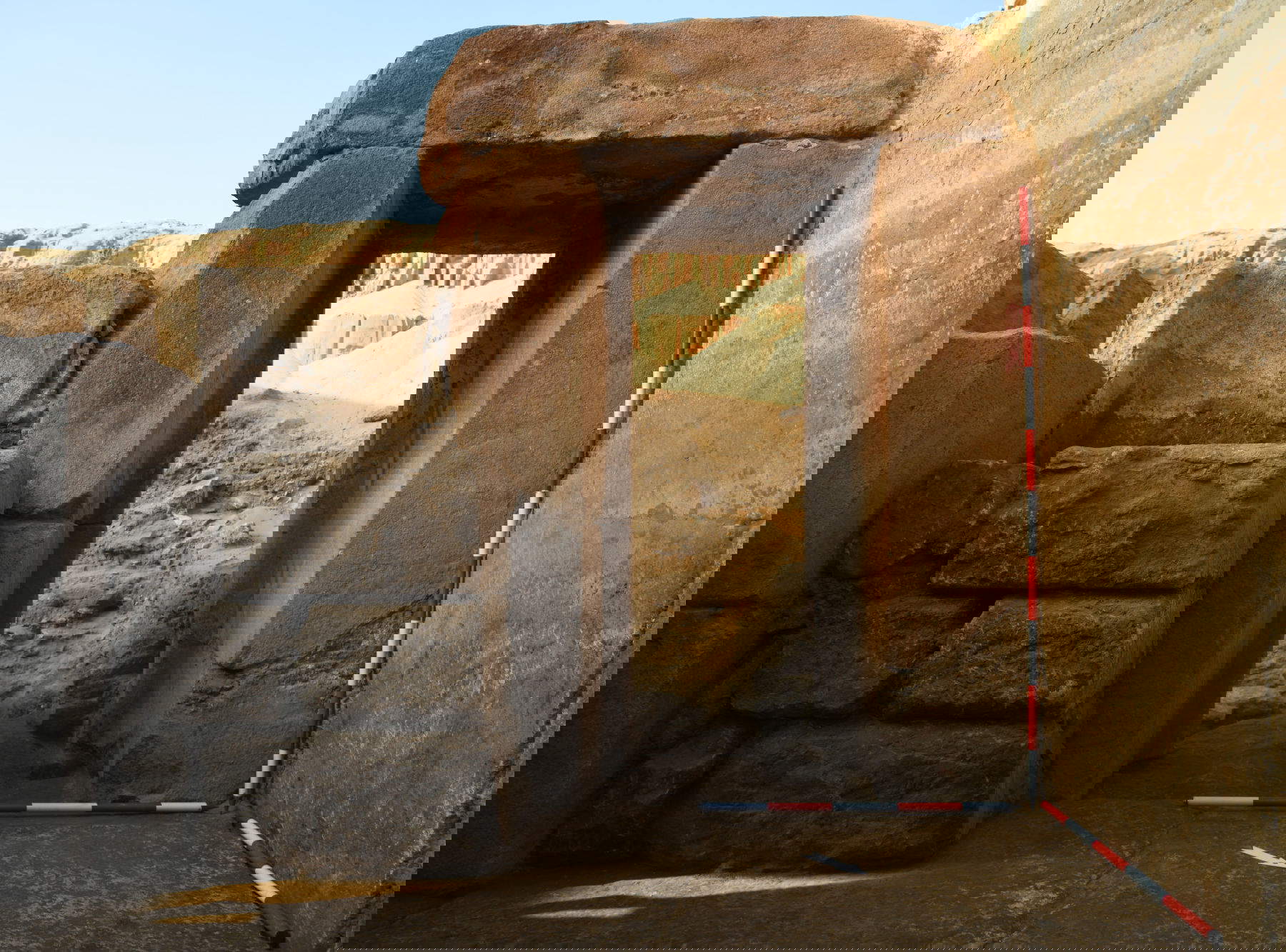
Also in April, in Saqqara, Egypt, archaeologists discovered the tomb of Prince Userefra, son of King Userkaf of the Fifth Dynasty (2500-2490 BCE). The excavation, led by the Supreme Council of Antiquities and the Zahi Hawass Foundation, unearths numerous artifacts. For the first time, a pink granite false door, 4.5 meters high and 1.15 meters wide, decorated with hieroglyphic inscriptions, was found.
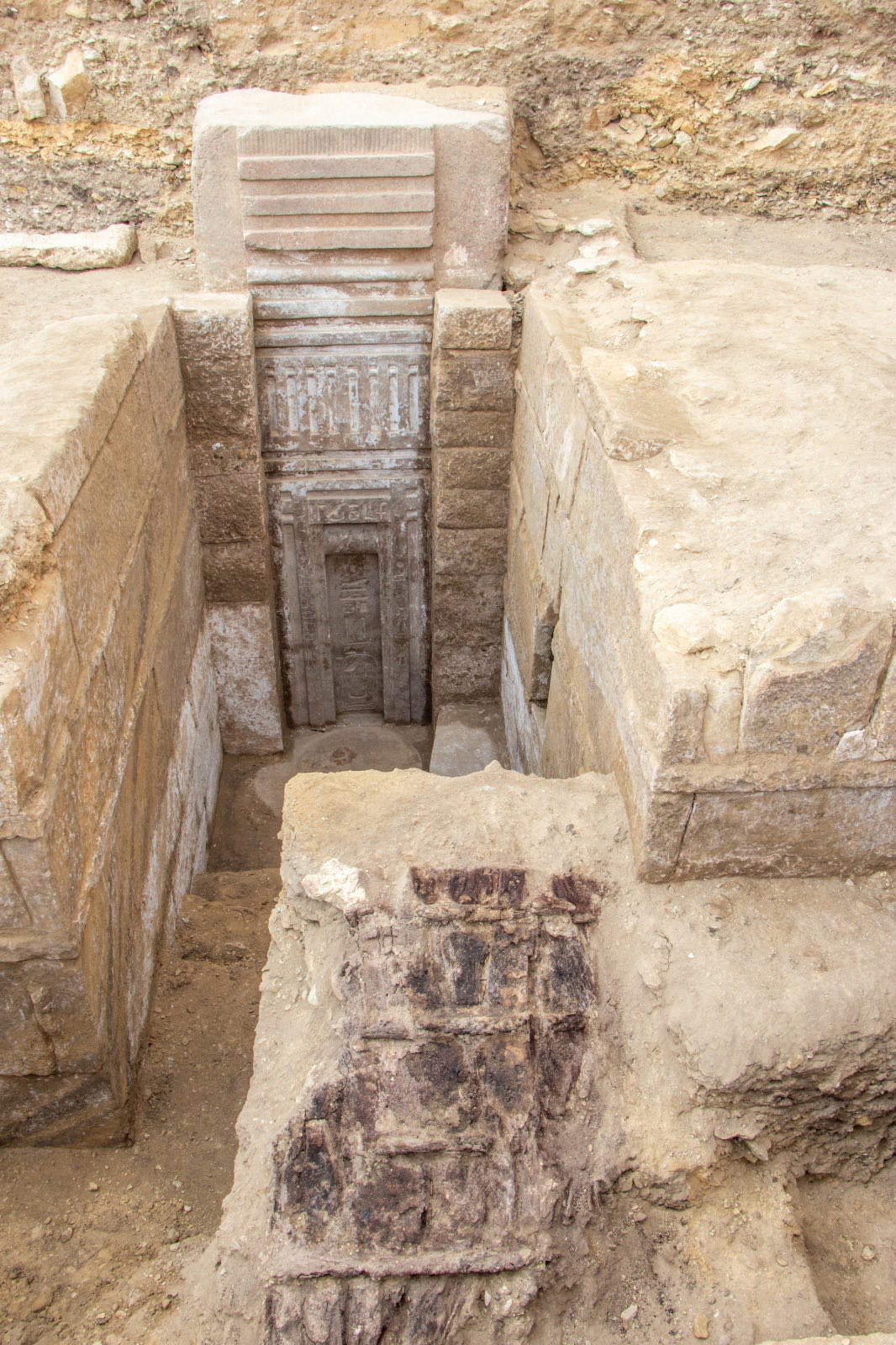
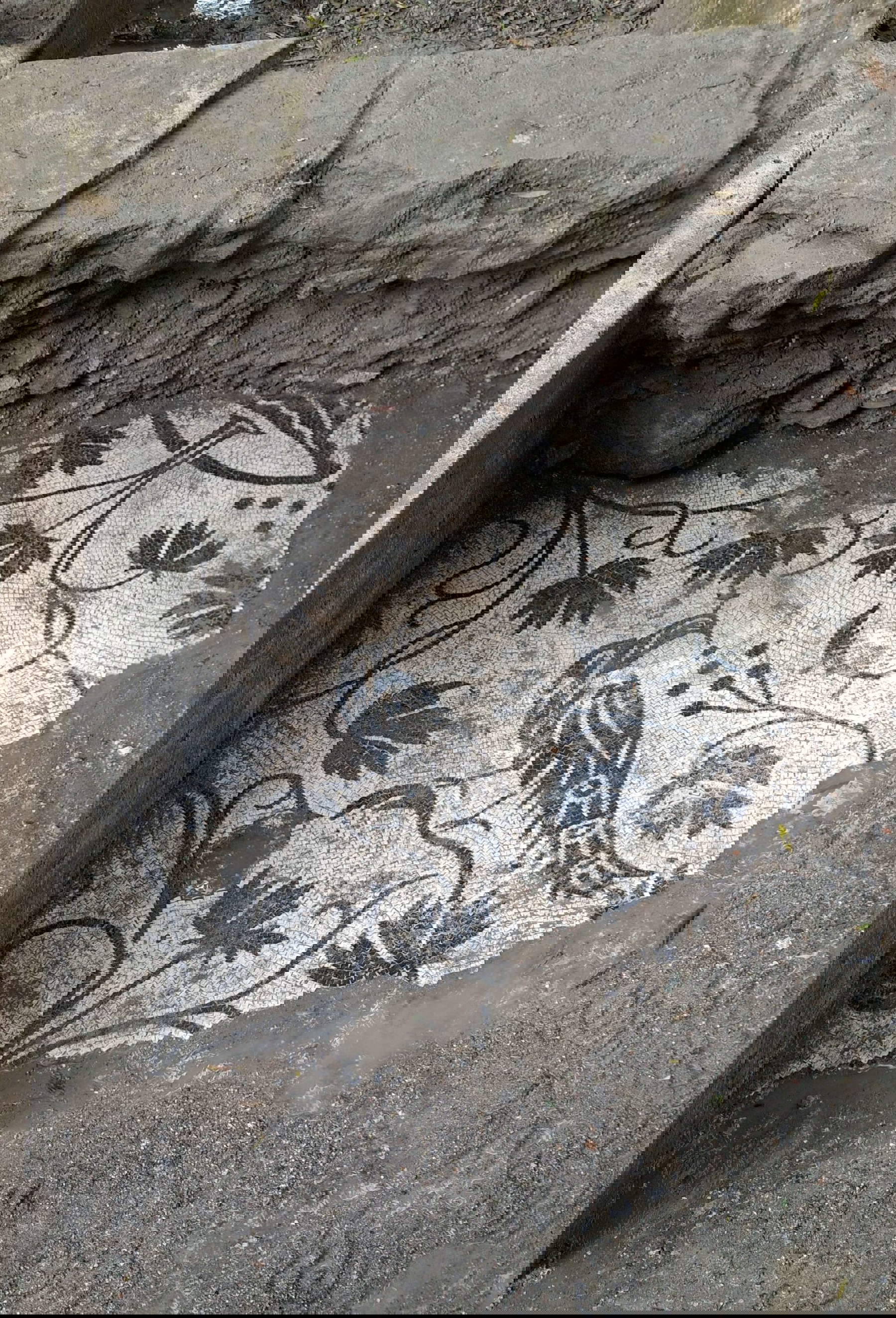
8. The mosaics and funerary monuments on the Appia Antica in Rome
In June, in Rome, along the Appia Antica, excavations at the site of Via Appia Antica 39 reveal a stretch of great historical and religious significance. The area housed shrines, such as that of Mars Gradivo, and a cult dedicated to the nymph Egeria. According to Christian tradition, the meeting between St. Peter and Christ took place here.
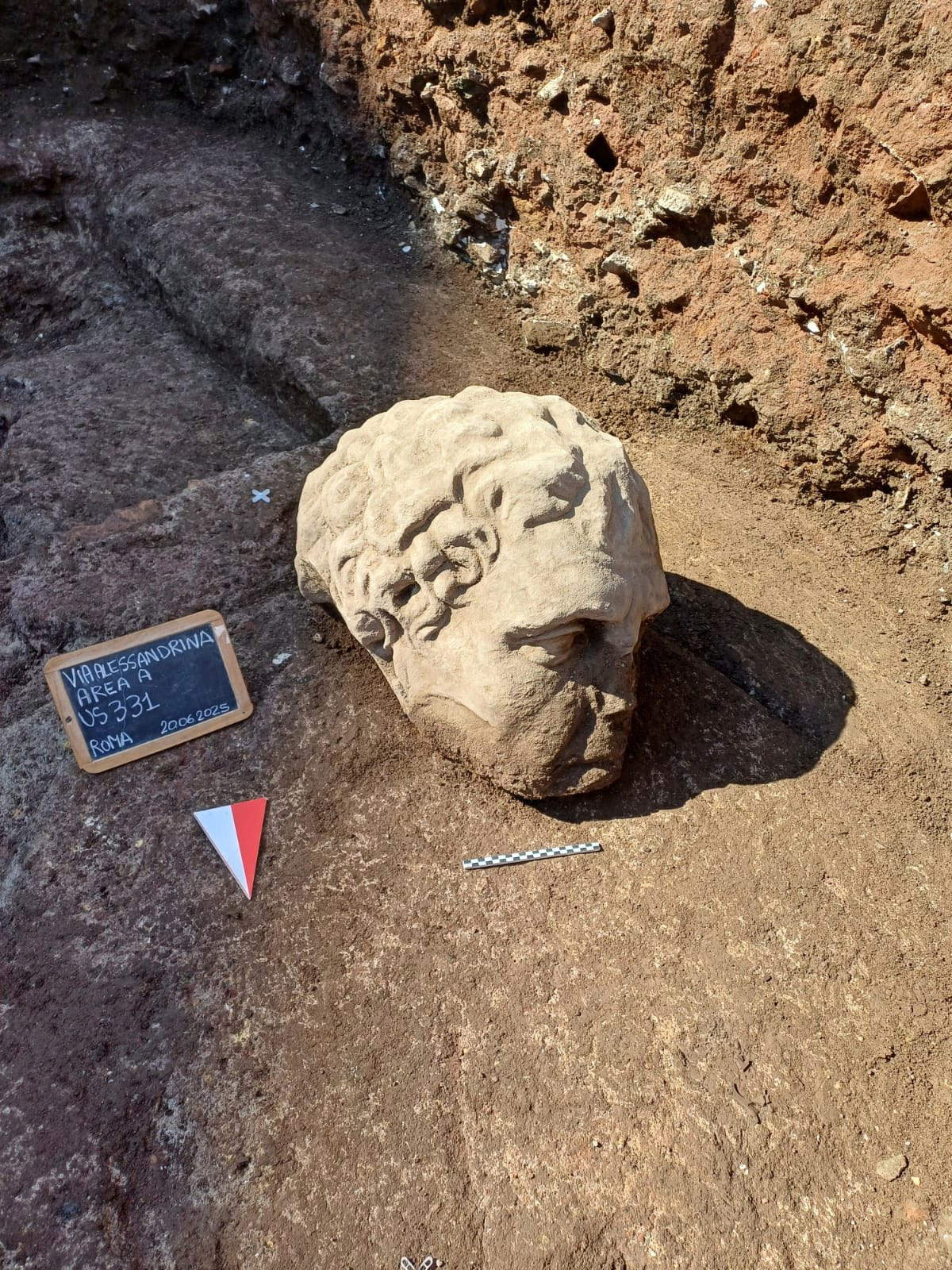
9. A large marble head in Rome
Also in June, a large marble head is discovered in Rome, under the square of the Forum of Trajan: a male face, with thick hair and intense expression, which for centuries has been guarded by time under the square of the Forum of Trajan. It is a fascinating discovery from the heart of imperial Rome, in an area where the imposing Porticus Trisigmentata, with monolithic columns nearly 12 meters high, once stood. The announcement was made by Mayor Roberto Gualtieri via a Facebook post.
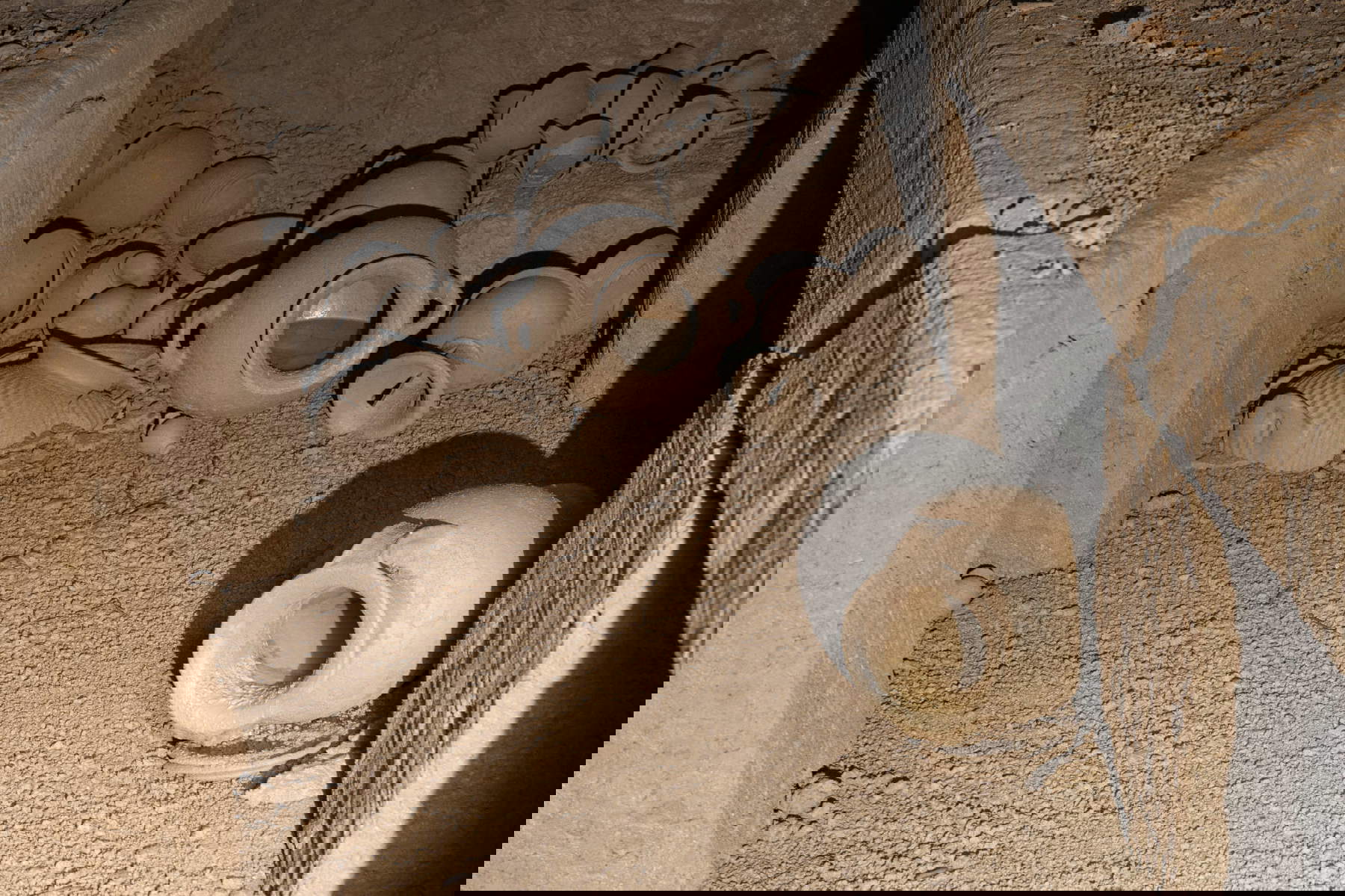
10. The inviolate Etruscan tomb in Barbarano Romano (Viterbo).
Still in June, in the Etruscan necropolis of Caiolo, in the archaeological area of San Giuliano in Barbarano Romano (Viterbo), an intact tomb from the late 7th century BC is discovered. Numerous fine painted ceramic vessels and bronze ornaments, linked to funerary rituals, emerge inside. The discovery includes a burial bed with a basin and other in situ objects.
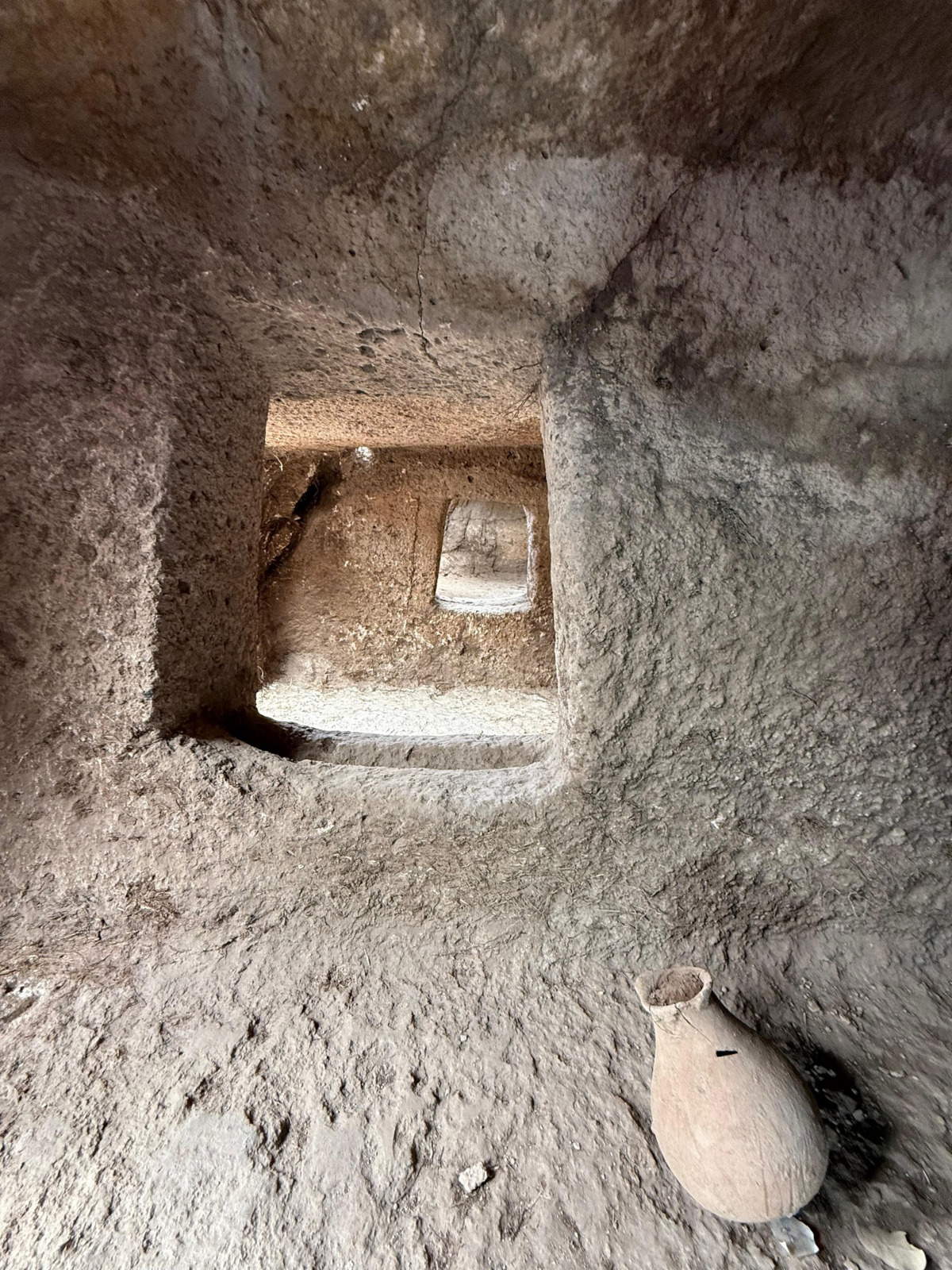
11. The three Domus de Janas in the archaeological complex of Sant’Andrea Priu in Sardinia.
In July in Sardinia, three Domus de Janas are discovered in the Sant’Andrea Priu complex in Bonorva. The discovery brings the total number of known hypogea to twenty, enriching a site recently recognized by UNESCO as a World Heritage Site. The tombs emerge on the plateau near the rock known as “Campanile” or “Toro.”
12. A glazed vase with Egyptian-style hunting scenes in the Thermopolium at Pompeii
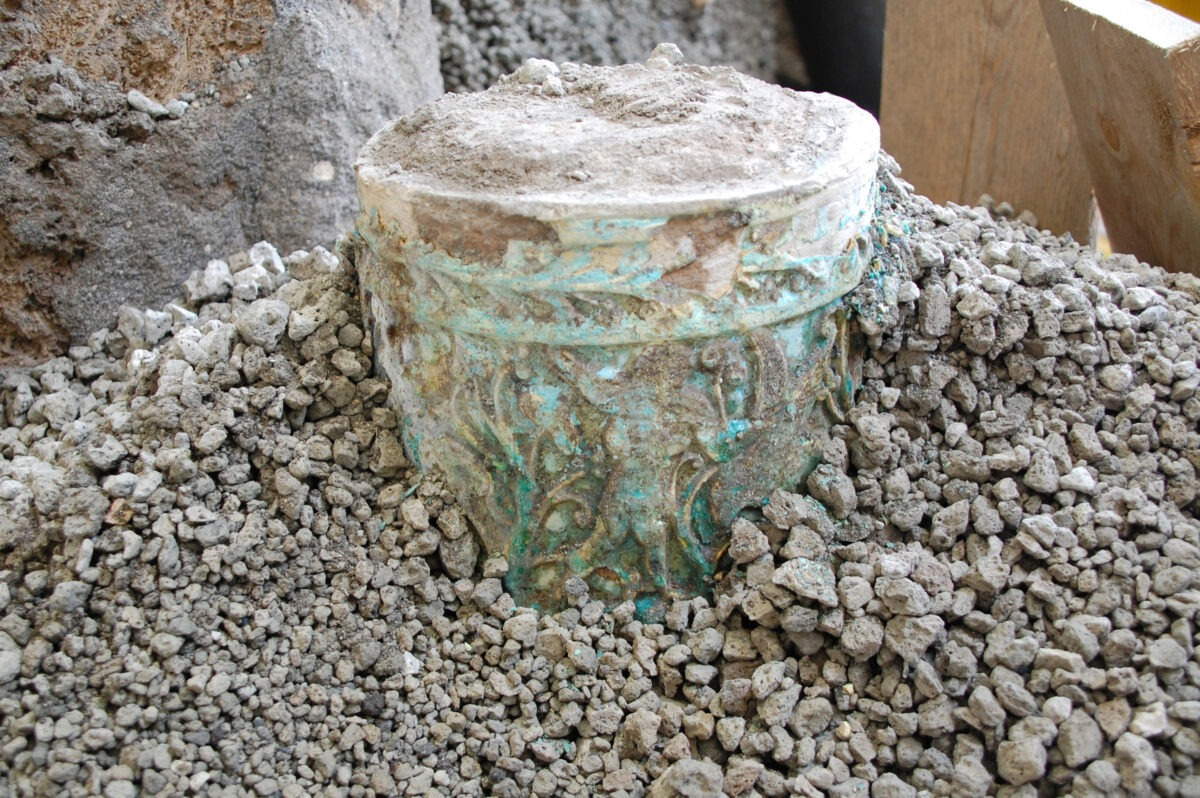
In November in Pompeii, in the Thermopolium of Regio V, archaeologists discovered a glass-paste situla decorated with Egyptian-style hunting scenes, made in Alexandria, Egypt. The vase, usually ornamental, had been reused as a kitchen utensil.
13. Maiden’s head found in Vulci (Viterbo).
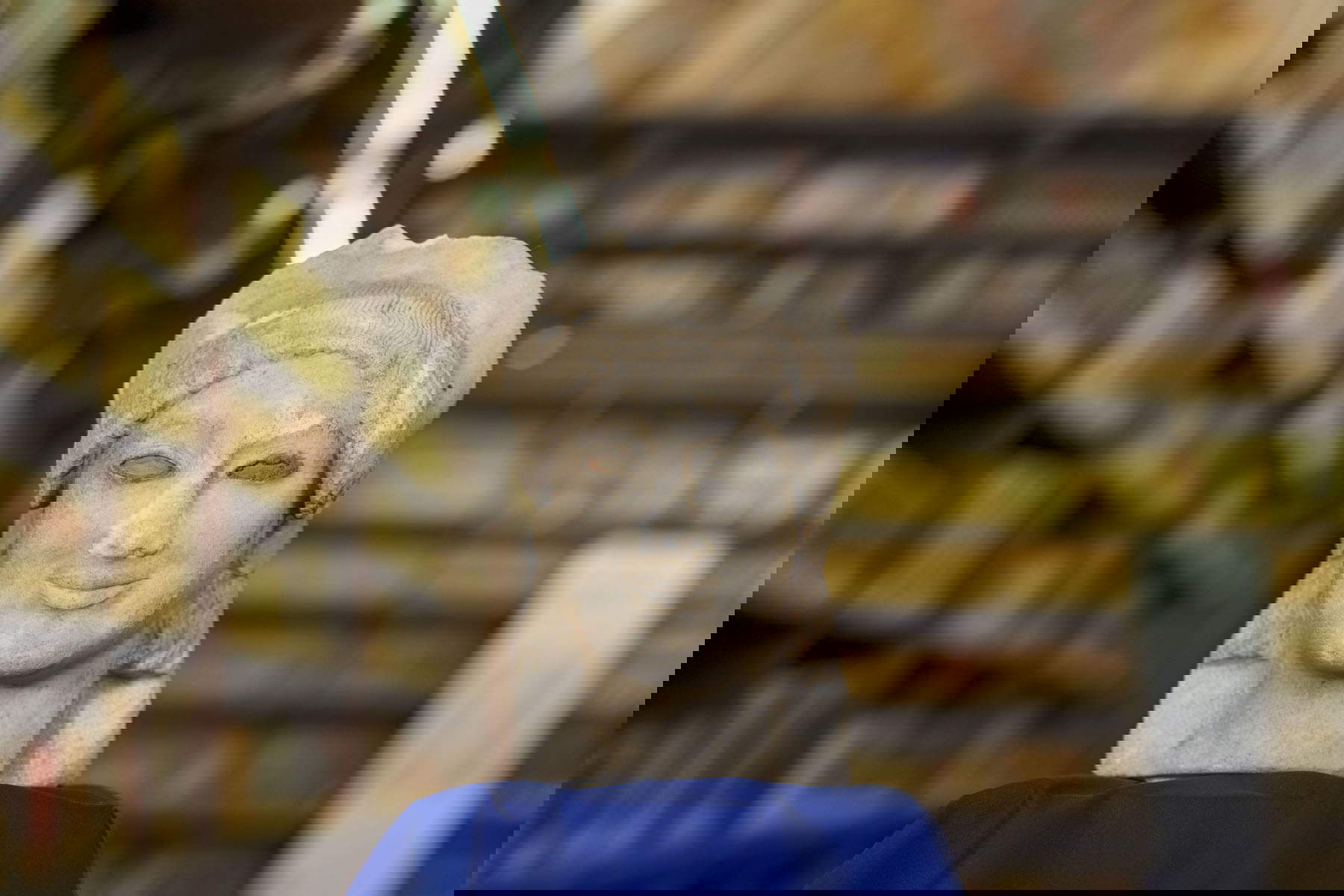
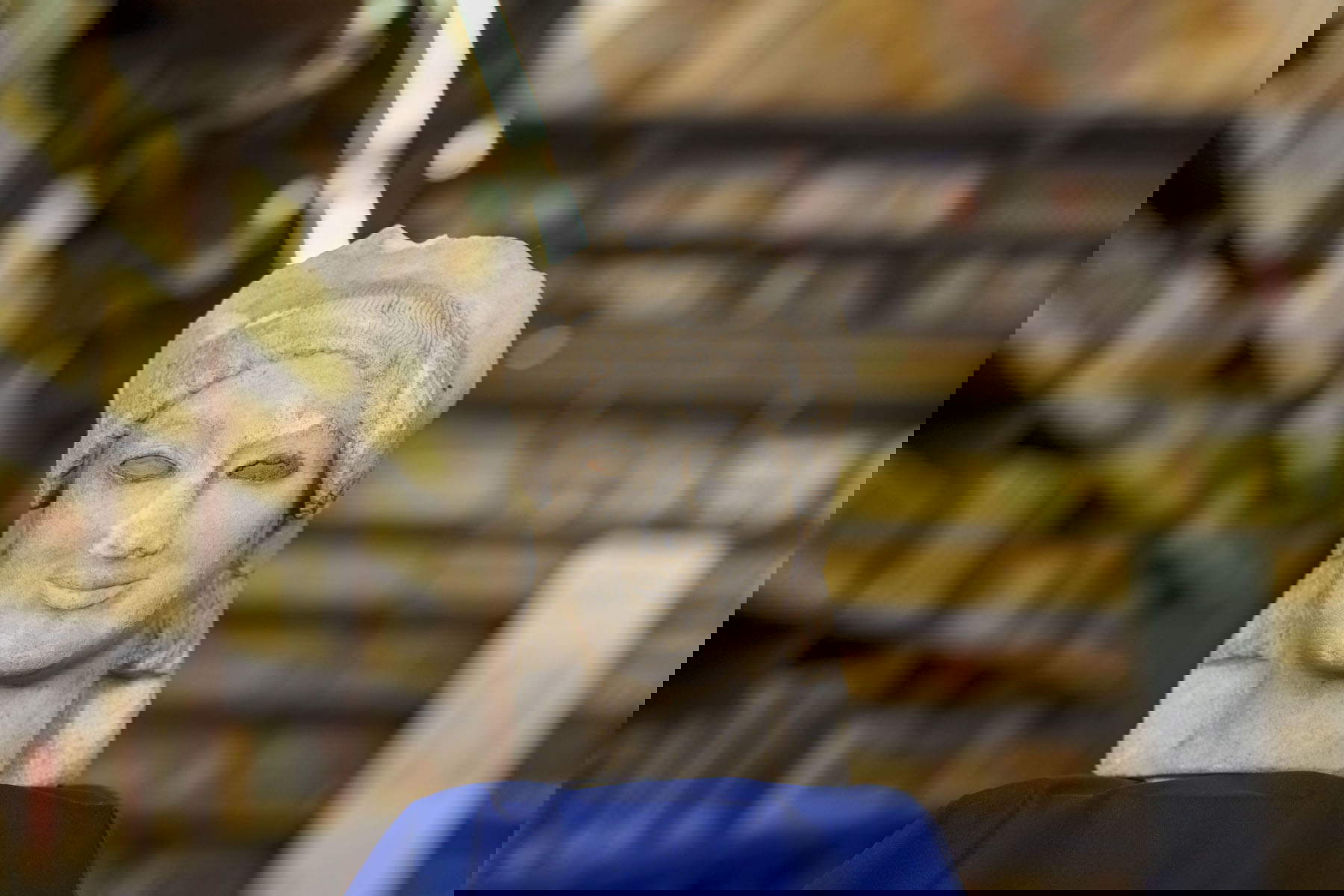
In December, a Greek marble head of a young woman, a Kore, was discovered at Vulci in excavations of the “Vulci Cityscape” project. The work represents a rare example of Greek sculpture in Etruscan territory. The find presents new insights into cultural relations between Greece and pre-Roman Italy. The project, launched in 2020, investigates the urban planning and development of the Etruscan city.
14. A temple near Cairo.
Also in December, near Cairo, an archaeological mission from the University of Turin and the University of Naples L’Orientale discovered a valley temple in the solar complex of Pharaoh Nyuserra. The ruler belonged to the 5th dynasty of the 3rd millennium BC. The excavations are taking place at the site of Abu Ghurab, an area of great historical value.
 |
| The most interesting archaeological discoveries of 2025 |
Warning: the translation into English of the original Italian article was created using automatic tools. We undertake to review all articles, but we do not guarantee the total absence of inaccuracies in the translation due to the program. You can find the original by clicking on the ITA button. If you find any mistake,please contact us.