



by
Federico Giannini  @federicogiannini1
12/03/2026
@federicogiannini1
12/03/2026



Categories: Debunking / Disclaimer
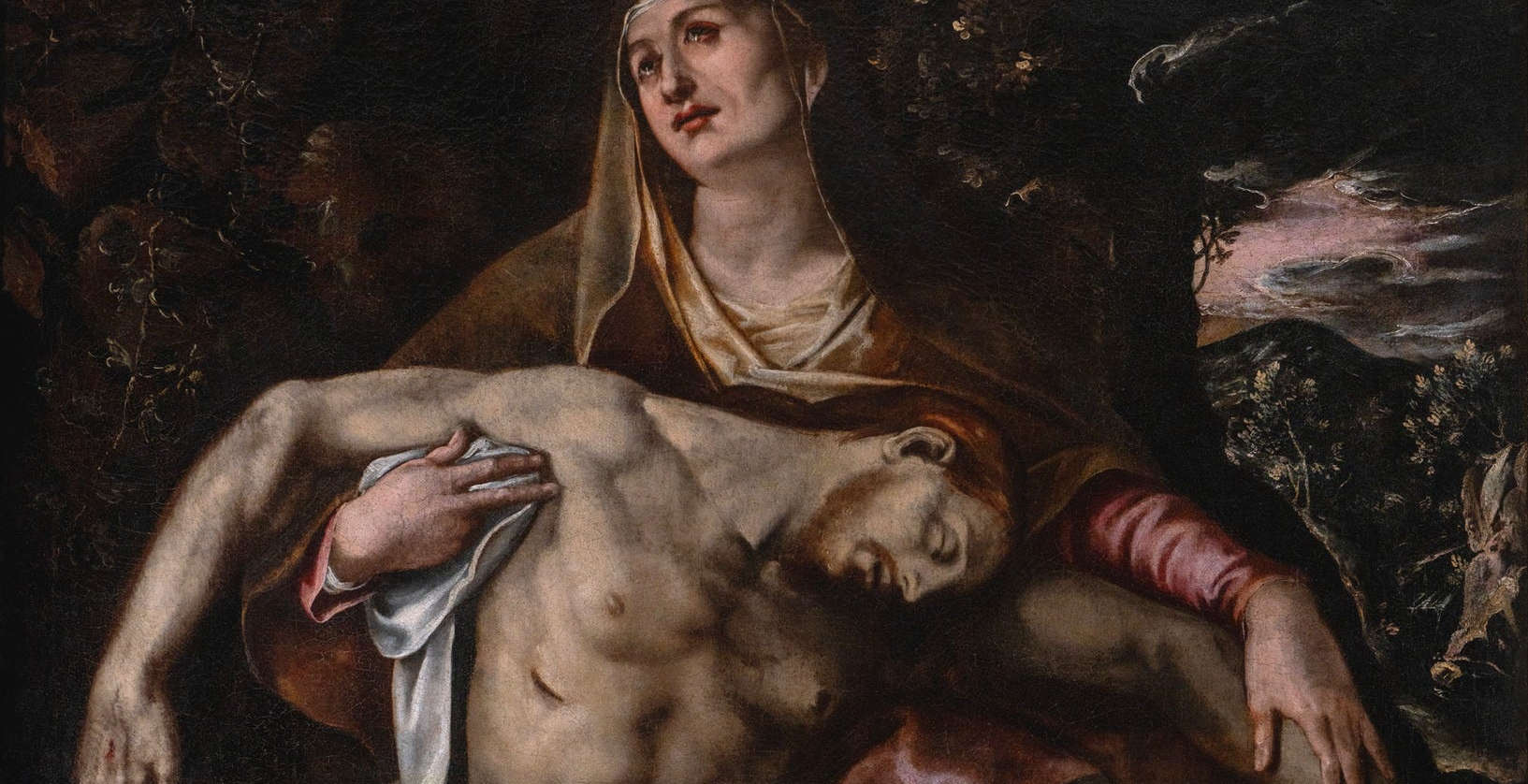
A painting sold at auction as an anonymous work from the 16th-17th centuries has been pointed to by art historian Michel Draguet as a possible work by Michelangelo. Is this an acceptable attribution? The scholar presented technical analyses and iconographic interpretations, but many elements make the attribution highly unlikely.

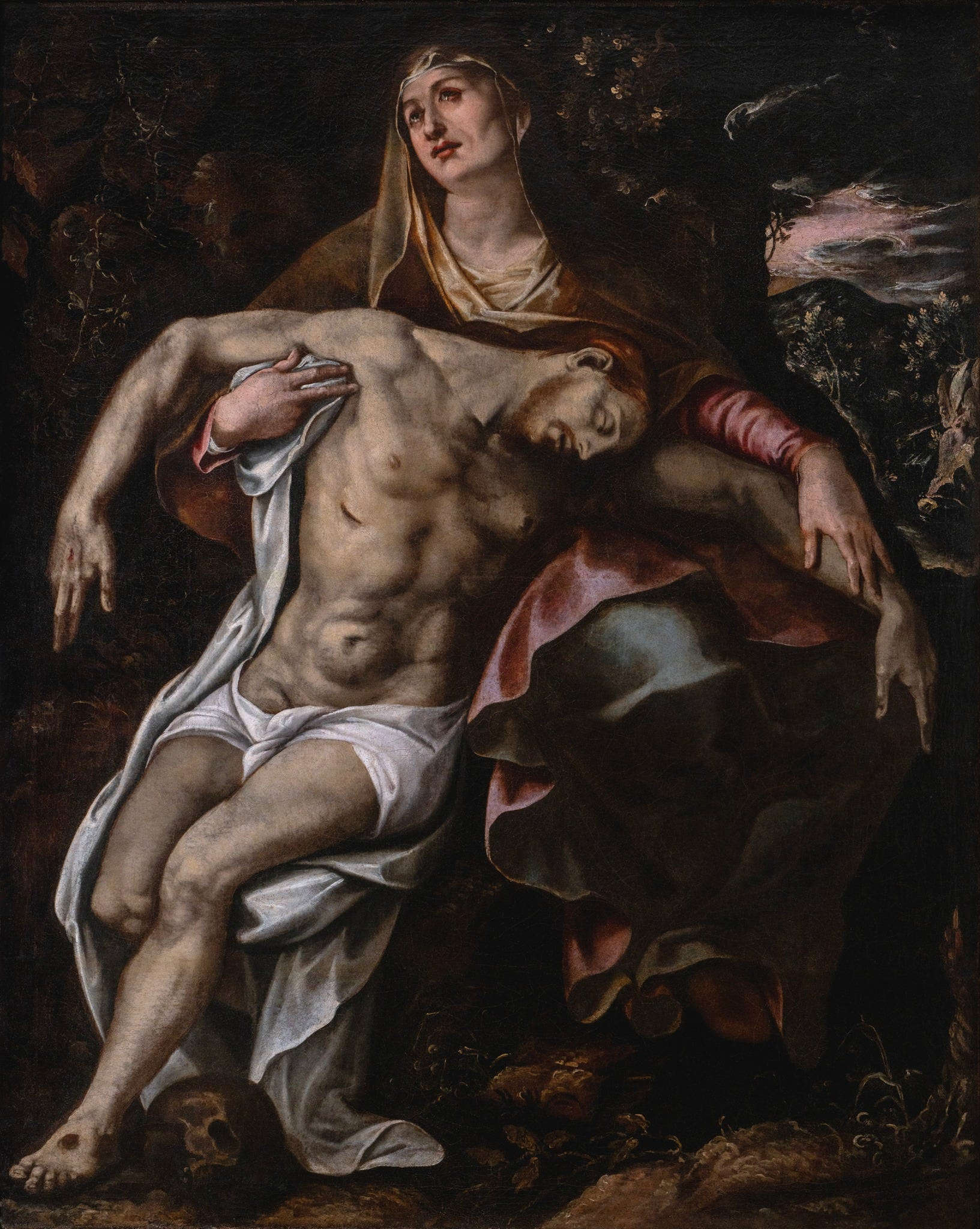
After the case of the bust of Sant’Agnese fuori le Mura, the last few days a new proposed attribution to Michelangelo Buonarroti (Caprese, 1475 - Rome, 1564) concerning a painting depicting a Pieta has rekindled the interest of scholars and observers in the art world. Like the Roman bust, however, it is another attribution that is difficult to sustain, not to say unlikely. The work, now in Belgium, has been pointed to by art historian Michel Draguet, an expert on art of the nineteenth and twentieth centuries, especially the Symbolist area (his work on Fernand Khnopff is important), and former director of the Musées Royaux des Beaux-Arts in Brussels, as a possible work by the great Tuscan artist. The thesis, which is based on technical analysis and a stylistic and historical interpretation of the painting, has also attracted attention because it concerns an artist whose pictorial production on movable media is extremely limited (to date only one certain work of his is known: the Tondo Doni) and difficult to document.

The affair originated in 2020, when the painting appeared in an online sale organized by the Wannenes auction house in Genoa. In the catalog, the work was reasonably described as an anonymous work by a painter between the 16th and 17th centuries and estimated at between 2,000 and 3,000 euros. The card indicated that the iconography and style reflected a composite figurative culture, characterized by Tuscan-Roman suggestions traceable to models by Andrea del Sarto, Pontormo, Francesco Salviati, and Michelangelo, as well as late Mannerist influences from artists active in Rome in the late 16th and early 17th centuries, such as Federico Zuccari and Jacopino del Conte. It is perhaps, given the manner, the work of a northern artist active in Rome in the late sixteenth or early seventeenth century. The work was not sold during the auction and remained available through the auction house.


Later two collectors living in Belgium noticed the painting by consulting the sale catalog and expressed interest in buying it. In the meantime, the seller had changed the terms of the negotiation, and the work was offered at a price of 35,000 euros. The collectors decided to travel to Italy to examine it directly and, after viewing, agreed to buy it, making the transaction conditional on obtaining export permission. In March 2024 the Soprintendenza Archeologia, Belle Arti e Paesaggio for the metropolitan city of Milan issued permission to leave Italian territory, and in April of that year the painting arrived in Belgium still without certain attribution.
According to reports in the Belgian press, in the days following the work’s arrival one of the owners spent some time looking closely at the paint surface and noticed two small monograms placed at the bottom of the composition. One is on a skull at the foot of Christ, the other on a leaf located further to the right. The marks, barely visible under old layers of paint, were interpreted as possible references to Michelangelo’s name. At that point the collectors decided to initiate a series of technical and scientific verifications.
The painting was then entrusted to the Institut Royal du Patrimoine Artistique (KIK-IRPA) in Brussels, Belgium’s leading institute dedicated to the study and conservation of artistic heritage. The center is known for major interventions and research, including the recent restoration of Jan van Eyck’s Polyptych of the Mystical Lamb . The investigation of the work was carried out through various diagnostic tools: ultraviolet light photography, x-rays, infrared reflectography, macro XRF analysis for pigment composition, and additional laboratory tests. The report prepared by the institute’s painting laboratory department indicates that the materials used are compatible with 16th-century painting, since the layers that have not undergone restoration or repainting were made entirely of materials in use between the 16th century and the late 18th century. The analyses revealed, among other elements, the use of enamel, a blue pigment obtained by crushing glass containing cobalt, and cochineal-based red lacquers. The latter material, derived from an insect widespread in the New World, began to circulate more widely in Europe from the mid-sixteenth century, a circumstance that may help define a plausible chronology for the work.
To verify the age of the support, a carbon-14 analysis was also performed on a fragment of the canvas. The result indicated, with a statistical probability of 95.4 percent, a date between 1520 and 1660. The technicians also found that the two monograms identified on the paint surface are affected by the painting’s cracks . This finding suggests that they were applied before the formation of the craquelure that develops as materials age.
The technical reports, however, merely present the results of the analysis without advancing attribution hypotheses, as is normally done in this type of study. In fact, scientific investigations can establish the compatibility of materials with a given period and clarify aspects of the execution technique, but they are not considered sufficient to identify with certainty the author of a work. In this specific case, carbon-14 dating concerns only the support and not the pictorial drafting; moreover, the identified time interval extends for more than a century, including decades after Michelangelo’s death.
Based on these data, Michel Draguet decided to undertake an in-depth study of the work, as he had promised the owners in case the analyses confirmed the chronological compatibility of the materials. The art historian said that he was not a specialist on Michelangelo, dealing mainly with Belgian art between the 19th and 20th centuries, but that he accepted the assignment because he thought it would be useful to approach the issue without preconceptions. According to his account, the hypothesis of an autograph painting by the master initially seemed implausible to him, but progressive examination of the work and historical documentation would lead him to consider the possibility more carefully. In the course of his research, Draguet compiled a very extensive study of more than six hundred pages, in which he analyzed the stylistic aspects of the composition and proposed connections with drawings and inventions attributed to Michelangelo. Among the elements cited are certain anatomical features, such as the shape of Christ’s navel, the position of the foot, and the way the Virgin’s knee bends, which the scholar believes can be compared with motifs found in works and graphic sheets by the master. The scholar also pointed out possible similarities with the drawing known as The Dream, preserved at the Courtauld Institute of Art, and with figures derived from antiquity such as the so-called Drunken Silenus.
Draguet’s analysis also extends to the historical and religious context in which the painting would have been conceived. The scholar proposes linking the work to the circle of the Spirituali (so much so that he wanted to rename the work the “Pietà of the Spirituali”), a group of Catholic reformers active in the 16th century and close to the poetess Vittoria Colonna, a figure with whom Michelangelo had an intellectual and spiritual relationship documented in letters and poems. According to this interpretation, the painting may have been conceived as an image of religious meditation intended to support the ideas of this milieu, which was committed to promoting a reform of the Church and a reconciliation with some instances of Protestantism. Within this symbolic reading, the two monograms would take on a particular value: the one placed on the skull would recall the theme of death and sin, while the one on a leaf would allude to rebirth and resurrection. Draguet also speculates that the work may have been made as a gift intended for the group of Spirituals, perhaps through the mediation of Vittoria Colonna herself, and that its function may have been that of an image intended to support a theological and spiritual debate.
Despite the breadth of the study and the interest aroused by the proposal, several aspects of the affair remain extremely problematic. One of the most relevant points concerns the support of the work. Michelangelo is best known as a sculptor, architect, and author of large fresco cycles, while easel paintings attributed with certainty to his hand are very few: as anticipated, the only certain one is the Tondo Doni, made on panel and preserved in the Uffizi Gallery. Other works sometimes proposed as his, but not unanimously recognized, are also executed on panel. The possible discovery of an autograph canvas would therefore represent an entirely new element and would require particularly solid historical explanations, which, at least in the light version of the study, disclosed by Draguet, were not provided (in fact, the art historian did not focus on the support).
Another element to consider concerns the interpretation of the monograms. The KIK-IRPA report states that they were applied before the formation of the cracks, but this does not necessarily imply that they were traced by the same hand that painted the work. It is only possible to state that they were added at a stage relatively close to the making of the painting. Since the cracks do not form immediately after the execution of a work, it cannot be ruled out that the marks were also affixed some time later, possibly by another person: in fact, it is not uncommon in the history of art for signatures, initials, and apocryphal monograms to be added for so many reasons. Often a collector could add an artist’s forged signature to an authentic work, but just as often artists’ signatures could be added to third-party works to facilitate their sale: monograms, in short, alone do not prove anything. Art history knows of several cases in which paintings initially attributed to Michelangelo were later traced back to the circle of his followers. One episode concerns a Crucifixion that in the 1960s was presented as a work by Michelangelo and attracted great attention at an exhibition in Saluzzo, which was visited by tens of thousands of people. In that case, analyses had uncovered, exactly as in this case, a signature and a monogram of the artist, but the painting was later examined by specialists, including Roberto Longhi, who downplayed the enthusiasm. Today, in fact, the painting, kept in a private collection, is alternately given to Marcello Venusti or some artist in his circle. Venusti was one of the leading pictorial interpreters of Michelangelo’s inventions in the second half of the 16th century. From the master’s drawings he produced numerous pictorial versions intended for relatively wide circulation. This phenomenon contributed to the spread of compositional and iconographic models associated with Michelangelo’s name.
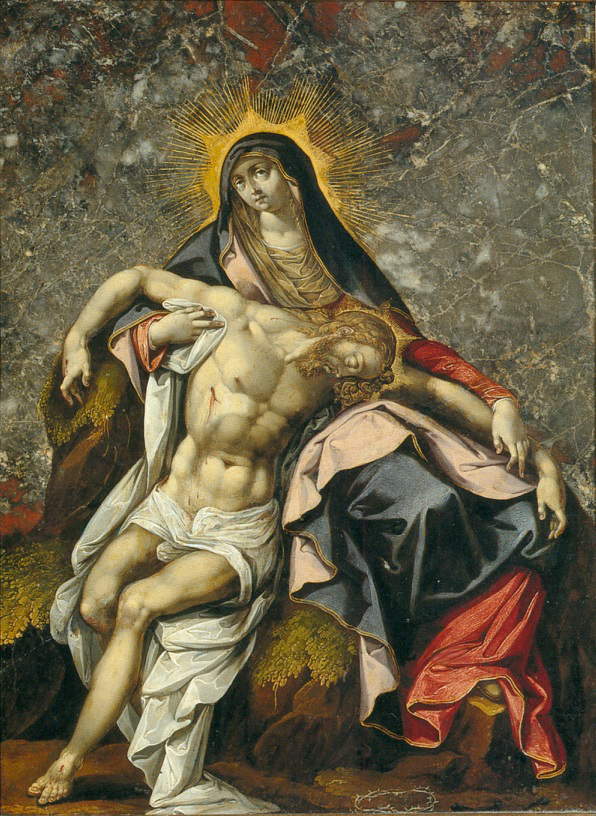
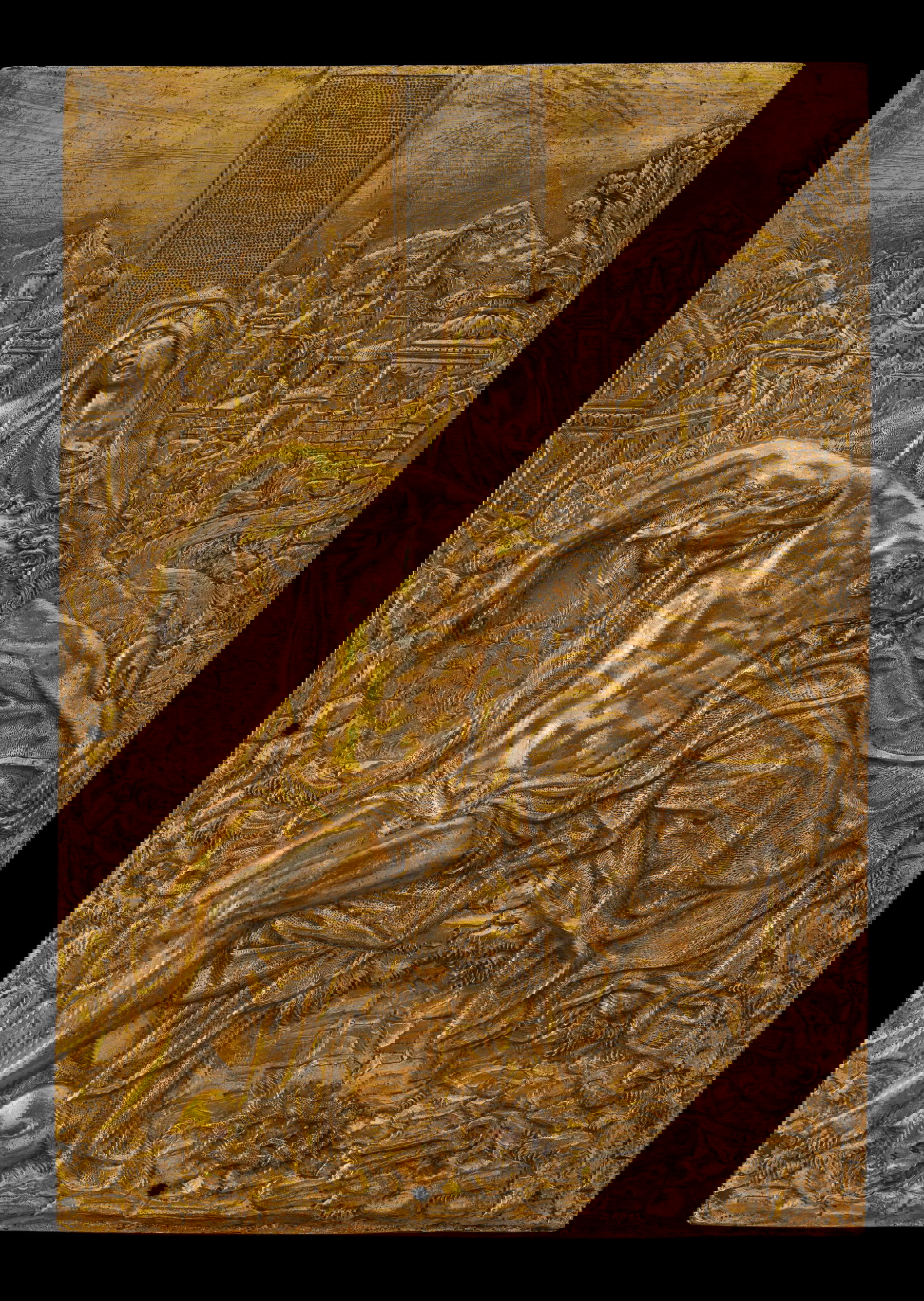
From the iconographic point of view, the composition is part of a widespread tradition in the 16th century. Indeed, the theme of the Pieta with Christ supported by the Virgin was very popular in the figurative culture of the time and was the subject of numerous reinterpretations. Among the best-known models is the bronze relief designed by Guglielmo della Porta, an artist who contributed significantly to the spread of Michelangelo-derived inventions in the second half of the 16th century. In this context, it is not uncommon to encounter works that reinterpret or replicate models related to Michelangelo’s language.
The painting at the center of the discussion today is thus part of a complex picture in which technical data, stylistic interpretations and historical reconstructions must be carefully evaluated. The scholar and the work’s owners have announced their intention to make the documentation they have collected public, with the aim of fostering open discussion among specialists. They have therefore published technical analyses and a shortened version of the 600-page study. However, the provenance of the painting remains poorly documented at the moment and is one of the points yet to be clarified. As is often the case in cases of this kind, defining the authorship and context of a work requires a verification process that can extend over time. The debate among scholars, based on comparative analysis of sources, techniques and style, will probably be decisive in determining what place can be assigned to this painting in the history of 16th-century painting and in the broader panorama of works related to the Michelangelo tradition. There is, however, decidedly little, probably none, chance that the attribution to Michelangelo will find acceptance.
 |
| Is the Pieta popping up in Belgium by Michelangelo? No: here's what you need to know |
Warning: the translation into English of the original Italian article was created using automatic tools. We undertake to review all articles, but we do not guarantee the total absence of inaccuracies in the translation due to the program. You can find the original by clicking on the ITA button. If you find any mistake,please contact us.