




by Redazione 05/03/2026



Categories: Debunking / Disclaimer
Yesterday, news made the rounds of an alleged discovery of a new Michelangelo in the basilica of Sant'Agnese fuori le Mura in Rome: unfortunately, not enough details have emerged for the attribution to be considered valid. It is a hypothesis not based on solid elements, at least as far as it has been offered to the press, and nothing more. Details.

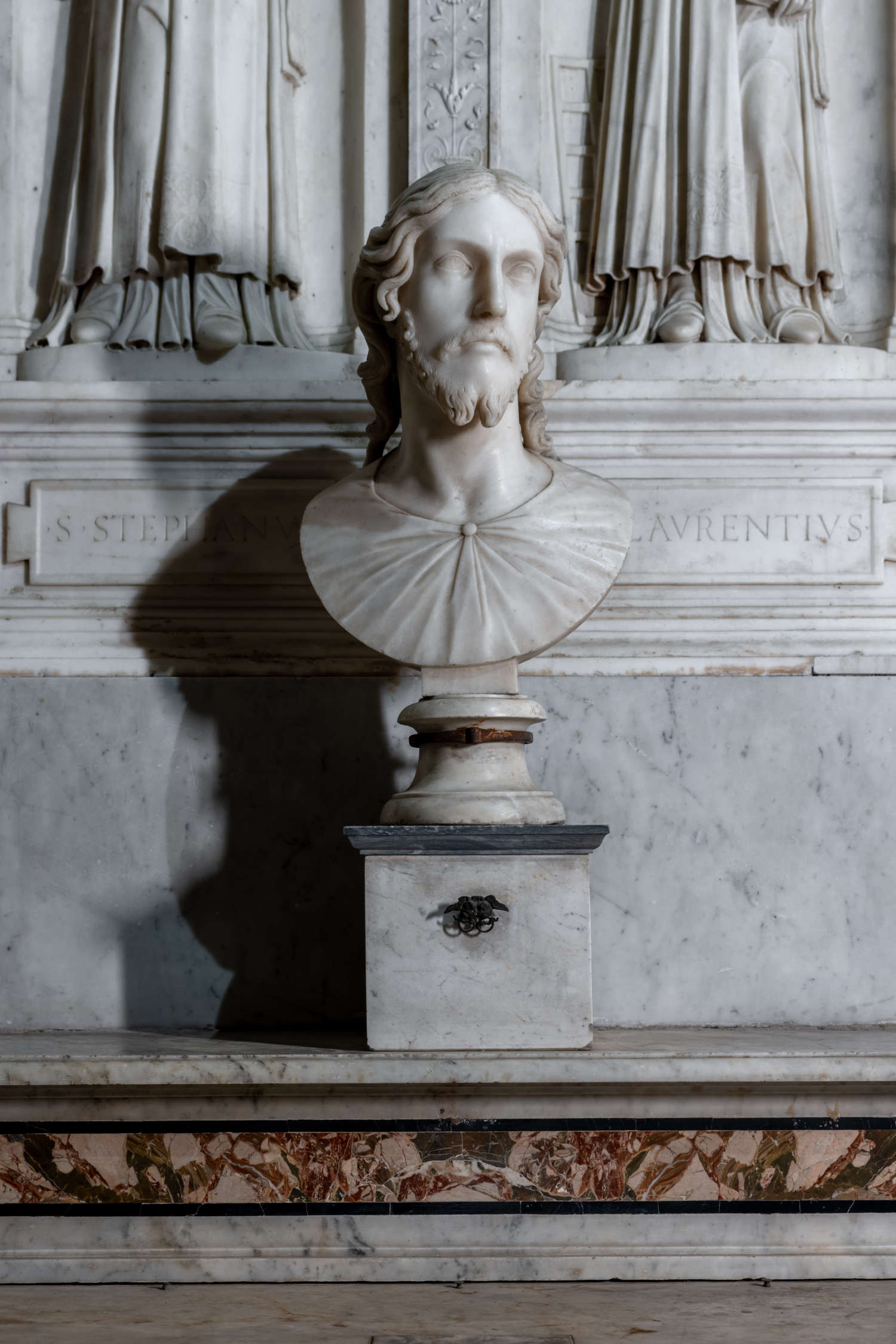
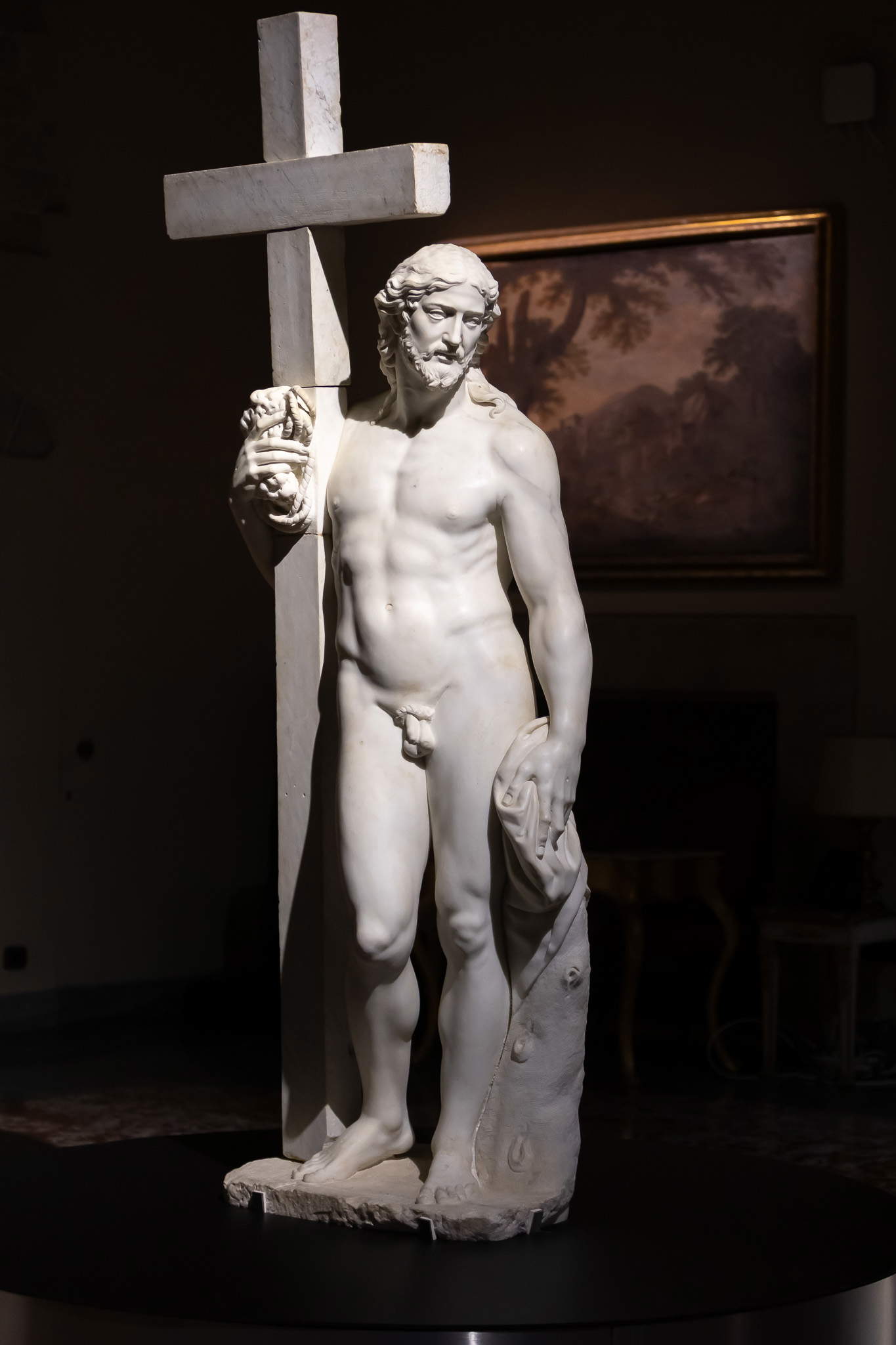
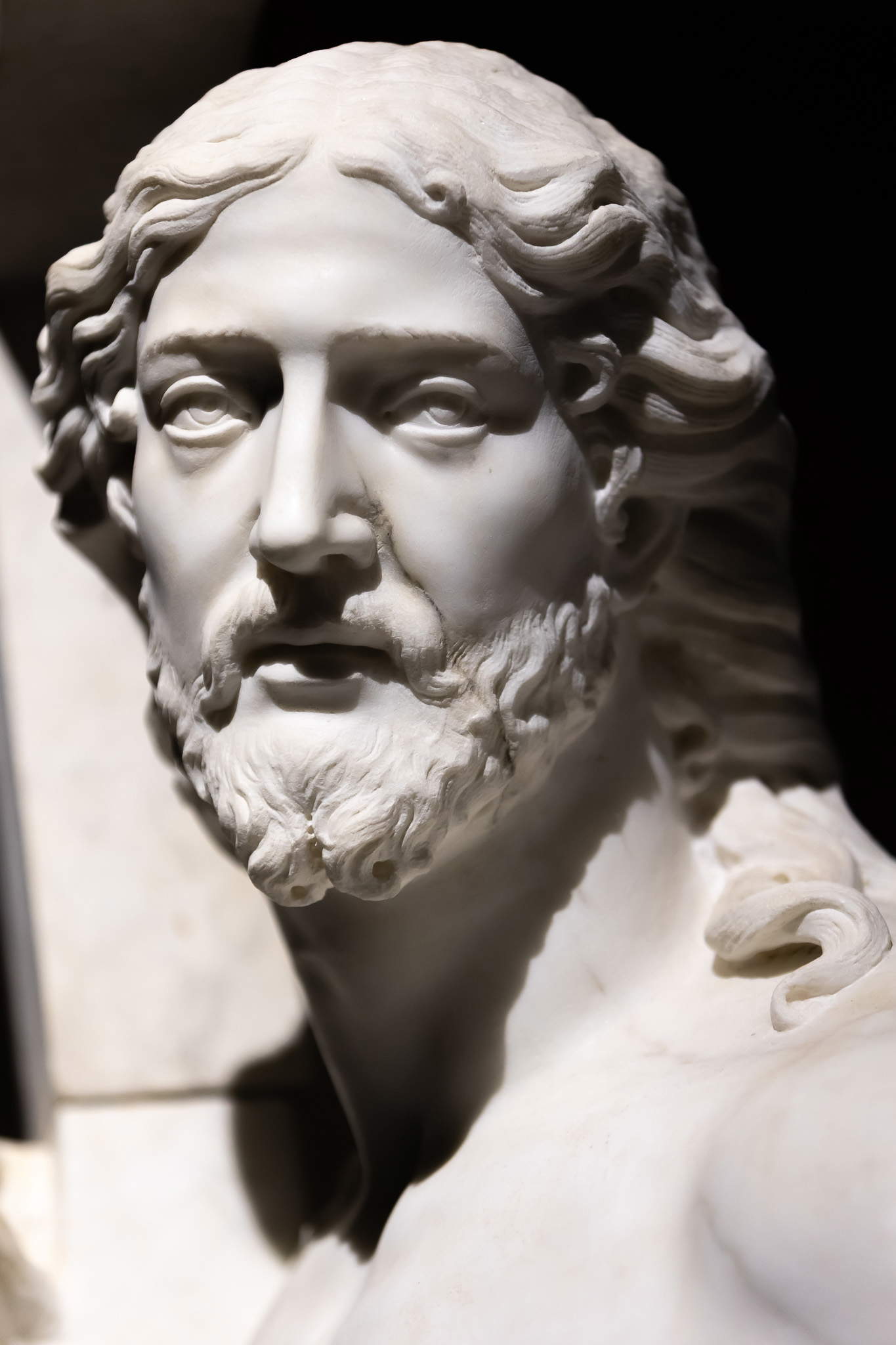
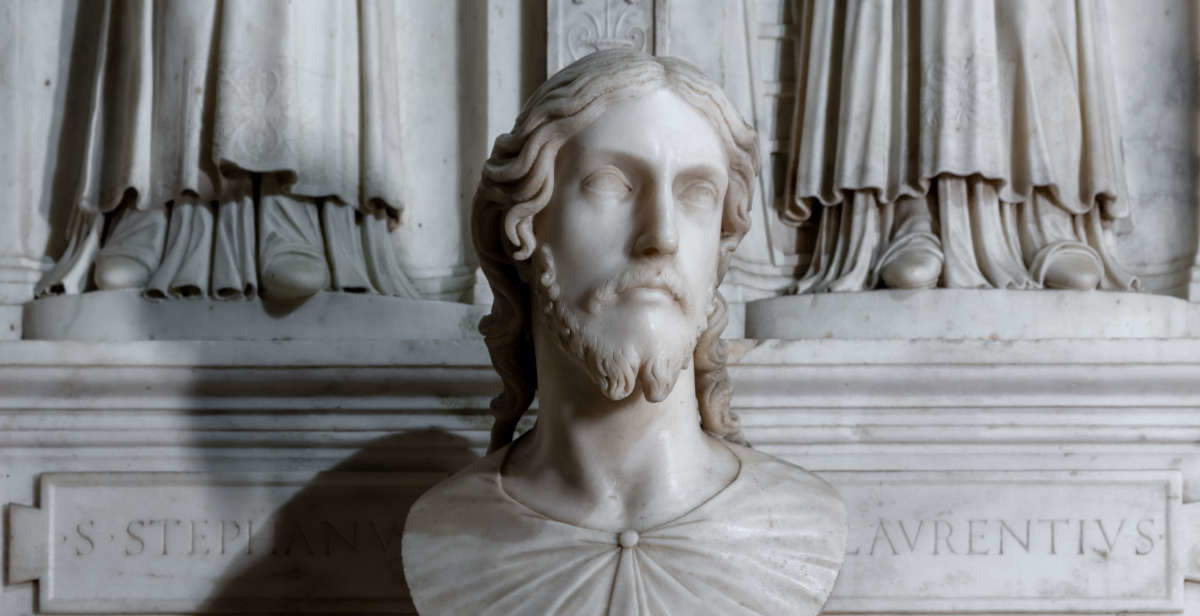
In recent hours the attention of many media has focused on a bust preserved in the basilica of Sant’Agnese fuori le Mura in Rome, the subject of a proposed attribution to Michelangelo. The hypothesis, put forward by Valentina Salerno, who introduces herself on her website as a writer, actress, director, pedagogue and cultural historian, was presented at a press conference yesterday morning and quickly gained wide visibility in generalist newspapers and television reports, reviving the idea that a hitherto unrecognized work by the Renaissance master may be located in the Roman basilica.
According to Salerno’s reconstruction, the bust was initially conceived by Michelangelo as a portrait of Tommaso de’ Cavalieri, a figure known for his personal connection to the artist, and later transformed into an image of the Salvator Mundi. In support of this thesis, the researcher related the sculpture to a drawing preserved at theAshmolean Museum in Oxford. However, the identification of the face with that of Tommaso dei Cavalieri remains problematic: at the moment, in fact, there are no unanimously recognized portraits of the Roman nobleman: some hypotheses have been advanced in relation to a sheet preserved at the Musée Bonnat in Bayonne, France, but without a definitive consensus among scholars.


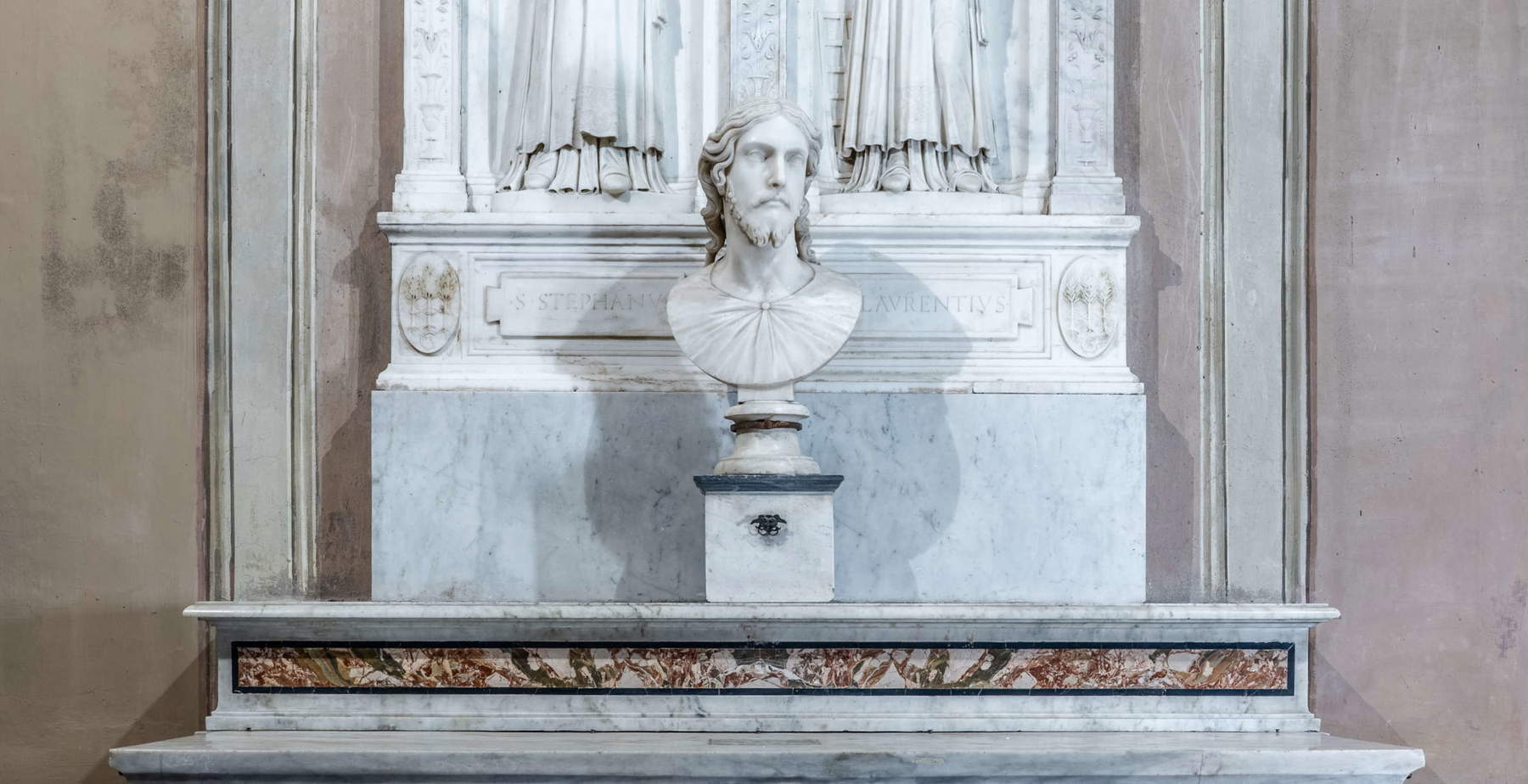
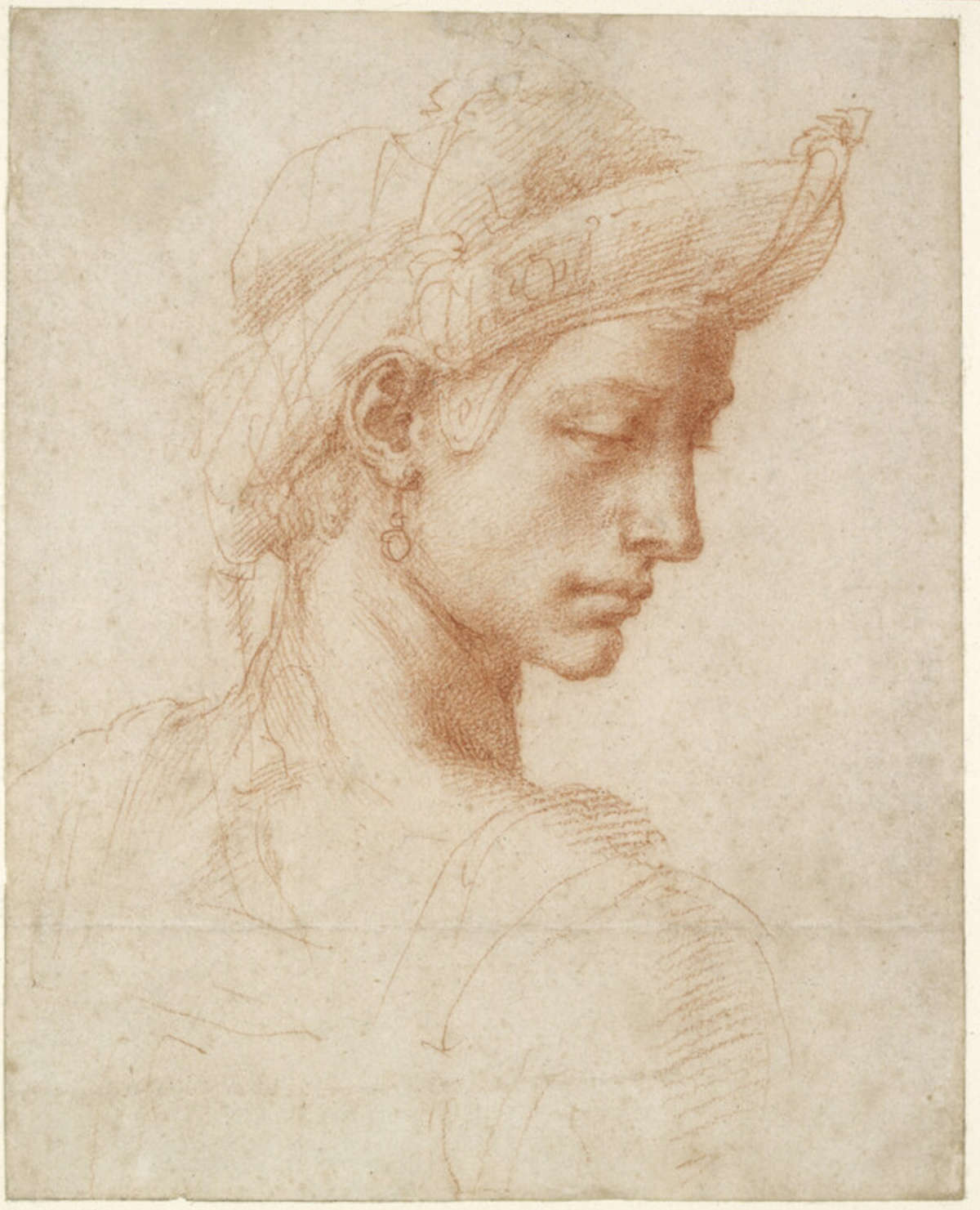
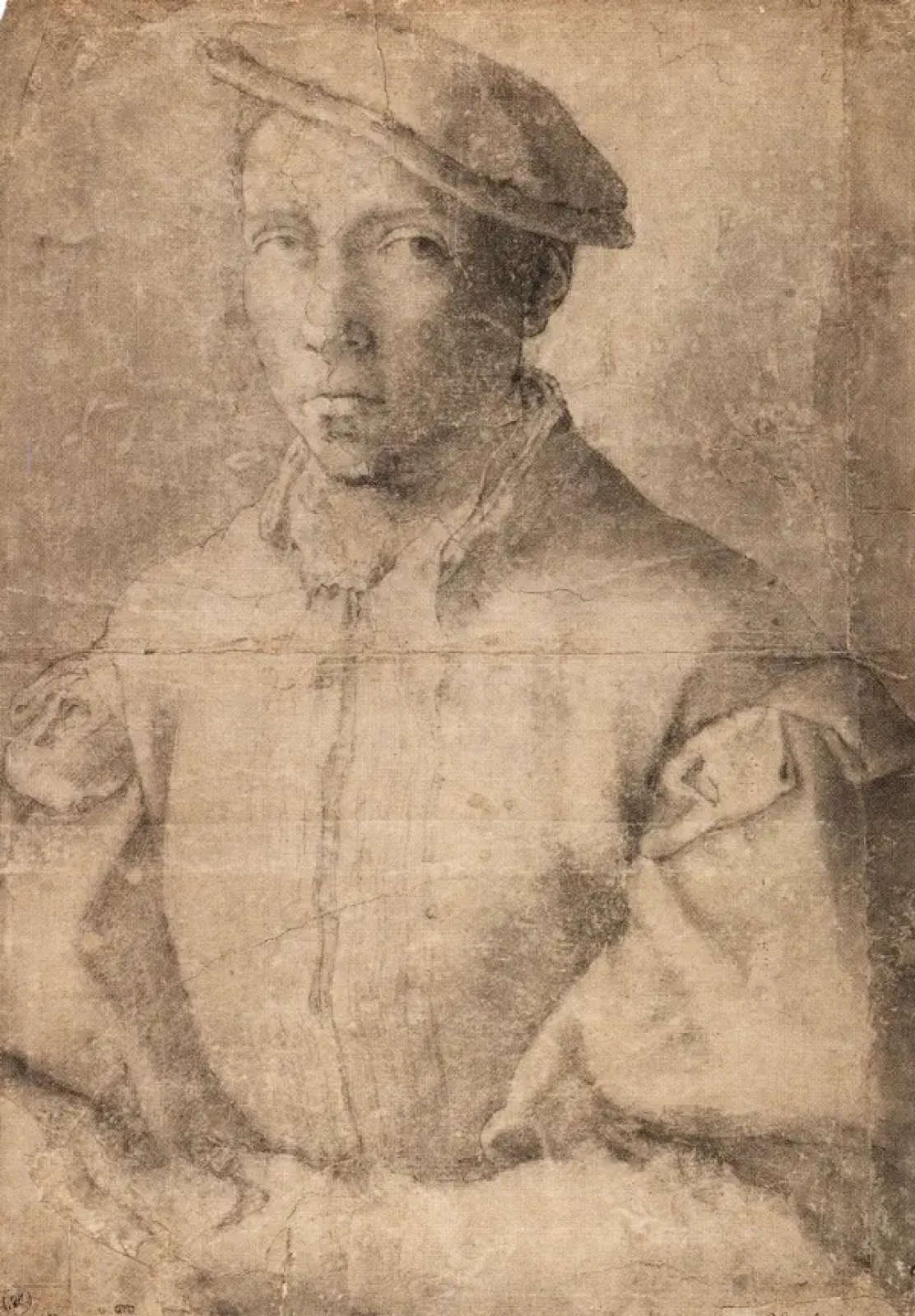
The proposed reconstruction also includes a possible history of the bust: the work would have remained in the possession of Tommaso de’ Cavalieri and, after his death, would have passed to the Lateran Canons. Its entry into the basilica of St. Agnes would be dated to 1590, at the initiative of Cardinal Alessandro de’ Medici di Ottajano, the future Pope Leo XI. From that time, according to this interpretation, the sculpture would not leave the complex. However, the material delivered to the press lacks any solid reference that could attest to both the identification of the bust with Tommaso de’ Cavalieri and the steps described: in fact, no documents are provided to support what remains, therefore, a hypothesis. The proposal to date the work to 1534 also raises further questions: indeed, it is not explained why the bust should date to that year.
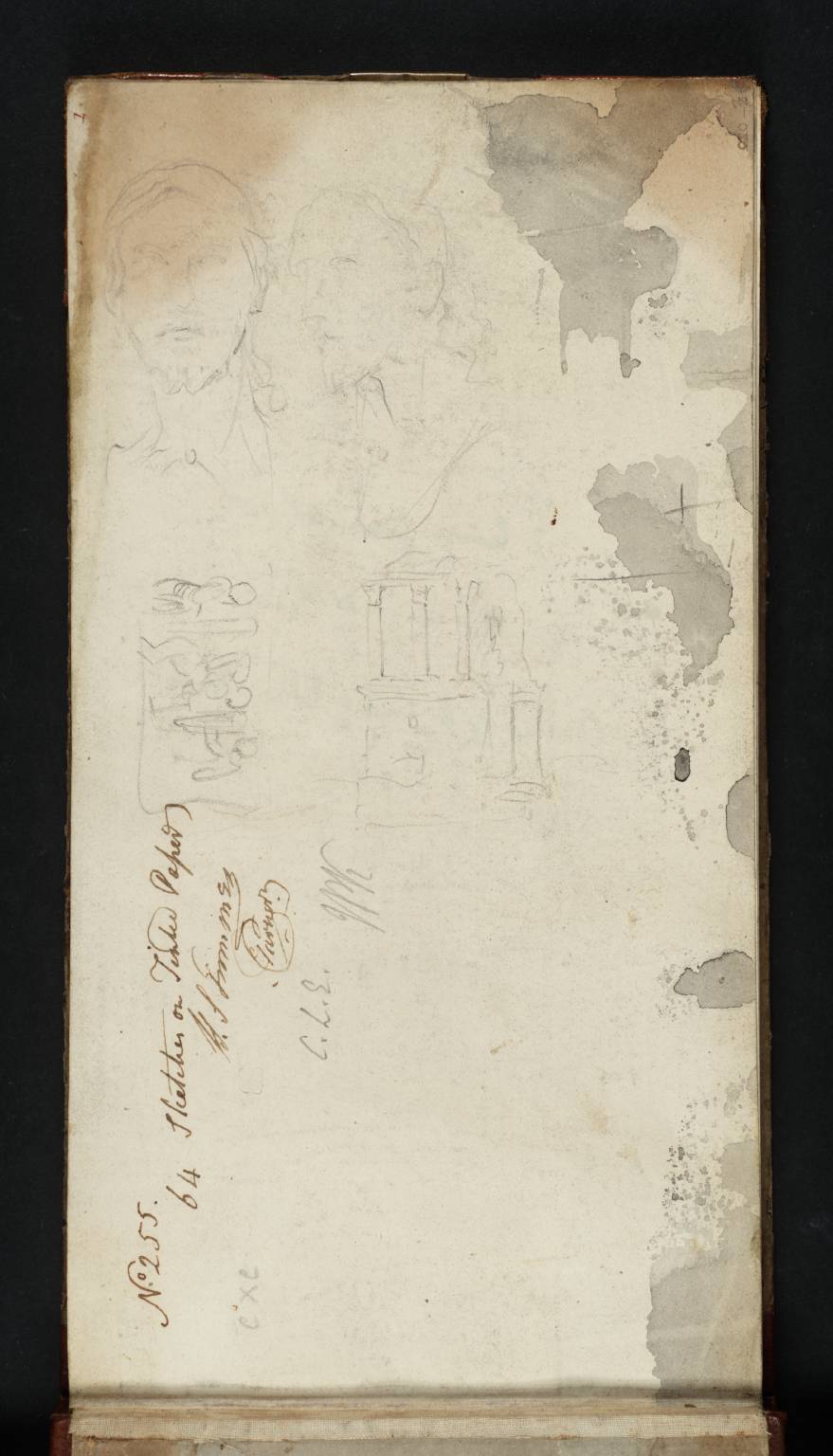
It has also been claimed in some journalistic reconstructions that the work would have been kept anonymous during the Napoleonic era to avoid possible confiscation by French authorities. However, the history of the sculpture of St. Agnes Outside the Walls appears much more complex. In fact, there is a tradition of attribution to Michelangelo that dates back to at least the 18th century: the bust is mentioned in an 18th-century edition of Giorgio Vasari’s Lives as the master’s work, and before that in a 1776 text by Giosafatte Massari, Memorie della gloriosa Vergine e martire S. Agnese, in which a “head of the Savior, which is taken by Buonarroti” is mentioned. “Taken from Buonarroti” does not mean that it is the master’s or was part of his production or heritage, but rather that it is based on a model by Michelangelo. During the nineteenth century the sculpture was also well-known among artists and travelers. The British painter Joseph Mallord William Turner sketched it during his trip to Italy in 1819 in one of his notebooks now preserved at the Tate. In the years immediately following, the German neoclassical sculptor Emil Wolff made a copy now preserved at Charlottenburg Castle, while the work was also mentioned by the writer Stendhal. These accounts indicate that the bust was known and discussed as early as the 18th and 19th centuries. The presence of an early attributive tradition, however, does not in itself constitute conclusive evidence. In art history, attributions are based on a combination of documentary sources, stylistic analysis and comparison with certain works. It is therefore not uncommon for works long believed to be by a great master to be later reconsidered in the light of new research or deeper analysis.
It is precisely stylistic analysis that represents one of the central points of the debate. The face of the Christ in the Roman bust bears affinities with that of the Giustiniani Christ, a work created by Michelangelo between 1514 and 1516. At the same time, however, significant differences are evident: compared to Michelangelo’s model, the sculpture of St. Agnes appears more static and conventional, with a less intense rendering in the modeling and movement of the features.
A further element of discussion concerns the scientific committee that would accompany the presentation of the discovery. Among the names cited by the Messenger are prominent scholars and institutional figures: William Wallace, Hugh Chapman, Barbara Jatta, Pietro Zander, Alessandro Cecchi, and Cristina Acidini. Acidini, reached by Finestre sull’Arte, told us that she had not seen the material proposed by Salerno, so she would not comment. Chapman, Jatta and Wallace, on the other hand, were heard by the Associated Press: Jatta distanced himself from the committee, the British Museum let it be known that Chapman does not intend to comment, while Wallace, an art historian with publications on Michelangelo, the only one to comment on the news, disputed the idea of the existence of a possible “treasure trove” of many unknown works by Michelangelo, and noted in general how numerous new attributions to the master have been advanced in recent decades, often presented as sensational discoveries but rarely confirmed by consensus of the scientific community in the long run.
During the twentieth century, in fact, several scholars had already questioned Michelangelo’s attribution of the bust of Saint Agnes. A 1924 publication, Churches of Rome by Roger Thynne, noted that a chapel in the church contains a sculpture that “has been repeatedly and insistently ascribed to Michelangelo. There seems to be no historical evidence to prove the accuracy of this attribution, nor, from the artistic point of view, is there the slightest reason to believe that it is correct. The work, which is neither good nor bad, lacks too much individuality to be recognized as anything other than an indistinct 16th-century work.” Some alternative hypotheses have suggested that the sculpture may be the work of an anonymous author or, in some cases, the seventeenth-century sculptor Nicolas Cordier. Today, however, there is a tendency to consider the work as sculpture of Roman scope. In fact, in the card of the General Catalogue of Cultural Heritage, last updated in 2005, it appears as a work “of Michelangelo imprint” from the second half of the 16th century. The process of artistic attribution is in fact often complex and subject to revision: as studies progress and knowledge expands, works once considered masterpieces by great masters may be reconsidered, while new proposals for attribution require in-depth verifications and critical comparison among specialists. Thorough verifications that, in this case, seem not to have taken place.
 |
| No new work by Michelangelo has been discovered in Rome |
Warning: the translation into English of the original Italian article was created using automatic tools. We undertake to review all articles, but we do not guarantee the total absence of inaccuracies in the translation due to the program. You can find the original by clicking on the ITA button. If you find any mistake,please contact us.