



by Redazione 14/02/2026



Categories: Events / Disclaimer
On the occasion of the 120th anniversary of the discovery of the intact tomb of Kha and Merit, two exceptional loans arrive at the Egyptian Museum in Turin from Paris: the pyramidion of Kha and the Book of the Dead of Merit.
On the occasion of the 120th anniversary of the discovery of the intact tomb of Kha and Merit, two exceptionally valuable artifacts are coming to the Egyptian Museum of Turin to tell their story: the pyramidion of Kha, now housed at the Musée du Louvre, and the Book of the Dead of Merit, kept at the Bibliothèque nationale de France. From Feb. 14 to Aug. 10, 2026, these extraordinary loans will be on display in the Egyptian Museum’s room dedicated to the famous funerary outfit. The Merit papyrus will remain on view until August 2026, while the pyramidion will be on display until February 2027.
Kha and Merit belonged to the scribal class of ancient Egypt and lived about 3,500 years ago in Deir el-Medina, a village located on the west bank of the Nile, opposite today’s Luxor (ancient Thebes), between the Valley of the Kings and the Valley of the Queens. In this desert area resided artisans and workers charged with building and decorating the tombs of pharaohs during the New Kingdom (ca. 1539-1077 BCE). While we know little about Merit (in the texts she is referred to simply as “lady of the house”), what we do know about Kha is that she was the “director of works,” responsible for the design and construction of the royal tombs. The rulers for whom she worked include Thutmose III and Amenhotep II.


Their burial was discovered intact in 1906 by Ernesto Schiaparelli, then director of the Egyptian Museum. Much of the grave goods were transferred to Turin, where they are still preserved and displayed.
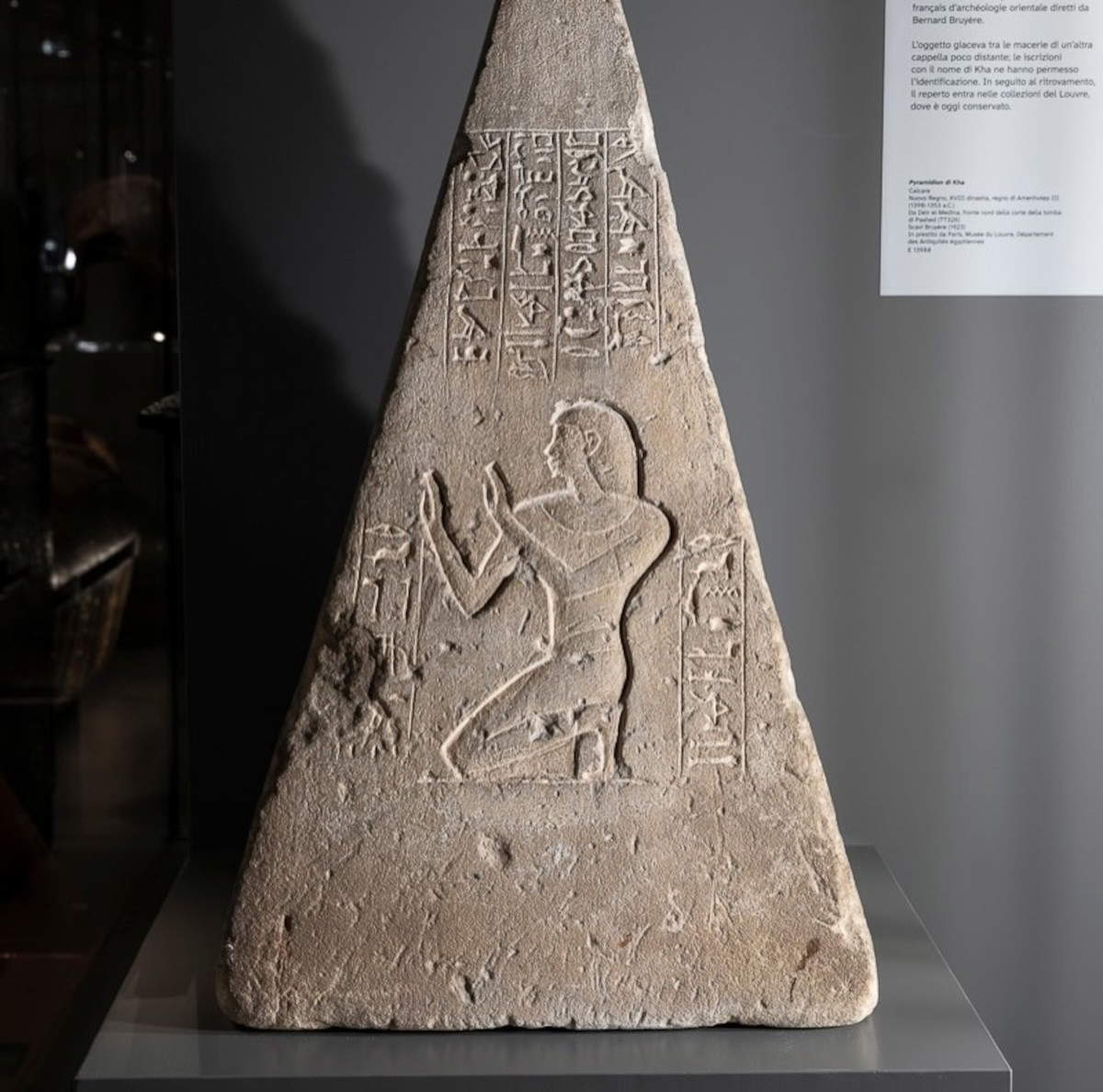
The pyramidion of Kha
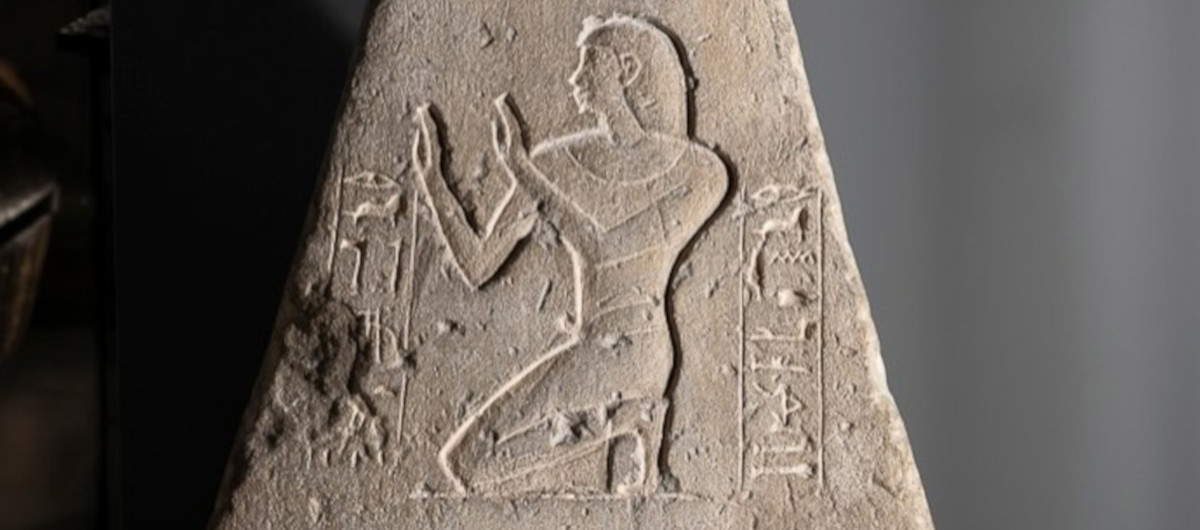
According to a well-established tradition, the tombs of Deir el-Medina were divided into two distinct spaces: the hypogean rooms, intended for the burial of the deceased with their grave goods, and the funerary chapel, a place of worship for the living and a symbolic point of connection between the earthly world and the afterlife. The chapel, built of mud brick within an enclosed courtyard, included a vaulted chamber decorated with religious scenes and texts. Sometimes the structure took on a pyramidal shape externally, culminating in a stone spire called a pyramidion.
The chapel of Kha (TT8) was made of mud brick and originally topped by a limestone pyramidion inscribed with his name and titles. On each face is depicted Kha kneeling in the act of worship. The object was found in 1923 in the courtyard of tomb TT326 by the French archaeological mission headed by Bernard Bruyère. Today the pyramidion is preserved in the Louvre.
Merit’s Book of the Dead
Next to the pyramidion, a second artifact allows for a deeper look into Egyptian funerary beliefs: the Book of the Dead of Merit. The expression “Book of the Dead” is modern. Rather, the ancient Egyptians spoke of Beginning of the Day formulas for leaving the tomb, that is, formulas intended to enable the deceased to leave the darkness of the tomb and symbolically return to the light.
In 1824 the Egyptologist Karl Richard Lepsius was the first to translate and identify these very Formulas in Turin, publishing them under the title Das Totenbuch (“Book of the Dead”), a designation that became established in the modern tradition. However, this is not a fixed text: each papyrus contains a different selection of formulas drawn from a repertoire of more than 190 compositions, including hymns, prayers, mythological narratives and magical formulas. These texts provided the deceased with the knowledge and powers needed to face the journey to the afterlife and achieve transformation into an immortal spirit.
There are two Books of the Dead related to Kha and Merit, one for each spouse. Kha’s was found in 1906 inside the tomb, folded on its middle sarcophagus. Merit’s papyrus, on the other hand, has a more nuanced and partly still enigmatic history. It was rediscovered in France in the mid-19th century at the residence of the Duc de Luynes in Dampierre, some fifty years before Schiaparelli’s official discovery of the tomb. At the time, the burial was hidden under more than fifteen meters of rocky debris, and this very condition had ensured its inviolability for more than 3,500 years. The papyrus was later donated to the Bibliothèque nationale de France, where it is still preserved today. Although intended for the same funerary context, the two papyri thus followed very different paths, suggesting that in ancient times an event occurred, as yet unknown, that led to their separation.
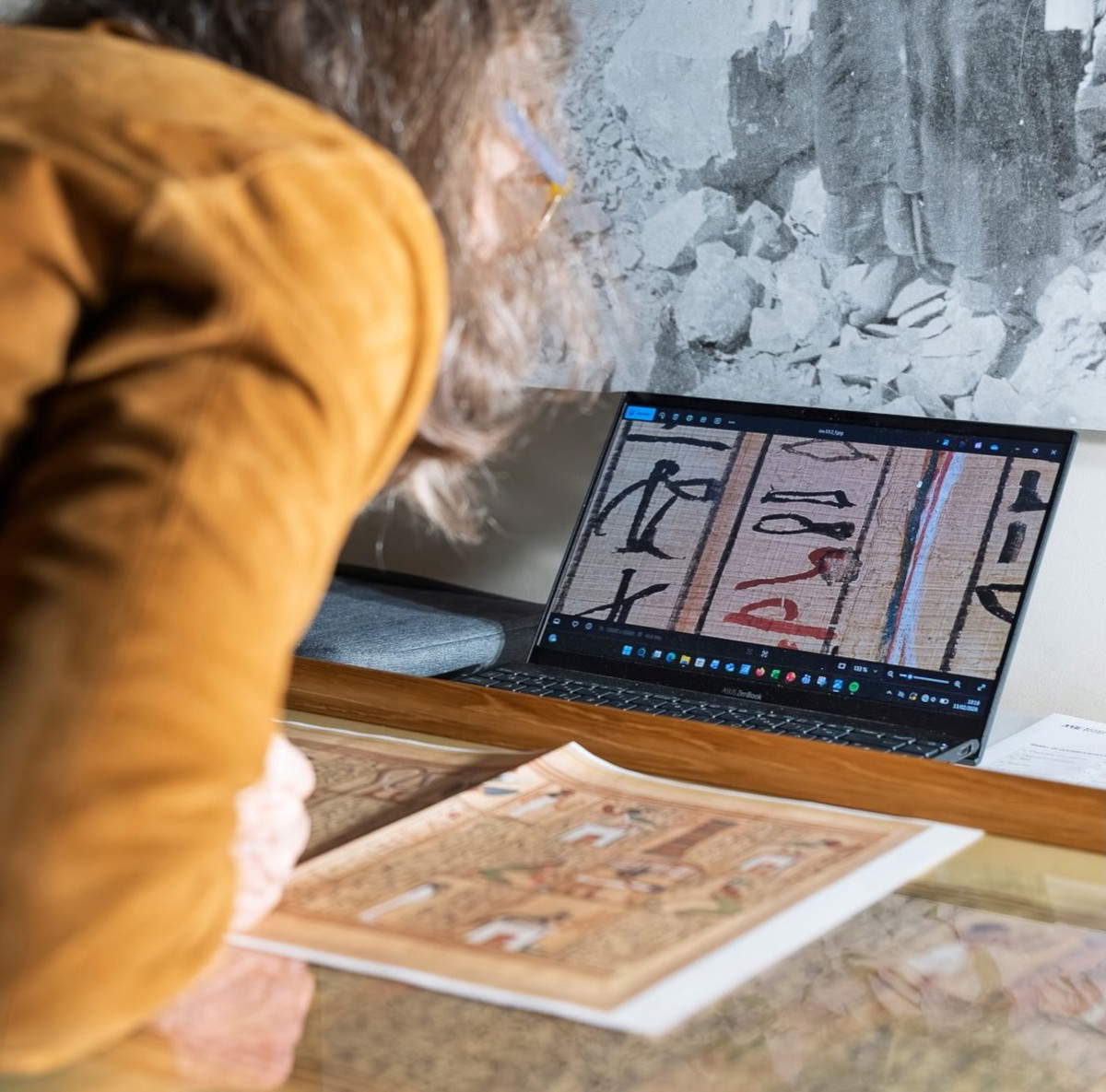
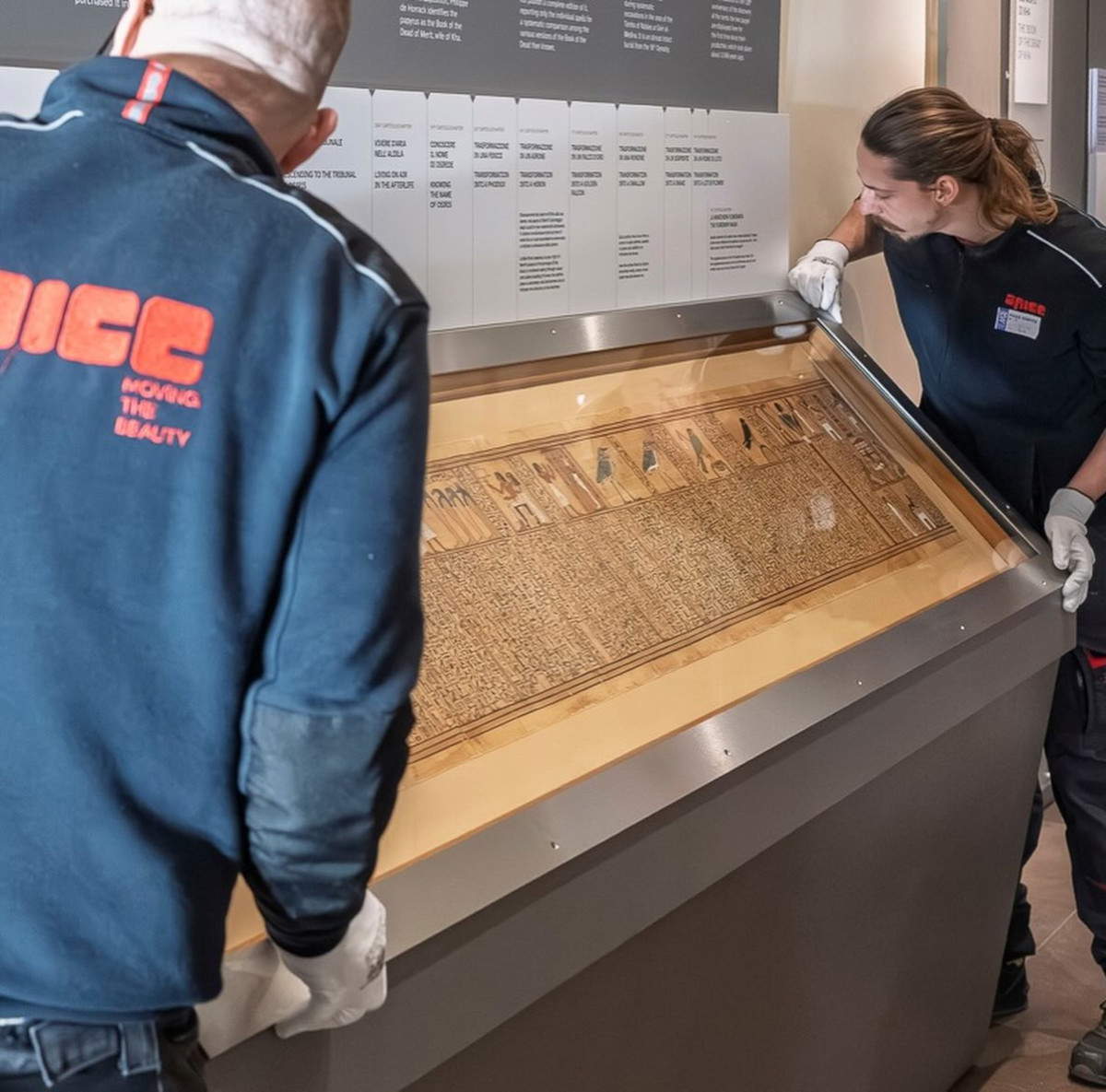
The exhibition From Paris for Kha and Merit. Two Masterpieces on Loan for the 120th Anniversary of the Tomb’s Discovery represents an opportunity for visitors: for the first time in Turin, Kha’s pyramidion and Merit’s Book of the Dead return to dialogue in the same space after more than three millennia. An encounter that allows visitors to delve into ancient Egyptian funerary beliefs through works of the highest historical and symbolic value, normally housed in two of Europe’s most important cultural institutions.
 |
| At the Egyptian Museum in Turin, two exceptional loans from Paris for the 120th anniversary of the discovery of the tomb of Kha and Merit |
Warning: the translation into English of the original Italian article was created using automatic tools. We undertake to review all articles, but we do not guarantee the total absence of inaccuracies in the translation due to the program. You can find the original by clicking on the ITA button. If you find any mistake,please contact us.