




The official program of Gibellina - Italian Capital of Contemporary Art 2026, an initiative promoted by the Directorate General for Contemporary Creativity of the Ministry of Culture, was presented this morning in the capital. The title chosen by the City of Gibellina (Trapani) for the year of activity is Portami il futuro (Bring me the future), which will accompany an articulated planning throughout 2026 and will find its official launch on January 15 and 16. Speakers at the press conference included Angelo Piero Cappello, director general of Contemporary Creativity of the Ministry of Culture, Gibellina Mayor Salvatore Sutera, artistic director Andrea Cusumano, Rosalia D’Alì, president of the Western Sicily Tourist District, Francesca Corrao, president of the Orestiadi Foundation, and Francesco Paolo Scarpinato, councillor for cultural heritage and Sicilian identity of the Sicilian Region.
“The awarding to Gibellina of the title of first Italian Capital of Contemporary Art,” says the Director General of Contemporary Creativity of the Ministry of Culture, Angelo Piero Cappello, “represents a historic step for our country, recognizing art a central role in the development of integrated territorial networks on the civil, social and cultural levels of individual communities. This initiative inaugurates a new vision of national cultural policies, in which contemporary creativity becomes an engine of regeneration no longer of a single territory but of networks between territorial realities as factors of social cohesion. Gibellina, a symbol of rebirth and experimentation, establishes itself as a national and international laboratory of shared artistic practices. The Portami ilfuturo project testifies how art can become a common good and a tool of memory, dialogue and innovation. The first Italian Capital of Contemporary Art thus marks the start of a path that strengthens the role of culture as the foundation of democratic and community life.”
“Today Gibellina speaks to the world with the language of art, memory and hope,” says Gibellina Mayor Salvatore Sutera. “Being Italian Capital of Contemporary Art 2026 is not just a title: it is the fulfillment of a collective dream, it is proof that utopia can become reality. It is a sign that the vision of former Mayor Ludovico Corrao continues to walk with us, alive more than ever. From the rubble of the earthquake, a city was born that chose not just to rebuild walls and houses, but to rebuild souls, relying on art as a political, civic and poetic act. Gibellina has become a laboratory of beauty, a place where art is not ornament, but destiny. Today the title of Capital is an opportunity and an extraordinary chance given to us by the Ministry for a small municipality like ours. This recognition belongs to the citizens of Gibellina but also to the entire Belìce Valley involved in the project. From the memory and heritage created by Corrao, today the challenge is Portami il futuro entrusted to artists, intellectuals, and young people who today find here a space of freedom and vision. We do not want just a celebratory year but a shared path projected for the years to come that smell of prosperity and development.”
“Gibellina-Italian Capital of Contemporary Art 2026,” adds Andrea Cusumano, Artistic Director Gibellina 2026, "was born from the conviction that contemporary art is not only an expression of the present, but a practice of presence: a way of inhabiting places, building relationships and taking responsibility for the time we live in. Bring Me the Future is an invitation addressed to artists and citizens to confront the fractures of contemporaneity, transforming crises into opportunities for choice, care and change. Gibellina thus becomes an open laboratory, in which art is not called to represent the future, but to enact it, through shared processes capable of generating knowledge, participation and new centrality for territories. A project that asks artists to be present, to work in the places of everyday life and to contribute to building a beauty understood as a social task, leaving a cultural legacy that goes beyond the year of the title and continues to produce meaning over time."
The title of Italian Capital of Contemporary Art is awarded for the first time in Italy and gives Gibellina an unprecedented role in the national cultural scene. The city of Belìce, rebuilt after the 1968 earthquake through a process that saw art assume a central function in the redefinition of urban space and collective identity, now becomes the site of an extended reflection on the relationship between artistic production, community and territory. Portami il futuro ideally picks up the baton of the experience started by Ludovico Corrao, promoter of the cultural reconstruction of Gibellina first as mayor and then as president of the Orestiadi Foundation. The program intends to renew that approach, positioning contemporary art as a shared practice among artists, citizens and institutions, and as a tool for building social and civic relations. In this sense, the very notion of “capital” is reinterpreted not as a center of concentration, but as an open space of widespread cultural production.
The event is supported by the Sicilian Region, the Municipality of Gibellina, the Ludovico Corrao Museum of Contemporary Art and the Orestiadi Foundation. The artistic direction is by Andrea Cusumano, joined by co-curators Cristina Costanzo and Enzo Fiammetta and project coordinator Antonio Leone. The supporting curatorial committee consists of Antonella Corrao, Arianna Catania, Alfio Scuderi and Giuseppe Maiorana, while the Scientific Committee brings together Antonia Alampi, Achille Bonito Oliva, Marco Bazzini, Michele Cometa, Hedwig Fijen, ClaudioGulli, Teresa Macrì and Maurizio Oddo.
The official opening ceremony is scheduled for Thursday, January 15, 2026, a date that coincides with the anniversary of the earthquake that struck Gibellina and the Belìce Valley in 1968. The choice of this day underscores the link between historical memory and contemporary planning, placing the launch of the program within a reflection on the past and its consequences in the development of the city. Over the course of the year, Gibellina and the municipalities of the Belìce Valley and the Libero Consorzio Comunale of Trapani will be traversed by an articulated system of exhibition projects conceived not only as tools for the preservation of memory, but as devices capable of reinterpreting the present starting from the traces left by contemporary art on the territory. The exhibitions will be accompanied by guided tours created by the students of Gibellina and Salemi, called upon to narrate the city and its artistic and architectural heritage, activating an intergenerational dialogue between places, works and communities.
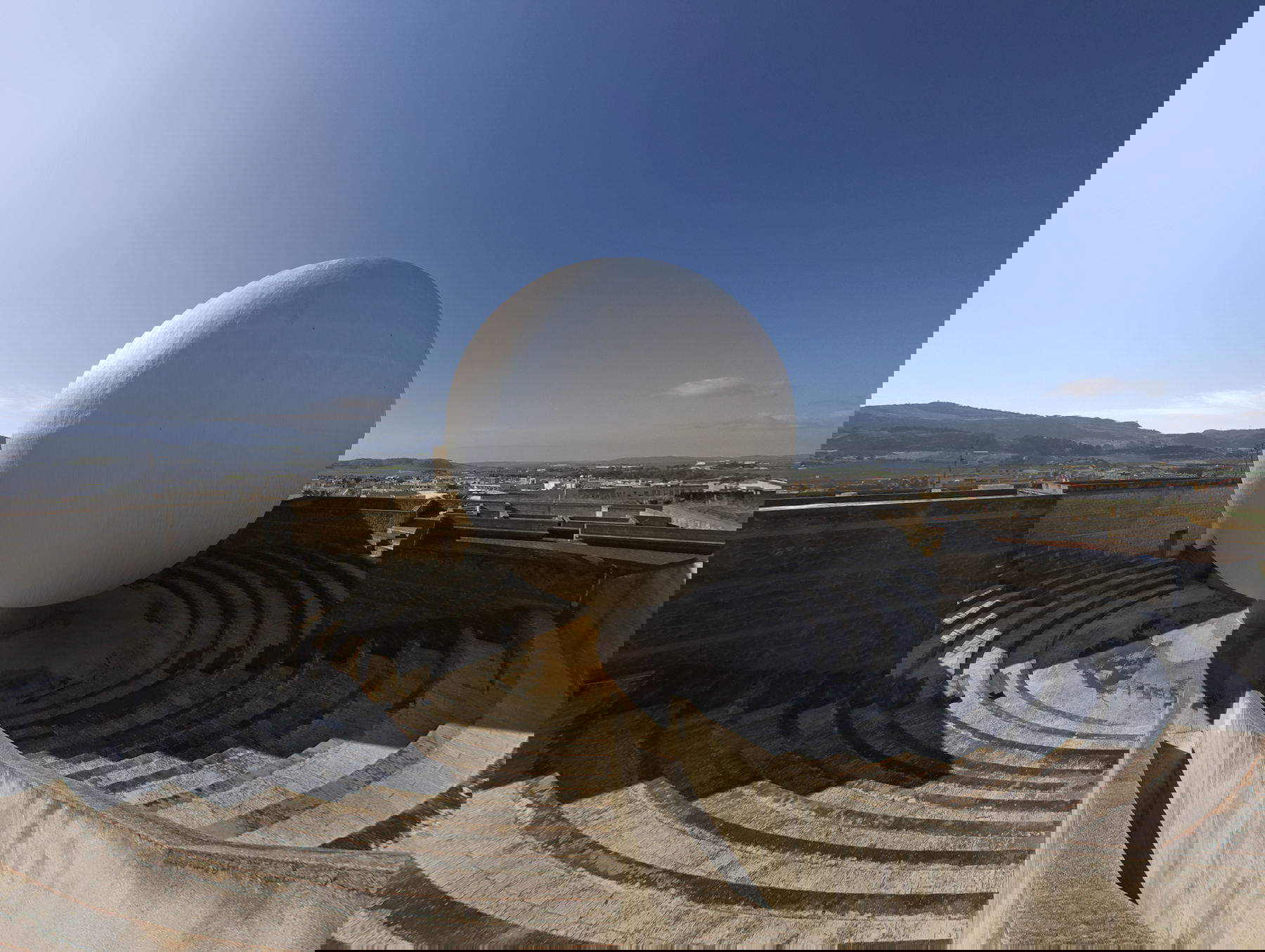
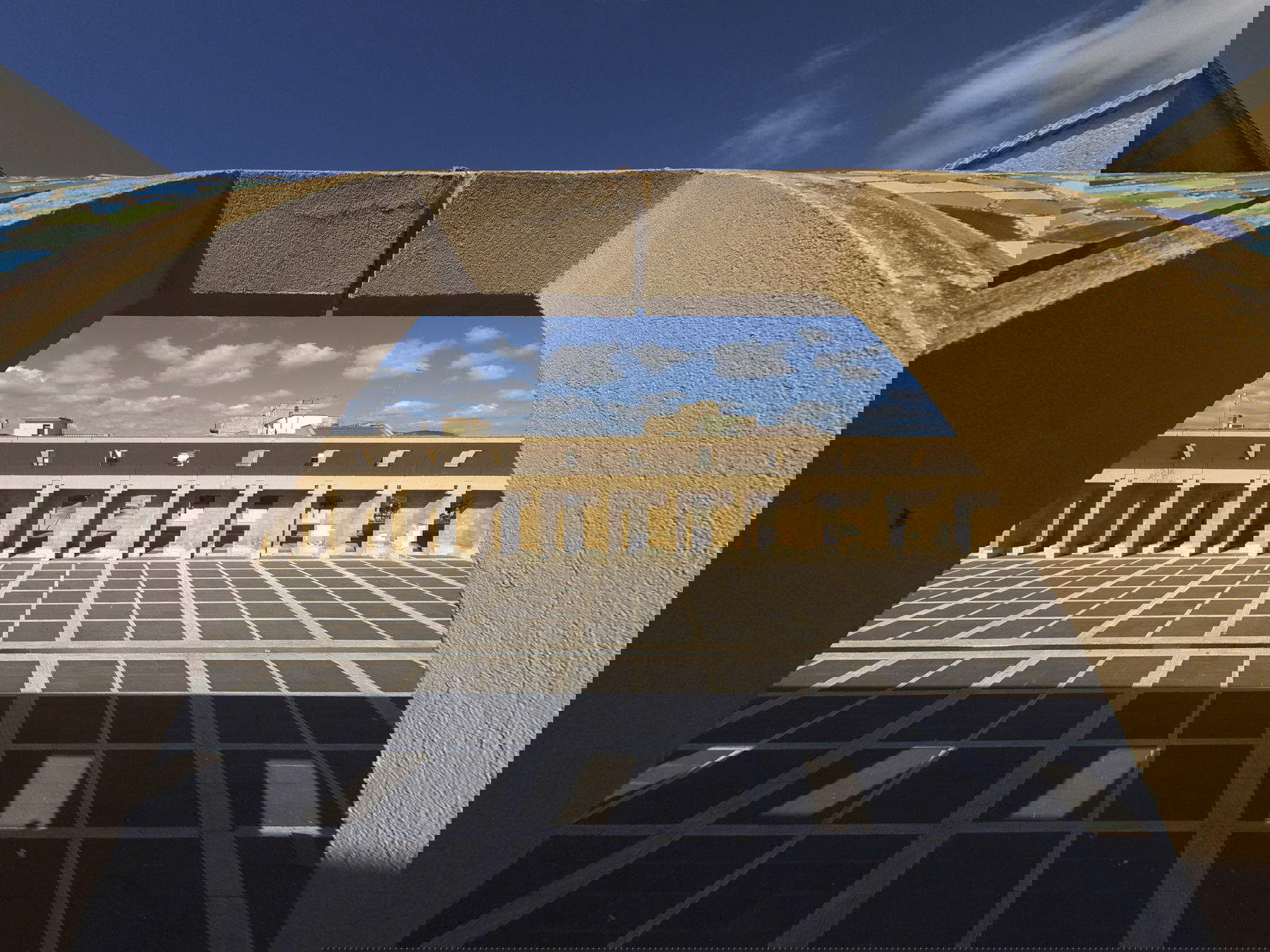
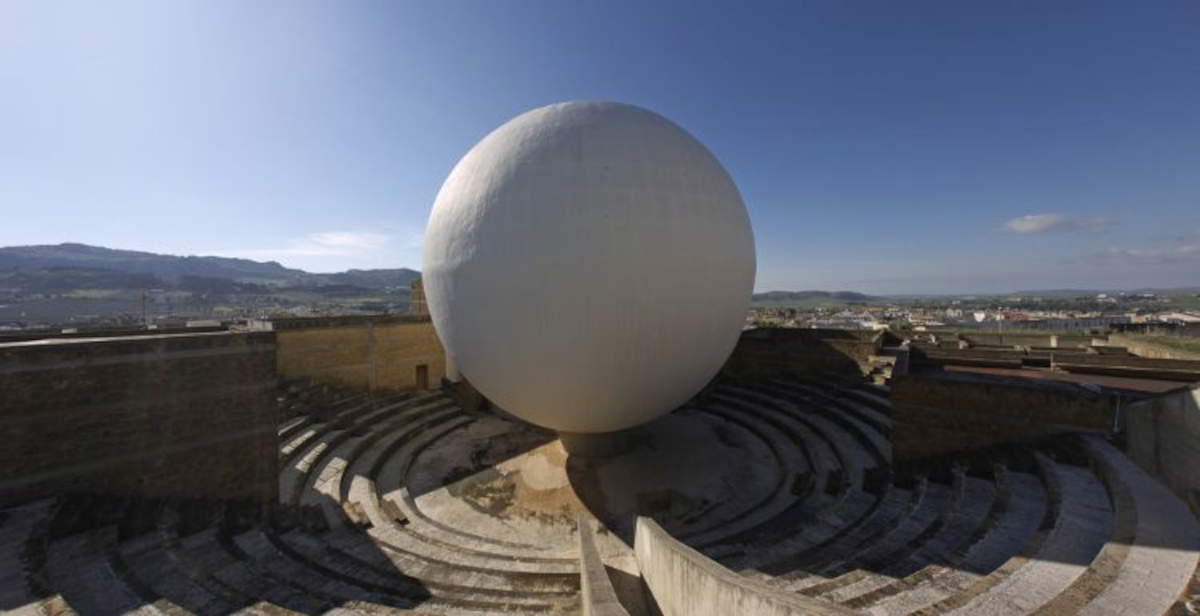
The exhibition program includes video installations by Masbedo and Adrian Paci, who will inhabit the sculptural space of Pietro Consagra’s Theater. A dialogue between works by Carla Accardi, Letizia Battaglia, Renata Boero, Isabella Ducrot and Nanda Vigo will also offer a look at new generations of artists. A major exhibition dedicated to the Mediterranean is also planned, while the contemporary art collection of the Galvagno family, founder of Elenka, will offer a focus on established Sicilian artists. Collector Peppe Morra’s collection, on the other hand, will recount his path as a patron and cultural promoter. An installation by Parisian artist Philippe Berson, who chose Sicily as a place to live and work, will also be presented over the course of the 12 months. This will be accompanied by the project of prìsenti, processional drapes made by artists such as Pietro Consagra, Alighiero Boetti and Giulio Turcato. The exhibition Domestic Displacement will bring together works by Mona Hatoum, William Kentridge, Shirin Neshat, Anna Maria Maiolino, Amalia Pica, Regina José Galindo, Santiago Sierra, Zehra Doğan, María Magdalena Campos Pons, Holly Stevenson, Paolo Icaro, Olu Oguibe, Mustafa Sabbagh, and Akram Zaatari, relating poetics that reflect on displacement as an experience of decontextualization and new location.
Thanks to a collaboration with the Riso - Museum of Modern and Contemporary Art in Palermo, Richard Long’s environmental work Circle of Life will be remounted, while Chinese artist Liu Bolin will confront the wounds left by the earthquake. This panorama will be complemented by a special edition of the Gibellina Photoroad festival, a report on contemporary artists from Ghana, a photographic exhibition by Giuseppe Ippolito dedicated to the relationship with Alberto Burri’s Grande Cretto, the Atlas project Elimo with maps by Alessandro Isastia and drawings by Marzia Migliora, as well as reflections on the Mediterranean, Outsider Art and artistic practices related to memory and geographies of the territory.
Alongside the exhibitions, the residency program focuses on the relationship between artistic production and community building through participatory and regeneration projects that involve artists, young people and inhabitants in paths of mutual learning. Between the former church of Jesus and Mary designed by Nanda Vigo, restored and reopened for the occasion, and the headquarters of the Orestiadi Foundation, Lucia Veronesi, Flavio Favelli, Sisley Xhafa, Giorgio Andreotta Calò, Pietro Fortuna, Jonida Xherri, Khaled Ben Slimane, Sonia Besada, Lucio La Pietra and Igor Grubic will start their processes. In parallel, the Stalker collective, Francesco Lauretta, Luigi Presicce, Virgilio Sieni, Zoukak Theatre, Alberto Nicolino and the Diwan arts symposium will activate participatory practices aimed at community building. Performing arts, including theater, performance, film and music, will inhabit historic and emblematic places in the city and its territory, questioning audiences on contemporary social issues. Among the protagonists are Regina José Galindo, Roberto Andò, Mimmo Paladino and Emilio Isgrò, along with site-specific interventions such as that of the collective Shaken Grounds - Seismography of Precarious Presences, and festivals that interweave cinema, music and contemporary art, from the Orestiadi Festival to the Biennale Arcipelago Mediterraneo.
A central role is given to education and participation programs, which involve schools and citizens through workshops, training activities, intergenerational projects and cultural citizenship paths. These include Artensis embroidery workshops, documentary exhibitions, Info Points as spaces for storytelling and sharing, podcasts and art education paths open to all audiences.
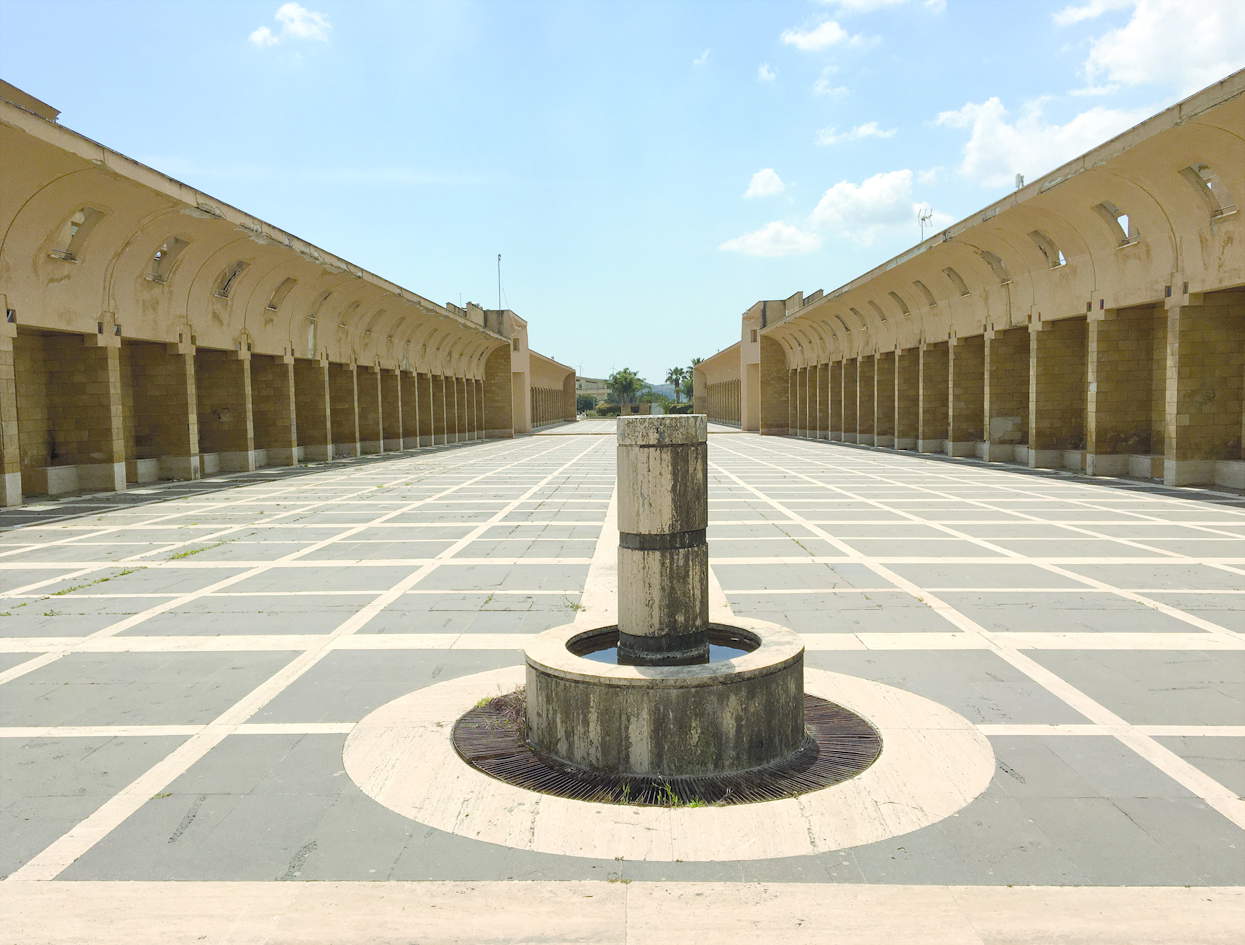
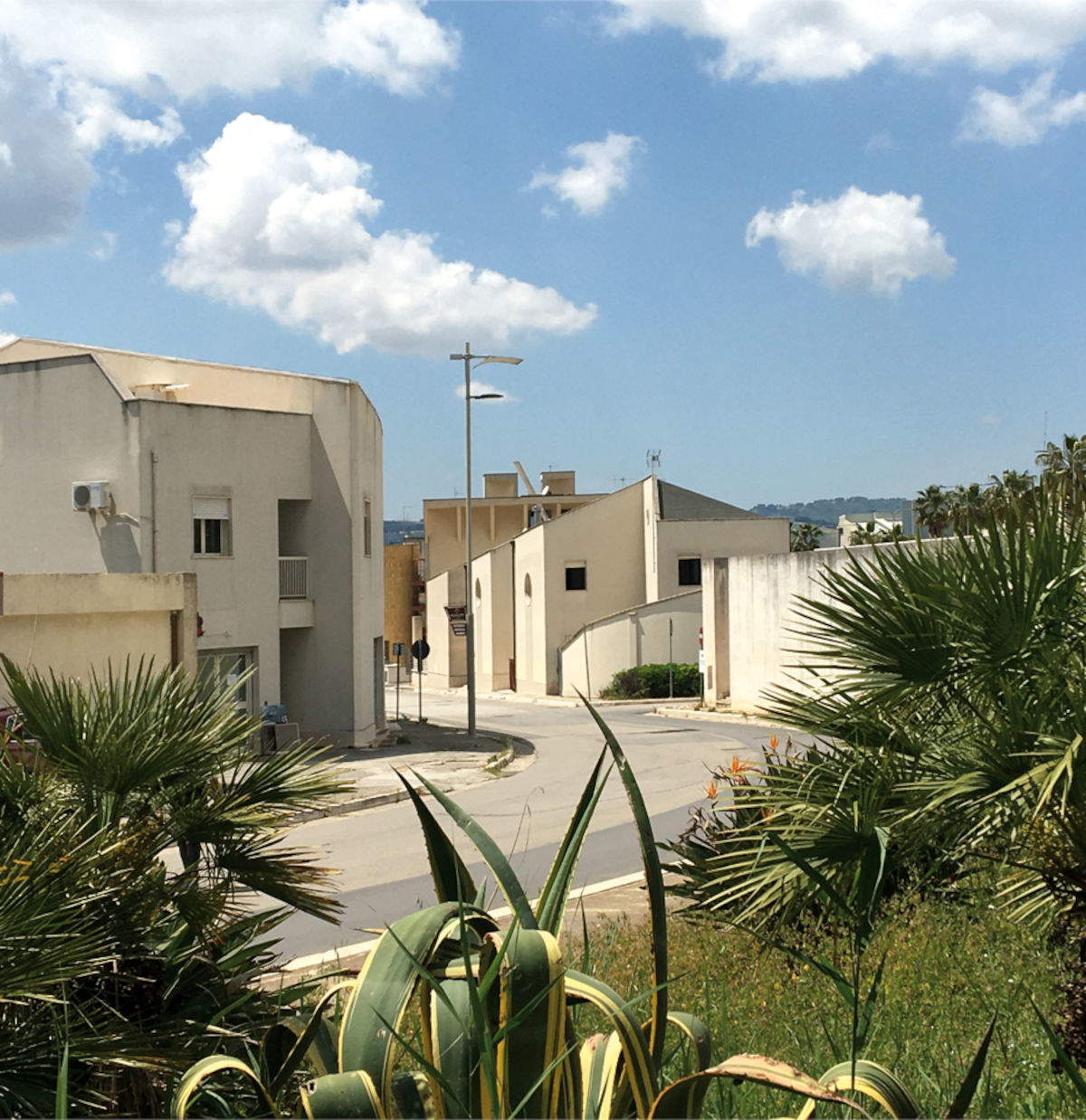
In collaboration with national and international universities and research institutes, including LUISS, IULM, La Sapienza in Rome, the University of Palermo and several Academies of Fine Arts, Gibellina will become a venue for symposia, conferences and study days, configuring itself as a center for debate on contemporaneity and the role of art in urban regeneration processes. The program is developed through an articulated network of venues, from the new city to the places of memory of the destroyed Gibellina. These include the former church of Jesus and Mary by Nanda Vigo, the Palazzo di Lorenzo and the Secret Gardens by Francesco Venezia, the Chiesa Madre by Ludovico Quaroni and Luisa Anversa, the Sistema delle Piazze by Franco Purini and Laura Thermes, the Theater and Urban Works by Pietro Consagra, the Orestiadi Foundation, Baglio Stefano, the Ludovico Corrao MAC and the Grande Cretto by Alberto Burri, along with diffuse spaces such as the CRESM, the lake, the Orestiadi Estates and theEpicenter of Living Memory.
The project was thus born as a choral initiative and is developed through a network involving the municipalities of the Belìce Valley, numerous centers in the province of Trapani and a partnership extended nationally and internationally. The stated goal is to attract artists, cultural workers and visitors from Italy and abroad, placing Gibellina in a circuit of exchanges and collaborations that go beyond the local dimension. Within this framework, the city is presented as a case study in the Italian and international context. The reconstruction initiated after the earthquake, based on a direct dialogue with artists and architects, has produced an urban and symbolic fabric that continues to interrogate the relationship between art, public space and community. Portami il futuro fits into this trajectory, proposing a vision that looks at culture as a participatory right and as a structural element of collective life.
A central aspect of the program also concerns the direct involvement of citizens, who are called upon to participate as active stakeholders in the processes of cultural production. The project aims to generate integrated and shared forms of planning, in which the relationship between guest artists and local communities helps to define future scenarios for the city. Programming is presented as a process in the making, capable of evolving over time through confrontation and participation. In this perspective, Gibellina - Italian Capital of Contemporary Art 2026 is configured as an open laboratory, in which art becomes a tool for observation, dialogue and transformation, keeping at the center the collective dimension and the relationship with the territory.
 |
| Gibellina Capital of Contemporary Art 2026 program unveiled: here's what will be there |

The author of this article: Noemi Capoccia
Originaria di Lecce, classe 1995, ha conseguito la laurea presso l'Accademia di Belle Arti di Carrara nel 2021. Le sue passioni sono l'arte antica e l'archeologia. Dal 2024 lavora in Finestre sull'Arte.Warning: the translation into English of the original Italian article was created using automatic tools. We undertake to review all articles, but we do not guarantee the total absence of inaccuracies in the translation due to the program. You can find the original by clicking on the ITA button. If you find any mistake,please contact us.

























 IT
IT FR
FR DE
DE ES
ES CN
CN


