





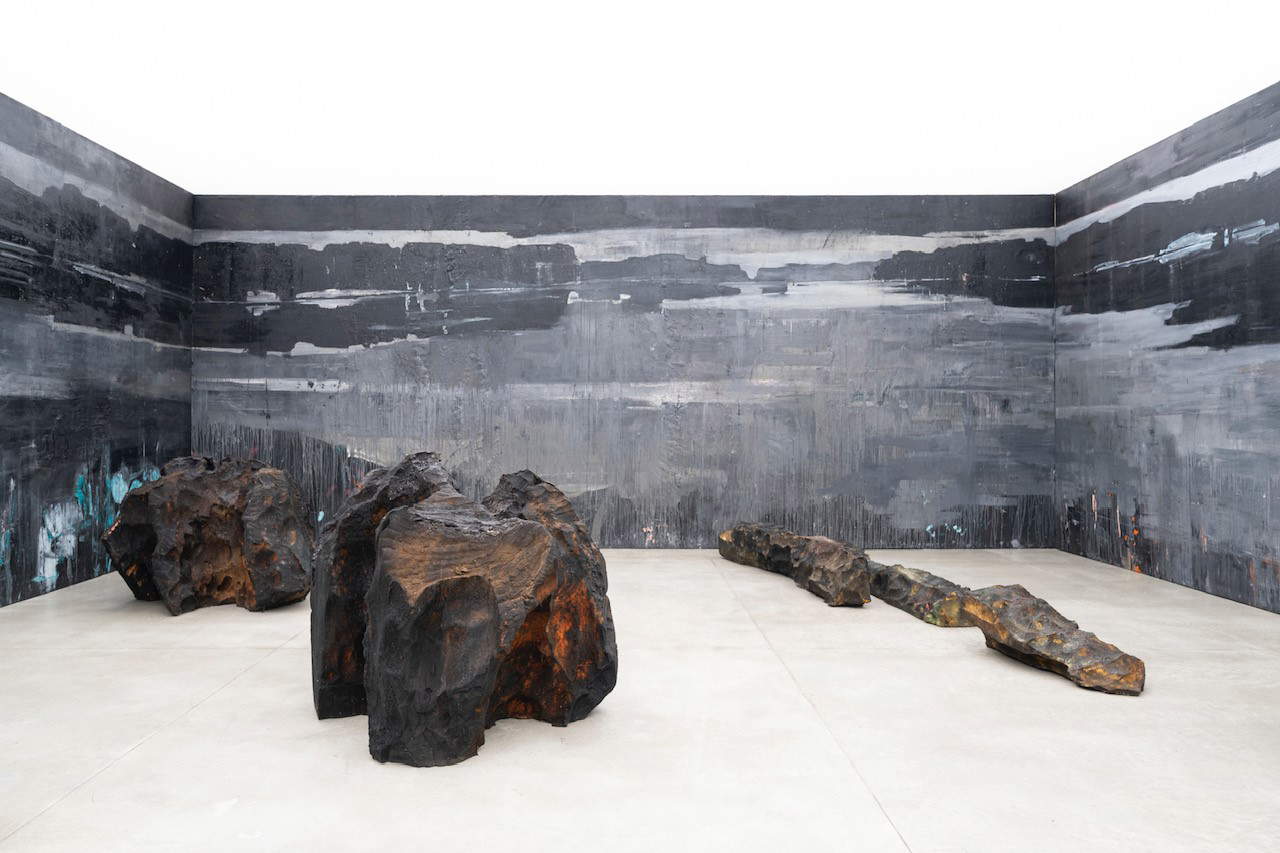
Milan. In the deep darkness that precedes dawn - but in the glow of dawn we will discover another and more intense sense of bewilderment in the pictorial blackness that surrounds us - what strikes us about Nobu at Elba is the intense smell emanating from John Frangi’s large paintings: the unmistakable scent of oil painting. Giovanni Agosti had written so, in the catalog of the exhibition held in the Scuderia Grande of the Villa Panza di Biumo in 2004, that that work of his friend and fellow traveler involved all the senses, not just that of sight. But it was hard to imagine that the sense of smell could be activated twenty-one years after the painting was drafted, now that the gigantic installation of that time has been repurposed, exactly as it was, and thanks to Francesco Librizzi’s new layout, in the Stirling Room of Palazzo Citterio, the contemporary addition signed by the great English architect to the Pinacoteca di Brera, in Milan, Frangi’s city. Power of painting, which retains intact its chemistry not only emotional and, in the acrid smell of oil, returns the scent trapped in a material so dense that it retains its olfactory substance for two decades. And so full-bodied that it invites (tempts) us to touch it, in the full-bodied layers of the bright water lilies of Monetian memory, in the vast informal backgrounds of Teutonic grays, in the impetuous pictorial gesture of expressionist echo, in the pictorial paste marked as by a truck nailing on the highway.
Nobu at Elba Redux is titled the re-presentation of an experience (sharable through Jan. 18, Thursday through Sunday only at Palazzo Citterio, 2 to 7 p.m., free admission) that was born, in the sign of landscape and figuration painting, as a double challenge: To the limits of easel paintings and therefore capable of inhabiting space by involving and disrupting the surrounding environment; to the context that would welcome the works, namely the site-specific collection of American art in the house-museum in the Varesotto area of Giuseppe Panza (1923-2010), the great Italian patron in love with U.S. minimalist art, but not only. The undertaking succeeded, and of the pictorial construction site of that cycle comparable in size and commitment to medieval art, but also to the very extensive drafts of Anselm Kiefer’s paintings, the 2004 double catalog (5 Continents Editions) has remained. The two volumes document both the four ten-foot-tall canvases (two are fifteen feet long, the others eight and five feet long, respectively) and the long series of work and private life photos, notes and diagrams, writings and recollections, that testify to the creative process of this “masterpiece” (the term, concurring, is Agosti’s) by Frangi. Now that the graphic storyboard has been re-presented-as it was then in the room next to the room where Nobu at Elba’s painting dominates, and in the same plastic filing cabinet envelopes from 2004, with their pitted edges, hung on the wall as if they were framed pictures- the restoration of that challenge, to convention and time, has been completed, with the addition of a new, smaller catalog (it can be downloaded for free from the museum’s website: https://palazzocitterio.org/news/exhibition/nobu-at-elba-redux/) again signed by Giovanni Agosti who, still leaning on an unconventional sequence of photos for his very personal authorial captions, recalled the twenty years and more that had passed from the exhibition at Villa Panza to the present.
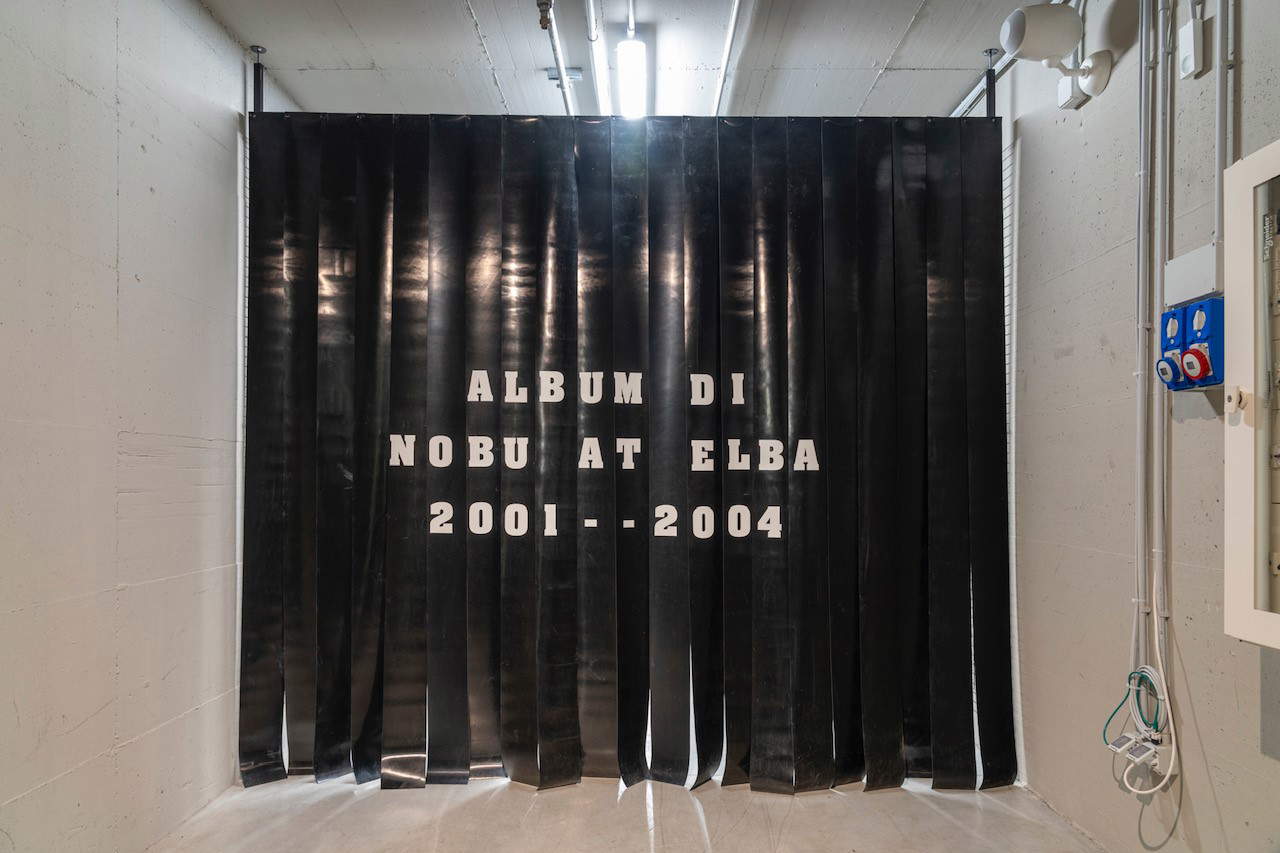
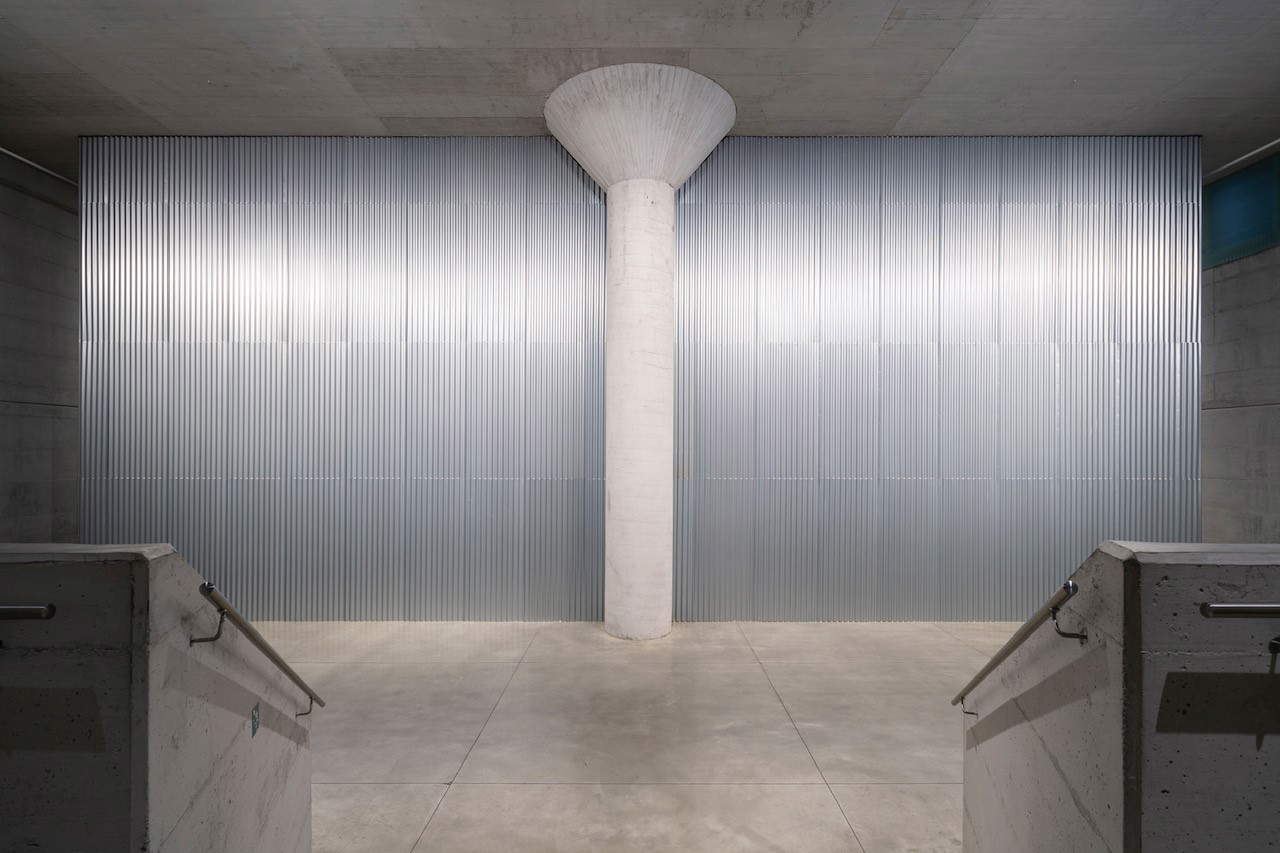
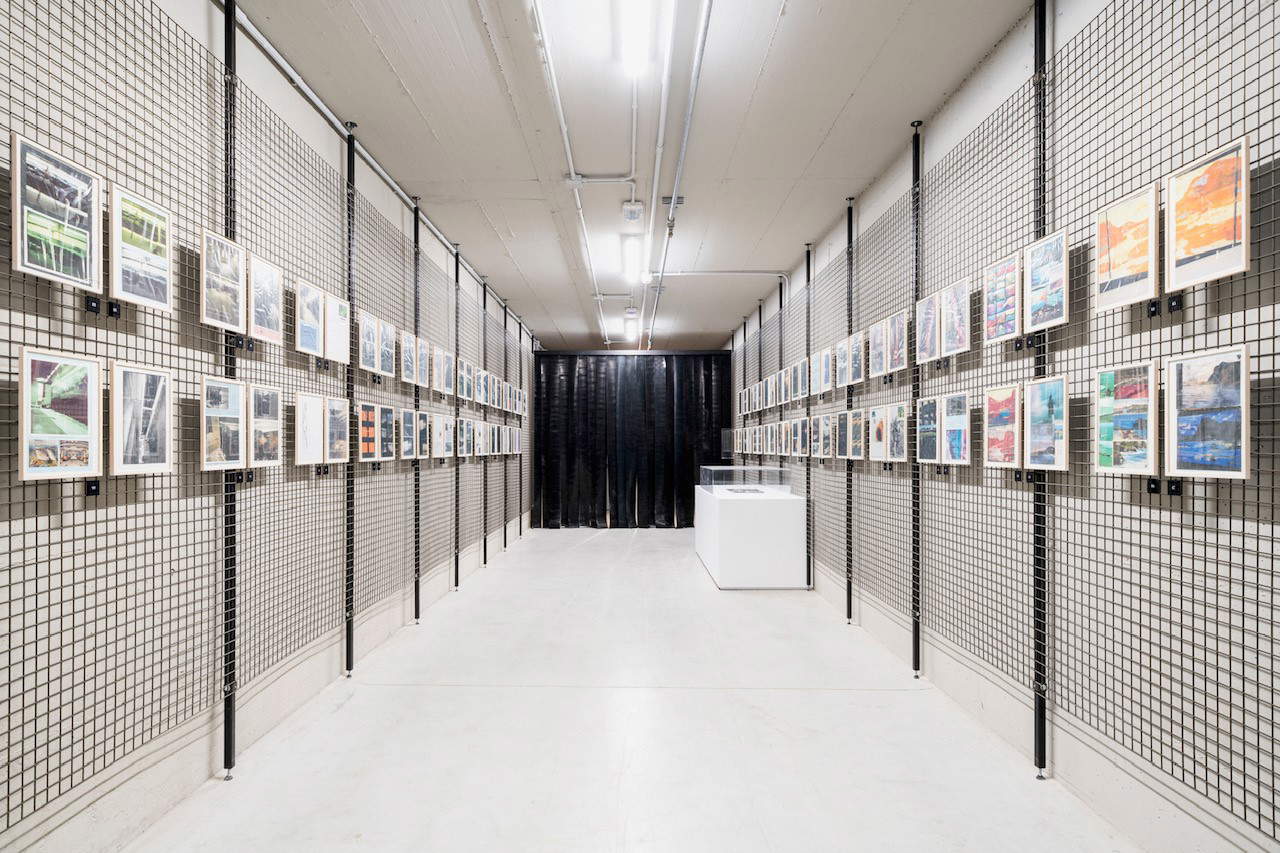
We thus discover that since 2004 the giant canvases, such in size, commitment and magnificence, have “rested,” rolled and bagged, in a storage room near Frangi’s studio on Via Spartaco in Milan; that the twenty, lightweight painted sculptures, now returned to stand between the viewer and the paintings with which they interact, had found shelter instead in another warehouse, along with the 32 sheets of the picture diary that accompanied and explained the Nobu at Elba enterprise; that it took another disused industrial building, after the Casale Litta where the work saw the light of day in 2003-2004, that is, a former dyehouse in Borriana, to unroll and revise the immense canvases before re-pinning them, not without difficulty, on new frames; but also that Frangi’s dogs were allowed to stroll over those river landscapes lying on the ground, sniffing them; and that some minimal color fall-off there was, yes, but the paintings held as a whole. And how well they have held.
In fact, now as then, it is possible for the viewer to imagine and immerse himself in a river that starts from the tarry black of Burri and Kiefer, that welcomes the flashes of Richter and Schifano, but also the Brescian gleams of Romanino, to overcome the idea of the unassailable monochrome, as in Malevich and the Rothko of the Houston Chapel, and rejoin the tradition of Lombard naturalism, albeit imbued with German Romanticism. They will discover, visitors willing to try this total art experience, that the elements of nature (water, the river course, its estuary and lagoon, the hills in the background, the turreted skyline ) are not so recognizable, that is, objectively stated. All the more so because the two trees in the pictorial wall opposite the entrance wall have been submerged, obscured, almost erased, by the coats of color that Frangi has laid down repeatedly in this work laden yes with afterthoughts, but strong in one certainty: That painting, despite the many drips that almost evoke the dampness of riverbanks at night, is worthwhile for itself, like a daughter who has become autonomous from her father, the result of a practice that the painter lives in solitude, though surrounded by the warmth of animals, children, friends, and loves.
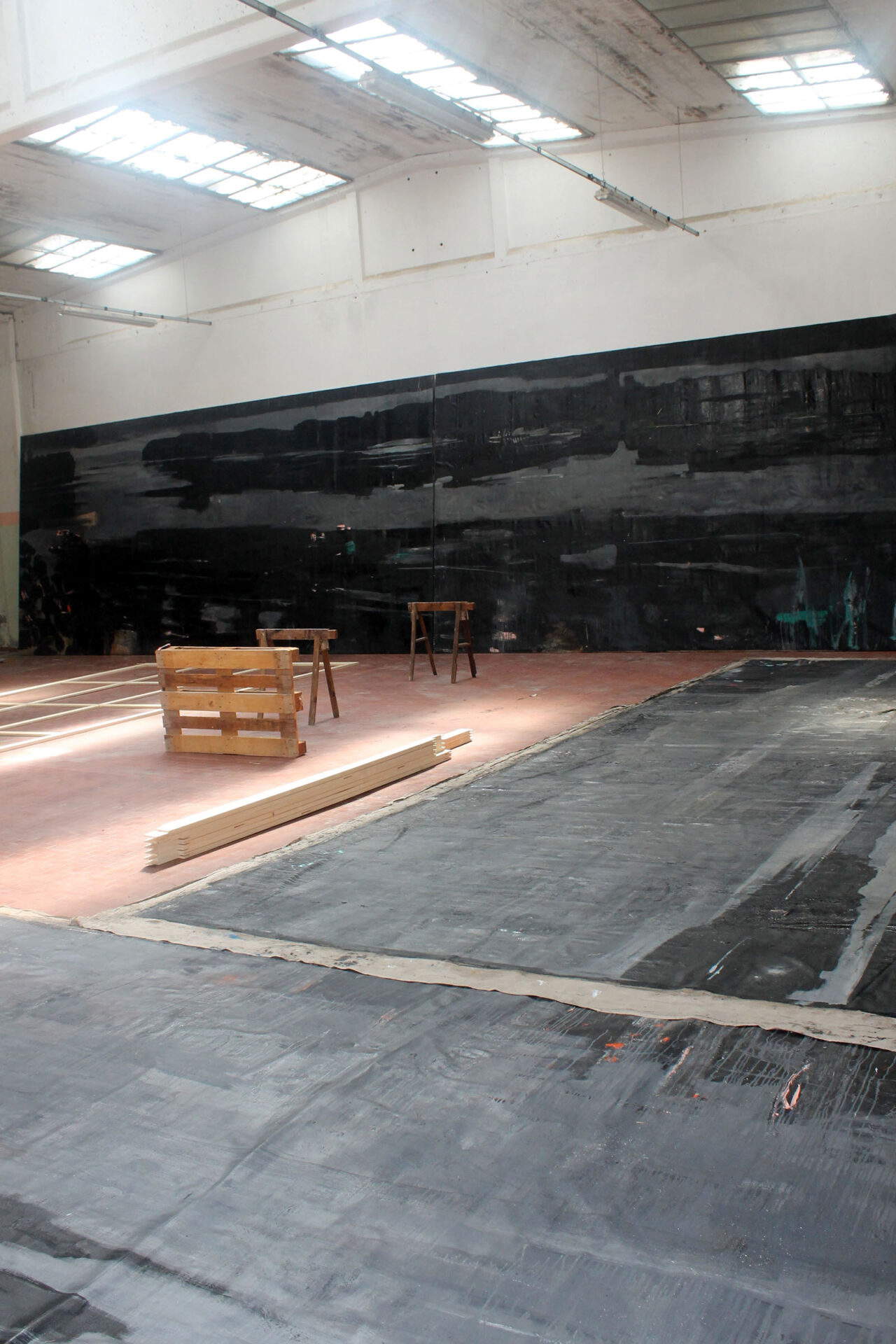
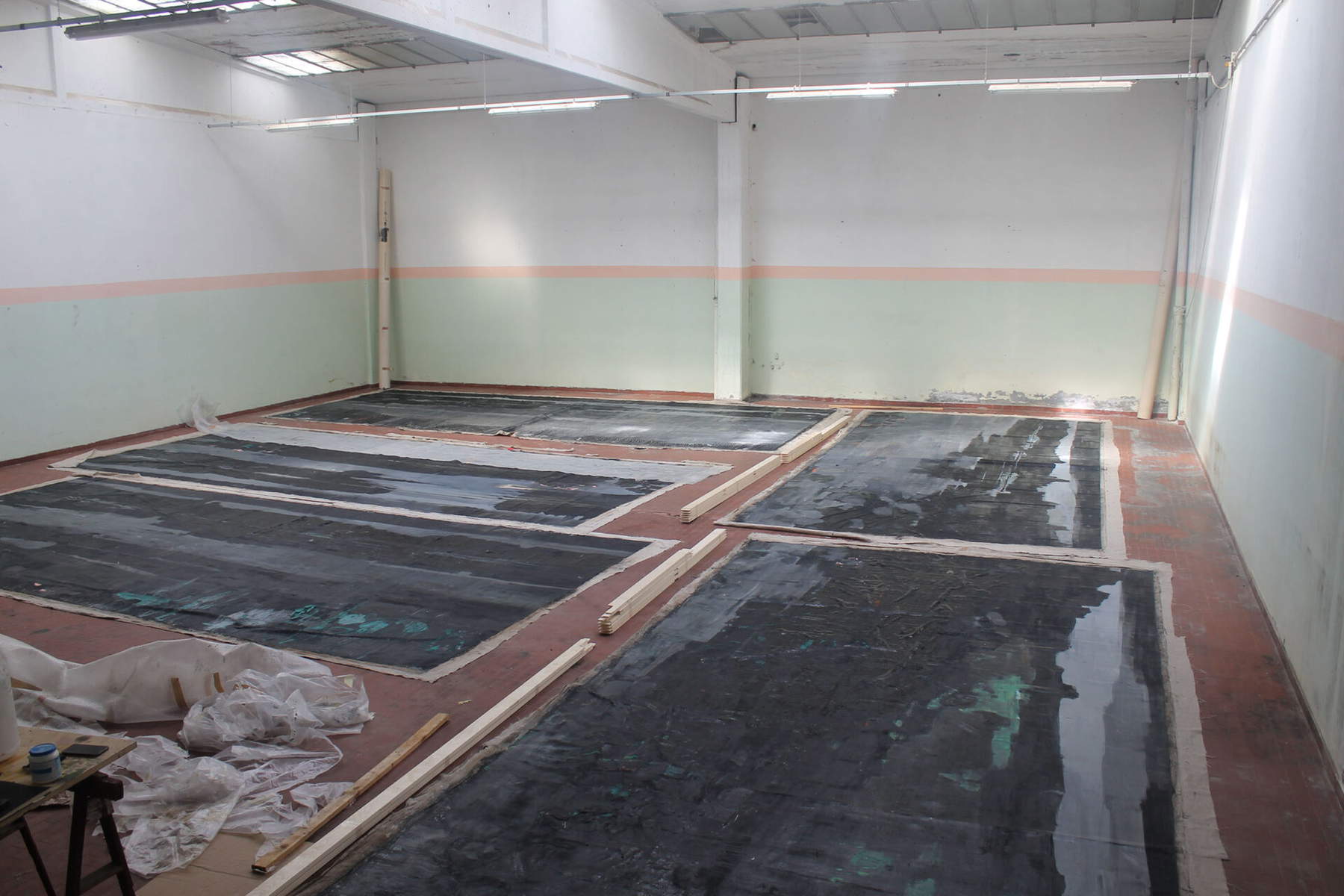
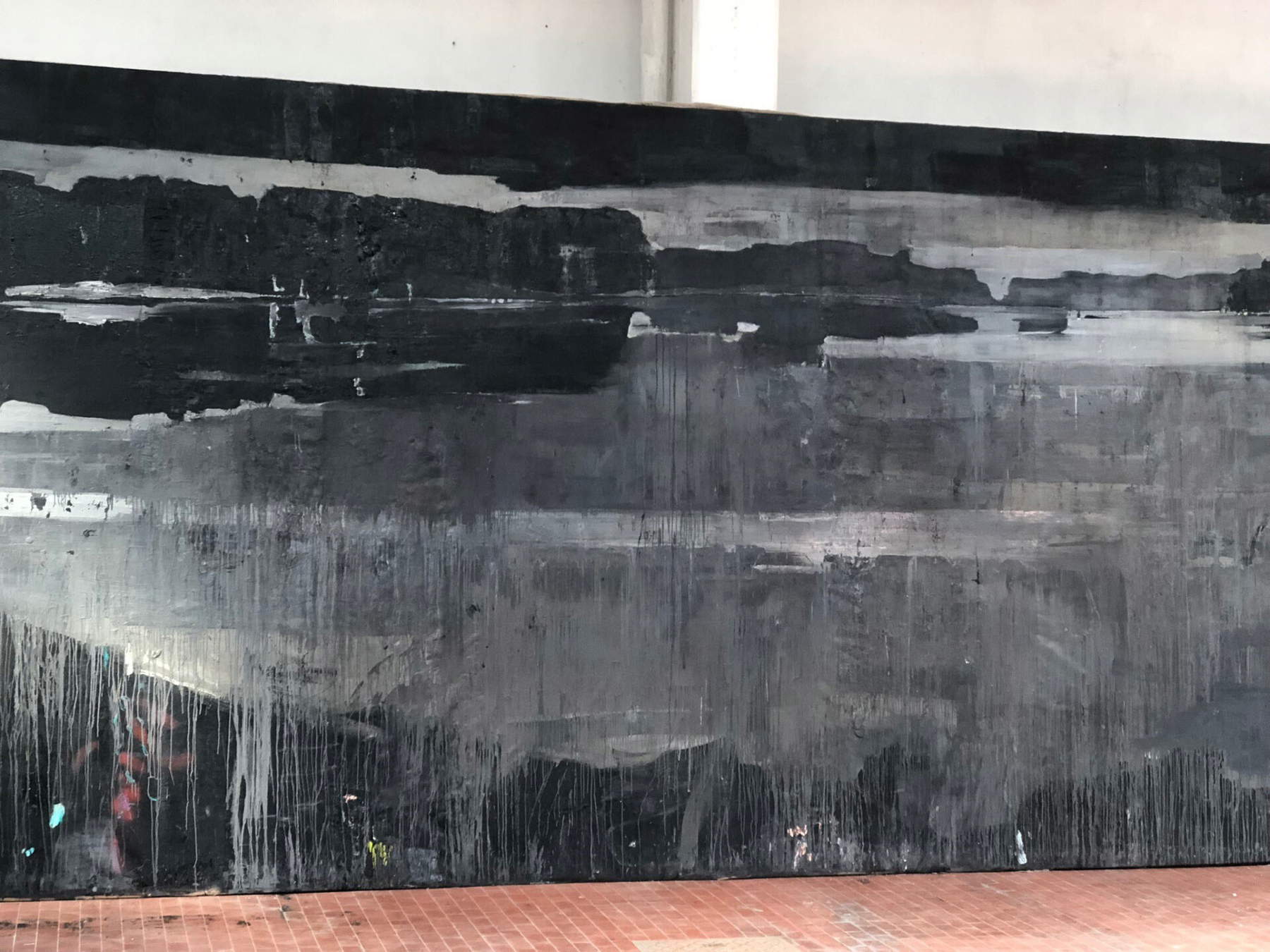
Coming out as if from the paintings, like charred timbers released by the river current, here lie the twenty tree trunks in front of the paintings, which, made of foam rubber, like Giulio Turcato’s 1960s paintings on display until January 31, 2026 in the remarkable exhibition at the Giuliani Foundation in Rome, constitute the plastic aspect of the installation Nobu at Elba. The tops of these “bodies,” arrived as they are at the end of the night and at the limits of the human, are dyed predominantly black so that, to the visitor’s eye, the apexes of the sculptures will blend in with the dark background of the oil paint spread, and often congealed into incandescent matter, in the plagues and sores of Frangi’s great interior landscape. Then always comes, however, the electric light, operated by a time device that in a few minutes takes us from dawn to deep night, to clarify the view and define the contours of things. In the silent play Nobu at Dawn, the painting scene is reminiscent of the theater scene. And the black backdrops, the result of pictorial fiction but very real and concrete, come to life with the weekday rhythm of the passing hours.
Nobu at Elba, with canvases arranged to evoke a religious architecture, complete with paintings along the aisles, counter-façade and transept, and sculptures placed in the center of the space as if they were pews, ambos and altars of an abandoned church, was was shown for just over a month in February-March 2024 at Villa Panza, without the landlord then deciding to keep it forever in the museum, its collection now managed by Fai, for which the installation was conceived and executed. And now the work is repurposed in Milan (until January 18, 2026) in the Braidense complex, to allow a check on the tightness of this umpteenth return to painting, history and nature (such was and is Frangi’s with respect to the contemporary digital, medialist, late conceptual scene). The comparison is with the masters of the past, remote and near, at Brera and Palazzo Citterio. Waiting for an institution, public or private, to acquire Nobu at Elba by making permanent the exhibition of this work that brings back, as in medieval cycles or Tintoretto’s canvases, Sironi’s muralism or Rothko’s environments, the viewer to the center of painting.

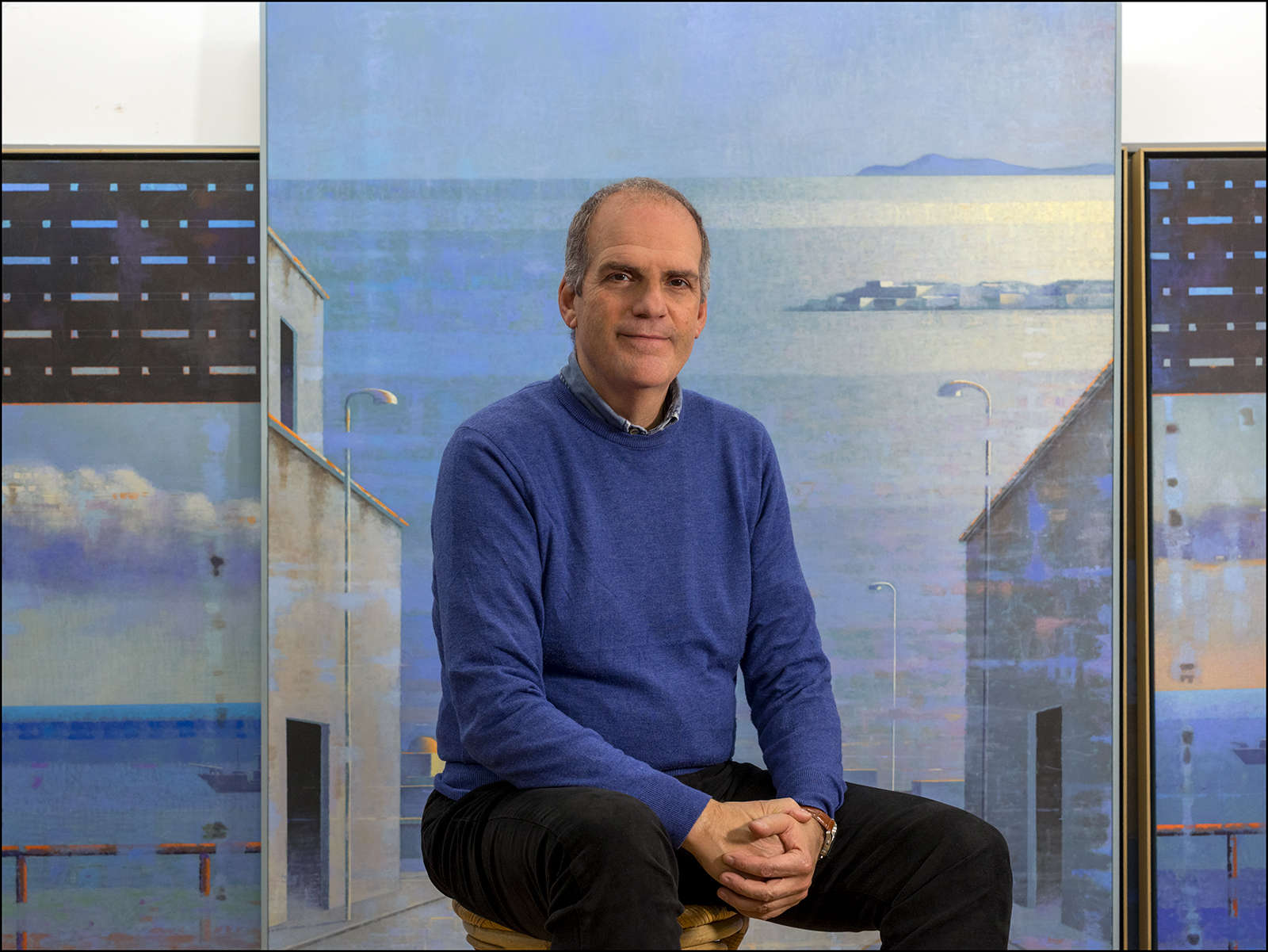
The author of this article: Carlo Alberto Bucci
Nato a Roma nel 1962, Carlo Alberto Bucci si è laureato nel 1989 alla Sapienza con Augusto Gentili. Dalla tesi, dedicata all’opera di “Bartolomeo Montagna per la chiesa di San Bartolomeo a Vicenza”, sono stati estratti i saggi sulla “Pala Porto” e sulla “Presentazione al Tempio”, pubblicati da “Venezia ‘500”, rispettivamente, nel 1991 e nel 1993. È stato redattore a contratto del Dizionario biografico degli italiani dell’Istituto dell’Enciclopedia italiana, per il quale ha redatto alcune voci occupandosi dell’assegnazione e della revisione di quelle degli artisti. Ha lavorato alla schedatura dell’opera di Francesco Di Cocco con Enrico Crispolti, accanto al quale ha lavorato, tra l’altro, alla grande antologica romana del 1992 su Enrico Prampolini. Nel 2000 è stato assunto come redattore del sito Kataweb Arte, diretto da Paolo Vagheggi, quindi nel 2002 è passato al quotidiano La Repubblica dove è rimasto fino al 2024 lavorando per l’Ufficio centrale, per la Cronaca di Roma e per quella nazionale con la qualifica di capo servizio. Ha scritto numerosi articoli e recensioni per gli inserti “Robinson” e “il Venerdì” del quotidiano fondato da Eugenio Scalfari. Si occupa di critica e di divulgazione dell’arte, in particolare moderna e contemporanea (nella foto del 2024 di Dino Ignani è stato ritratto davanti a un dipinto di Giuseppe Modica).Warning: the translation into English of the original Italian article was created using automatic tools. We undertake to review all articles, but we do not guarantee the total absence of inaccuracies in the translation due to the program. You can find the original by clicking on the ITA button. If you find any mistake,please contact us.




























 IT
IT FR
FR DE
DE ES
ES CN
CN


