




by Redazione 08/01/2026



Categories: Exhibitions / Disclaimer
The National Portrait Gallery in London will present "Lucian Freud: Drawing Into Painting." The exhibition aims to be the largest museum project ever mounted in the UK on the artist's drawings, bringing together drawings and preparatory studies rarely exhibited alongside famous paintings.


From February 12 to May 4, 2026, the National Portrait Gallery in London will present Lucian Freud: Drawing Into Painting, a major exhibition devoted to the drawings and paintings of Lucian Freud. The exhibition aims to be the largest museum project ever mounted in the United Kingdom on the artist’s drawings, bringing together drawings and preparatory studies rarely exhibited alongside famous paintings. The exhibition will thus offer unprecedented insight into the creative process and working methods of one of the greatest artists of twentieth-century realism.

Curated by Sarah Howgate, senior curator of the National Portrait Gallery’s contemporary collections, in collaboration with David Dawson, artist and director of the Lucian Freud Archive, the exhibition aims to investigate how, although Freud is best known as a painter, some of the most significant transformations in his artistic practice emerge precisely through drawing. From childhood Freud drew compulsively, and the starting point for the exhibition is the extraordinary collection of early drawings, 48 sketchbooks, letters and unfinished paintings that make up theLucian Freud Archive at the National Portrait Gallery.


These documents provide insight into the artist’s thought processes throughout his career. In addition to drawings of various kinds, the Archive holds curious details and recurring themes: telephone numbers ranging from gas stations to the drawing rooms of British aristocracy, drafts of love letters, betting predictions and reflections on paintings in progress. A significant portion of the works on paper presented in the exhibition come from this vast, largely unpublished holdings.


In the 1940s Freud’s practice was defined by extremely accurate and linear observational drawings, which received much attention from contemporary critics. Thereafter, the artist focused increasingly on painting, adopting a freer approach to the medium, partly under the influence of his friendship with Francis Bacon. From the mid-1950s through the 1970s, painting became the focus of his research, while drawing assumed a more intimate and reserved role, confined mostly to personal notebooks.
Through the dialogue between drawings and paintings, the exhibition highlights how Freud considered drawing not only a preparatory stage, but a fundamental tool for observation, investigation and understanding of subjects. It was not until the mid-1970s that the artist returned to drawing with renewed intensity, at a time when his painting had reached full maturity. In 1982, after an interruption of 34 years, Freud also resumed the technique of etching, which he considered a “form of drawing.”
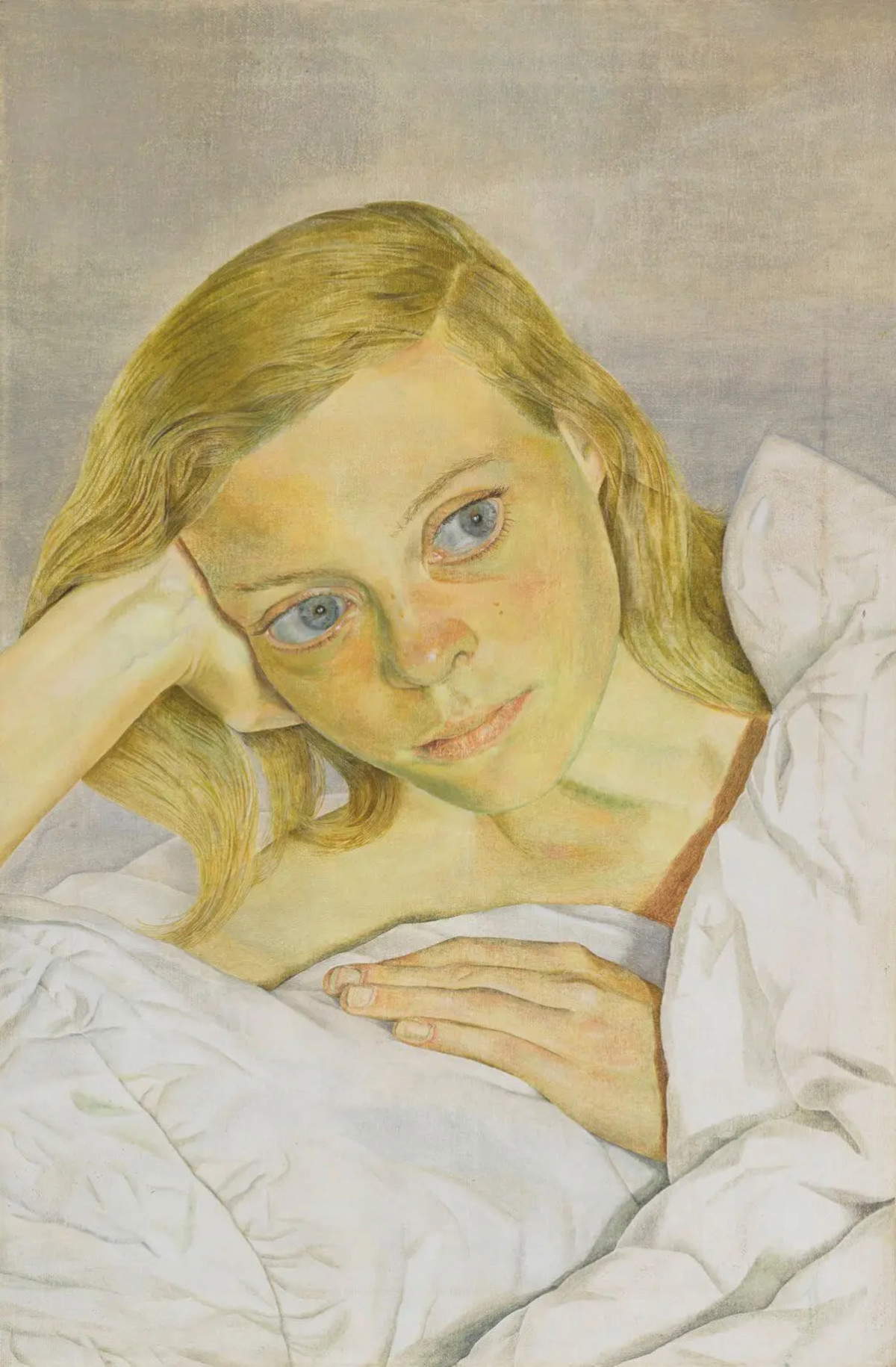
The exhibition will feature numerous drawings and etchings placed in direct relation with paintings. The similarities and differences between the different expressive languages will offer a fascinating reading of the artist’s working method. Also among the works on display will be one of Freud’s most ambitious figure paintings, Great Interior, W11 (from Watteau) (1981-1983), made in response to Antoine Watteau’s Pierrot Content (c. 1712). In a reversal of the usual creative process, Freud did not produce preparatory drawings before the painting, but instead made an intensive series of sketches after the work was completed, as a visual reminder. Watteau’s painting, from the Thyssen-Bornemisza Museum in Madrid, will be exhibited alongside Freud’s drawings.
An additional nucleus will be devoted to the relationship with John Constable. As a young man Freud had unsuccessfully attempted to copy Study of the Trunk of an Elm Tree (c. 1821), abandoning the undertaking because it was too complex. Decades later he returned to that comparison with the etching After Constable ’ s Elm (2003), which will be presented in the exhibition alongside the Constable painting that inspired it.
“Lucian Freud was one of the 20th century’s greatest observers of the human condition. Widely known as a painter, this exhibition investigates his lesser-known work as a draughtsman,” explains curator Sarah Howgate. “I am thrilled that Lucian Freud: Drawing into Painting brings together the artist’s best drawings from around the world, some of which are being shown for the first time in this exhibition, and links them back to the corresponding paintings. This exhibition, held in London, the city Freud loved more than any other, reveals a lesser-known side of his work, a wonderful opportunity to understand his work behind the scenes and his day-to-day thinking as an artist.”
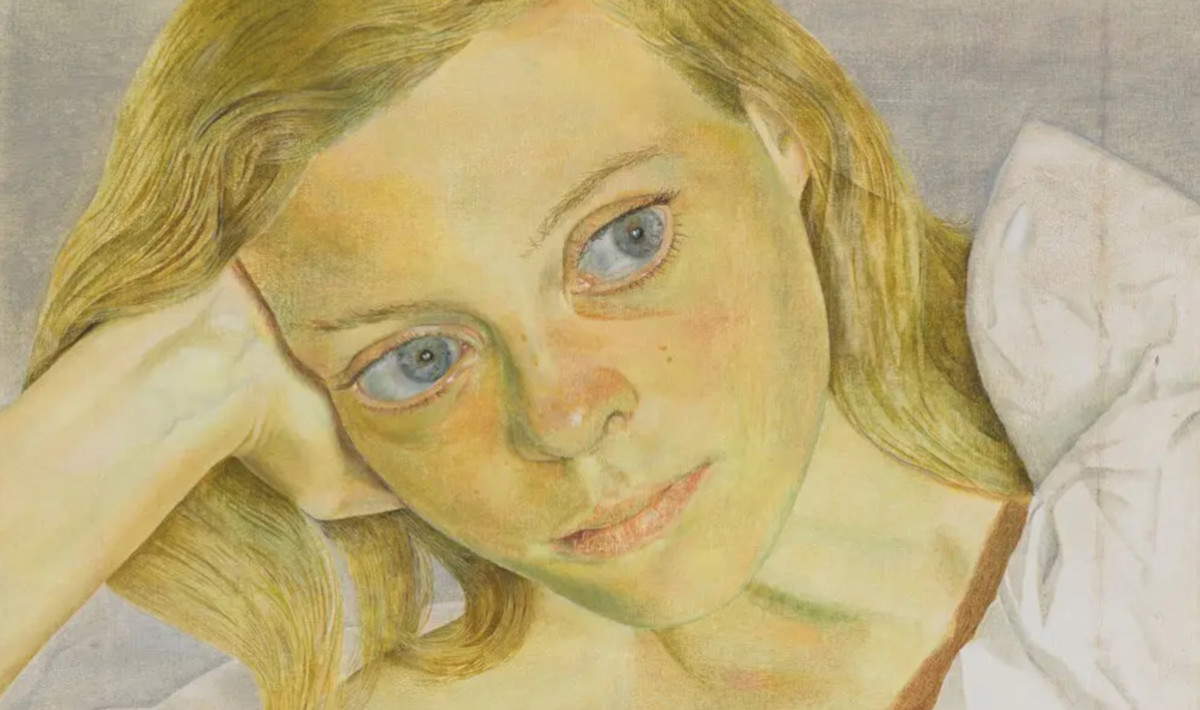 |
| London, at the National Portrait Gallery a major exhibition devoted to the drawings of Lucian Freud |
Warning: the translation into English of the original Italian article was created using automatic tools. We undertake to review all articles, but we do not guarantee the total absence of inaccuracies in the translation due to the program. You can find the original by clicking on the ITA button. If you find any mistake,please contact us.