



by Redazione 07/11/2025



Categories: Exhibitions / Disclaimer
On the occasion of the Nitto ATP Finals 2025, the Royal Museums of Turin and the State Archives present an exhibition that investigates the birth of tennis in the European courts through three works that reveal how the tennis ball was part of the life and education of the Savoy princes.
From November 8 to 18, 2025, the Royal Museums of Turin, in collaboration with theState Archives, will present the dossier exhibition At the Origins of Tennis: Rackets and Court Games at the Galleria Sabauda, an initiative that is part of the program of the Nitto ATP Finals 2025. The exhibition investigates from a historical, artistic and cultural point of view the roots of one of the world’s most popular sports, showing how the ancestor of modern tennis was a central element of court life and a pastime much loved even by the dukes of Savoy. The small but densely packed exhibition brings together three works illustrating the spread of jeu de paume or pallacorda, a game that conquered European courts in the Renaissance centuries. Referred to as the “game of kings and king of games,” tennis enjoyed great popularity in France and in major Italian courts, from Florence to Milan, from Ferrara to Mantua. As early as 1555 the philosopher Antonio Scaino codified its rules in the Trattato del giuoco della palla, with explicit references to the racket, marking a fundamental moment in the history of this discipline.
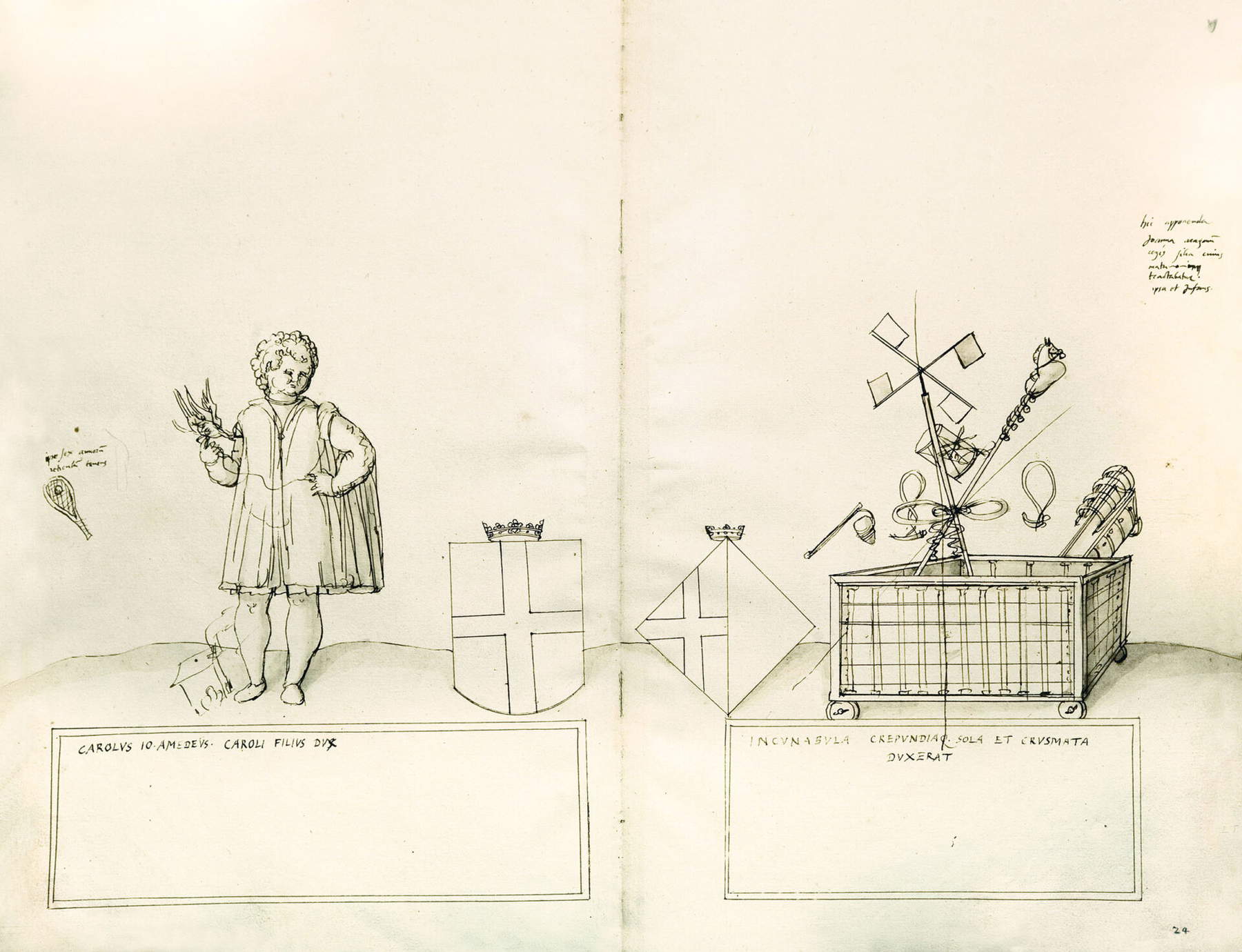
The exhibition at the Royal Museums reconstructs how tennis was an integral part of the education and entertainment of the young Savoy princes. One of the most important testimonies comes from a manuscript in the Turin State Archives, containing portraits of the counts and dukes of Savoy, accompanied by poetic notes by the historiographer Filiberto Pingone (1525-1582). On one of the pages on display appears little Carlo Giovanni Amedeo (1488-1496): the prince, portrayed at the age of six clutching a bird tied with a string, is flanked by a racket and a ball, a clear reference to childhood games and the role of entertainment in the education of young nobles. On the facing page, a sling, a spinning top, a tambourine, a pinwheel and other objects intended for the entertainment of court scions emerge from a trunk on wheels, a sort of ancestral games basket.


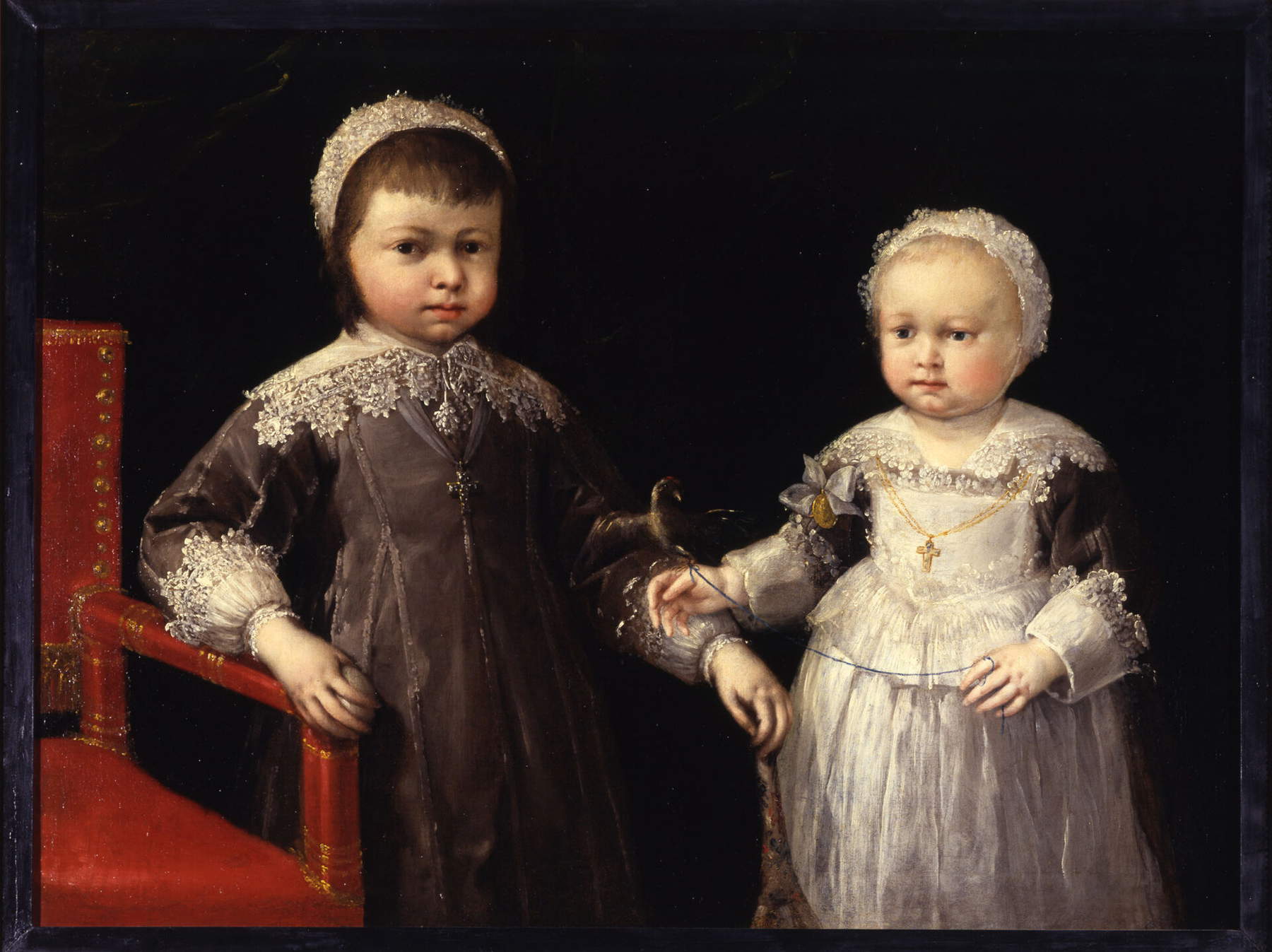
Related to this same theme is the double portrait housed in the Galleria Sabauda, in which the two eldest sons of Victor Amadeus I and Christina of France are depicted together at their favorite games. Little Charles Emmanuel, the future duke, holds between his fingers a small bird tied by a thin string, while his older brother, four-year-old Francesco Giacinto, turns his gaze toward the viewer holding a ball and a racket. The image restores the everydayness of childhood pastimes in 17th-century Turin, but also the importance attached to physical education and play as tools for harmonious growth.
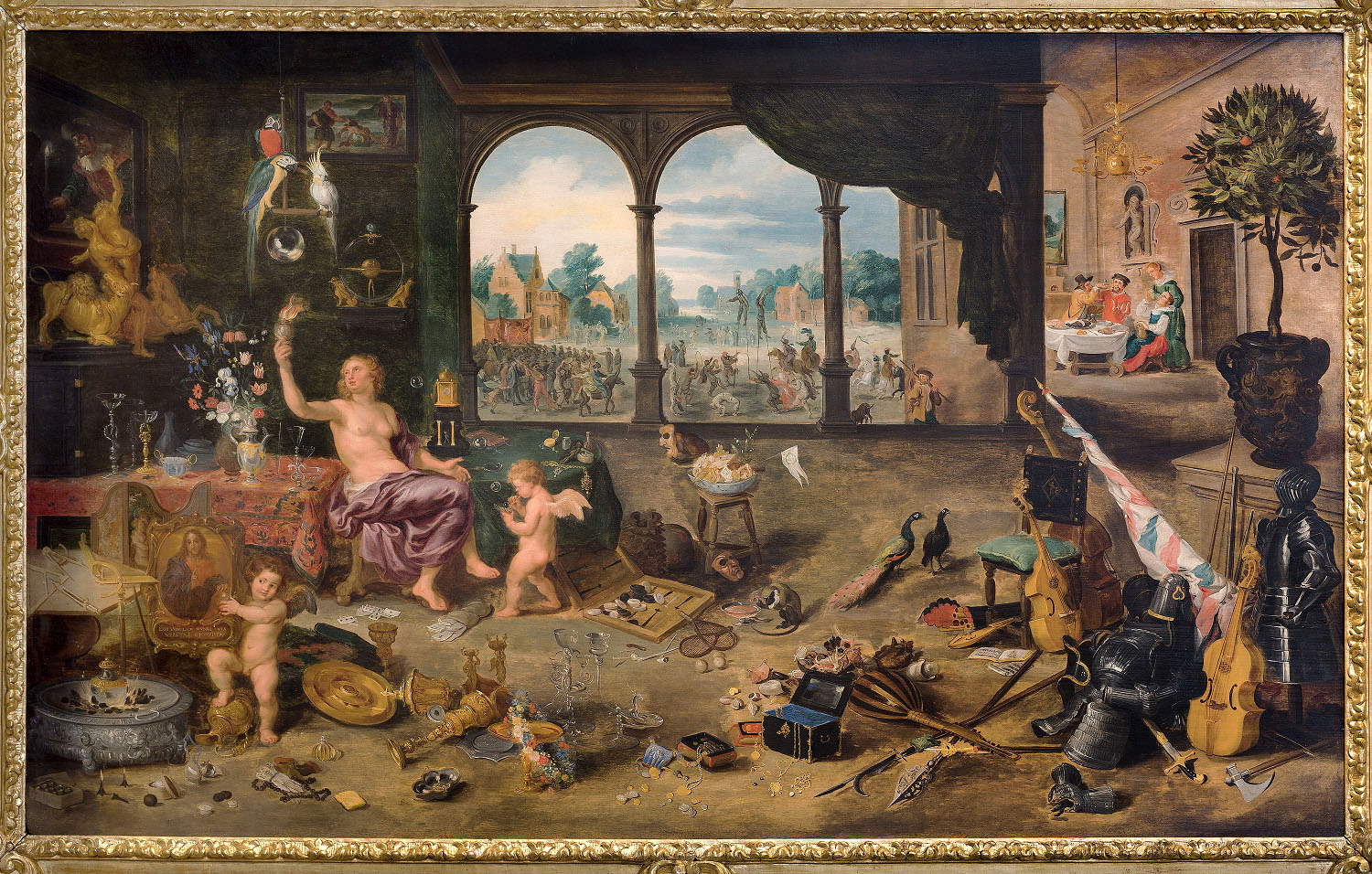
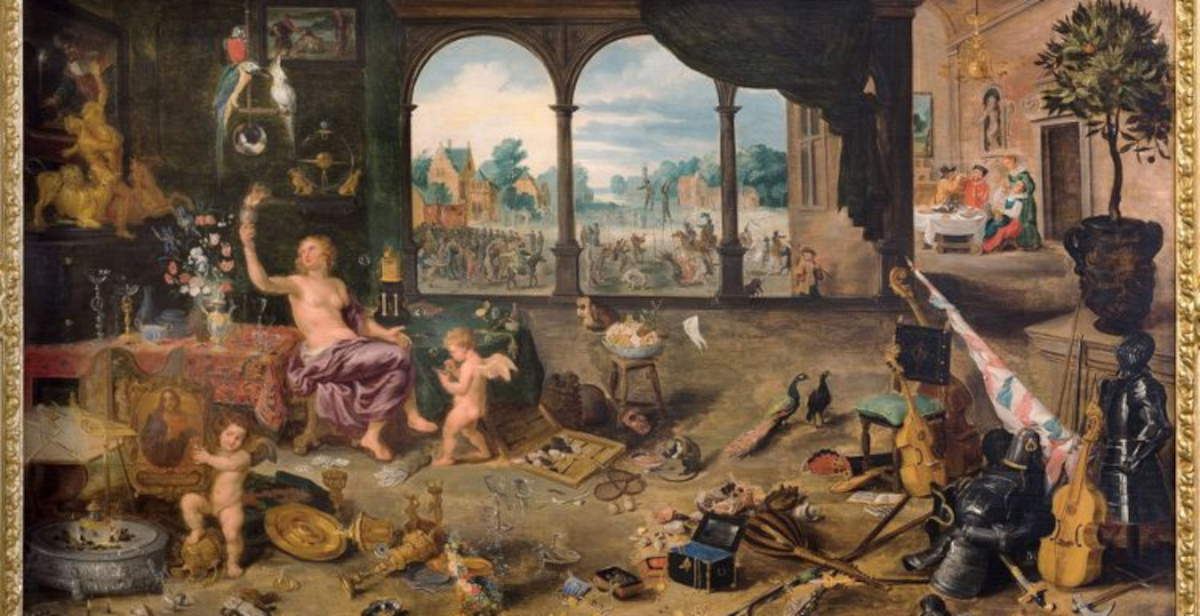
On display next to the portrait is a painting of an allegorical subject attributed to Flemish painter Jan Brueghel the Younger, also from the Sabauda Gallery. The work, characterized by a dense accumulation of objects alluding to human pleasures and passions, from music to science, art to war, includes two rackets and three balls placed in the center of the composition. These elements, embedded in a complex repertoire of symbols, help evoke the vanity of earthly riches and the fragility of worldly amusements, according to a moral reading typical of seventeenth-century Nordic painting.
The exhibition is accompanied by a public meeting entitled At the Origins of Tennis: rackets and court games, which will be held on Monday, November 10, 2025, from 3 to 4 p.m., at Casa Tennis in Turin’s Piazza Castello. The event, part of the Live tennis, Love Torino & Piemonte program, will feature Paola D’Agostino, director of the Royal Museums; Annamaria Bava, head of the Art and Archaeology Collections; Stefano Benedetto, director of the Turin State Archives; and Alessandro Tosi, director of the Museum of Graphics and professor of History of Modern Art at the University of Pisa. The meeting will offer an in-depth look at the origins of tennis, which began as an elegant pastime in European courts and gradually evolved into an international sporting discipline.
Also on the Live tennis, Love Torino & Piemonte calendar is a second event, scheduled for Friday, Nov. 14, 2025 at 5:30 p.m., also at Casa Tennis. The meeting, titled The “divine” Guido Reni in the Savoy collections and on the altars of Piedmont, will be dedicated to the figure of the great Bolognese master, whose 450th anniversary of his birth falls. Curators Annamaria Bava and Sofia Villano will illustrate the modernity of the painter and his relationship with the Savoy court, in relation to the major exhibition currently underway at the Musei Reali(Galleria Sabauda, second floor), which can be visited until January 18, 2026. The exhibition brings together more than twenty works including paintings, drawings, and engravings, including the recently rediscovered and restoredAssumption of the Virgin altarpiece, and canvases from Piedmontese collections and the Musée des Augustins in Toulouse.
Visits to the two dossier exhibitions are included in the admission ticket to the Royal Museums of Turin. On the occasion of the Nitto ATP Finals, match ticket holders will be able to access the Royal Museums at a reduced rate of 10 euros, against the purchase of a full ticket for the accompanying person, according to the formula 1 full + 1 reduced.
 |
| Turin, at the Royal Museums an exhibition on tennis in antiquity on the occasion of the ATP Finals |
Warning: the translation into English of the original Italian article was created using automatic tools. We undertake to review all articles, but we do not guarantee the total absence of inaccuracies in the translation due to the program. You can find the original by clicking on the ITA button. If you find any mistake,please contact us.