





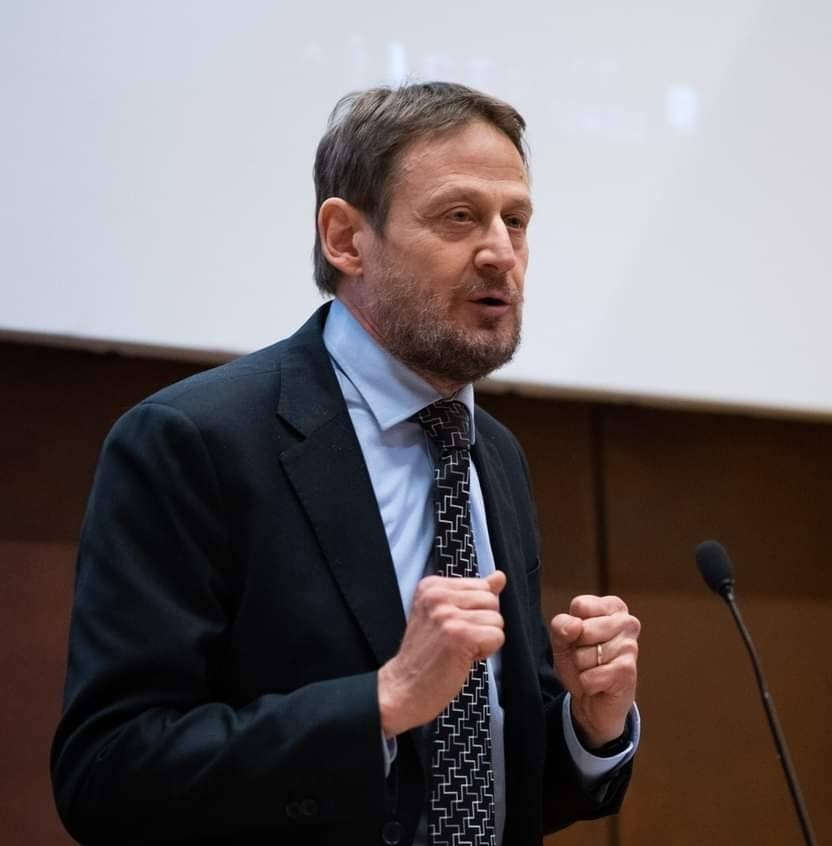
The book Bellezza Italia. A User’s Manual for the Tourism We Want (Primamedia Editore, 172 pages, 16 euros), takes the form of a dialogue between a tourism operator and a cultural operator, namely Roberto Guiggiani (professor of Tourism Markets and Trends at the University of Pisa, former director of the Pisa Tourism Agency) and Gianluca De Felice (secretary of the Opera della Primaziale Pisana), with a preface by Federico Giannini. The purpose of the book is to analyze, through an in-depth study of topics such as marketing, heritage enhancement, overtourism and destination management, the challenges facing cultural tourism. An important economic sector for our country, which generates employment and wealth, but which also causes problems and contrasts, especially considering that the dialogue between tourism and culture has often not been the easiest, on the contrary. The book was born precisely to try to understand how these two souls can meet for a proper and creative management of cultural heritage. Federico Giannini interviewed the two authors: we publish today the interview with Roberto Guiggiani.
FG. How should a museum or exhibition take into account the needs of tourists?
RG. A museum or exhibition should take into account the needs of tourists and visitors in general even before opening its doors, at the moment when it goes to design the historical, artistic and museographic itinerary to be offered then to visitors. The dialogue in this book starts precisely from this assumption: if cultural operators and tourism operators would talk to each other beforehand, it would be possible to absolutely improve the quality of the experience and visit, even surprising visitors by going out to meet them and anticipating in advance what might be the elements of interest from the individual tourist profiles that one wants to attract.
How do the needs of tourists differ from the needs of non-tourists?
This is a good question. The needs of tourists who visit a museum or an exhibition compared to non-tourists differ essentially in the shortness of time available, compared perhaps to residents who may have more hours available and can return. Haste should not be viewed negatively, however. You have to be able to construct a message, a narrative that can be of interest even to those who perhaps know less about that museum, know less about that artist, know less about that current of thought. Here, this would be just one of those elements on which a collaboration between cultural operators and tourism operators would bear the best fruit. The best examples of quick tours for tourists, but not rushed or superficial, are certainly those that are done with tour guides inside an exhibition or museum. For example, at Palazzo Blu in Pisa I have very often visited the exhibitions they organize every winter, and I have very often found guided tours that knew how to focus on the highlights, on the most important works, staying basically within the 50-60 minutes of the visit without taking anything away from the quality and depth of the visit.
So how could one imagine an example of good collaboration between tour operators and cultural workers to meet this need for brevity of the visit on the part of the tourist?
In the book, we cite the example of the Scrovegni Chapel in Padua, which of course also presents ways of visiting that could also be replicated and borrowed for works of art that are not in situations that endanger their very existence. But other realities could also be mentioned, such as, precisely, Palazzo Blu in Pisa, as a very particular but coherent form of museum and exhibitions.
In the book, you say that it is often not the centrality or ease of access to an asset that counts but its importance, and you mention the Scrovegni Chapel, or its ability to do branding, mentioning the castle of Agliè when there had been the famous Rai TV drama that brought thousands of tourists to the castle. How then does one build brand around a monument or museum that becomes capable of transforming itself into a major tourist destination?
The ability to make brands around a monument, a museum, something that is attractive from a cultural point of view is built with a communication capacity that is not superficial, abstract or valid for everyone, but that is inherent, closely linked to the history, narrative and quality of that museum or cultural asset. Over the years, Palazzo Strozzi in Florence, which has a program of both exhibitions and off-exhibition activities in various parts of Tuscany, is a way to establish itself precisely as a brand and to have an attractiveness that in that case concerns both tourists, but also the residents of Florence and the residents of Tuscany in terms of tourist attractiveness.
How important is continuity in cultural programming also in terms of tourist attractiveness?
Continuity is a fundamental element not only for cultural tourism and not only for museums and cultural institutions, but for any element that wants to be present in the tourist market. Continuity of presence, consistency of message over the years, communication that is never interrupted 365 days a year is a key element of success in the tourism market. And I am talking about cultural tourism as well as food and wine tourism, as well as sports tourism or any other travel motivation. Constant, permanent communication, consistency in message and not just in image, logos, colors, but rather in the things you do. Each activity must have a link to the previous activity, must have a sense that gives precisely a constant, fixed, attractive image, because the message needs time, years to be established internationally.
What does it mean in concrete terms to valorize culture from the tour operator’s point of view? And how does valorization for the tourism operator (if it differs, of course) differ from that of the cultural operator?
Cultural valorization in tourism comes through the reception services, the quality of the reception services, the desire to be visited, therefore to be clear, concise, effective. From the moment I appear on the official website, to the moment I arrive at the ticket office, to the ability to accommodate people who have permanent and temporary disabilities in a way that ensures full usability of the visit. That is the central element. How is it different from enhancement instead more strictly cultural? Well, they are two distinctly different things. Cultural valorization is the creation of paths and stories, of narratives that, in full respect of the conservation of the works, can tell us what a museum institution, a monument wants in some way to tell about its heritage. It is essentially based on the preservation of the works and a display that is correct and does not expose to any risk. Enhancement on the other hand from a tourism point of view lies in usability, in a usability that in the book we say should be respectful, correct, but also creative in the ability to intercept the interest of a public that may not necessarily be cultural tourists in the full sense of the word.
Intercepting the interest of tourists basically also means doing promotion, and in the book you say something very interesting, which is that France is the country with the most tourists because it is the one that does tourism promotion best. How does France differ from Italy and how does it do tourism promotion better than anyone else?
France is considered by those of us in the industry to be the model (and we could add Spain as well) of a tourism promotion that has been successful over the years because it has always been managed out of any political conditioning: it is a technical management. They have obviously modified and updated the methods of promotion, but they have been better at knowing how to enhance the various locations from time to time: Paris, the French Riviera, Lyon, the Loire Castles, Normandy. They knew how to create messages for each of these destinations that reached specific profiles of tourists, perhaps even knowing how to renew their attractiveness and capacity over the years, following new or innovative trends in the tourism market well. In this sense they get the results: they are the best at it. We often say that they are good, far too good at selling their country, but in fact it is not that they are too good: it is that over the years they have been able to reconcile technical expertise with consistency of message and with knowledge of established markets, the European ones, and new ones, for example Asian countries, and in identifying messages profiled for individual segments of tourism, which is the key we all have to measure ourselves against today.
The book discusses the relationship between politics and tourism. Politics also means the ability to solve problems, and in Italy there are many problems in tourism, for example, overcrowding in certain resorts. In your opinion, what are the main problems and how could they be solved?
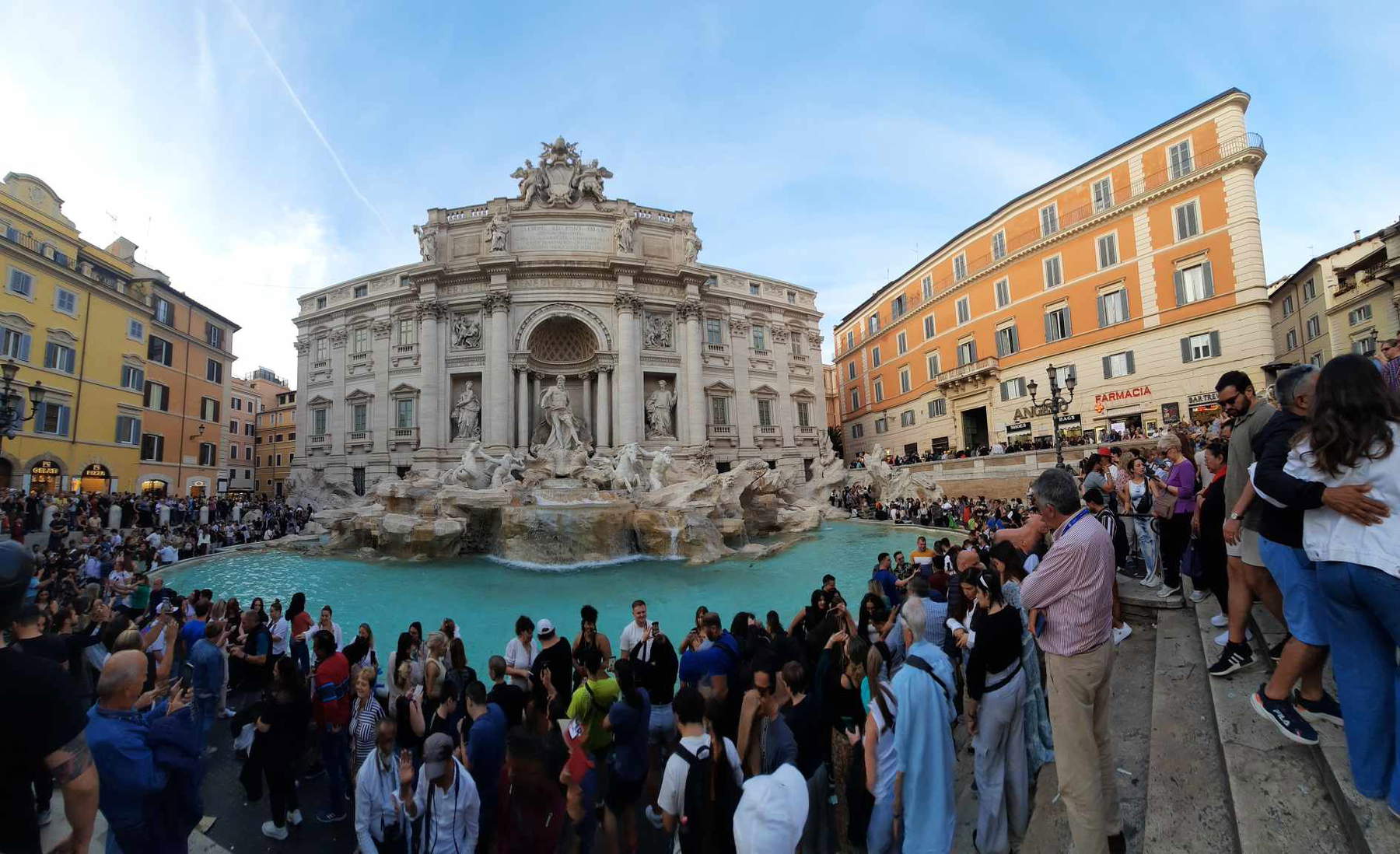
In Italy tourism promotion is essentially political: it is at the national level with the national agency, which is now called ENIT, it is at the regional level. Tourism is a matter that the Italian Constitution entrusts to the regions, each of which has a promotion agency. Some work better, some work worse, but there is always a political overriding of tourism technique, of communicating what is really of interest. The first weakness is the fact that communication often changes from year to year or from administration to administration, and this of course takes great strength away from the promotional message. Secondly, things are pursued that are useful from a political point of view. I would like to mention a recent case: root tourism, which is very valuable from an electoral point of view by talking to Italian-descendants (60-80 million, but it’s not really known how many of them there are), and because of course in some way it focuses attention on the places where these people come from, but without any real, real analysis of who the root tourists might be, what their motivations might be, their desires to travel. It is a fad that maybe in a year or two years passes and you abandon the work done chasing another political chimera. Does tourism in Italy have problems? Yes, there are, although perhaps not the ones that are addressed daily in newspapers, on television, on websites. Is overcrowding, so-called overtourism, a problem? Yes, it certainly is in Venice, it is in certain parts of Rome, it is in certain parts of Florence, it is not for so many other destinations that there are in our country. In fact, the real problem with tourism is essentially the lack of a welcoming system that goes through information, that goes through the usability of cities, that goes through the ticketing of museums as well as other subjects. The real problem is the lack of organization and also management of flows where they actually become too numerous because they are too concentrated in certain areas. I, however, have written in the book and have often reiterated in speeches, interviews and so on that overtourism is being fought only in words. Actually, mayors and aldermen like overtourism because it brings a lot of money to a city, because it makes a lot of economic activities work, and as a result they talk badly about it because this can bring votes, it can bring electoral consensus, but I have yet to see an intervention that was really geared toward flow management and redistribution of flows, city management that goes beyond tourism and addresses all the issues of residency, mobility, commercial fabric and so on. Little or nothing, on the other hand, has been done in terms of creating welcoming services or expanding tourist attractions in order to reduce overcrowding. Just recently there was at the BTO in Florence a series of meetings with European and also Italian Destination Management Organizations (DMOs) addressing this issue: Barcelona, Valencia, Copenhagen, Munich and Trentino-Alto Adige. They all emphasize the same point: you cannot reduce tourist flows significantly, you cannot stop people from going to these cities.
So what can we learn in terms of organization from those who are perhaps working better than we are?
We need to find ways to heal the crisis points. First: with participation, involving residents, involving them in solutions, trying to reduce hostility, finding shared solutions by everyone. Second: by expanding the space, the area on which tourists move. If they are all concentrated on a square, if they are all concentrated in a museum, you have to be able to create attractors at 200 meters, 500 meters, one kilometer, two kilometers, so that these flows can be expanded. And that of course requires investment, and considerable investment. Nobody has a magic wand, nobody has a one-size-fits-all solution. Each reality must somehow adapt to its own size, its own tourist flows, its own characteristics. Undoubtedly mobility flows are an essential element: how many buses arrive, how many cruises arrive, what routes, what routes do they take within a city? Because very often it is these group tourism phenomena that lead to overcrowding at certain times of the day. Where we can direct them not all to the same thing but instead to different attractors so that even parts of the city that are currently marginal can enjoy the tourist flows that also have a positive economic value. The other common element of these DMOs that are trying to manage tourist flows in cities is to use tourists’ money to reduce residents’ costs, to break down residents’ hostility by saying: yes, it’s true, these tourists maybe bother you, but with their money we don’t charge you access or permit to the LTZ, we don’t charge you garbage tax, we let you enter city museums for free, in such a way that the economic benefits go to not only the business operators, but to all residents. Are there practices to copy? No, I am against copying. I am very much in favor of borrowing positive experiences and adapting them to one’s own city.

The author of this article: Federico Giannini
Nato a Massa nel 1986, si è laureato nel 2010 in Informatica Umanistica all’Università di Pisa. Nel 2009 ha iniziato a lavorare nel settore della comunicazione su web, con particolare riferimento alla comunicazione per i beni culturali. Nel 2017 ha fondato con Ilaria Baratta la rivista Finestre sull’Arte. Dalla fondazione è direttore responsabile della rivista. Nel 2025 ha scritto il libro Vero, Falso, Fake. Credenze, errori e falsità nel mondo dell'arte (Giunti editore). Collabora e ha collaborato con diverse riviste, tra cui Art e Dossier e Left, e per la televisione è stato autore del documentario Le mani dell’arte (Rai 5) ed è stato tra i presentatori del programma Dorian – L’arte non invecchia (Rai 5). Al suo attivo anche docenze in materia di giornalismo culturale all'Università di Genova e all'Ordine dei Giornalisti, inoltre partecipa regolarmente come relatore e moderatore su temi di arte e cultura a numerosi convegni (tra gli altri: Lu.Bec. Lucca Beni Culturali, Ro.Me Exhibition, Con-Vivere Festival, TTG Travel Experience).
Warning: the translation into English of the original Italian article was created using automatic tools. We undertake to review all articles, but we do not guarantee the total absence of inaccuracies in the translation due to the program. You can find the original by clicking on the ITA button. If you find any mistake,please contact us.
























 IT
IT FR
FR DE
DE ES
ES CN
CN


