




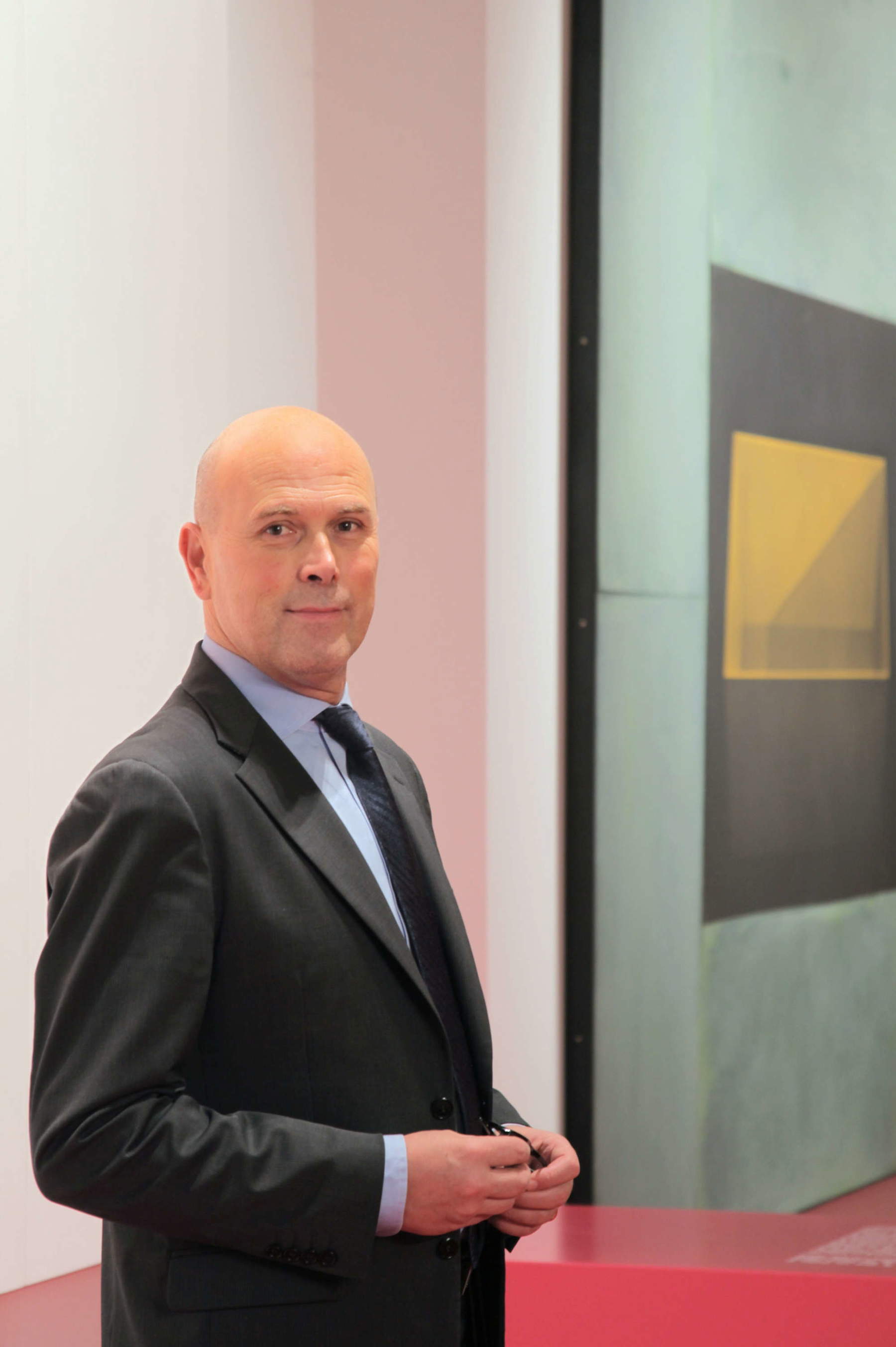
Sergio Campagnolo is the dean of press offices dealing with art and culture. A longtime passionate and knowledgeable professional, always available, adept at sensing and interpreting changes and revolutions in the profession, a man behind the scenes of the success of several large and not-so-large exhibitions followed by his press office, Studio Esseci, founded in Padua in 1986, Campagnolo left the business after exactly forty years in business. In the meantime, his Studio Esseci, to be headed by his collaborators Roberta Barbaro and Simone Raddi, has become an indispensable point of reference for those involved in culture on a professional level. How has he built his success? What are the foundations of his method? And most importantly: what will happen to the press office profession, and to exhibitions, in the future? Sergio Campagnolo discusses this in this long interview with Federico Giannini.
FG. I’d like to start with a curiosity, something that we have in common: we both came to art by a roundabout way. You went from medicine to art (or rather: from medicine to sociology, and then to art). I wanted to ask you what it was like to go through this transition and especially how you managed to juggle it at first, working in a completely different environment from the one in which you were trained.
SC. You know, I was basically a farm boy. I came from a family of farmers, then laborers, from a small town. So at first, when I got into this job (because I had been eyeing it, not because of anything else) I felt very out of place. Eventually, evidently, the ability to work, and to work in a method that was all together different from that of the ladies (because it was almost only ladies, at that time, who did this job), favored me. And it was a climb that was not even sought, it came on its own. Moreover, I had already done work of this kind in a scientific environment. I had been the Press Office at the National Institute of Nuclear Physics for two years, and that was the time of Rubbia’s Nobel Prize: so not exactly the most modest gym in Italy at that time. I had also worked as an employee (not for INFN, but for the ASL in my area) as an in-house press office. I had, in short, work experience before. To art I happened upon it by chance. I liked it, evidently they also liked me, and I had spontaneous endorsements: locally, for example, Tony Cibotto, who at the time was the art signature of the Gazzettino, nationally Federico Zeri, who always gave me a hand. And that got me going. Nothing studied, very casual.
Another thing we have in common: you said you are ... Campagnolo by name and origin, and I am also from the province. How has being from the province helped you, and today in your opinion is it -- still a limitation or has it become an added value?
It is neither a limitation nor an added value, in my opinion. It depends on how you work, period. People can go looking for a press office that is in the most unlikely places if they perceive it as something that comes in handy. That’s all. Of course, at the time it was a bit colorful that we were, for example, extremely present in the Roman square. They looked at us (actually, they looked at me, because I was on my own at the time) almost as a kind of little duckling, which had to be somehow respected hiusto because it was small. Then the little duckling grew up a bit. The feeling, though, is that the positive opinion and all in all the sympathy towards that duckling remained.
I would ask you then what have been, at this point, the pillars on which the success has been based ... of the duckling, I would say. Getting respect from very large realities is not easy.
We have changed method, somewhat, without presuming great revolutions. In provincial realities (but all things considered, even in the Roman reality, where we had a big baptism), press offices were still made by... salons. That is, it was still an environment of almost salon-like relations. We did not belong to any salons, I really not even a little bit, and we worked. A lot of phone calls, we broke a lot of boxes, however, in the end the results came. I’m not saying we were the only ones doing it, but we did it perhaps more precisely than others.
Coming to how press office work is done: today many people tend to increasingly confuse press office and marketing, often overlapping the two activities. What do you think is the insurmountable boundary between informing (and thus press office activity) and promoting (marketing) in the world of culture?
There is indeed a great deal of confusion, not only with marketing, but also with public relations, which are another thing, although they are often really confused. The distinction is this: the press office operates where it does not have to pay or invest for an article or service to come out. That is the fundamental difference. You do marketing by investing. Public relations you do it -- by investing anyway, even if in another form. The press office doesn’t.
And you, as a press office, how did you choose the elements on which to base your communication for your clients? Take exhibition communication, for example.
Exhibition communication for me has always come later, in the sense that first of all there was a confrontation with the client and the curator, because if you don’t create an attunement with these people you can’t do your job well. This is my personal belief, it is not necessarily the only one, but at least I have always reasoned this way. So much so that with many clients I then became a kind of friend, even consultant, which is an added value. After that you have to study: what about that exhibition can fascinate, if not amaze? And it is an increasingly topical theme. Just look at the web: the hooks, that is, the headlines, say something amazing, then maybe the reality is totally different. You can’t get there, of course, by being a press office. Let me give you a practical example. I personally created the concept for an exhibition about an eighteenth-century scientist from Rovigo, Cristina Roccati. A well-to-do middle-class girl, first off-site student of science (she did not study in Padua as would have been legitimate, as it was territory of the Venetian Republic, but went instead to Bologna, a papal territory). She graduated, then basically had the misfortune of running into a financial meltdown of her father (a merchant of sorts) and had to go back home, because in those days, if you wanted to study, you had to pay. He ended up being a physics teacher to the children of the rich in the city of Rovigo. An interesting story, of course, but no big deal. tudiating, however, I realized that Cristina Roccati graduated in physics at the time when a professor of anatomy at the University of Bologna, Petronio Zecchini, claimed that women have brains, but this brain reasons through the uterus. He wrote the pamphlet The Thinking Womb, which seems like nonsense to us today but actually shaped, and in some ways opposed, scientific thinking about women’s ability to deal with it, all the way back to Maria Curie. For a very long time. That was the element we focused on. And it worked. Otherwise it would certainly have been an interesting local phenomenon, but nothing more. In short: the press office has to study. Even beyond the specific interests of the curator. And then the curator has to be convinced (in that case there was no need, because the exhibition was curated by a decidedly good curator, Elena Canadelli) and you have to bring the client to think in this way as well.
I imagine that communication, on your part, must also take into account the differences in who receives it: one thing is the trade magazine, another thing is the generalist publication. Do press offices make this distinction?
In my opinion too little. It should be made, and to some extent it is made, but not always and not yet enough. Because one thing is the specialized masthead, another thing is any tourism website (which should be held in equal consideration with Finestre sull’Arte, because I am not for discriminating A and B mastheads, I have never done it, just conceptually it does not fit me), which has a totally different language and need for simplification. The alternative is what? That that text, assuming the theme is intuited as interesting, ends up with artificial intelligence, which reduces it to the number of lines needed to make a screed out of it. And that is not a good outcome. I do not believe in the miraculous power of pitching: I believe in the fine work that has to be done by contacting the editorial office, or the editor, or the contributor. That is the real work of the press office, not so much writing and issuing a press release: anyone can do that. The other job that has set Studio Esseci apart is to have an address book that goes far beyond newspapers (whatever they are: written, radio, broadcast, and online). We have tried for years to implement stakeholders, that is, decision makers, those in the area who have a voice, directors of other museums, superintendencies, and so on. I give the most trivial example: presidents of Lions and Rotary, but also of cultural associations, who then are the ones who can organize ... the field trip! And then become promoters of that exhibition themselves. Don’t imagine a communication only to official communicators, but also to all those people who can talk about it, take care of it, organize it. What I cannot understand, rather, is what will happen tomorrow. I imagine an increasingly determined entry of artificial intelligence in this area as well. Without engaging in science fiction, I imagine that within 3-5 years it will no longer be Roberta or Simone contacting you, but it will be an artificial voice that will respond to your needs, perhaps even more precisely than a human, send you materials immediately, check your output, and thank you for your output. What that means then in terms of quality or occupancy, I don’t know. There will be a lower quality maybe, but on the other hand, if you analyze the overall output after a press campaign, they already tend to a lower and lower level. And that’s an objective element So there won’t even be a huge difference, there will, however, be a completely different way of working. I am not even able to understand what will happen in the world of exhibitions. Exhibitions cost more and more (this is a real fact: prices are rising), and the audience is not increasing proportionally. Except for a fairly small number of cases altogether, the rest of the exhibitions have not increased in the last three years. And that is a problem. We are realistically going towards a decrease in resources: public institutions will be more and more engaged on social issues (hopefully not on other areas, such as war), banking foundations, which today are a great support, will be taken by the jacket more for social than cultural situations, and companies will be more and more focused on product and less on collateral. I think that’s a pretty realistic picture.
You’ve laid out a pretty complex picture. Meanwhile, you mentioned artificial intelligence, and you said that we are already seeing a lowering of the quality of communication (which is, also in my opinion, tangible and perfectly observable). I ask you then: will artificial intelligence help to flatten it further, or will we humans, in order to survive, have to go back to writing well in order to distinguish ourselves from artificial intelligence, and thus we will see a rise in the quality of writing?
I guess both are true. I don’t have a crystal ball, but I think of it this way: sites that are pure information will probably not flatten out or improve, because they already have a poor standard now. And artificial intelligence might even do better. In all markets there is the low-end product, the mid-range product, and the high-end product. In the high end, your reasoning about the creative’s greater focus on giving more could be true, and I would hope so.
Speaking instead of exhibitions: has all the overproduction in recent years, in your opinion, helped culture or has it saturated and especially fragmented the public’s attention?
In the meantime, I wonder if exhibitions were made to make culture. In many cases they were not. They were means (and, mind you, this is not a criticism at all: better that than anything else) that several cities, perhaps not among the largest, used to attract audiences. And that is entirely legitimate. The public then discovered smaller cities, but also major cities, on the occasion of an exhibition: this is good. They have very often been used as essentially tourist attractors, according to a quantitative logic that has prevailed, in my opinion, in recent years and that is now beginning (without my, I repeat, really having the truth in my pocket) to show a little bit of a chord. The exhibition was worthwhile if it made tot visitors, if it made X turnover in ticketing, if it moved Y percentage-wise in terms of tourist attendance or turnover of hotels, inns and restaurants. That was what was judged as important. But in this whole environment, if you will, slightly misled by these requirements, there also arose operations (like the one on Beato Angelico, for example) of very great quality, which obtained a very great public response. But which, however, require a very large initial investment. The question then is: How many will be able in the future to have enough budget to afford such operations? And how many others, on the other hand, will go toward third-site exhibitions that in some cases prove to work just as well as if they were first-site? This, too, is an interesting phenomenon, because exhibitions are now going to tap into (except for huge ones) a 100- to 150-kilometer catchment area, and thus are available to audiences within that radius. There are examples of companies and people running an exhibition in ninth, tenth, eleventh locations and reaping success. This could be another way. Then there are exhibitions that cost less. It’s no accident that photography has grown a lot, because a photography exhibition, no matter how beautiful it is, definitely costs a lot less than a big art exhibition. So exhibitions will continue: in my opinion the type of exhibitions will change a little bit.
You have been following successful exhibitions, big exhibitions, small exhibitions, expensive exhibitions. I ask you then: how important, then, is the work of the press office in determining the success of an exhibition?
It is one of the factors. The press office does a job that is essentially confirmatory in nature. That is, if the public finds it on a website, fine. But if they also see it on a television report (especially from the national networks), if they see it in a major newspaper, maybe just through the press review, then what they read takes on more substance. This could be the real function of the press office. And in some ways also the real function of newspapers like yours: to become a reference for an audience that is not carried away by a four-line headline fished out of the net, but wants to understand whether they are spending their time and money well.
I come back to another point you mentioned earlier: the fact that part of your firm’s success has been based on building a base of important stakeholders. I would think of the fact that the news industry today is very differentiated. Newspapers and journalists have been joined by influencers, creators, social pages, and a whole range of stakeholders who in various capacities operate in the information sector as well as in the communication sector (let’s leave the distinction alone, while keeping in mind that there is a lot of confusion here as well). How do you think the arts and culture audience navigates this chaos? And again: is the trade publication still a solid point of reference? How has its perception changed in this crowded landscape?
The word “audience” is an indeterminate definition. We actually have many audiences, and we need to think not for a formless mass but for specific cohorts of subjects, otherwise we are wrong. I often go to observe visitors to exhibitions, mine and others’. And I see that classical art exhibitions essentially have an audience from 35-45 years old and up. Contemporary art exhibitions have an audience that may be over 45 years old, but it is mainly composed of a younger audience. Some special theme exhibitions intercept 25-35 year olds. The right interlocutor must be sought for each of these categories. Those aged 35-45 and up today I would say still see television. A news report gets noticed. This is a group that listens to radio, although in different forms, not necessarily in the radio news. If the disc jockey says, “I went to see such an exhibition on Sunday and enjoyed it,” that’s worth more than the report in the radio news. After that, we all, of course, take a look at the web: some very carefully, some even paroxysmally, some somewhat lightly, and this depends on age, education, culture, attitude. In all this, newspapers and cultural pages are read by a very small minority: already the newspaper does not have large readership numbers, the decrease is evident, and within the newspaper the cultural page is certainly not the most read. Yet it is important for that theme I mentioned earlier: the need for confirmation. If what I have seen on the web and heard on TV I also find, coincidentally or not, in the online edition of the newspaper, it gives me greater confidence.
Think instead of what the newspaper, the daily, the trade magazine used to be. They were the absolute.
Not only that: anyone who wrote about art, even in the Gazette, was a famous person! Because everybody read the newspaper. And they all read it.
And not only that: I dare say they used to determine by themselves, or at least to a great extent, the success of an exhibition. Today, of course, this is no longer the case. So, if information alone is no longer enough to move the outcome of an exhibition, let alone decree its success, where is the game really being played?
I answer in a perhaps unexpected way. Communication is certainly important, but first and foremost the direct communication of those organizing the exhibition or those curating it with their clientele matters. The most explicit example is Marco Goldin. When he opens the doors of an exhibition, he already knows that he can count on a certain kind of influx, because they are his customers. Then others are added, but the strong core, which makes the exhibition take off, is formed by his customers. He takes great care of them, and they become fans of Marco Goldin. Then come the social media (which he curates very carefully himself), come the presentations in the territories, the theater shows in the cities. It’s a lot of work if you want to get great results. Now there is nothing miraculous anymore. It is the sum of a huge amount of work.
So at this point I provoke you: are we becoming more customers and more fans, and less informed visitors?
We are one and the other. Let me give you an example outside of exhibitions. Even a commercial brand of a supermarket does direct marketing aimed at its customers, does promotional actions. But it doesn’t make its customers less informed. It is up to the customer to know what he wants. He may go to see an exhibition because it is fashionable, because everyone is going, or because the choice is reasoned. It is valid one but also the other. The real question is, what do people who happen to even accidentally happen to be within that experience get? That is the question that needs to be asked.
So in your opinion today a good press office must also be a good analyst, able to read traffic data and flows to decide what to communicate ... or can it still rely on its cat’s nose?
It is long past time to rely on the sniffer: that would be a mistake. Sniffing then is something personal: mine does not coincide with that of a collaborator or colleague. Of course, the flair helps, in the sense that if you do an analysis by also paying attention to other people’s data and so on, it supports you. But after that you have to struggle, you have to do analysis. I have a degree in sociology, and that has helped me on this path. There is statistics, there are sciences of analysis. It takes a lot more fine work than it used to. The world has become much more complex (which is why it is also, in some ways, more fascinating) but it requires more strength, more focus and an open mind.
Talking specifically about Studio Esseci: what do you think is the biggest challenge that Roberta and Simone will have to face in order to keep a press office with 40 years of experience, which started out as traditional, relevant in this world that is racing toward artificial intelligence as we have been saying?
I have always given myself this goal: to try to understand where the world is going (our world, but really also the world around us, because if a war breaks out, we are also affected). And understand how the horizon of work will evolve at three and five years, and on that create specific action. I think this is still a valid method. Although more difficult, I recognize, to understand what happens three and five years from now in our work and in the art world.
And instead, to close, on your personal activity: I know that you are following an activity of conceiving exhibitions. I still remember with pleasure your exhibition on the De Silvestri Collection in Rovigo a couple of years ago, which was an interesting opportunity for insight. What are you doing now?
I continue to collaborate with the Fondazione Cassa di Risparmio di Padova e Rovigo, which at my suggestion created a series of exhibitions called History and Stories of Polesine. A bit to bring the people of Polesine (and also the people of Veneto, and those who feel like going back there) to understand what important historical moments, what important people they had in their past. A past up to the near past, because one of the last exhibitions was on Giacomo Matteotti, for example. I am now working on an exhibition on a 16th-century figure who is well known among scholars but virtually unknown to most: Luigi Groto, the Blind Man of Adria. The exhibition will be titled Groto, the Blind Man of Adria between Monteverdi and Shakespeare. We are talking about a refined intellectual of the sixteenth century, blind from birth, who wrote many poems, odes, orations, speeches of various kinds, but also a series of great comedies and tragedies. He not only wrote them, but directed them and partly participated in them as an actor. It has something to do with Monteverdi because he set some of his sonnets to music; others were set to music by Spanish musicians, testifying to how in the sixteenth century Italian culture (even of apparent provincial origin, as might have been that of a person born, raised and always lived in Adria) pervaded virtually all of Europe at the time. And Shakespeare has something to do with it because La Hadriana, a play written by Groto (found in the great English libraries in the sixteenth century, and we have demonstrated its presence) may have served as a canvas for William Shakespeare’s plays. It is not proven, but neither is it ruled out. Then we will have two more art exhibitions on two aspects of collecting, which are really very important, like the one you mentioned earlier of the De Silvestri in the Rovigo area. This is a project I would like to pursue, because I find it to be a different way of doing exhibitions: low-cost, with a mainly local audience (which I don’t see as a limitation, in fact I see it as a value) but with the ability to attract audiences from outside as well.

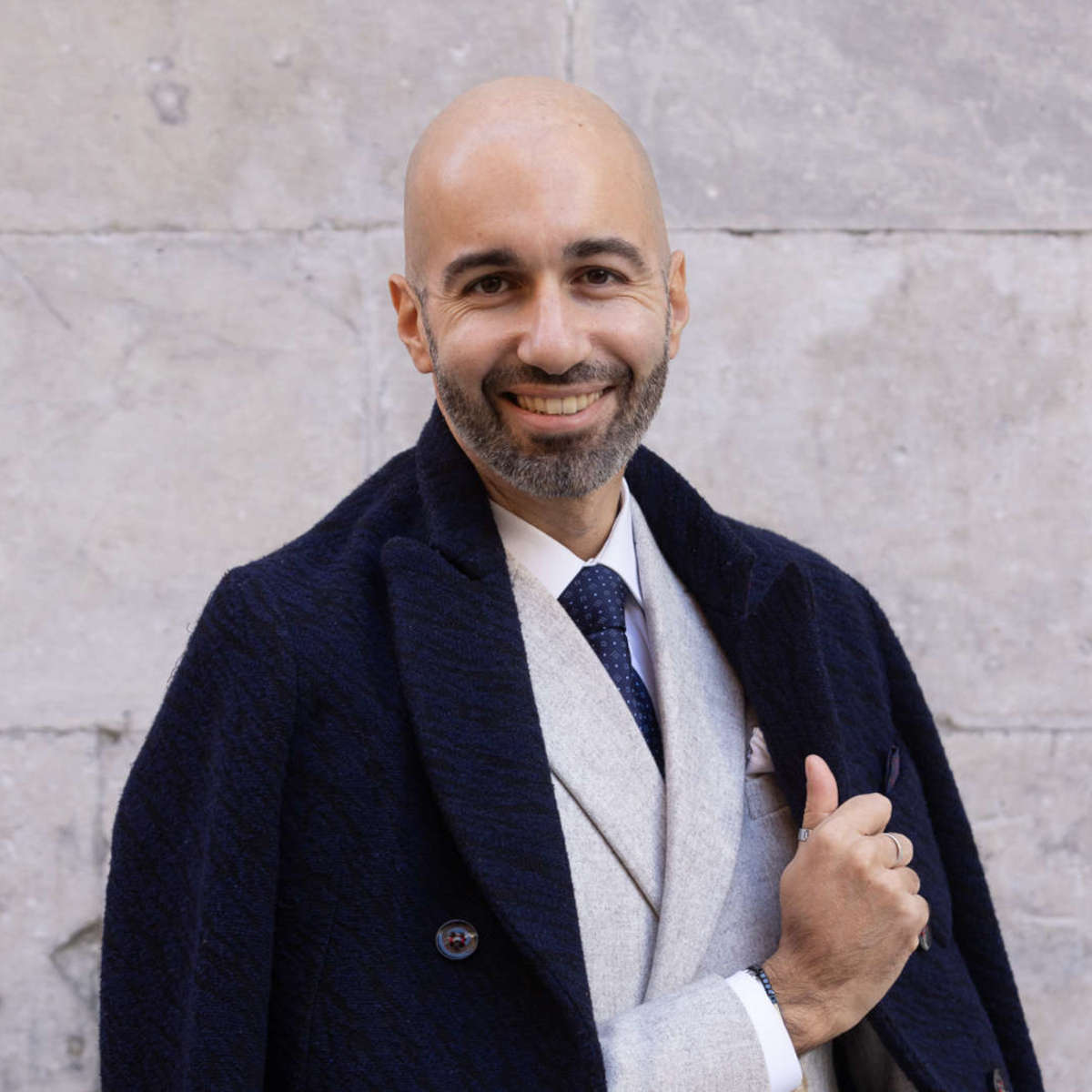
The author of this article: Federico Giannini
Nato a Massa nel 1986, si è laureato nel 2010 in Informatica Umanistica all’Università di Pisa. Nel 2009 ha iniziato a lavorare nel settore della comunicazione su web, con particolare riferimento alla comunicazione per i beni culturali. Nel 2017 ha fondato con Ilaria Baratta la rivista Finestre sull’Arte. Dalla fondazione è direttore responsabile della rivista. Nel 2025 ha scritto il libro Vero, Falso, Fake. Credenze, errori e falsità nel mondo dell'arte (Giunti editore). Collabora e ha collaborato con diverse riviste, tra cui Art e Dossier e Left, e per la televisione è stato autore del documentario Le mani dell’arte (Rai 5) ed è stato tra i presentatori del programma Dorian – L’arte non invecchia (Rai 5). Al suo attivo anche docenze in materia di giornalismo culturale all'Università di Genova e all'Ordine dei Giornalisti, inoltre partecipa regolarmente come relatore e moderatore su temi di arte e cultura a numerosi convegni (tra gli altri: Lu.Bec. Lucca Beni Culturali, Ro.Me Exhibition, Con-Vivere Festival, TTG Travel Experience).
Warning: the translation into English of the original Italian article was created using automatic tools. We undertake to review all articles, but we do not guarantee the total absence of inaccuracies in the translation due to the program. You can find the original by clicking on the ITA button. If you find any mistake,please contact us.






















 IT
IT FR
FR DE
DE ES
ES CN
CN


