




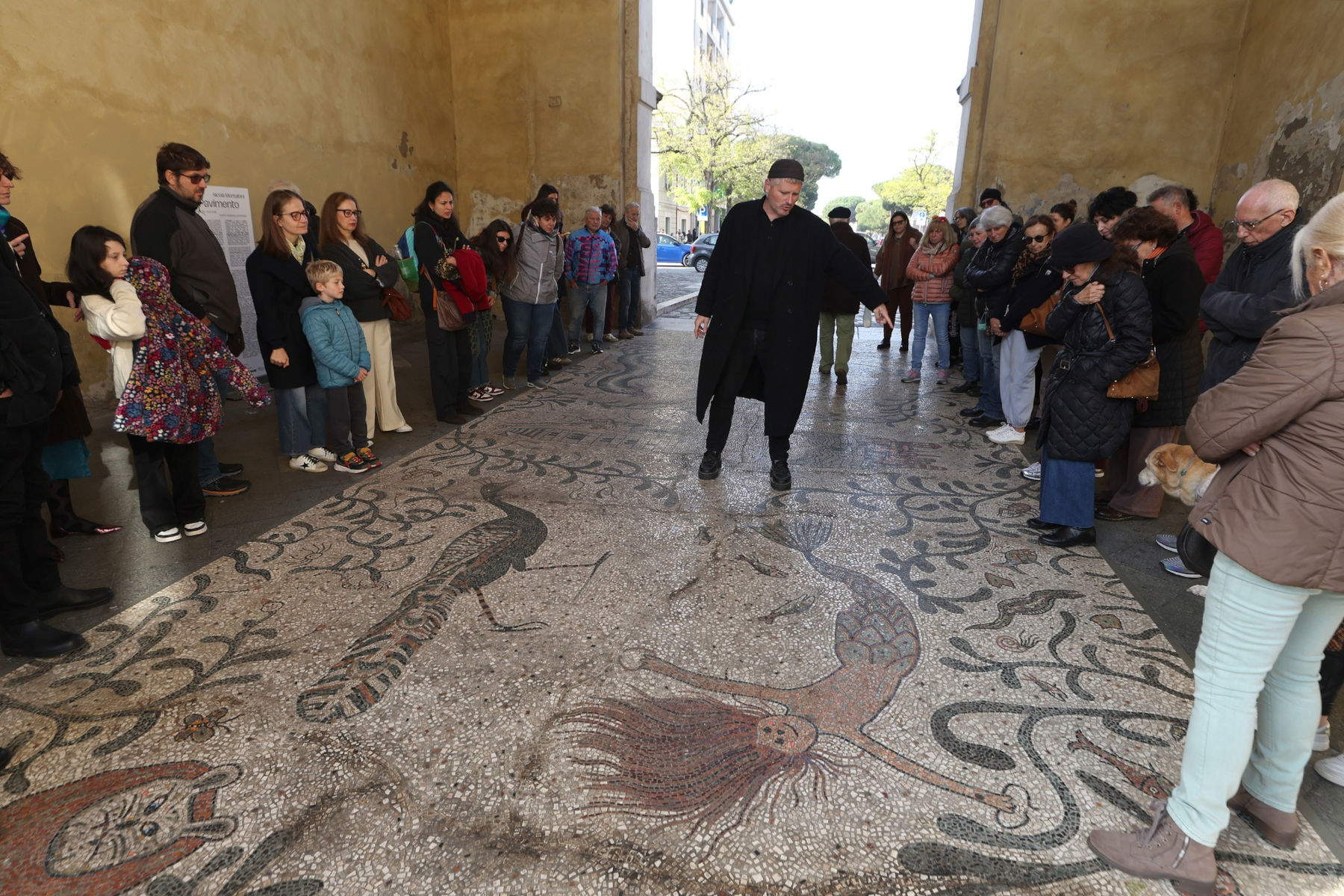
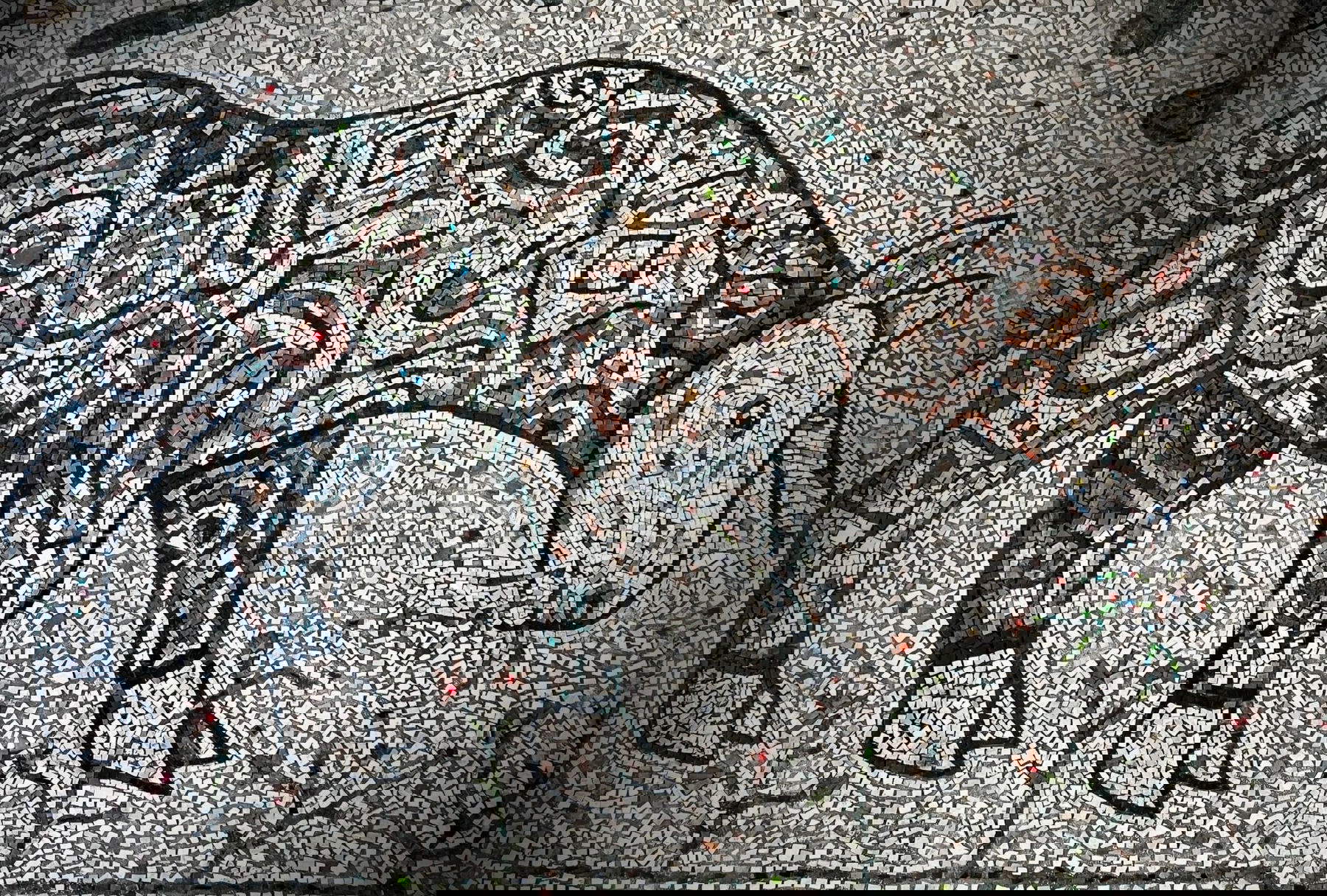
Do you rememberIl Pavimento, the large mosaic designed by Nicola Montalbini(we talked about it here) and installed inside Porta Adriana, one of the historic entrances to the city of Ravenna and passageway to the main pedestrian artery of the center, during the Biennale di Mosaico Contemporaneo? The temporary work, which has become one of the most discussed cases of the event in recent months, is to be removed. As reported by several newspapers such as Il Resto del Carlino and Ravenna e Dintorni, despite requests made by the Municipality of Ravenna, the Soprintendenza Archeologia, Belle Arti e Paesaggio (Archaeology, Fine Arts and Landscape Superintendence ) has issued a negative, binding opinion, requiring the mosaic to be dismantled by Sunday, January 25 , 2026.
"The Floor was born as a temporary operation, which in a short time aroused the affection and recognition of the community,“ artist Nicola Montalbini tells us. ”Following the negative opinion of the Superintendency, together with the city administration and the Department of Culture I will work to find a new home for the Floor that will maintain its public and community character. Everything that is happening intrigues me because it raises important questions, and says that yes, the mosaic is more alive than ever."
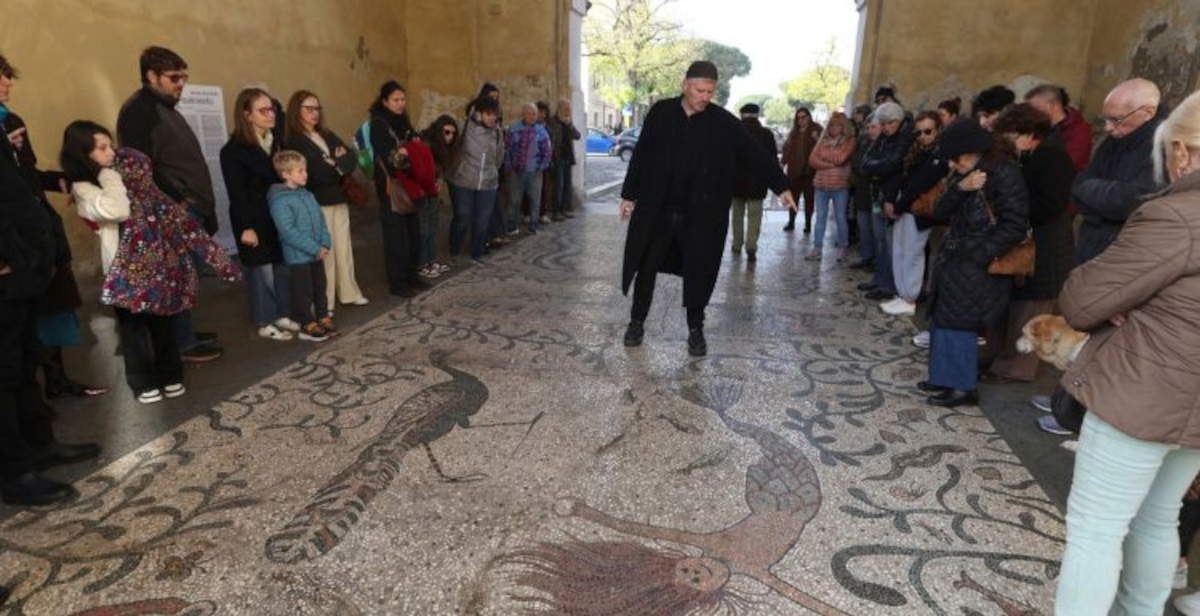
The Floor had been inaugurated on Oct. 17 and, as planned for all Biennale installations, its removal was scheduled to coincide with the official closing of the event, set for Jan. 18. From the first days, however, the work had attracted widespread interest, not limited to visitors and insiders. The mosaic had become part of daily life for many Ravenna residents, traversed on foot or by bicycle, observed during guided tours led by Montalbini himself and used as a space for observation and study even by school groups. Around the work, the idea that it could remain in place beyond the planned time frame had quickly established itself.
In mid-December, the Municipality had submitted an initial proposal to the Superintendence, asking to keep Il Pavimento permanently at Porta Adriana, guaranteeing the full reversibility of the intervention. As Ravenna and Surroundings writes, in the absence of a response, the Administration had made a second request, illustrated by Culture Councillor Fabio Sbaraglia, which envisaged a temporary extension until mid-June, with the aim of making the work visible even during the spring and summer tourist season. Both hypotheses were rejected. The Superintendency therefore confirmed the removal requirement, stipulating that the area must be restored by January 25, one week beyond the closing date of the Biennale. The decision thus permanently closed the possibility of the mosaic’s permanence at Porta Adriana, despite the cross-party consensus the work had garnered. During the weeks of the Biennale, merchants in the area had promoted a petition to prevent its removal, collecting more than 700 signatures in a short time. The City Council had also spoken unanimously in favor of keeping the Pavement, voting on a motion shared by all political forces, including those on the center-right. The fact that the superintendent Federica Gonzato had the final say was known, but the possibility of an extension had remained open until the negative opinion arrived.
The rejection therefore elicited immediate reactions. As Il Resto del Carlino writes, Alberto Ancarani, leader of Forza Italia’s group in the City Council, formally asked the Superintendency to suspend any act of removal and to open a public discussion with the Council and the city. Parliamentarian Ouidad Bakkali also intervened in the case, announcing the submission of a question on the matter and inviting the Minister of Culture to visit Ravenna. In parallel, Councillor Sbaraglia said he was working on a possible alternative plan, a Plan B that would allow the work to be relocated to another public space.
In the meantime, the debate also extended to social media, where comments collected online returned an articulate and sometimes conflicting picture. Part of the public expressed the desire for the mosaic to remain at Porta Adriana, considering it one of the most successful cultural initiatives in recent decades. Under a video posted on the Facebook page Ravennawebtv on Oct. 29, 2025, one user wrote, “It would be sorely missed if it were taken down, and the most beautiful initiative taken by the municipality in 50 years. It must be protected so that it doesn’t get ruined but woe to those who touch it from there!”
Other comments called out the city’s historical identity: “But excuse me, are we or are we not the city of mosaics? Ravenna should be carpeted everywhere. We have a traffic circle called the ’mosaicists’ traffic circle’ and it didn’t occur to them to put even a shred of mosaic in the middle. We have historic mosaics that they love all over the world, but we could give another offer to tourists, young people and citizens all to enjoy more contemporary and modern works as well. For me it should definitely be kept!”
With the confirmation of the removal, which came on January 20, the debate became more heated. On the same day, under posts and videos published by the Facebook page Ravennawebtv dedicated to the mosaic, numerous critical comments addressed to the work of the protective body appeared. “With this decision the superintendence (intentionally lowercase) has done nothing but reconfirm its uselessness,” writes one user, while another observes, “However, the city of mosaics against itself is really the limit.” There is also no shortage of references to the urban context of Porta Adriana, judged by some to be undervalued: “Good thing I am the Superintendent of Cultural Heritage eh! Maybe because it is positioned in a space instead little cared for which apparently they overlook little,” reads a further comment. Reactions that restore the measure of an affair capable of intercepting widespread sentiment far beyond the sphere of insiders.
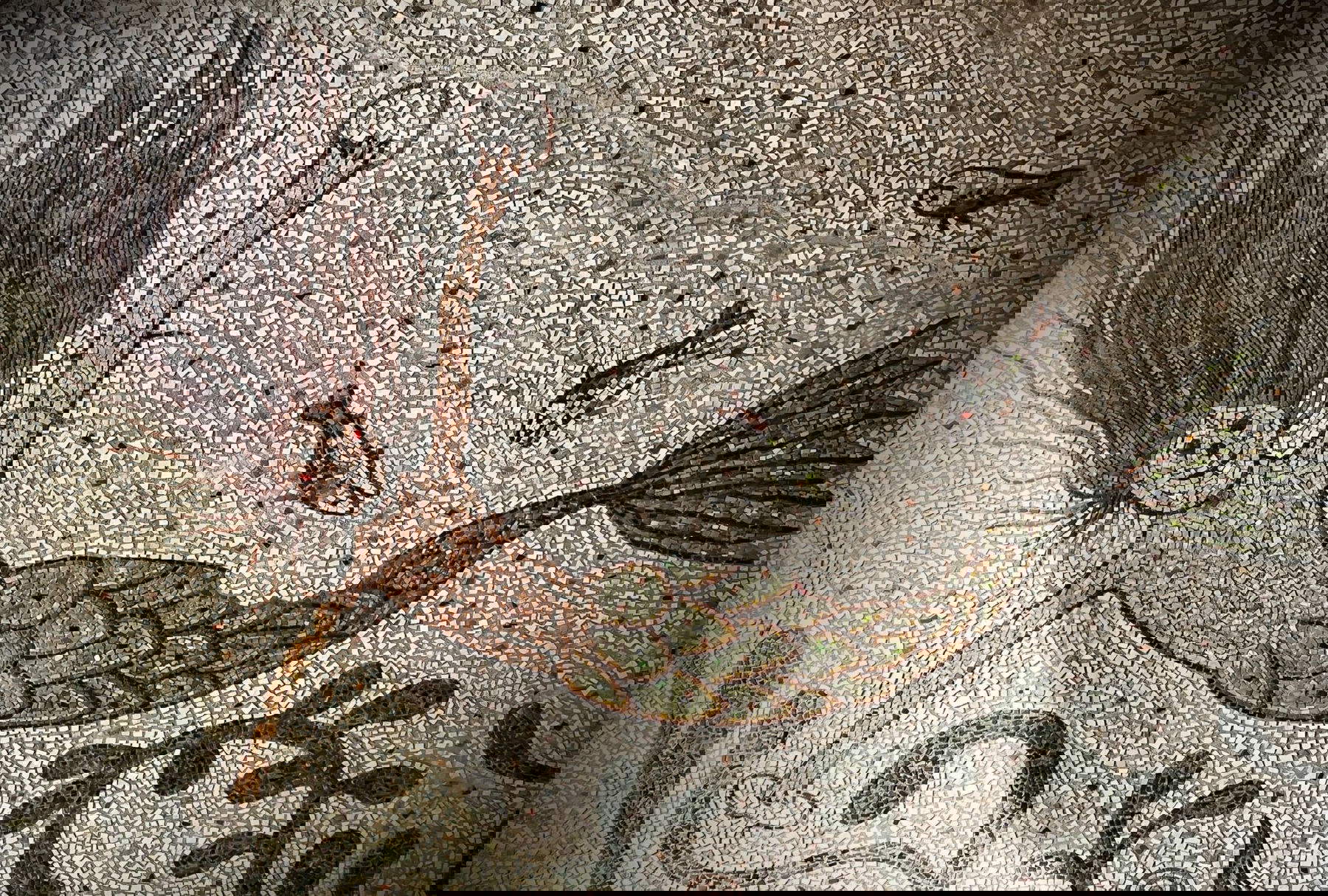
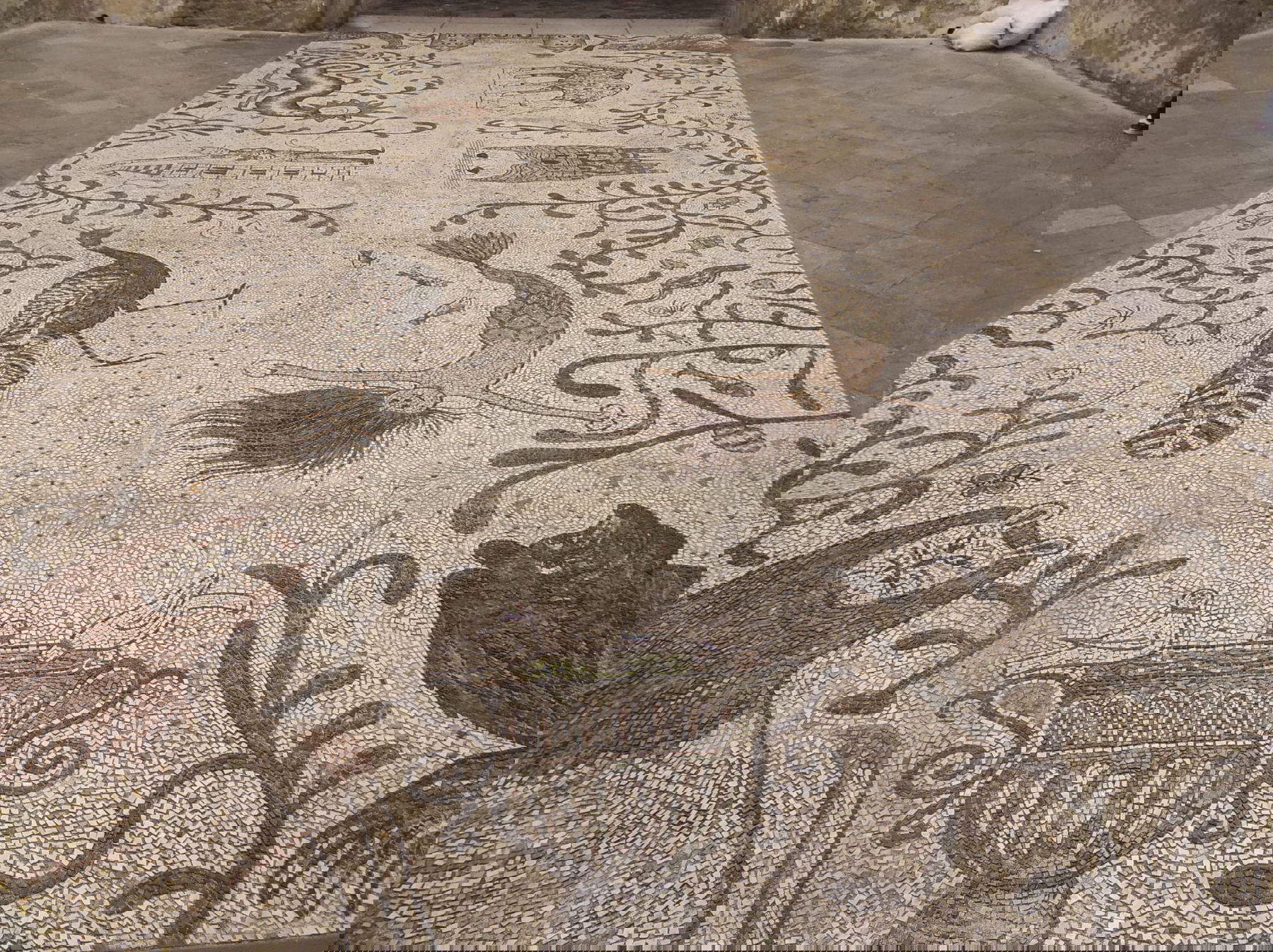
The MontalbiniFloor was created in collaboration with Marco Santi ’s Gruppo Mosaicisti Ravenna and with the involvement of students from theAcademy of Fine Arts: Roberta Casadei, Francesca Fantoni, Lorenzo Baruzzi, Chiara Cappucci, Yinzhuoran Cheng, Martina Di Mattia, Mattia Farinelli, Chiara Ferraresi, Xia Lingjie, Hernan Lombardo and Marica Zanga. The curatorship of the project was entrusted to Daniele Torcellini and Eleonora Savorelli. The initiative, organized by theMarte Association, received support from the Municipality of Ravenna and sponsors Mapei and Profilpas. From an iconographic point of view, the work proposes a sequence of real and fantastic animals, hybrid figures and quotations that refer to the ancient mosaic tradition, the artist’s personal memory and suggestions related to the future. The Floor is configured as a physical and symbolic crossing, designed to be walked on and experienced, and invites a layered, non-immediate reading in dialogue with the urban context and the city’s history.
The removal of the mosaic will require several days of work and a series of technical permissions. The operation will be conducted together with the Gruppo Mosaicisti Ravenna cooperative, which collaborated on the work. However, the city administration and Montalbini have made it clear that the work will remain usable in some form, in a public space, without indicating further details on its location or how to access it. The Porta Adriana affair thus ends with a double institutional rejection and a discussion that, beyond the outcome, has brought back to the center the relationship between contemporary art, preservation and public space in a city that has coexisted with mosaics for centuries.
 |
| Ravenna wants to keep Montalbini's mosaic. But the Soprintendenza is having it dismantled |


The author of this article: Noemi Capoccia
Originaria di Lecce, classe 1995, ha conseguito la laurea presso l'Accademia di Belle Arti di Carrara nel 2021. Le sue passioni sono l'arte antica e l'archeologia. Dal 2024 lavora in Finestre sull'Arte.Warning: the translation into English of the original Italian article was created using automatic tools. We undertake to review all articles, but we do not guarantee the total absence of inaccuracies in the translation due to the program. You can find the original by clicking on the ITA button. If you find any mistake,please contact us.


























 IT
IT FR
FR DE
DE ES
ES CN
CN


