



by Federica Schneck 16/01/2026



Categories: Opinions / Disclaimer
Between sponsors, branding and economic pressures, museums today are in danger of losing their independence and critical function. A shift from public institution to symbolic showcase, between self-censorship, private collecting and new forms of cultural power that risk undermining the mission of museums. Federica Schneck's reflection.


There was a time when the museum was considered a temple of knowledge, a place where society confronted its own history, where art was kept not only to be contemplated, but also to be studied, understood, passed on. Today, in many cases, those temples seem to look more and more like glossy showrooms, immersed in communication strategies, dependent on sponsors and patrons, forced to chase the pace of visibility and cultural monetization. This is not a sudden crisis, nor is it a recent degeneration. Rather, it is the result of a slow but steady shift in the role of the museum within neoliberal society: from critical space to attractive container, from cultural institution to brand. But this process raises a central question that is now more urgent than ever: is the contemporary museum still an independent institution? Or has it become a showcase for private interests masquerading as philanthropy?
Historically, the museum was born as a public institution par excellence. It is no coincidence that during the 19th and 20th centuries, the opening of national museums (from the Louvre in 1793, a symbol of post-revolutionary cultural democratization, to the Italian civic museums in the unification of Italy) was closely linked to the construction of collective identity, the transmission of knowledge, and the formation of a knowledgeable and educated citizenry. But with the transition from the 20th to the 21st century, this vision has entered a crisis. The gradual reduction of public funds for culture, the explosion of cultural tourism, and the growing competition among institutions to attract visitors and sponsors have pushed many museums to redefine their mission. The logic of “economic sustainability” has slowly taken the place of the “educational and civic” one.


In the new management lexicon, words such as “museum identity,” “scientific research,” and “curatorial project” are often obscured by concepts such as brand positioning, user experience, and audience development. The visitor becomes “customer,” the exhibition is transformed into “event,” the artwork into “content.” The museum, from a place of cultural mediation, thus risks becoming a spectacular platform where what matters is not so much the critical quality or cognitive value of the exhibits, but theirsymbolic saleability . Those who invest, companies, banking foundations, major collectors, seek visibility, reputation, recognition. And they also often get a voice.
In this scenario, the figure of the curator and museum director assumes a position as complex as ever. While they are called upon to ensure the scientific quality of proposals, they must inevitably confront the demands of boards, management committees, and financial partners. The risk is to find themselves in a position of continual compromise: to propose projects that are culturally relevant but also politically neutral and economically palatable.
Many curators, even among the most respected, privately admit how difficult it is today to propose strong thematic exhibitions that boldly address controversial issues-postcolonialism, the environment, inequality, gender identity-without fearing repercussions or pressure. In some cases, the problem is explicit: obstructed exhibitions, rejected works, edited texts. In others, it is more insidious: preemptive self-censorship, selection of “safe” themes, programming built around names that “work” in the marketplace. But if the museum forgoes risk, what happens to its critical function? If it merely confirms what we already know or want to see, is it still a space for collective growth or just a container for cultured entertainment?
A further element of ambiguity concerns the growing centrality of large private collectors. Over the past two decades, many exhibitions, even in public museums, have been built around loans from personal collections, sometimes in exchange for visibility or entry on boards.
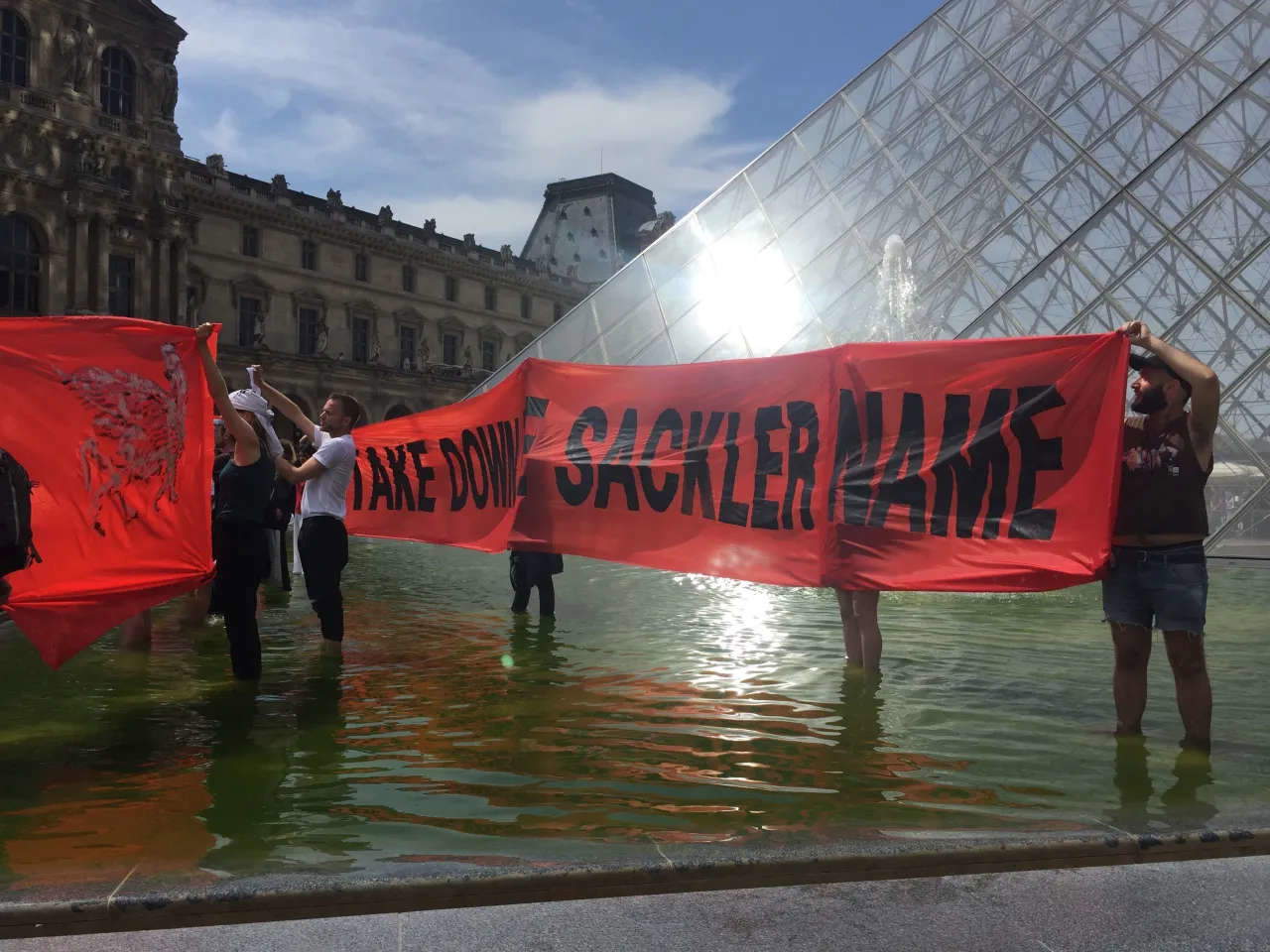
Of course, collectors have always been major players in art history. But what is of concern today is the way some of them use museum institutions as tools to legitimize their own taste (and investment). Exhibiting a work in a museum is tantamount to accrediting it culturally and, in many cases, enhancing its economic value. Some U.S. and U.K. museums have recently been at the center of controversy for accepting donations from scandal-linked industrial or pharmaceutical groups (this is the Sackler case), while others have hosted exhibitions devoted entirely to collections of investors operating directly in the contemporary art market. The question is, to what extent can and should the public institution accept these compromises? And who ensures that museum programming is not bent, even unwittingly, to speculative logics?
Then there is another actor not to be underestimated in this dynamic: the public. Or rather: the way the public is thought of by institutions. Too often, museum strategies seem to be aimed at an idealized “average visitor,” who must be entertained, amazed, retained. “Accessible,” “engaging,” “immersive” exhibitions are designed, but the question of how these exhibitions contribute to a more knowledgeable, critical, active viewer is rarely asked. The museum, John Dewey already reminded us, is not a place of consumption, but of experience. If it stops stimulating thought, if it gives up generating questions, if it merely proposes consensual aesthetics, then it ceases to be an instrument of cultural citizenship. The paradox is obvious: at a time when there is constant talk of “cultural democratization,” there is often a flattening of supply, designed not to disturb, not to complicate, not to risk.
Yet, virtuous examples exist. Small civic museums that maintain independent programming, public spaces that work in dialogue with the territory, foundations that reject the logic of the blockbuster to build complex and layered projects. There are encouraging signs in the international system as well: biennials curated by intellectuals, museums rejecting opaque partnerships, directors resigning in the name of ethical consistency. The point is not to demonize the public-private relationship, but to recognize its criticalities and build more transparent governance tools. It would be useful, for example, to rethink the boards of public museums, to guarantee representation quotas to independent professionals, to clearly separate management functions from curatorial ones. And above all, reaffirm a fundamental principle: culture is not a consumer good, but a common good.
In the end, it all comes down to a question of cultural democracy. Museums, if they want to remain living spaces, must return to being places of symbolic conflict, of openness, of plurality. They must have the courage to speak even when their voices are disturbing, to host divisive works, to propose uncomfortable visions. The museum is not, or should not be, a showcase, but an open window to the world. If today that window becomes opaque, if only glossy reflections and corporate logos are glimpsed behind the glass, then culture risks losing one of its most important spaces of autonomy and truth. And so the question remains there, prickly and unresolved: are museums still ours?
Warning: the translation into English of the original Italian article was created using automatic tools. We undertake to review all articles, but we do not guarantee the total absence of inaccuracies in the translation due to the program. You can find the original by clicking on the ITA button. If you find any mistake,please contact us.