




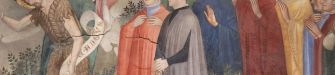
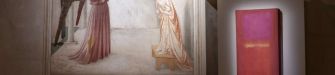
We live in an age when everything is photographed. Breakfast, sunsets, concerts, dogs, cats, plates of pasta. And it is absolutely normal thatart , too, enters this continuous flow of images. Yet, incredibly, right here we encounter the highest wall: copyright. The situation borders on the grotesque. If I photograph a medieval fresco, I can share it anywhere, even print it on a T-shirt. But if I photograph several twentieth-century artists, I have to ask permission from the heirs, pay a fee, undergo a bureaucratic rigmarole that not even the passport office. Never mind that the work is in a public museum, maintained with public money: the image remains armored. Result: a fourteenth-century fresco is freer than a twentieth-century work. A paradox that cries out for vengeance. The ancient is free, the modern is in prison.
A prime example of the absurdities of copyright incontemporary art concerns Robert Indiana’s famous LOVE series. In May 2018, just one day before the artist’s death, the Morgan Foundation launched a lawsuit against Indiana’s longtime assistant Jamie Thomas and publisher Michael McKenzie, accusing them of defamation and violations related to copyright and the Visual Artists Rights Act. According to the foundation, Thomas and McKenzie allegedly isolated the artist from family and friends in order to reproduce and sell works under his name without his consent. But the controversy did not stop there: in late April of that year, McKenzie filed a countersuit accusing the Morgan Foundation of engaging in a major fraud. According to him, the rights to the LOVE series had never been valid, because the work had allegedly been in the public domain since 1964. The sculpture, now an internationally recognized icon, had begun to spread in 1965 when the Museum of Modern Art used its image for Christmas cards.
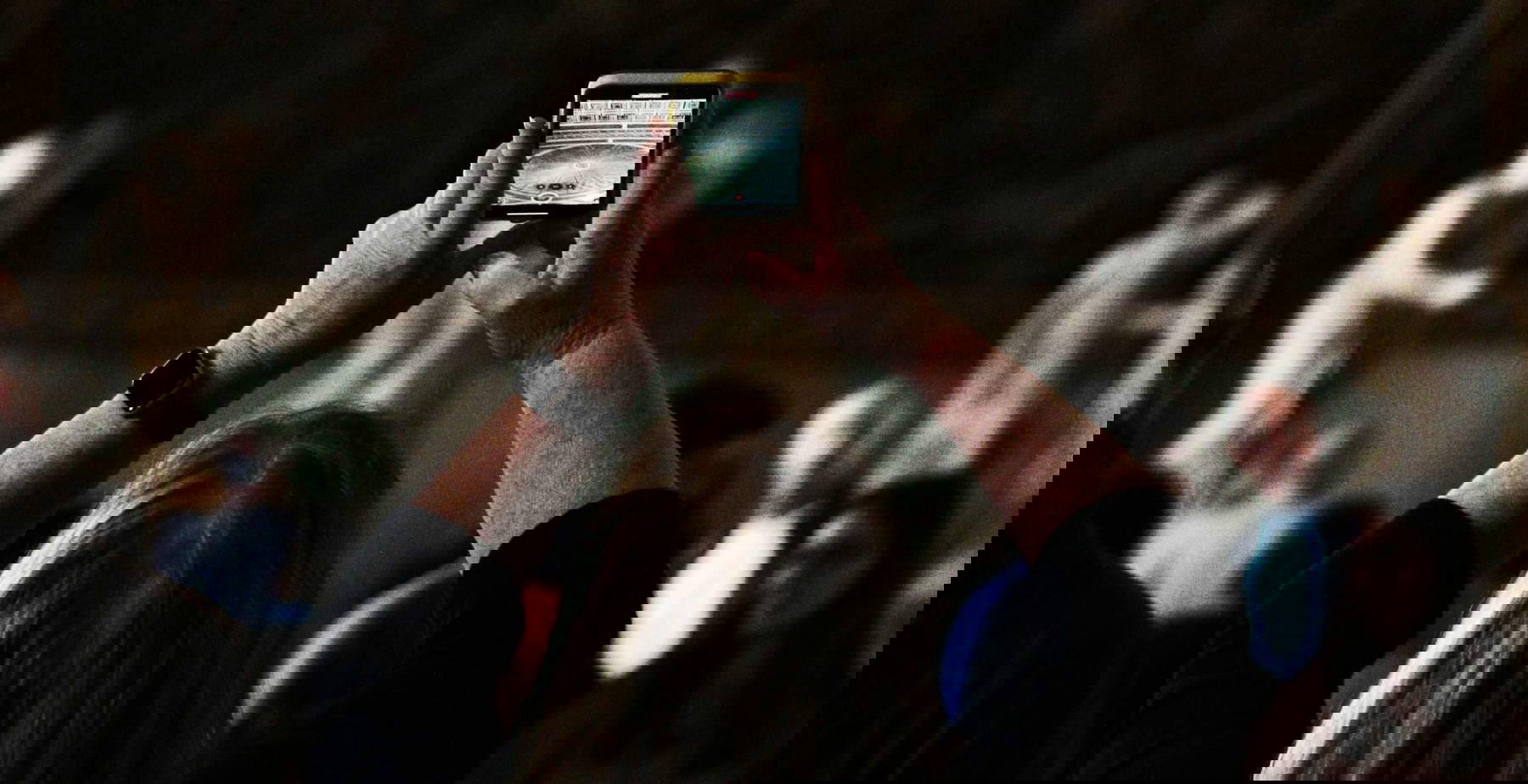
This is precisely where the paradox of our digital age emerges: not being able to circulate means not existing. An exhibition without shareable photographs is an exhibition that disappears the day after it closes; a work that cannot be circulated online is a cultural ghost. For millions of people today, the encounter with art happens first on Instagram or Google. If a work is not there, it simply does not exist for them. Someone has figured it out: the Rijksmuseum in Amsterdam has made hundreds of thousands of ultra-high-definition images available online, and the MET in New York has done the same. The message is clear: the more works circulate, the more alive they are, the more they become collective heritage. Others, however, defend copyright as a medieval barricade, deluding themselves that they are protecting art when in fact they are stifling it.
Sure, copyright makes sense to protect a living artist’s earnings or to regulate the market for commercial reproductions, but what sense does it make to apply it to educational photos, online encyclopedias, popular posts? There is no commerce here; there is only culture. This is not about protecting your wallet, it is about protectingaccess to knowledge.
Behind this madness is a more radical question: to whom doesart belong? To the artist, his heirs, or to the community that funds it, exhibits it, lives it? Can we really accept that a work, once displayed in a public museum, remains a prisoner of private rights? Should we not demand that it become part of our collective memory, free to circulate and be known?
Without images, art dies. Becauseart, today, is image. It is not a matter of debasing the physical museum experience, but of recognizing that its life does not end in the halls: it continues online, in books, in social media, in collective visual memory.
That is why copyright applied to images of art is not protection, it is censorship. It does not defend the artist, but makes him invisible. It does not protect the work, but isolates it. It does not strengthen the heritage, it impoverishes it. Perhaps it is time to reverse the perspective: it is not the public that has to ask permission to see, but the private owners that have to justify why they want to deny it. Because a work that is not circulated, not seen, not shared, ceases to be art and simply becomes an object.
Better a risky shared work than a forgotten work. Better an “abusive” photo than a tomb-like silence. Because the real prison of art is not time, it is not degradation, it is not theft: it isinvisibility. And if we want art to really survive, we must think of a world in which it breathes, multiplies, and reinvents itself thanks to those who observe it, photograph it, comment on it, and share it. The true strength of art lies not only in its creation, but in its ability to enter people’s lives, to inspire, to teach, and to remain in the collective memory. A work that remains locked in a shrine is dead; a work that circulates, even at the risk of being misinterpreted, lives. And living, for art, is the only form of freedom that really matters.


The author of this article: Federica Schneck
Federica Schneck, classe 1996, è una giornalista specializzata in arte contemporanea. Laureata in Storia dell'arte contemporanea presso l'Università di Pisa, il suo lavoro nasce da una profonda fascinazione per il modo in cui le pratiche artistiche operano all’interno, e in contrapposizione, alle strutture sociali e politiche del nostro tempo. Si occupa delle trasformazioni del sistema dell'arte contemporanea, del dialogo tra ricerche emergenti e patrimonio culturale, del mercato, delle istituzioni e delle fiere internazionali. Alla scrittura giornalistica affianca quella critica, con testi per artisti, gallerie e collezioni private.Warning: the translation into English of the original Italian article was created using automatic tools. We undertake to review all articles, but we do not guarantee the total absence of inaccuracies in the translation due to the program. You can find the original by clicking on the ITA button. If you find any mistake,please contact us.

















 IT
IT FR
FR DE
DE ES
ES CN
CN