





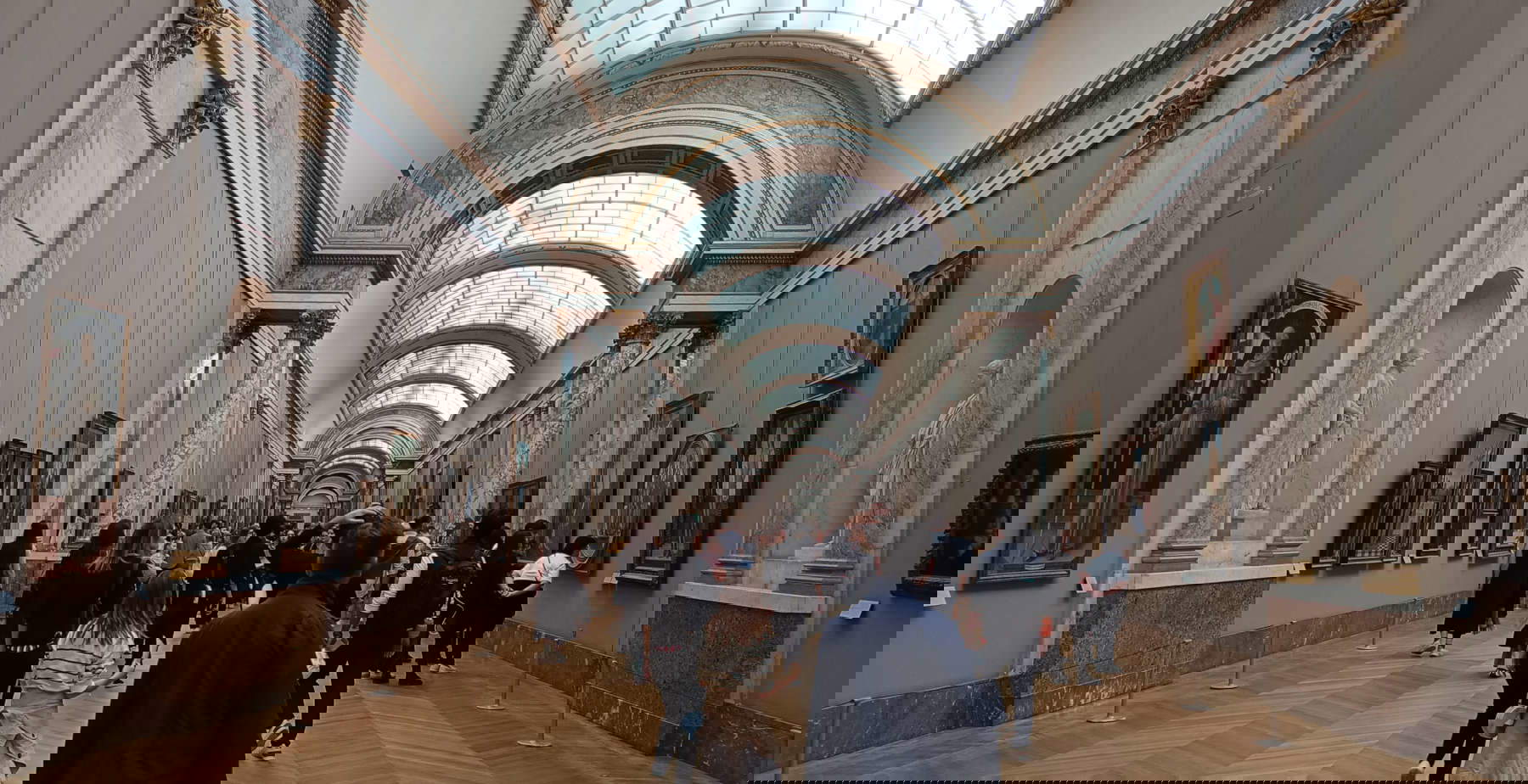
To enter a major European museum is often to experience a contradiction. On the one hand, wonder: Greek statues that do not seem to have lost an iota of their power, intact Egyptian sarcophagi, gleaming African bronzes. On the other the doubt that creeps in, insistent: what right do we, “we” visitors, “we” Europeans, “we” Westerners, have to admire what has been snatched elsewhere, often by force? The question of disputed heritages is not an insider’s issue, but a real identity, cultural and political node. It is a debate that crosses continents, governments, families and, above all, consciences. It is no coincidence that every now and then it flares up again like a fire that has never been extinguished and makes us wonder about a question: who really owns the stolen, destroyed or purloined works?
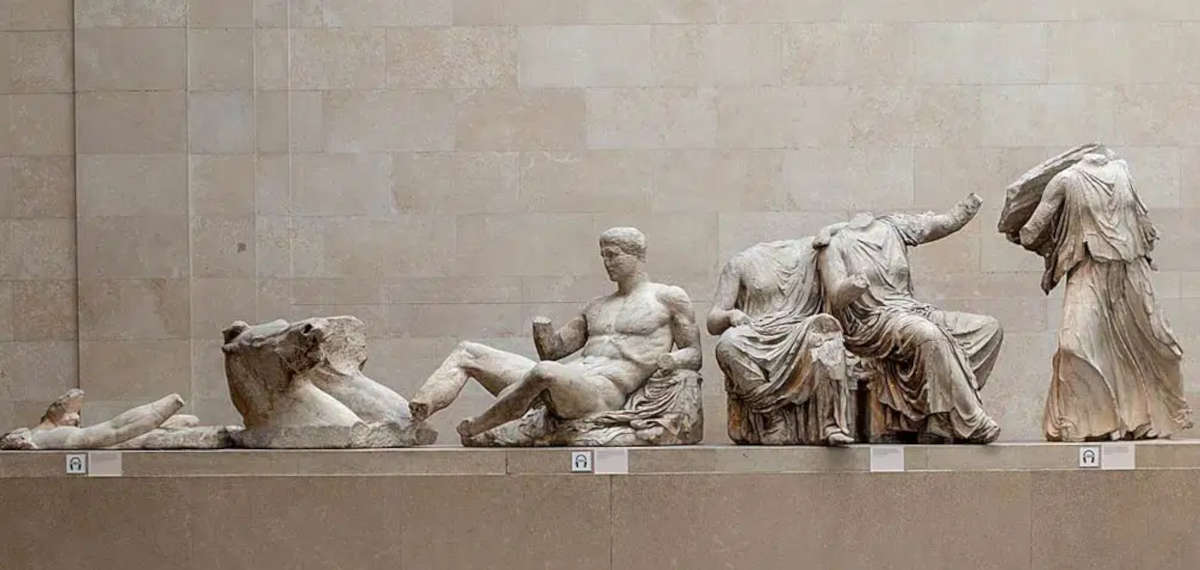
Many Western museums began as treasure chests of colonial power. Every statue, every mask, every artifact was, and in part remains, a trophy. It was not enough to conquer territories; it was also necessary to empty their temples and palaces, to take away what represented them. The force was not only military: it was symbolic. The Parthenon friezes transferred to London, the Benin bronzes scattered halfway around the world, the Egyptian mummies lined up as exotic curiosities: all this tells a story of overpowering disguised as “cultural protection.” But can we still pretend that “protection” and “robbery” are the same thing?
However, it is not only colonialism that decides the fate of works. There are those who, like ISIS, have turned heritage into an enemy to be put down. Palmyra, a symbol of a civilization that had blended East and West, was reduced to dust under the blows of the extremists. It was not only material destruction: it was the will to erase memory, to deprive a people of its past. So here the question turns around: better a work “saved” in a distant museum or a work left at risk of disappearing forever?
The return of a work of art is never a neutral event: it is an act that shakes consciences, that reopens wounds. But, in most cases, everything proceeds with exasperating slowness. Heirs waiting for generations, governments opposing loopholes, museums entrenched behind outdated laws. Occasionally something happens: a painting returned, a landscape handed back to the heirs of a persecuted family, a bronze finally coming home. But more often than not, the returns seem like exceptions, gestures reluctantly granted rather than rights recognized.
Then there is a different story, less dramatic but equally revealing: that of the Italian avant-garde, and Futurism in particular. In the 1920s, Fortunato Depero took his universe of geometric shapes and aggressive colors overseas. This was not theft or spoliation, but an ambiguous encounter: the avant-garde that wanted to remake the world found in America the ideal terrain for market and experimentation. From here, the problem shifts to another plane: when a work leaves its original context and is reread elsewhere, the crux is no longer just who owns it materially, but who really holds its meaning. Is it the audience who looks at it with new eyes, or the tradition that generated it?
Perhaps the heart of the matter lies here: in understanding whether we regard works as property or as living presences, to be treasured together. The logic of “this is mine” belongs to a world of borders and empires; the logic of cultural hospitality, on the other hand, imagines a heritage that travels, that is told, that returns from time to time to its origins without ceasing to dialogue with other publics. But are we ready for this revolution? Are we willing to accept that the Louvre is not “French,” that the British Museum is not “English,” but places of transit and not possession?
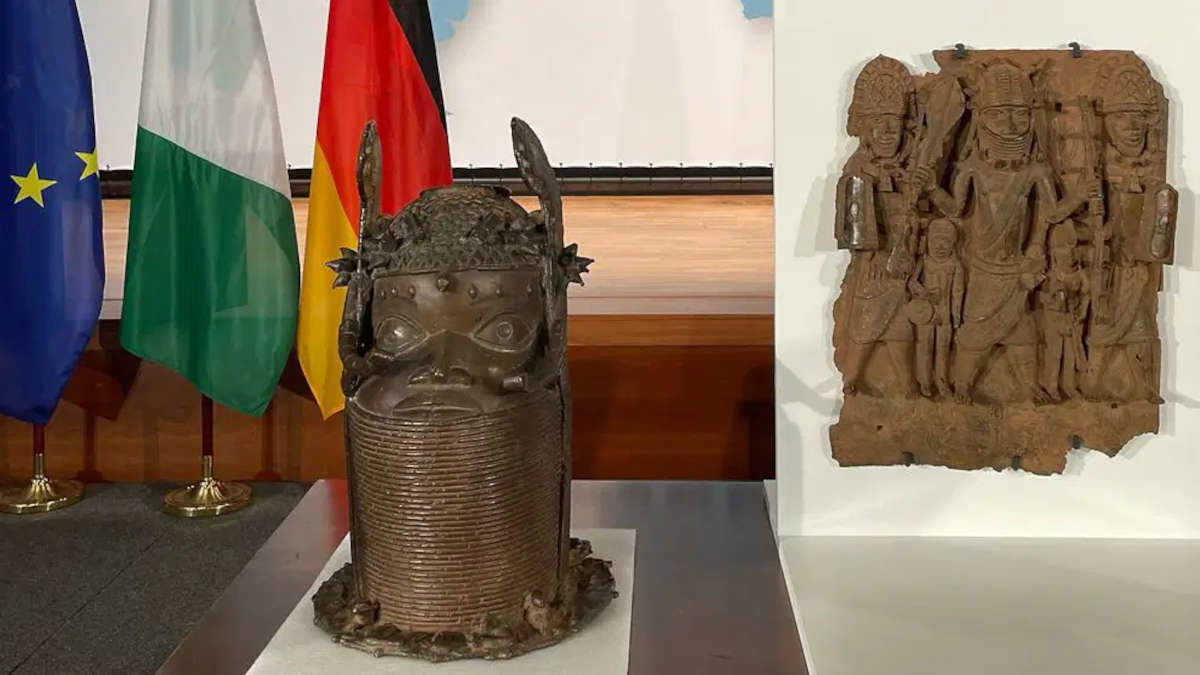
In the end, it all comes down to a question of courage: the courage to recognize that much of the world’s heritage has been accumulated through violence, robbery, and deception; the courage to imagine a different kind of management, based on responsibility rather than possession. Perhaps this is where the discussion needs to ignite: not in museum boards, nor in the corridors of ministries, but among us, visitors and citizens, heirs to a complex past. Every time we cross the threshold of a museum, we don’t just observe works of art: we see the traces of unresolved conflicts. And their silent beauty questions us, relentlessly, “whose side are you on?”
The concept of “owning” collapses under the weight of history. Perhapscultural hospitality , not possession, is the key to dissolving symbolic conflicts. Works that return, that are lent, that travel no longer as loot or monuments, but as narratives, as shared stories. The question is not “who do they belong to?” but “how do we coexist with their stories?” Works are more than objects: they are witnesses. We are not simply looking for an owner: we are looking for a custodian capable of deserving their memory.


The author of this article: Federica Schneck
Federica Schneck, classe 1996, è una giornalista specializzata in arte contemporanea. Laureata in Storia dell'arte contemporanea presso l'Università di Pisa, il suo lavoro nasce da una profonda fascinazione per il modo in cui le pratiche artistiche operano all’interno, e in contrapposizione, alle strutture sociali e politiche del nostro tempo. Si occupa delle trasformazioni del sistema dell'arte contemporanea, del dialogo tra ricerche emergenti e patrimonio culturale, del mercato, delle istituzioni e delle fiere internazionali. Alla scrittura giornalistica affianca quella critica, con testi per artisti, gallerie e collezioni private.Warning: the translation into English of the original Italian article was created using automatic tools. We undertake to review all articles, but we do not guarantee the total absence of inaccuracies in the translation due to the program. You can find the original by clicking on the ITA button. If you find any mistake,please contact us.























 IT
IT FR
FR DE
DE ES
ES CN
CN


