





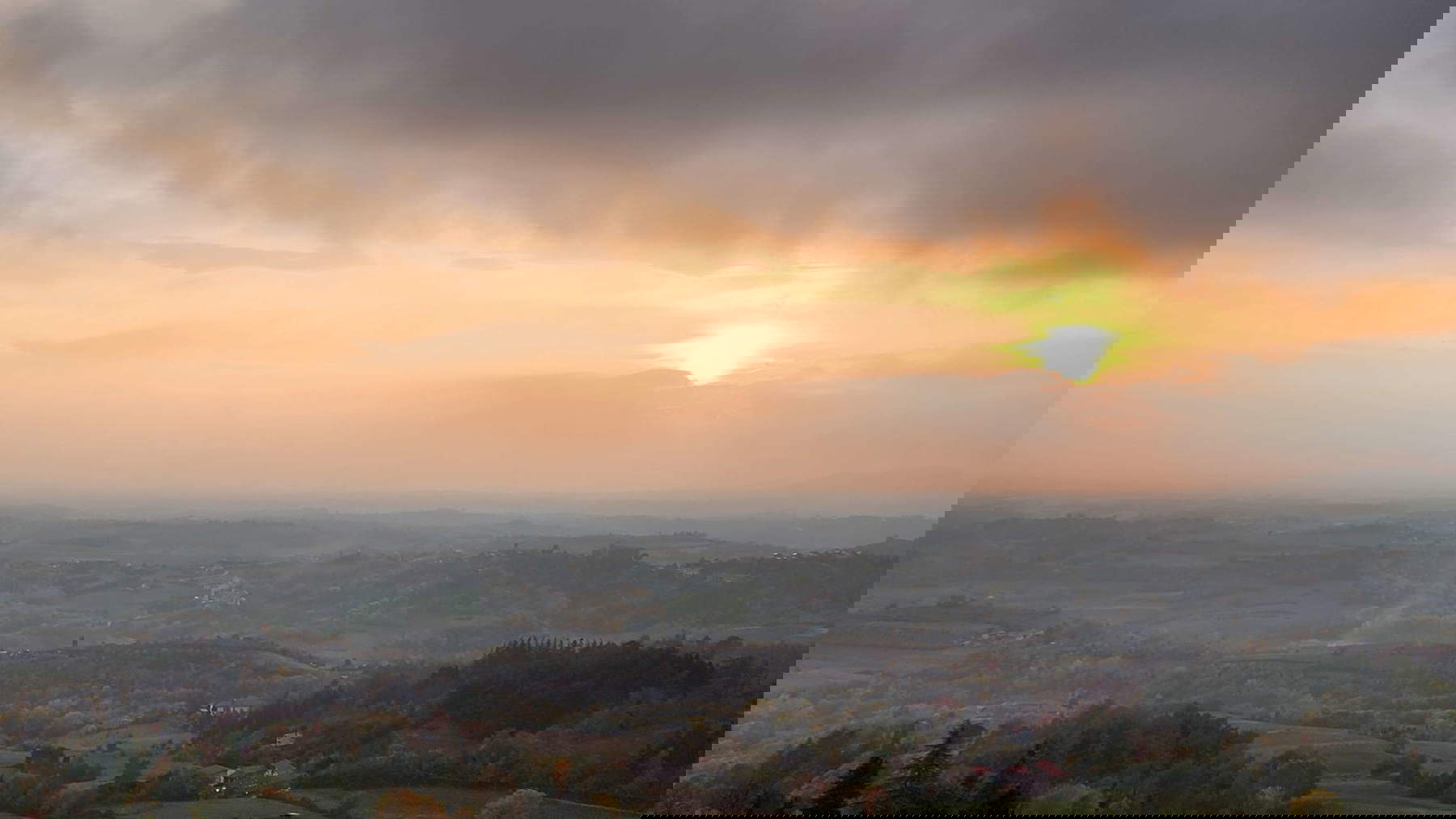
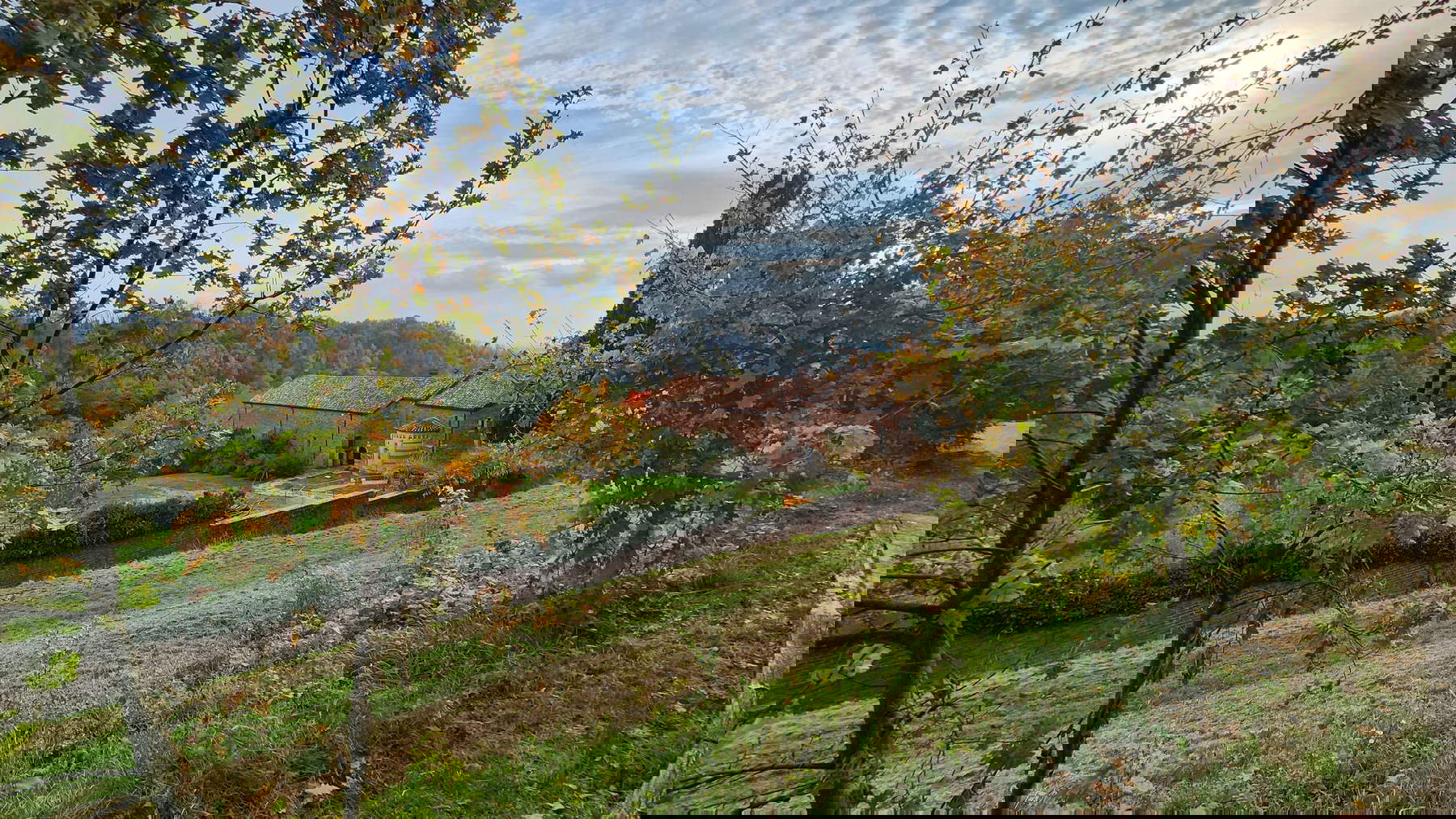
As soon as you go up to the Belvedere of Albugnano, a village of five hundred inhabitants announced by the vineyards that, having finished the Turin hinterland, rise from Chieri to the bald hillocks of the Basso Monferrato, a sign explains that this terrace was one of Don Bosco’s favorite places. He used to walk there and sometimes gave lectures in the shade of the centuries-old elm tree, now dried up, but which lived for two and a half centuries, from the 1720s until 1981. Village lore has it that the hollow of the tree housed, in earlier times, “the workshop and laboratory of a poor cobbler,” reads a nineteenth-century bulletin, “who repaired there on good days in summer and autumn,” and it was “there that valentuomo among his slippers to work.” From here one can see the whole valley at the foot of the village, between late autumn and winter a tapestry of ochre, vermillion and all shades of green, which becomes a mantle of fern when, past four in the afternoon, the sun begins to set. The abbey of Santa Maria di Vezzolano is down in the woods and is said to have been one of Don John Bosco’s favorite outings, and it seems that he, too, enjoyed telling his students the legend of Charlemagne who allegedly founded the monastic complex in 773 after escaping some unspecified danger: the abbey would have been his way of thanking Our Lady for saving him.
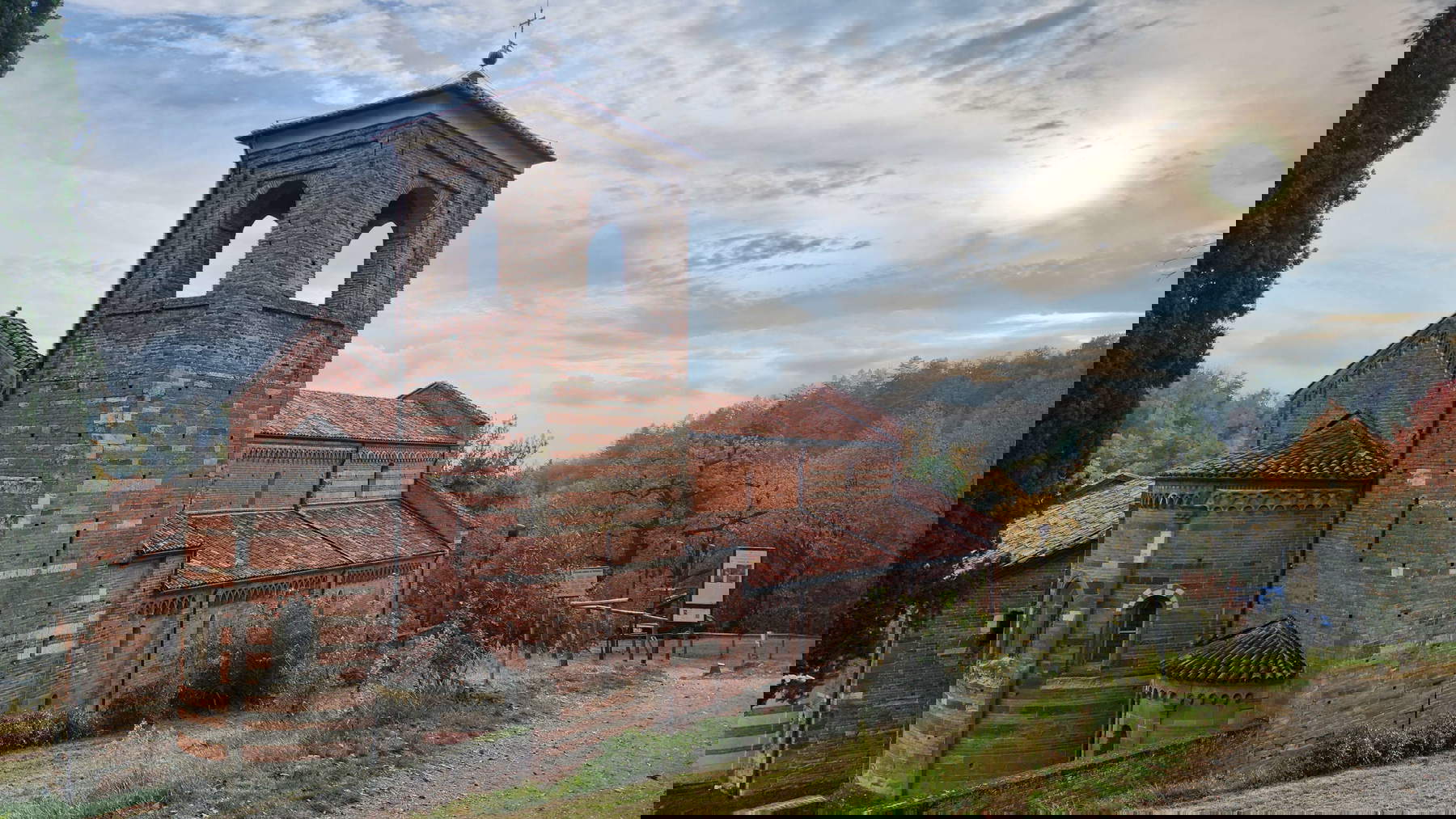
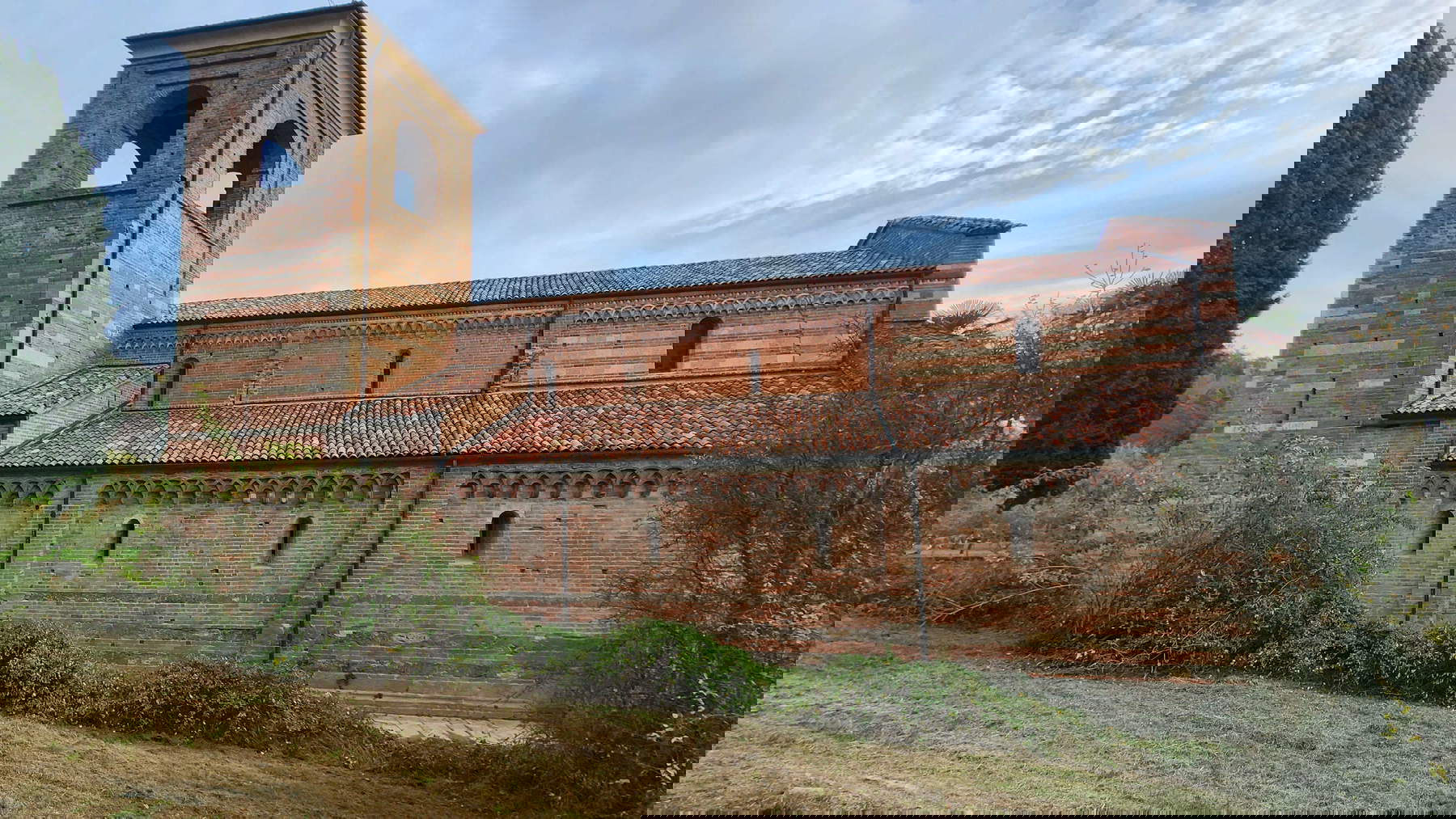
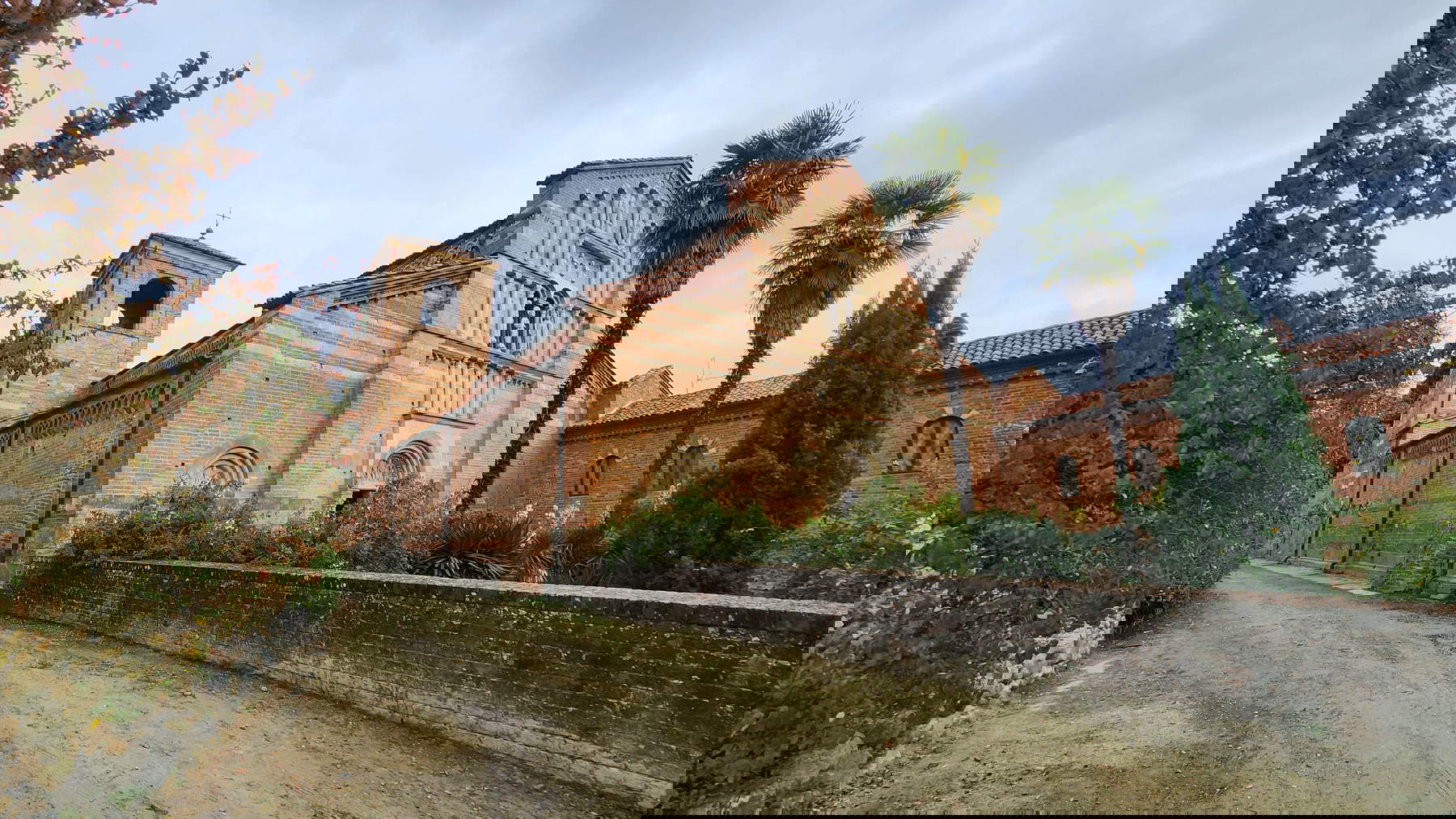
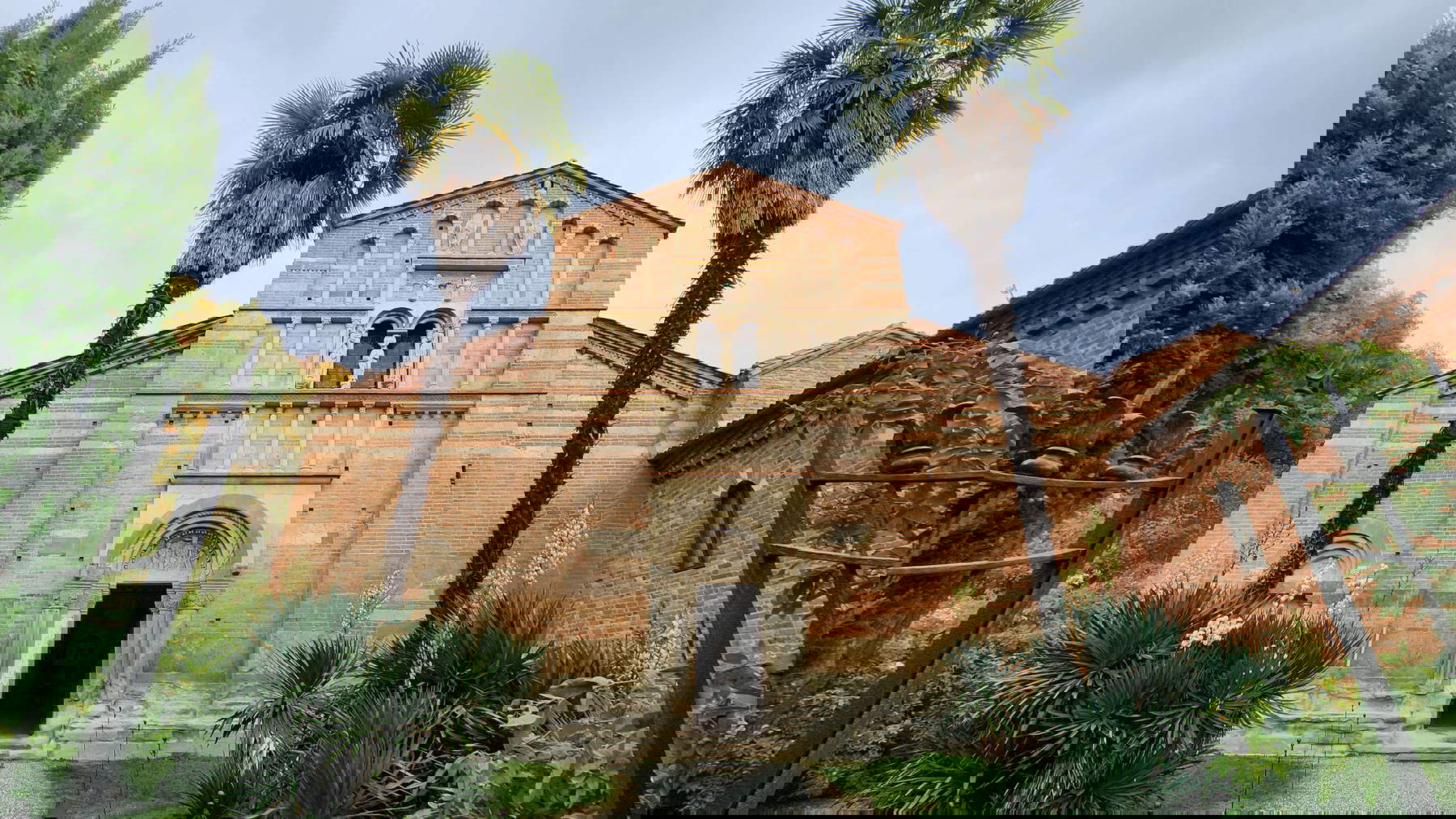
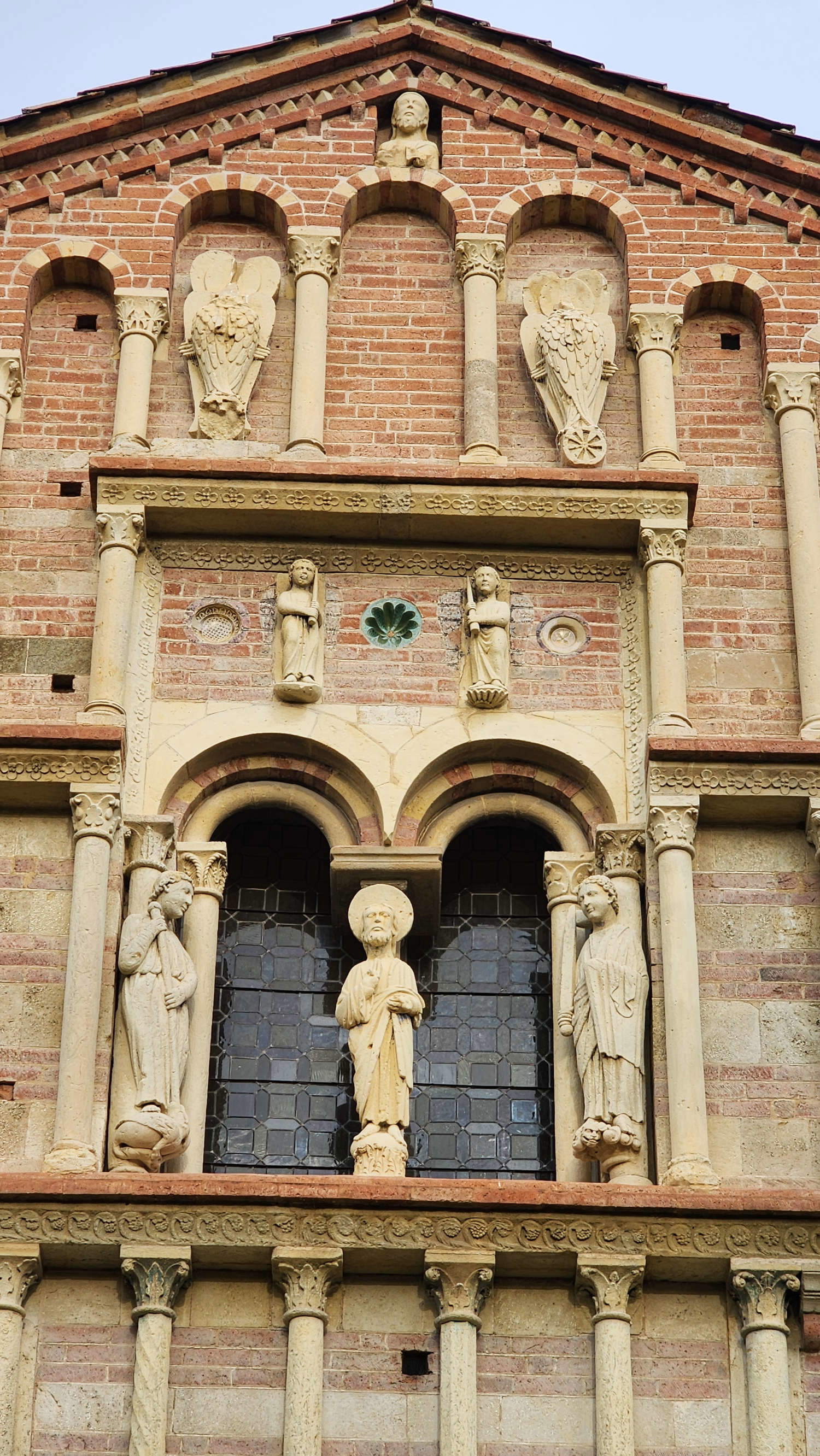
The reality, however, is somewhat less romantic, and one only has to see the church from the outside to realize that we are in the presence of a much later building. Of course, it could have been rebuilt: in the first known document about the abbey (or rather: on the rectory, as it should more properly be called, since it was always governed by Augustinian canines) an investiture dated February 27, 1095, the original of which has been lost (we know its contents from theoriginal (we know its contents from eighteenth-century transcriptions, believed to be reliable), speaks of two religious men, Theodolus and Aegidius, to whom some local nobles donated a church dedicated to St. Mary and the goods contained therein so that they could found a religious community. Nothing remains of that pre-existing building, however, and until some document is found that can clarify how this church arose, it will be very difficult to make reliable assumptions about its foundation. What is certain is that the forms of the building suggest a total reconstruction that began in the mid-12th century. The church comes to meet those who want to see it as you descend along the meadow sloping down from the hill above, the one you then climb to return to Albugnano: arriving from the village, Santa Maria di Vezzolano has its back to those arriving, letting them admire first the large semicircular apse, then the sturdy bell tower, which has been rebuilt at the top, then the side with those galleries of single-lancet windows and hanging arches that suggest the idea of a building site that went on for quite a long time, since the use of interlaced pointed arches became common in Lombard Romanesque architecture.common use in Lombard Romanesque towards the end of the 12th century, and at the same time also the possibility of a design followed, at least from a certain point in history onward, by an up-to-date and even refined architect, and it is enough to see the façade well to realize the order that the creator of this building had intended to give to the church’s elevation. A large tripartite facade, with the three bodies corresponding to the naves of the church (although the third is no longer there, closed by the cloister), with sandstone bands alternating with brick ones. As throughout the church, both inside and out, but on the façade with a precise, ordered geometric intention. In the center is a large, severe Romanesque stone portal with massive moldings that accompany the visitor to the entrance, topped by the relief with the enthroned Madonna between two angels, the Holy Spirit in the form of a dove addressing her directly by speaking in her ear. Above the portal, three orders of blind arcades (the second, however, only partially: in the center opens a splendid mullioned window with, in the center, the statue of Christ blessing and on the sides St. Michael and St. Raphael, intent on trampling a dragon and a devil, symbols of the evil that must remain outside the church), and to crown it all, above the mullioned window, the statues of two candle-bearing angels, interspersed with three large ceramic dishes of Arab production (it was in use at the time to decorate the facades of churches also with the’insertion of these large, refined basins decorated with geometric motifs), two seraphim whose heads, however, have not survived, and in the highest position the image, rigid and frontal, of the Eternal Father, in the exact center of the facade.
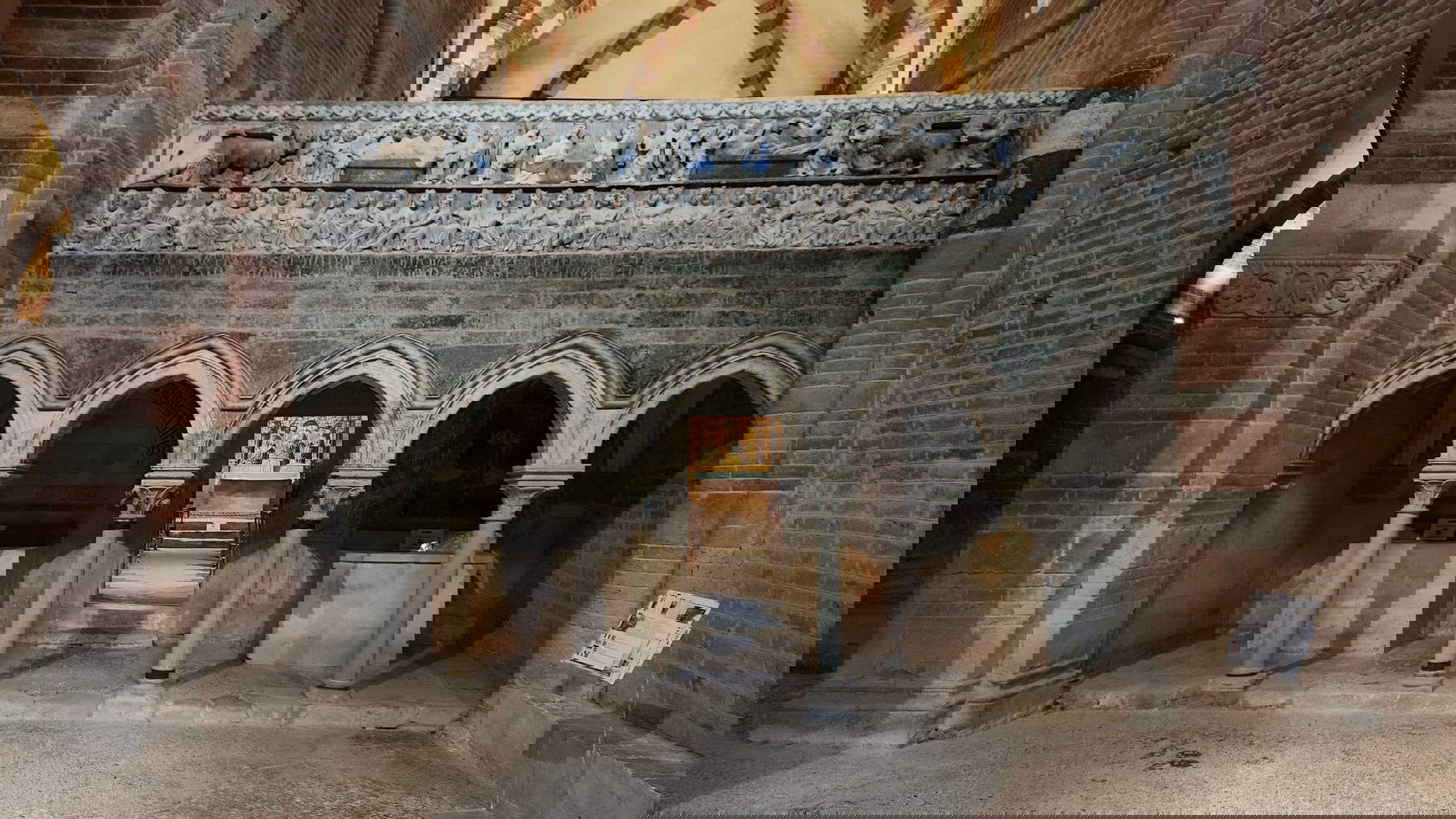
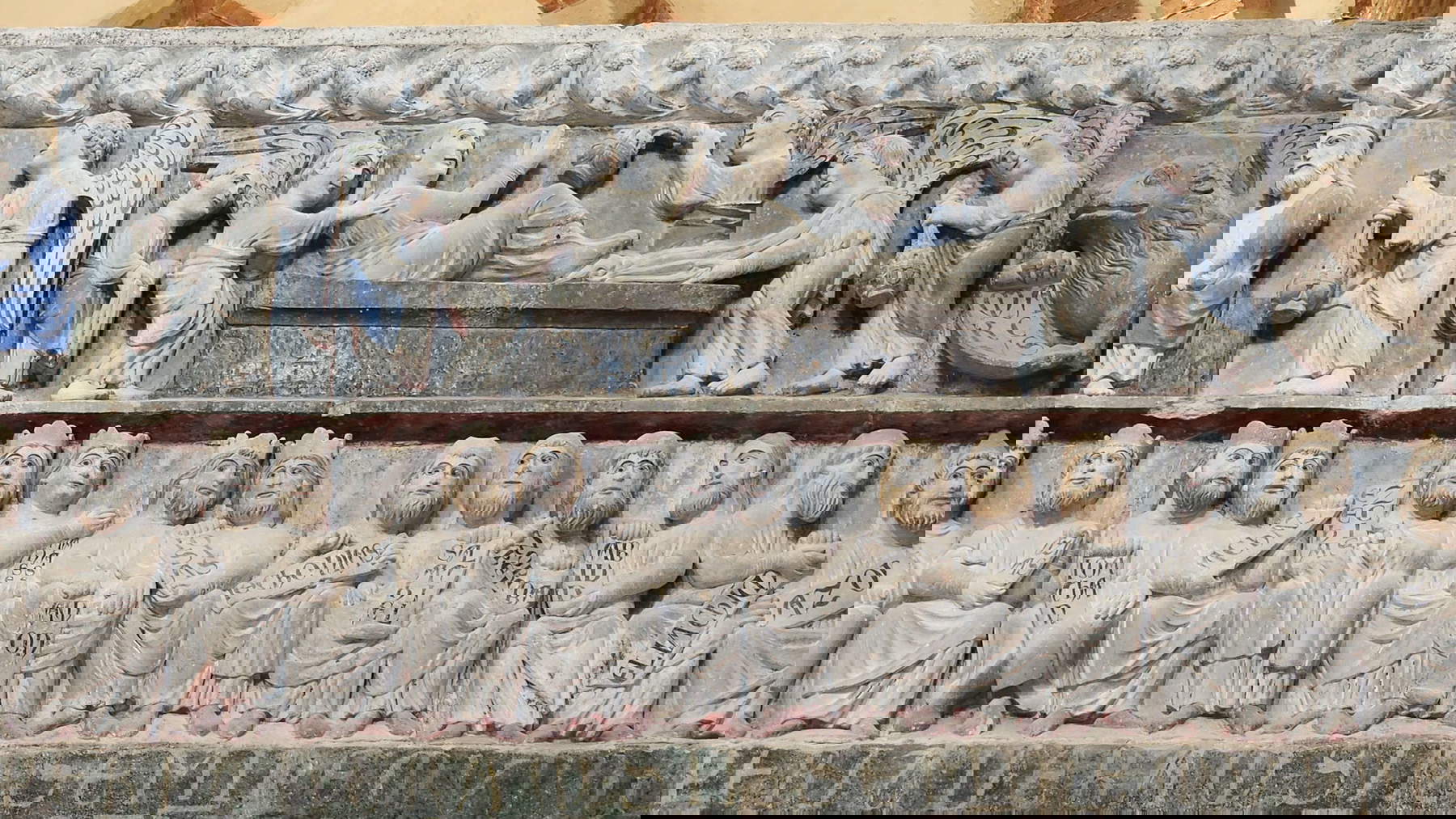
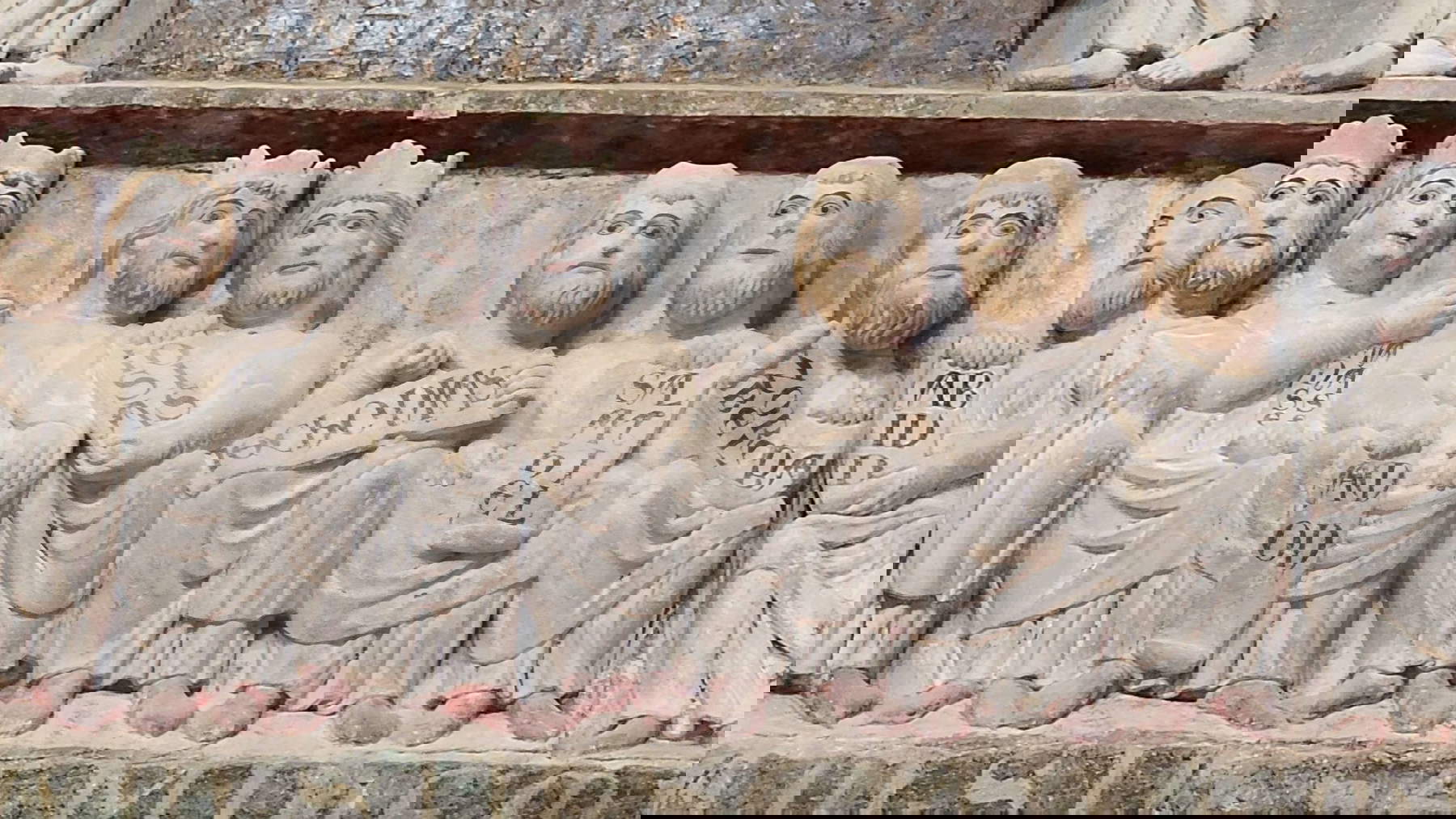
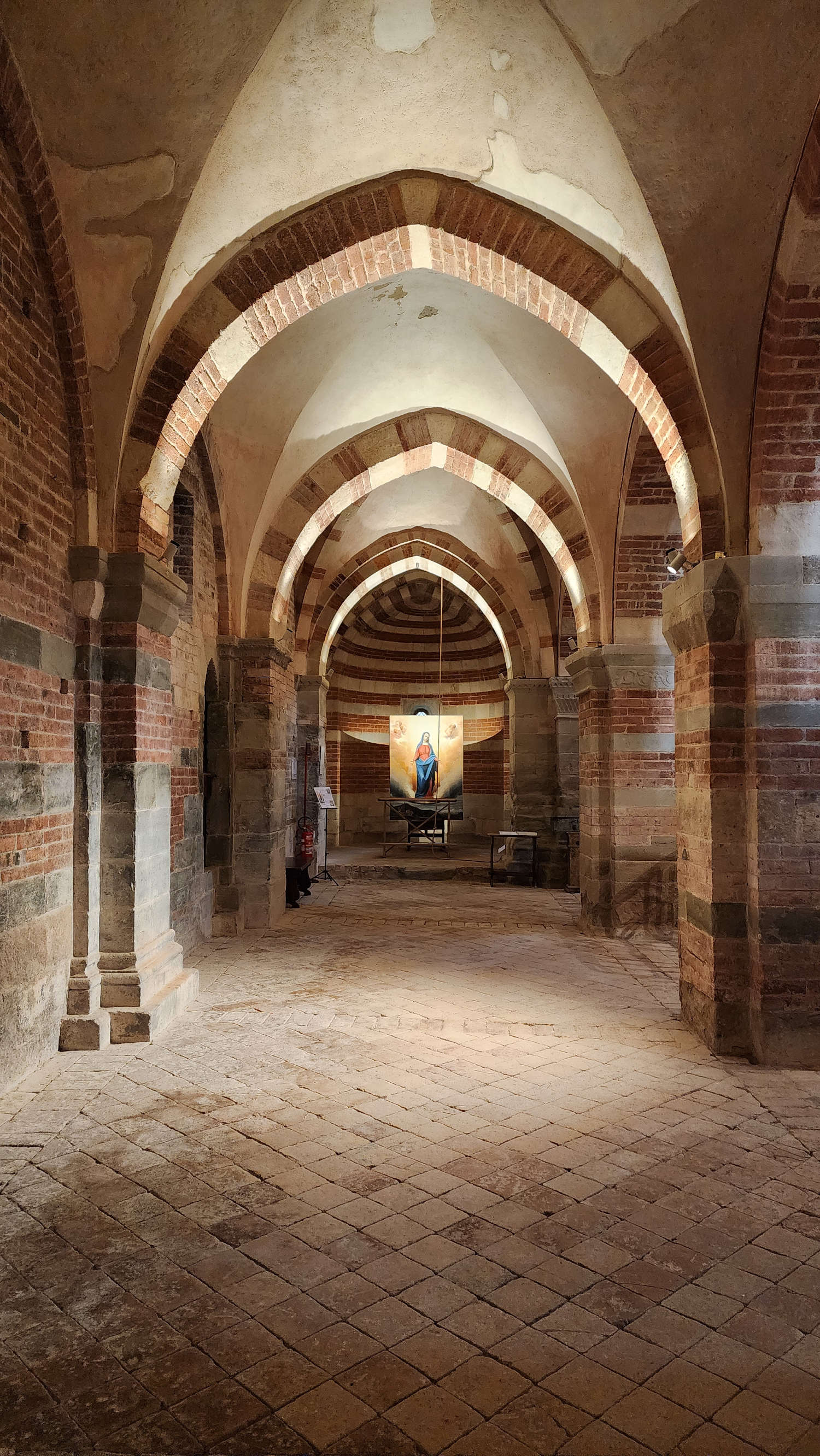
When one enters, one does not get that impression of rigor, severity, austerity, and at times even gloominess that one usually perceives whenever one enters a Romanesque building, of the older, more strictly observed kind. Partly because, as we look up, the high cross vaults with bicolored ribs refer us to a different construction phase, with the Gothic characteristics of these areas. Partly because the spectacular pier that obstructs the view of the altar and crosses the entire width of the main nave moves all gazes to awe: it is very rare to see inside an Italian church similar constructions, a jubé that had to separate the space of the faithful, who stood on this side of the pier, from that reserved for the religious. Very rare, because after the liturgical reforms introduced by the Council of Trent, these structures began to be dismantled everywhere in Italy: the Reformed Church wanted the rite performed by the officiant on the altar, the celebration of the mystery, to be visible to all. The one in Santa Maria di Vezzolano escaped, we do not know why, the Counter-Reformation. It looks like a voluminous loggia set askew, almost as if it were a foreign body, an alien entirely carved from Monferrato sandstone, landed in the middle of the church, resting on a base also made of sandstone, now worn: five pointed arches are surmounted by two bands carved in high relief, one with the genealogy of Christ (the individual figures, thirty-five those carved, but there are five others painted on the side pillars, hold scrolls with their names on them, thus impossible to confuse them), and the one above with the scene of the Dormitio Virginis, on the left, followed by the’Crowning of the Virgin by Christ and the image of the awakening Madonna, called, the Latin inscription explains, “by him whom you begat.” The inscription, in addition to giving the date and the name of the provost under whom the work was completed (“Anno ab incarnatione Domini MCLXXXVIIII, reigning Frederico Imperatore, completum est opus istud sub preposito Vidone,” or 1189, during the reign of Frederick II, under provost Guido), specifies the subject and clarifies the theological concept governing the entire decorative apparatus: Christ’s ancestors brought Mary into the world, who without human seed generated “veram Sophiam,” the true Wisdom, that is, Christ who would later call her with Himself above the stars: the Virgin is thus exalted as a mediating figure between the ancestors and Christ Himself, and is a participant in His nature as much human as divine.
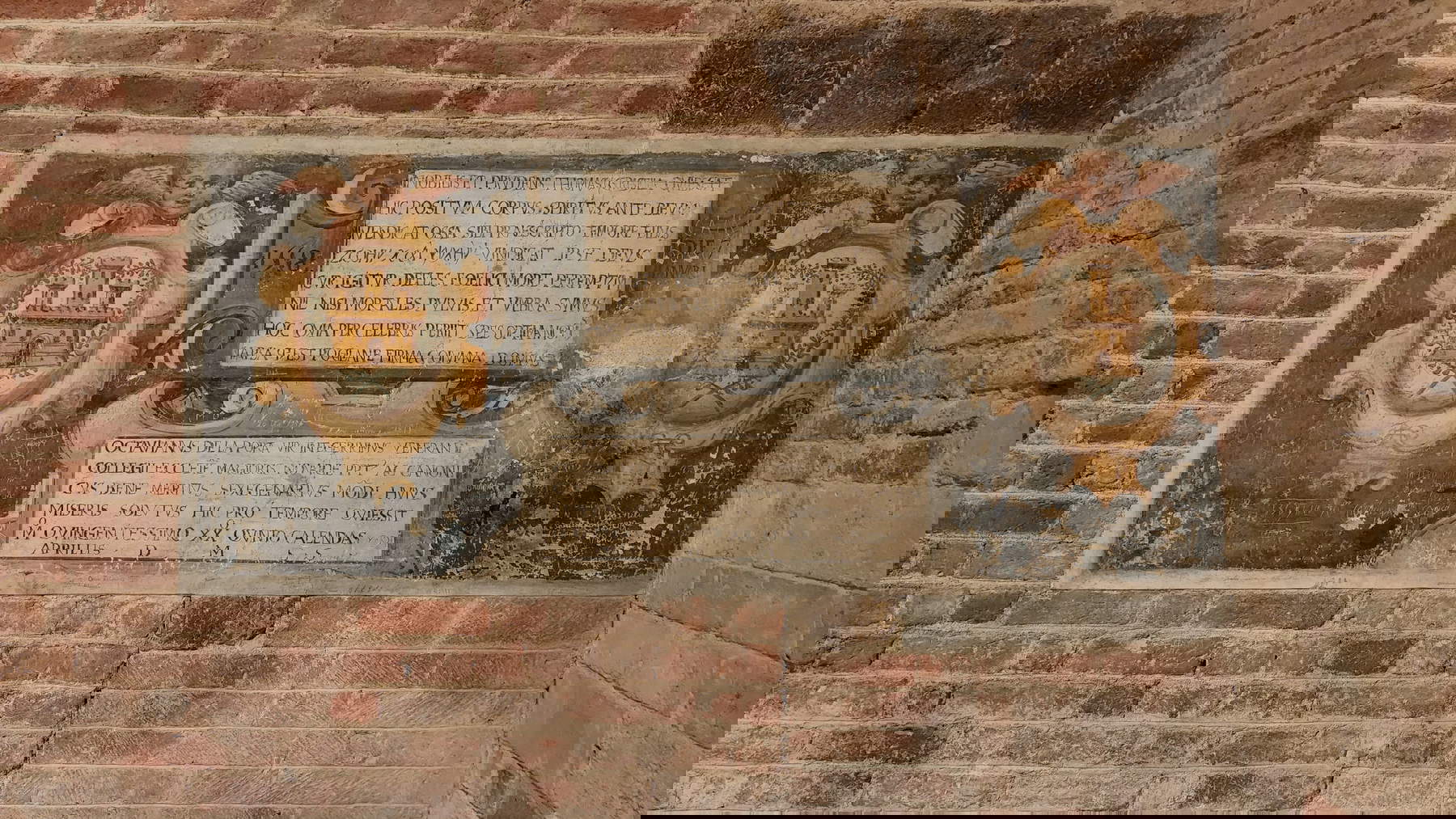
The rarity of the Vezzolano jubé is surprising not only because here, in this church, an element has been preserved that, after the Council of Trent, was usually removed, but also because it has remained almost intact, even the original colors of the figures have been preserved. It is not exactly as it was seen in 1189, because the obvious adaptations of the two arches at the ends and the fact that five figures are painted on the pillars suggests the hypothesis that, at some point in history, the Vezzolano pier was slightly mutilated on the sides, we do not know why, or even when, but it is still a miracle that such a work arrived almost intact. Not least because Vezzolano underwent further modifications over the centuries: one passes the pier, and in the nave one sees two funerary inscriptions, in an ungrammatical Latin stuffed with piemontesisms that trace dialectal pronunciations, accompanying two burials, one from 1558 and one from 1520, one of a certain Tommaso Grisella, a member of a local noble family, and the other of one Ottaviano della Porta, a native of Novara. Evidently for some time the church floor hosted inhumations: these are the only two surviving records, the others are probably lost because in the 1860s the church would have undergone further renovations.
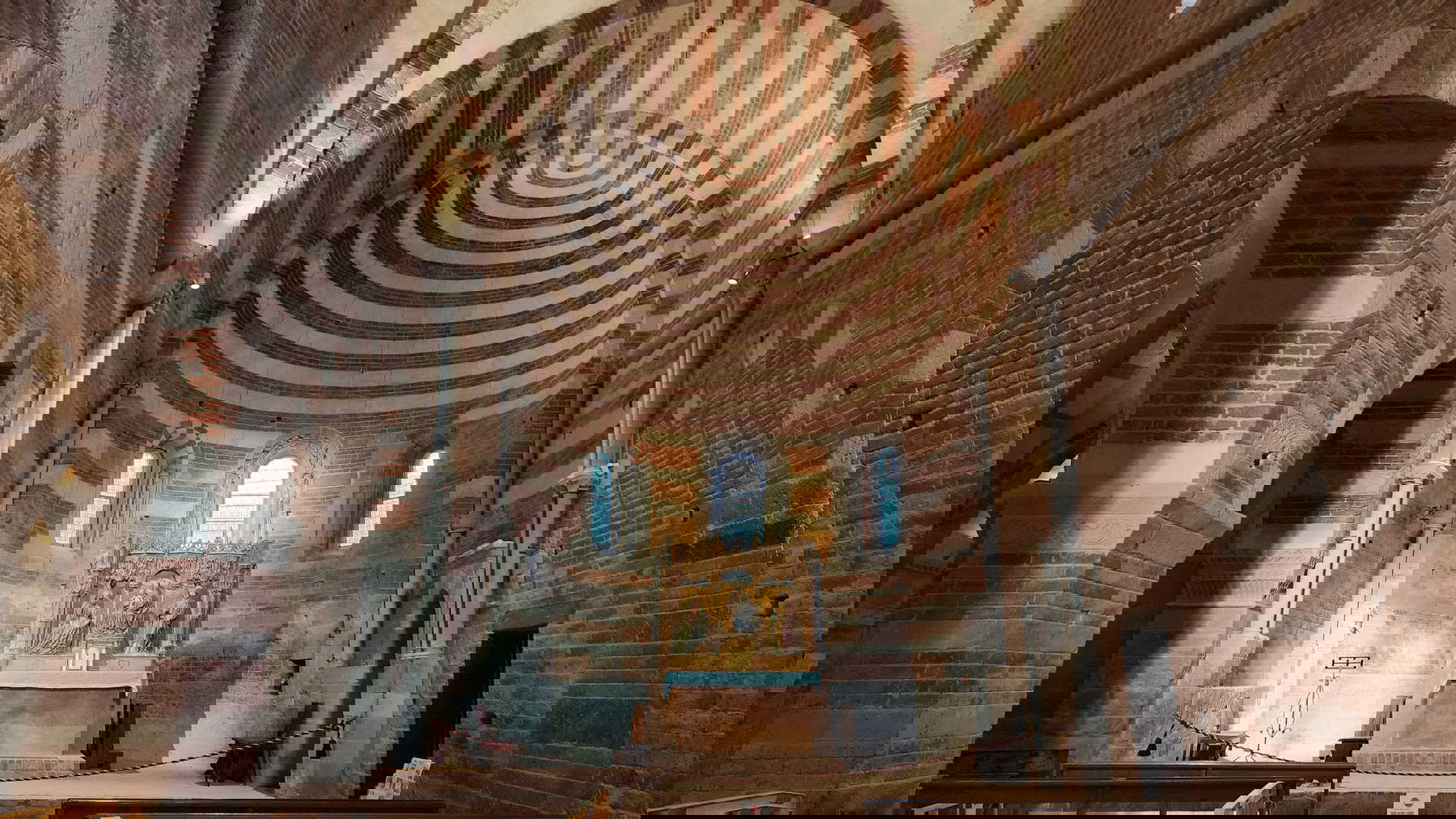
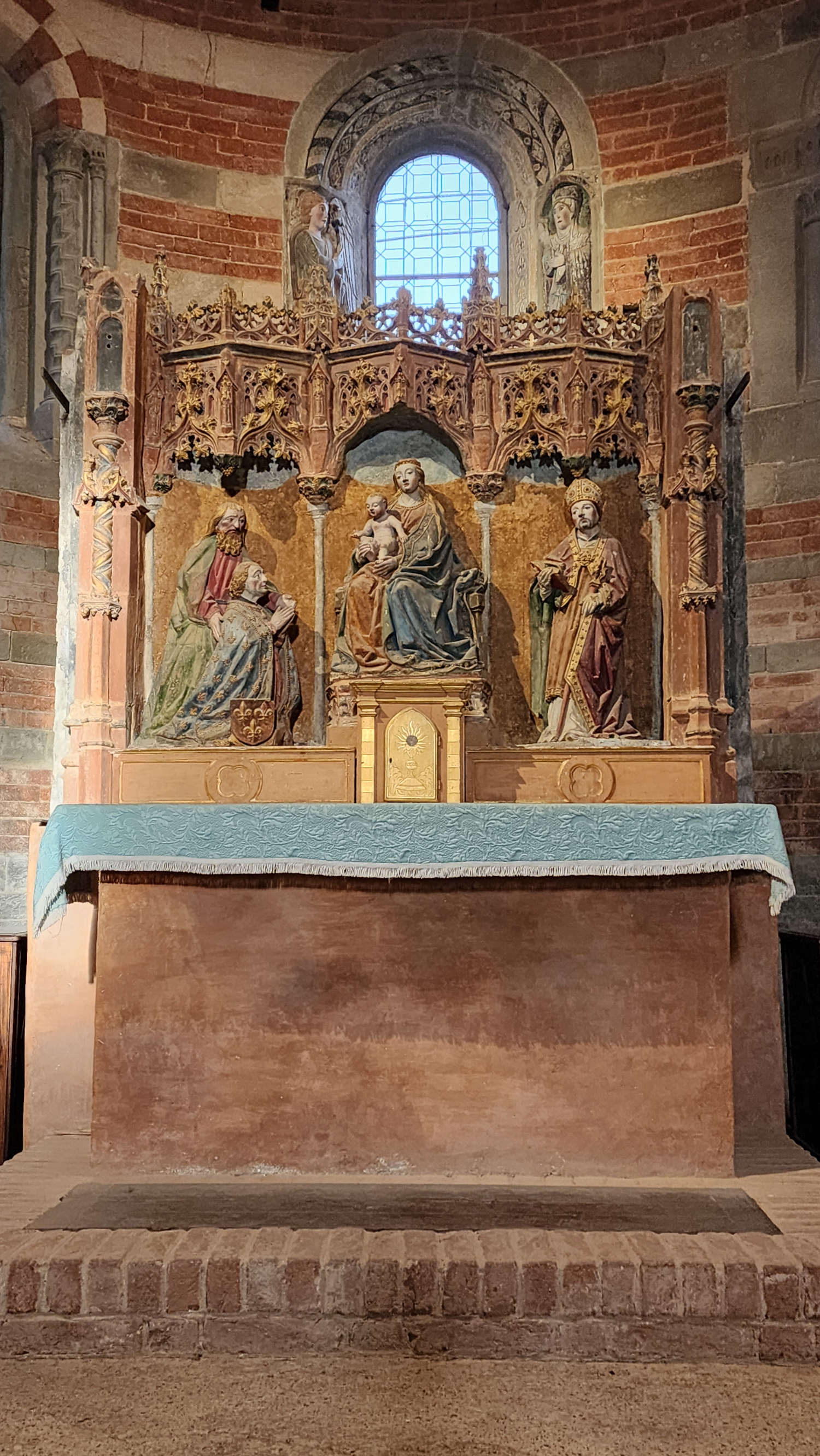
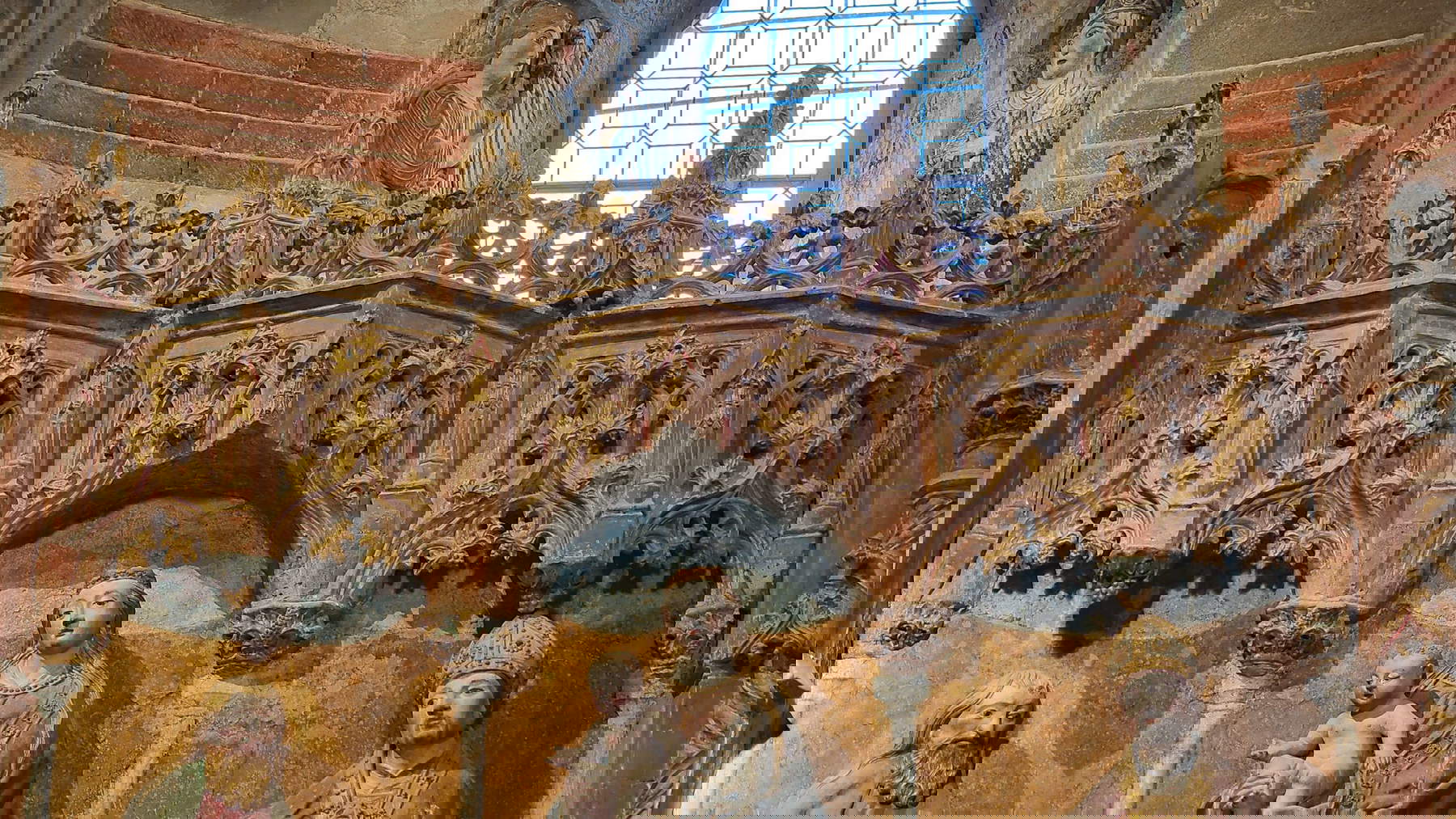
The two bas-reliefs, an Announcing Angel and an Announced Virgin, that adorn the arch of the central single-lancet window of the apse, which is developed in a large basin with concentric bands of terracotta and sandstone, materials made even more vivid and even more hypnotic by the red and white paint spread to enhance their color, have also preserved their colors: in the center, the large painted terracotta retable of the late 15th century, by an author still unknown, in which the homage of Charles VIII, king of France who descended to Italy in 1494 and was later driven back to his lands, to the Virgin has been identified. The French ruler, who sojourned between Asti and Chieri during his 1494 descent, was recognized by virtue of the collar of the Order of St. Michael, instituted by his father, Louis XI, which he displays under his cloak decorated with the fleurs-de-lis of France, and in the scene he is introduced to the Virgin, accompanied in the right compartment by St. Augustine (the clerics of Vezzolano followed the Augustinian rule), by a holy apostle, we are not sure which one: it is likely a gift that the local community wanted to make to the king on the occasion of his visit to Vezzolano. Giovanni Romano, an art historian who was among the foremost experts on the Lombard and Piedmontese Renaissance, had called this terracotta triptych a “sympathetic summit of Piedmontese plastic art not infeuded with Lombardy”: less sympathetic and more flamboyant, however, is the elaborate frame, a spectacular crowning piece that has few other equals in the area.
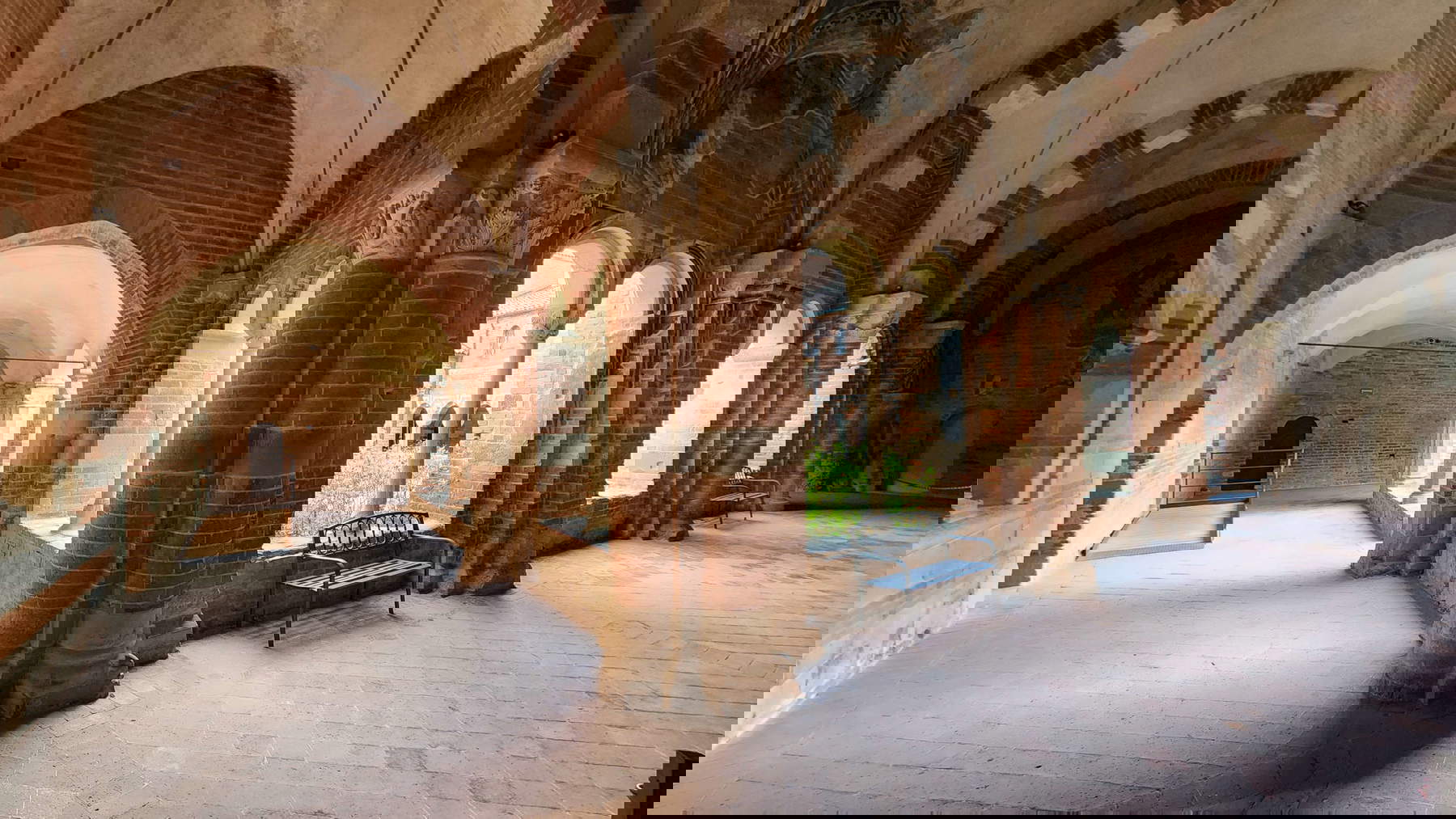
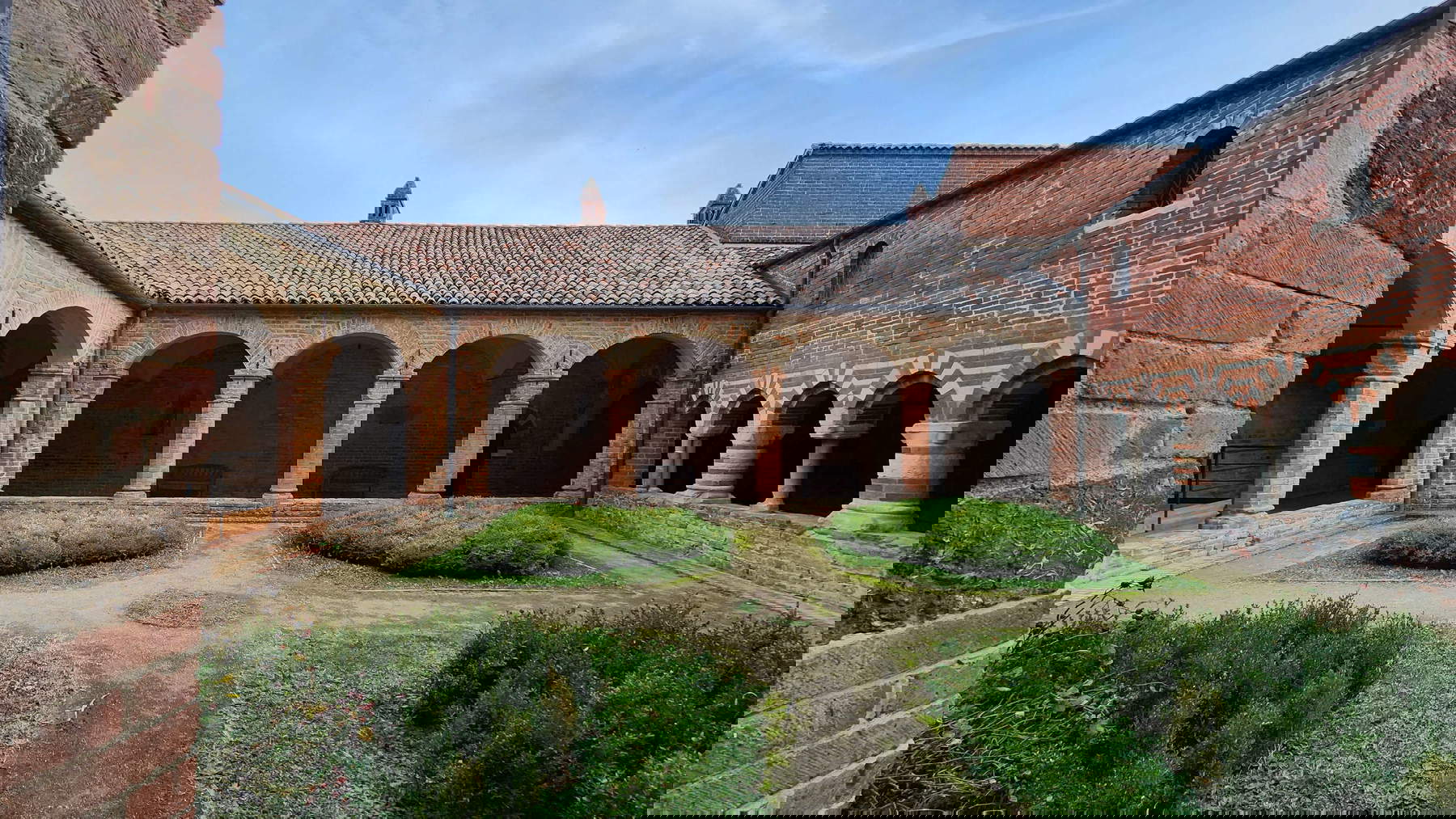
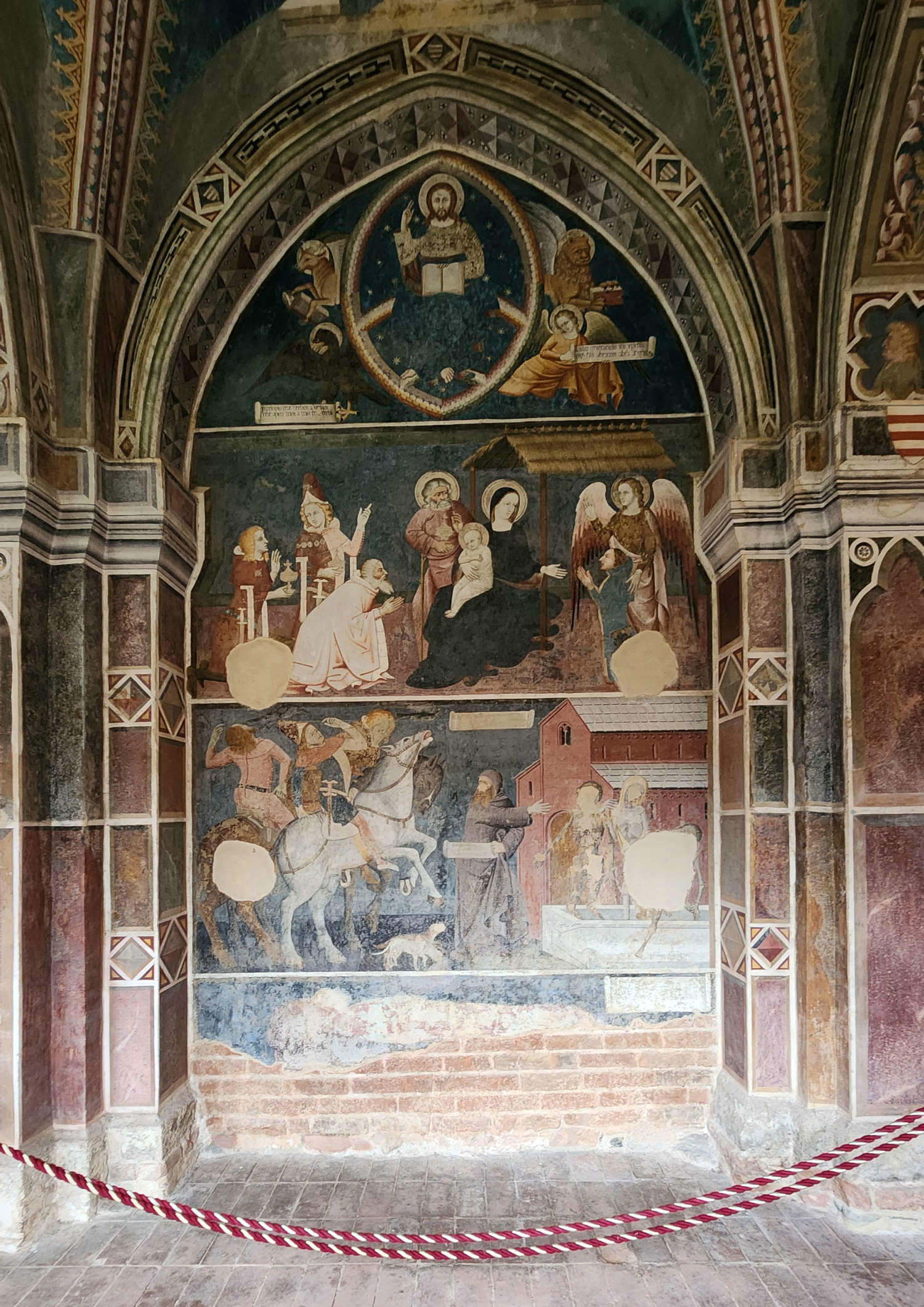
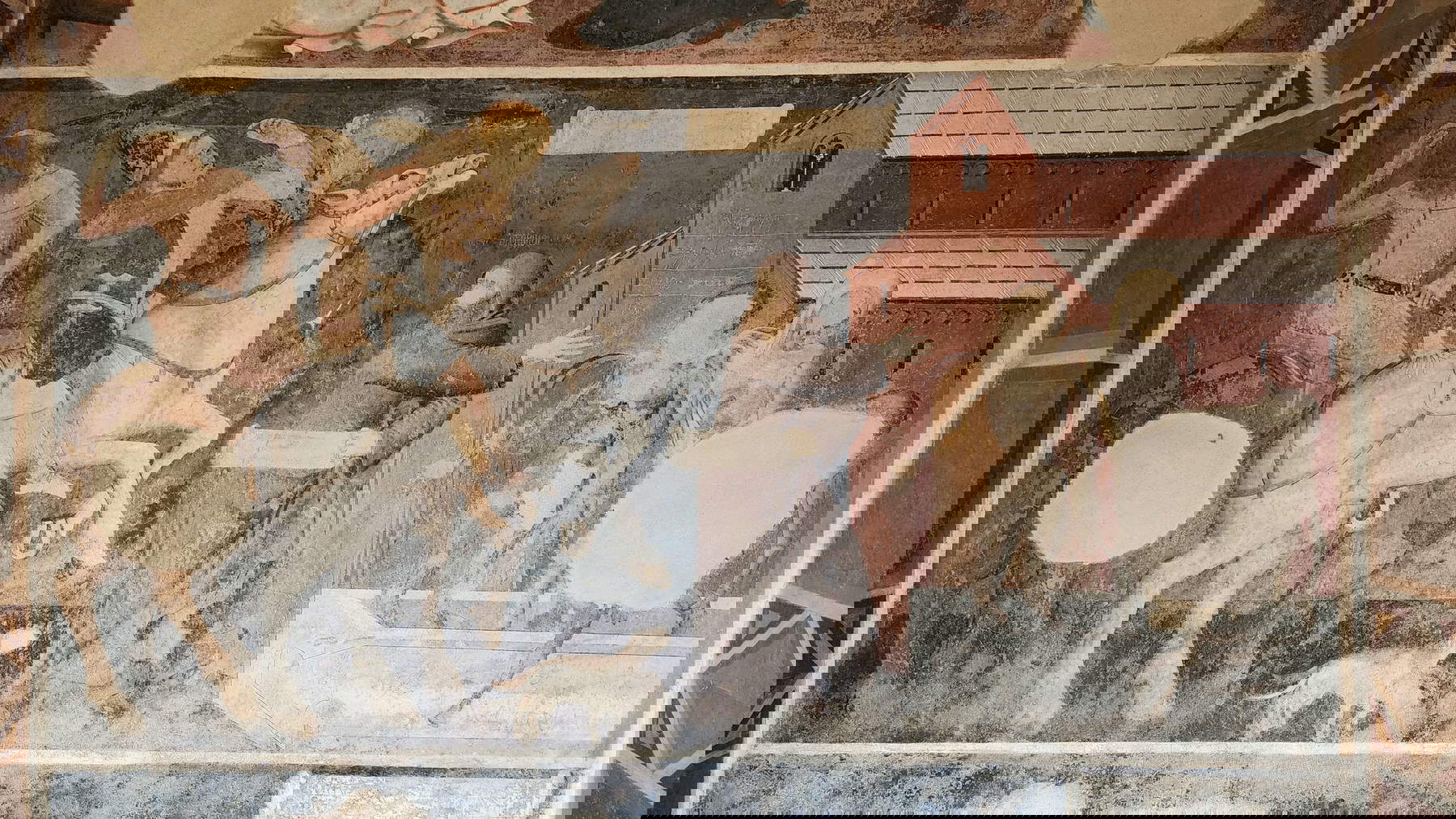
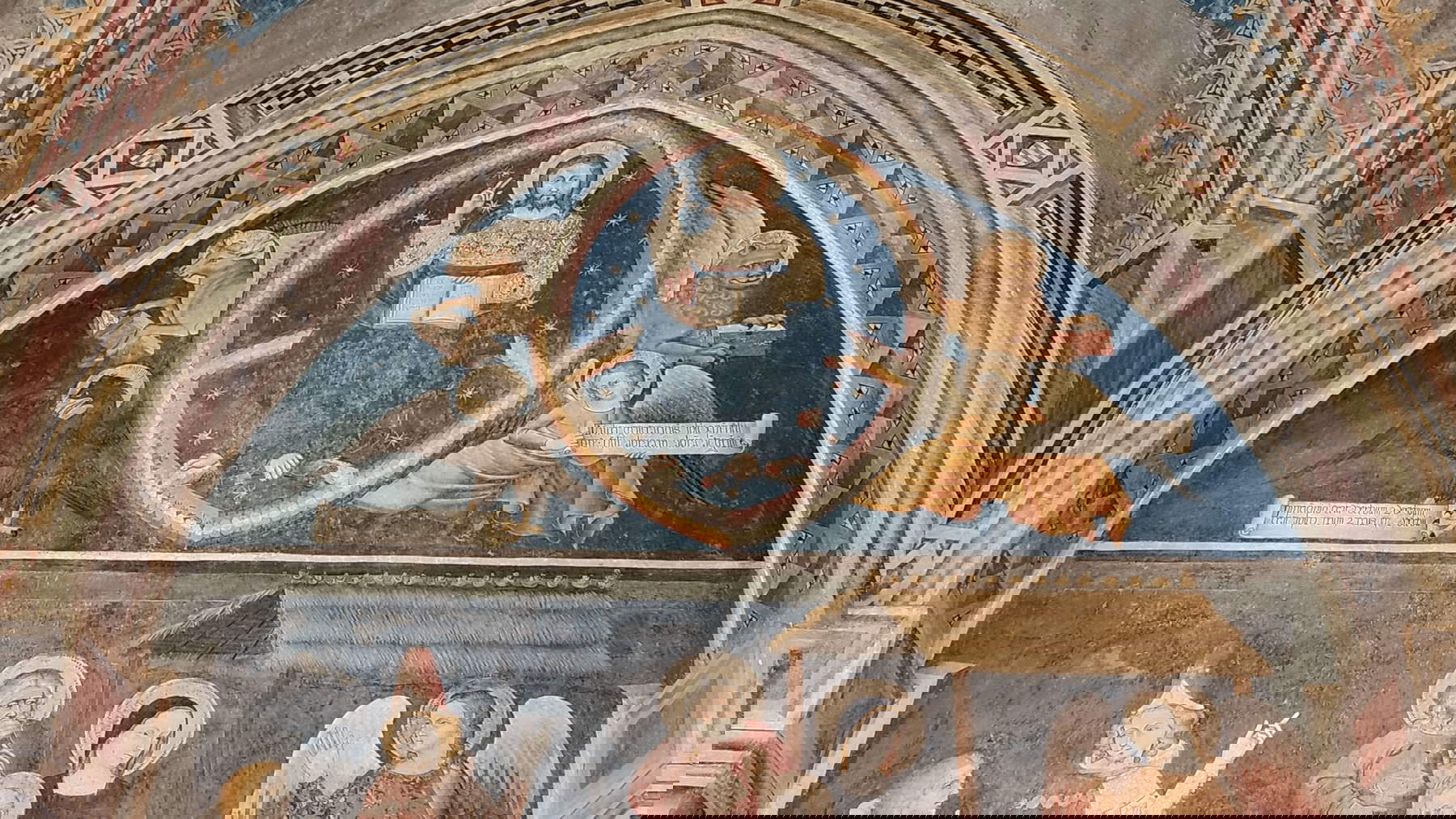
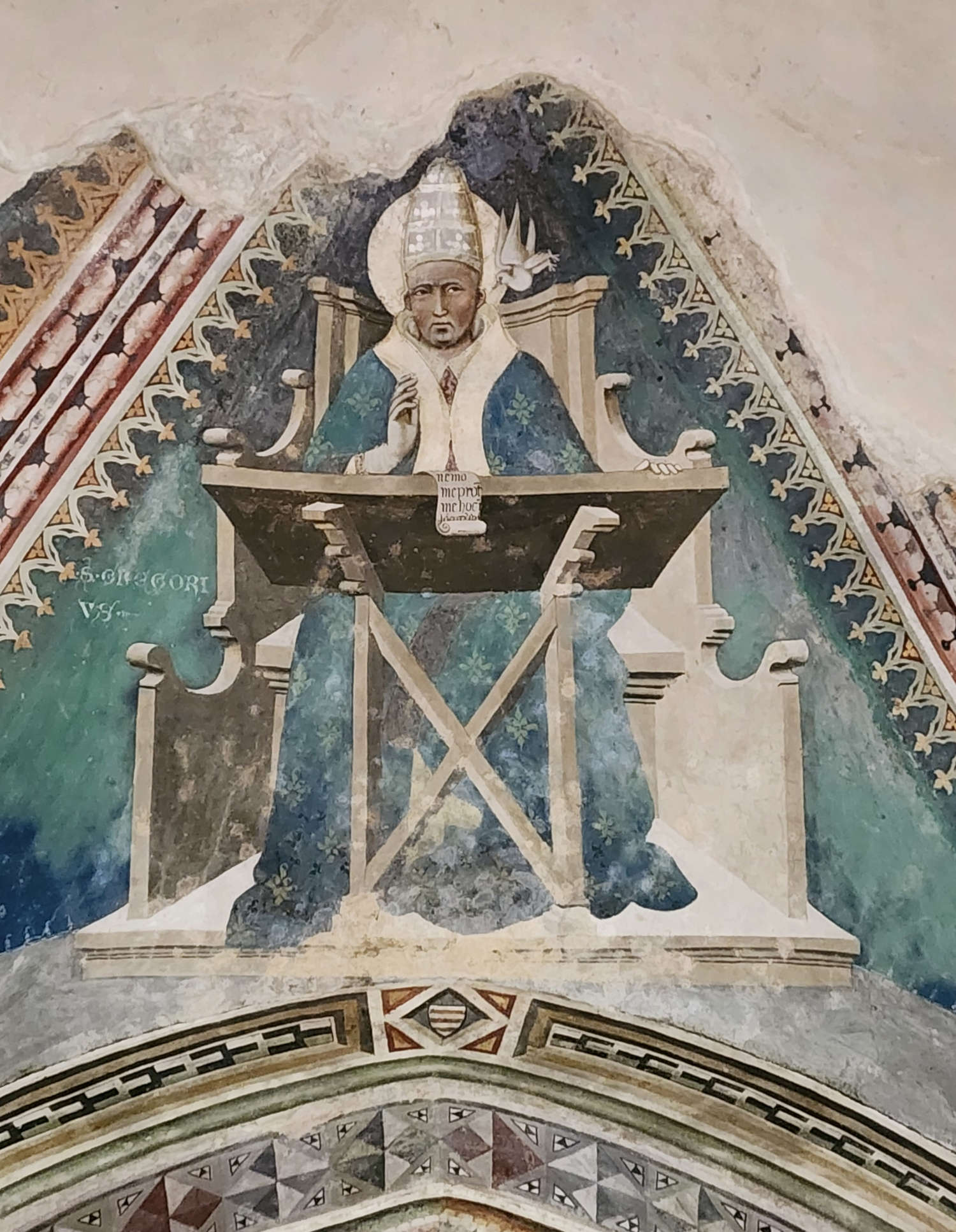
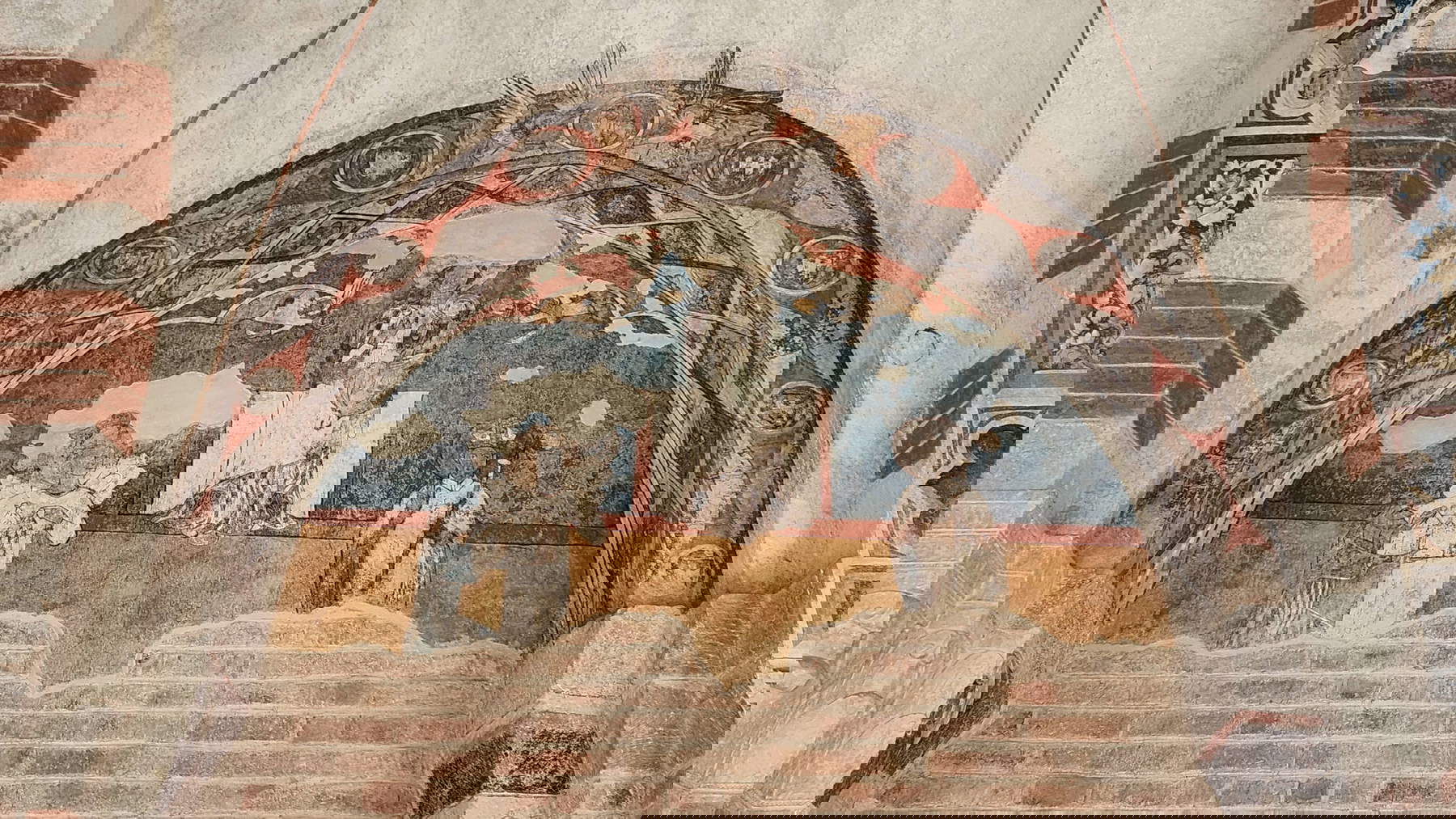
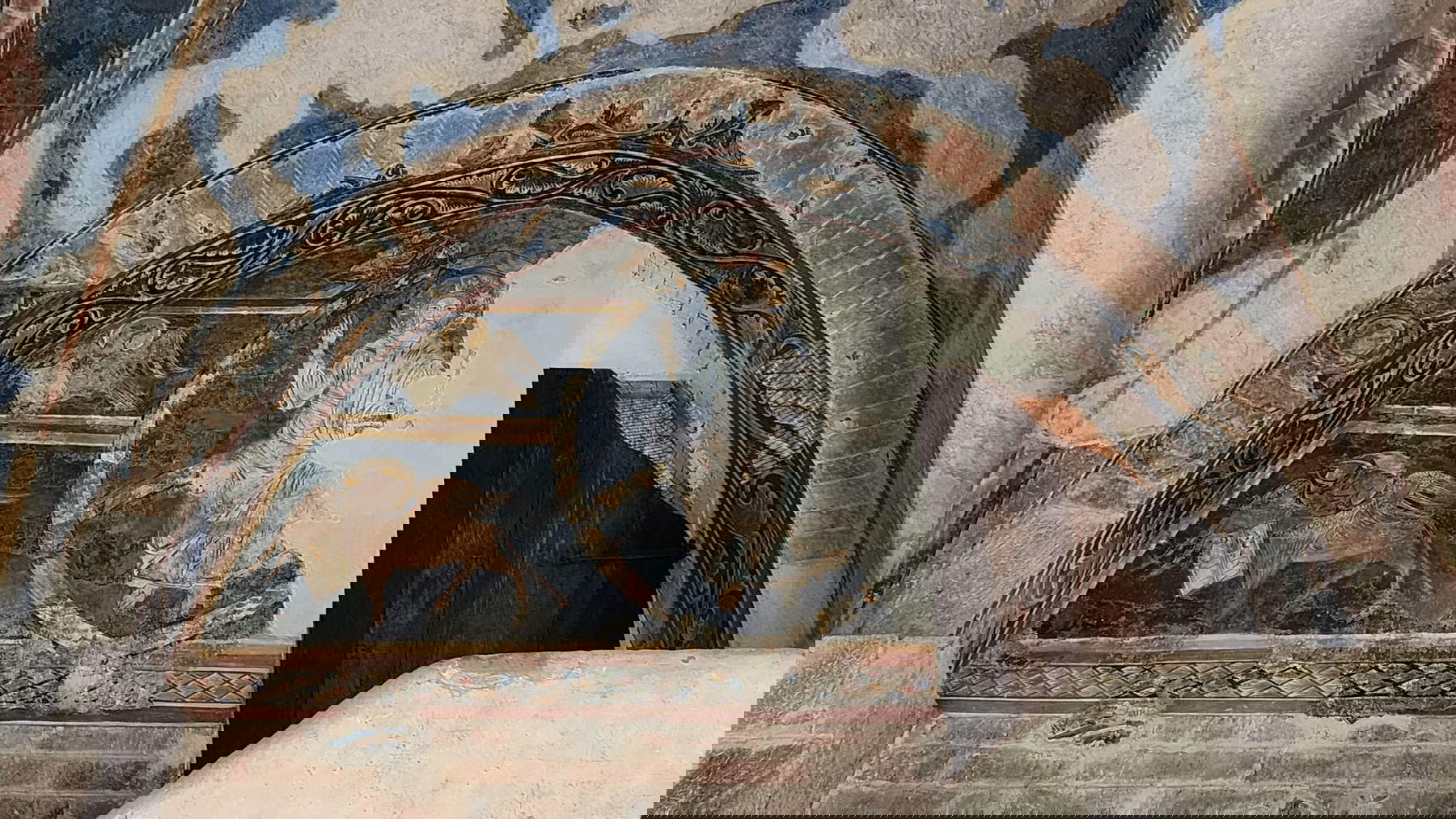
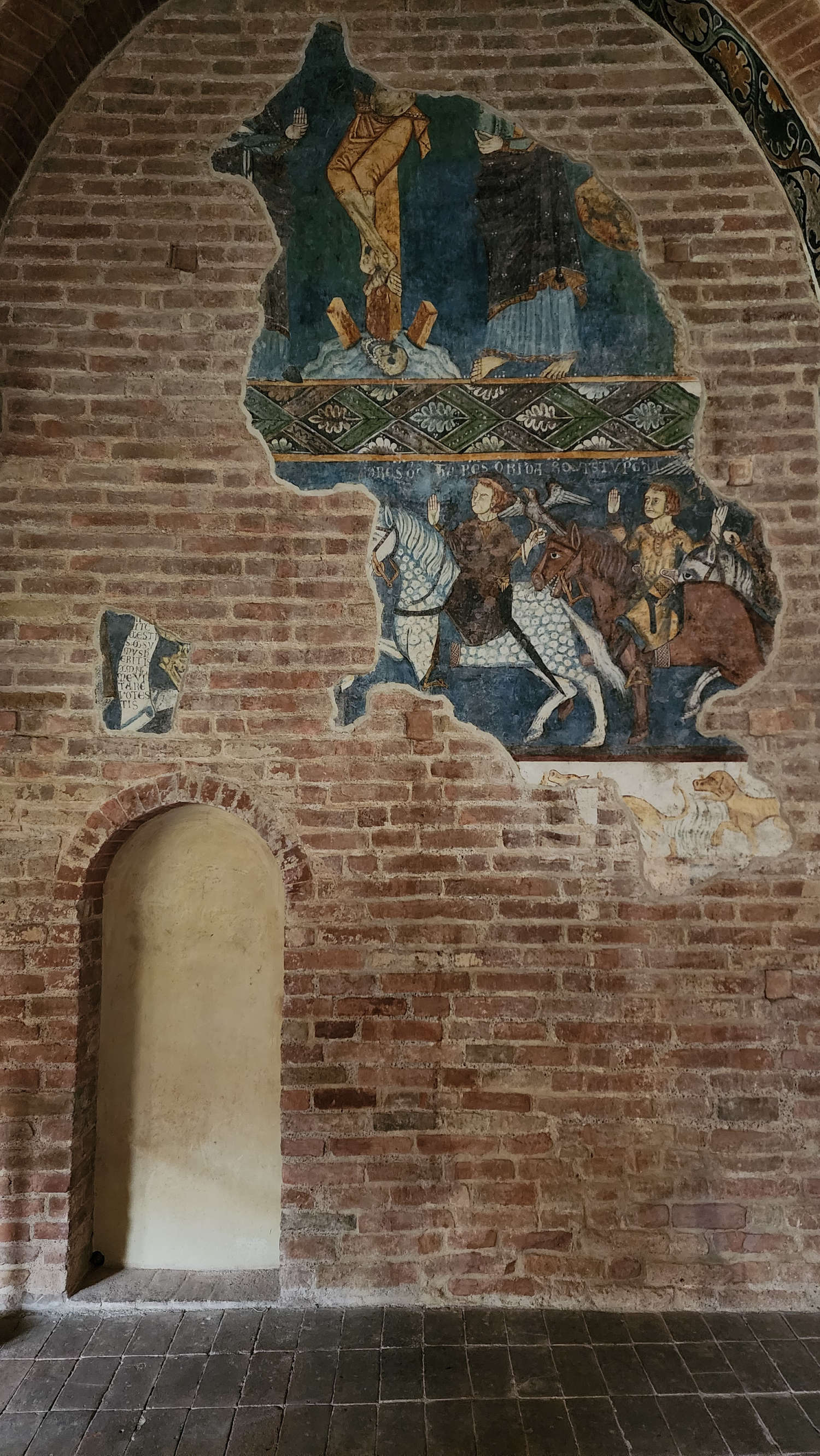
Leaving the church and moving into the cloister, one can lose half hours looking at the frescoes, which, though lacunose, offer valuable evidence not only of 14th-century Piedmontese painting culture, especially along the chapels located on the side of the cloister bordering the church, along that arm that occupies the space originally intended for the third nave of the church. Given the themes of the frescoes, it is likely that this area had been intended to accommodate the tombs of the families who had chosen Santa Maria di Vezzolano as the site of their tombs: the theme of the meeting of the three living and the three dead appears, and twice, a unique case in the writer’s memory, of which we are reminded of a lofty example, that of Buonamico Buffalmacco in the Camposanto monumentale in Pisa, where the episode announces the beginning of the Triumph of Death. Neither fresco deviates from the typical depiction of the scene (unless one considers, in the better-preserved fresco, the figure of the monk acting as mediator, guide, further admonisher): three horsemen, strolling through the countryside, come across three uncovered tombs, where they see three corpses, one of a recently dead person, the second in an advanced state of decomposition, and the third now reduced to a skeleton, reminding the three young men, usually richly dressed on their elegantly harnessed horses (and in one of these two frescoes, the worst preserved one, also accompanied by expensive hunting falcons), that life is like a breath. In the more fragmentary fresco, above which, moreover, the fragment of a Crucifixion can be seen, of the dead only the bone of a skeleton can be seen, but traces of the cartouche admonishing the conspicuously frightened young men on horseback can be clearly distinguished: today we see only the final part of it, but the entire inscription is referred to us by nineteenth-century historians, who noted it before the fresco suffered further damage (“Pensate quod estis quod sumus hoc eritis quod minime vitare potestis,” which roughly we could translate as “Think of what you are, we are what you will be, and you can do nothing about it”). In the best-preserved chapel, above the scene of the encounter, here instead is anAdoration of the Magi and, even more above, the Eternal Father in a mandorla accompanied by the symbols of the four evangelists, and on the summit, in the spire, a Saint Gregory the Great in a chair, with his throne painted according to a perspective foreshortening that is still intuitive but vigorously effective, the only survivor of a set of doctors of the Church who must have stood beside him. The coats of arms along the chapel allow the commission to be traced back to the Rivalba family, which for a long time ruled the nearby town of Castelnuovo d’Asti with its seigniory, while the formal characters have led scholars to assign the scenes to the still anonymous Master of Montiglio, so called because of his eponymous work, the frescoes that adorn the chapel of the castle of Montiglio, a short distance from here. Scholars Carla Travi and Maria Grazia Recanati have emphasized that “lingering transmontane flavor” that can be felt "in the softly jagged profile of Mary’s robe in theAdoration of the Magi in the Rivalba Tomb, in the complexity of the pointed drapery in the sweet angel of the Tetramorph surrounding the Christ in mandorla above, or finally in the abundance of silver and gold, completely lost, that are still guessed in the robes, in the vestments of the horses, in the weapons (the extraordinary scene of the Meeting of the Three Living and the Three Dead [....] on the adjoining side of the cloister)." In the next three arches, other coats of arms warn that we are entering the area had decorated by the De Radicata family: a St. Peter with a reliquary being presented by an angel to the Virgin, and above the Lamb of God with angels, and then again a heavily damaged Christ Pantocrator, another Madonna and Child between St. Peter and St. John the Baptist, presenting the Virgin with a worshipper wearing armor that would allow a dating of the work, because of its style, to the early fourteenth century.
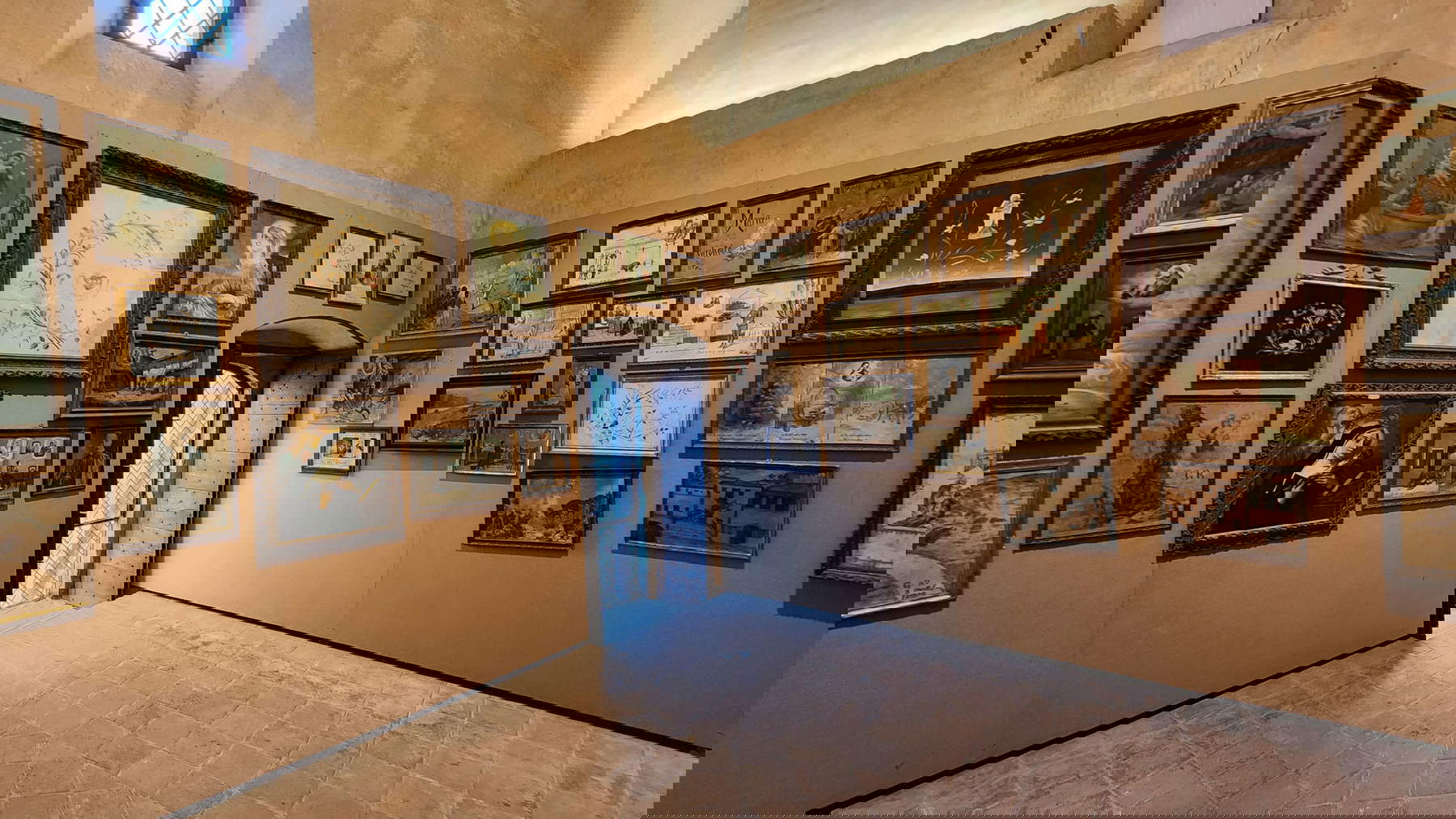
We are not sure what uses the rooms were intended for that are still accessed today by walking through the cloister, but we can get there by deduction. In the chapter house and in what must have been the guest quarters there are now small exhibitions that explain the role of Santa Maria di Vezzolano and place it in the context of a vast constellation of parish churches, small churches and Romanesque chapels scattered throughout the Asti area. On display in the probable monastic refectory are copies of the so-called “Vezzolano panels,” the paintings by Antoine de Lohry and his school once kept in the abbey, and then removed in the 1950s for conservation reasons (today they are in the availability of the Regional Museums Directorate of the Ministry of Culture, waiting for a permanent destination to be found for them after restoration is completed in 2022), and in an adjoining room two walls are filled with votive offerings painted in the late 19th and early 20th centuries.
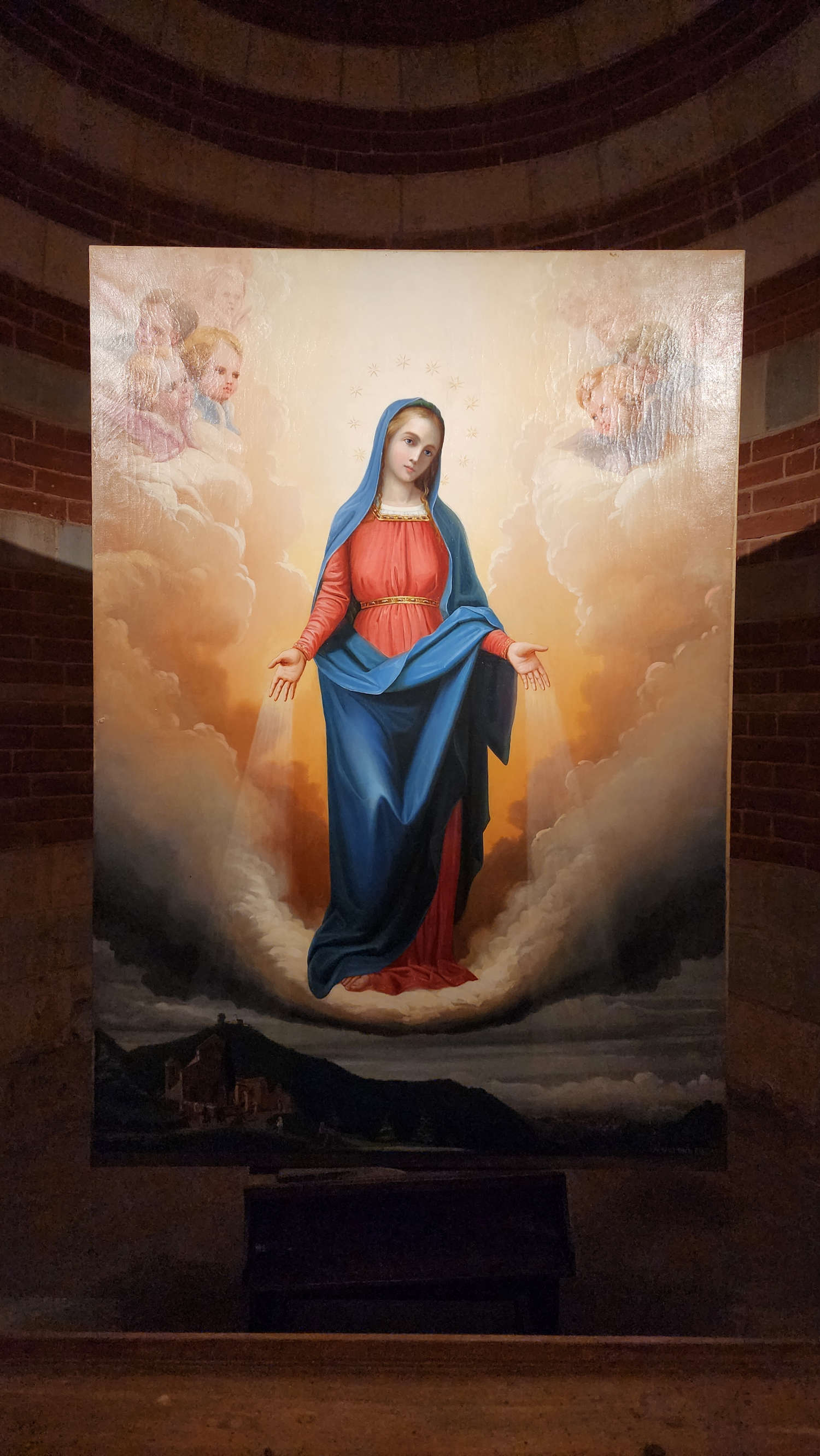
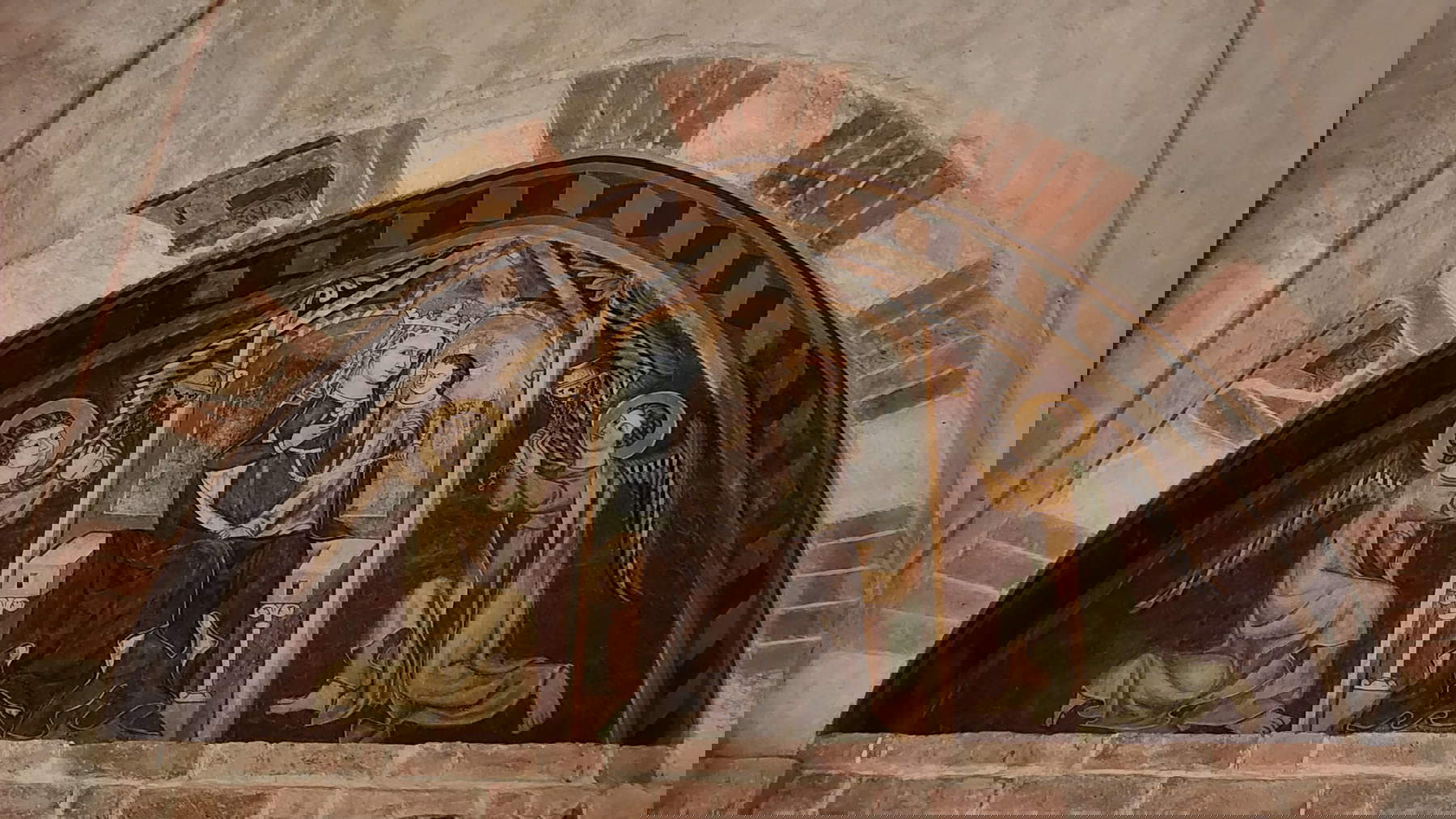
One returns to the church by passing under a lunette depicting the Madonna and Child Enthroned, with two angels on either side, arranged in symmetry, and it is impossible to leave the church without looking again at the pier, perhaps passing, this time, from the nave to see the’recently restored nineteenth-century painting by Giuseppe Rollini of Our Lady of Vezzolano that was commissioned to be painted by the inhabitants of Castelnuovo d’Asti who escaped a cholera epidemic in 1868, a work that the community particularly cares about, so much so that they have reserved a prominent place for it in the church, not far from the jubé. To be fair, the Reformed Church also tried to have Vezzolano’s pier torn down: documents refer to a pastoral visit in 1584, when Bishop Carlo Montiglio stopped by the church and prescribed that “the choir which is in the middle of the church, and the altars which are under it” be removed. Fortunately, no one would follow up on the prelate’s orders, given also the fact that the church was sparsely attended, and in a location that at the time was almost hidden, difficult to reach, with long walks in the summer sun or through impassable streets with snow in the winter. Don Bosco, when he spoke of Vezzolano, did not fail to mention the clerics who, among the vineyards of these hills, exercised their Christian charity by giving hospitality to fugitives who sought to escape justice, inciting them, however, to repent of their conduct. Vezzolano’s pier, in the 16th century, was also something of a wanted man in the post-Conciliar Church. And he, too, managed to escape justice, even before the abbey knew its decline, before it passed into private hands after the Napoleonic suppression of religious orders, before it became uninhabited and was remembered only by a few sporadic devotees who came here on solitary pilgrimage, before Don Bosco elevated it as the destination of his sorties, before modern protection requirements placed it in the hands of theentrusted it into the hands of the state property that, since 1937, through the Superintendence, has been in charge of its preservation and that has finally led it to a glittering, secluded, silent flourishing.

The author of this article: Federico Giannini
Nato a Massa nel 1986, si è laureato nel 2010 in Informatica Umanistica all’Università di Pisa. Nel 2009 ha iniziato a lavorare nel settore della comunicazione su web, con particolare riferimento alla comunicazione per i beni culturali. Nel 2017 ha fondato con Ilaria Baratta la rivista Finestre sull’Arte. Dalla fondazione è direttore responsabile della rivista. Ha scritto i libri Vero, Falso, Fake. Credenze, errori e falsità nel mondo dell'arte (Giunti editore, 2025) e Immagini del potere. Arte e propaganda da Augusto a Trump (Giunti editore, 2026). Collabora e ha collaborato con diverse riviste, tra cui Art e Dossier e Left, e per la televisione è stato autore del documentario Le mani dell’arte (Rai 5) ed è stato tra i presentatori del programma Dorian – L’arte non invecchia (Rai 5). Al suo attivo anche docenze in materia di giornalismo culturale all'Università di Genova e all'Ordine dei Giornalisti, inoltre partecipa regolarmente come relatore e moderatore su temi di arte e cultura a numerosi convegni (tra gli altri: Lu.Bec. Lucca Beni Culturali, Ro.Me Exhibition, Con-Vivere Festival, TTG Travel Experience).
Warning: the translation into English of the original Italian article was created using automatic tools. We undertake to review all articles, but we do not guarantee the total absence of inaccuracies in the translation due to the program. You can find the original by clicking on the ITA button. If you find any mistake,please contact us.



















 IT
IT FR
FR DE
DE ES
ES CN
CN


