








The National Gallery of Art in Washington has announced the acquisition of Magdalene in Ecstasy, a rare painting made around 1625 by Artemisia Gentileschi (Rome, 1593 - Naples, post-1654). The work, considered by scholars to be one of the pinnacles of the painter’s production, represents the National Gallery’s first major acquisition devoted exclusively to Artemisia Gentileschi and is a significant addition to the museum’s collections of Italian painting of the modern age.
The painting will be on public display starting in late February in Gallery 29, on the main floor of the National Gallery’s West Building. The acquisition was made possible by a donation from Nina J. Cohen, in honor of her father Emanuel Cohen, and the Patrons’ Permanent Fund. With this entry, the work enters a public collection for the first time, marking a key step in its conservation history.
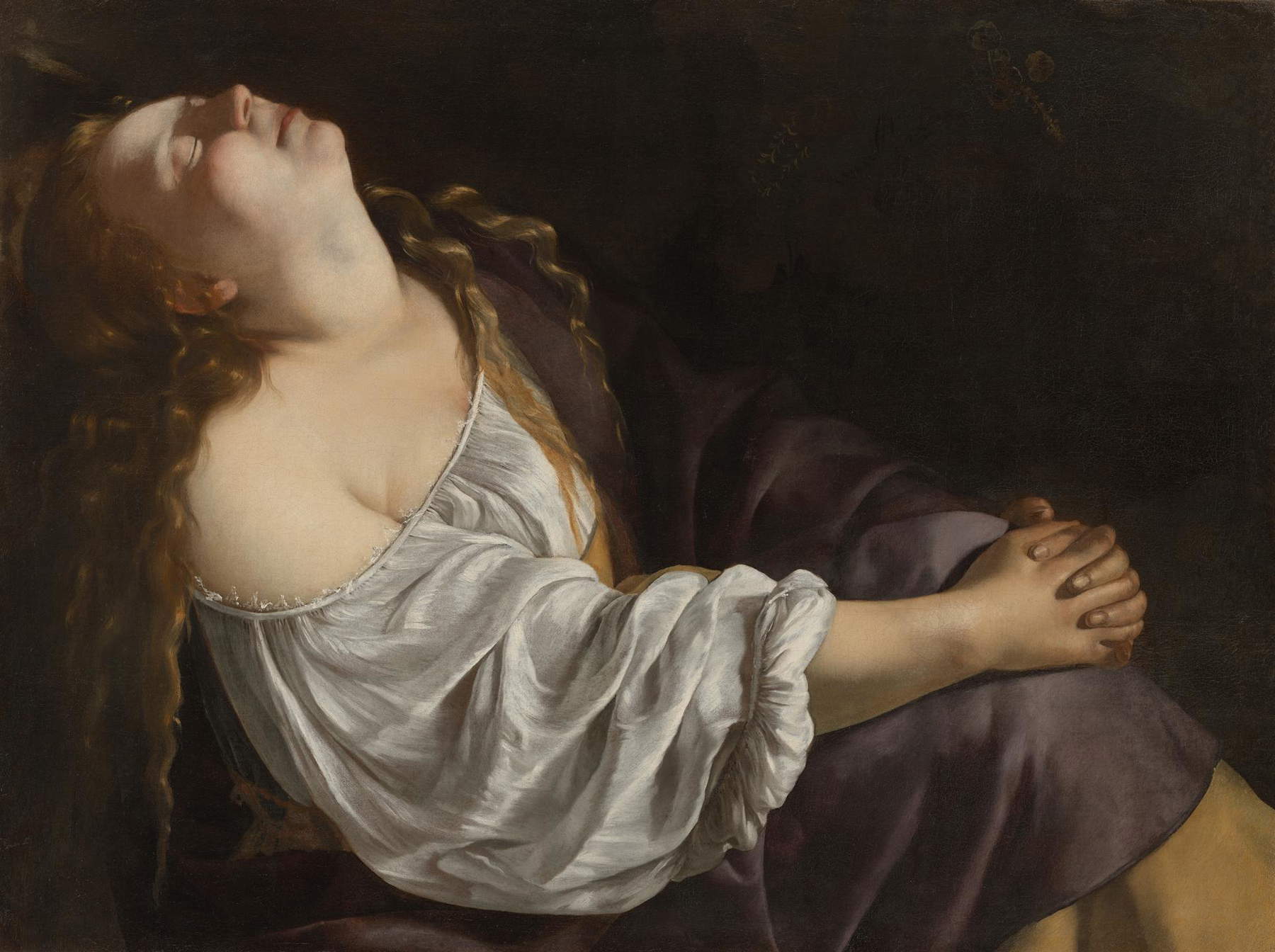
Magdalene in Ecstasy is considered one of the most refined and powerful paintings ever made by Artemisia Gentileschi. Its importance has been reaffirmed by a long series of studies, publications and exhibitions since its rediscovery in 2011. For centuries, in fact, the work had remained in a private collection and had disappeared from the historical record. The painting resurfaced in southern France at the beginning of the second decade of the 21st century and was subsequently purchased by a private collection at a Sotheby’s auction in 2014.
Art historians date the painting to the period around 1625, when Artemisia Gentileschi was in Rome for the second time. This is a crucial phase of her career, often identified as the moment of her greatest artistic maturity, in which the painter achieved an extraordinary balance between narrative force, emotional intensity and technical refinement. In these years, her works are distinguished by the use of saturated colors and strongly expressive figures, capable of deeply engaging the viewer.
The acquisition was welcomed as a major event by the museum’s management. "It is a momentous occasion to bring Mary Magdalene in Ecstasy into the National Gallery’s collection as the first notable example of the extraordinary work of Artemisia Gentileschi," said Kaywin Feldman, director of the National Gallery of Art. “This acquisition marks an important addition to our historic holdings, a testament to our ongoing commitment to deepening our collection and, as a result, expanding public access to great works of art. We look forward to sharing this seminal painting with visitors to the National Gallery in the years to come, as it enters a public collection for the first time.”
From a curatorial perspective, the work also takes on central value. E. Carmen Ramos, museum curator, said, “We are thrilled to announce this acquisition of Artemisia Gentileschi, one of the most important artists of the 17th century. Her painterly approach shaped the evolution of modern and Baroque art. The acquisition, a depiction of Magdalene, is unique in its composition and its close focus on the figure, which highlights the narrative power of Artemisia Gentileschi’s work at the height of her career. The National Gallery is honored to hold this masterpiece and to expand access to her genre-defining artistic practice.”
Magdalene in Ecstasy depicts the saint in a state of intense spiritual transformation. The composition differs markedly from both traditional depictions of Magdalene and the painter’s previous interpretations of the same subject. Indeed, Artemisia Gentileschi renounces the more usual iconographic attributes, such as the skull, the cross or the jar of ointments, focusing exclusively on the figure and her inner experience. This choice accentuates the emotional and psychological dimension of the scene, making the conversion of the saint an immediate and tangible event for the viewer.
The work ideally dialogues with a lost depiction of Magdalene made by Caravaggio in 1606, from which it seems to take up the idea of a figure caught in a moment of intense spiritual introspection. Artemisia Gentileschi, however, reworks this model in an entirely personal way, bringing Magdalene closer to the viewer’s space and intensifying the emotional involvement. The conversion from secular to religious life takes place before the eyes of the viewer, transforming the painting into a visual and spiritual experience at the same time.
From a historical perspective, Magdalene in Ecstasy represents a rare example of a depiction of a woman caught in such a direct and immediate process of emotional and psychological transformation. This aspect reflects a widespread interest in the seventeenth century in the concrete and perceptible rendering of religious experience through art, but it takes on particular significance in the context of the production of Artemisia Gentileschi, an artist who often placed strong and complex female figures at the center of her works.
The entry of Magdalene in Ecstasy into the National Gallery’s collections also marks a significant moment for the representation of women artists in early 17th-century Italian art collections. The work is part of an expansion and deepening of the collections devoted to Baroque art, helping to provide a more comprehensive and articulate view of the artistic production of the period. The National Gallery of Art, which welcomes millions of visitors from around the world each year, holds a collection of more than 160,000 works ranging from antiquity to contemporary art. The addition of this masterpiece by Artemisia Gentileschi further strengthens the museum’s role as a leading institution for the study and dissemination of art history, offering the public an opportunity to engage directly with one of the most intense and significant works of Italian Baroque art.
|
| National Gallery of Washington acquires Artemisia Gentileschi's Magdalene |

Warning: the translation into English of the original Italian article was created using automatic tools. We undertake to review all articles, but we do not guarantee the total absence of inaccuracies in the translation due to the program. You can find the original by clicking on the ITA button. If you find any mistake,please contact us.


















 IT
IT FR
FR DE
DE ES
ES CN
CN