





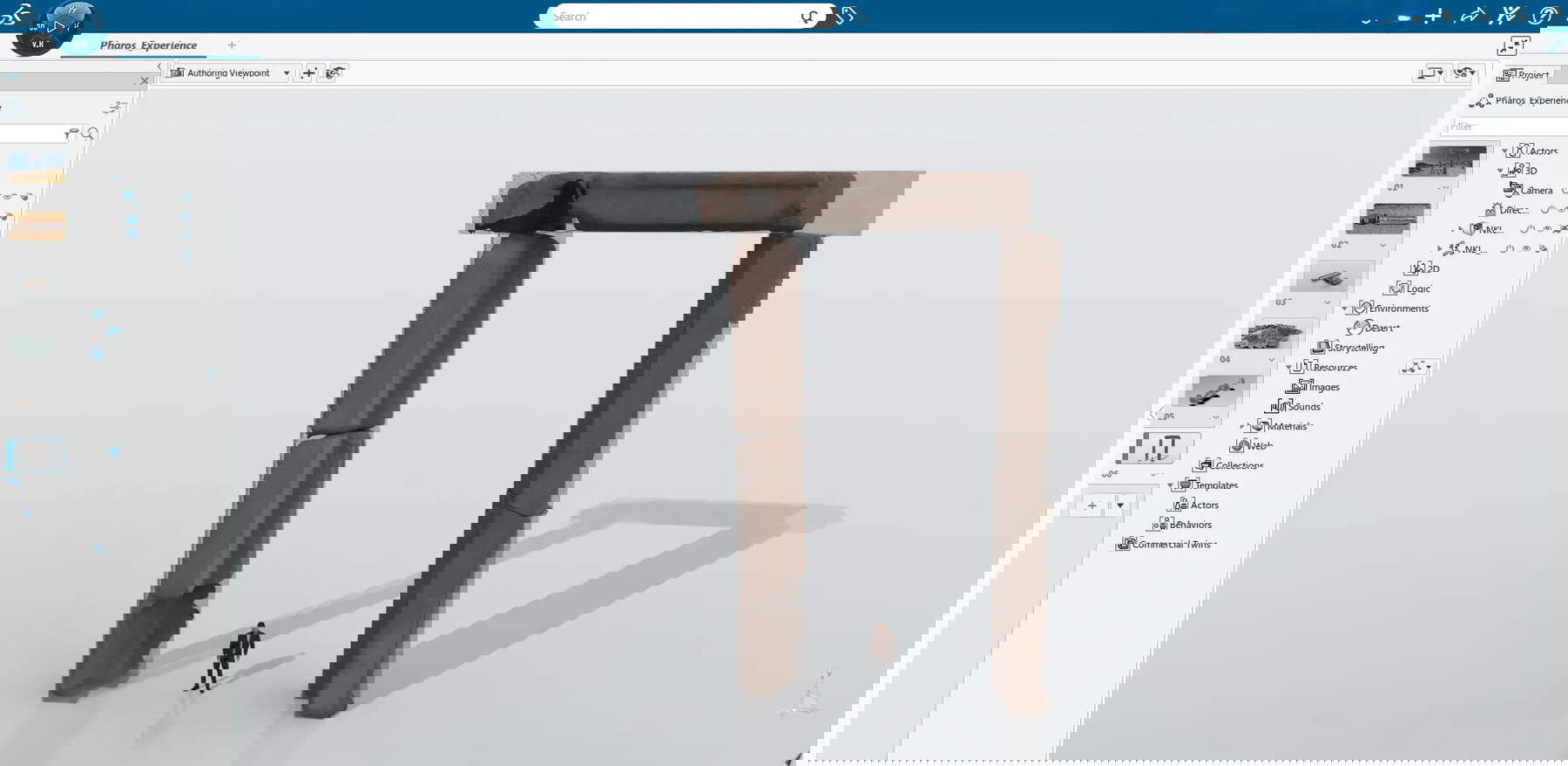
A digital reconstruction of the Lighthouse of Alexandria in Egypt is at the center of a research project that links underwater archaeology, historical analysis and three-dimensional modeling to restore one of the seven wonders of the ancient world. As Art News reports (citing a New York Times article), historians, architects and programmers are working to create a 3-D model of the building from the architectural remains preserved on the seabed in front of the Egyptian city’s harbor, where the structure stood in the Hellenistic age.
The Lighthouse of Alexandria dominated the entrance to the harbor and was considered one of the tallest buildings in the ancient world. With an estimated height of about 140 meters, it was second only to the Great Pyramid of Giza (146.6 m). The building was commissioned by Ptolemy I Sotere (367-283 B.C.E.), Alexander the Great’s Macedonian general who became pharaoh of Egypt, and completed under the reign of his son and successor Ptolemy II Philadelphus. During the approximately three hundred years of the Ptolemaic dynasty, Alexandria indeed represented a major center of Greek culture in Egypt.
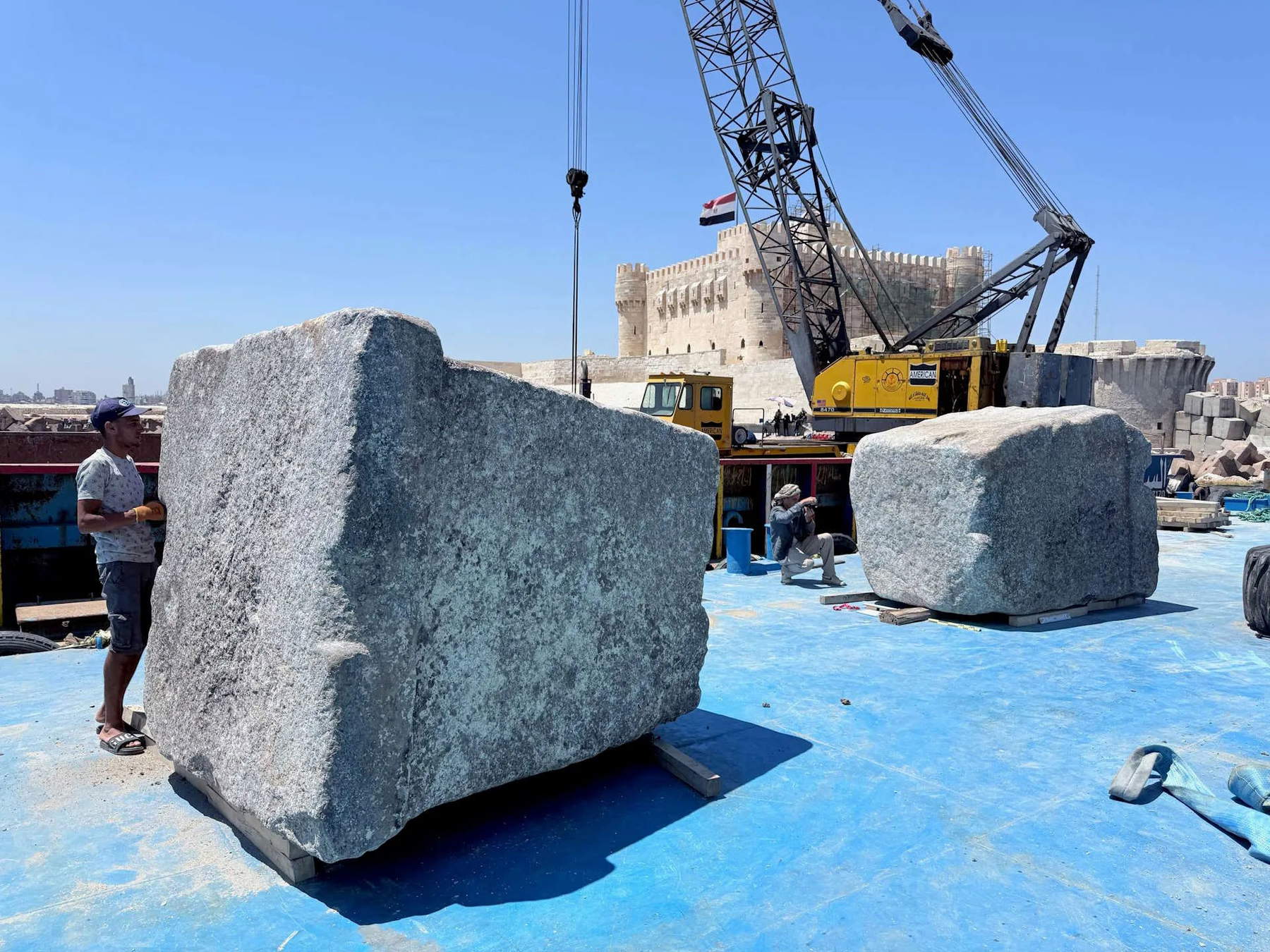
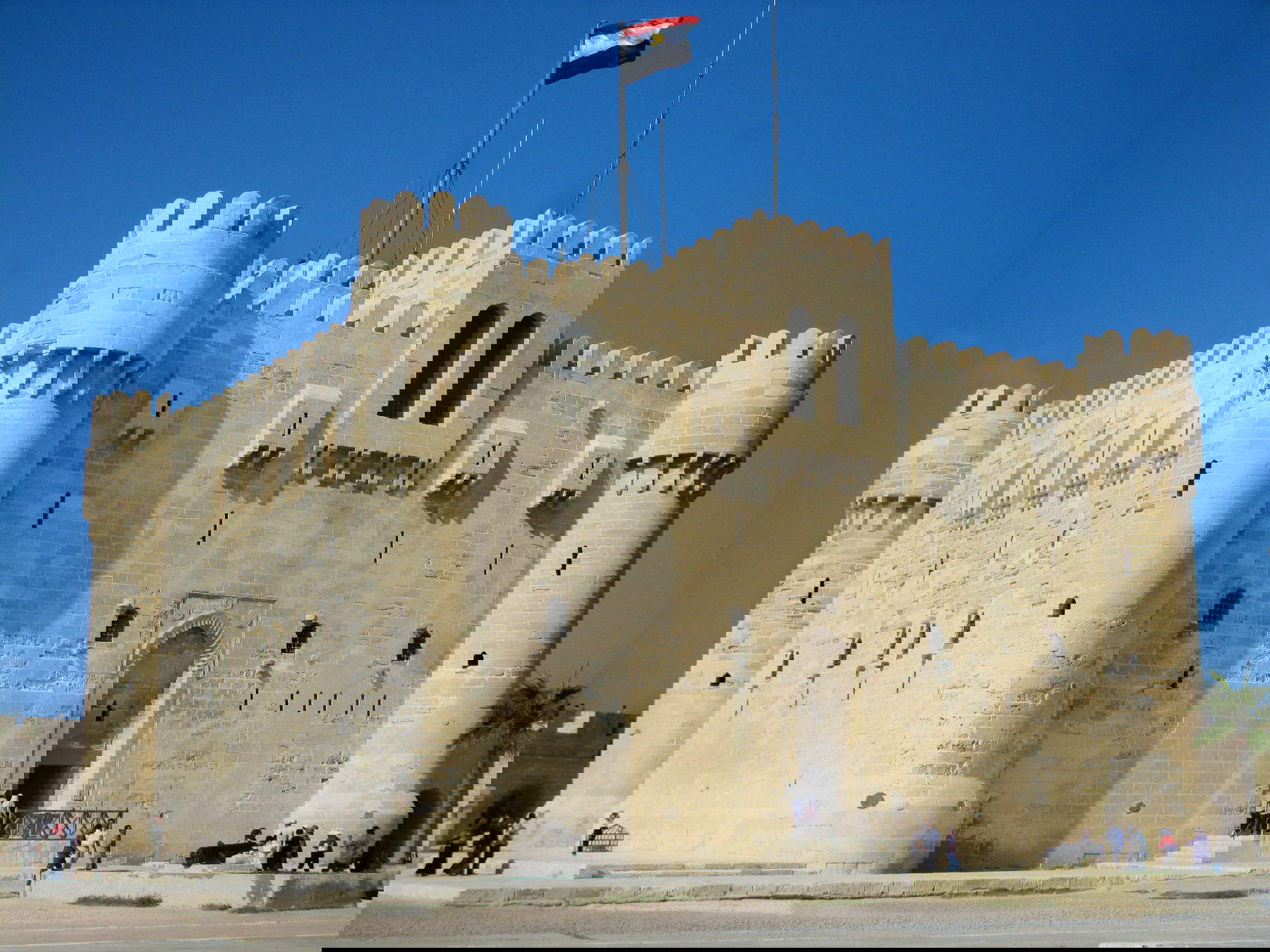
Built on the island of Faro, off the coast of Alexandria, the lighthouse was made of stone and articulated in three distinct architectural levels. The structure had a rectangular base, an octagonal middle section, and a cylindrical top. At the top, a system composed of mirrors and a large fire allowed ships sailing in the Mediterranean to signal access to the harbor. Over the centuries the building was gradually weakened by seismic events. The final destruction occurred in 1303, following the Crete earthquake, which caused the structure to collapse. Most of the materials fell into the sea and remained submerged for a long time, complicating the reconstruction of the architecture, while some blocks were reused to erect, in 1477, the fortress of Qaitbay on the same promontory.
The three-dimensional model of the lighthouse thus makes it possible to virtually place every element found on the seabed, including some five thousand units scanned so far, and aims to create an explorable version of the building, offering researchers and the public a chance to perceive the structure as it was in ancient times. Last summer in the course of operations, the Pharos Project team brought granite blocks and other architectural elements to the surface and digitally scanned them. Among the most important finds emerges a pylon that combines Greek construction techniques with Egyptian stylistic elements. In addition, worsening water conditions are making underwater work increasingly complex, necessitating in future phases the increased use of temporary salvage of submerged materials, which will be lifted, documented, and then returned to the sea to ensure their preservation.
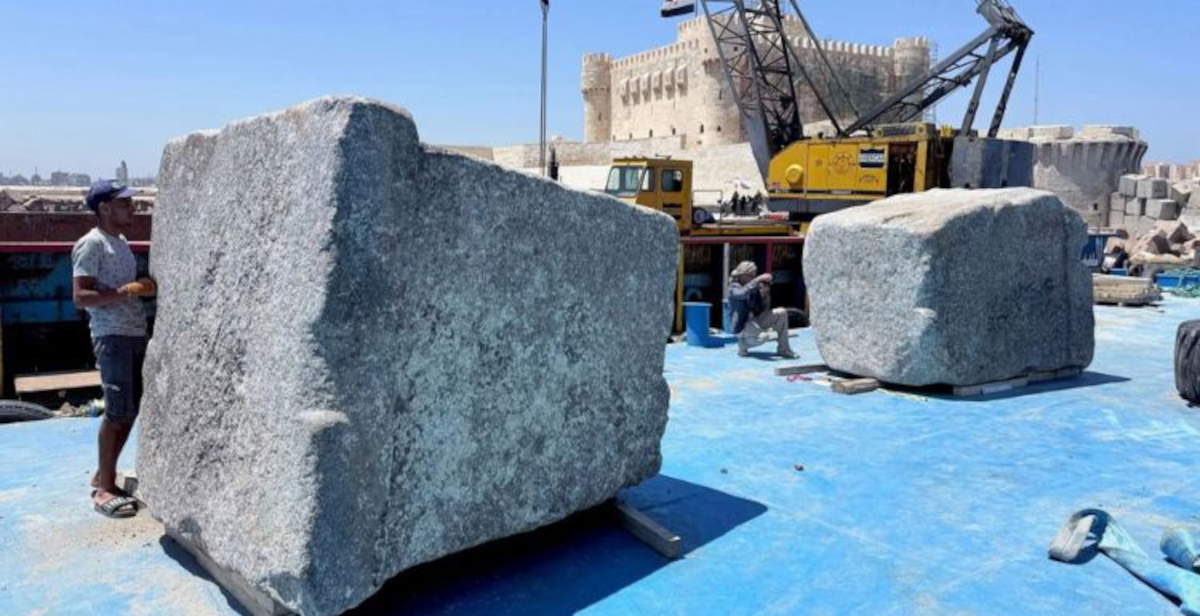 |
| This is what the Lighthouse of Alexandria will look like: a project reconstructs it in 3D |


The author of this article: Noemi Capoccia
Originaria di Lecce, classe 1995, ha conseguito la laurea presso l'Accademia di Belle Arti di Carrara nel 2021. Le sue passioni sono l'arte antica e l'archeologia. Dal 2024 lavora in Finestre sull'Arte.Warning: the translation into English of the original Italian article was created using automatic tools. We undertake to review all articles, but we do not guarantee the total absence of inaccuracies in the translation due to the program. You can find the original by clicking on the ITA button. If you find any mistake,please contact us.





























 IT
IT FR
FR DE
DE ES
ES CN
CN


