





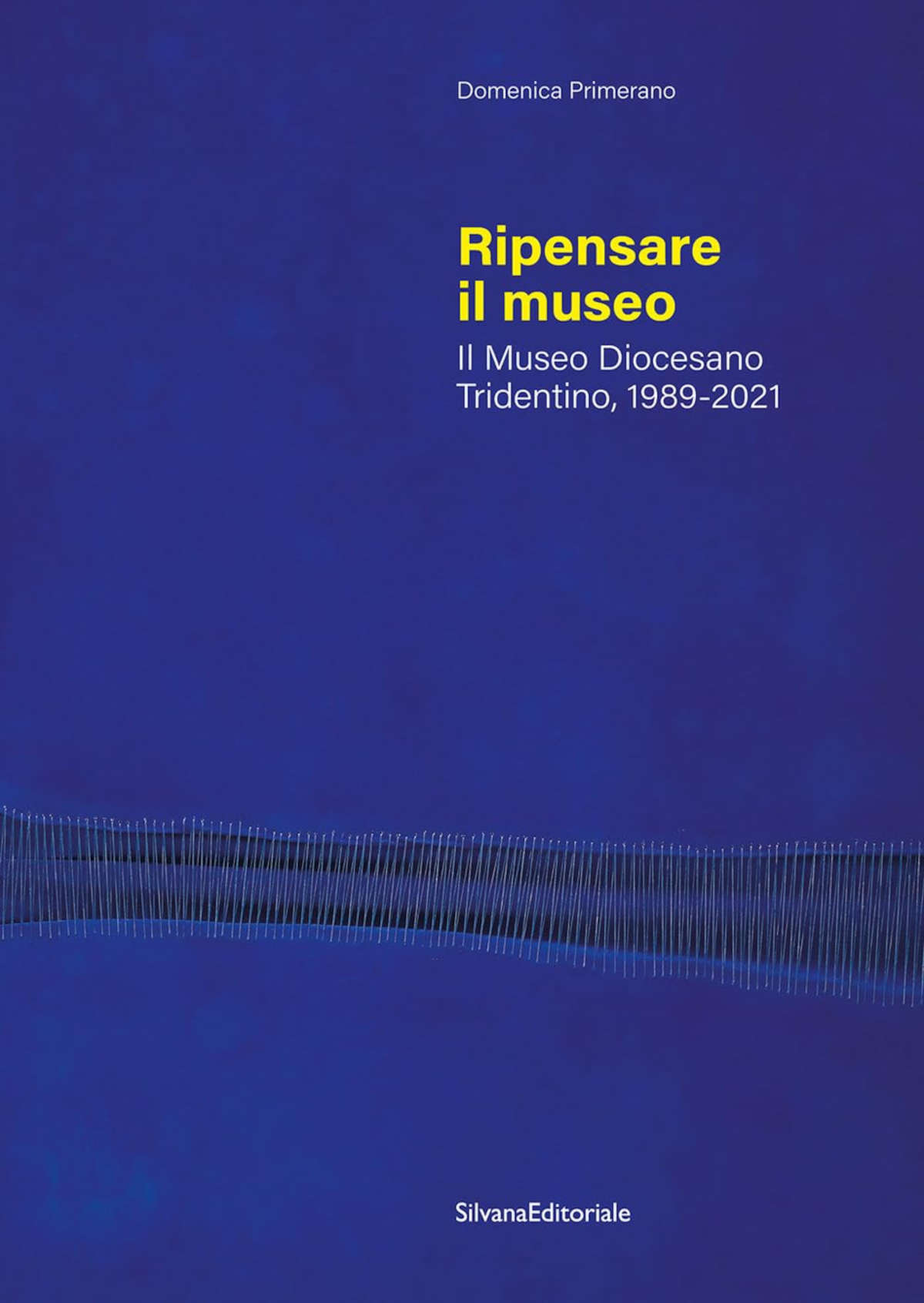
This is not an article on what Domenica Primerano, director of the Tridentine Diocesan Museum from 2014 to 2021, did during the years she worked inside the halls of Palazzo Pretorio: we had already spoken on the subject in abundance in the aftermath of her resignation, so those who want to catch up will find in the middle of these pages an article with a large copy of numbers, episodes, details. Or, even better, they will be able to get hold of the book, Rethinking the Museum, which Primerano herself published a few weeks ago with Silvana Editoriale and in which she condensed thirty-two years of professional experience all spent on the Trento museum. It is not even an article on what it means to “rethink the museum,” because a museum can be rethought in thousands of different ways: in the exergue to the first chapter of the book, the reader will encounter a thought by Franco Russoli that informs us of the impossibility of finding a museum everywhere unique and the same, since the museum “must assume from time to time the character that its heritage and history demand.” And it is not an article about the book, to be fair. Or rather: the book inspired the meager, unsolicited reflections that follow. On the volume itself, however, it can be added that today it is very rare to find such hybrids and that Domenica Primerano’s book is reminiscent, if anything, of certain nineteenth-century treatises where the author’s experience was mixed with general considerations on the subject: I am thinking of Vittorio Pica, who at the end of the century wrote a book on Japanese art beginning with an account of his visit to Edmond de Goncourt’s mythological collection of Oriental arts, or of Nino Costa’s autobiography, which interweaves an account of his life, albeit a lively one, with considerations about the painters of his time, his relationship with the public, and technical issues. Domenica Primerano’s book is at the same time a professional autobiography, a narrative, a brief and up-to-date handbook of museology (the apparatus of the notes comes closer to the academic essay than to the popular essay), a report, as it is used to say now, on three decades of activity at the Tridentine Diocesan Museum, all written in the first person, with a flat, delicate but resolute prose, a prose that reflects the author’s gentle, decisive and determined character, with a predilection for parataxis, without too many incisors, a prose imagined to accompany the reader inside the pages, a reflection of what throughout her career Domenica Primerano has done with visitors to her museum: indicative, and inevitable, that the writing also reflects in a certain way the approach towards the museum.
It is not, therefore, an article about all of the above. Consider it, then, an article on what a museum can be in the third millennium, starting from the insights Primerano has scattered throughout the pages of her book. A curious precedent could be recalled: Manganelli provoked by saying that the museum of works of art is a “monstrous encyclopedic machination,” a monothematic collection of supposed beauty, the equivalent of “making all the Josephs live in one neighborhood of a city,” a seemingly reasonable instrument because it is based on classification criteria that have little to do with the “madness” that presides over creation. Then, an ecclesiastical museum, one might further provoke, is always the child of a form of violence, as a collection of objects wrested from their contexts: sold and then recovered, or from suppressions of churches and convents, or even remnants of demolitions, decommissioning, destruction. With rare exceptions, and all of them contemporary, no object that is preserved in a diocesan museum was ever intended for the museum. The same reasoning, of course, could be made for any museum, but in the case of an ecclesiastical institution the loss is even more evident, due to the fact that every object preserved there was made for a specific ritual, devotional, liturgical function. A “secular” museum, to say, could in theory recreate a collector’s Wunderkammer with some degree of fidelity to the lost context. The same thing cannot be said for a diocesan museum. One can do an exercise in suspension of disbelief and imagine being a seventeenth-century collector contemplating the fruit of one’s research. One cannot imagine being inside a church, without the incense, without the prayers, without the cold. The museum then becomes an archive of babble, fragments of a religious discourse that can no longer be heard in its entirety. There is, however, to consider that those fragments can become the basis of a new discourse, potentially unlimited.
The museum, then, could be considered a fragmentary language that seeks to speak again, a buried language that has come back to life. I believe that Domenica Primerano has set all her work at the Tridentine Diocesan Museum in this spirit. Starting, moreover, from a delicate assumption: how to ensure that an ecclesiastical museum avoids being perceived as an institute invested with a pastoral mission, and succeeds instead in being an institute capable of speaking to anyone that buried language to be brought back to life. In Trent, the work succeeded because the former director worked on several levels. First, she tried, by her own admission, to overcome prejudice by acting on what is seen: “it was essential,” we read in Rethinking the Museum, “first of all to banish the idea of the dusty sacristy by organizing the museum according to the most up-to-date museographic criteria, finding the right balance between exhibition and conservation purposes, paying attention to the safety of the works and visitors, making the spaces accessible even to people with disabilities so that no one would feel excluded. The museographic choices were the first step in assigning dignity to an institution that had to present itself as renewed, but then there was everything else.” It served, therefore, to return to Russoli, to try to identify the museum not through its objects (or rather: even through its objects, so much so that one of Domenica Primerano’s first “revolutions,” if we want to call them that, was to set up not an itinerary on iconographic or typological bases as it still is in most ecclesiastical museums, but on a chronological basis, with lunges on vestments, liturgical objects and so on), but through its actions. Transforming, then, a little-visited diocesan museum into a central cultural production hub for the whole community. This, then, is what “rethinking” has meant for the Tridentine Diocesan Museum. Making those inert objects become words full of meaning in an unprecedented discourse.
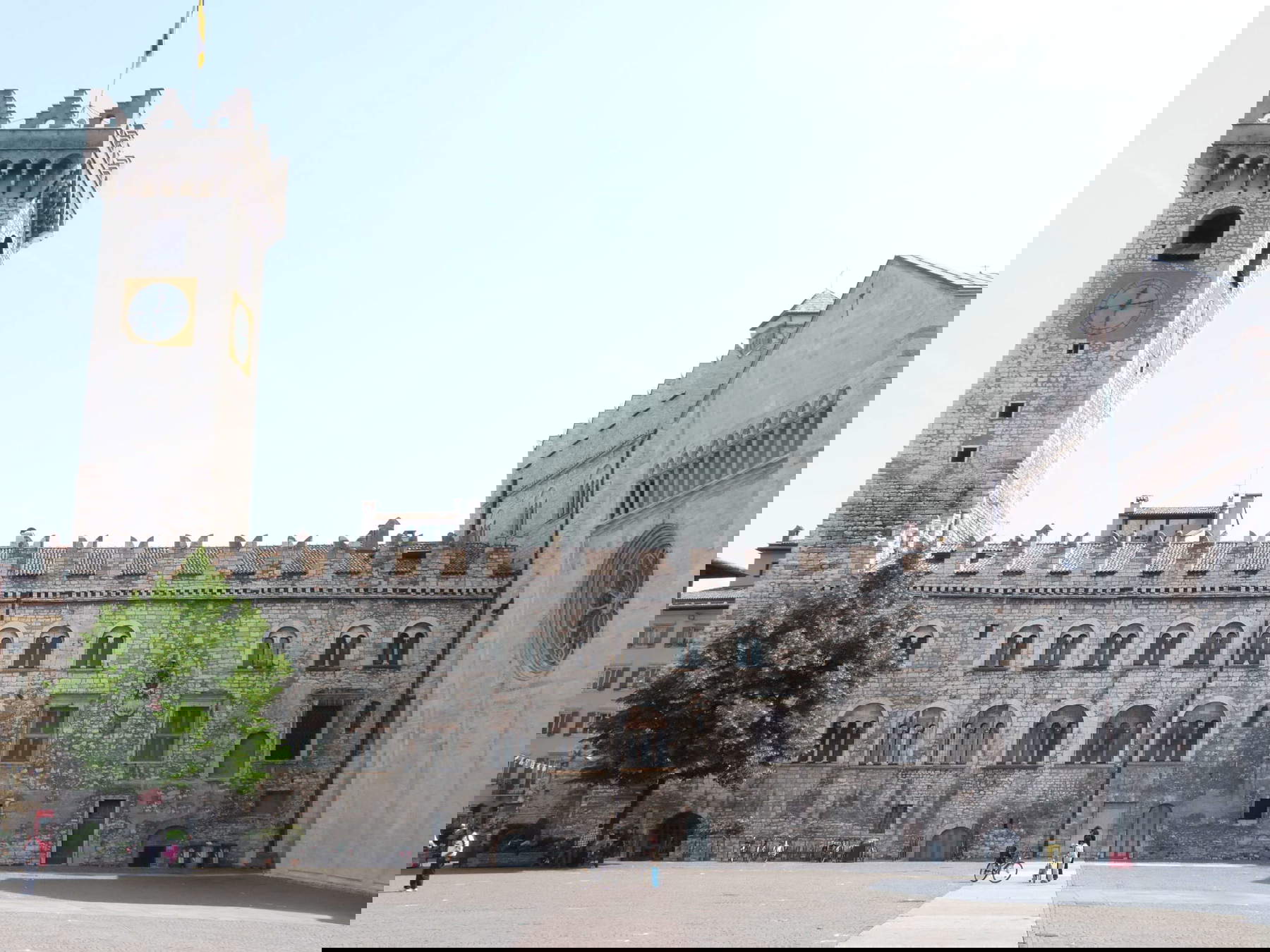
An unprecedented discourse that is also, one might add, the only way that a diocesan museum can still be said to be relevant in a society. It cannot be said that no stone has been left unturned in Trent: exhibitions, certainly, but also contemporary art production, specific projects, even eccentric ideas, moments reserved for the most diverse audiences, and to go over them all here would be superfluous (the book does not skimp on details). And it will be no accident if, today, so many church museums, in Milan as in Sarzana, in Massa as in Genoa, have followed the example, observed the results, learned from that experience, sought inspiration. However, having to choose a single example, it will suffice to recall the exhibition on Simonino da Trento that was held between 2019 and 2020, one of the most significant that has been organized in Italy in the last ten years if not more, a project that was more than a review of history and art history: it can be said to have been the development of a paradigm, certainly replicable, to ensure that an exhibition of objects can have the widest possible meaning for the community it addresses, to ensure that the community itself perceive itself as an active part of the process, to show that even a museum where pieces of wood from half a century ago are collected is not a guardian of dust but is a center of critical elaboration of the present (not only: it can be a barrier against the drifts of the present, against simplification, against exclusion, against dullness, against degradation, against indifference). It is then regrettable to note that the continuations and ramifications of that exhibition were at the origin of the events that led to the interruption of the work done by Domenica Primerano, events summarized in the concluding pages of the book. The hope, of course, is that the journey can be resumed.

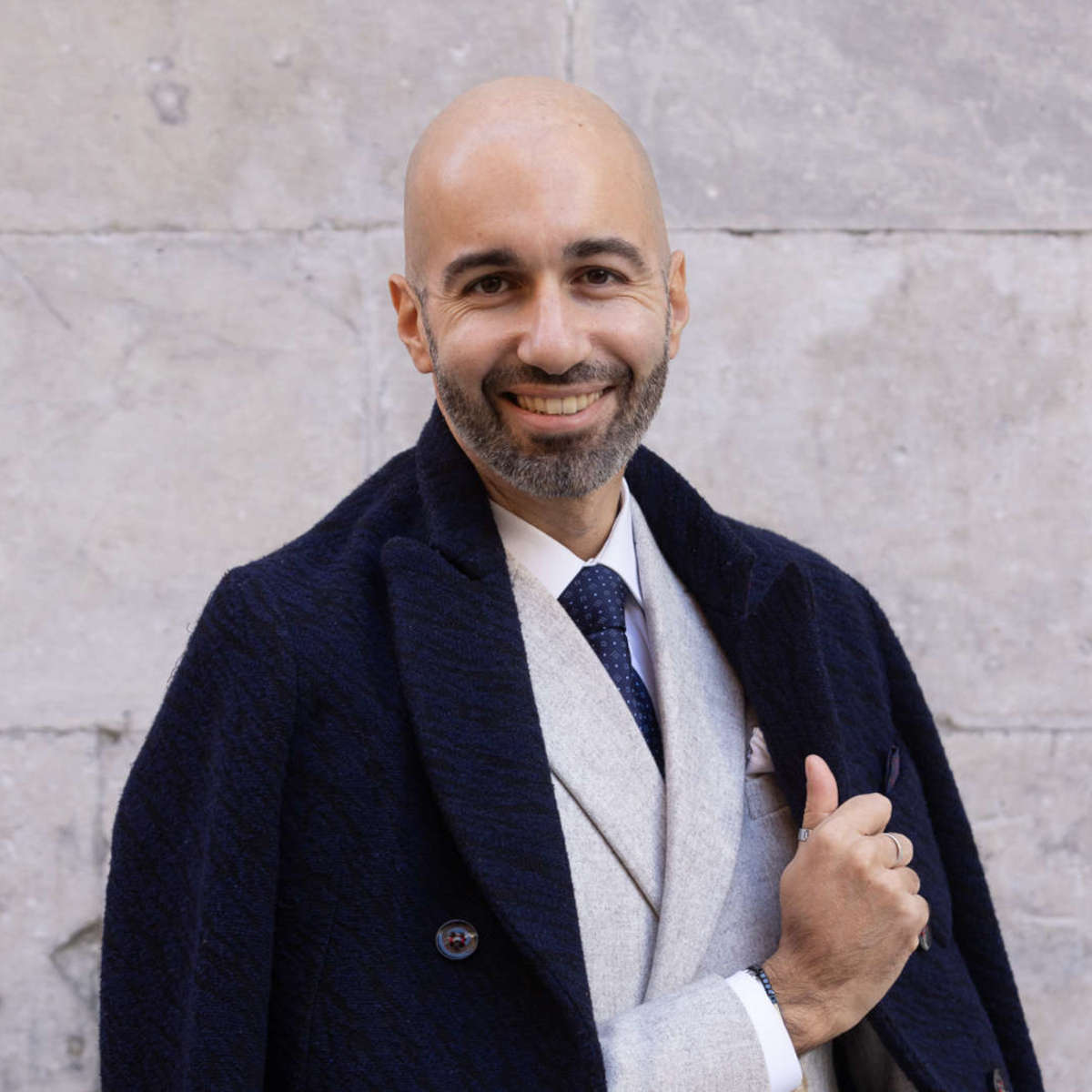
The author of this article: Federico Giannini
Nato a Massa nel 1986, si è laureato nel 2010 in Informatica Umanistica all’Università di Pisa. Nel 2009 ha iniziato a lavorare nel settore della comunicazione su web, con particolare riferimento alla comunicazione per i beni culturali. Nel 2017 ha fondato con Ilaria Baratta la rivista Finestre sull’Arte. Dalla fondazione è direttore responsabile della rivista. Ha scritto i libri Vero, Falso, Fake. Credenze, errori e falsità nel mondo dell'arte (Giunti editore, 2025) e Immagini del potere. Arte e propaganda da Augusto a Trump (Giunti editore, 2026). Collabora e ha collaborato con diverse riviste, tra cui Art e Dossier e Left, e per la televisione è stato autore del documentario Le mani dell’arte (Rai 5) ed è stato tra i presentatori del programma Dorian – L’arte non invecchia (Rai 5). Al suo attivo anche docenze in materia di giornalismo culturale all'Università di Genova e all'Ordine dei Giornalisti, inoltre partecipa regolarmente come relatore e moderatore su temi di arte e cultura a numerosi convegni (tra gli altri: Lu.Bec. Lucca Beni Culturali, Ro.Me Exhibition, Con-Vivere Festival, TTG Travel Experience).
Warning: the translation into English of the original Italian article was created using automatic tools. We undertake to review all articles, but we do not guarantee the total absence of inaccuracies in the translation due to the program. You can find the original by clicking on the ITA button. If you find any mistake,please contact us.





















 IT
IT FR
FR DE
DE ES
ES CN
CN


