





For the sixteenth edition of NEXT, the project created in 2010 with "the intent to exorcise, through contemporary art, one of the deepest wounds in the world’s cultural heritage, transforming the grief over the loss of the Nativity by Caravaggio, stolen from the Oratory of San Lorenzo in Palermo in 1969 and never to be found again, into an opportunity for creative rebirth and reflection," the Amici Dei Musei Siciliani association entrusted French-Italian painter Maïa Régis with the creation of the new Nativity. Trained at the Royal College of Art in London, Régis has recently exhibited in Italy and abroad and is active with her own studio in Palermo’s historic center. As per tradition, the work was unveiled at midnight on Dec. 24 and will remain on view until Oct. 17, 2026, a date that coincides with the anniversary of the theft.
The choice of Maïa Régis responds to the desire to entrust this new Nativity to a young but already internationally recognized voice capable of combining pictorial intensity and contemporary sensibility. Her research is characterized by a painting rich in chromatics and stratifications, placed in a border zone between figuration and abstraction. The images arise from the interweaving of imagination, cultural references and personal symbols that are superimposed as ever-changing landscapes. Light assumes in the artist’s vision the role of a generating force of forms and meanings, the very origin of the represented scene.
Living and working in Palermo represents for Régis an inexhaustible source of inspiration. Sacred architecture, popular processions, market life and the constant dialogue between the sacred and the everyday feed an imaginary in which spirituality and urban life merge.
Maïa Régis was invited to reinterpret a Nativity in the same dimensions as Caravaggio’s work, transforming the memory of the lost masterpiece into a new contemporary vision, in which the dialogue between sacred and present is renewed through a personal and strongly textured pictorial language.
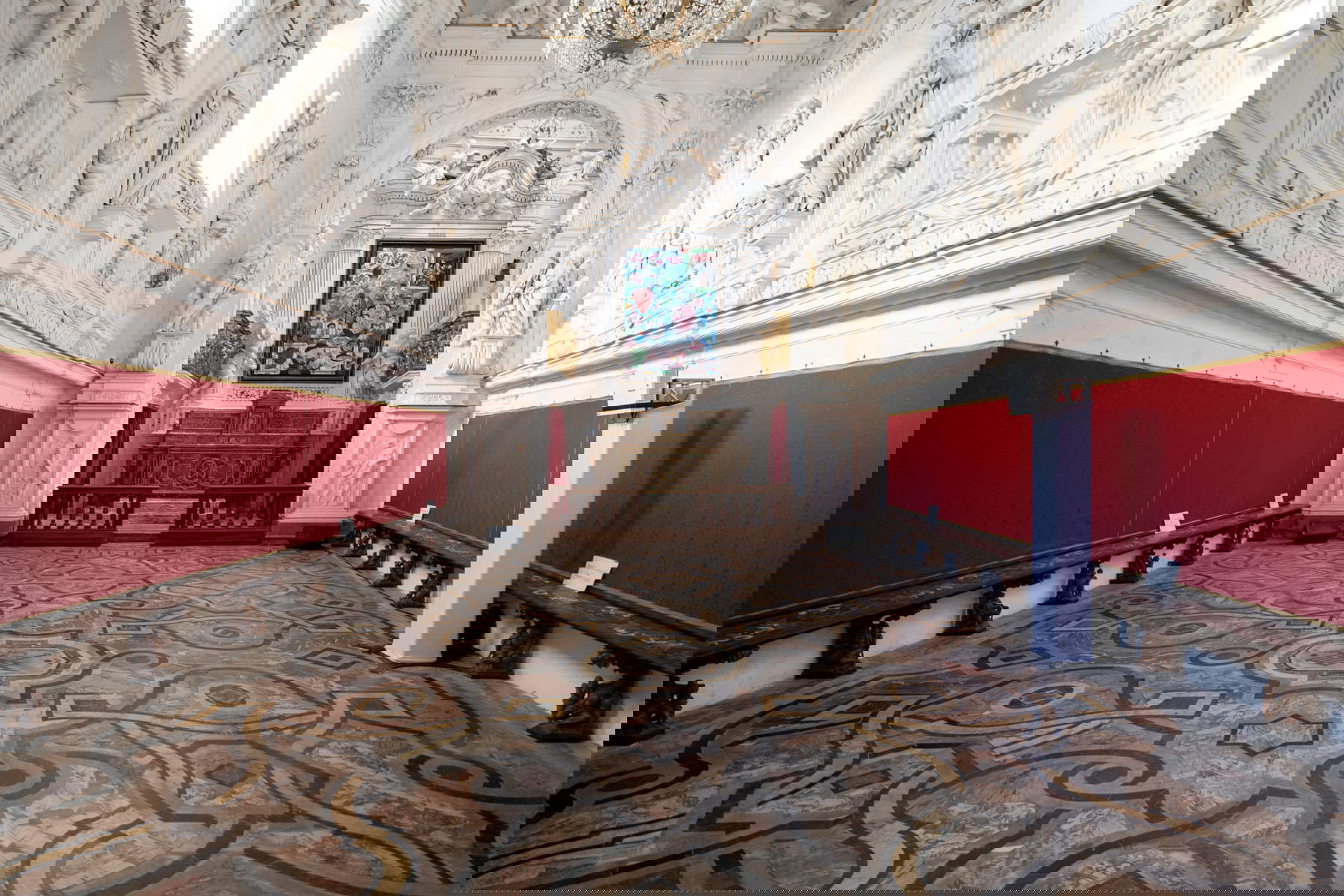
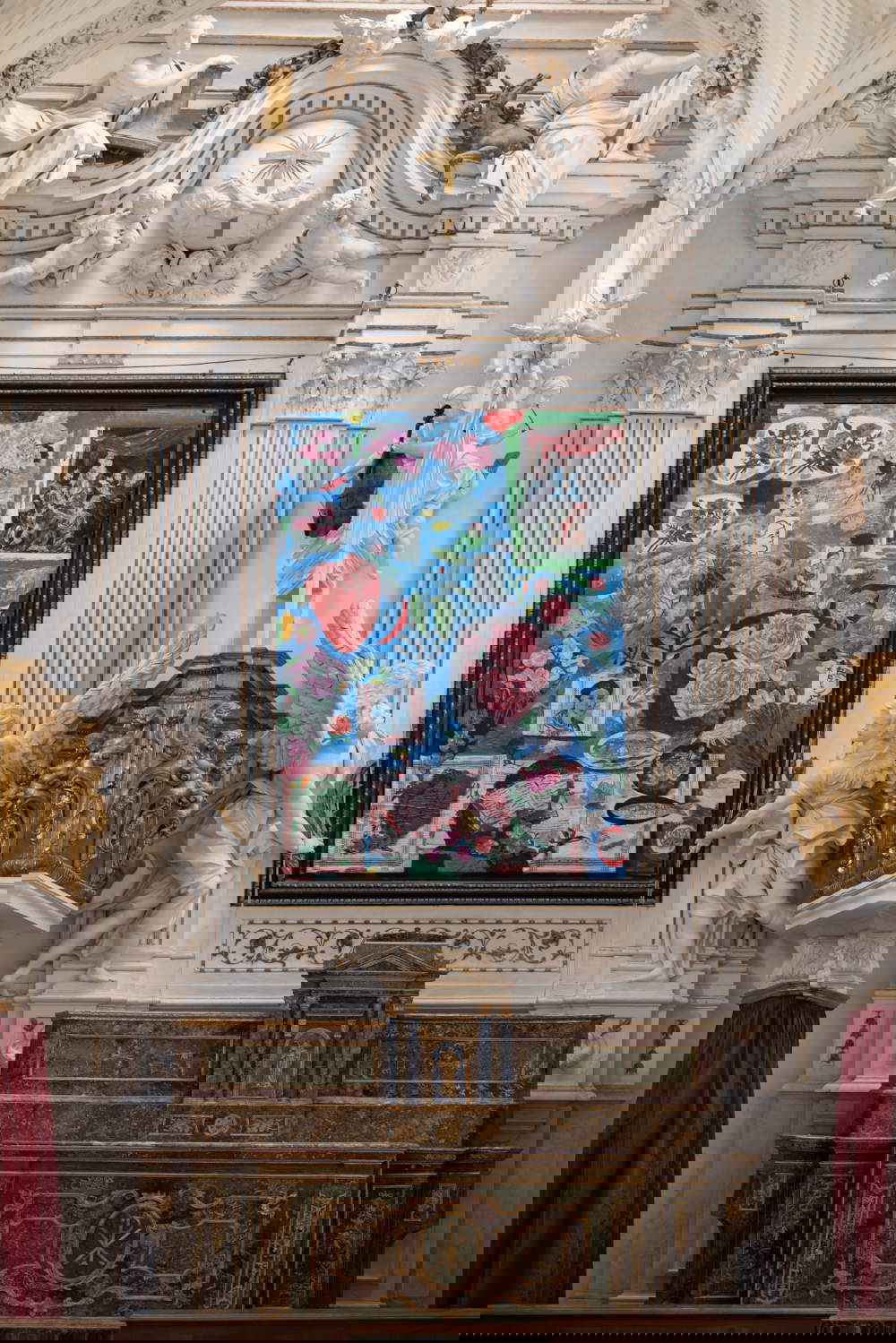
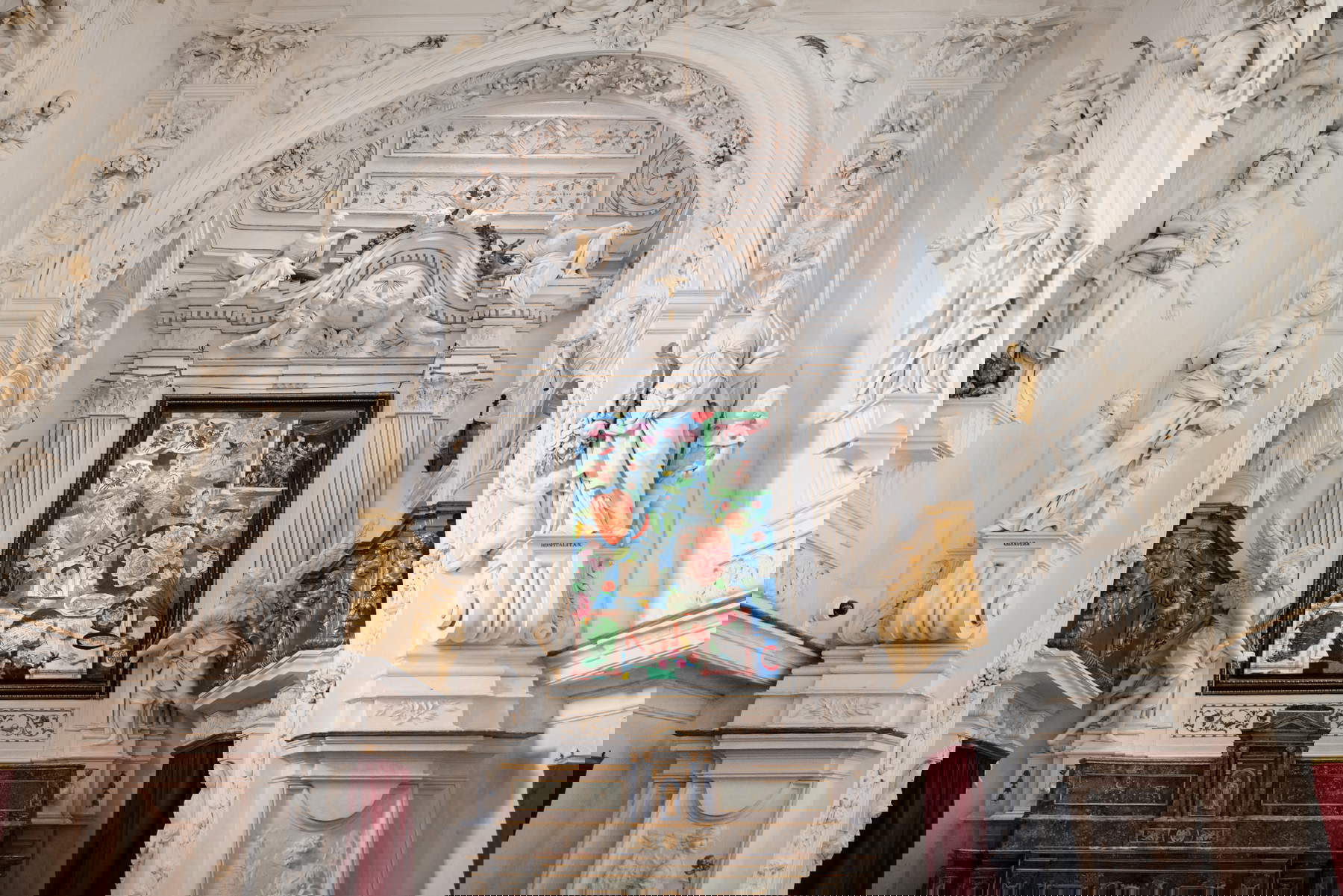
The project takes shape from repeated visits to theOratory of San Lorenzo and an in-depth comparison between Caravaggio’s dramatic darkness and the Baroque luminosity of Serpotta’s stuccoes. The iconographic tradition of the Nativity is thus reinterpreted as a cosmic scene, a true explosion of energy that looks not to nostalgia but to the idea of a new beginning. Also found within the composition are direct references to Caravaggio’s Madonna of the Rosary, mentioned in the upper corner of the painting, along with recurring symbols in the artist’s poetics, such as hearts, fish, and flowers, resonating with the themes of birth and the sacred. The canvas is made with a mixed technique of acrylic and oil, a choice that allows for a deeper and more vibrant rendering of the subject matter. Thin collages of fabric, integrated into the pictorial background, add a dimension of layered memory, almost invisible but crucial in the construction of the image.
"It is a privilege to create a new Nativity for the Oratory of San Lorenzo, one of the most extraordinary places in Palermo. Here the light of Serpotta’s stuccoes dialogues with the darkness of Caravaggio, and the absence of the stolen canvas has become almost mythical in the city’s memory. The Baroque churches of Palermo are an inexhaustible source of inspiration for me: working for this legendary space is a unique experience," said the artist.
“The choice of Maïa Régis allows us to bring together what we wanted for this edition: a female voice, the gaze of a very young artist in dialogue with Palermo’s art history, and an international breath - French, but deeply connected to Palermo. The freshness of her intervention is the best seed from which to revive life, beauty and hope from a past we would like to forget,” said Bernardo Tortorici di Raffadali, president of the Friends of Sicilian Museums.
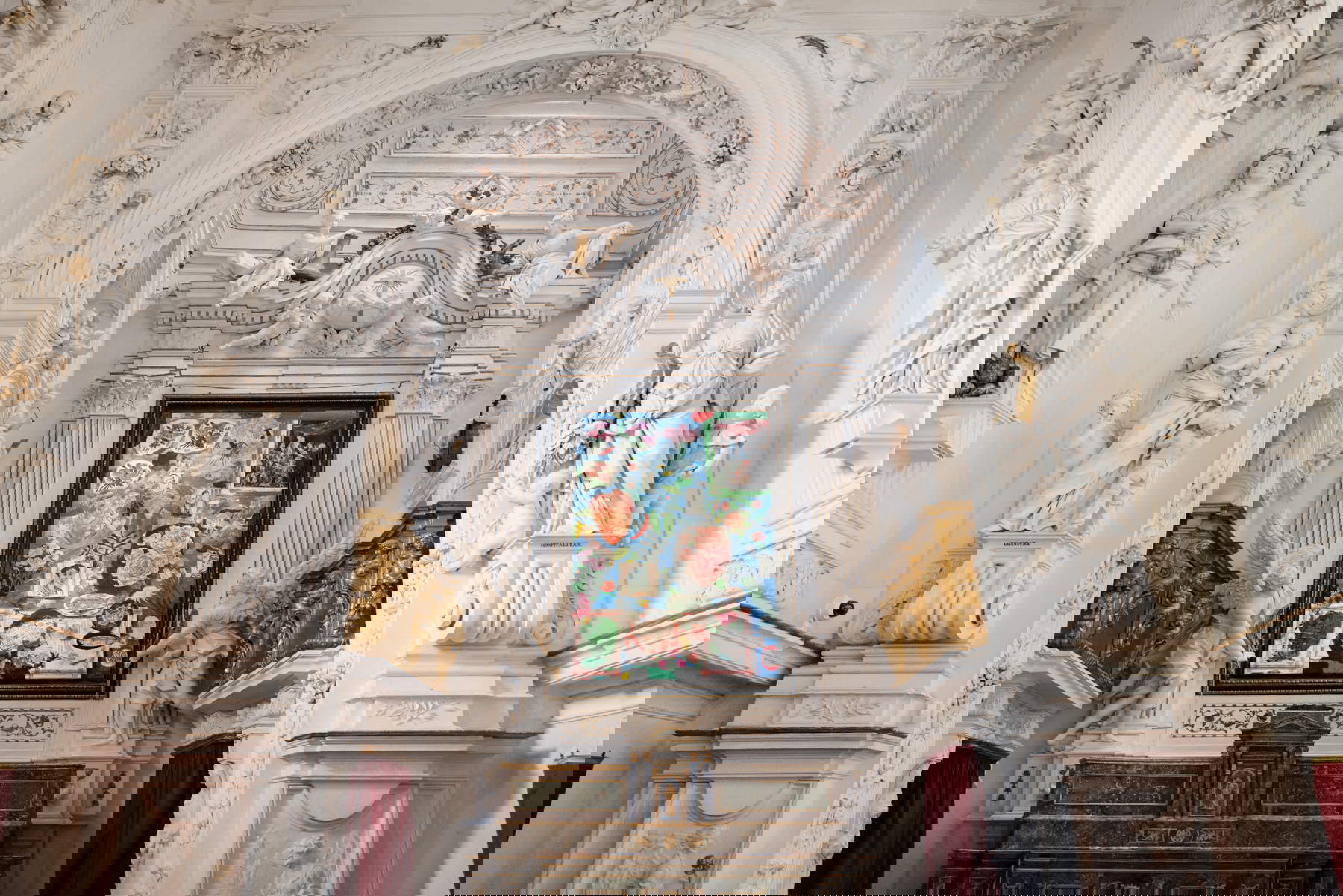 |
| It is painter Maïa Régis this year who pays homage to Caravaggio's Nativity in the Oratory of San Lorenzo in Palermo |

Warning: the translation into English of the original Italian article was created using automatic tools. We undertake to review all articles, but we do not guarantee the total absence of inaccuracies in the translation due to the program. You can find the original by clicking on the ITA button. If you find any mistake,please contact us.



















 IT
IT FR
FR DE
DE ES
ES CN
CN


