



by Redazione 18/12/2025



Categories: Exhibitions / Disclaimer
For the winter season, MAN in Nuoro presents three exhibition projects dedicated to Alfredo Casali, Franco Pinna and Franco Mazzucchelli, articulating a reflection on insularity, photographic language and participatory art practices.
For the winter season 2025-2026, the MAN - Museum of Art in Nuoro presents an articulated exhibition program that brings together three distinct but ideally connected exhibitions dedicated to Alfredo Casali, Franco Pinna and Franco Mazzucchelli. The overall project is part of a research path initiated by the museum around the concept of the island, understood not only as a geographical datum but as a cultural construction, symbolic space and narrative device, capable of crossing different languages, eras and artistic practices.
Opening the cycle is Alfredo Casali’s solo exhibition, Isolitudine, curated by Massimo Ferrari and Chiara Gatti, which can be visited until March 8, 2026. The exhibition is in the wake of previous initiatives dedicated to the theme of insularity, after Isole Minori. Notes on Photography from 1990 to the Present and Islands and Idols, and develops a pictorial declination of it focused on the inner and symbolic dimension of the island. Casali presents at MAN a nucleus of recent and unpublished works that address the theme of the border as porous space, archaic origin and voluntary detachment, understood as an existential as well as geographical condition. The term “isolitudine,” a neologism that gives the exhibition its title, defines a complex condition in which the sense of belonging and the feeling of isolation coexist. In Casali’s painting, the island emerges as a physical place and at the same time as a mental space, inhabited by a constant tension between rootedness and a desire for elsewhere. Reference to modern island literature, from Salvatore Satta to Gesualdo Bufalino, helps to delineate a cultural horizon in which solitude also becomes a measure of the world and an instrument of knowledge. In this perspective, the island is a center, a microcosm that refers to a universal dimension.


Casali’s pictorial research, from the beginning, has developed around a balance between narrative and abstraction, sign and matter. The influences of the lyrical abstractionism of Gastone Novelli and Cy Twombly, of visual poetry and of a suspended figuration, heir to the lesson of Giorgio Morandi, emerge in the construction of essential and measured spaces. Houses, trees, chairs and fragments of landscape are configured as domestic archetypes, minimal elements that delimit vital places overlooking the emptiness of the sea or the sky. The artist’s philosophical training is reflected in a rigorous painting practice, attentive to the scanning of planes and the construction of voids, to the point of leading his poetics to the threshold of the island, understood as an unstable form drawn at the margins of consciousness.
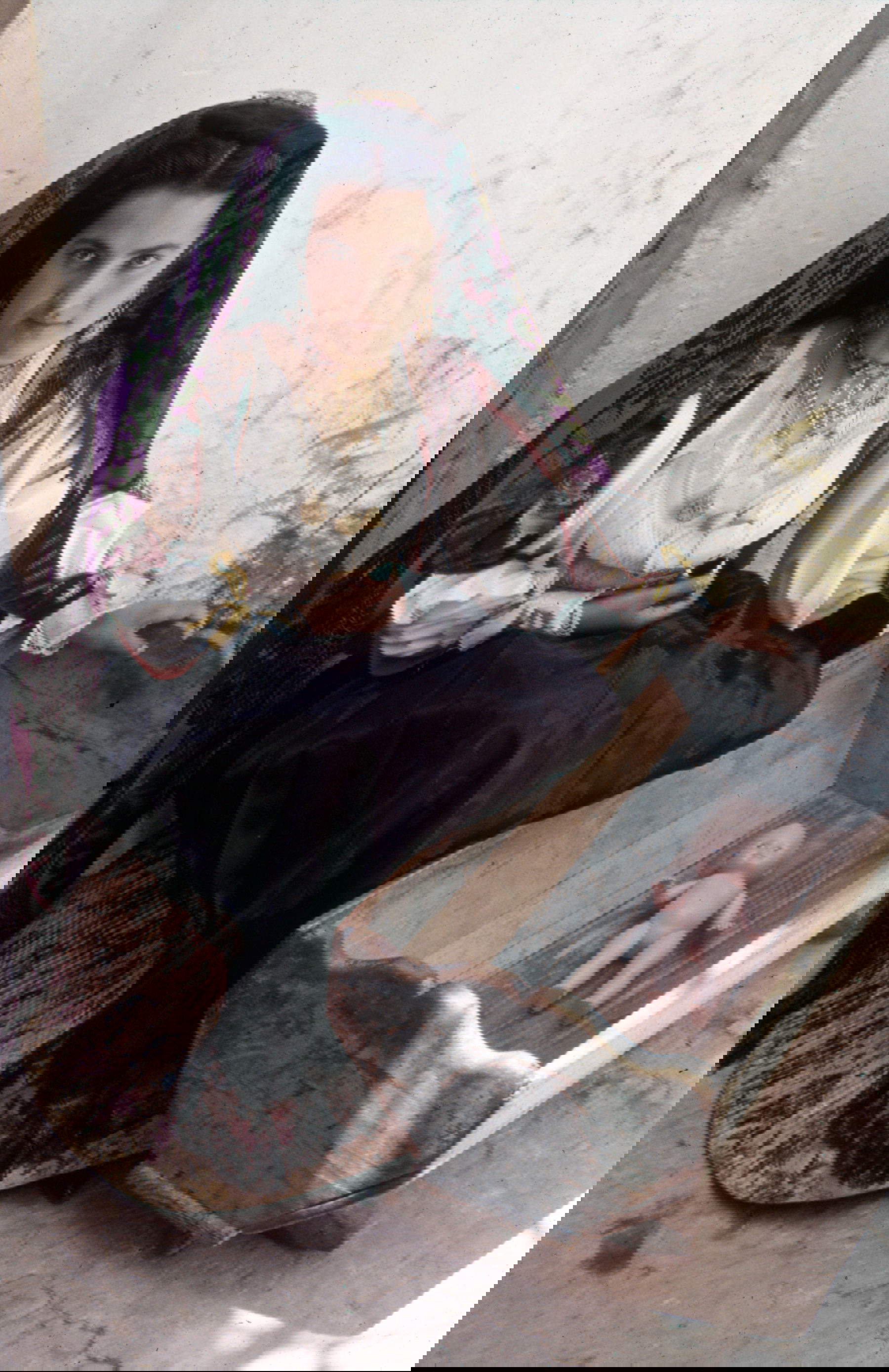
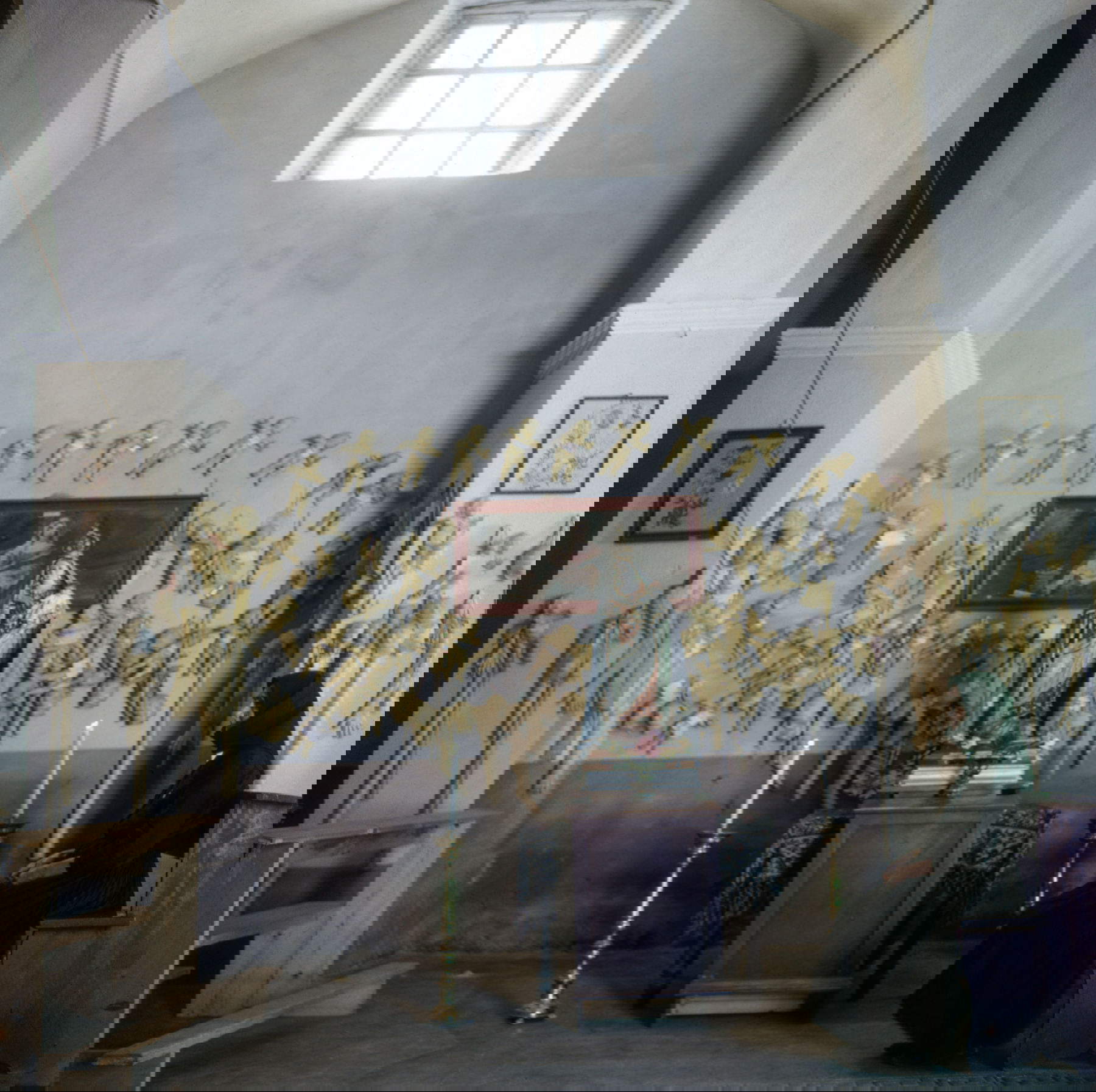
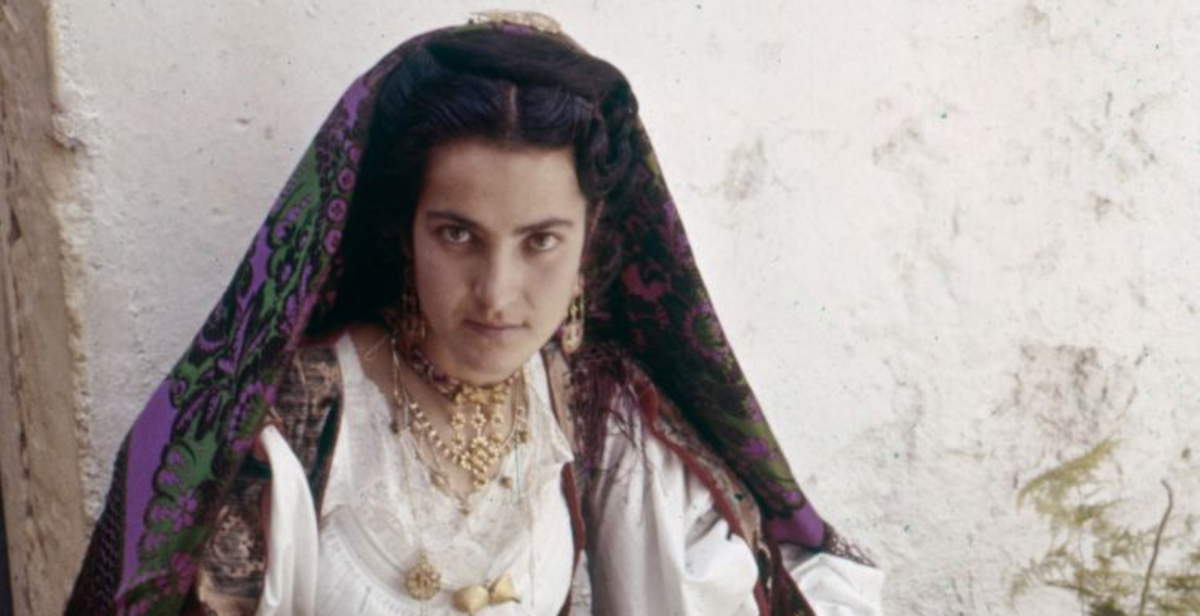
MAN also opened to the public Franco Pinna. Sardinia in Color. Recovered Photographs 1953-67, a project curated by Paolo Pisanelli for OfficinaVisioni, with conception and scientific direction by theFranco Pinna Archive. The exhibition, which can be visited until March 1, 2026, continues the museum’s reflection on the language of photography and the relationship between Sardinia and the artists who crossed it as a place of research and experimentation. The exhibition is also part of the centenary celebrations of the birth of Franco Pinna, who was born in La Maddalena in 1925 and died in Rome in 1978. The project brings to light a long-forgotten photographic corpus, restoring a little-known dimension of Pinna’s work: that in color. The exhibition consists of about eighty works, including rarely exhibited color photographic prints and archival materials, and offers a journey through his professional life through a long work of recovery and digital restoration of the original chromatics. The images are flanked by black and white comparison photographs, slides, working tools and vintage publications from the Franco Pinna Archive, including magazines such as Vie Nuove, Noi Donne, L’Espresso and Panorama, which explain the editorial context and the reasons for the use of color.
The itinerary starts with the color photographic campaign taken in Orgosolo in 1953 and goes through some central stages of Pinna’s island production, such as Canne al vento of 1958, Argia a Tonara of 1960, the images for the volume Sardegna. A Stone Civilization of 1961 and the chronicles on banditry and shepherds’ protests of 1967. Arranged as a long-form narrative, the sequences restore the evolution of a language that in color finds its own poetic autonomy, capable of holding together document and ritual dimension. As Federico Fellini observed in 1976, Pinna’s gaze moves with “a hierophant’s slowness,” suspended between scientific observation and symbolic tension.
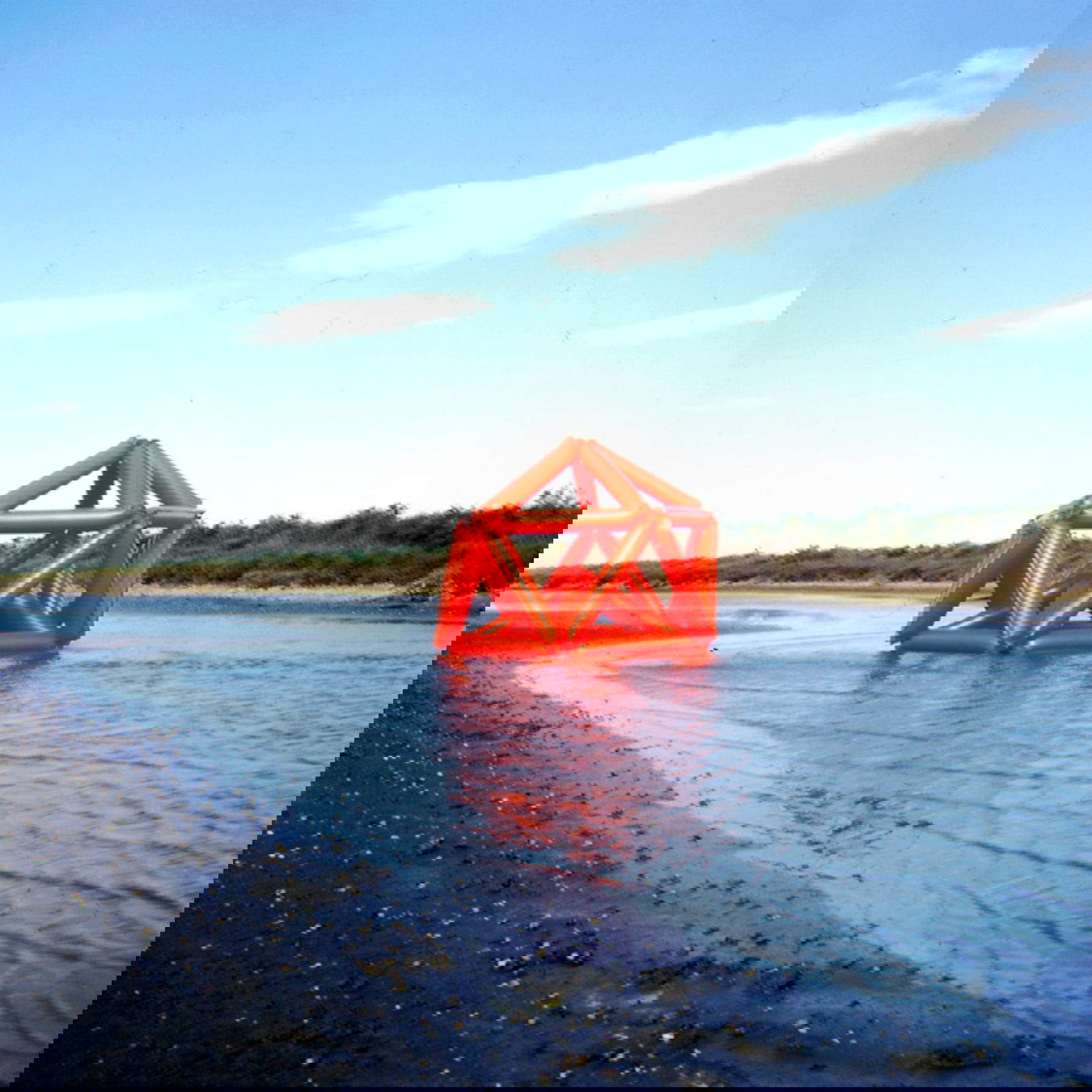
Completing the exhibition program is the exhibition Franco Mazzucchelli. Blow Up, open from December 5, 2025 to March 8, 2026, curated by Marina Pugliese and realized in collaboration with MUDEC Museo delle Culture in Milan. The project traces the research of Milanese artist Franco Mazzucchelli, born in 1939, from the 1960s to the present, through works and photographic documentation that testify to the experimental, social and participatory nature of his work. The exhibition is part of MAN’s line of research dedicated to artists who have addressed issues of sustainability and community, activating over time processes of public involvement and reappropriation of space.
The itinerary presents works related to the projects A. TO A. (Art to Abandon / Art to be Abandoned), including the interventions made in Milan in front of Alfa Romeo in Via Traiano in 1971, in the square of the Liceo artistico in Turin in the same year and in Piazza dei Priori in Volterra in 1973. The large inflatable PVC structures, abandoned in public space, become instruments of interaction and critical reflection on the function of art outside institutional circuits. In some cases, as in the Milan intervention, the work unexpectedly took on a political significance, being used by workers as a symbolic barrier. A historical section, exhibited for the first time in an Italian public institution, is dedicated to Caduta di Pressione, a 1974 work originally presented at the Diagramma gallery in Milan. The installation involved measuring the consumption of oxygen in a room in relation to the presence of visitors, returning a mapping of breathing and apnea recorded through scientific instruments and filing cabinets bearing names and pressure values. The itinerary also includes two large inflatable PVC sculptures, a 26-meter-long Totano and a 12-meter-high Cone, examples of a temporary and monumental sculpture that redefines the relationship between work, space and audience.
The exhibition concludes with a site-specific installation from the Reappropriations cycle, which fully occupies a room in the museum by erasing its boundaries and inviting the public to physically enter the plastic membrane structure. Monumentality and lightness, suspension and adhesion, synthetic materials and critical reflection on the present traverse a project that tells by chapters Mazzucchelli’s research and his continuous confrontation with the collective dimension of artistic experience.
Notes on the artists
Alfredo Casali, born in Piacenza in 1955, lives and works in his city. After graduating in philosophy from the University of Bologna in 1983 under the guidance of Luciano Anceschi, he developed a path between painting, visual poetry and theoretical studies, arriving at a personal artistic language characterized by poetic essentiality and recurrence of archetypal elements organized in thematic cycles. Giovanni Fumagalli was among the first to recognize the value of his work, welcoming him to the Galleria delle Ore in Milan and flanking him between 1986 and 1996. Casali participated in the XXXII Biennale d’Arte Città di Milano (1993) and the Cremona Biennials (1993 and 1999), exhibiting in numerous solo and group shows. Among the most important are the solo show at the Centro Culturale San Fedele in Milan (2011), the exhibition on international abstraction at the Mendrisio Museum of Art (CH), the group shows Sogno e Confine (Piacenza, 2012) and La natura obliqua (Saronno), and the solo show at the Ceribelli Gallery in Bergamo (2014). Recent exhibitions include Studio d’arte del Lauro in Milan (2019), MAN in Nuoro in collaboration with Polo Territoriale di Agrigento (2023), and the exhibition Alfredo Casali, Giovanni Fabbri. Geographies life, territory, history at the Magazzino del Sale in Cervia (2023), a prelude to the anthological Alfredo Casali. The memory of things curated by Massimo Ferrari for Volumnia in Piacenza (2024). Michele Tavola, Franco Fanelli, Sara Fontana, Stefano Fugazza, Ivo Iori, Stefano Crespi, Flavio Arensi, Chiara Gatti, Marina De Stasio, Rocco Ronchi and Giorgio Seveso have written about his work.
Franco Pinna (La Maddalena 1925 - Rome 1978) was one of the protagonists of Italian photographic Neorealism. After experience in the Roman Resistance and a brief period as a documentary film operator, he joined the Fotografi Associati cooperative in 1952 and accompanied Ernesto De Martino on ethnographic expeditions to Lucania and Salento. In 1961 he published Sardinia. A Stone Civilization, his most important volume, and from 1964 he became Federico Fellini’s trusted photographer. Author of more than 300,000 images, he combined aesthetic rigor and civic commitment, documenting Italy’s transformations and rendering a human portrait of the 20th century. Since 1997 the Franco Pinna Archive, with offices in Rome and Bologna, has been preserving and promoting his legacy through exhibitions and research.
Franco Mazzucchelli, born in Milan in 1939, lives and works in the same city. Known for pioneering experiments with synthetic materials since the 1960s, he has made large-scale environmental installations capable of altering the perception of urban space and the interaction of the public, who can touch, move and even take away the works. His practice explores social dynamics through total participation, temporarily integrating the works into the city landscape. Since the early 2000s, his research has moved toward a more aestheticized dimension with the inflatable canvases of the cycle Bieca Decoration, defined in a self-mocking key as painting for pure aesthetic enjoyment and in relation to commercial logics.
Mazzucchelli’s installations have been presented in numerous public spaces in Italy and abroad, including the Alfa Romeo Factory, Piazza San Fedele, Accademia di Belle Arti di Brera and Castello Sforzesco in Milan, Piazza dei Priori in Volterra, Lake Como, Munich and the Camargue. He has participated in such historic exhibitions as the 60th Venice Biennale (2024), the 13th Rome Quadrennial (1999), the 11th Rome Quadrennial (1986), the 37th Venice Biennale (1976) and the 15th Milan Triennial (1973). His works are also featured in major international institutions, including MAPS - Museum of Art in Public Spaces (Køge, 2025), Museo Madre (Naples, 2024), MACRO (Rome, 2021), Centre Pompidou-Metz (2021), Cité de l’Architecture (Paris, 2021), ArtScience Museum (Singapore, 2020), Konsthall Lund (2020), Kunsthalle Wien (2019), ZKM (Karlsruhe, 2019), nGbK (Berlin, 2018) and Museo del Novecento (Milan, 2018). Mazzucchelli received the Alfredo d’Andrade Lifetime Achievement Award in 2022, served as Deputy Director of Brera 2, and taught Sculpture Techniques at the Brera Academy of Fine Arts in Milan.
 |
| At MAN in Nuoro, the solo exhibitions of Alfredo Casali, Franco Pinna and Franco Mazzucchelli |
Warning: the translation into English of the original Italian article was created using automatic tools. We undertake to review all articles, but we do not guarantee the total absence of inaccuracies in the translation due to the program. You can find the original by clicking on the ITA button. If you find any mistake,please contact us.