



by Redazione 18/12/2025



Categories: Exhibitions / Disclaimer
GAMeC of Bergamo's 2026 program, directed by Lorenzo Giusti, focuses its entire year on the theme of education. Inspired by Paulo Freire's thought, the project interweaves art, pedagogy and techno-scientific culture through exhibitions, public programs and activities for the public.
In 2026, GAMeC - Galleria d’Arte Moderna e Contemporanea di Bergamo will focus its entire annual programming on the theme of education, understood as a shared learning process and as a tool for emancipation and social transformation. The project, developed under the direction of Lorenzo Giusti, takes the title Pedagogy ofHope and is inspired by the theoretical legacy of Brazilian pedagogue Paulo Freire, proposing an updated reinterpretation in relation to the cultural, technological and social challenges of the present.
The choice is in continuity with the path started in the two-year period 2024-2025, during which GAMeC experimented with new curatorial formats in the fields of cultural production and heritage enhancement. Projects such as Thinking Like a Mountain, dedicated to decentralized, diffuse and participatory ways of making art, and Galaxy, a path of shared and interdisciplinary reinterpretation of the Collection, have represented stages in a research process preparatory to the opening of the new museum venue. In 2026, education thus becomes the third strategic area of the museum’s activity, assuming a central role in defining its future identity.


The program stems from the awareness of operating in a context traversed by rapid transformations, in which technological applications produce increasingly pervasive forms of induced, often unconscious, learning. In such a scenario, the ability to flank a technical-scientific culture with a humanistic education capable of interrogating the complexity of the present time appears to be a growing necessity. The questions that guide the entire project concern the knowledge and skills useful for understanding and transforming contemporary reality, pedagogical practices capable of developing autonomy, responsibility and critical thinking, and the role that dialogic and participatory processes can assume within museum institutions.
The reference to Paulo Freire, author of the expression “pedagogy of hope,” recalls a conception of education as a practice of freedom based on dialogue, participation and empowerment of those involved. Starting from these assumptions, GAMeC will articulate the 2026 program in moments of in-depth study, reflection and confrontation on different scales, from local to global, involving heterogeneous audiences in terms of age, background, education and languages. A central role will be played by collaboration with realities, organizations and institutions active in the fields of museum, social, technical-scientific and civic education, with the aim of building a network of shared practices.
The centerpiece of the annual will be a broad interdisciplinary Public Program, structured in monthly meetings designed as opportunities for inquiry and dialogue. The schedule will be communicated progressively, following an approach that enhances the reflections that have emerged over the months and encourages a circular dialogue between the different initiatives. The program will include interventions by experts in the pedagogical field, presentations and analyses of case studies with representatives of international museum institutions and artists engaged in the integration of research and educational practice, as well as workshops dedicated to the experimentation of new methodologies and the consolidation of relations with the territory. Within this framework is also the involvement of the Dalmine Foundation, which will help develop the dialogue between humanistic and technical-scientific culture as a transversal theme of the entire program. The integration of artistic research, educational practice and labor knowledge represents one of the key elements of a project that looks at education as a space for relationships and the shared construction of knowledge.
During the summer, Bergamo ’s Palazzo della Ragione will host a site-specific installation by the Fosbury Architecture collective. The intervention will transform rooms traditionally used for exhibitions into a modular space, designed to accommodate different audiences and adapt to the many cultural activities planned throughout the year. More than an exhibition device, the project is configured as an active platform that invites reflection on education as a relational practice. The Sala delle Capriate will thus assume a symbolic and operational role, becoming a permanent laboratory for experimentation, co-learning and research, in which artistic, educational and civic practices will coexist on a daily basis.
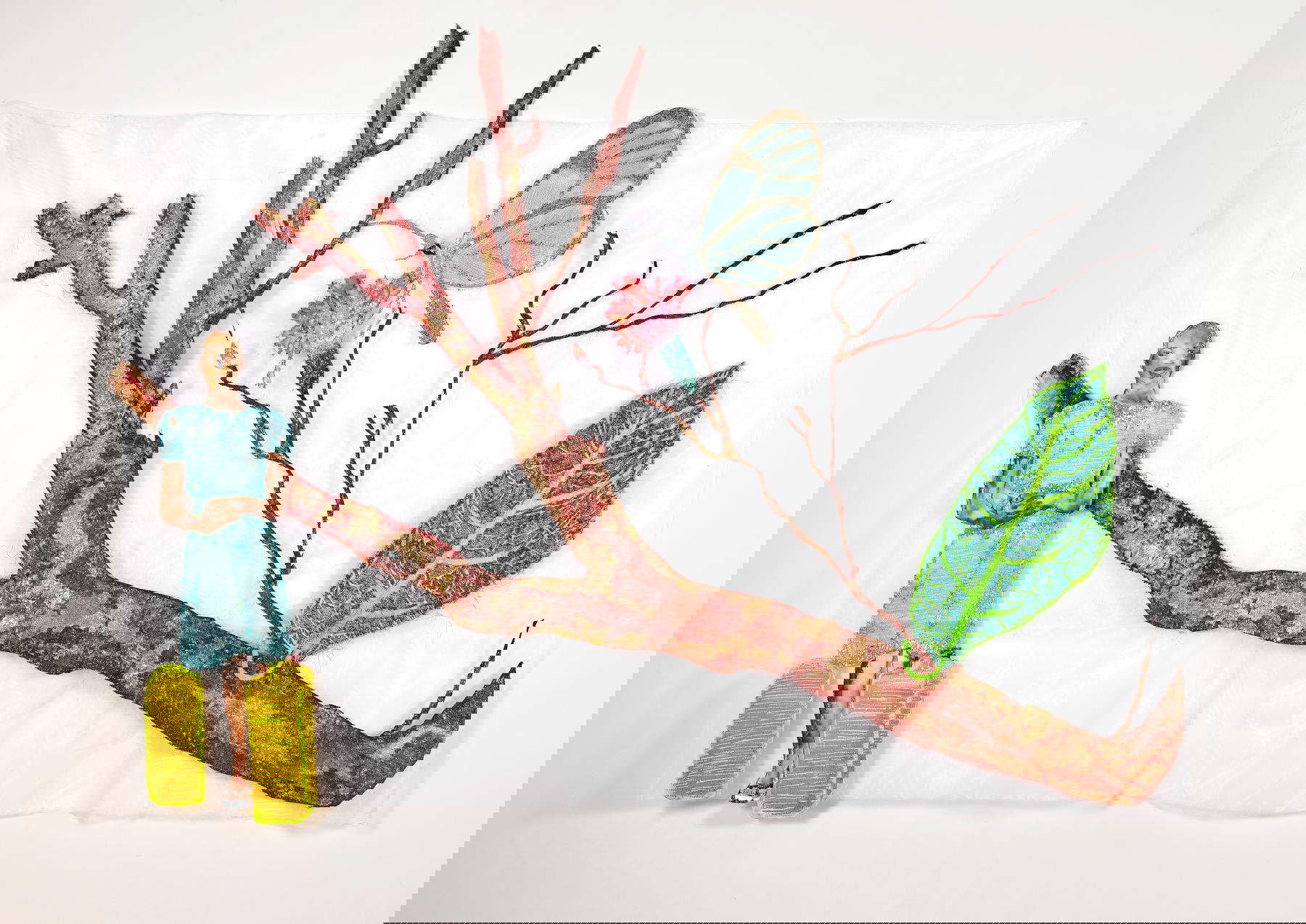
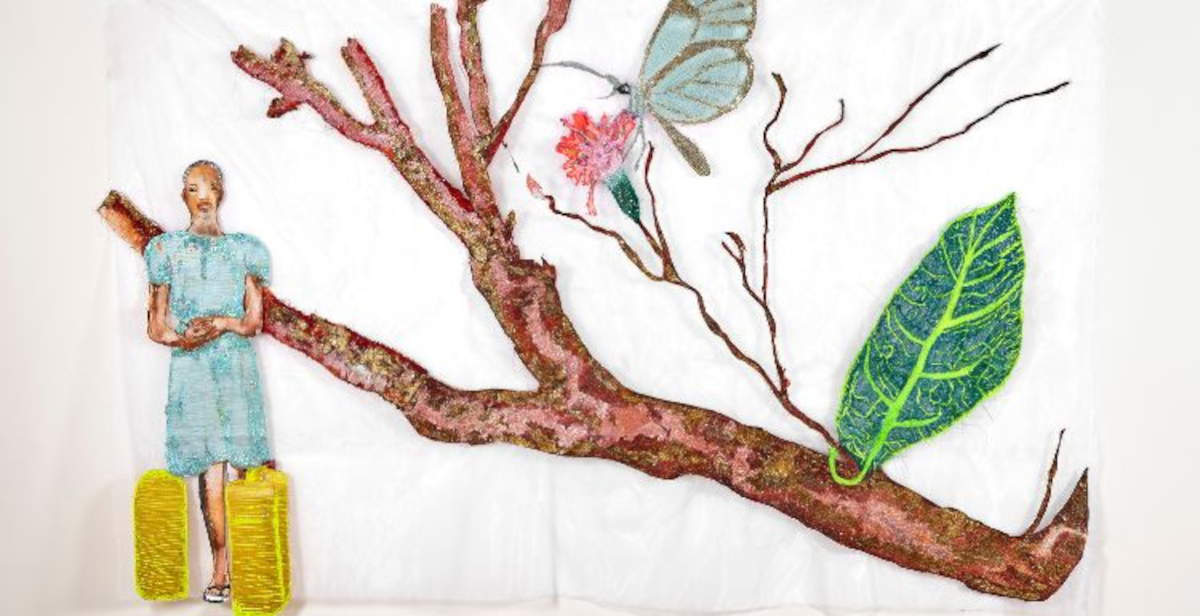
The 2026 exhibition program also includes two exhibitions in GAMeC’s Spazio Zero, both of which grew out of the activation of educational and workshop experiences. From Feb. 26 to Sept. 6, Eau, a project by Angolan-Portuguese artist Ana Silva, born in Calulo in 1979, will be presented. The exhibition addresses the issue of access to clean water, one of the most relevant crises of our time, through work that interweaves textile practice, social and environmental research. The project, made in collaboration with a network of local embroiderers, takes shape from textile works on which the artist invites participants to intervene. In her practice, Silva initially entrusts the subjects she devises to Angolan embroiderers, and then personally completes the works with hand decorations. The language of embroidery, traditionally associated with care and memory, is used to make visible a condition in which water represents a privilege.
From Oct. 1 to Jan. 24, Spazio Zero will host a site-specific project by Selma Selman, an artist and activist born in Bihać in 1991 of Romani descent. Selman’s work is developed in continuity with a research that starts from personal and family experiences to investigate issues related to identity, social hierarchies and conflicts between different forms of knowledge. Central to her practice is the principle of “learn to unlearn” as a means of questioning official narratives and valuing oral and marginalized knowledge. For the artist, education represents a means of emancipation and self-determination, even in patriarchal contexts such as that of her community of origin. The Get the Heck to School foundation, established by Selman in 2017 to financially support access to primary education for Romani girls, is part of this perspective.
Alongside the exhibitions and the Public Program, the activity of Radio GAMeC, which will inaugurate a new format dedicated to education, will also continue in 2026. Through the voices of female artists, artists, researchers and education professionals, the radio will propose dialogues on contemporary educational and artistic practices, offering a space for in-depth analysis and comparison open to different perspectives. Throughout the year, moreover, an articulated calendar of workshops, guided tours and thematic itineraries, dedicated both to temporary exhibitions and to the Collections, will involve visitors in shared learning experiences, strengthening GAMeC’s role as an educational garrison on the territory. Taken as a whole, the 2026 program takes the shape of a further step in the museum’s transformation path, which looks to education as a structuring framework for its cultural and institutional activities.
 |
| Bergamo, GAMeC's 2026 program focuses on the theme of education |
Warning: the translation into English of the original Italian article was created using automatic tools. We undertake to review all articles, but we do not guarantee the total absence of inaccuracies in the translation due to the program. You can find the original by clicking on the ITA button. If you find any mistake,please contact us.