




by Redazione 17/02/2026



Categories: Exhibitions / Disclaimer
Bogna Burska and Daniel Kotowski will represent Poland at the 61st International Art Exhibition - La Biennale di Venezia with an audio-video installation that interweaves deaf culture, whale songs and "more-than-human" communication, in dialogue with the curatorial theme of "Minor Keys."
Poland has announced the artists who will represent the country at the 61st International Art Exhibition - La Biennale di Venezia, scheduled for 2026. The Polish Pavilion will host Liquid Tongues, a project signed by Bogna Burska and Daniel Kotowski and curated by Ewa Chomicka and Jolanta Woszczenko. The proposal was selected by the jury of the public competition for the Polish Pavilion and approved by the Ministry of Culture and National Heritage of the Republic of Poland.
The project focuses on listening to marginalized languages, with special attention to deaf culture and forms of communication defined as “more-than-human.” The installation, audio-visual in nature, involves the Choir in Motion (Chór w Ruchu) collective, composed of hearing and deaf performers, who are called upon to interpret communication codes and whale songs in both spoken English and International Sign Language (IS). Central to the narrative are stories of loss and reconstruction, ranging from the revival of whale cultures to contemporary attempts to recover marginalized languages and forgotten communicative systems. The work unfolds on multiple levels of expression. On the visual level, cinematography is entrusted to Magda Mosiewicz and Burska herself; the sound component is taken care of by composer Aleksandra Gryka; the physical dimension of the experience is translated into acoustic waves that refer to the vocalizations and echolocalizations of right whales. The collective choreography of the chorus, conceived by Alicja Czyczel, draws inspiration from the movement of the schools of fish.


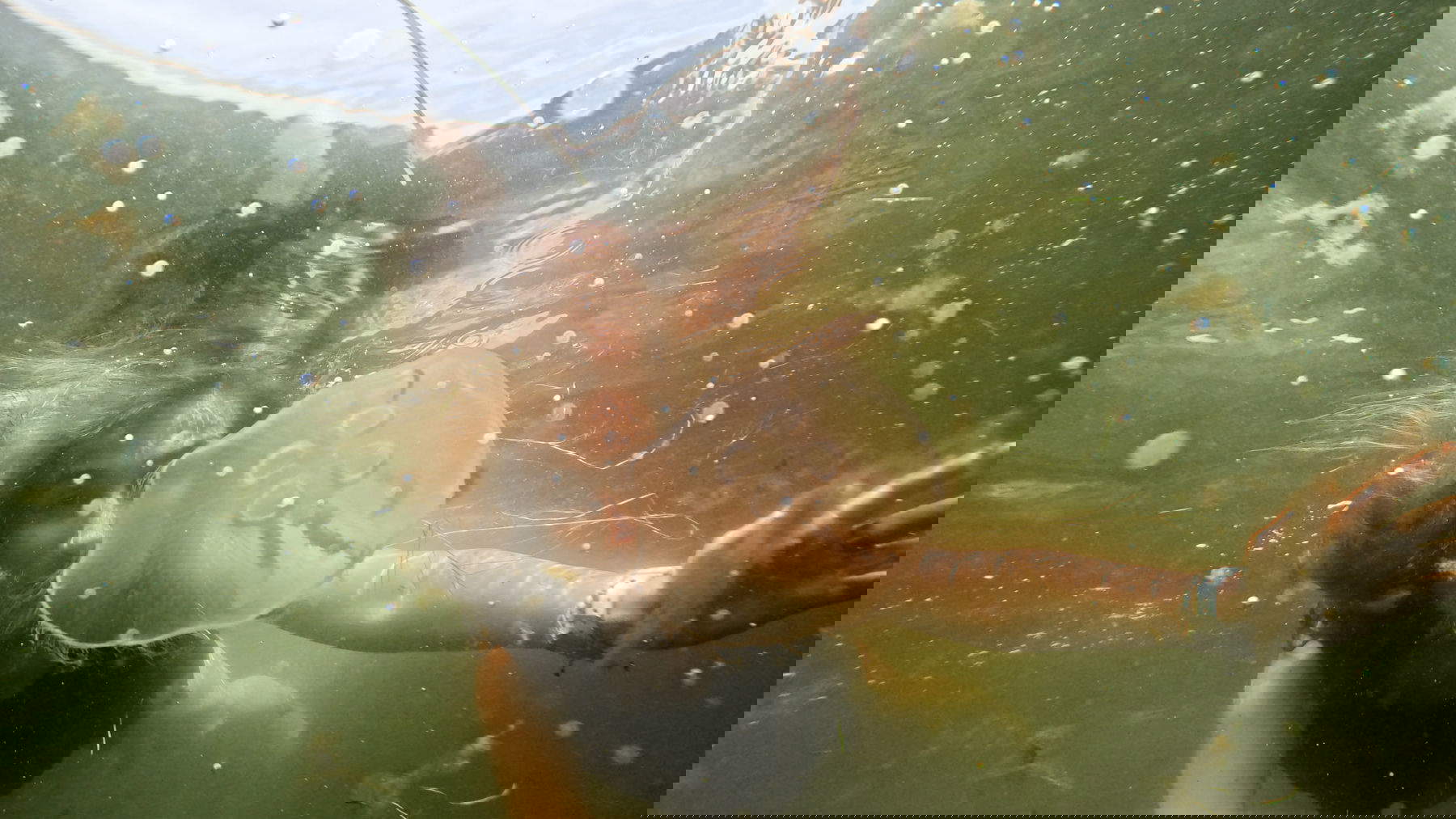
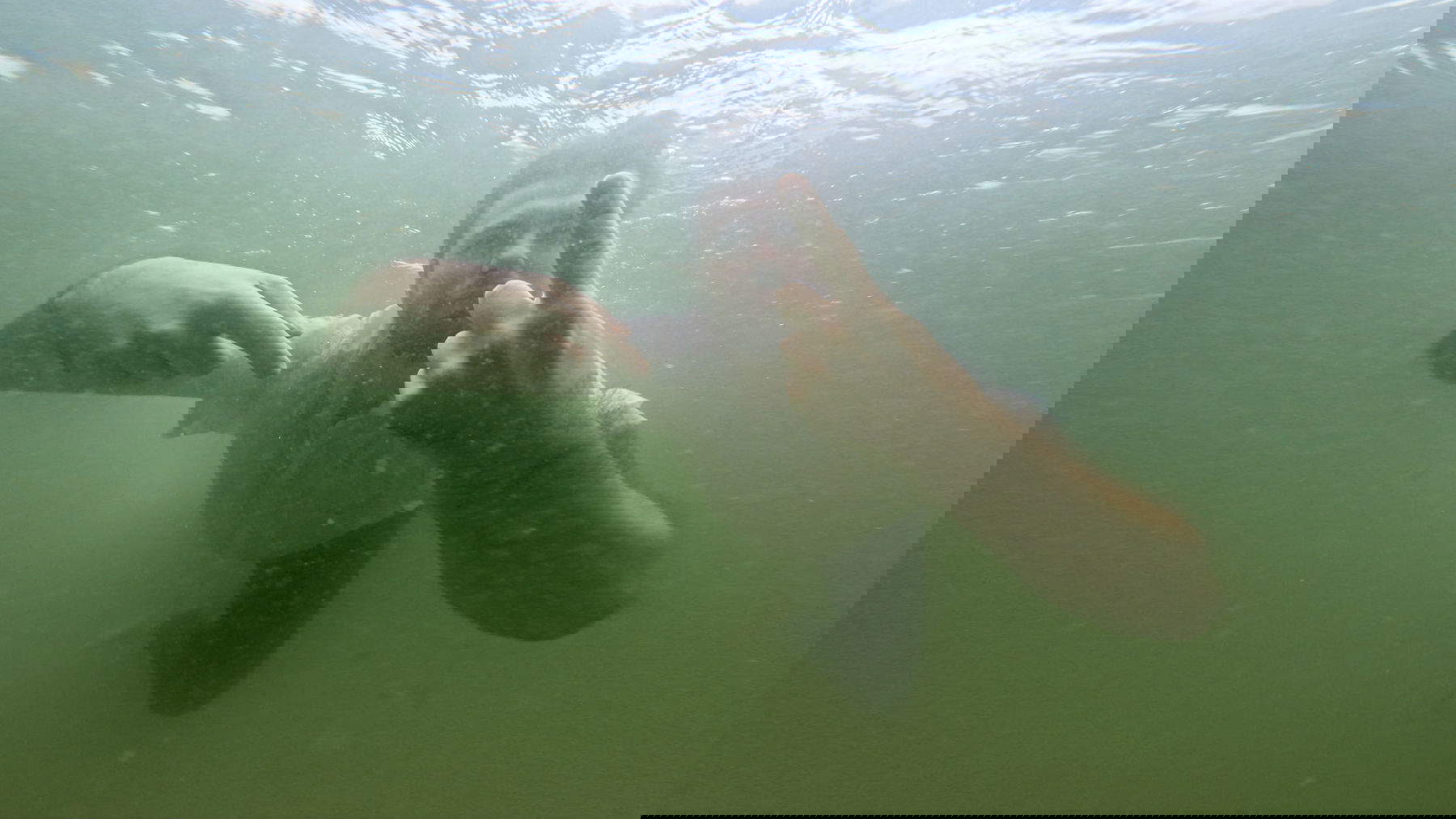
One of the key concepts of Liquid Tongues is Deaf Gain, a theoretical approach according to which deafness is not considered a disability but a distinct culture and identity, capable of generating autonomous perspectives and new forms of expression. In this perspective, communication is articulated through a plurality of sensory and bodily modalities. Part of the audio and video footage was shot underwater, an environment in which deaf people can communicate freely through sign language, while hearing people produce altered and distorted sounds. The boundary between air and water is taken as a space for experimentation, a place where languages, bodies and different perceptual modalities meet.
The proposal fits into the curatorial framework of the Biennale Arte 2026, entrusted to Koyo Kouoh and built around the musical metaphor of the Minor Keys, the minor keys. The concept invites a confrontation with what is fragile or neglected: weak voices, forgotten narratives, micro-memories. The emphasis is on the possibility of developing inconspicuous forms of resistance, establishing new relationships, and building societies based on listening to each other and the ability to resonate together. Liquid Tongues fits into this framework by proposing an overcoming of the supposed limits of communication and hypothesizing subjective communities capable of including multiple perspectives, including the animal perspective.
Bogna Burska, visual artist and playwright, has exhibited in numerous institutions in Poland and abroad. Daniel Kotowski, an artist and performer, is known for his research on the experience and language of deaf people, which has been presented in various European art centers. The collaboration between the two results in a project that combines artistic research, theoretical reflection and performance practice. The production of Liquid Tongues is entrusted to Zachęta - National Gallery of Art, an institution that for more than seventy years has organized Polish exhibitions at both the International Art Exhibition - La Biennale di Venezia and the International Architecture Exhibition, as well as being the custodian of the Polish Pavilion. Projects to represent Poland at the two Venetian exhibitions are selected through a two-stage public competition, evaluated by a jury of experts in the fields of art and architecture.
For the 2026 edition, the commissioner of the Polish Pavilion is Agnieszka Pindera, director of Zachęta - National Gallery of Art. The Polish Pavilion Office consists of Michał Kubiak, deputy commissioner, and Anna Kowalska. Poland’s participation in the 61st International Art Exhibition - La Biennale di Venezia is funded by the Ministry of Culture and National Heritage of the Republic of Poland. Zachęta sponsorship is supported by ORLEN; main exhibition partner is theAdam Mickiewicz Institute; exhibition partners are LAZNIA Center for Contemporary Art, the Polish Institute of Linguistic Diversity, and theUniversity of Physical Education in Warsaw. The project also has the support of thePolish Institute in Rome and the Society for the Encouragement of Fine Arts.
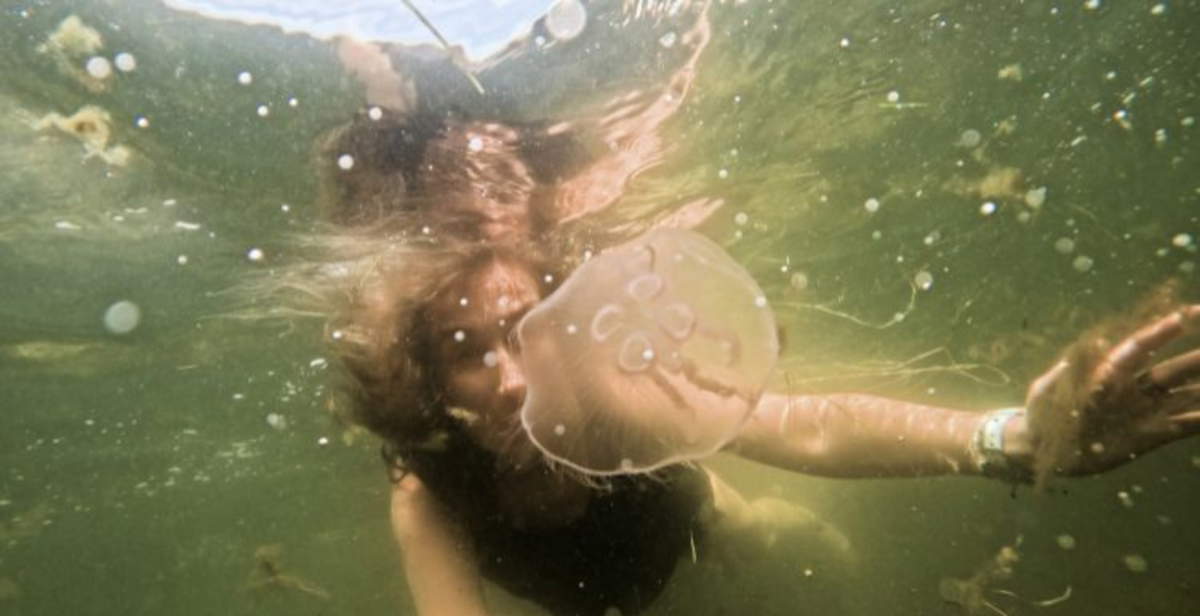 |
| Poland at Venice Biennale 2026 brings installation on listening to marginalized languages |
Warning: the translation into English of the original Italian article was created using automatic tools. We undertake to review all articles, but we do not guarantee the total absence of inaccuracies in the translation due to the program. You can find the original by clicking on the ITA button. If you find any mistake,please contact us.