




by Redazione 21/12/2025



Categories: Exhibitions / Disclaimer
From December 20, 2025 to October 11, 2026, the Galleria d'Arte Moderna di Roma celebrates the centenary of the founding of its collection with the major exhibition GAM 100. A Century of the Municipal Gallery 1925-2025
From December 20, 2025 to October 11, 2026, the Galleria d’Arte Moderna di Roma celebrates the centenary of the founding of its collection with the major exhibition GAM 100. A Century of the Municipal Gallery 1925-2025, curated by Ilaria Miarelli Mariani and Arianna Angelelli with Paola Lagonigro, Ilaria Arcangeli, Antonio Ferrara and Vanda Lisanti, and promoted by Roma Capitale, Assessorato alla Cultura, Sovrintendenza Capitolina ai Beni Culturali with the organizational support of Zètema Progetto Cultura.
In fact, on October 28, 1925, for the first time, an exhibition itinerary dedicated to contemporary art took shape in the spaces of Palazzo Caffarelli in Campidoglio, built around an initial nucleus of works acquired by the City of Rome. Thus was born the embryo of what, shortly thereafter, would become the Gallery of Modern Art: the first civic collection founded on the acquisition of modern works by artists, established and emerging, active in the Italian and international context.
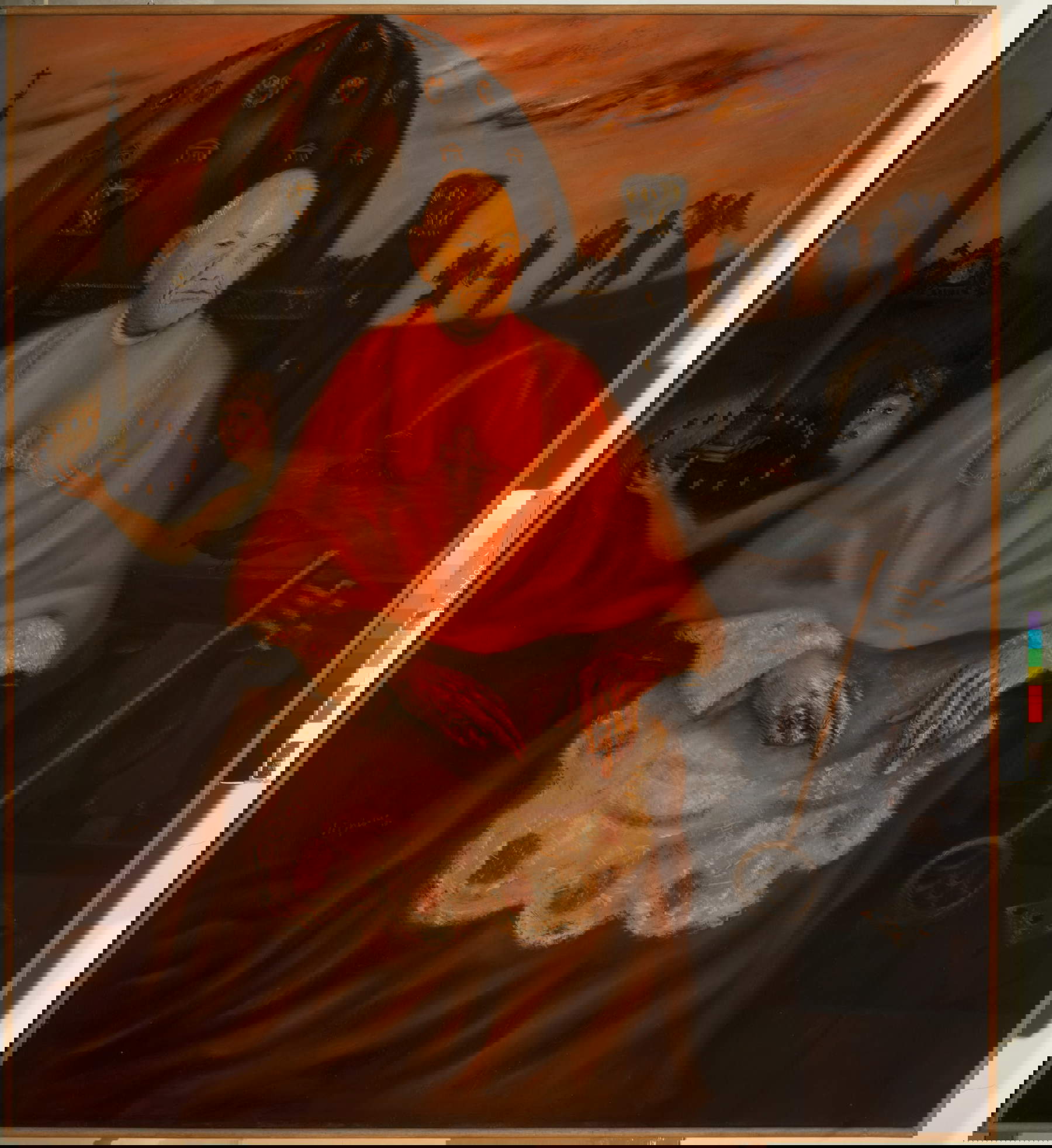
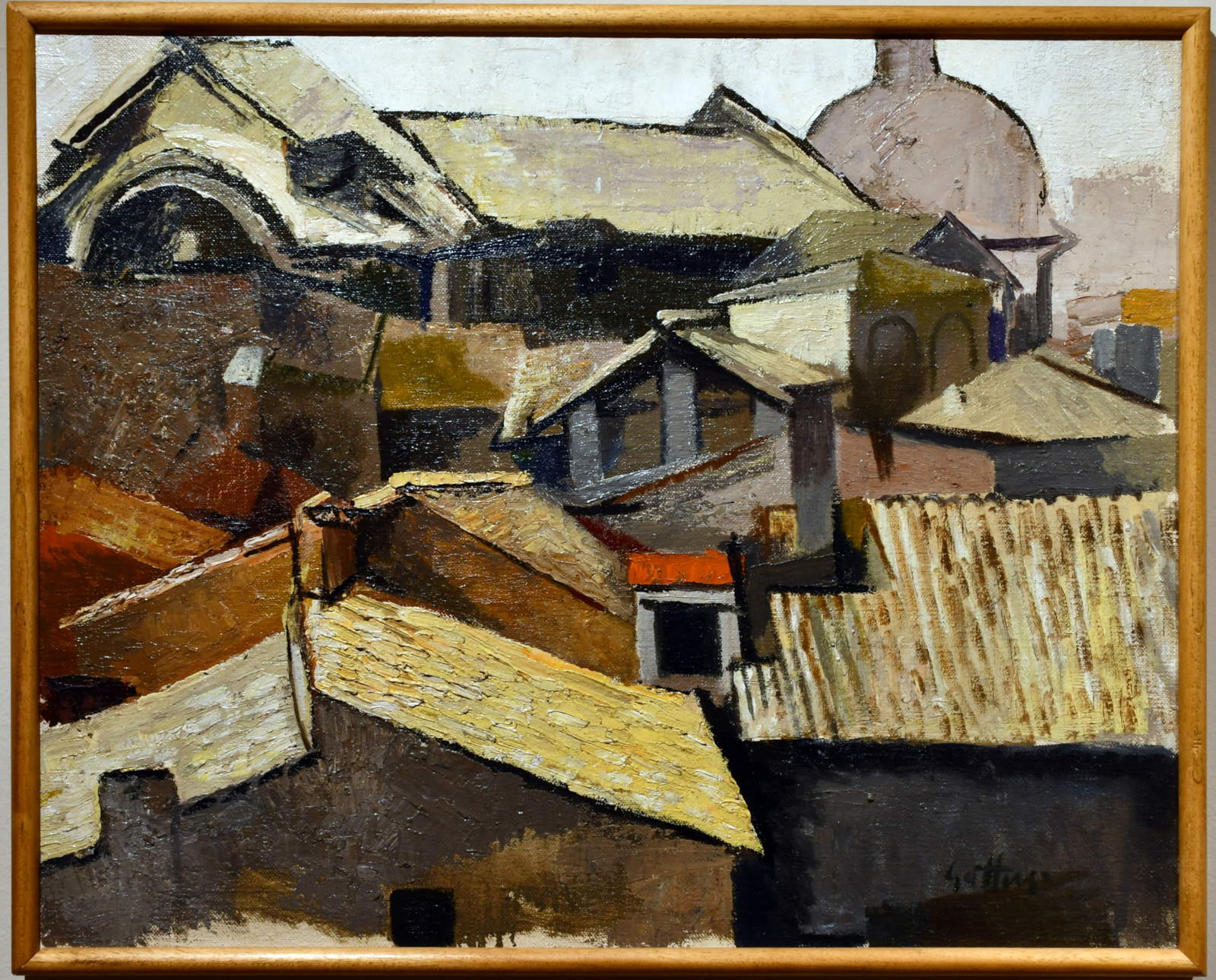
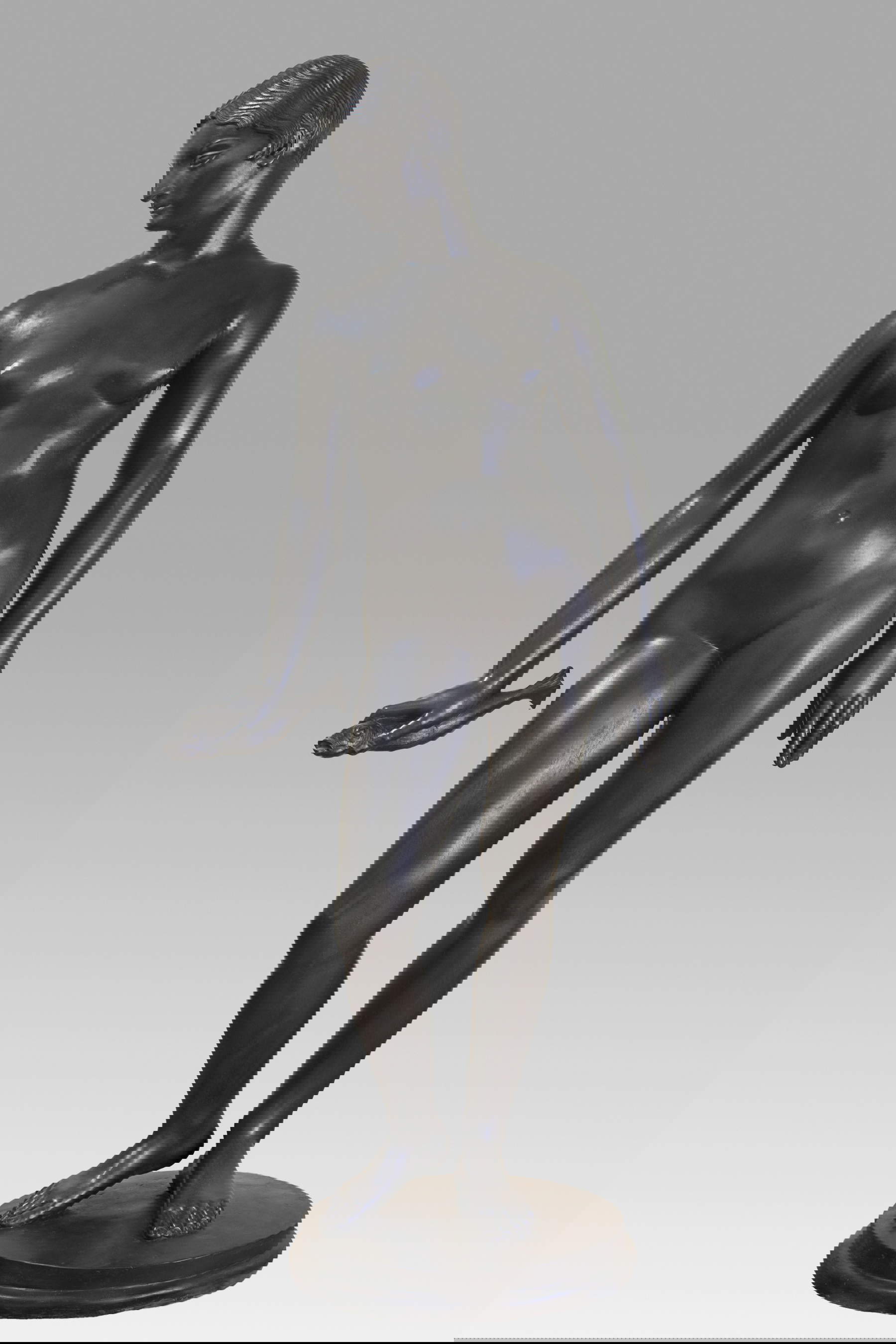
Today, with more than 120 works including paintings, sculptures and works on paper, the exhibition aims to retrace the evolution of the Capitoline Gallery through the milestones of a far-sighted policy of acquisitions. An articulated and long-term process that began as early as 1883 with the first purchases made on the occasion of the “Esposizione delle Belle Arti” at the Palazzo delle Esposizioni, including the marble statue Cleopatra by Girolamo Masini that can be seen today in the cloister, and has continued to the present day, giving rise to a collection that exceeds 3.000 works and includes artists such as Giacomo Balla, Carlo Carrà, Mario Sironi, Fortunato Depero, Antonio Donghi, Renato Guttuso, Giorgio de Chirico and Antonietta Raphaël Mafai.


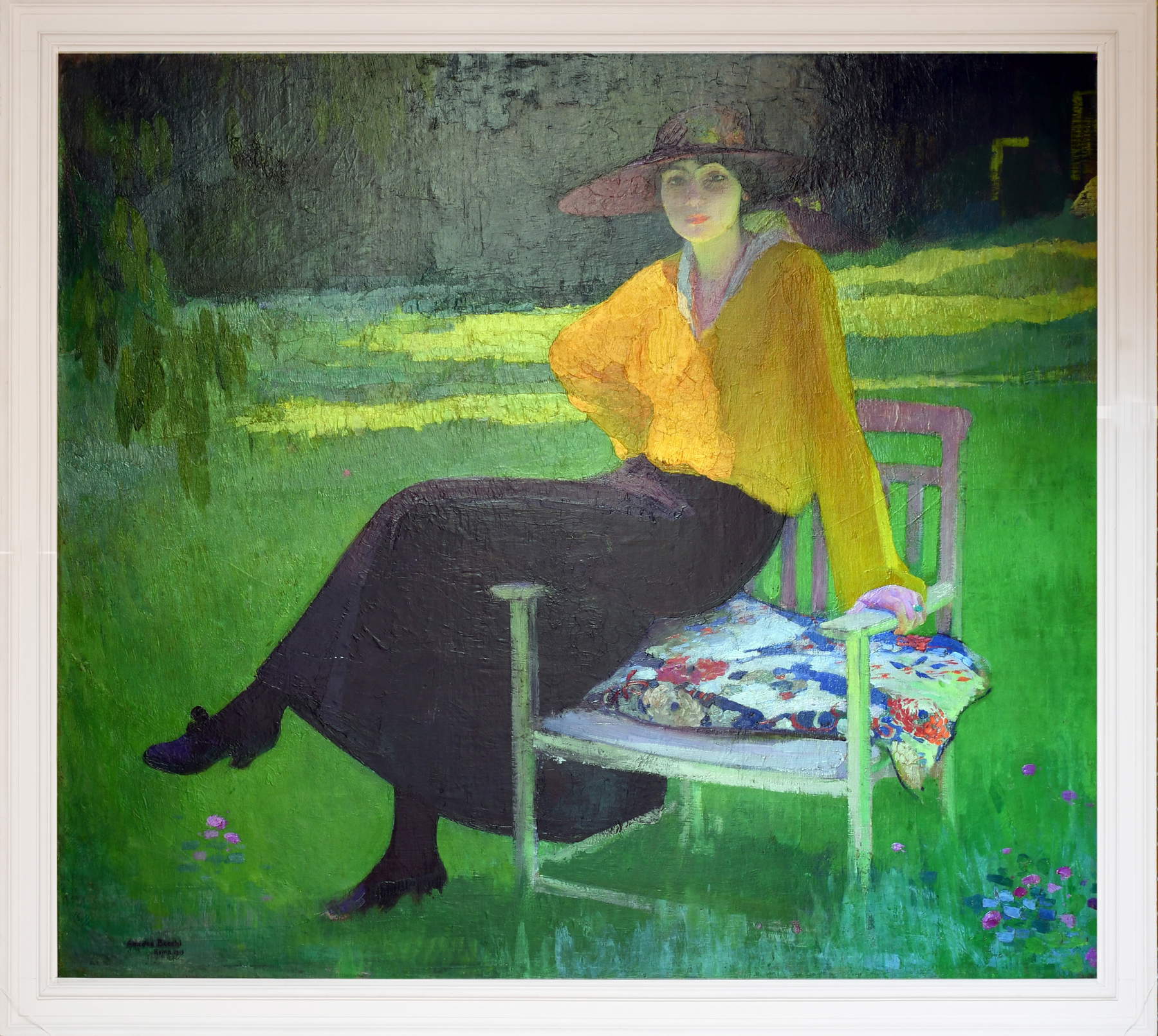
The centenary told by the exhibition is made up of artists, places, cultural choices and exhibition spaces, in an indissoluble intertwining with the history of the city of Rome. The articulation of the itinerary on the three floors of the museum constitutes a guide through the twentieth century, allowing the visitor to understand not only the ways in which the works in the collection were entered, but also the social, political and cultural contexts that have oriented the administration’s choices over time. Passing through the rooms, a narrative thus unfolds that spans more than two centuries of art history, restoring the plurality of languages and poetics that flowed into the Gallery and the strong link between the works, their authors and city and national cultural policy.
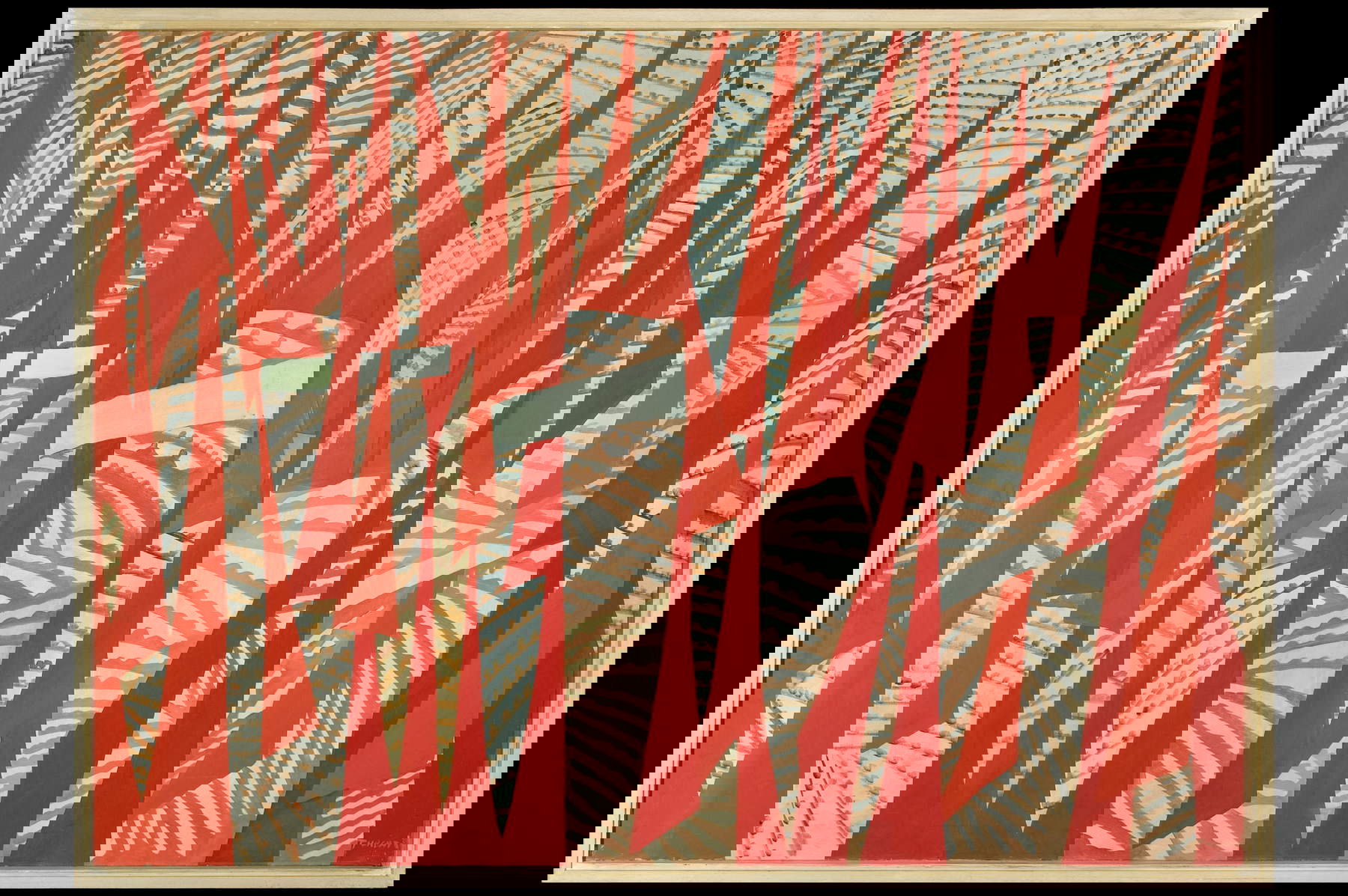
Interpreting the spirit of the different epochs, the Gallery of Modern Art has gradually assumed a central role in the international cultural scene, giving space to emerging instances: from the experiences of the late 19th century linked to the In arte libertas movement of Nino Costa and Giulio Aristide Sartorio, to theFuturist avant-garde; from the Roman Secession, a protagonist at the Palazzo delle Esposizioni between 1913 and 1916, to the Novecento movement promoted by Margherita Sarfatti and the magazine Valori Plastici. Space is found for Antonio Donghi’s Magic Realism, de Chirico’s Metaphysics, the second Futurism, as well as the Roman Biennials and Quadrennials, which were crucial to the enrichment of the collection. The itinerary continues with the Roman School, the post-World War II period and the new languages of Abstraction, Informal and Neoavantgarde, to the 1970s, 1980s, 1990s and the most recent acquisitions of the 21st century.
The exhibition also tells a complex story of museum locations and transformations that have accompanied the Gallery throughout the twentieth century: from the 1925 inauguration at Palazzo Caffarelli to the 1931 reopening as Galleria Mussolini, curated by Antonio Muñoz; from the first Quadriennale in 1931 at Palazzo delle Esposizioni, to the 1952 rebirth at Palazzo Braschi, to the venue at Palazzo delle Esposizioni between 1963 and 1972 curated by Carlo Pietrangeli and, finally, to the 1995 and 2011 inaugurations in the current location of the former convent of the Discalced Carmelites at San Giuseppe a Capo le Case.
It is precisely to this early phase of the convent that the 17th-century mural painting by Sister Euphrasia della Croce, a nun of the monastery and a friend of Plautilla Bricci, dates back to this early phase, brought to light after years of concealment and now once again on view at the exhibition. Intended for the winter choir, one of the most sacred spaces of the cloister, the paintings depicted scenes related to Carmelite spirituality: from the surviving fragments emerge two nuns praying in front of the Cross-fountain, a symbol of life and resurrection, flanked by a second mural with the Virgin, Mary Magdalene and St. John, more dramatic in tone and now partially missing in the center.
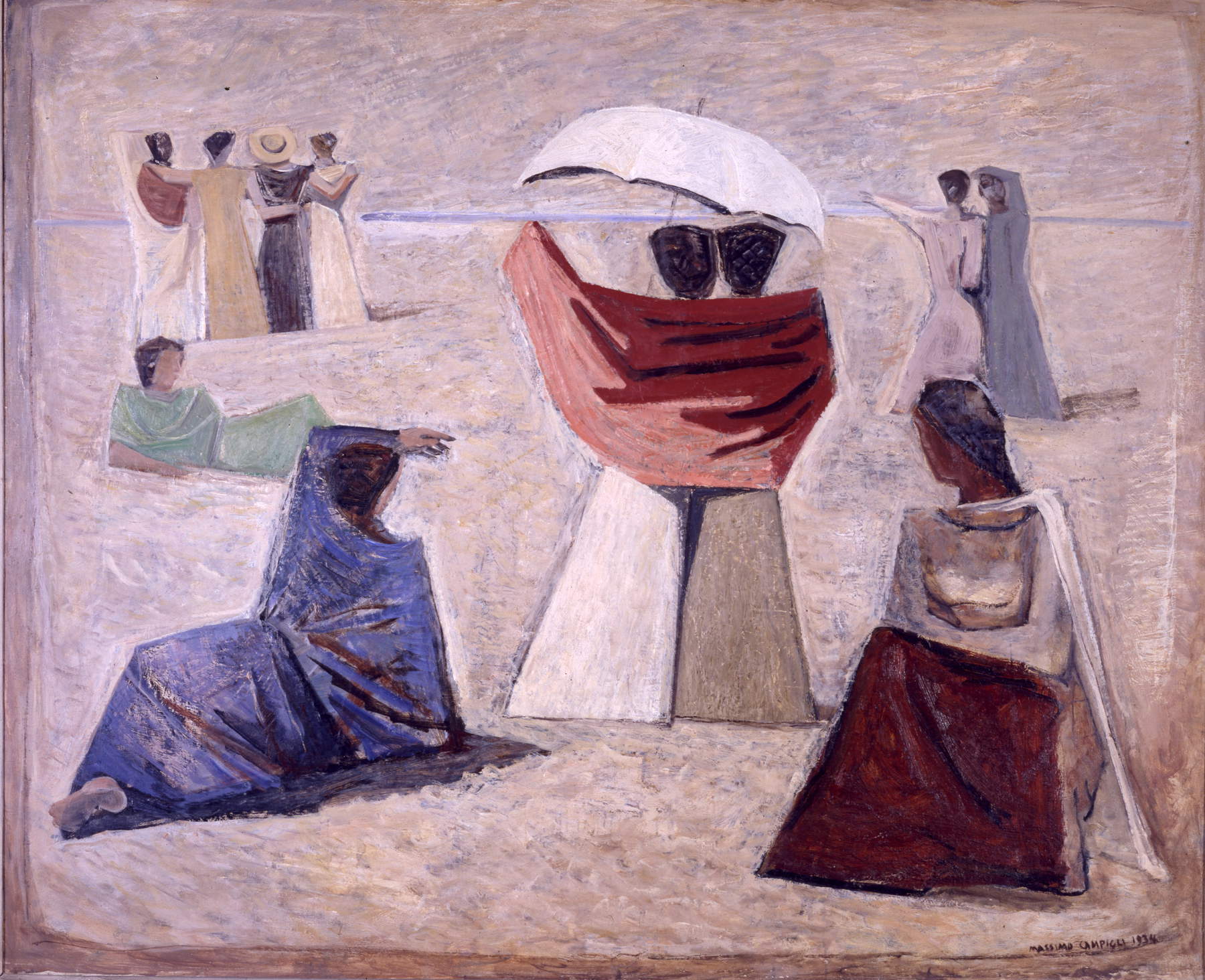
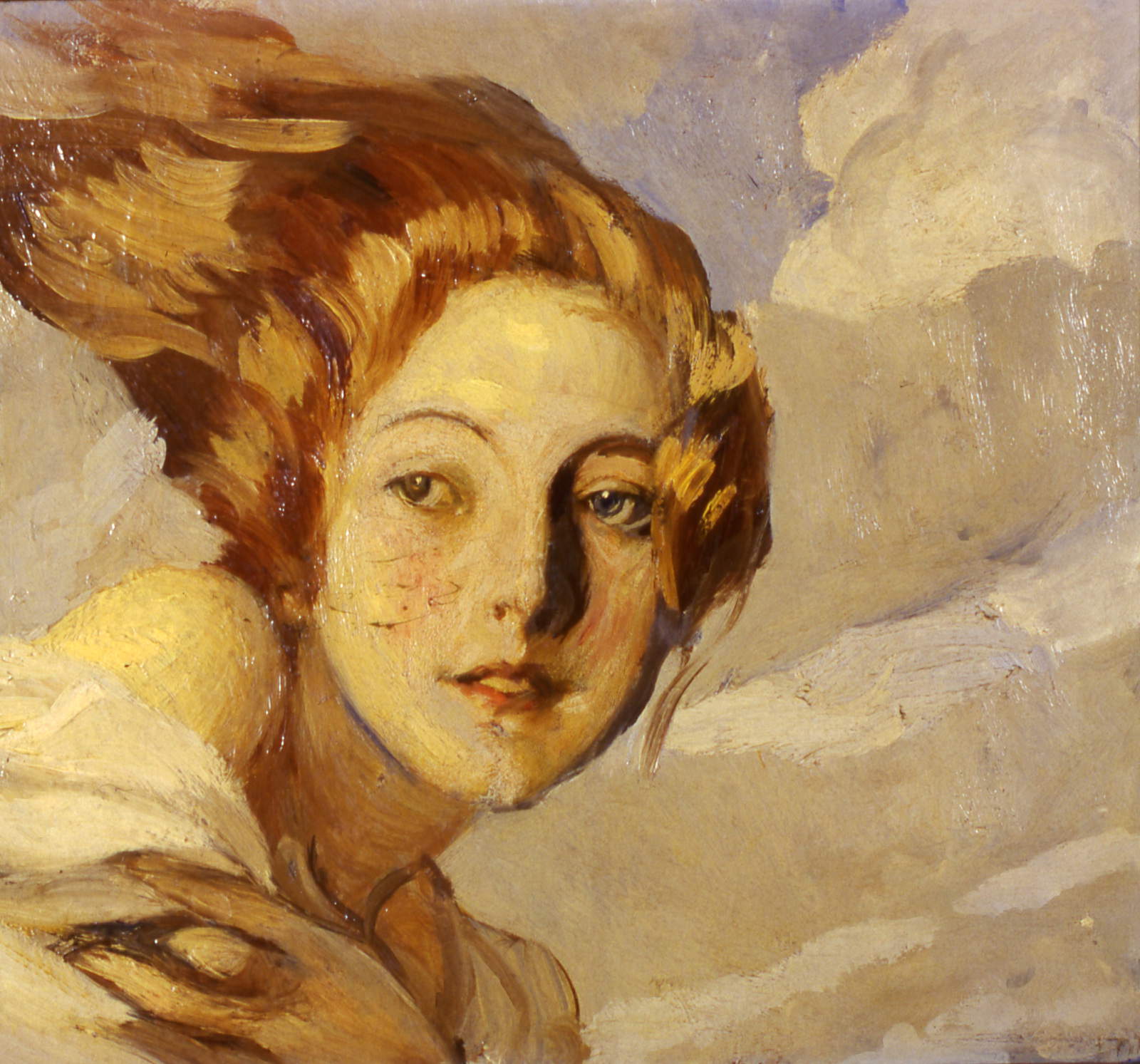
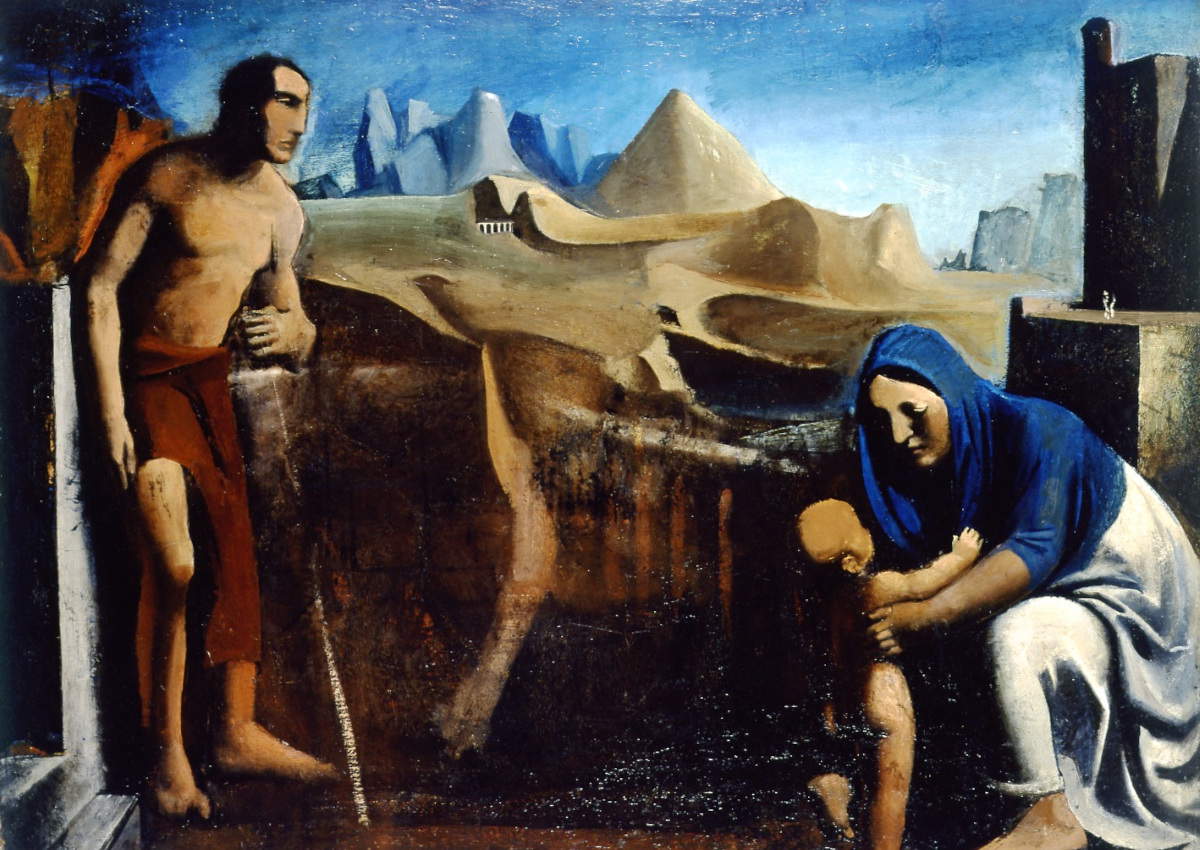
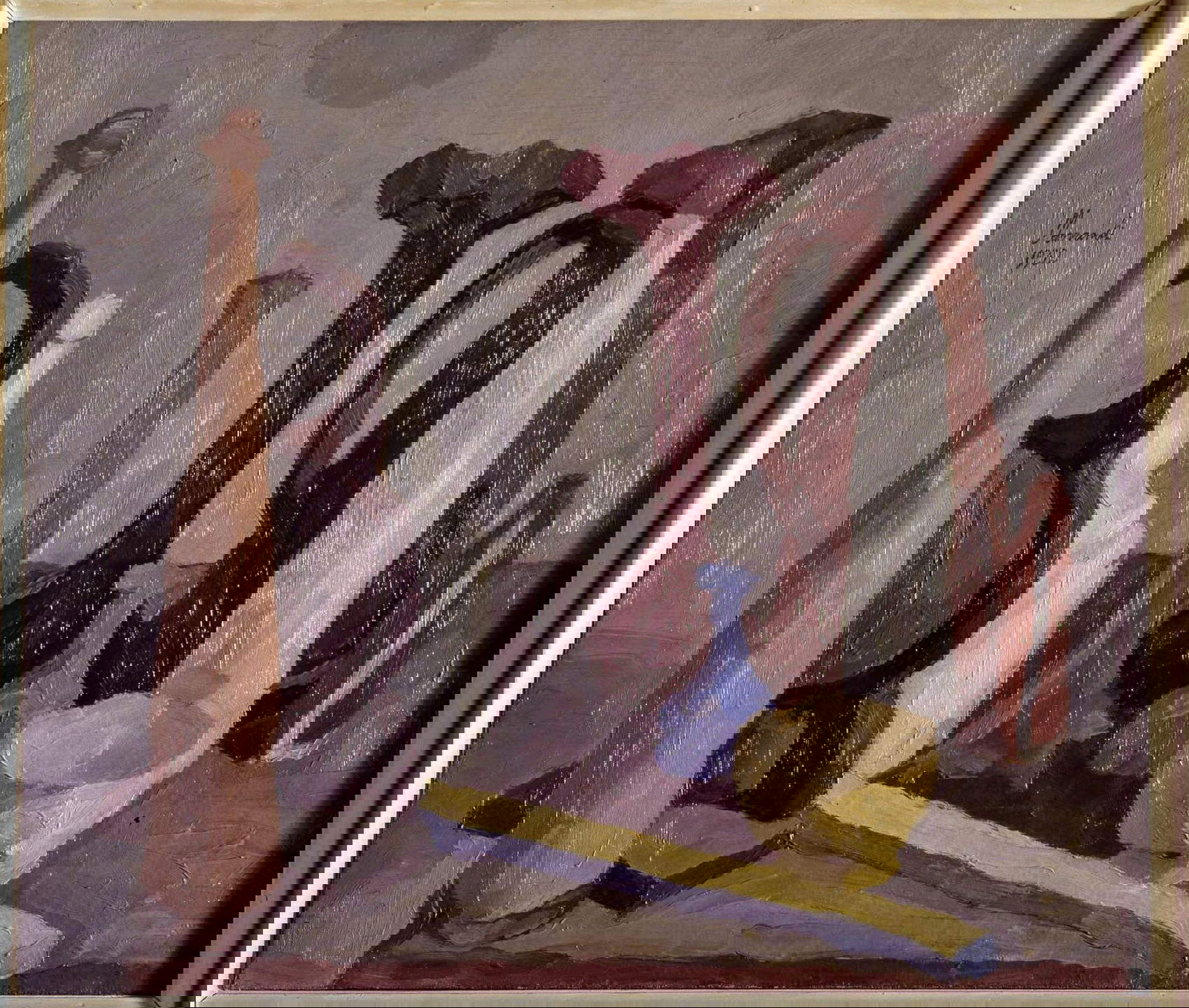
The exhibition opens on the second floor with the section The Birth of the Gallery. The first acquisitions, the avant-gardes and the role of the Quadriennali, dedicated to the 1925 inauguration and the 1931 rearrangement curated by Antonio Muñoz. The original placement of Amleto Cataldi’s Galatea on the Caffarelli terrace, conceived as a monumental fountain and now displayed in a dedicated space on the ground floor, is also recalled in this context.
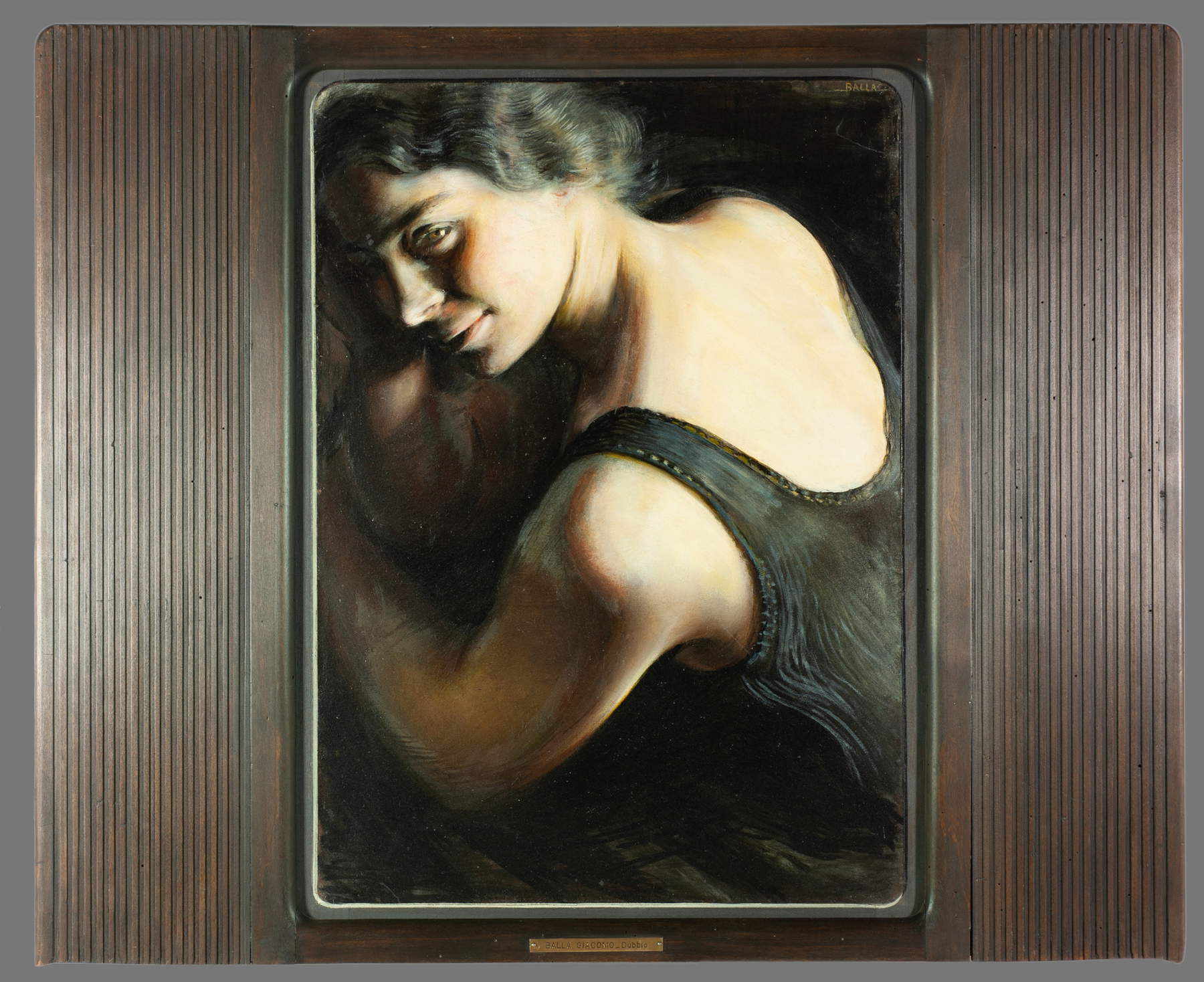
The initial acquisitions were the result of a lively exhibition climate, fueled by such key reviews as those promoted by the Società Amatori e Cultori di Belle Arti di Roma, from which came works by Enrico Coleman, Duilio Cambellotti and Giacomo Balla with the celebrated Il dubbio. A central role is played by the Roman Secession exhibitions, which testify to the Capitoline administration’s attention to the most innovative languages: examples include works by Vittorio Grassi, Enrico Lionne, Camillo Innocenti and Auguste Rodin. At the same time, the “return to order” promoted by Valori Plastici and the Novecento movement was affirmed, with artists such as Felice Carena, Mario Sironi and Gino Severini committed to the recovery of the classical tradition and the techniques of antiquity.
Alongside these experiences emerged Antonio Donghi’s Magic Realism and de Chirico’s Metaphysics, while the Roman Biennales and, even more so, the Quadriennali, starting in 1931, played a decisive role in defining the collection, highlighting both new trends and figures such as Costa and Sartorio. Finally, ample space is reserved for Second Futurism, with works by Tato, Benedetta Cappa Marinetti, Prampolini, Depero, Monachesi and Crali.
The section From the search for a new home to the rebirth in the 1950s, on the second floor, links the experiences of the early twentieth century to the period following World War II, marked by the Gallery’s suppression in 1938 and the temporary dispersal of works. With the 1952 reopening of Palazzo Braschi, thanks to the efforts of Carlo Pietrangeli, artists such as Onorato Carlandi, Scipione and Renato Guttuso returned to the exhibition, while the historic “Black and White” room with graphic works by Morandi and Checchi was also revived.
The top floor, with the section Toward the New Gallery of Modern Art. An ever-growing collection, traces the move to the Palazzo delle Esposizioni in the 1960s and subsequent acquisitions, characterized by a strong heterogeneity of languages and generations, up to the 1990s and the current location in Via Crispi, inaugurated in 1995 and reopened in 2012 after major modernization works. The growth of the collection continues to this day with works by Elisa Montessori, Lamberto Pignotti and Guido Strazza.
GAM 100. A Century of the Municipal Gallery 1925-2025 is the result of extensive choral work involving museums and institutes of the Capitoline Superintendency, including the Museum of Rome in Trastevere, the Photographic Archive of the Museum of Rome and the Capitoline Historical Archives, as well as collaboration with entities such as Istituto Luce, Teche Rai and the Photographic Archive of the Press Office of Roma Capitale.
To further broaden the reading of the collection, the exhibition plans a second rotation in the spring of 2026, which will also allow for the presentation of hitherto unpublished works. Finally, special attention is paid to accessibility, with specific routes for visitors with visual impairments and a new nucleus of tactile tables created in collaboration with the Fondazione Cassa dei Risparmi di Forlì and the Museo Tattile Statale Omero in Ancona.
“It is a journey through the city of Rome, its history and also the history of the international art scene, the exhibition with which the Gallery of Modern Art celebrates the centenary of its foundation with the exhibition GAM 100. A Century of the Municipal Gallery 1925-2025,” says Culture Councillor Massimiliano Smeriglio. “With the 120 works brought together along the three exhibition floors, it also traces the city’s cultural policy in its relationship with artistic movements, artists and the acquisition of their works by GAM over the course of more than 100 years: the Gallery of Modern Art thus offers an extraordinary historical and artistic journey that starts from the late nineteenth century, passes through Futurism, the Novecento movement, Magic Realism, de Chirico’s Metaphysics, the period of the Roman School, the postwar twentieth century with Abstraction and Neoavantgarde, and on to the 1980s and 1990s and the latest acquisitions of the 2000s. A journey through time and place that testifies to how Rome has always brought together diverse voices and expressive pluralities, and that engages the visitor from the very first works acquired with the birth of the Gallery. Works mostly from important exhibition events that have oriented world art history. I thank the choral work of the other museums and institutes of the Capitoline Cultural Heritage Superintendency, as well as the photographic and historical archives.”
|
| Rome's GAM celebrates the centenary of the founding of its collection with a major exhibition |
Warning: the translation into English of the original Italian article was created using automatic tools. We undertake to review all articles, but we do not guarantee the total absence of inaccuracies in the translation due to the program. You can find the original by clicking on the ITA button. If you find any mistake,please contact us.