





From March 20 to June 21, 2026, the Zentrum Paul Klee in Bern, Switzerland, presents Schwitters : On the Fringes of the Avant-Garde, the first major museum exhibition in Switzerland devoted to Kurt Schwitters in more than two decades. The exhibition, curated by Martin Waldmeier with curatorial assistance from Josephine Rechberg, reconstructs the entire span of the German artist’s production, from his figurative beginnings to his years in exile in Norway and the United Kingdom, including Merz paintings, assemblages, collages, a reconstruction of the Merzbau in Hanover, portraits, landscapes, sculptures, graphic works and literary texts.
The exhibition is organized by Zentrum Paul Klee in collaboration with the Sprengel Museum and the Kurt and Ernst Schwitters Foundation in Hanover, with support from Kanton Bern, the Federal Office of Culture, Swisslos Kultur Kanton Bern, Burgergemeinde Bern and the Ursula Wirz Foundation. The opening is scheduled for Thursday, March 19, 2026 from 6 p.m., with free admission for the opening night.
“Through both his art and his life, Schwitters shaped generations of artists, from postwar figures like Robert Rauschenberg and Jean Tinguely to contemporary artists like Thomas Hirschhorn and Phyllida Barlow. He demonstrated how everyday discarded materials could give rise to new visual and spatial worlds and how, in a broader sense, art and life could be aligned,” points out Martin Waldmeier, curator of the exhibition.
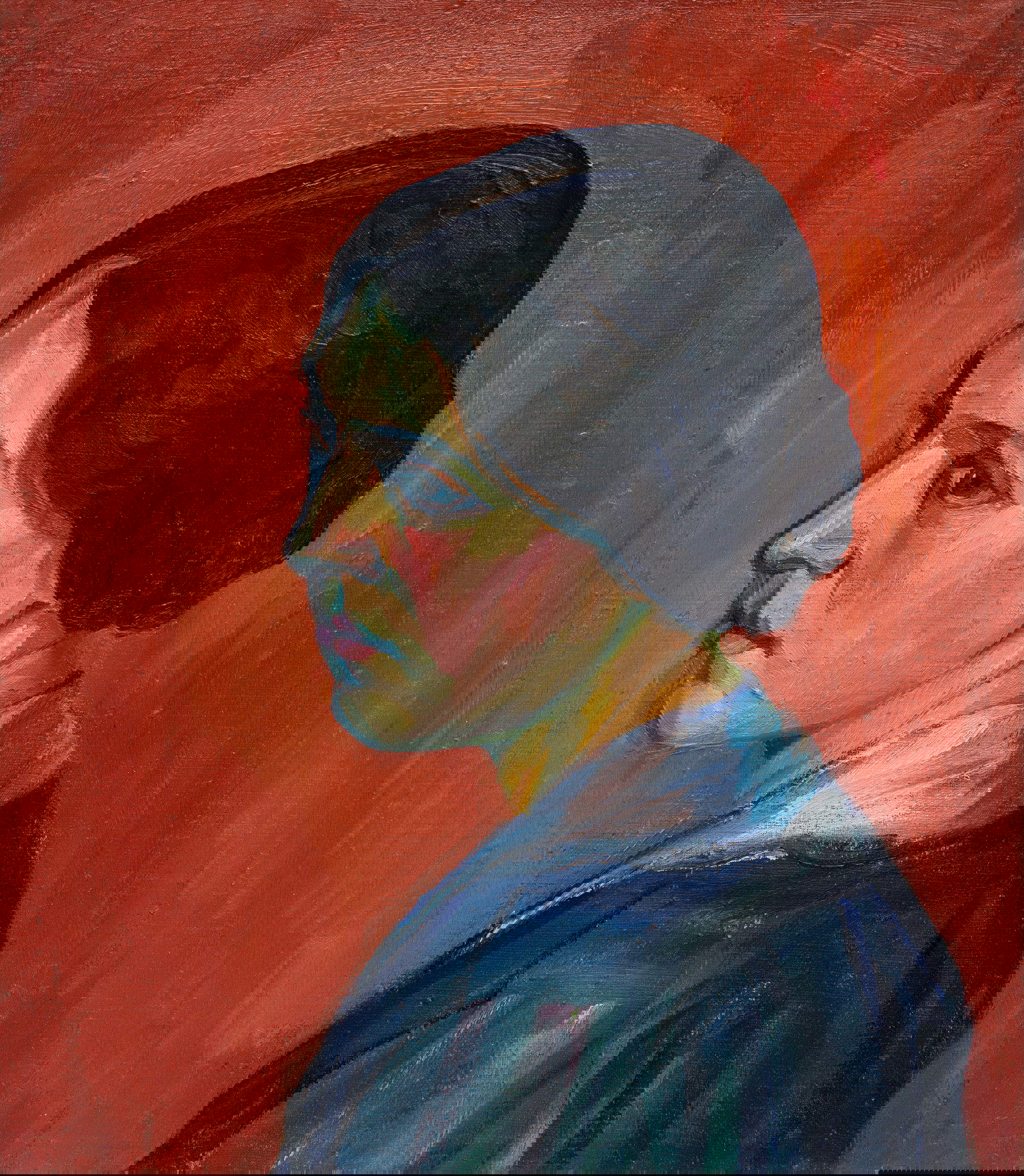
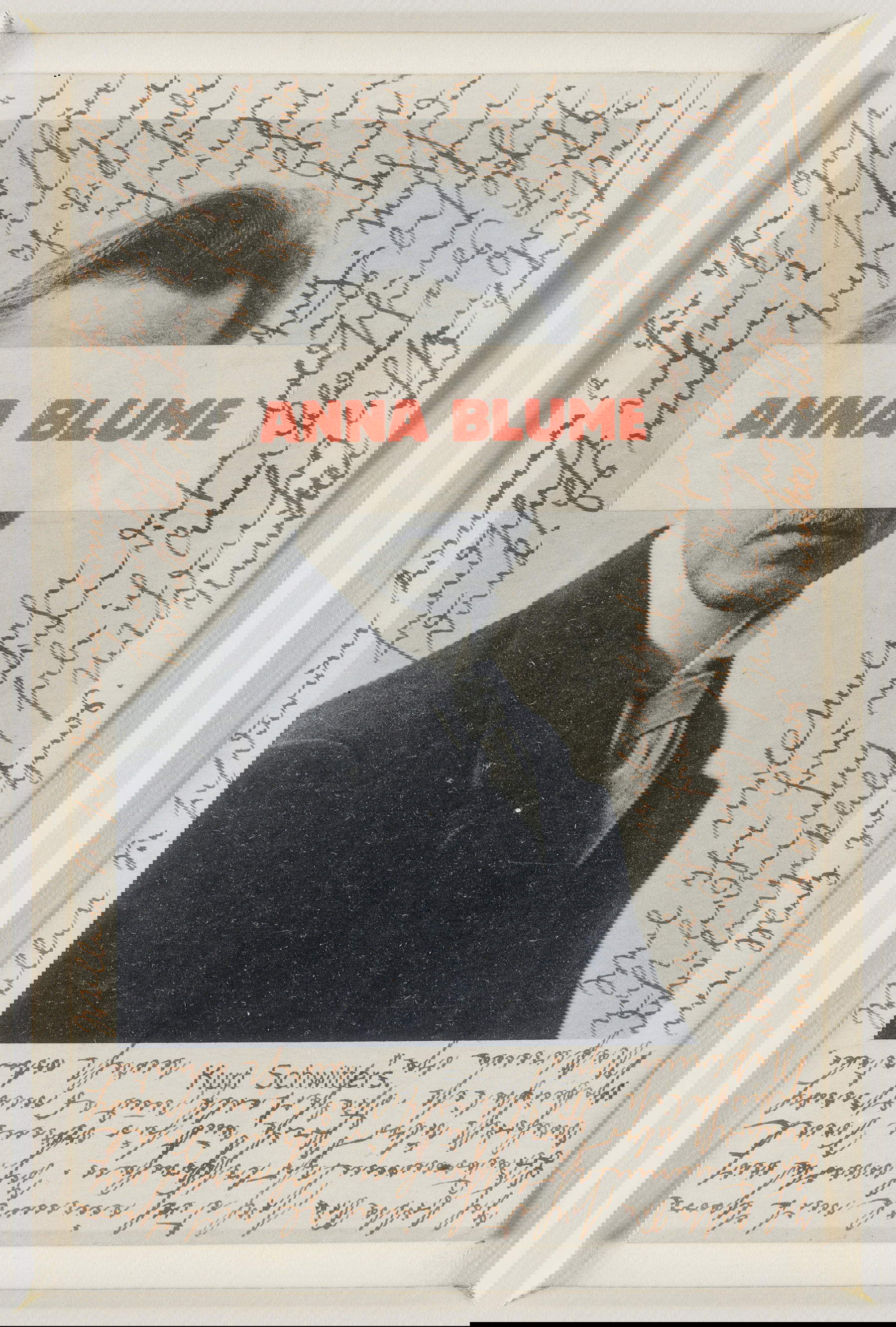
Born in Hanover in 1887 and died in Kendal, UK, in 1948, Schwitters occupies a peculiar position in the history of the twentieth-century avant-garde. After an academic training in painting, he began his activity with representational and figurative works, eventually moving intoExpressionism and laterabstraction. Although he maintained active relations with the major international movements of the time, from Dada to De Stijl to Constructivism, he never formally joined any group, maintaining an independent stance. In a context marked by the political engagement of many artists in post-revolutionary Germany, such as the Berlin Dadaists, Schwitters claimed the autonomy of art and a substantial distance from organized militancy.
In the 1920s he developed the concept of “Merz,” which was destined to become the hallmark of his work. Through the use of found and discarded materials, he made collages and assemblages that he called Merz works. Beginning in 1923, he began transforming his home in Hanover into the Merzbau, a walkable environmental sculpture that translated the principles of collage into architecture. The work, destroyed in 1943, is now considered a fundamental precedent in contemporary installation art. For Schwitters, the value of art lay in theintellectual act of creation: the goal was to generate a new harmonic order from chaos, confronting transience and ruin through artistic means.
The exhibition at the Zentrum Paul Klee follows a chronological layout and aims to restore the variety of the artist’s production. The core consists of the reconstruction of the Merzbau in Hanover, flanked by about twenty assemblages, reliefs and sculptures, as well as large-format projections documenting Merz’s later installations in Norway and England. Surrounding this centerpiece are thematic rooms that include some fifty collages, some twenty paintings, numerous drawings, watercolors, prints, publications, and typographic works. Collage, a pivotal element of the Merz principle, serves as a common thread throughout the exhibition.
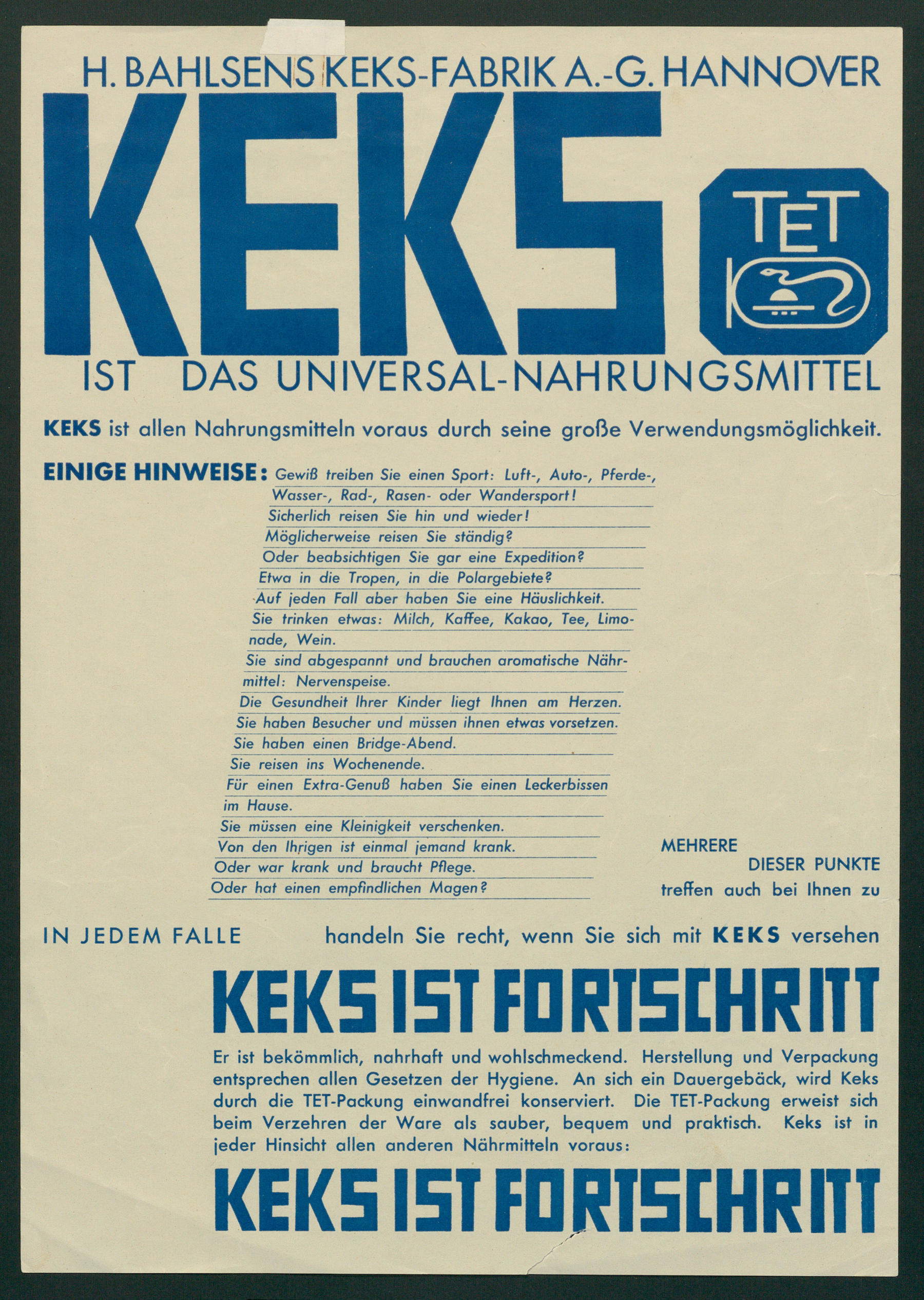
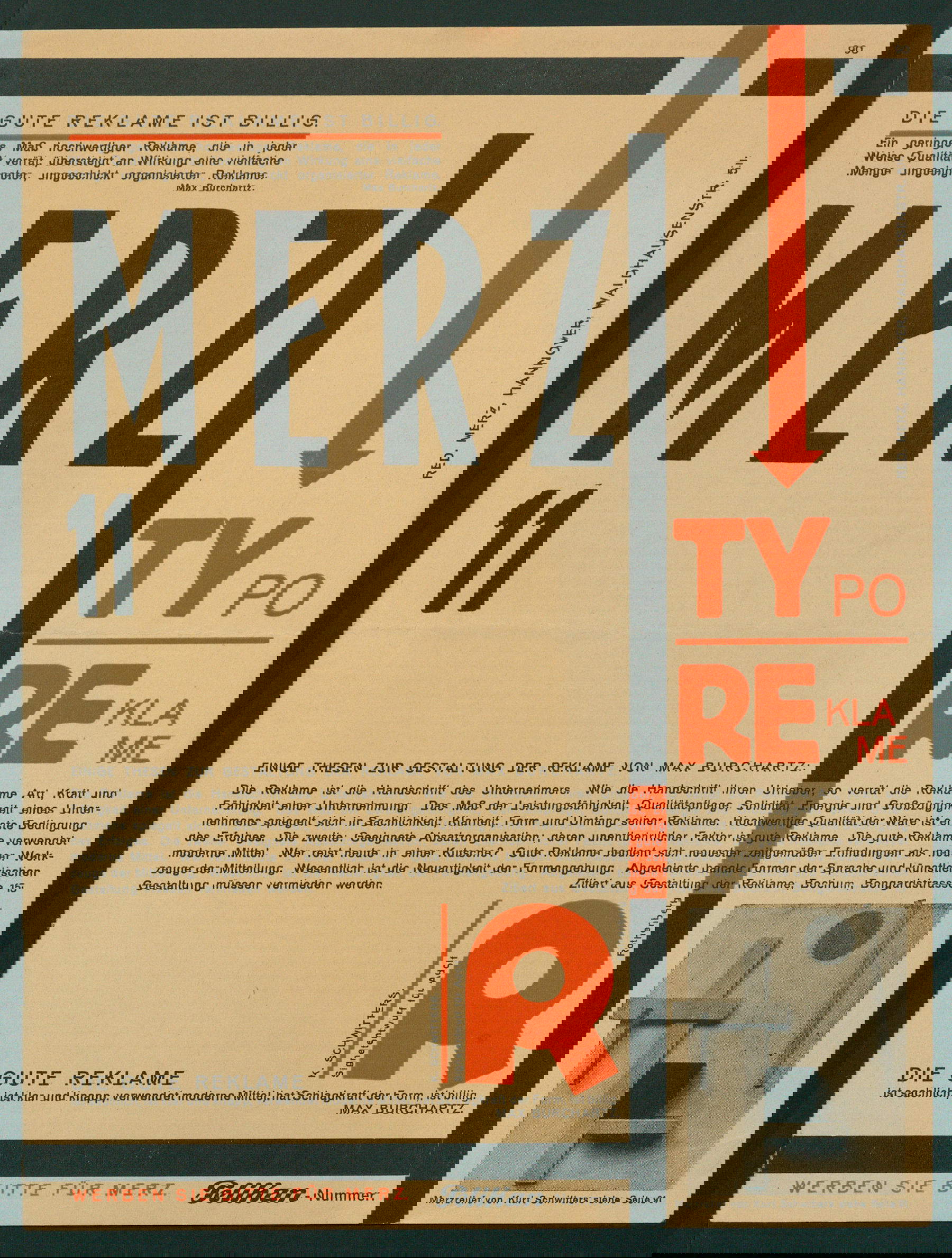
Alongside visual production in the strict sense, the exhibition addresses Schwitters’ work as a graphic designer, editor and writer. The artist was a major contributor to the development of modern graphic design, founded the international group “ring neue werbegestalter” (“Circle of New Advertising Graphic Artists”) and promoted an integration of art and design that aimed to recognize design and typography as having an autonomous cultural status. He also made a significant contribution to the definition of twentieth-century Swiss graphic design in this context.
The avant-garde magazine Merz became a laboratory for typographic experimentation and a platform for the international network of artists with whom Schwitters had relationships. In parallel he published posters, short stories of a critical and autobiographical nature, plays, poems and fairy tales. His best-known works include the Dadaist poem An Anna Blume from 1919 and the Sonate in Urlauten, known as Ursonate, composed between 1923 and 1932. It is precisely theUrsonate that will be performed live as part of the exhibition’s public program on Saturday, April 18, 2026, at 2 p.m. and Sunday, April 19, at 11 a.m., with a performance by Brussels-based musician Michael Schmid. Seating is limited.
The utopian aspirations of Schwitters’ artistic project are intertwined with a biography marked by traumatic events. Beginning in 1933, his qualification as a degenerate artist in Nazi Germany and his contacts with political opposition circles substantially compromised his work possibilities. In 1937 he fled with his son Ernst to Norway, settling in Oslo and spending the summer months in the Molde region. After the German invasion in 1940, father and son repaired to the United Kingdom. There they were interned in Hutchinson camp on the Isle of Man, along with other refugees from Nazi Germany, including many artists and intellectuals. Once freed, Schwitters settled first in London and then in the Lake District in northern England. Despite difficult conditions and gradually deteriorating health, he continued his work, starting new Merzbau in Norway and England and supporting himself financially through portraits and landscapes. While his figurative works gained some recognition in his host countries, his avant-garde ideas remained largely misunderstood.
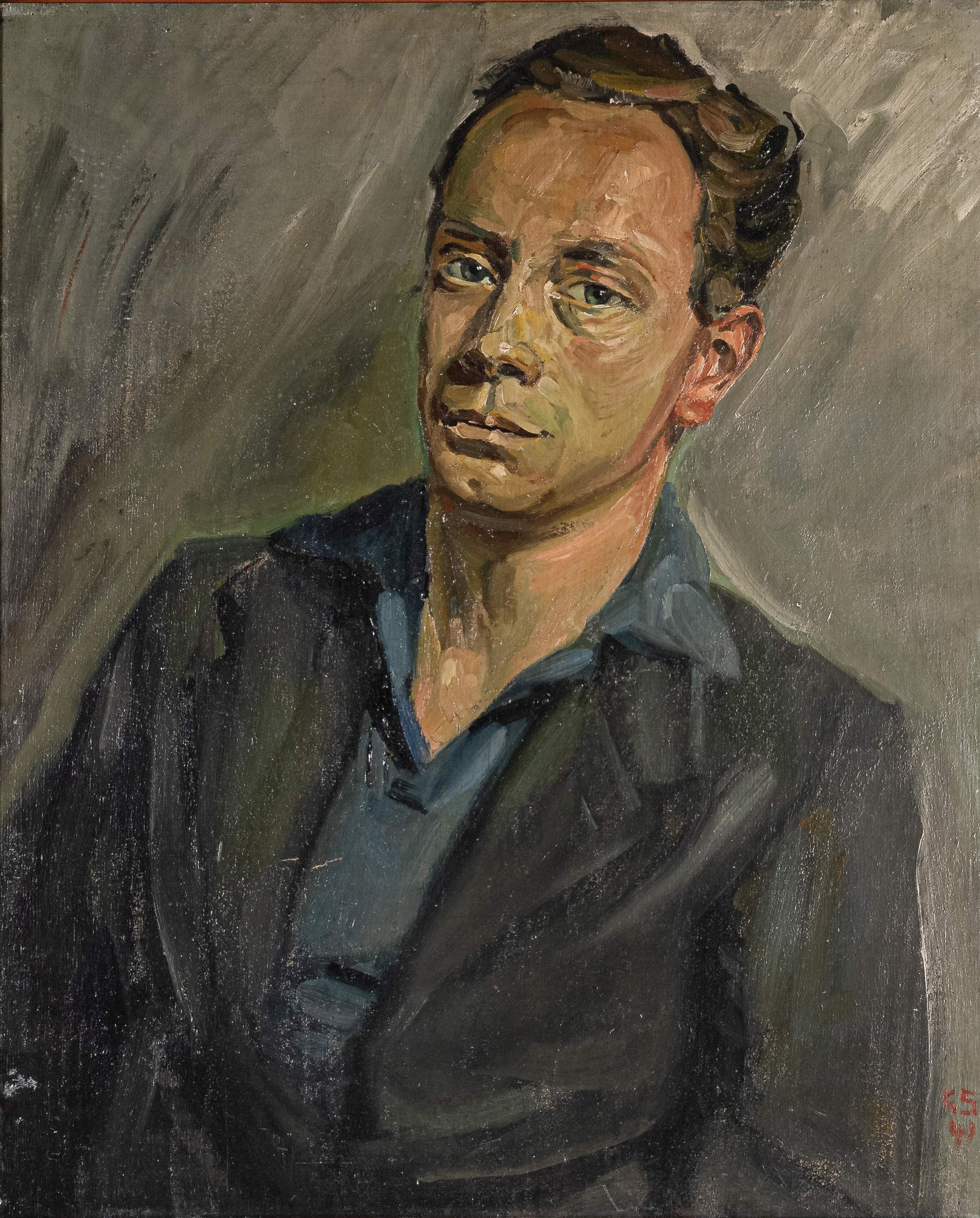
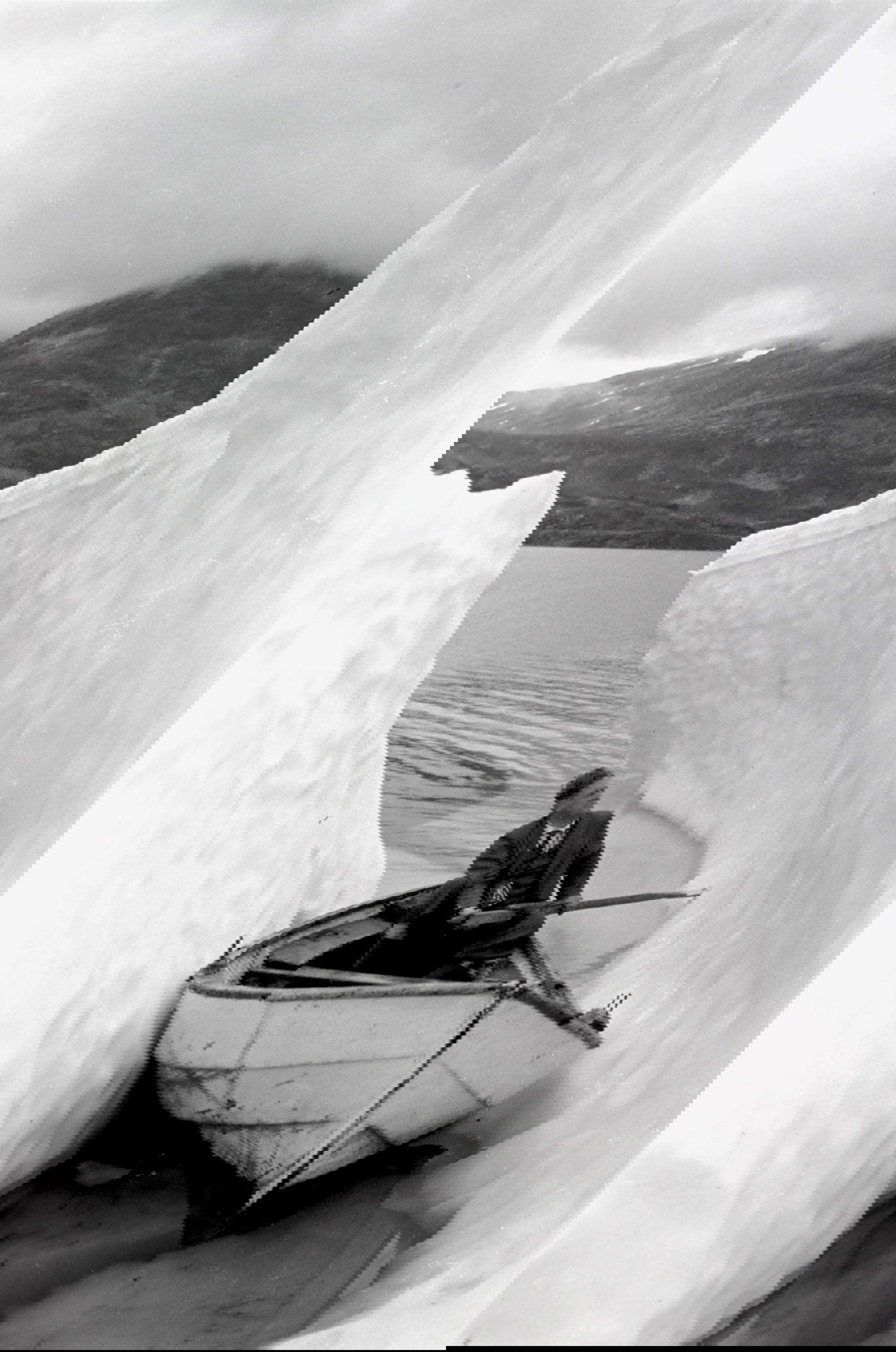
The installation integrates dynamic projections of texts that place posters, Dadaist prose, satirical and autobiographical writings in dialogue with the works on display. Closing the tour is the presentation of the film Kurt Schwitters. Immortality Is Not for Everyone, made in 1982 by Klaus Peter Dencker, which collects testimonies from friends and family members of the artist. An interactive collage workshop open to visitors of all ages also operates within the exhibition. In collaboration with the Zurich University of the Arts, Department of Visual Communication, male and female students have typographically reinterpreted the poem An Anna Blume; the resulting posters are included in the exhibition.
In conjunction with the exhibition, Zentrum Paul Klee is publishing an extensively illustrated volume designed by Harald Pridgar in collaboration with Hirmer Publishers of Munich. The book, titled Kurt Schwitters. Grenzgänger der Avantgarde. Ausgewählte Werke und Texte (Kurt Schwitters: an explorer of the boundaries of the avant-garde. Selected Works and Texts), is edited by Martin Waldmeier and Nina Zimmer, with a preface by them, an introductory essay and texts by Waldmeier, as well as a selection of the artist’s writings. The edition, in German, has 404 pages, 204 illustrations, format 16.5 x 22.5 cm, paperback, ISBN 978-3-7774-4694-3, and is available from the museum store.
The program also includes guided tours in English on May 24 and June 14, 2026, at 3 p.m. From March 20 to August 23, 2026, Creaviva will also host an extensive interactive exhibition in the loft related to the retrospective, entitled Spatial Collage. Materials unfold. The project is inspired by Merz’s idea as a totalizing principle that for Schwitters involved works, texts, spaces and the dwelling itself. Discarded furniture from homes in the Bern area, recycled materials and salvaged objects were reassembled into a white structure articulated in niches, cavities, walls and drawers, conceived as an explorable environment. The installation occupies the entire loft and provides the starting point for multi-sensory creative experiences. Visitors are invited to also collect, construct, compose and record their own version of Ursonate, using voice as an instrument. Bernese artist Philomena Heinel, active at Atelier Rohling supporting people with cognitive disabilities, contributes an intervention that introduces a contemporary perspective.
Kurt Schwitters was born in Hanover in 1887 to Eduard and Henriette Schwitters, merchants. As early as 1901 he manifested mental health problems with an initial psychogenic episode. Between 1908 and 1909 he studied at the School of Applied Art in Hanover and from 1909 to 1915 attended the Royal Saxon Academy of Fine Arts in Dresden, where he learned academic painting and wrote his first expressionist poems. Between 1911 and 1913 he participated in his first exhibitions in Hanover. In 1915 he married Helma Fischer and opened a studio in his parents’ home. In 1916 his son Gerd was born and died prematurely.
Between 1917 and 1918 he turned toward Expressionism and abstraction, creating his first Abstractions works. He was called to arms but declared ineligible and assigned as a technical draftsman at Wülfel Ironworks in Hanover, where he continued to exhibit. In 1918 he participated in his first exhibition at Der Sturm gallery in Berlin, where he exhibited regularly until 1928, and his son Ernst was born. During the November Revolution and the end of World War I he experimented with his first collage and assemblage works, coining the term “Merz” to unify his artistic activities. In 1919 he created stamp drawings, watercolors and prints and came into contact with Dadaism.
In the 1920s he consolidated ties with the international avant-garde, published manifestos and poems in European magazines, gave lectures and participated in exhibitions in Germany and the Netherlands. In 1922 he developed his first sound poems and collaborated with El Lissitzky, Hans Arp and Tristan Tzara. In 1923 he started Merzbau in his house in Hanover and founded Merz magazine, collaborating with Dada artists. In the following years he founded the Merz Advertising Agency, worked as a designer and printer and participated in trips to Germany, the Netherlands, France and Prague. In 1927 he co-founded the “ring neue werbegestalter,” an association of new advertising designers, with Robert Michel, Willi Baumeister, Jan Tschichold, Walter Dexel and others.
From 1929 he worked as a printer for the Hanover administration, participated in international exhibitions, and began annual trips to Norway from 1930 to 1936, where he stayed in the Molde Fjord and on the island of Hjertøya, earning a living with portraits and landscapes. In 1932 he recorded parts of Ursonate and the poem An Anna Blume for South German radio and joined the German Social Democratic Party.
With the rise of Nazism in 1933, Schwitters was labeled a degenerate artist, withdrew from public life, and suspended exhibitions and publications in Germany. In 1937 he followed his son Ernst to Norway and moved works from his studio in Hanover to Lysaker. During the German invasion of Norway in 1940 he escaped with Ernst across the Lofoten Islands to Tromsø, then to Scotland and finally to Hutchinson Camp on the Isle of Man, where he made portraits of fellow internees and gave lectures.
After a studio fire in 1941 he moved to London, where he met artists such as Ben Nicholson and Barbara Hepworth, before settling in Barnes with his son. In 1943 his house in Hanover is destroyed by an incendiary bomb. In 1944 he participated in exhibitions in London and Basel; that same year he suffered a stroke and temporarily lost the use of part of his body. His wife Helma dies of cancer.
In 1945 he moved with Edith Thomas to Ambleside in the Lake District, continuing to earn a living from paintings and commissions. In 1947 he receives a grant from MoMA New York to rebuild or continue the Merzbau in Germany or Lysaker, which was used to create a new Merzbau in Elterwater. In 1948 he obtained British citizenship and died the next day in Kendal, in the presence of Edith Thomas and son Ernst.
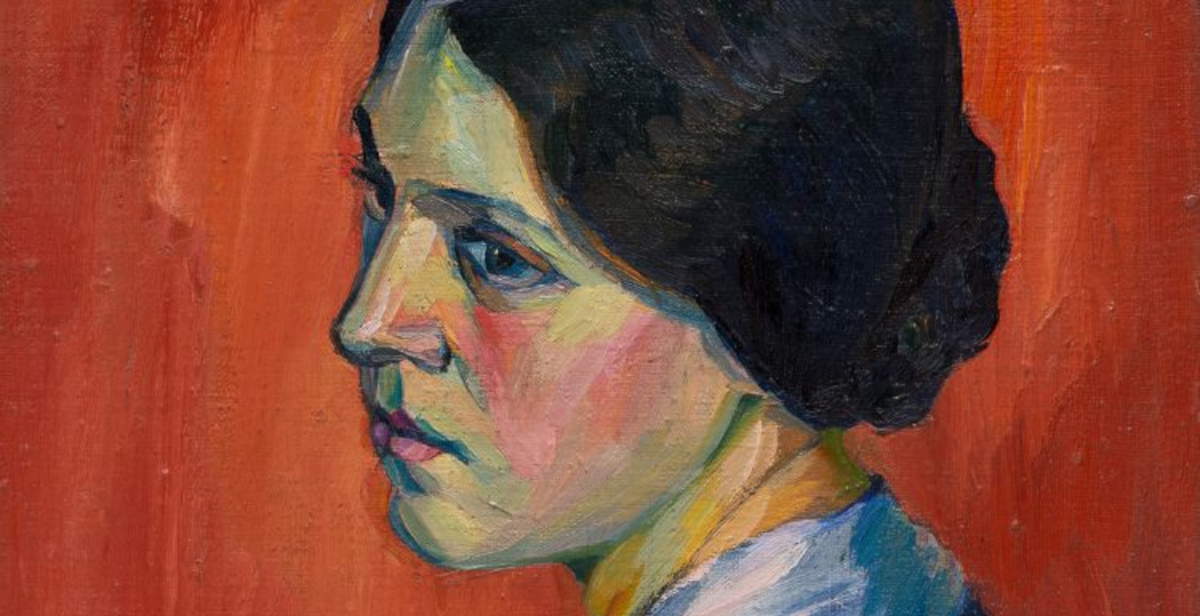 |
| Schwitters, returning to Switzerland: first major exhibition in 20 years at Zentrum Paul Klee |

Warning: the translation into English of the original Italian article was created using automatic tools. We undertake to review all articles, but we do not guarantee the total absence of inaccuracies in the translation due to the program. You can find the original by clicking on the ITA button. If you find any mistake,please contact us.























 IT
IT FR
FR DE
DE ES
ES CN
CN


