





From Feb. 27 to Aug. 31, 2026, London ’s Tate Modern is hosting A Second Life, the largest exhibition ever devoted to Tracey Emin. The exhibition, staged in the Eyal Ofer Galleries and curated by Maria Balshaw, director of the Tate, is the most significant survey of the career of the British artist, born in 1963, and traces forty years of practice through more than ninety works including painting, video, textiles, neon, sculpture and installation. Conceived in close collaboration with Emin, the exhibition, which comes on the heels of the successful Sex & Solitude exhibition at Palazzo Strozzi in Florence, brings together celebrated works and new productions that have never been exhibited before, marking a moment of stocktaking and revitalization in the artist’s trajectory.
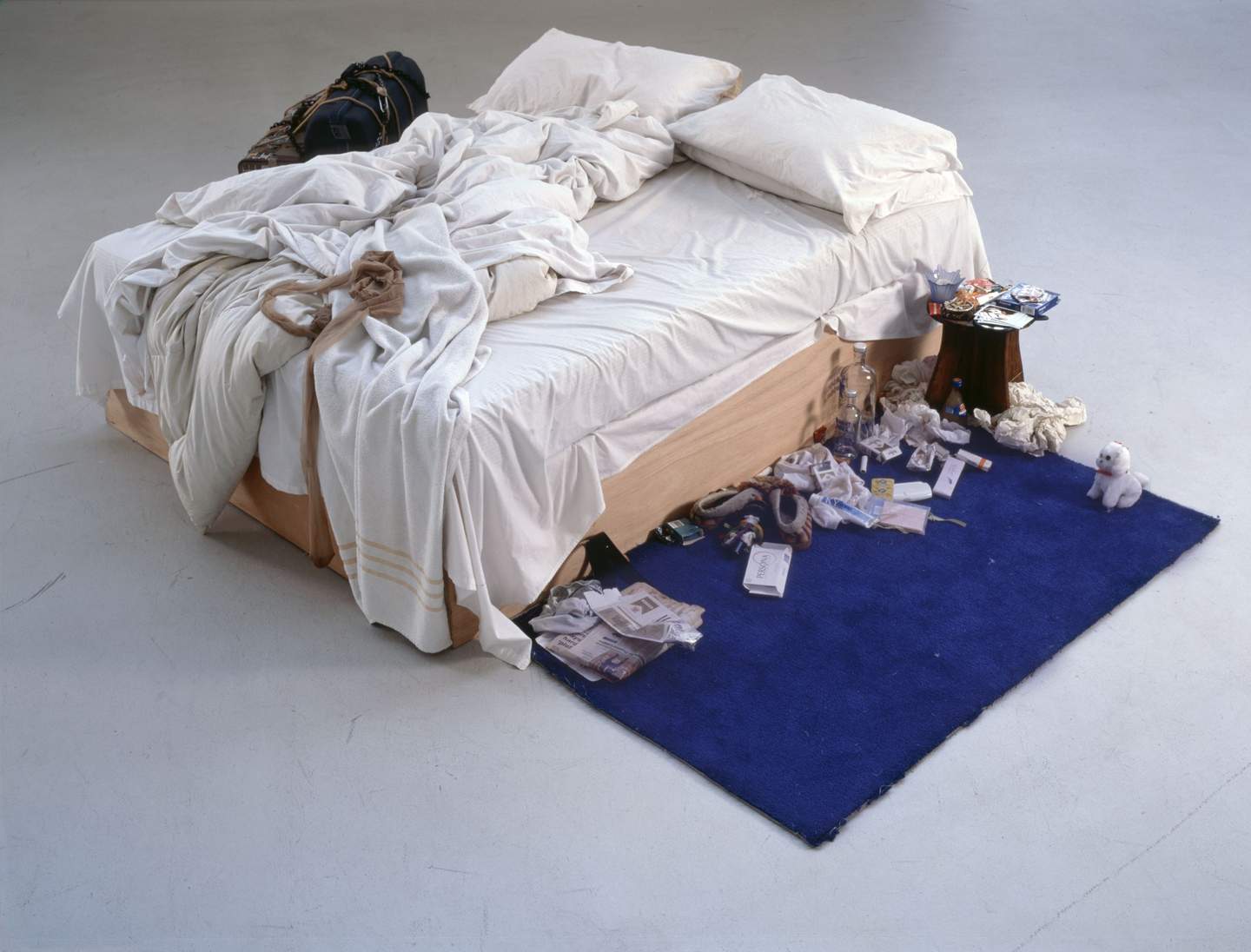
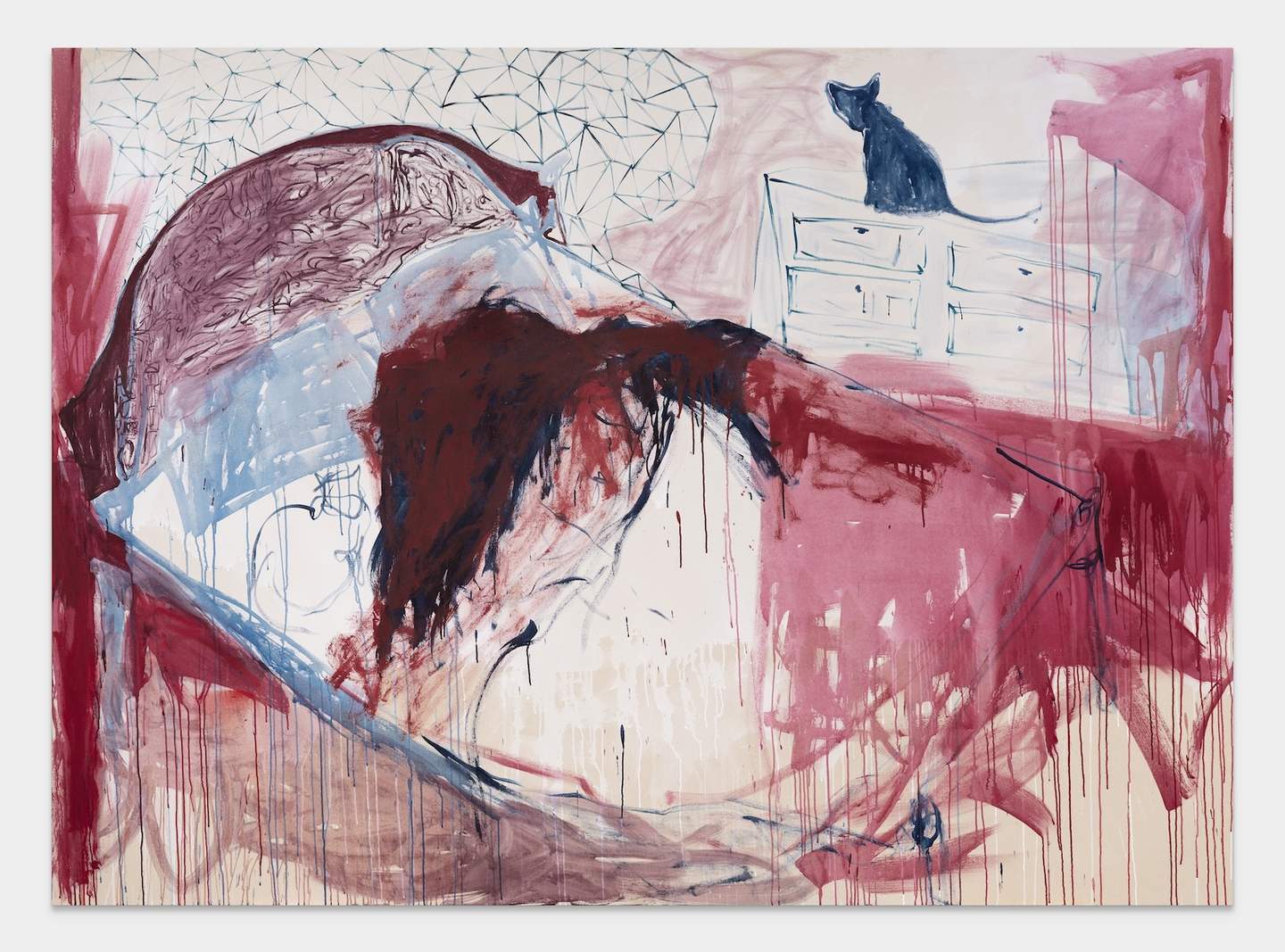
Tracey Emin is considered one of the most influential figures in contemporary art of her generation. Having leapt to the attention of the general public in the 1990s, she has become a symbol of a crucial season in British culture and global art history thanks to a radically autobiographical approach and a declared absence of boundaries between the private sphere and the public dimension. Works such as My Bed, nominated for the Turner Prize in 1999, ignited a heated critical and media debate about what can be considered art, challenging established categories and redefining the role of personal experience in artistic practice.
A Second Life traces the entire span of his production, from seminal installations of the 1990s to more recent paintings and bronze sculptures, some of which are being presented to the public for the first time. The exhibition is constructed as a narrative that weaves together key biographical events and linguistic transformations, showing how Emin has consistently used the female body as a powerful tool to investigate passion, pain and healing. The exhibition broadens the understanding of her work by celebrating its raw and confessional approach, while posing profound questions about love, trauma and autobiography.
The itinerary begins with the artist’s original relationship with painting. Works from her first solo exhibition, My Major Retrospective 1982-93, consisting of a series of small photographs documenting paintings made during her formative years and later destroyed in a particularly difficult period of her life, are presented. Alongside these images are Tracey Emin CV (1995), a self-portrait accompanied by a first-person narrative tracing her existence up to that point, and the video Why I Never Became A Dancer (1995), in which the artist recalls traumatic episodes from her adolescence spent in Margate. In these early works, the first-person voice that would become a distinctive feature of her production emerges clearly, a mode of storytelling that interweaves confession, memory and identity claim.
The connection to Margate, a hometown overlooking the sea, runs through Emin’s entire practice. Left behind at age 15, the town remains a constant reference in his life and imagination. After intermittent periods of return in his late teens and early twenties, he moved to London in 1987 to study at the Royal College of Art. His mother’s death in Margate in 2016 and his survival from cancer in 2020 mark another return, this time permanent. The artist chose to settle back in the coastal city, where she founded the Tracey Emin Artist Residency, a free studio-based art school. In the exhibition, works focused on Margate and childhood memories explore how Emin reworks and rewrites her personal history. Mad Tracey From Margate: Everybody’s Been There (1997) exhibits intimate thoughts through hand-stitched phrases, letters and drawings, while the wooden installation It’ s Not the Way I Want to Die (2005), inspired by the famous amusement park Dreamland, reflects on her anxieties and vulnerability, evoking roller coasters as an existential metaphor.
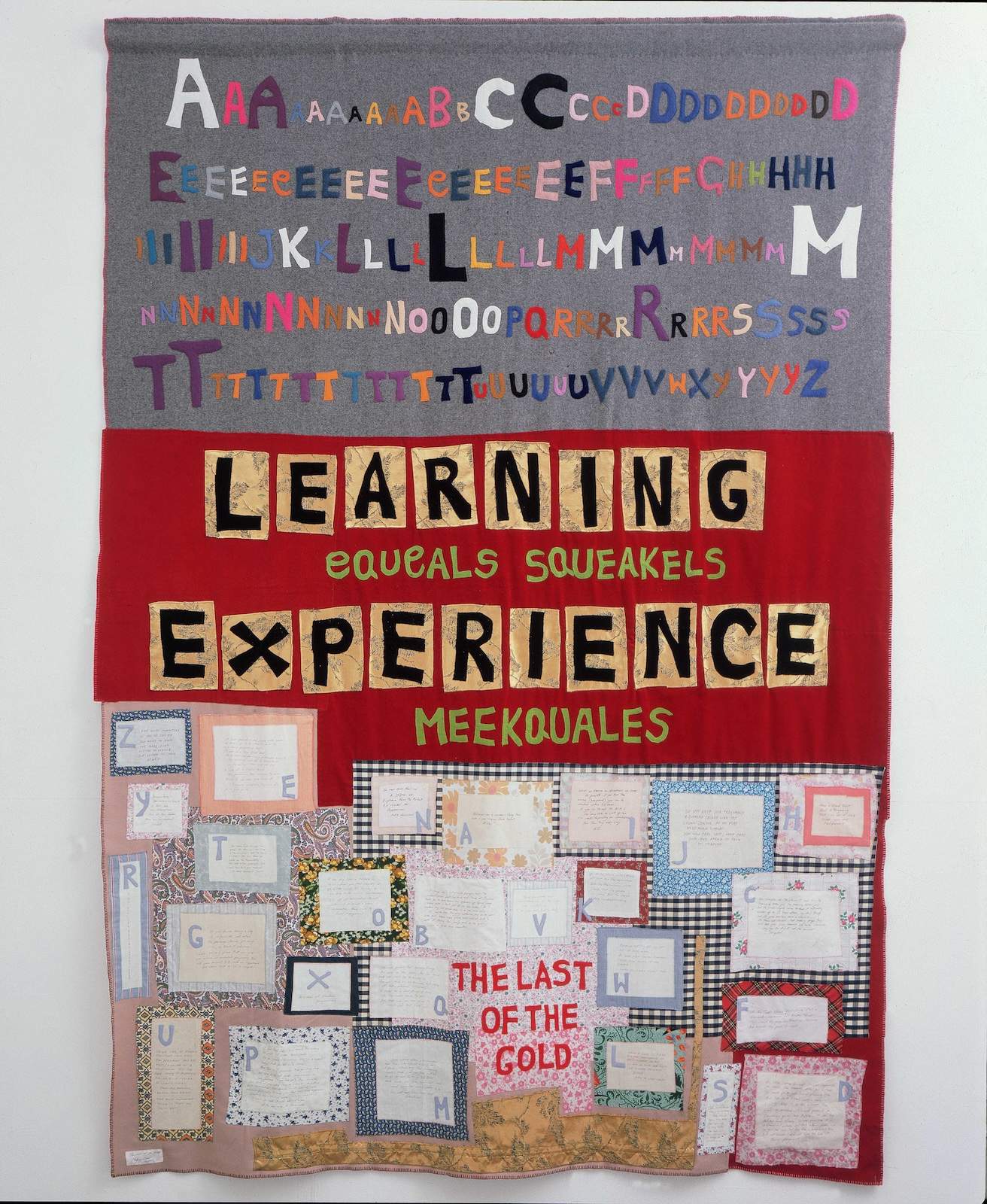
The exhibition also unabashedly addresses personal trauma and grief, themes central to Emin’s poetics, helping to unhinge the stigma surrounding issues often removed from public discourse. The experience of sexual violence is evoked in works such as the neon I could have Loved my Innocence (2007) and the calico embroidery Is This a Joke (2009). In How It Feels (1996), one of her most personal videos, the artist recounts an abortion gone wrong, describing the institutional neglect, the physical and psychological implications of choosing not to become a mother, and the misogyny that often accompanies such a decision. Presented to the public for the first time is The Last of the Gold quilt (2002), which bears an A to Z of abortion, a kind of alphabetical guide designed as a support for women facing a similar situation.
At the center of the exhibition are two key installations in the artist’s history, Exorcism of the Last Painting I Ever Made (1996) and My Bed (1998). The former documents three weeks Emin spent locked in a Stockholm gallery in an attempt to reconcile herself with painting, a medium she had abandoned six years earlier following her abortion experience. My Bed, which became famous and was nominated for the Turner Prize, presents the artist’s bed in the midst of a personal crisis marked by alcohol abuse, transforming a moment of collapse into a work capable of questioning the viewer about vulnerability and the truth of experience. In this symbolic transition, the viewer is led from the artist’s first life to a second life, following illness and surgery.
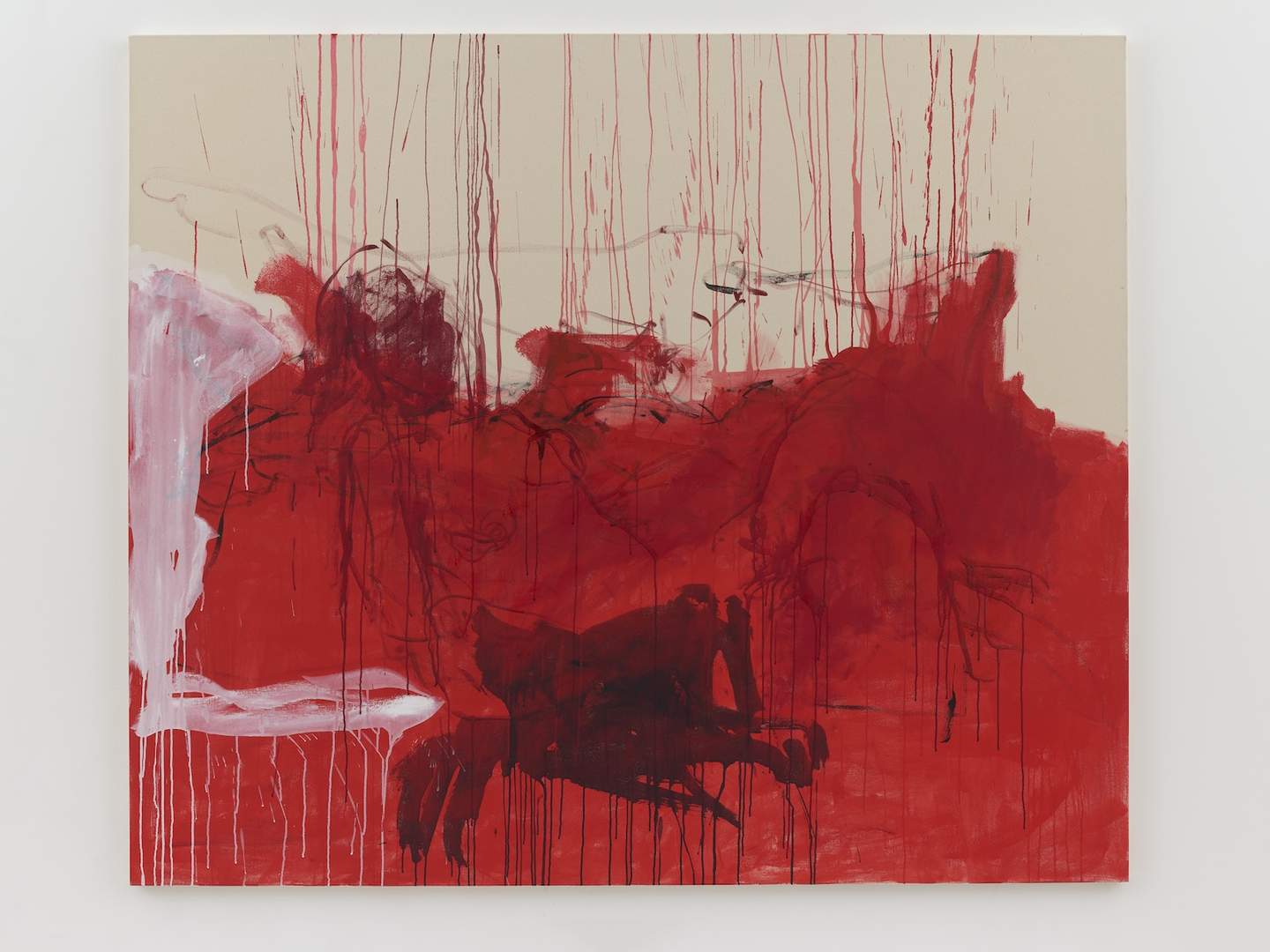
The experience of cancer,surgery and disability is addressed directly, reaffirming the choice to never separate the personal from the public. The bronze sculpture Ascension (2024) explores the new relationship with the body after major bladder cancer surgery, while new photographs show the ostomy the artist lives with today. The exhibition culminates in a core of large recent paintings in which Emin investigates the dimensions of his second life. While pain and poignancy remain present, the large canvases express a transcendent and spiritual quality, a sign of a resolute determination to live in the present. Alongside these works, the sculpture Death Mask (2002) recalls the persistence of a darker side, composing a portrait of an intensely lived existence.
Beyond the museum walls, the monumental bronze I Followed You Until The End (2023) will be installed outside the Tate Modern, imposing itself on the urban landscape and inviting passersby to engage with the visceral force of Emin’s work. The entire exhibition is presented in partnership with Gucci, with additional support from the Tracey Emin Exhibition Supporters Circle and Tate Members.
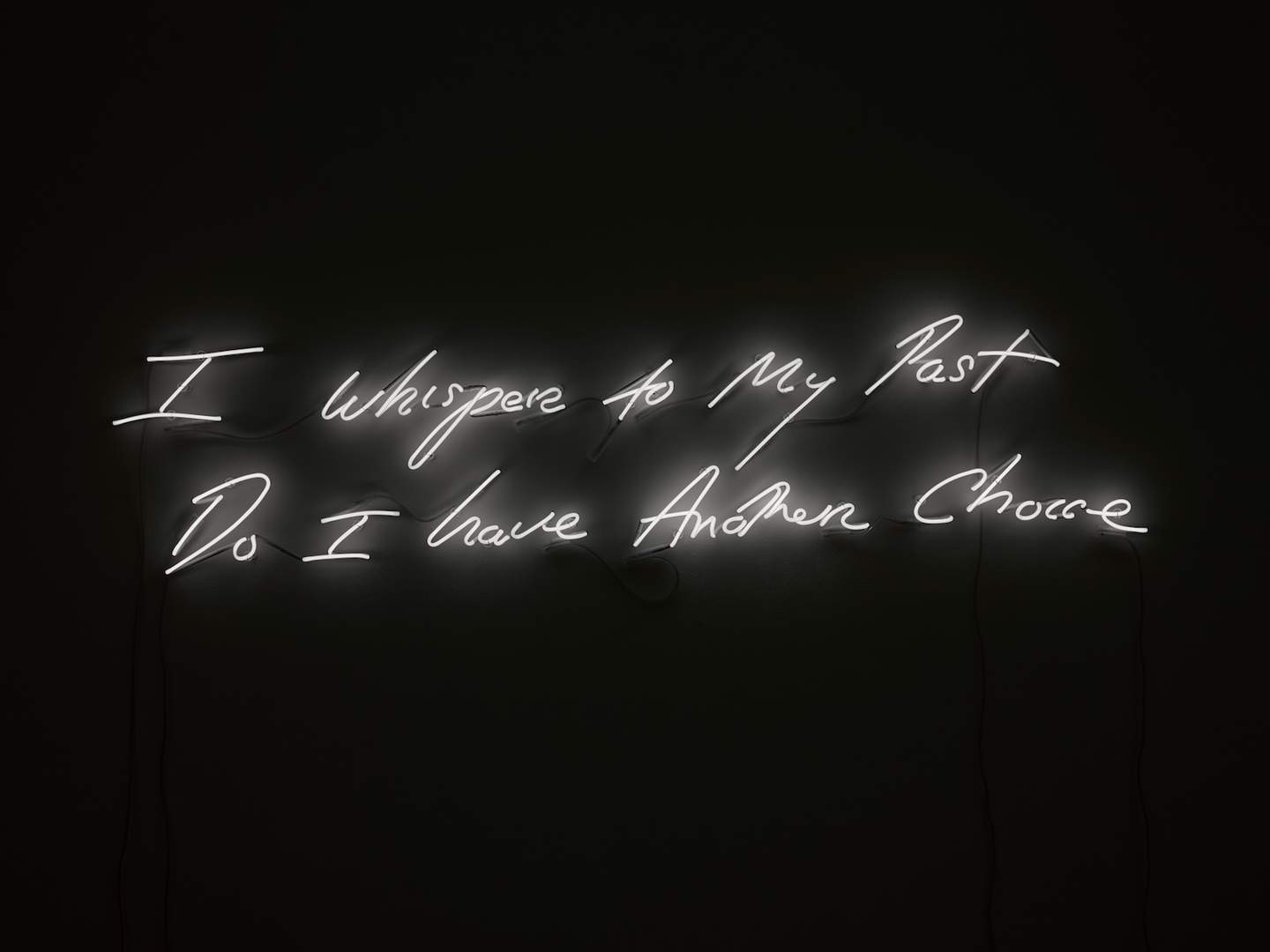
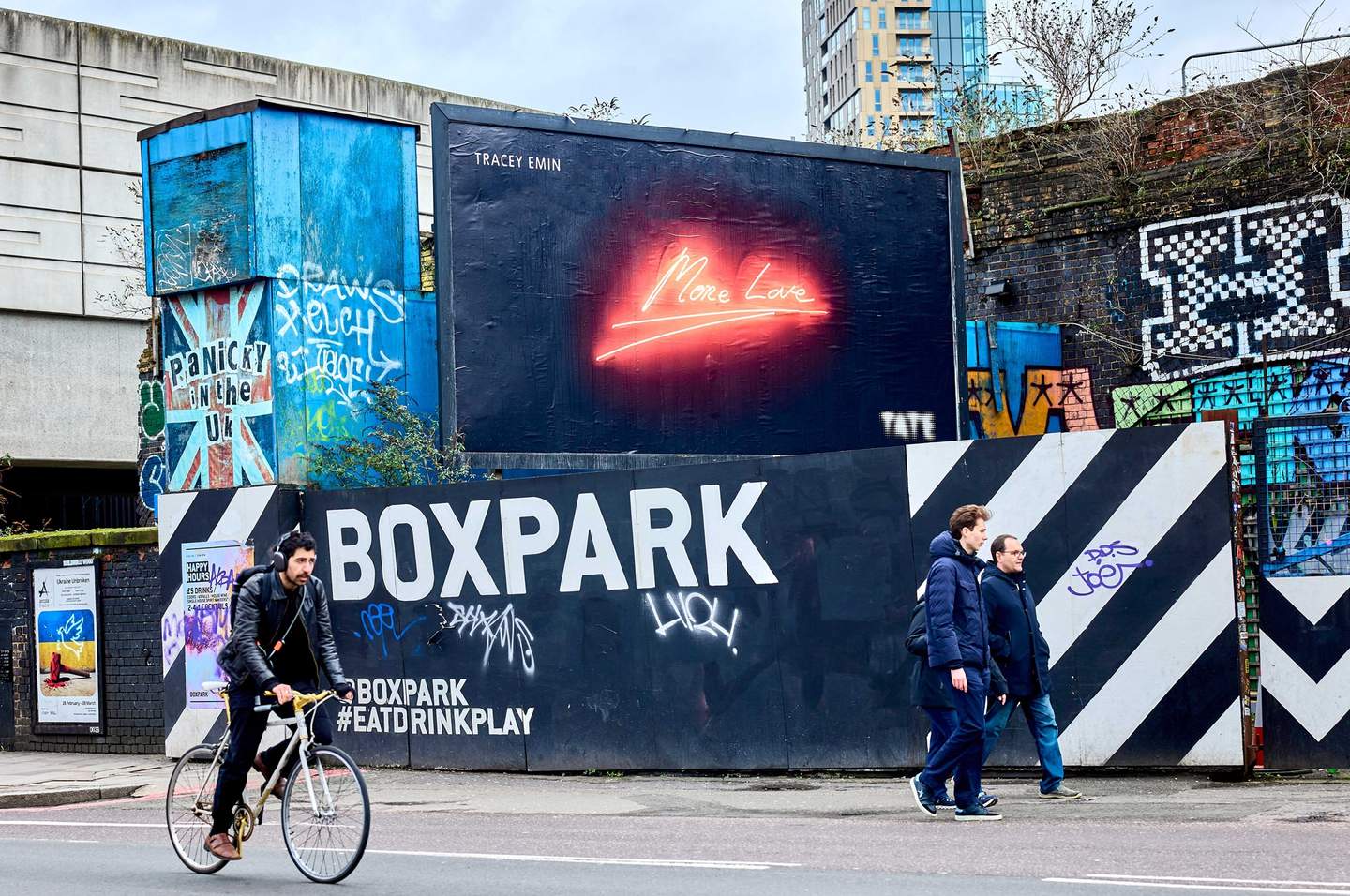
In addition, to coincide with the opening, for two weeks Emin’s celebrated neon works will invade buildings and billboards throughout London in a free pop-up campaign anticipating the exhibition. Through March 9, twenty-two installations spread across eleven boroughs, from Lambeth and Croydon to Walthamstow and Tower Hamlets, feature poetic phrases in the artist’s unmistakable handwriting, such as I Whisper to My Past do I Have Another Choice and I can Feel You Everywhere. Created in collaboration with creative agency Jack Arts, part of the BUILDHOLLYWOOD Group, the project transforms the city into an open-air gallery. “This project,” said Maria Balshaw, “beautifully extends Emin’s established use of neon to share messages of pure intimacy. Whether encountered on a morning commute or discovered silently on a neighborhood street, Londoners can experience her work in a way that feels personal. These first-person statements invite us into Emin’s inner world while encouraging personal reflections.”
Neon, deeply intertwined with the artist’s spirituality and emotional responses, is both a tool for self-expression and a means of connecting with others. Over the past decade, his luminous statements have occupied international public spaces, such as the I promise to love you sign in Times Square in 2013 and I want my time with you at London’s St. Pancras station since 2018. The London initiative thus offers a preview of the intimate and direct approach that characterizes A Second Life, allowing citizens to engage with the artist’s inner dimension as well as their own.
Tracey Emin called the exhibition a personal turning point, a landmark in her journey, an authentic celebration of living. “I’m very excited to have an exhibition at Tate Modern. For me, it is one of the greatest international contemporary art museums in the world and it is located here in London. I think this exhibition will be a landmark for me. A moment in my life where I look back and look forward. A true celebration of life.”
A Second Life thus takes the form of a monumental yet deeply personal retrospective, spanning four decades of research and showcasing the coherence of an artist who has turned her life into the stuff of art. Between memory and present, trauma and rebirth, the exhibition at Tate Modern returns the image of a path marked by fractures and recompositions, in which confession becomes a political act and vulnerability becomes a universal language.
|
| Tracey Emin, at Tate Modern the largest retrospective of her career |

Warning: the translation into English of the original Italian article was created using automatic tools. We undertake to review all articles, but we do not guarantee the total absence of inaccuracies in the translation due to the program. You can find the original by clicking on the ITA button. If you find any mistake,please contact us.
























 IT
IT FR
FR DE
DE ES
ES CN
CN


