





From Feb. 6 to April 5, 2026, the Stirling Room at Palazzo Citterio in Milan will host an unprecedented project by William Kentridge dedicated to Giorgio Morandi. The initiative is part of the exhibition schedule that accompanies the major exhibition Metaphysics/Metaphysics at Palazzo Reale, organized on the occasion of the Milan Cortina 2026 Olympic and Paralympic Games, and is part of a diffuse itinerary that connects some of the city’s main museum venues, from Palazzo Reale to the Museo del Novecento, from the Gallerie d’Italia to Grande Brera.
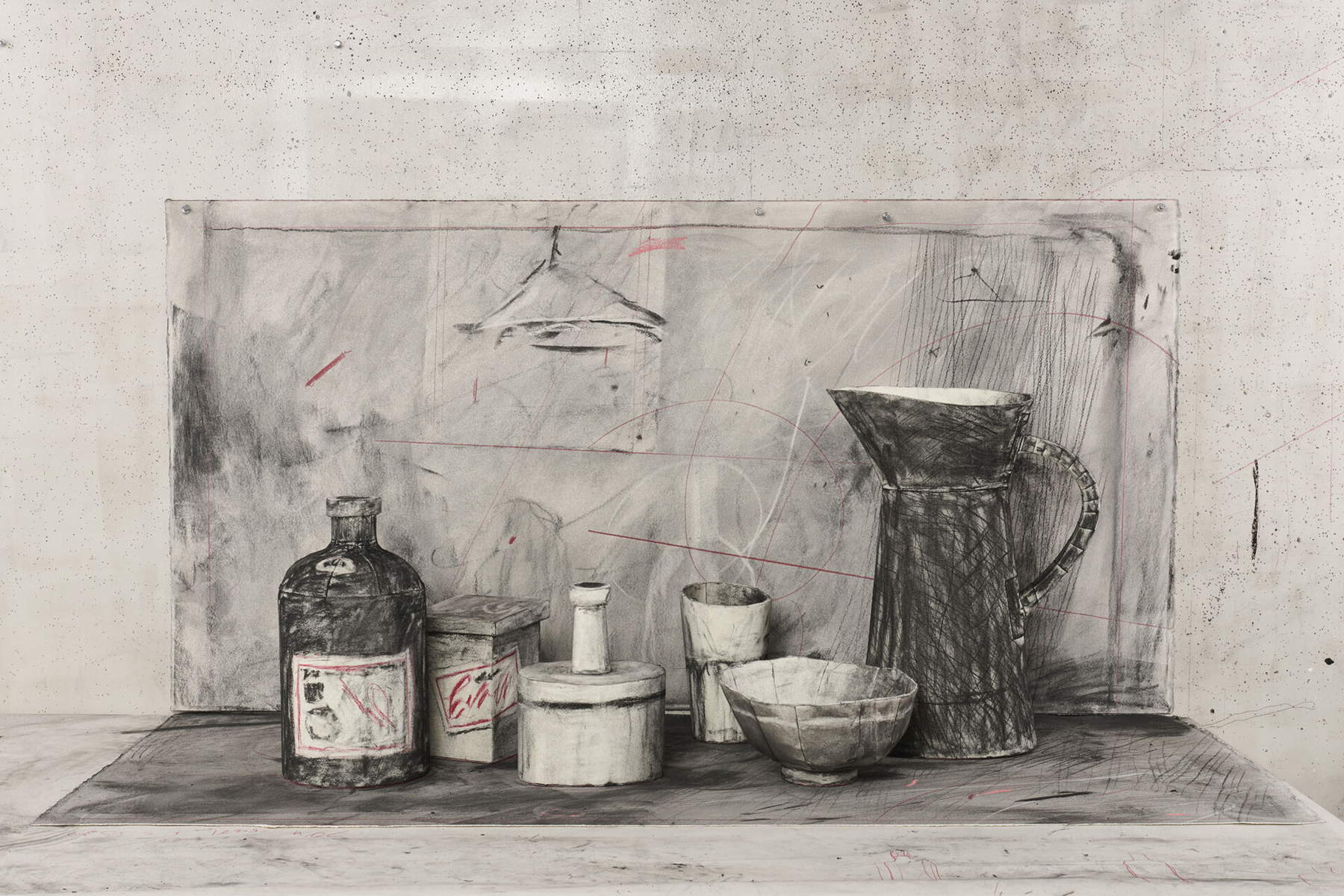
Curated by Vincenzo Trione, Kentridge’s intervention is divided into two distinct but closely connected nuclei. On the one hand, the sound video installation More Sweetly Play the Dance is presented, and on the other Remembering Morandi, a project conceived specifically for the Stirling Room. The latter is composed of a sequence of cardboard sculptures that rework everyday objects, central elements in Morandi’s still lifes, in a poetic key, establishing a direct dialogue with the metaphysical works of the Bolognese master preserved at Palazzo Citterio.
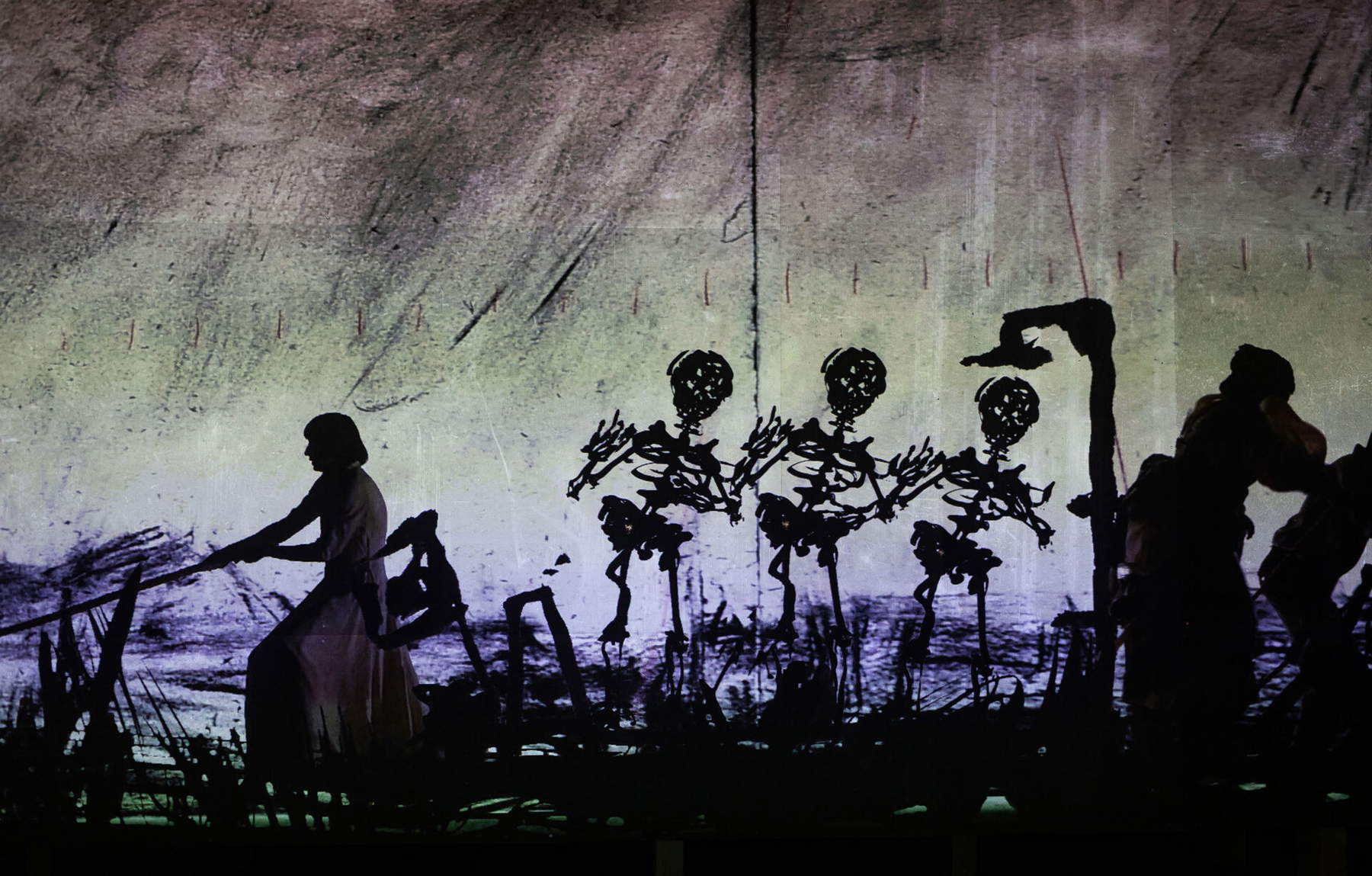
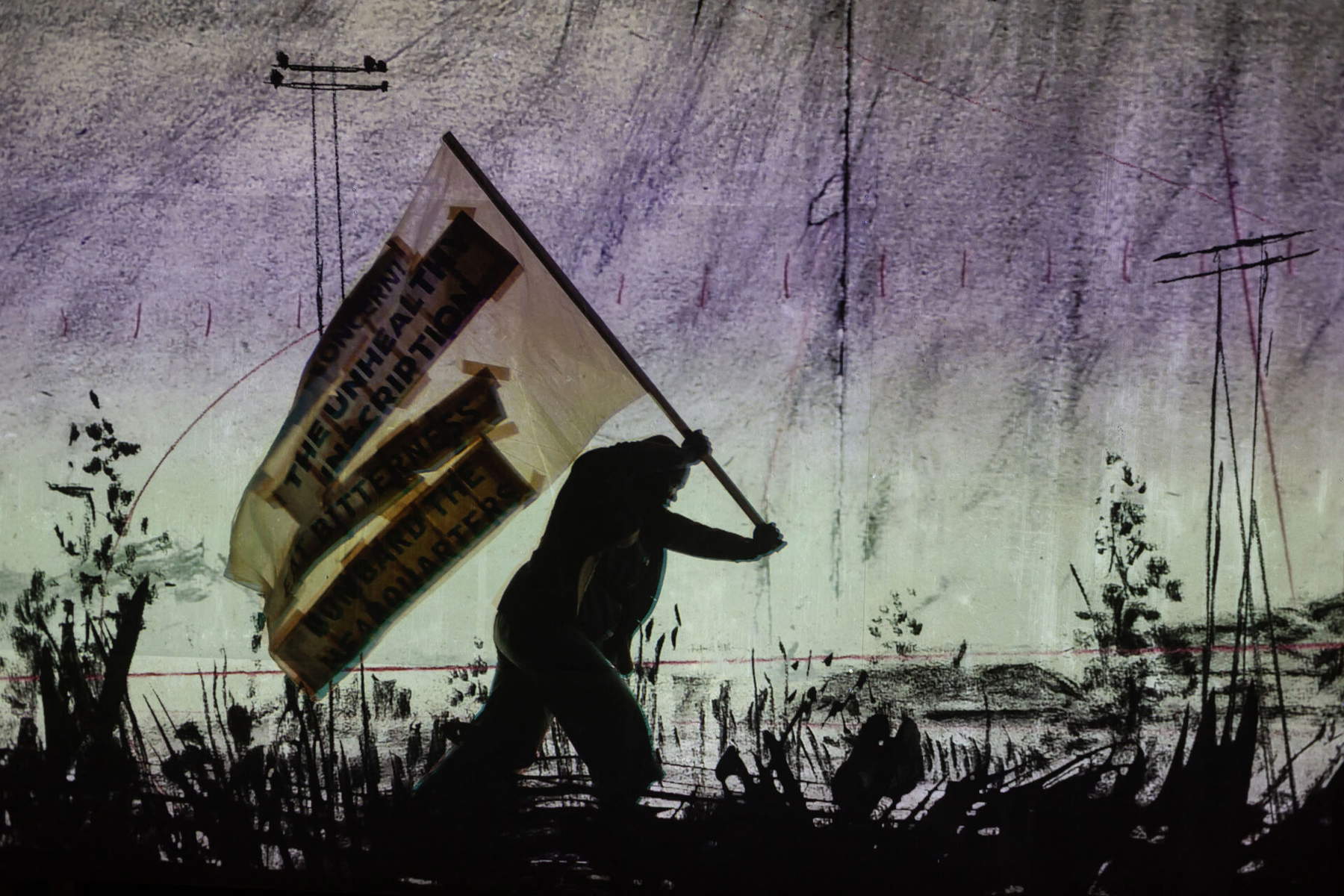
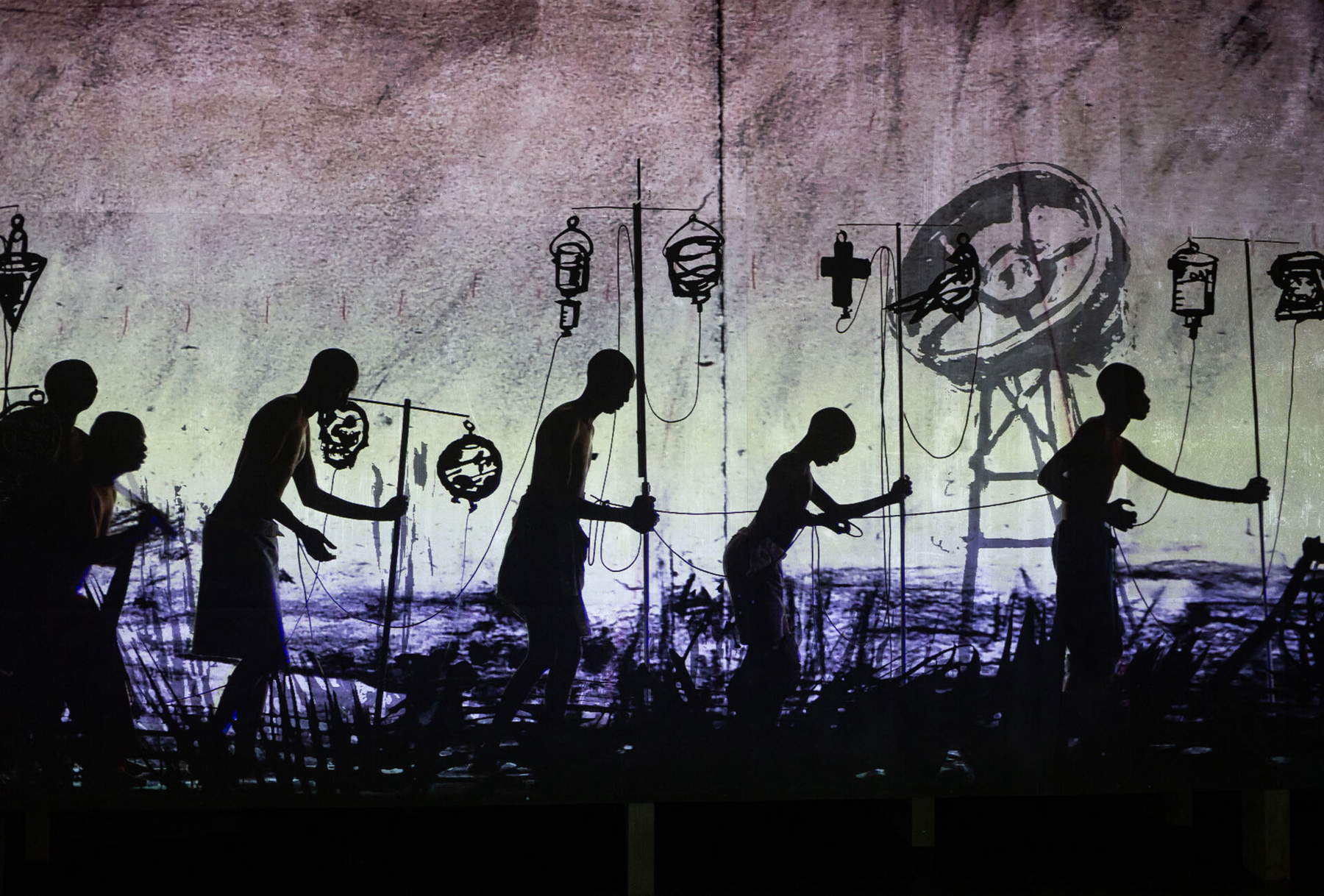
This homage to Morandi, offered to the public for the first time, reflects the research that characterizes Kentridge’s work. Through a language that crosses video, sound and sculpture, the South African artist addresses themes such as static, silence and the temporal dimension, recurring elements in Morandi’s poetics, reinterpreted in a contemporary perspective. The project for the Stirling Room was conceived in close relation to the exhibition at the Palazzo Reale, where Kentridge’s previous and conscious comparisons with Morandi’s work find space, including the 2001 animated film Medicine Chest and a series of charcoal drawings on paper made in the same year.
The dialogue between Kentridge and Morandi is not new in the South African artist’s output. Already during the lockdown period Kentridge had addressed Morandi’s legacy with the photogravure series Eight Vessels, made between 2020 and 2021. The installation presented at Palazzo Citterio is thus part of a long-standing reflection, which finds in the context of Metaphysics/Metaphysics a curatorial framework oriented toward relating the historical masters of Metaphysics with 20th- and 21st-century artists considered heirs or interlocutors of that season.
Metaphysics/Metaphysics is a project promoted by the Ministry of Culture and the City of Milan and produced by Palazzo Reale, Museo del Novecento, La Grande Brera-Palazzo Citterio and Gallerie d’Italia, in collaboration with the publishing house Electa. The program includes a major exhibition at Palazzo Reale and three exhibition chapters hosted in as many city museums, flanked by a multidisciplinary calendar of initiatives spread throughout the territory.
The exhibition Modernity and Melancholy, organized with the scientific collaboration of the Giorgio and Isa de Chirico Foundation and the Morandi Museum, and with the participation of the Alberto Savinio Archive and the Carlo Carrà Archive, is on view at the Palazzo Reale. The exhibition brings together more than 400 works, including paintings, sculptures, photographs, drawings, design objects, models, architectural models, illustrations, comics, magazines, videos and vinyls, thanks to national and international loans from more than 150 public and private institutions, galleries, archives and collections.
At the Museo del Novecento, in the Ettore and Claudia Gian Ferrari Archives, the project explores the relationship between Metaphysical Art and Milan, investigating the link between some of the protagonists of the group led by Giorgio de Chirico and the city, understood as an artistic and intellectual crossroads and as a laboratory for experimentation and dialogue between the arts. At the Gallerie d’Italia - Milan, Intesa Sanpaolo’s museum in Piazza Scala, on the other hand, a tribute to Morandi is proposed through Gianni Berengo Gardin ’s photographs dedicated to the painter’s Bologna atelier, in dialogue with the works preserved in the vault. The single catalog of the exhibitions is published by Electa.
“In the wake of Roberto Longhi,” says Angelo Crespi, director general of the Grande Brera, "I believe that Giorgio Morandi is the most important exponent of twentieth-century Italian art, or at least one of the two or three artists capable of bringing the grandeur of the antique back into the modern. And he is perfect to represent the title of the Milan exhibition,Metafisica/Metaphysics, since he was, from the beginning, strictly a metaphysician and, later, a solitary wayfarer on a path, rough and essential, that bordered depths that were nevertheless metaphysical. Morandi’s life was a luminous elegy, his famous bottles, unamenable landscapes, or seasonal flowers-according to Roberto Longhi-were pretexts for expressing himself precisely in a “form,” knowing full well that one does not express except feeling. And in this tension to “pure painting” he is an absolute master. So it never surprised me that a great contemporary artist like William Kentridge could draw inspiration from so much ethical matter even before than aesthetic, that is, from an approach that is supremely existential in its purity, nor that on the occasion of this exhibition he would think of a tribute to Morandi precisely at Palazzo Citterio, which houses perhaps his most significant theory of works, collected thanks to the foresight of two collectors like Emilio Jesi and Lamberto Vitali, friends and supporters of the Bolognese painter from the beginning."
“William Kentridge’s complex intervention,” explains Vincenzo Trione, “is divided into two stations: an immersive sound video installation and a sequence of cardboard sculptures, which poetically reinterprets Morandi’s still lifes. A hypothesis to start an ideal dialogue with the metaphysical works of the Bolognese master preserved at Palazzo Citterio. And, at the same time, a way to place Morandi’s silent constructions in resonance with the visionary explorations of a great contemporary artist, committed to placing history, memory, expectation, temporality and media in tension.”
“I have always loved and appreciated Giorgio Morandi,” William Kentridge recalls, "from the first moment I came across his work as an art student some fifty years ago. For me Morandi, along with Jean-Baptiste-Siméon Chardin and Philip Guston, are the greatest exponents of still life. With Remembering Morandi, I wanted to create a ’reverse Morandi,’ that is, to give three-dimensionality back to the real objects, be they bottles or vases, that Morandi had chosen to paint, and transform them back into a sculpture."
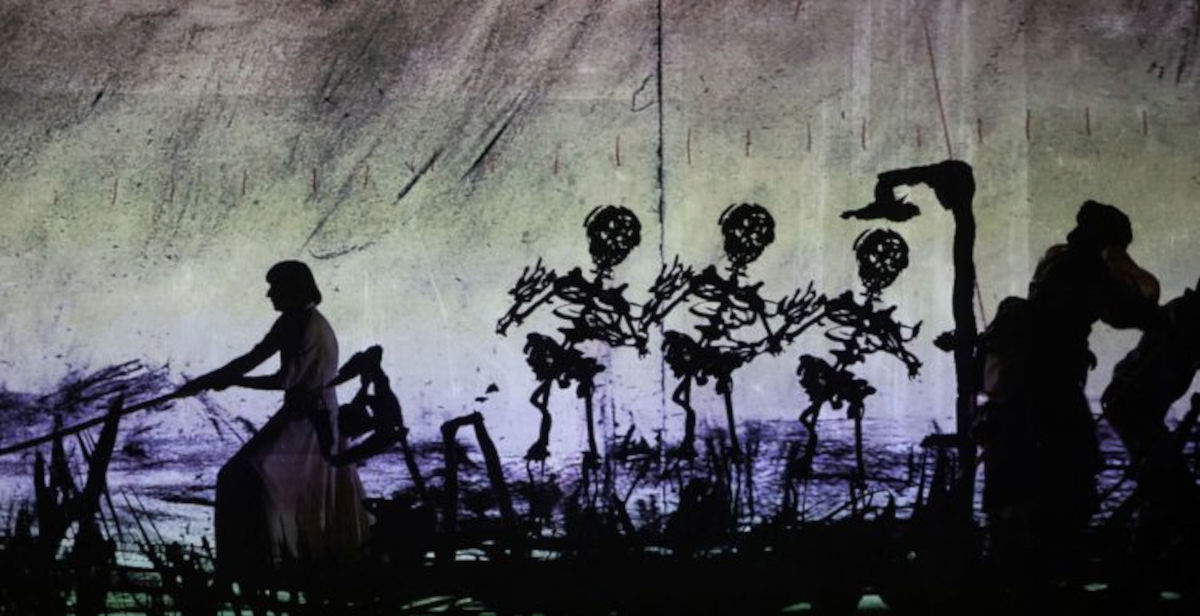 |
| William Kentridge rereads Morandi in a never-before-seen project at Palazzo Citterio |

Warning: the translation into English of the original Italian article was created using automatic tools. We undertake to review all articles, but we do not guarantee the total absence of inaccuracies in the translation due to the program. You can find the original by clicking on the ITA button. If you find any mistake,please contact us.






















 IT
IT FR
FR DE
DE ES
ES CN
CN


