



by Raja El Fani 12/01/2026



Categories: Interviews / Disclaimer
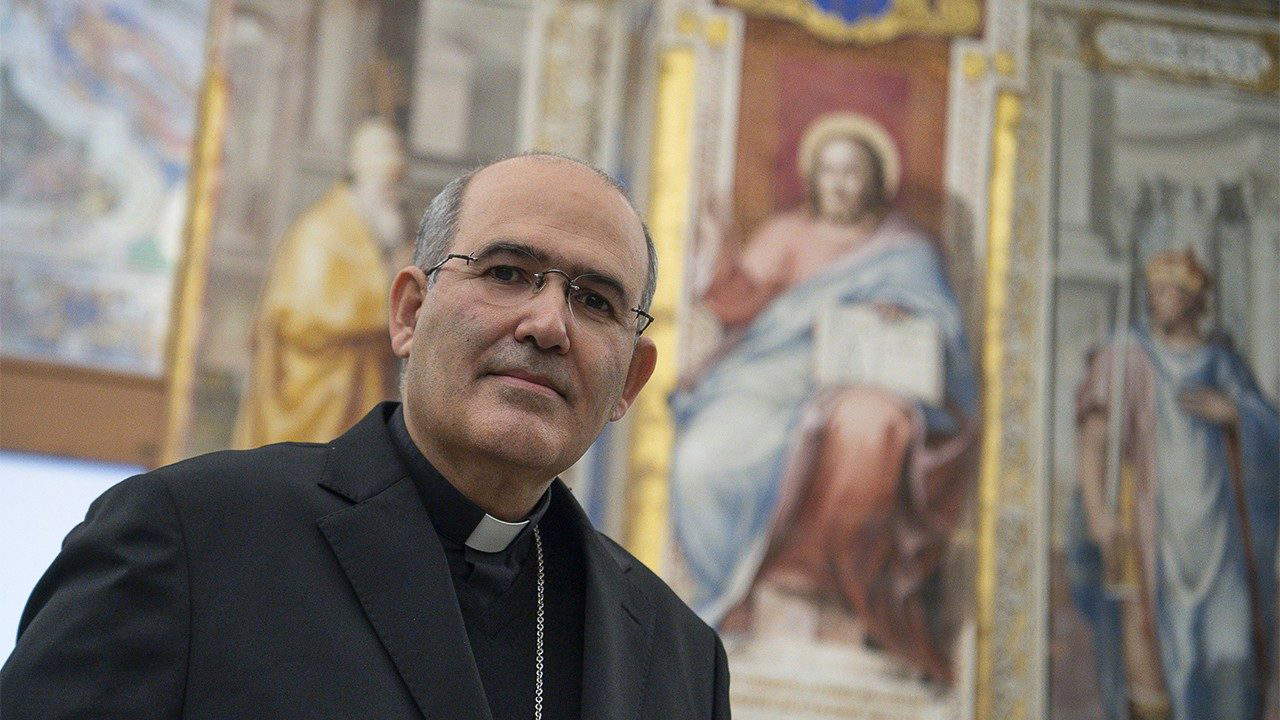
José Tolentino de Mendonça, cardinal and poet, has been prefect of the Holy See's Dicastery of Culture and Education, the counterpart of a minister of culture, since 2022. It was in 2025 that he had the idea of opening Conciliazione 5, a space the Church reserves for today's artists. How does the Church relate to contemporary art today? The cardinal answers in this lengthy interview with Raja El Fani.
Something has changed in the Church’s relationship with the art world, something that goes far beyond the exceptional papal encounters with artists in the Sistine Chapel or the latest ceremonies of the Academy of the Virtuosi at the Pantheon, ultimately desired and presided over by Cardinal Gianfranco Ravasi, President Emeritus of the Pontifical Council for Culture, which later became a Dicastery. Something that came to life before our eyes in Rome with the opening a year ago of Conciliazione 5, the Vatican’s first art gallery overlooking the Via della Conciliazione. The monumental artery designed by Piacentini connects the Tiber and Castel Sant’Angelo to the majestic Fabric of St. Peter’s, complete with Piazza, Colonnade, Basilica and Dome, a design combo between various visionary minds that succeeded each other between the Renaissance and Baroque, from the 16th to the late 17th century, from Bramante to Raphael, Peruzzi, Sangallo and Michelangelo, then Della Porta, Maderno and finally Bernini.
The architect of this ingenious operation, that of opening an art gallery for the Vatican, is Portuguese cardinal and poet José Tolentino de Mendonça, appointed in 2022 by Pope Francis, with the position of Prefect (i.e., minister), to structure and direct the newly created Dicastery of Culture and Education, and later confirmed in the role by Pope Leo XIV as well. Three years later only, at the conclusion of a year full of anniversaries between the Jubilee and the 60th anniversary of the Second Vatican Council, the cardinal gave tangible form to Pope Francis’ reform of the Roman Curia. And with the appointment, by Leo XIV, of Cristiana Perrella as president of the Academy of the Virtuosi a few months before the end of her tenure as first curator of Conciliazione 5 (in January the handover with the next curator anticipated in this interview), the search for administrative continuity and cohesion is also effective.


Is morality perhaps the Church’s great advantage over secular states? What are the advantages and limitations of an art gallery run by the Papal State? Cardinal Mendonça explains it to us in perfect Italian but foreign to all conventions and stereotypes: he speaks the Church’s unofficial language, that of spirituality, but he does not preach, he chooses his words carefully, enriching our modern lexicon made up of clichés, so much so that we are left with the doubt that by exempting ourselves from the faith we have perhaps given up something physiological. Meanwhile, the adherence of curators and artists to Cardinal Mendonça’s cultural project is systemic and connatural, all contributing without effort or conversion to the dissemination of Catholic principles urbi et orbi. The interview is by Raja El Fani.
REF. It was Pope Francis who chose His Eminence to head the cultural dicastery a year before he died. With what mission?
JTdM. The Dicastery of Culture and Education was born out of a merger between two entities with a very important mission, none was to become a “poor relative of the other.” The Catholic Church has the largest school network in the world, accompanying in schools and universities the integral formation of more than 70 million students. Education makes hope visible and possible. Culture, as its specific, allows us to think in depth and creativity about the different expressions of the human. Pope Francis’ vision was to inspire, to find synergy and convergence, to create a culture of brotherhood.
Why did Pope Francis specifically think of you, Your Eminence?
Before I was appointed Archivist, I worked at the Catholic University of Lisbon. I think the Holy Father thought of a profile that came from academia and with an interest in the mission of the church in the field of contemporary culture.
Did the transition with Pope Leo change anything in your mission at the Dicastery?
Every pontificate has its own physiognomy, every pontiff his own vision, a healthy singularity. But of course there are important lines of continuity.
If as between the pontificates of Julius II and Clement VII there is continuity, are there similarities between the visions of Francis and Leo XIV?
The vision of the Church remains focused on the principles of the Second Vatican Council even though there can always be new acceptances in response to different historical circumstances to be reconciled. We live in an age of accelerated transitions. As in the finale of Blade Runner, in Roy Batty’s monologue, the “Tears in the Rain” one, our human generation can say, “I have seen things you humans could not imagine.”
How do you reconcile that with the newness of the present?
By valuing the world and historical experience as a place for seeking and waiting for God. Culture is seen as an interweaving of languages that are indispensable for understanding the Human. Culture offers us so many signs of the times: it is worth listening to them to understand what pulses in the wounded heart of the present. The Second Vatican Council, for example, did not provide an answer but suggested a method based on three principles: listening, dialogue and encounter.
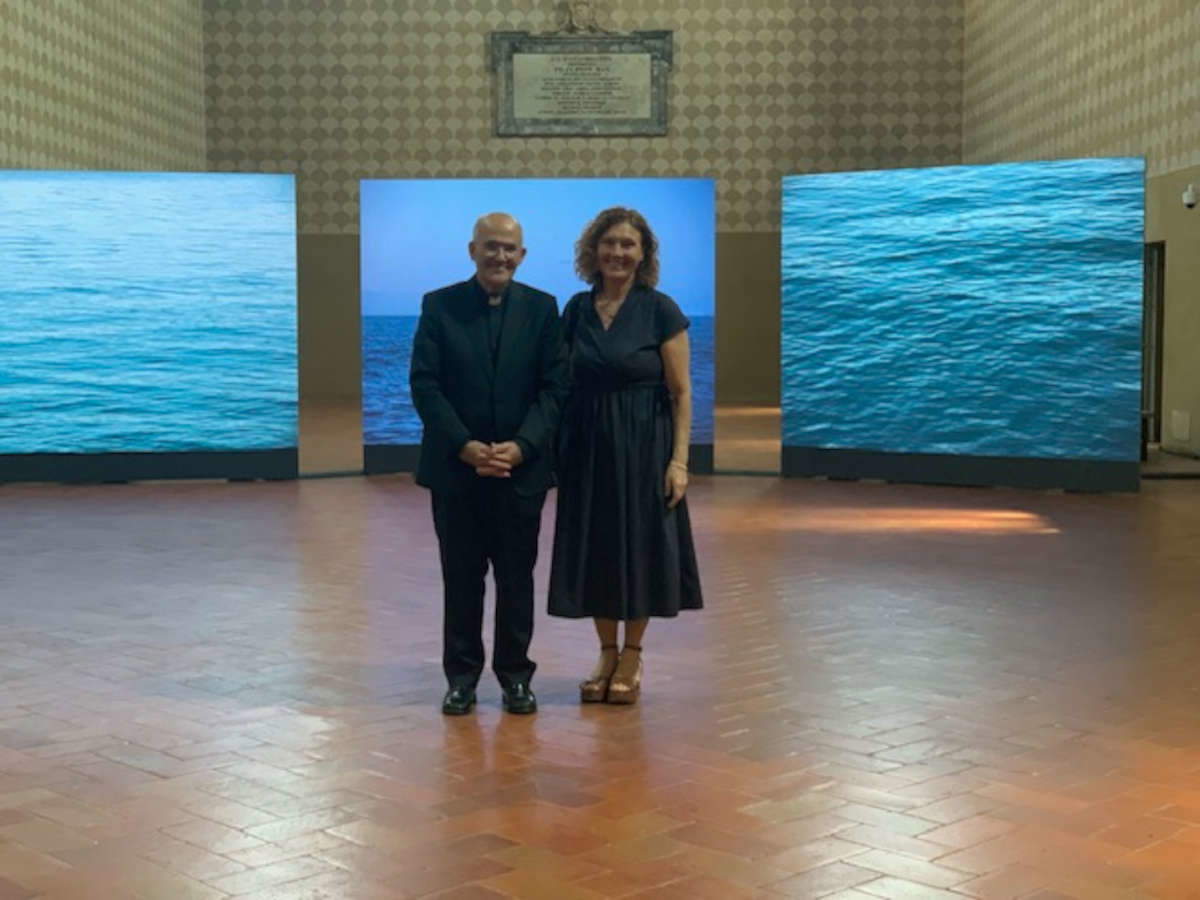
Conciliazione 5 is a showcase, a pop-up on the border between Rome and the Vatican State. Can we consider it a full-fledged art gallery, the Church’s first?
Conciliazione 5 is a kind of parable, a prophetic space. Prophecy also happens in the cultural field, not only in the social field. In prophecy there is some irreverence, because we are looking for new questions, new versions of reality. Prophecy encourages us not to stay and open doors that are already open, but to lead the way for something new. We need to inhabit the city by sowing small cultural prophecies. This gallery is a small gesture, but one that dreams of inspiring other realities. Conciliation 5 is a cultural laboratory open to research and experiments, sensitive to questions and contributions from artists for social vision.
Can the church fit into the contemporary art system while theoretically not being able to join the market?
We want to make a system, but in another way: to create critical thinking, to open to new visions, to listen to silent voices, to intercept original paths, to promote community practices. Ours is a gallery of dialogue with various institutions.
Is the strategy to use institutional partnerships to affirm the culture of the Church?
We sincerely believe in the potential of dialogue and listening to each other to seek visions together that can illuminate reality differently. It is not about conquest, but about coexistence. Interculturality is one of the great resources of the contemporary world.
What is your vision of art, Your Eminence? And what are the Church’s cultural goals?
Art is a lens, a kind of optical instrument: it helps us to see the human with poetic precision. And to see the human is to understand what a human is. Where he comes from and where he goes. Art is an acoustic instrument: it helps us decipher the voices, the whispers, the cries, even the unexpressed ones tattooed in the flesh. Art carries with it a capital of restlessness and imagination: it leads to new versions of the world. With art, the world is not blocked. It relies on possibility. It is crucial to allow artists to create, to dialogue with the great human questions. Which are also the ultimate questions, those of the full meaning of life. Our desire is also to collaborate so that contemporary art can establish links with sensitive human places, prisons, hospitals, territories of poverty, etc. In collaboration with other cultural institutions we try to foster art projects in other spaces or in a diffuse form.
So even the Macro Museum, now directed by Cristiana Perrella and in temporary connection with Conciliazione 5, is according to His Eminence a “sensitive” place?
The collaboration with the Macro took the form of a film, Sisters Without a Name, by Jonathas de Andrade about a group of women who live in a self-managed community applying Gospel values.
Did you come to the opening of the Macro in person, Your Eminence? What are your thoughts on that museum?
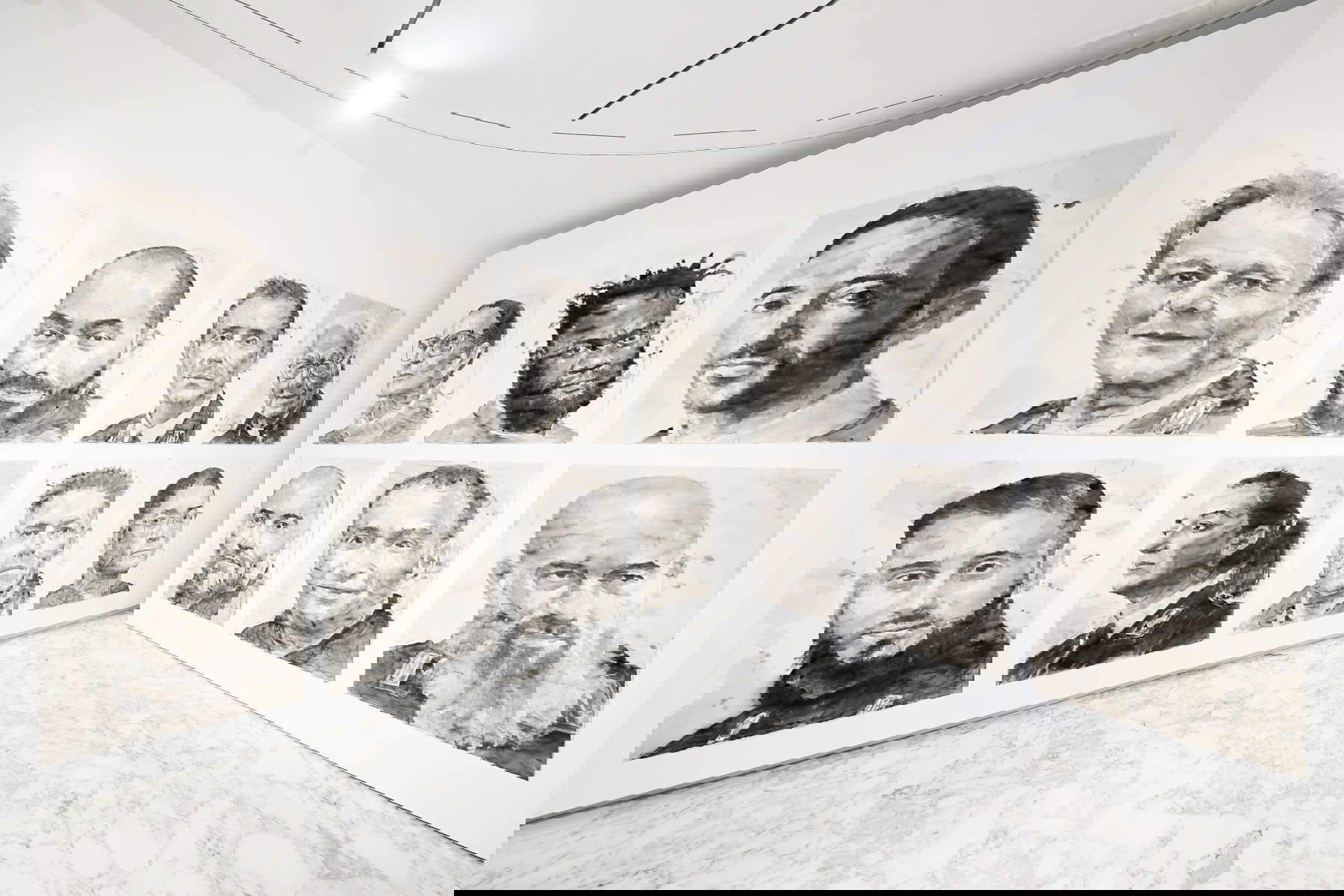
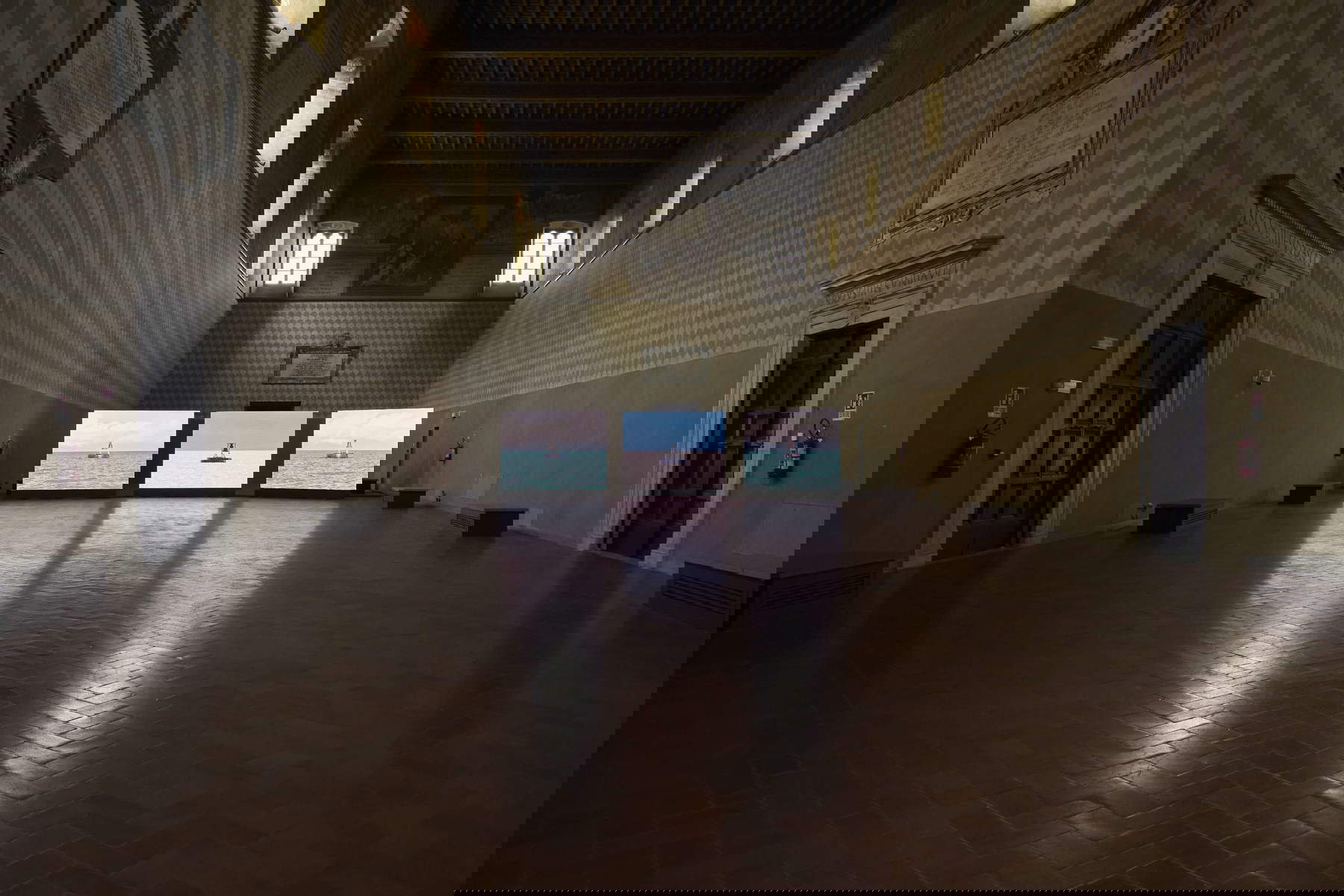
The Vatican values cultural institutions. As Pope Leo XIV says, they are like a garrison of humanity in the territory. I wish the reopening of this important space dedicated to the contemporary in the city of Rome well. Soon there will be the publication of the first catalog with all the artistic proposals of this first edition of Conciliazione 5. This year there were five (Marinella Senatore, Yan Pei-Ming, Adrian Paci, Vivian Suter, Jonathas de Andrade) next year there will be three, again with this logic of the diffuse gallery.
Who will be the curator of the next edition of Conciliation 5?
The next curator will be Donatien Grau, current curator of Contemporary Art at the Louvre Museum, with an established historical and literary background that is truly colossal. One of the most fascinating minds in current European culture. It will certainly be spectacular to accompany his proposals.
How do you choose curators?
By being careful. We always get very interesting indications. We choose profiles that can bring something new to the church’s dialogue with the contemporary.
Can we consider His Eminence the Vatican’s Minister of Culture? Has he already met with his Italian counterpart Minister Giuli?
In many ways there is a correspondence between this Dicastery and the ministries of culture, although the mission of the Holy See goes beyond the typical format of a state. We have cooperative relations with so many ministries of culture in the world. Of course also with the Italian one, particularly for the Venice Biennale. We will have a press conference soon, I can anticipate that the exhibition will be called With My Eyes.
What were the cultural goals achieved by the Vatican during this Jubilee that has just ended?
In the spirit of the Jubilee we opened Doors of Hope in Milan extending the Jubilee by reverberation. Paul VI said to artists, “The Church needs you.” Today the friendship with the art world continues.
Christian philosophy rests on universal values such as love and forgiveness spread through Christian iconography that has been updated over the centuries, from Cimabue to Giotto, from Michelangelo to Caravaggio. To what masters is Christian aesthetics entrusted today ?
I have to acknowledge that today there is a lack of cultural literacy of the contemporary even within the Church. This is a huge challenge. As a common taste we have remained stuck in imitations of the past and there is a struggle to recognize the resource that the contemporary represents. The contemporary masters are there, but unfortunately there is a lack of knowing and attending them. I think of extraordinary women artists such as Simone Fattal, Elizabeth Payton, Sonia Gomes or Portia Zvavahera. But practicing experiences of knowing and listening remains more important than setting a contemporary aesthetic canon. Our proposal is not to construct an aesthetic nor to impose a taste or a line. The practice of listening is already an aesthetic, a polyphonic aesthetic. The Church is a worldwide constellation of realities, there is no local dimension, today it is about accepting polyphonies. Universalism goes beyond particularisms. Love is, as Dante said, what moves the Sun, even the other stars, it is the secret engine of life, the only true gift. He who has not given love, has given nothing.
What are the realities opposed to love today?
Wars, violence, intolerance are obstacles to dialogue; they are all forms of rejection of love.
Is hatred the prerogative of capitalism and consumerism?
What I can say is that as a Christian I feel mortgaged to hope because I believe in love even when I do not see it.
Warning: the translation into English of the original Italian article was created using automatic tools. We undertake to review all articles, but we do not guarantee the total absence of inaccuracies in the translation due to the program. You can find the original by clicking on the ITA button. If you find any mistake,please contact us.