



by Gabriele Landi 21/02/2026



Categories: Interviews / Disclaimer
Minimalism, science, spirituality. From the microcosm of plants to the depths of blue, drawing becomes for German artist Lena Müller a poetic exploration of existence, space and the mystery that inhabits all things. The artist tells her story in this intense dialogue with Gabriele Landi.
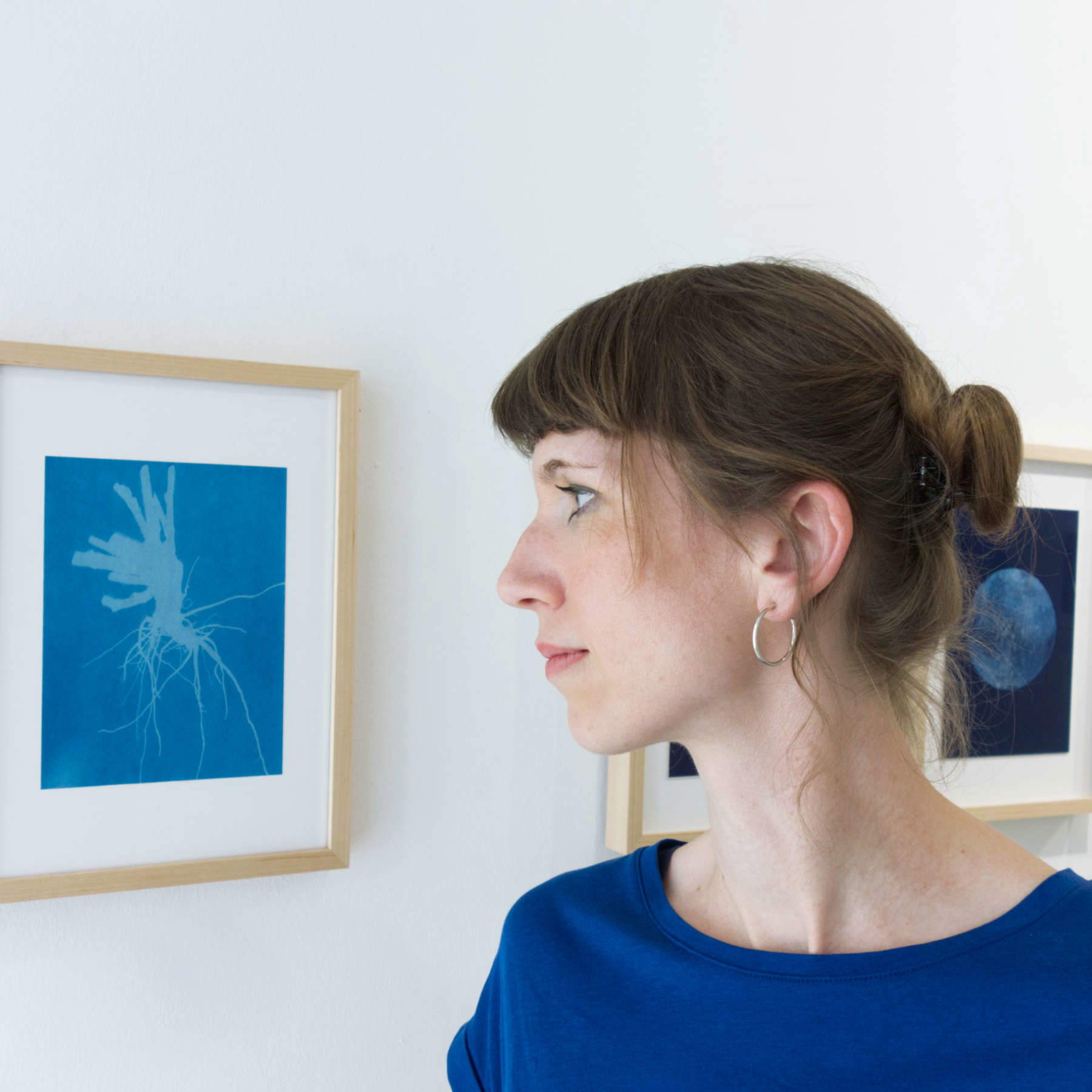
Lena Müller is a German artist born in Nuremberg in 1983 and grew up immersed in a passion for art and nature. Since childhood she has cultivated a love for drawing and creating personal worlds, inspired by visits to museums with her family and by her brother’s artistic activity. After studying at the Nuremberg Academy of Fine Arts between 2005 and 2010, she began to develop a deeply personal artistic language, combining scientific observation, philosophy and an intense curiosity for the micro and macrocosm. His works have been exhibited in several European cities, from Berlin to Rome, from Erlangen to Sète, and reflect a constant search for the secret hidden in nature and existence. His work, mainly on paper, mixes drawing, mixed media and tactile experimentation, with a focus on minimalism and reduction to the essential elements. Through abstract forms and inner landscapes, Lena invites the viewer to develop personal thoughts and associations, creating an intimate dialogue between art and viewer. Nature, scientific phenomena and spirituality are at the center of her research: from the communications between plants to the structure of the universe and the philosophical connections between time, space and consciousness. In this conversation with Gabriele Landi, the artist talks about himself.
GL. For many artists, childhood corresponds to the golden age, the one in which images and processes begin to settle that somehow become valuable for later developments. Was that the case for you as well?


LM. I was a child full of imagination, with an early love for nature, drawing and creating personal worlds through play. In addition, I grew up in a family with a strong interest in art. My parents sometimes took me to art exhibitions, and my brother made sculptures and jewelry. Over time, I came to know art as something valuable worth talking about and artistic skills as something worth striving for.
The ability to imagine personal worlds seems to me to be one of the fundamental characteristics of your work. How and with what substances do you nourish it?
By observing the world with open eyes and feeling, gathering inspiration and then transforming it.
Did you have a first artistic love?
As a child I was deeply fascinated by Květoslav Hísek’s illustrations of bird eggs. As a youngster, August Macke’s watercolors fascinated me greatly and I felt that art could enrich me.
Are you still interested in nature illustrations today?
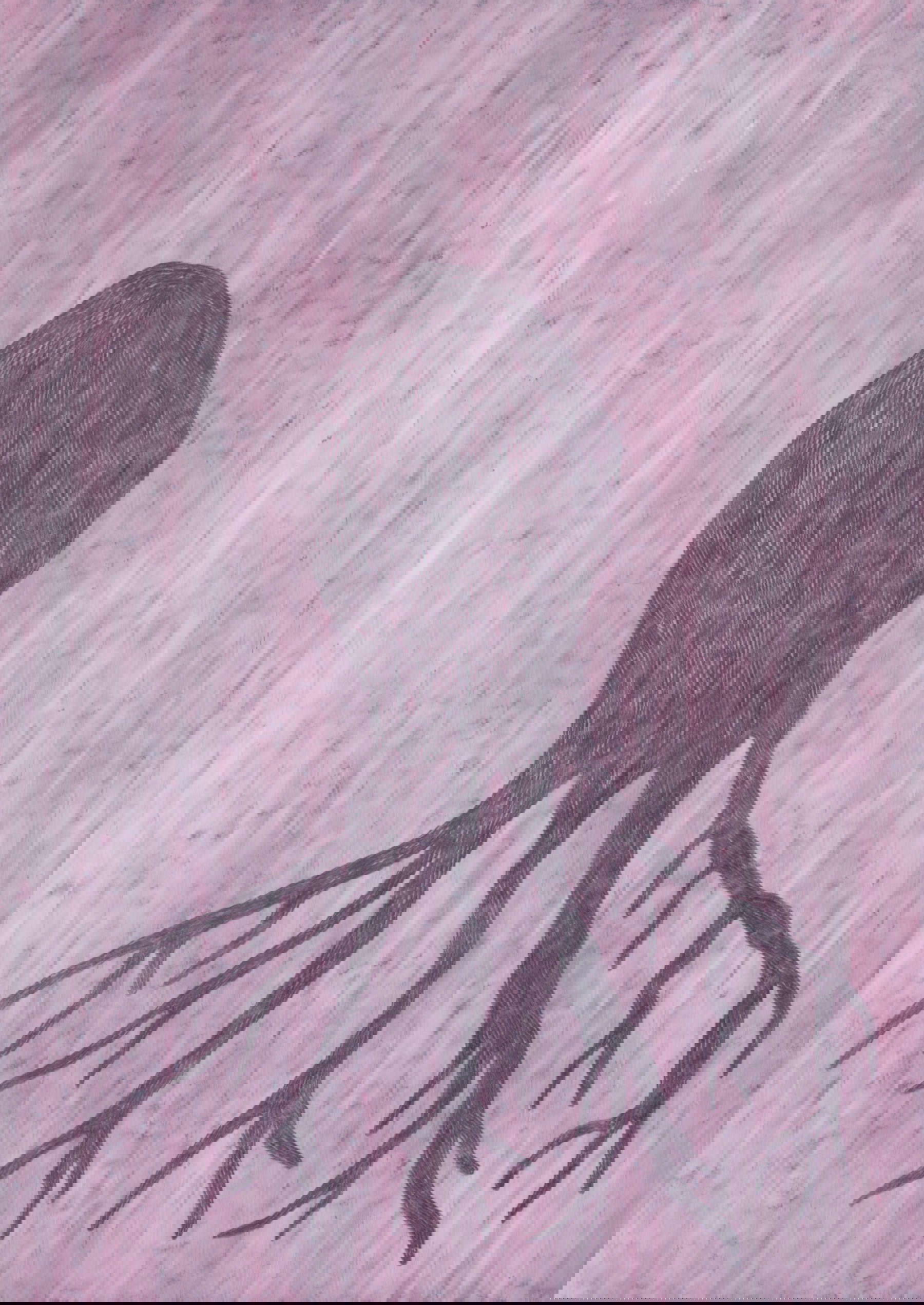
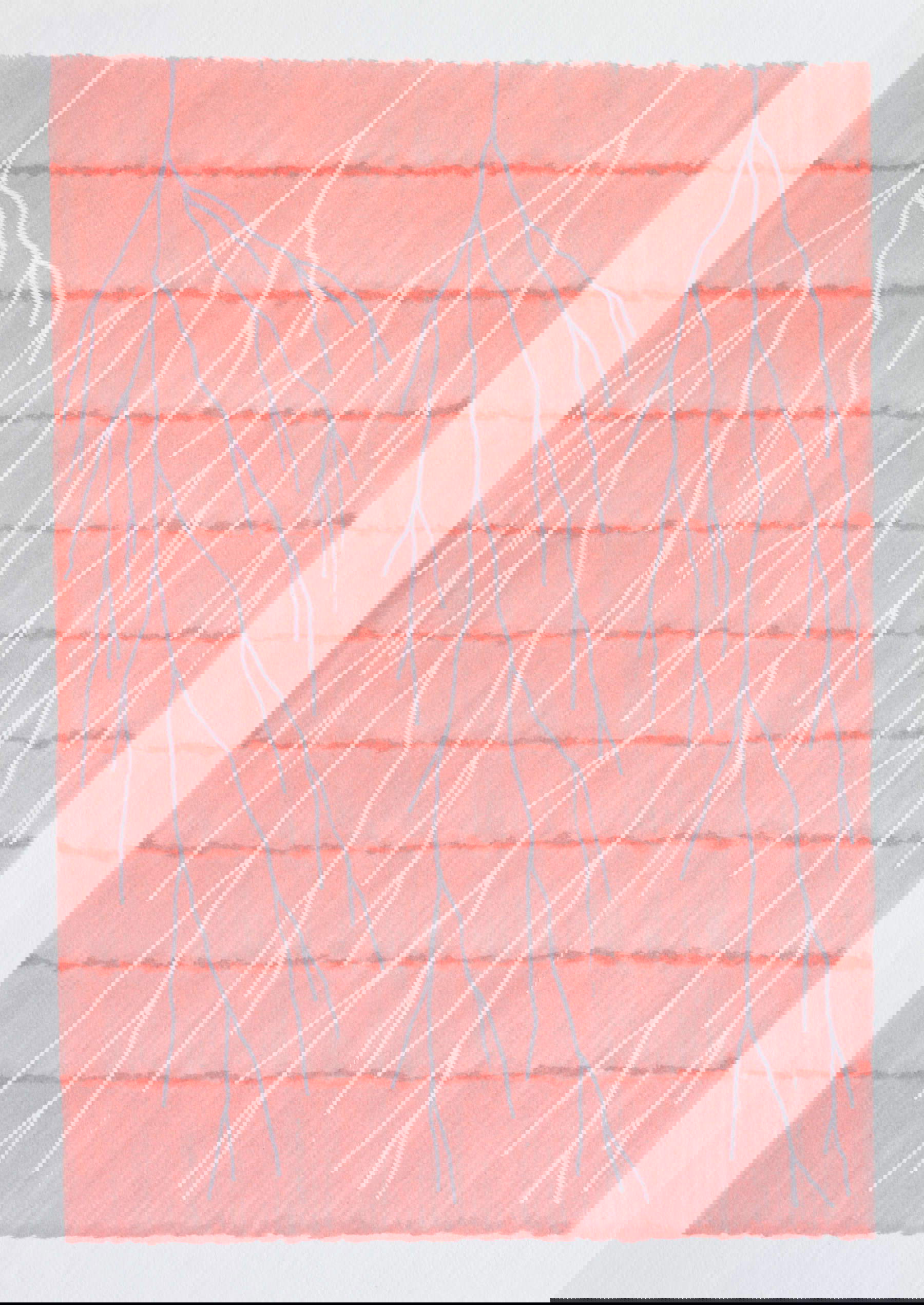
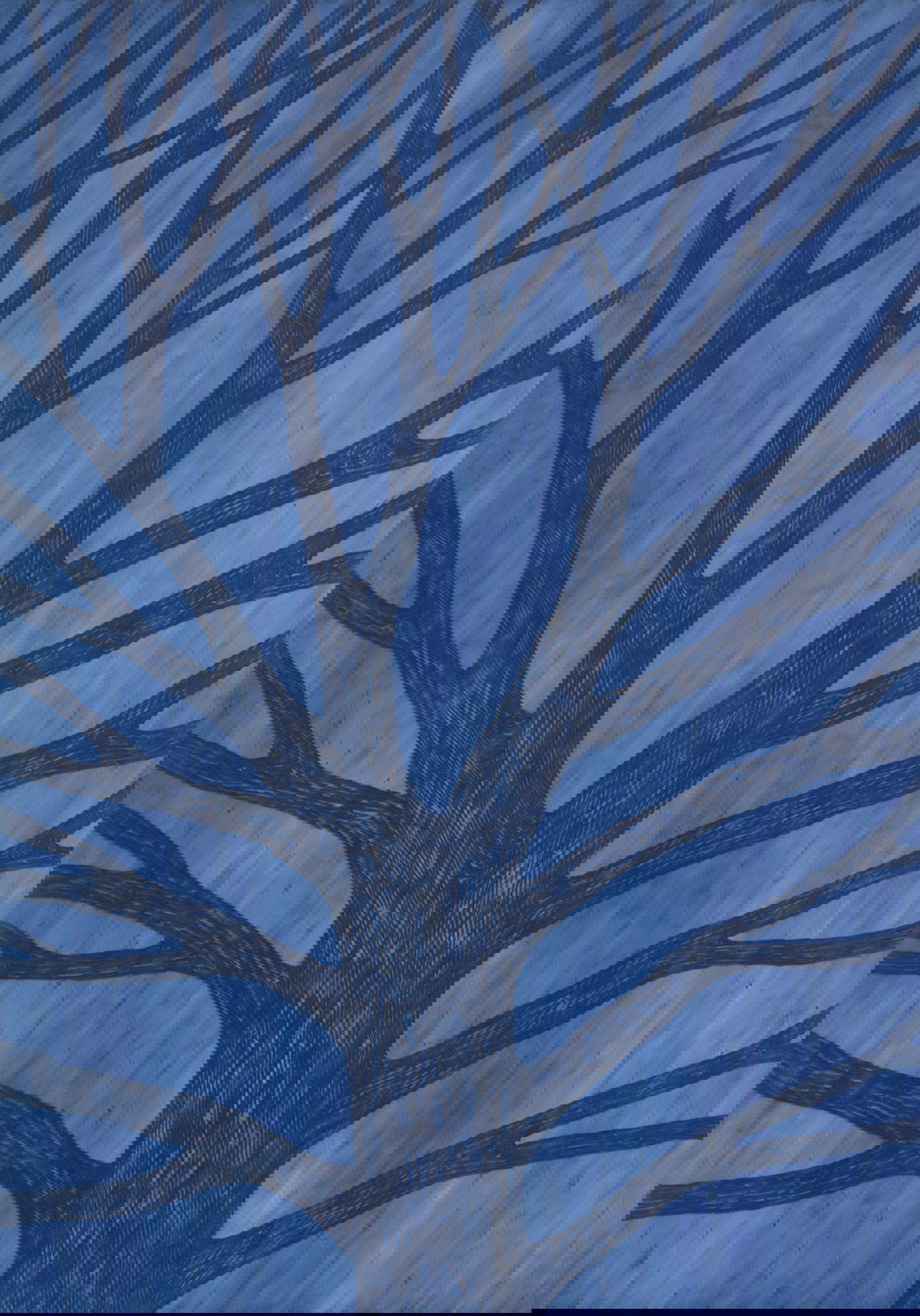
I still find biological illustrations, for example of roots or plants, attractive and able to inspire. They may be old biology books, but I also find contemporary illustrations, such as those by French botanist Francis Hallé, fascinating. I am also fascinated by the botanical illustrations of Anna Atkins, who in the 19th century was the first to make full use of the cyanotype technique for book illustrations.
What studies have you done?
I studied art from 2005 to 2010 at the Academy of Fine Arts in Nuremberg, in the class of abstract painter Rolf-Gunter Dienst.
Were there any important encounters during your training?
Encounters with different artistic currents broadened my horizons. Five years after my studies, I saw Agnes Martin’s exhibition at the Tate Modern in London and I was really excited about her courage in minimalism and her engaging visual worlds. Agnes Martin said, “You have to find the things you like. The things that are pleasing to your inner being.” It is an attitude I hold in high regard.
How has your work evolved over time?
At the beginning of my studies, my work was more figurative and I often used oil paints and acrylics, which I no longer do today. I was generally very insecure about technical possibilities. At some point I realized that if my art is not the place where I can be free, then where can I be free? There are so many limitations in life. My art is my space of freedom. I have internalized it. Now I have more access to my inner self to draw from. My work has also become more abstract and minimalist.
When you talk about minimalism, could you explain what you mean in more detail?
It is about reducing compositional elements to what I consider essential. I like simplicity that opens up worlds.
What is the origin of the images you paint?
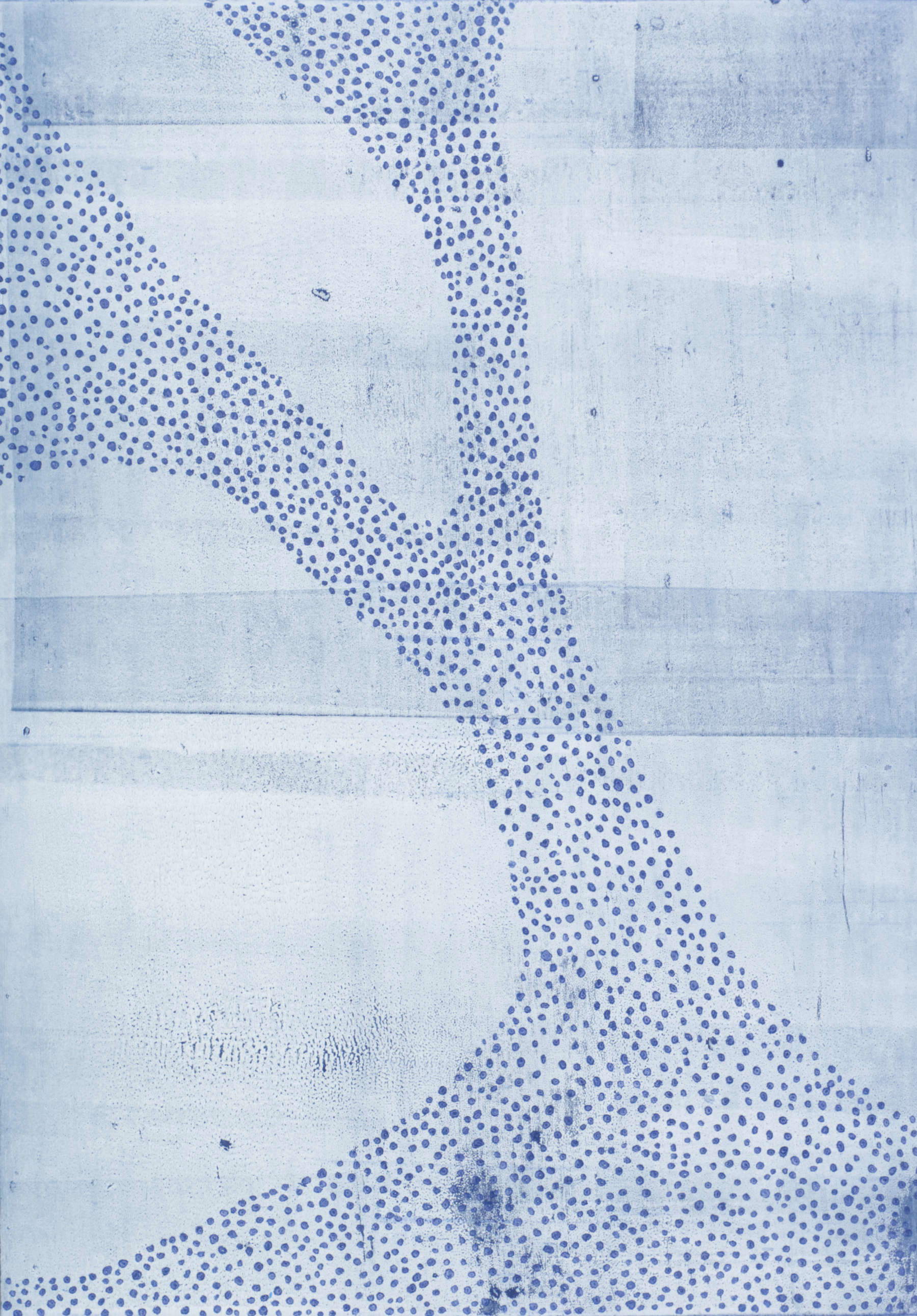
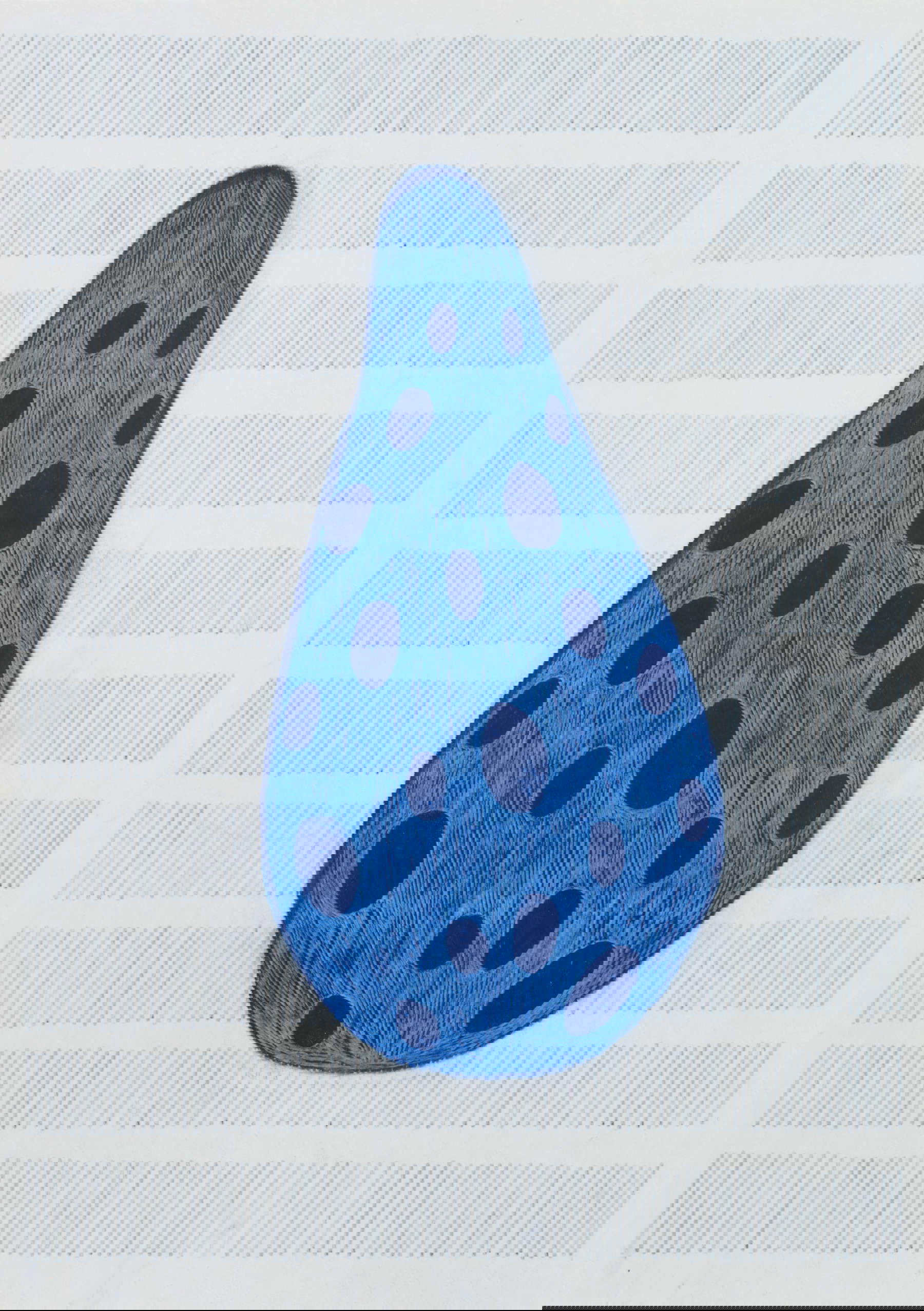
My artwork reflects my fascination with nature and scientific phenomena, particularly my interest in the microcosm and macrocosm. In addition, my art is characterized by a kind of philosophical orbit around questions of time, space, origin, human existence, the cosmos and composition. Through my art I trace the secret that lies in everything. Nature fascinates me in all its facets. From the universe, to the communication between plants and the world of microorganisms, I feel like a kind of artistic researcher. I also enjoy making poetic connections, for example between the wings of a butterfly under a microscope and a river. At the tactile level, I draw inspiration from different materials, tools and experimenting with different techniques, but drawing is my main medium of expression. Minimalism and reduction in general inspire me, finding some kind of fundamental essence is exciting. I like to create abstract visual worlds that give me and the viewer the opportunity to develop personal thoughts and associations.
Are you interested in the idea of a scientific approach to the investigation of imaginary worlds?
Imaginary worlds of thought are the foundation of philosophical thinking. Quantum physics also assigns a significant role to the observer, to humanity with its perceptions. The question of whether we create the world as we know it, our so-called reality, is incredibly intriguing. Scientific research on consciousness and mutual exchange with the world is also a fascinating field. In this regard, I found the film Aware by Frauke Sandig and Eric Black particularly impressive. Science and spirituality complement each other in mutually beneficial ways: from neuroscientists to Buddhist monks, different scientists explore the nature of consciousness. It often becomes really interesting when the considerations are interdisciplinary and open up different perspectives and worlds of knowledge.
Are you interested in the pictorial aspect?
In my work you can usually find a form of figurative pictorial aspect, but embedded in a more abstract visual language.
How important is the technical aspect of your work?
Using different techniques is very stimulating for me. I also like to mix different techniques, such as combining painting, drawing or printmaking.
Are you interested in the idea of landscape?
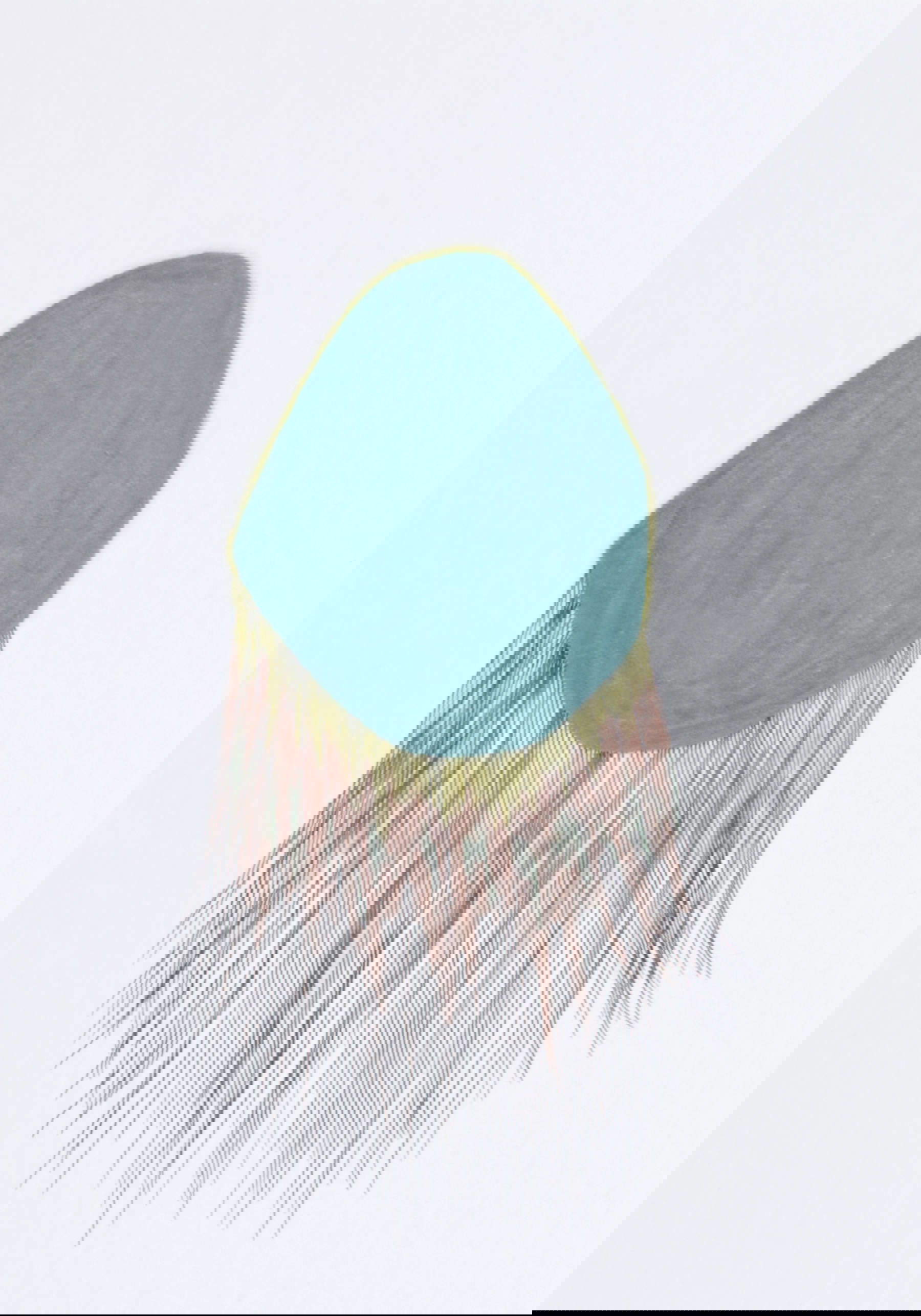
For me, somehow everything is landscape, small and big. Inner and outer landscapes that need to be explored. The surface of a plant, an alien moon, the skin of a fish, mountain ranges, water surfaces, everything ultimately forms a form of landscape. It excites me to explore it and transform it mentally and artistically. Quantum physicist Carlo Rovelli describes the world as granular, space as a network of vibrating quantum granules. From this perspective, playing with perspective, the concept of landscape becomes even broader and takes on a philosophical dimension.
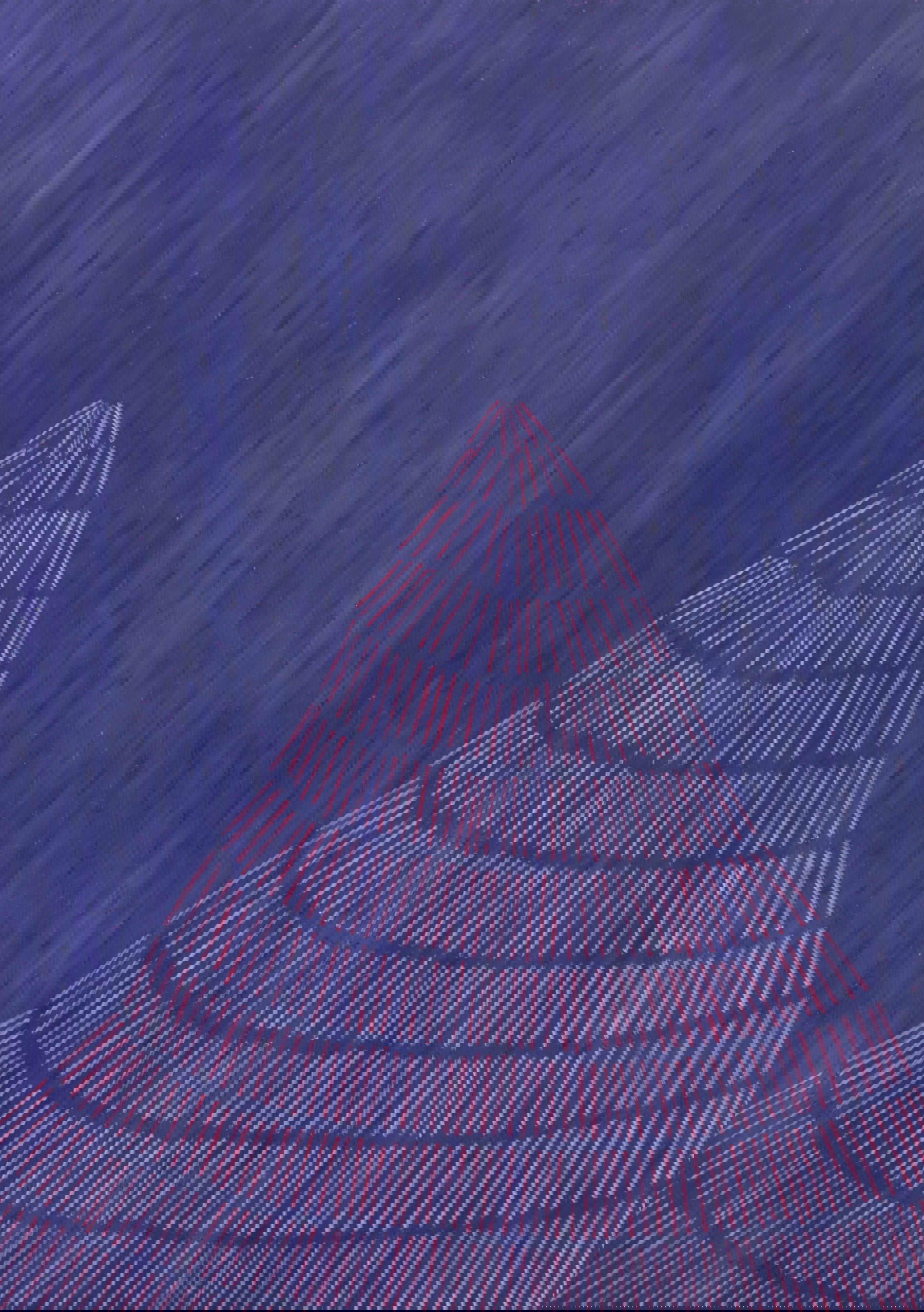
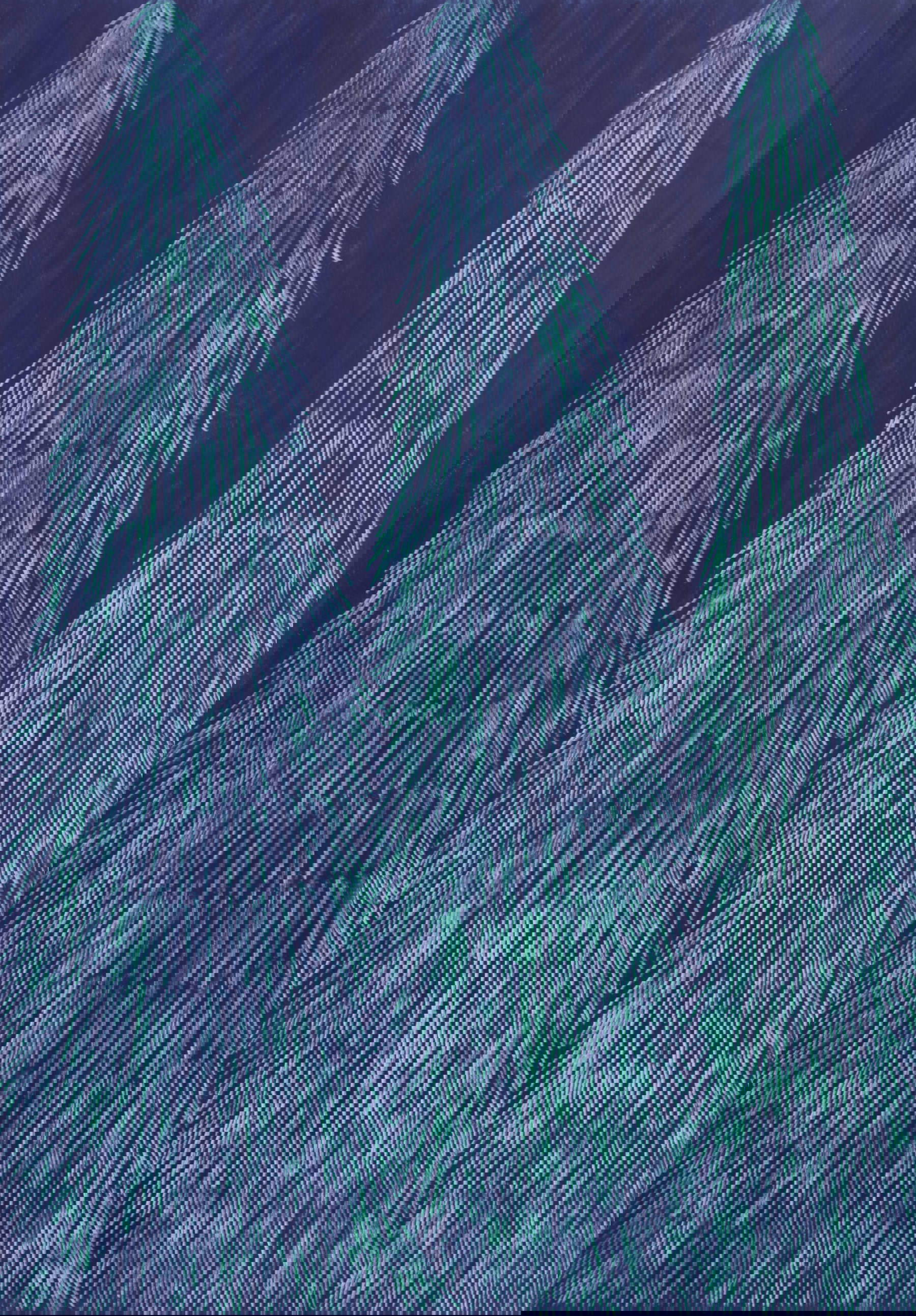
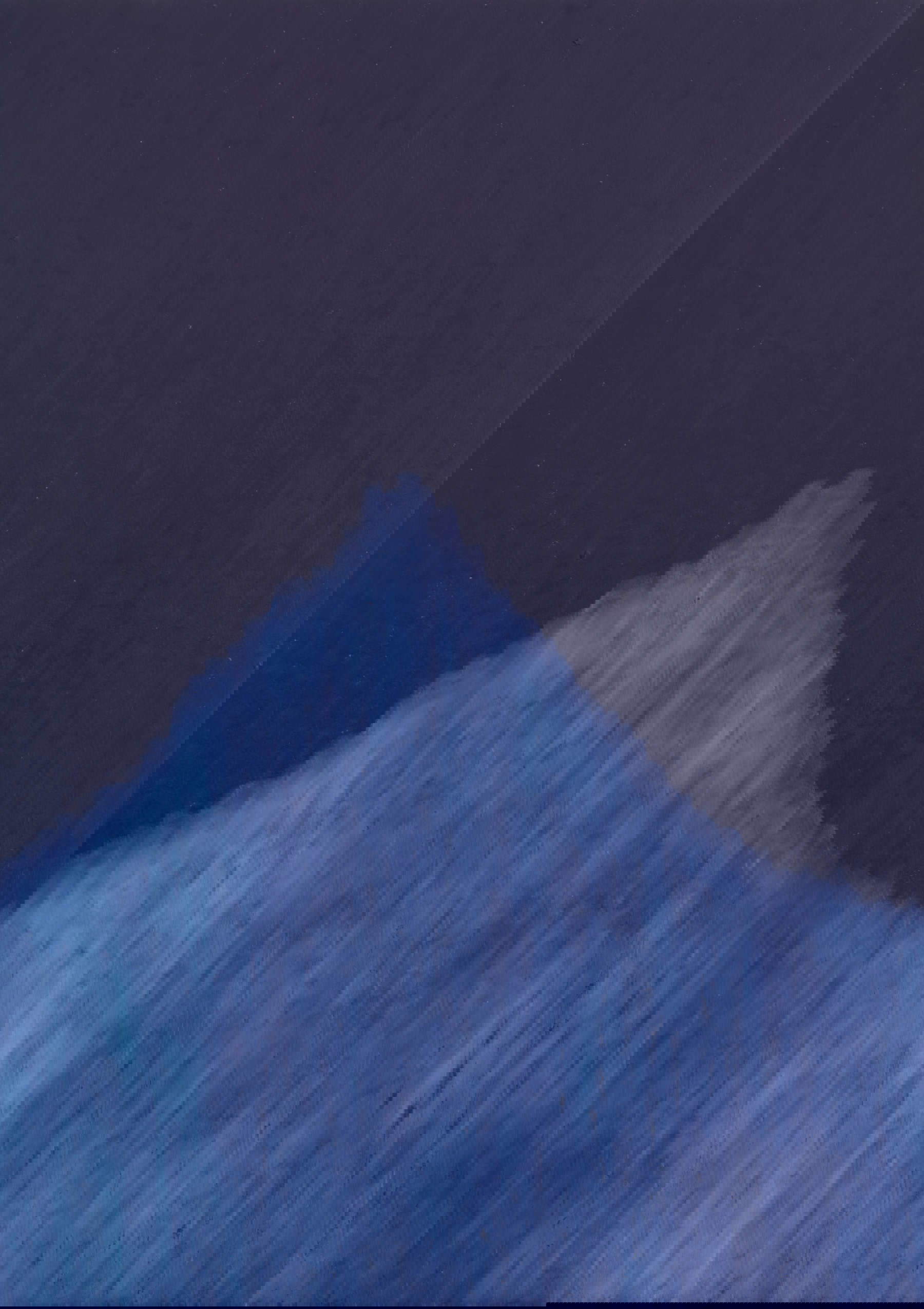
All of this seems to introduce a poetic dimension to the way you look at the world. Can you tell us about that?
I am interested in the big questions: how is everything structured? What is the cosmos made of? Who are we? Where are we going? Is there a connection between everything? I explore the great mysteries of our existence with my art, constantly trying to get closer to them. In artistic imagery, new realities emerge in a certain way. Creating and looking at art is always a wonderful way to experience deeper meanings, both intellectually and emotionally. I think that’s the beauty of art: that, at its best, it opens up inner and outer worlds for us and has the potential to expand our horizons in enriching ways.
Are you interested in the idea of the “wayfarer” as a way to explore this philosophical dimension?
The figure of the wayfarer developed in the 19th century. We all know it from the Romantic era. Again, it is a deep quest, an exploration of the connection between the inner and outer worlds, between humanity and the nature around it. Through contact with nature, experiencing its sublimity and observing its details, I also draw many suggestions for my art. For me, immersing myself in nature while taking a walk always has a contemplative quality and is a wonderful way to explore philosophical questions. For example, observing a stream in spring, I am often reminded of Heraclitus’ Panta rhei and my thoughts begin to wander.
Is the playful combinatorial aspect, both on a technical and imaginative level, important to you?
This playful aspect of combination (sometimes on a formal level, sometimes on a content level, sometimes on both levels) is somehow a common thread through my work.
How important is color in what you do?
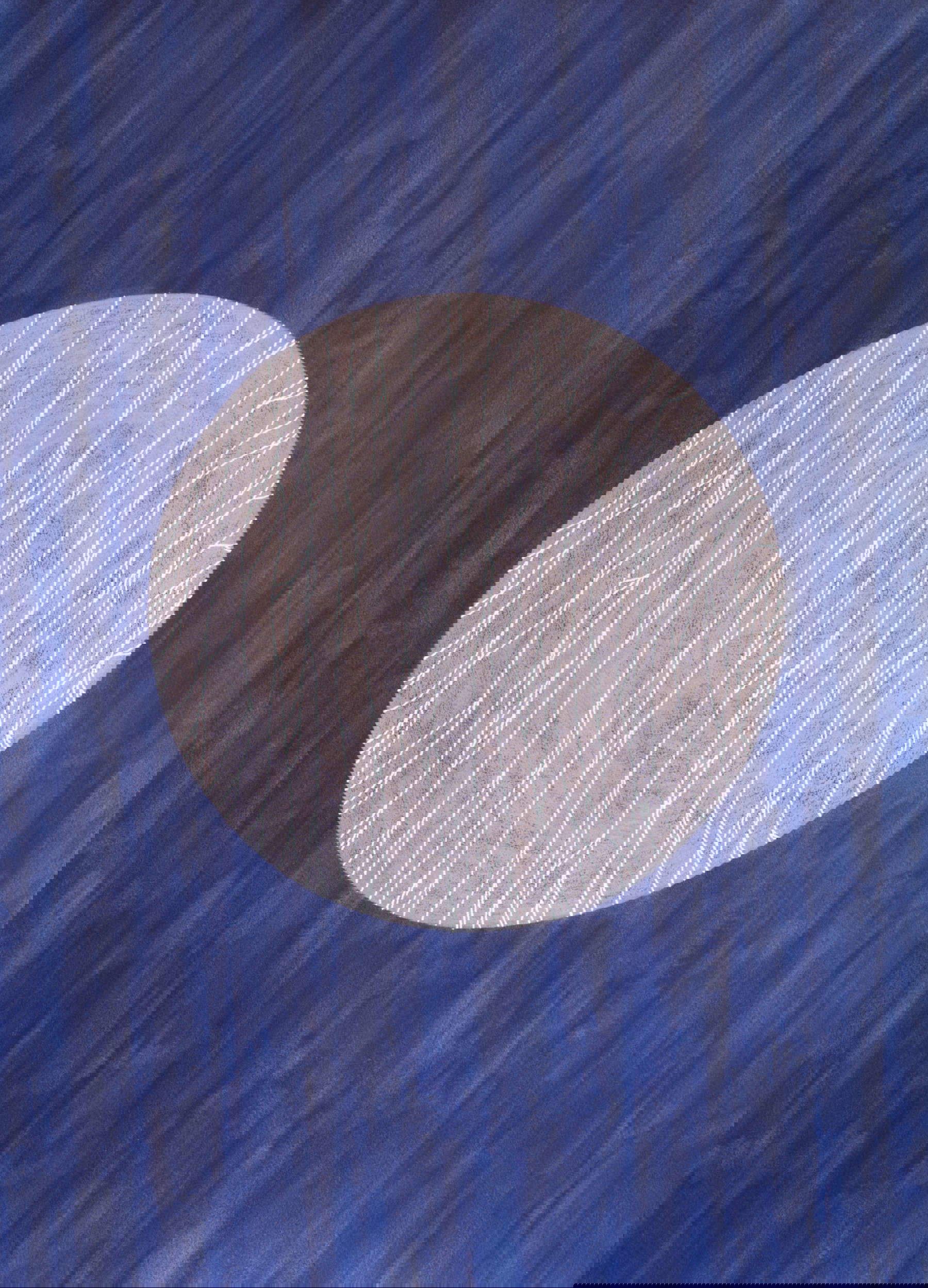
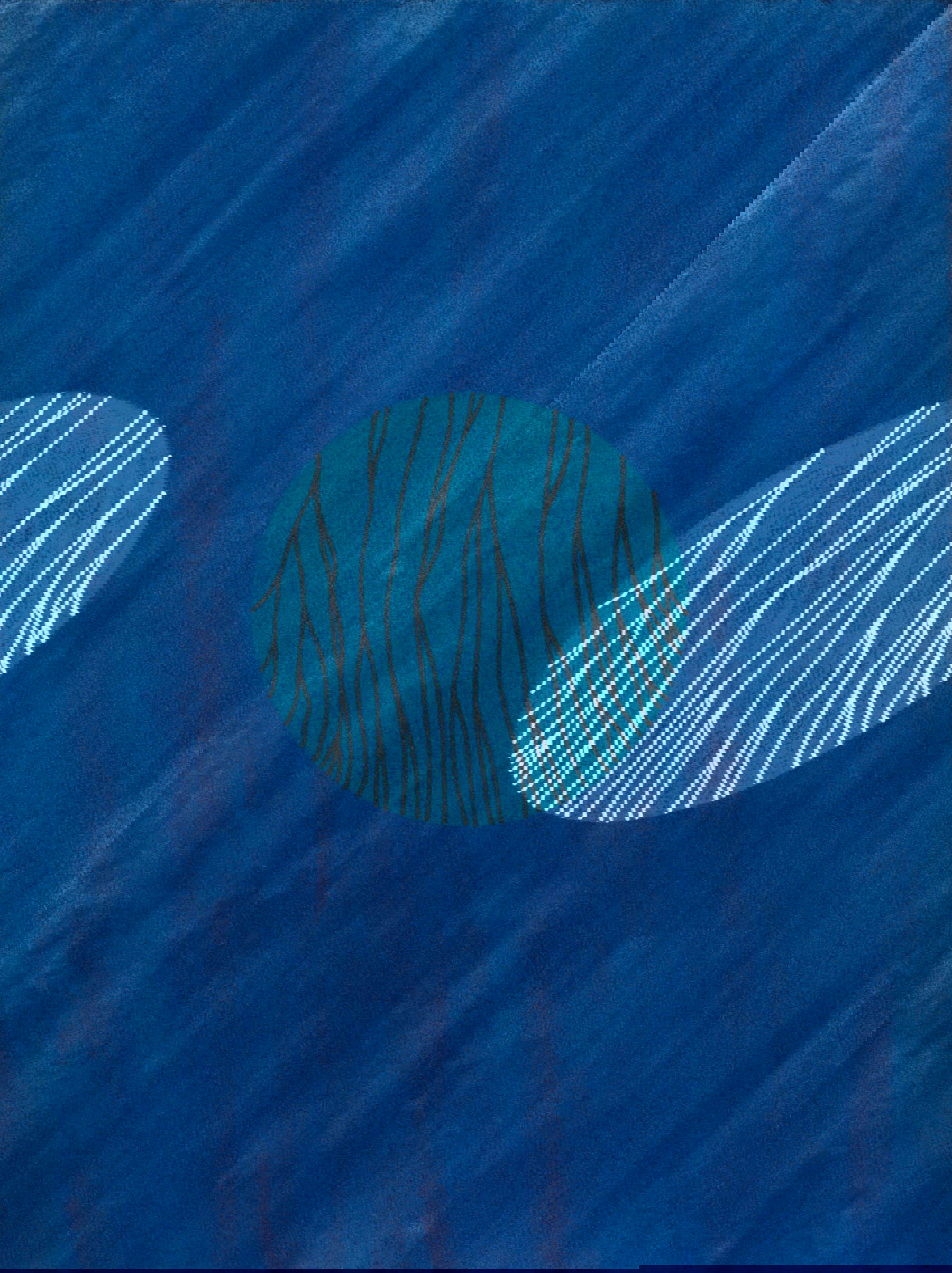
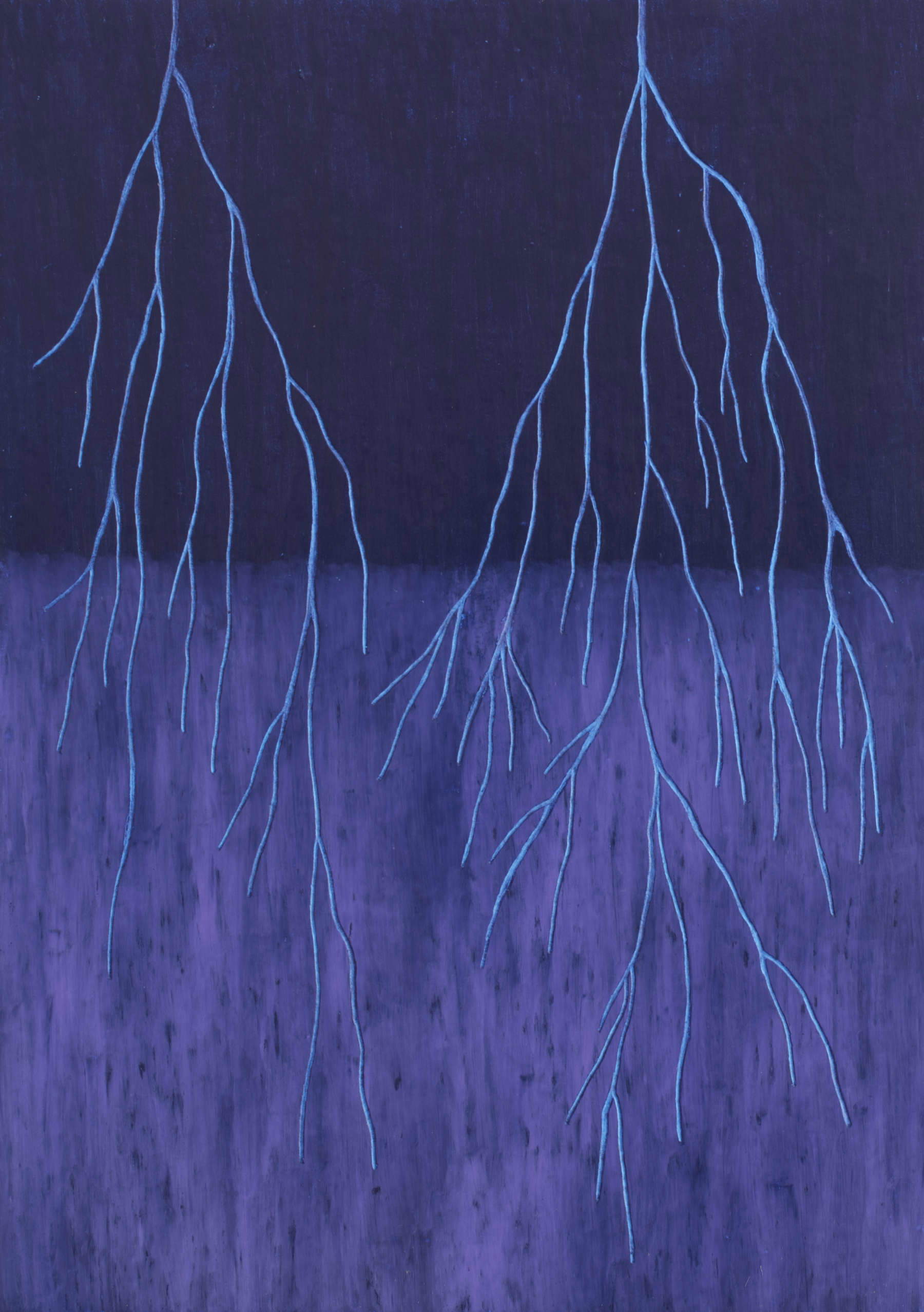
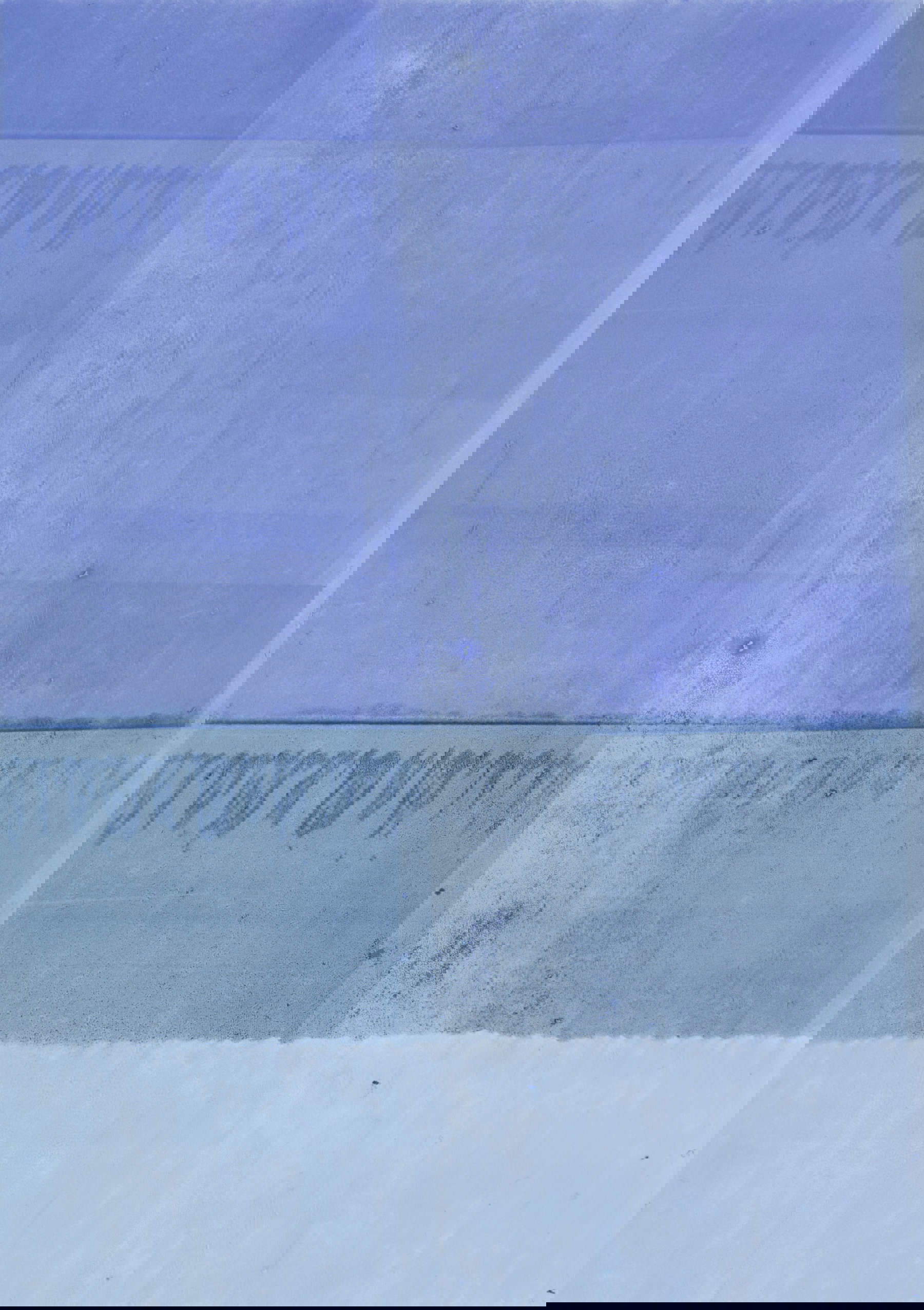
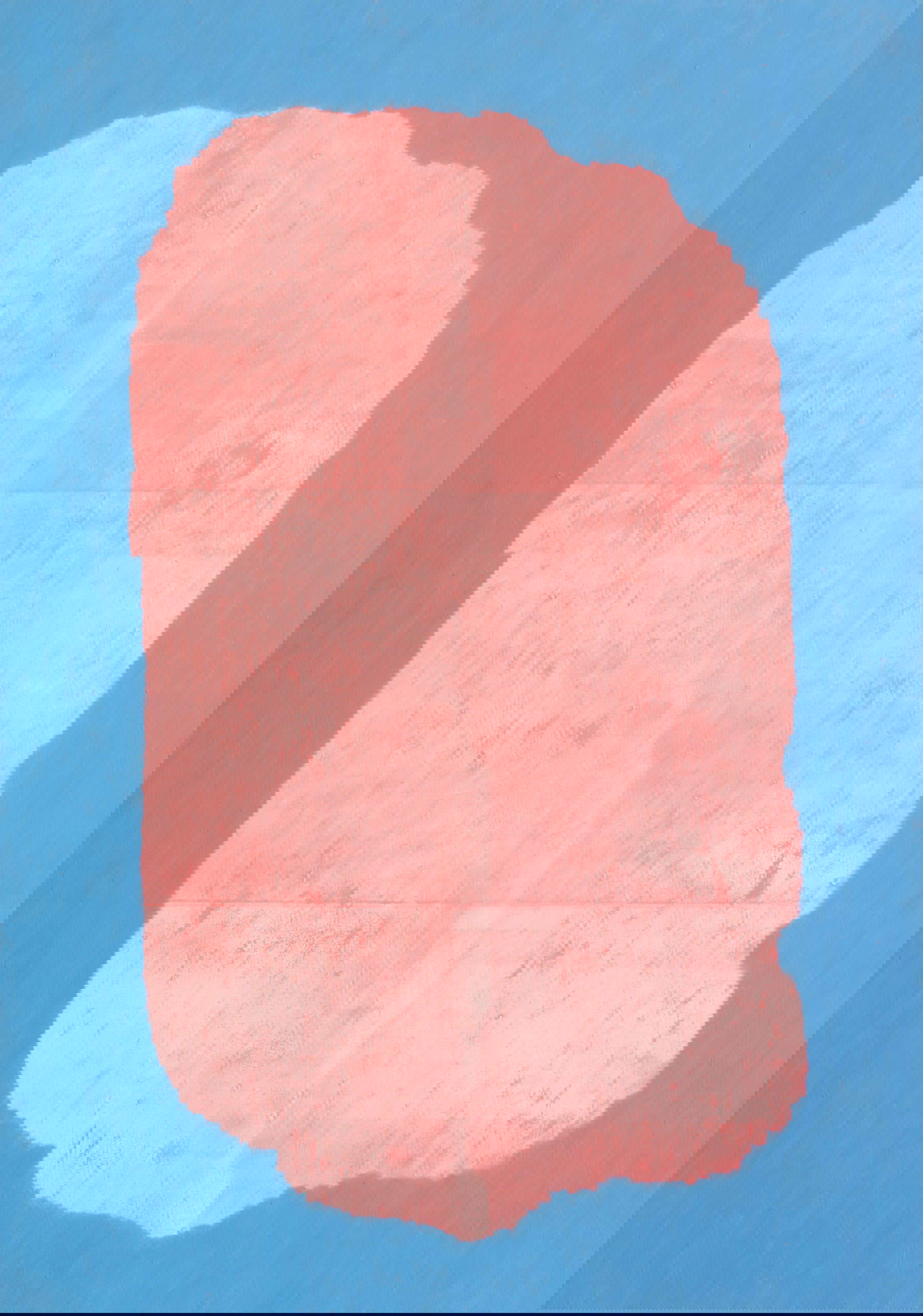
I choose color intuitively and like to play with it, because it supports form. Sometimes I also make serial variations of color. Colors have no symbolic meaning for me, they help me create my pictorial spaces. For example, I appreciate blue for its openness, calmness and depth.
Blue, in its various shades, recurs often in your works. I would like you to talk about it in more detail, if you don’t mind.
Johann Wolfgang von Goethe said about the color blue, “It is the color of darkness. As a color, it is an energy and, in its purest form, a fascinating nothingness. It seems to recede (distant mountains appear blue) and yet it draws you in. It is pleasant to look at, evokes a feeling of coldness and resembles a shadow.” He described it beautifully. For me, the color blue offers great freedom, offers a wide range of interpretations and is multifaceted in a unique way. I love applying a deep indigo blue with watercolor paint on handmade paper-it is enchanting.
Are you interested in the spiritual dimension in your works?
For me, the artistic process has something magical and also spiritual. In my eyes, art has a lot to do with introspection, but at the same time I also feel a deeper form of connection with the whole. I always look at the world from different perspectives. For example, I am interested in plant communication, from a scientific perspective, but I also find the spiritual component of nature fascinating. Some time ago I read the book Thus Spoke the Plant by Monica Gagliano and found it very inspiring: she also looks at the world of plants from multiple perspectives and opens horizons. I also like Japanese haiku, short poems about nature, which often also embody a kind of spirituality. They are simple, yet they say a lot. “Like astronomy, a frog looks at the sky.” These are just a few words by Kobayashi Issa, yet they open up a broad view of the world.
What role does the studio dimension play for you, understood as the physical place where the artist’s work takes place?
My work space is in my apartment, so I don’t have to leave the house to engage in art. It is the place where I find peace and can gather my thoughts. It is my creative workshop where I can create the right atmosphere.
When you start a work, do you already have a clear idea of how it will develop or is there room for change along the way?
It varies from work to work. Sometimes I have an image or elements of an image in my head, capture them in small sketches, text possible implementations of them in small drawings. When it comes to the actual work, I let it flow and, in addition to the planned components, I am usually surprised. Some things arise spontaneously in a playful way or change during the process.
What is drawing for you?
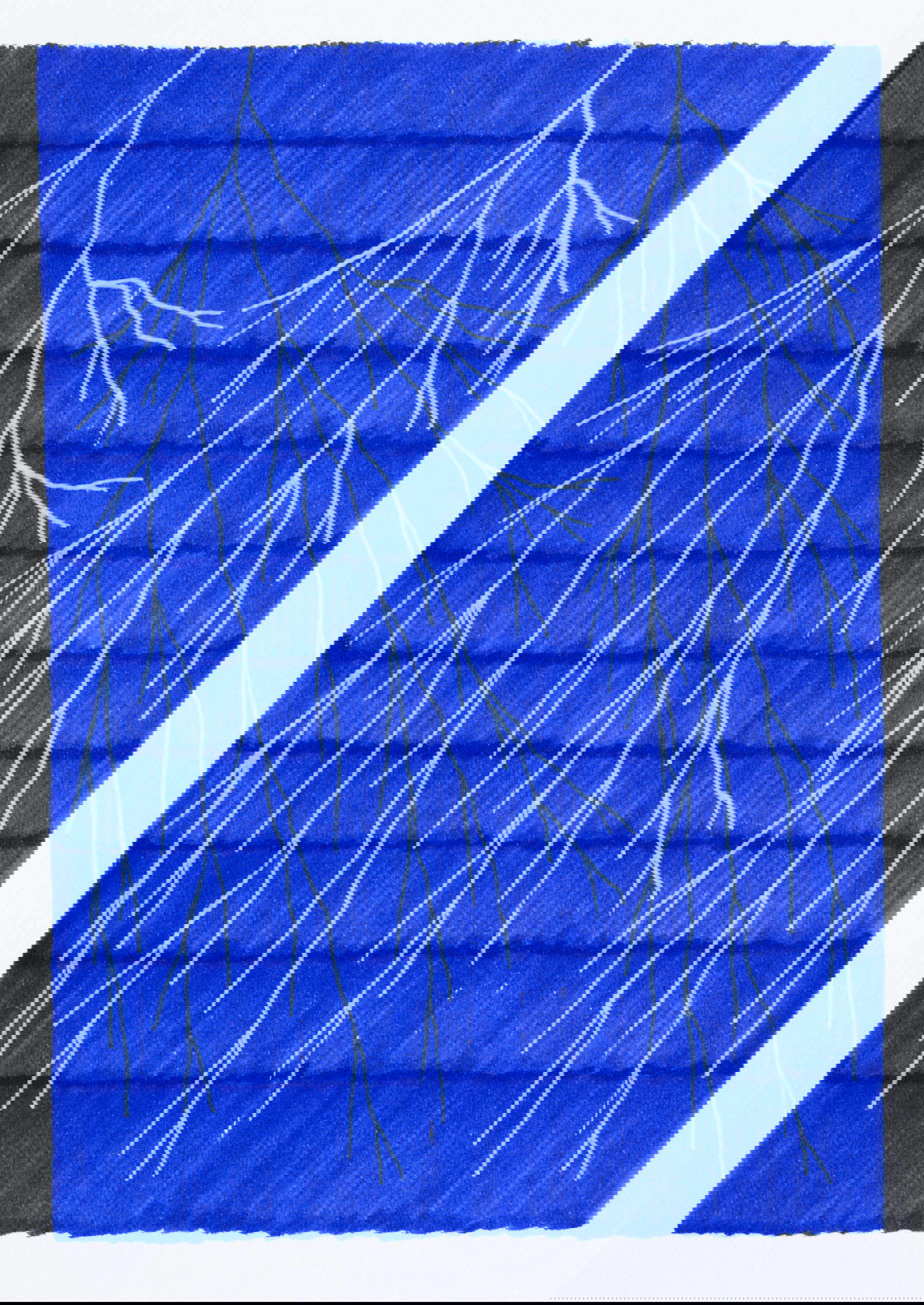
Drawing is an exciting medium and opens up many possibilities for me. I like to mix different techniques, but drawing is my favorite medium because it allows me some precision and freedom. With wax crayons I achieve painterly effects, with ink pens, for example, I achieve thin graphic lines that display a floating lightness of lines. I also like to use the sgraffito technique, in which I use a wooden tool to etch lines into the wax crayon or printing ink and reveal the layers underneath. This creates a different texture , often slightly raised. The process is almost a bit archaeological, because sometimes I am surprised by what I discover and what emerges.
Does chance, accident, play a role in your work?
Aesthetics play an important role in my work, but certain mistakes or unforeseen events often make the work interesting. Excessive perfectionism is an obstacle, but the composition has to be perfect in the end. This has to do with a skilled eye and the flow of energy.
Do you work in series, do you focus on one painting at a time or do you make several at once?
I often work in series, but I also create individual works in between. I usually work one after another and complete a single work in a timely manner. I only work on a few very long projects in parallel and for longer periods of time.
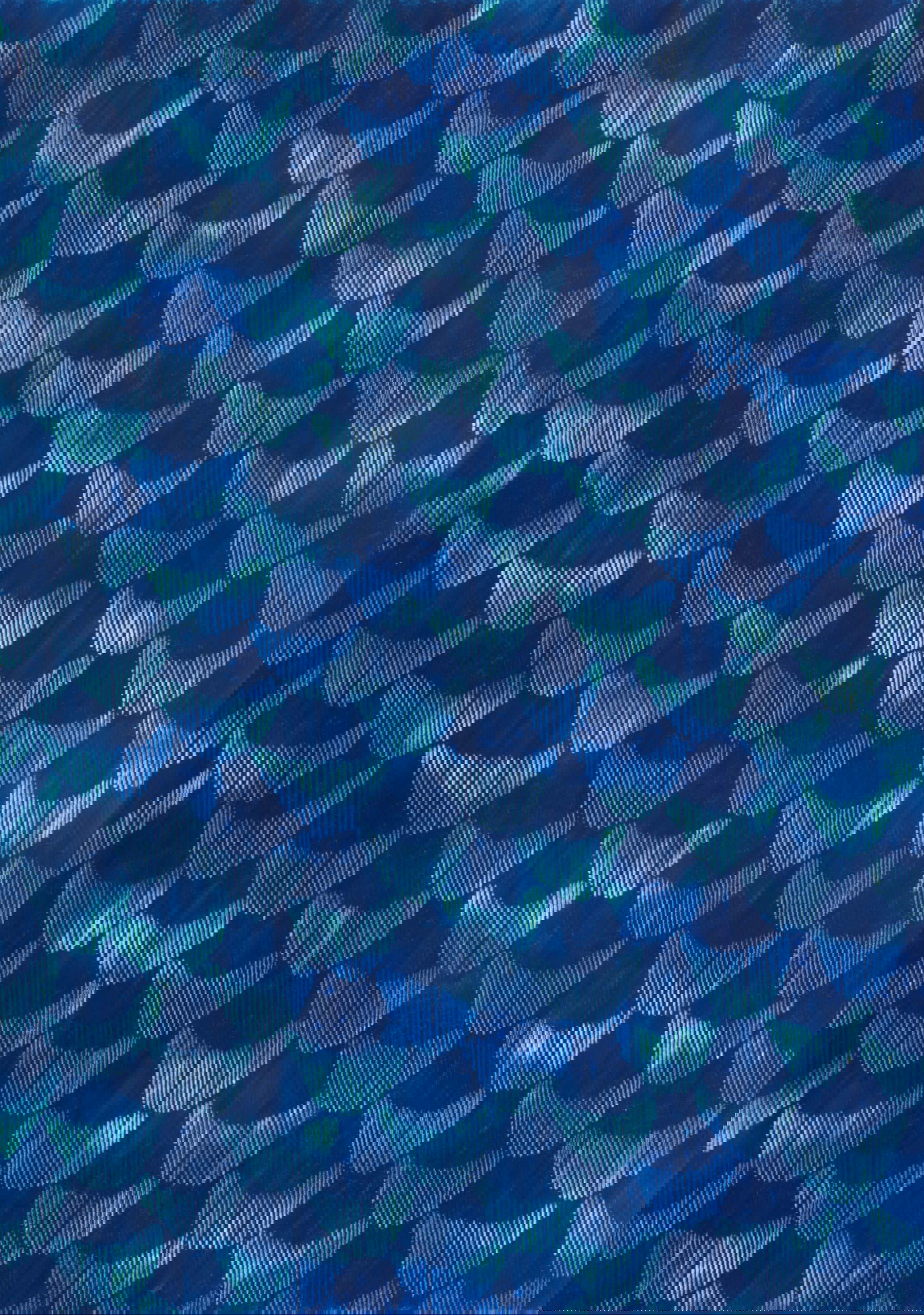
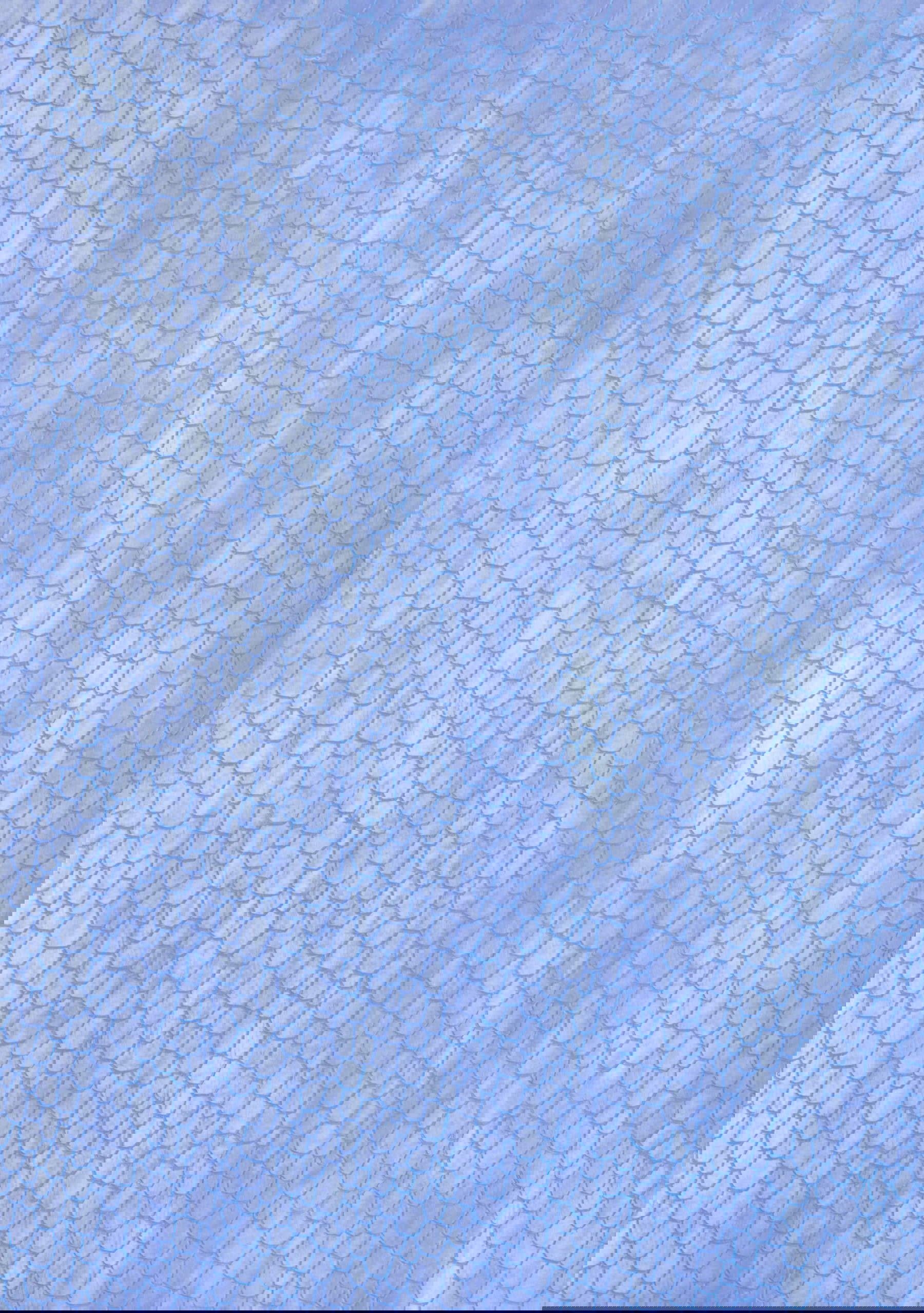
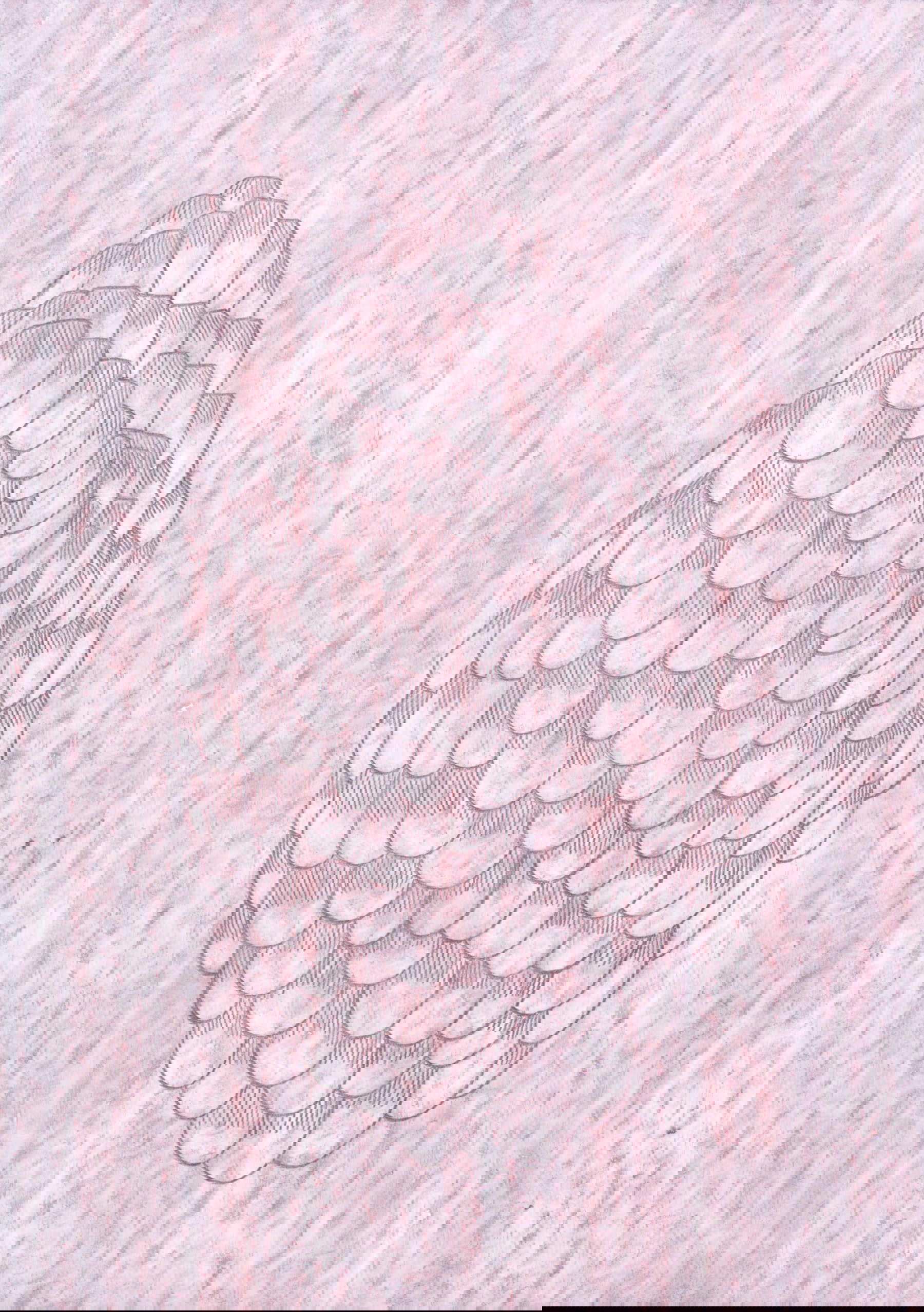
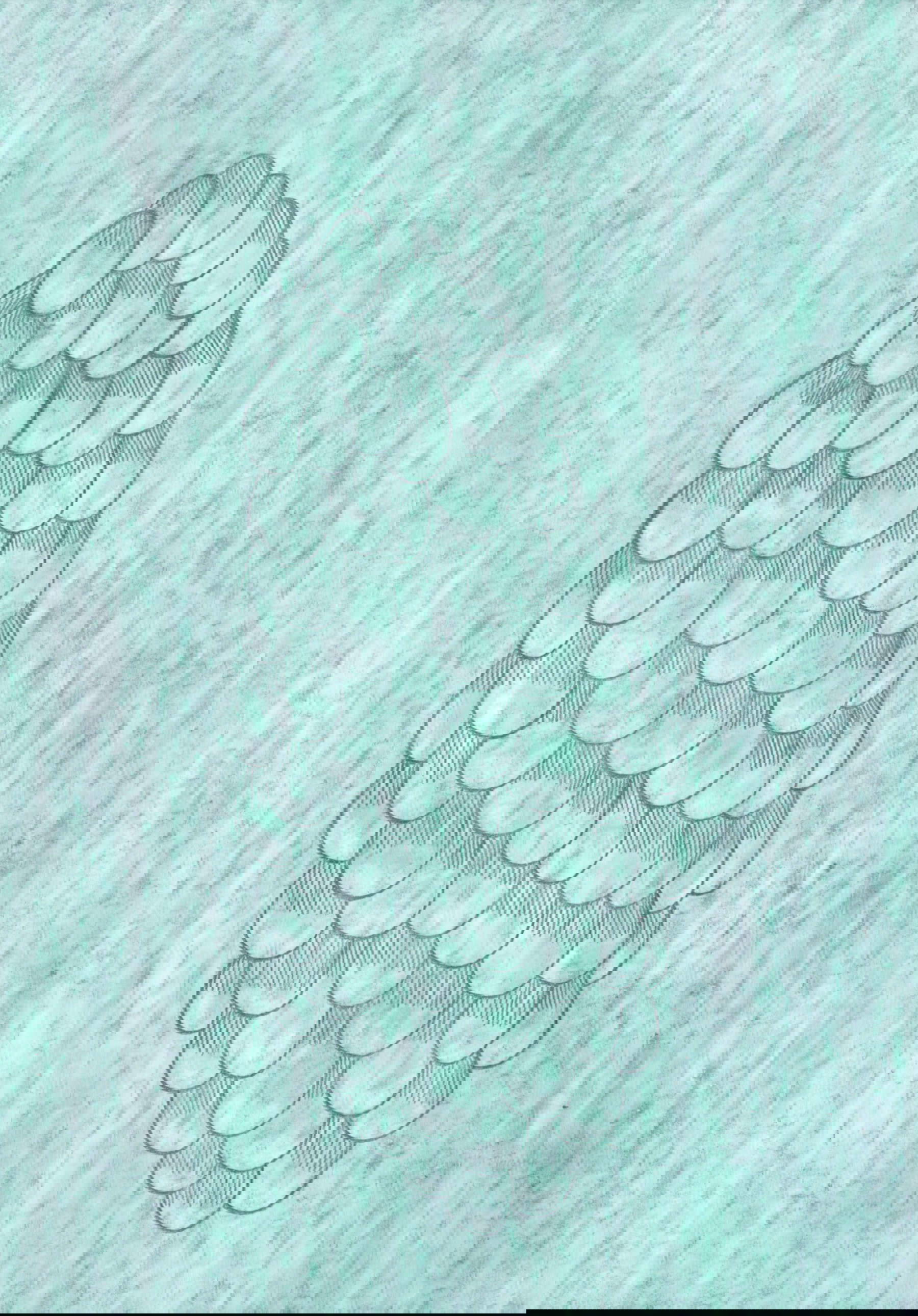
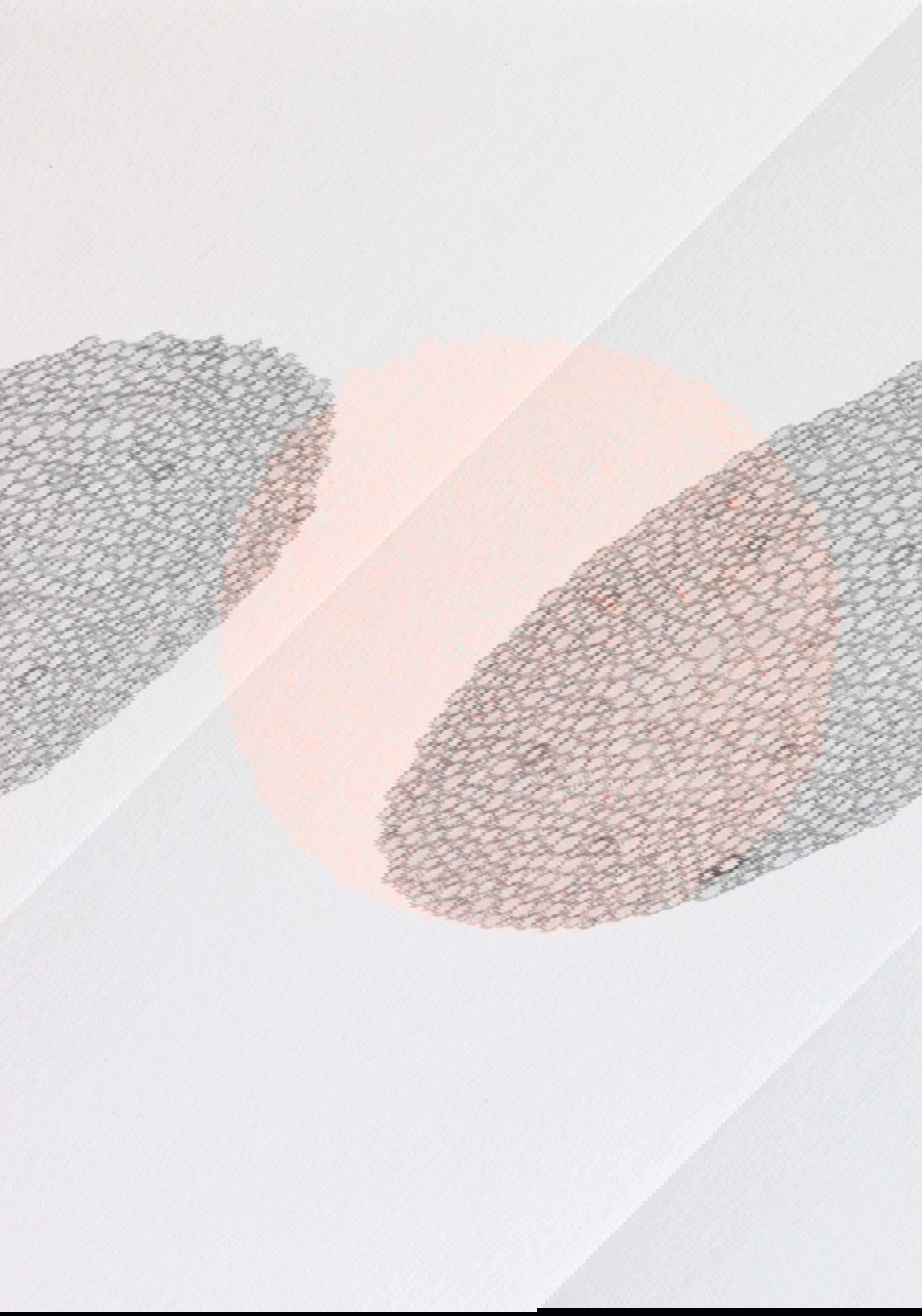
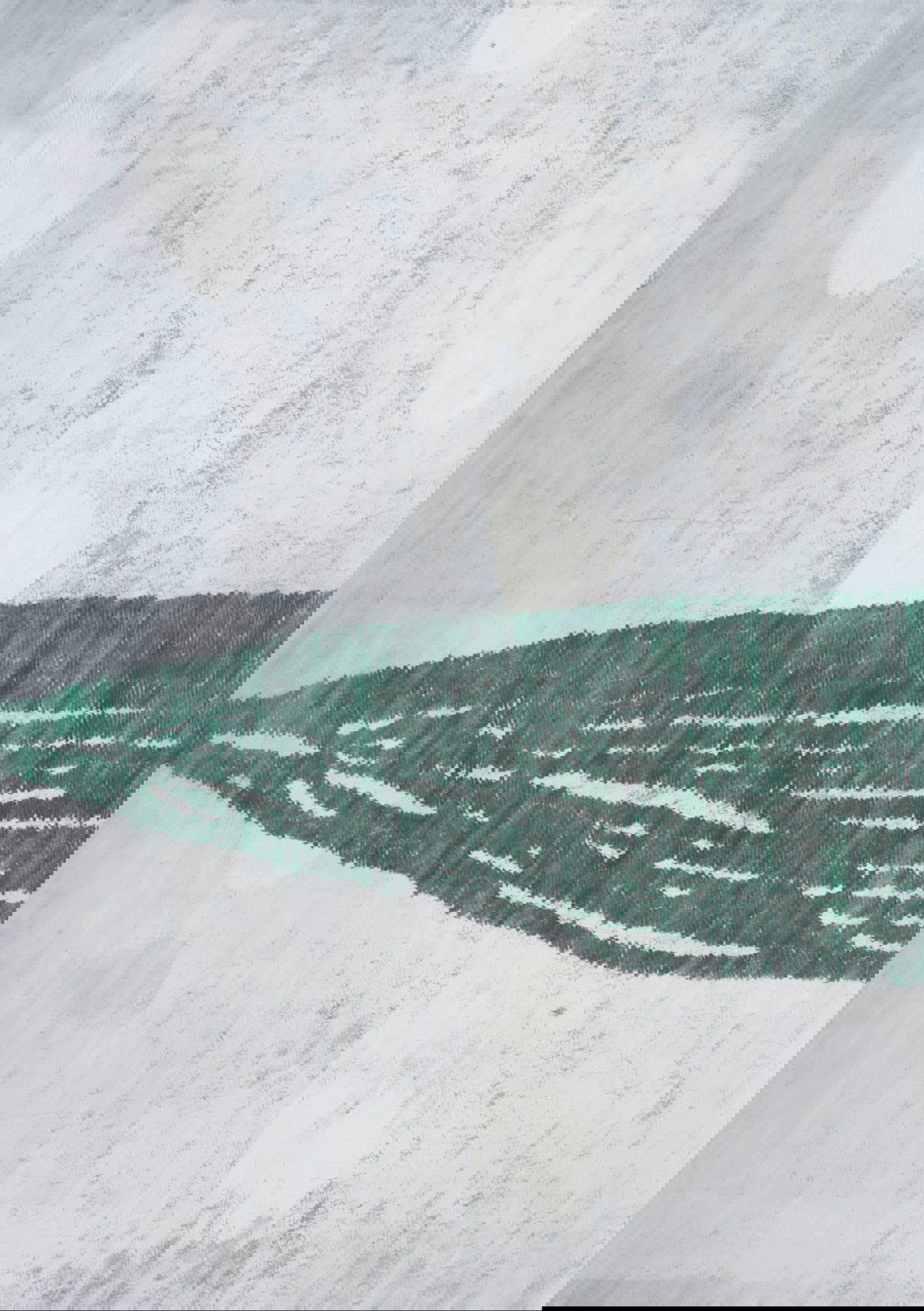
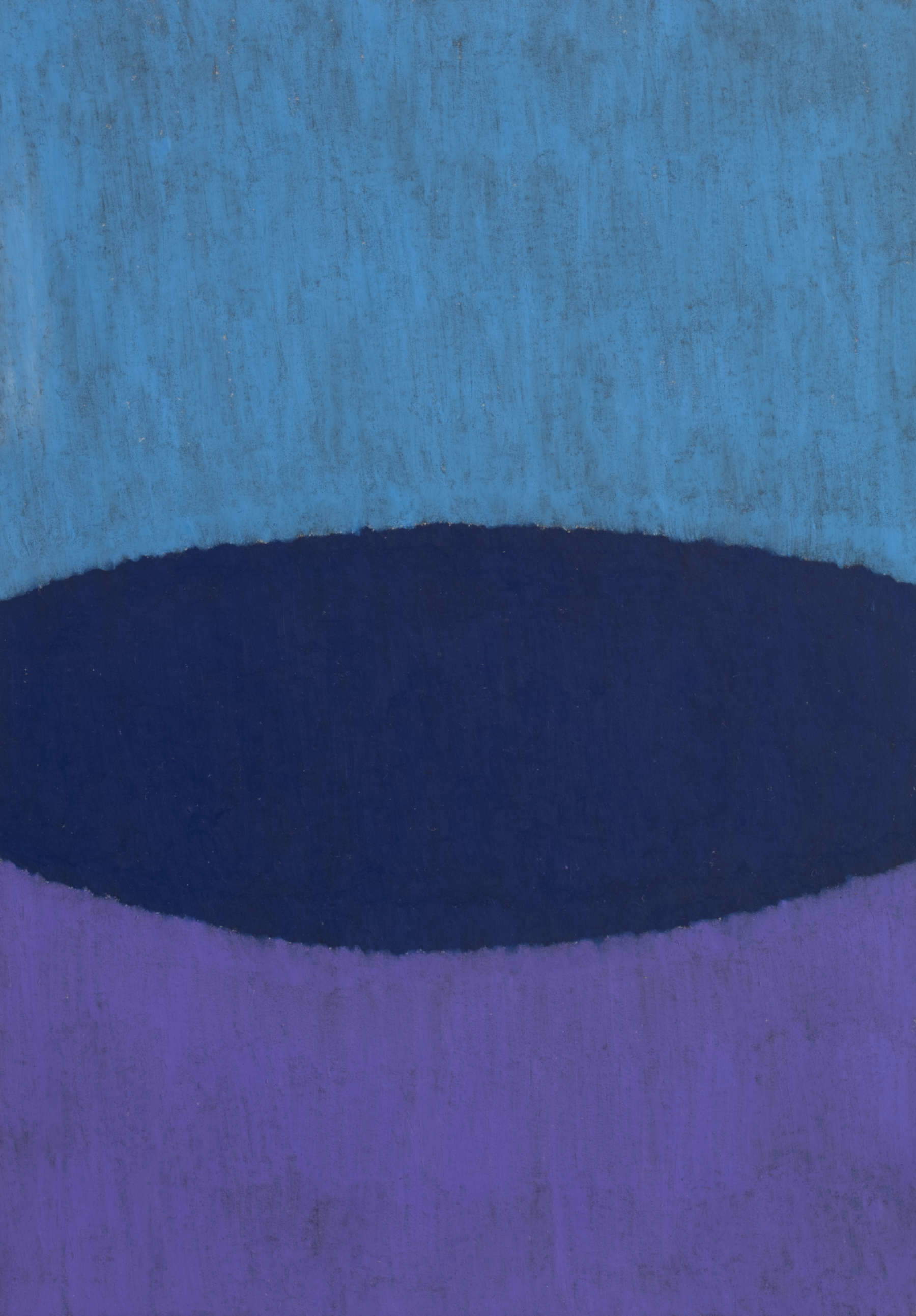
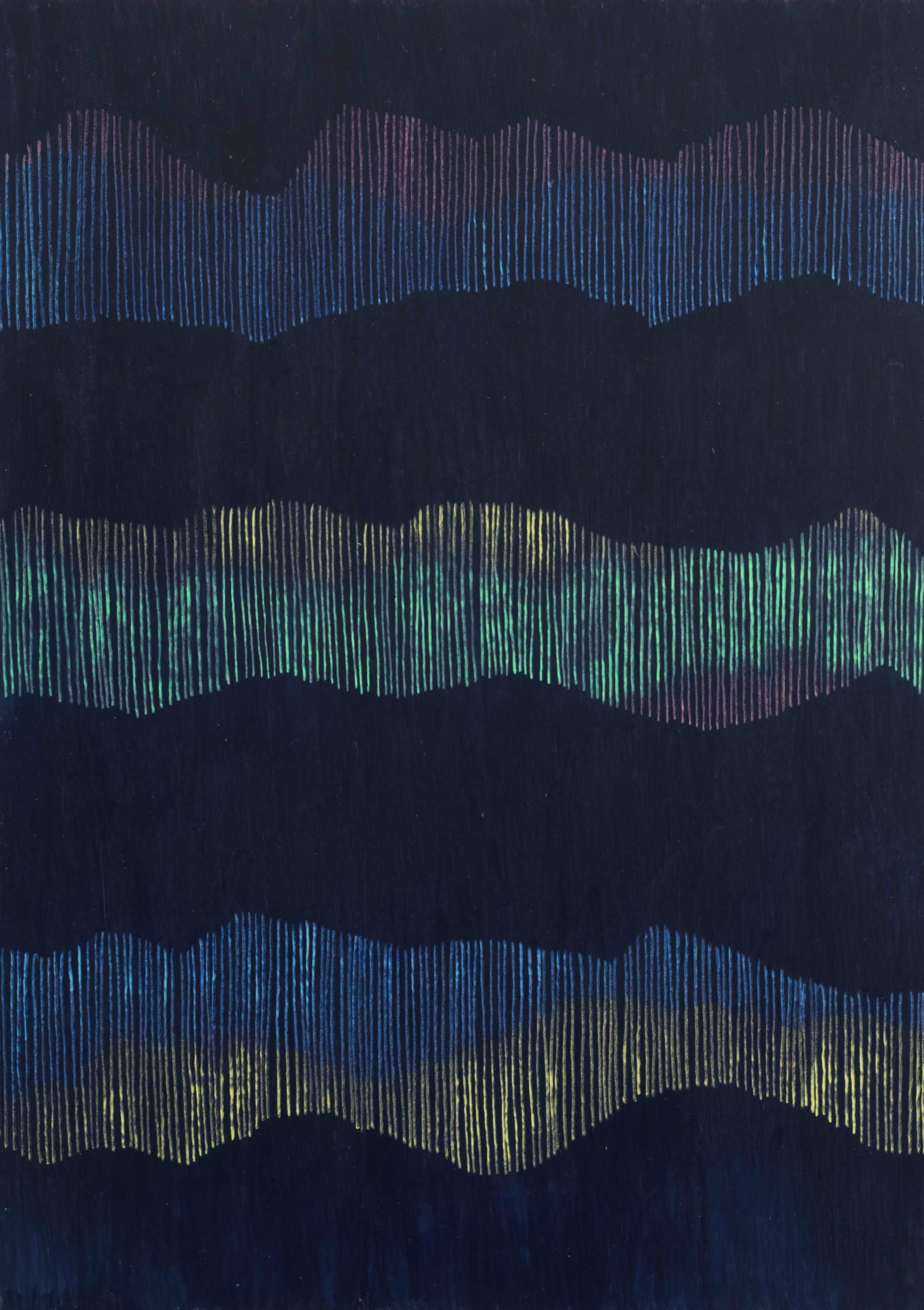
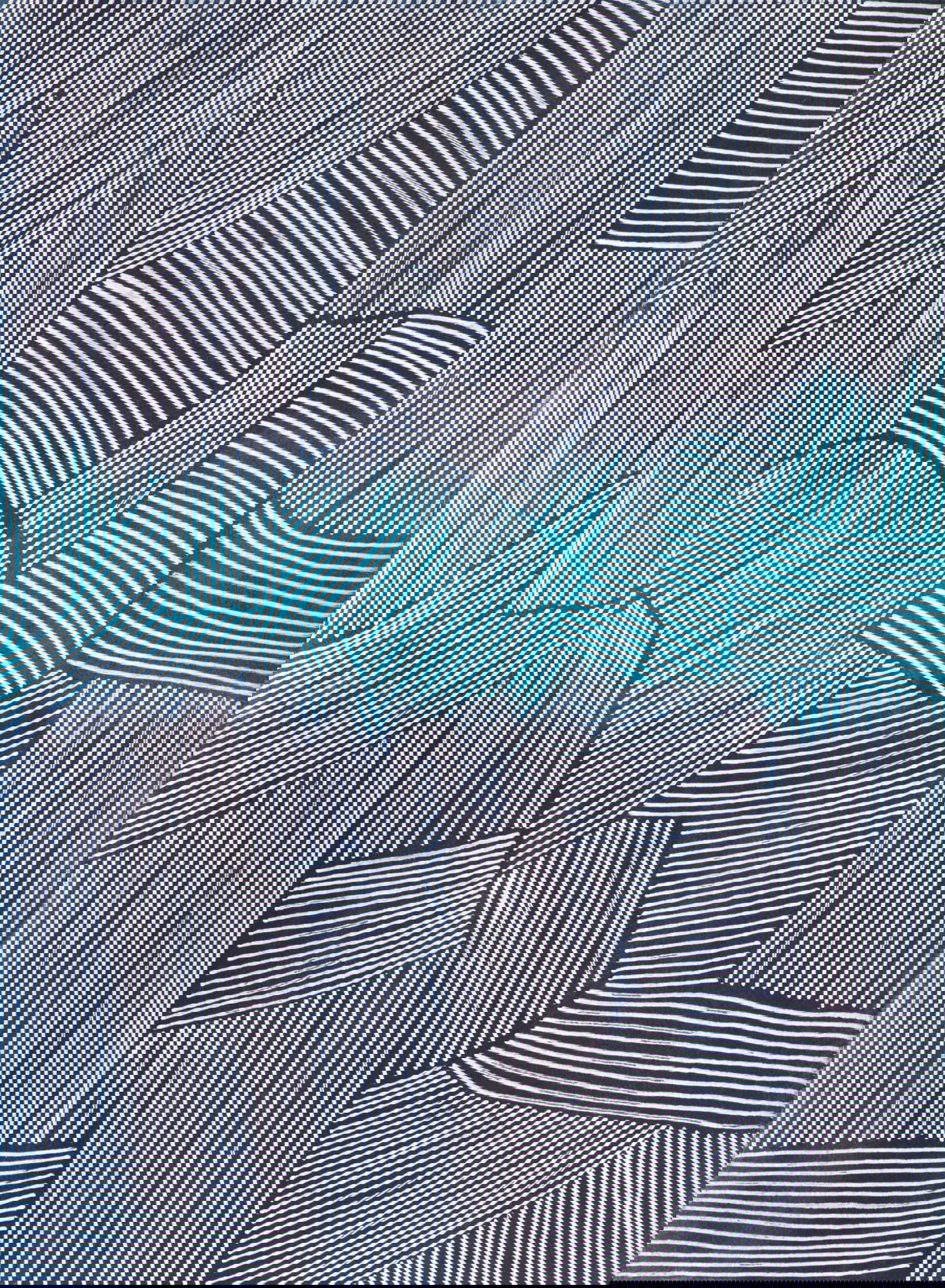
I saw that you prefer small formats, for what reason?
For me it is less about size, more about energy and intensity. The small format often attracts me more.
Is it related to an idea of density and intensity?
It has to do with focus, concentration and brightness. In Agnes Martin’s exhibition, for example, the smaller works unfolded their full effect, with the same intensity as the larger works. Perhaps the smaller formats also possess a bit more intimacy for me personally; everyone’s perception of them is certainly different.
What kind of dialogue do you seek with the viewer in front of your works?
Art activity is initially an intimate dialogue between me and art. My deep connection with nature is expressed in my art. As human beings, we would all do well to see the world in a less mechanistic way and have more courage to get in touch with ourselves and understand the world within us and around us in an emotional way. I have appreciated the fact that the Internet allows viewers from all over the world to see my work. They give me a lot of positive feedback, some saying that my images touch them, that they radiate something calm and peaceful. Maybe I can raise some awareness of the magic of nature. If I can bring them into my universe and thus open theirs, then it is a wonderful thing that makes me happy.
When you exhibit your works, are you interested in the idea that a relationship can develop between the works that can stimulate the viewer to imagine one or more possible stories?
When I exhibit my works, I make sure that each work is self-contained and that the overall effect is harmonious. I am simply providing a starting point, allowing for immersion. What develops in the viewer’s mind has its own dynamic. And that is good, I am not telling a story with a sequence of events, nor do I want to be didactic. At my last exhibition in Wiesbaden, a microbiologist came to see me and said my work gave her the feeling of coming home.
What happens to the works when no one is there to observe them? Can the existence of a work of art be independent of the presence of an observer?
Art is a language. Only in dialogue does it come alive and become charged with meaning. It takes at least one viewer, and that is first of all the artist who comes into contact with his evolving and finally finished work, which has a meaningful dimension. When still more viewers enter into dialogue with the work, an exchange occurs and new impulses enter the world. A work of art without a viewer, or music without a listener, reminds me of the Voyager space probes, a lonely mission flying in the darkness of space, humanity searching for someone else to listen.
In addition to painting, do you cultivate your interest in nature and its manifestations in other ways?
I read essays on nature, enjoy listening to podcasts and watching documentaries. I love stargazing, studying birds, and taking macro photos in nature. Gardening teaches me a lot about plants, soil life and various animals in a very hands-on way.
Some artists stand at the margins of what they do, others, like performers, are often at the center of it, then there are those who look at their work from the top down or vice versa-how do you relate to what you do?
Besides nature and gardening, art is my great passion. I am closely interconnected with my art, it comes from me and to me, and I am very grateful for it.
Warning: the translation into English of the original Italian article was created using automatic tools. We undertake to review all articles, but we do not guarantee the total absence of inaccuracies in the translation due to the program. You can find the original by clicking on the ITA button. If you find any mistake,please contact us.