





An increasingly accessible museum, able to speak to everyone through different languages. On the eve of National Braille Day on Feb. 21, the Capodimonte Museum and Real Bosco in Naples unveiled a new path of tactile-olfactory panels at the Giardino dei Principi , expanding the offer dedicated to accessibility thanks to PNRR 1.2 funding. The initiative is the result of collaboration between institutions, associations and partners, with the stated goal of making the museum complex and park truly usable by all types of users, regardless of sensory abilities.
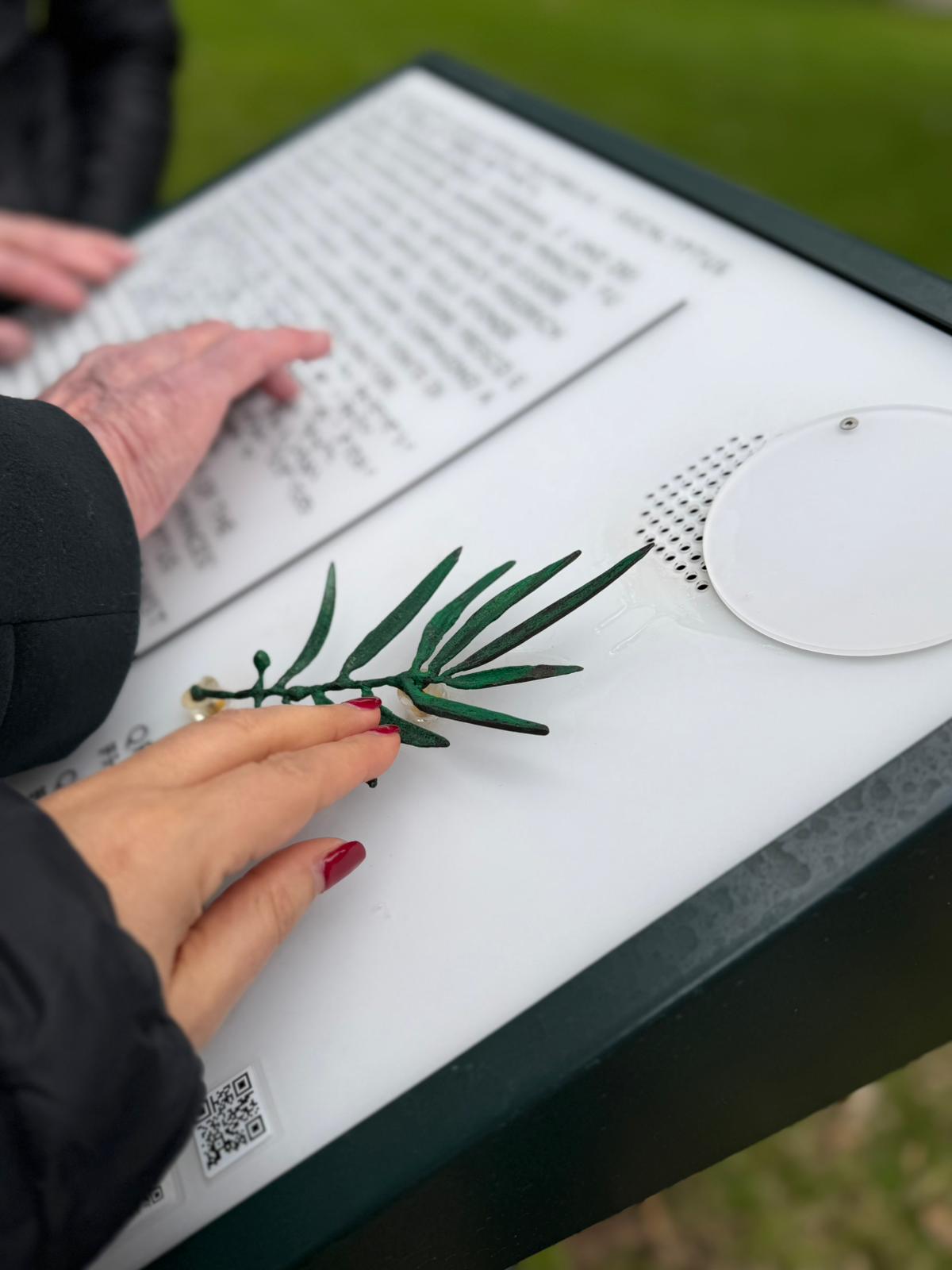
The new tactile orientation panels, in Italian and English, were designed with black text in normal enlarged and raised characters for tactile reading, flanked by raised Braille characters. Each medium has undergone an antibacterial, self-hygienizing surface treatment with a protective function so as to ensure safety and durability. The experience is enriched by natural scented essences and qr codes that link to multimedia content, including LIS videos and audio descriptions, thus integrating tactile, olfactory, visual and audio perception into a single path.
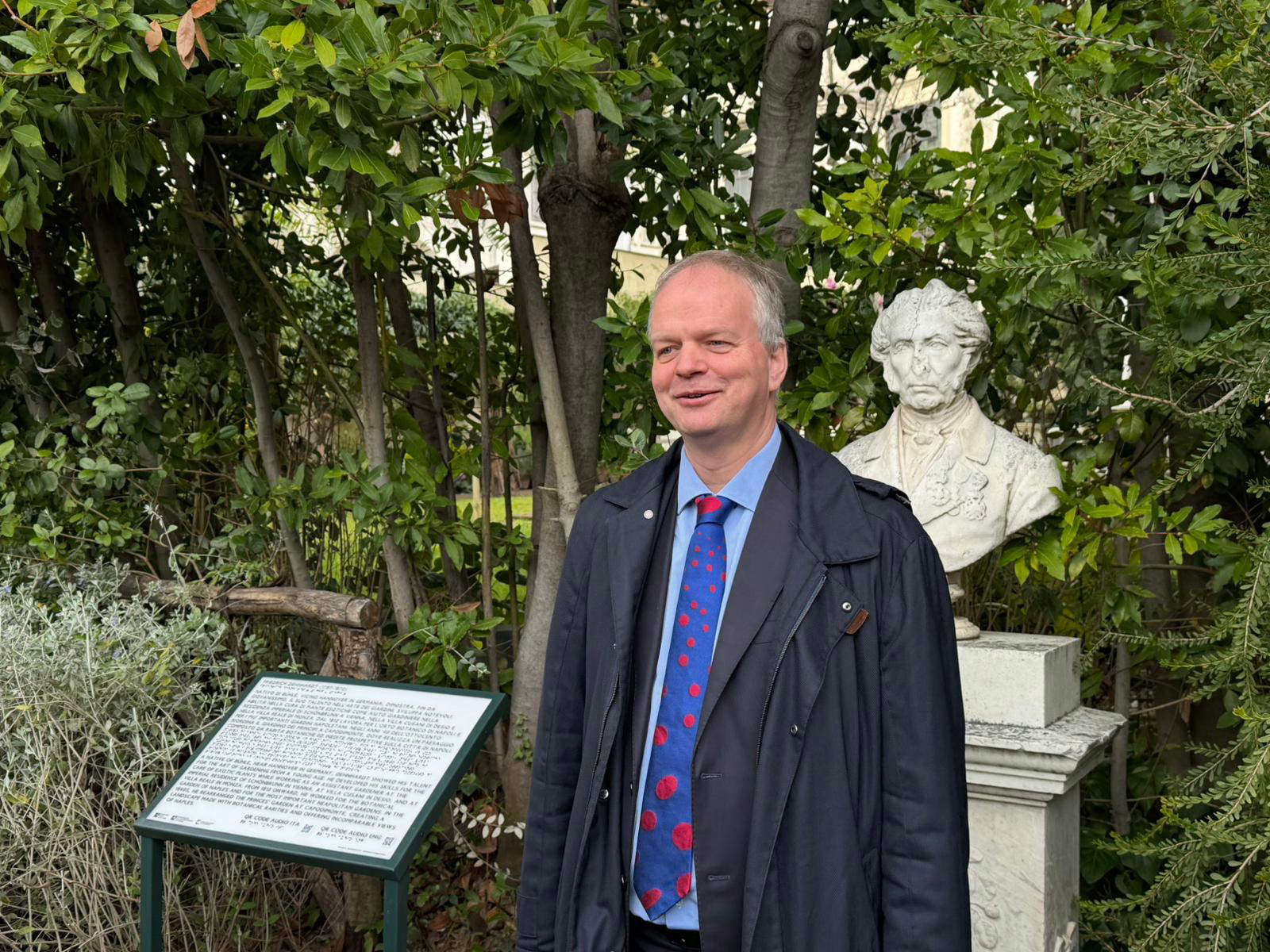
The director of the Capodimonte Museum and Real Bosco, Eike Schmidt, inaugurated the path by emphasizing how the institution really wants to be for everyone. “The project,” he explained, “has followed the principles of accessibility for all types of users, regardless of sensory abilities. In fact, information is communicated with various visual, tactile, olfactory, and verbal techniques and devices. The aim is to make the outdoor spaces truly inclusive as well, as places of knowledge where one can overcome the limits of diversity and have pleasant experiences.”
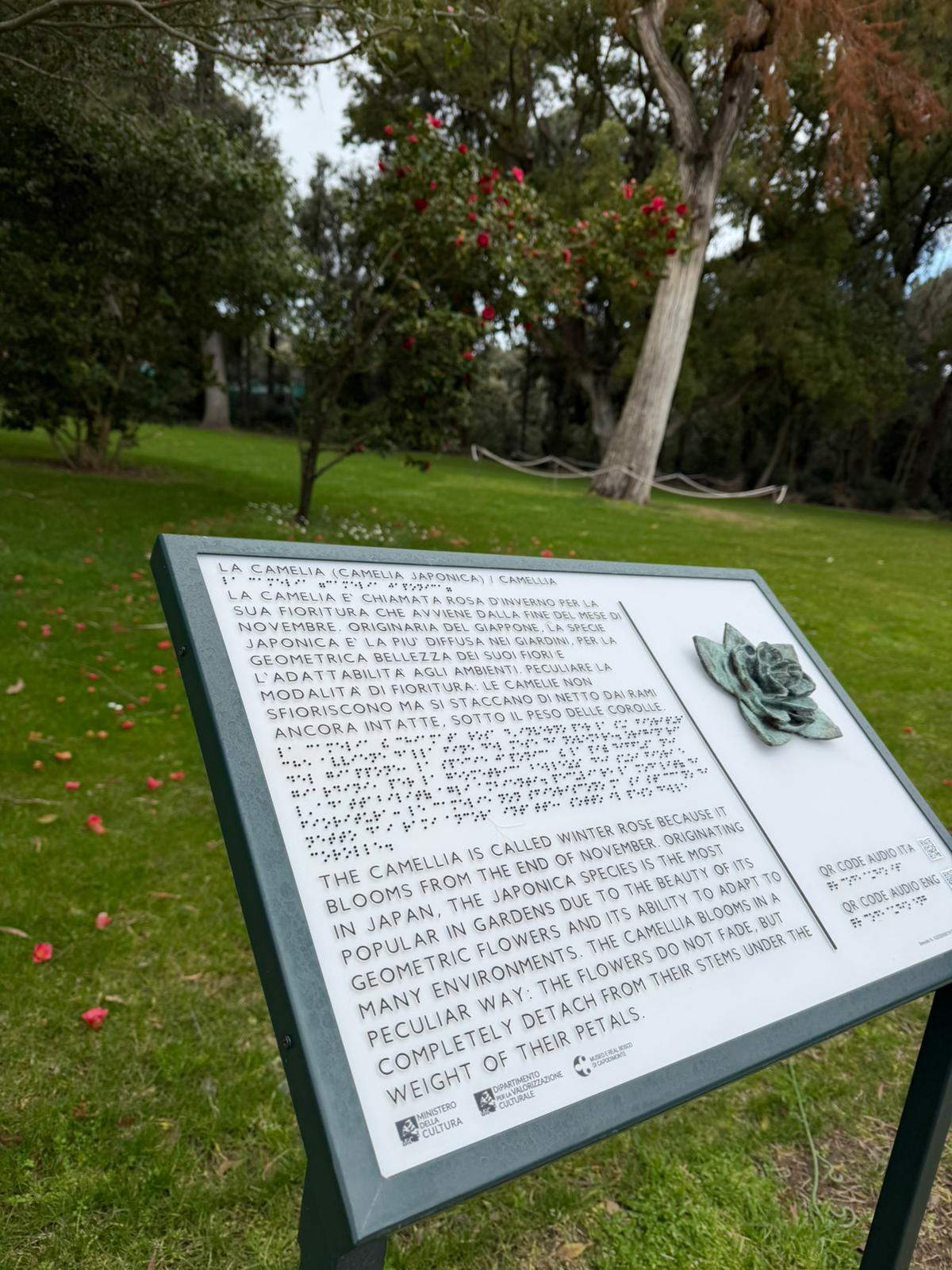
The panels are designed to orient visitors, including those with perceptual deficits, among the points of interest in the 134 hectares of the Real Bosco and to offer an introduction to the historical and landscape value of the recently restored Princes’ Garden, located in close proximity to the museum. Bronze reproductions of leaves and flowers, made from wax casts taken from life, restore the details of the plant species present to the touch, allowing a direct and concrete knowledge of the site’s biodiversity.
The diffuser of scented essences, found on some panels, allows the tactile experience to be associated with the olfactory one, enhancing the rare species in the garden. The qr codes supplement the physical path with digital content, offering videos in Italian sign language and audio descriptions that expand the possibilities of fruition. Two introductory panels provide historical context on the creation of the garden in the 19th century, according to Anglo-Chinese taste, by landscape botanist Friedrich Dehnhardt, who lived between 1787 and 1870. The media are accompanied by qr codes that link to an audio biographical description of Dehnhardt and an LIS video dedicated to the Capodimonte gardens, thus offering a complete picture from both historical and sensory perspectives.
Six thematic panels have been placed in the Princes’ Garden. Among them, the one dedicated to theeucalyptus describes the exotic tree from Tasmania, listed among the monumental trees of the Campania Region, and includes a bronze reproduction of the leaf, a qr code with the LIS video on Capodimonte’s plant species, and a counter for the olfactory experience of the essence. The panel on camellia tells about the importance of this flower in the gardens of Neapolitan royal sites, while the one on camphor illustrates the monumental tree from China. Pink pepper, a fragrant species in the Princes’ Garden, is also the subject of a panel describing its characteristics and peculiarities.
In addition to the fixed panels, twenty portable, double-sided, easy-to-use tactile cards have been produced, with relief graphics on the back and black and Braille descriptions on the reverse. The contents provide information on the entire site, the park around the Palace, the museum, the Princes’ Garden, and the main plant species. The schematic plan of the tour route of the Real Bosco highlights significant elements and has been produced in a stereocopy-compatible manner for tactile reading, with graphics and text in black and Braille, while also being pleasant for normal viewing.
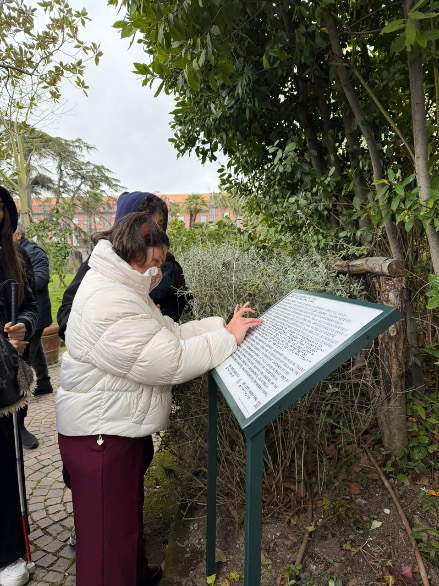
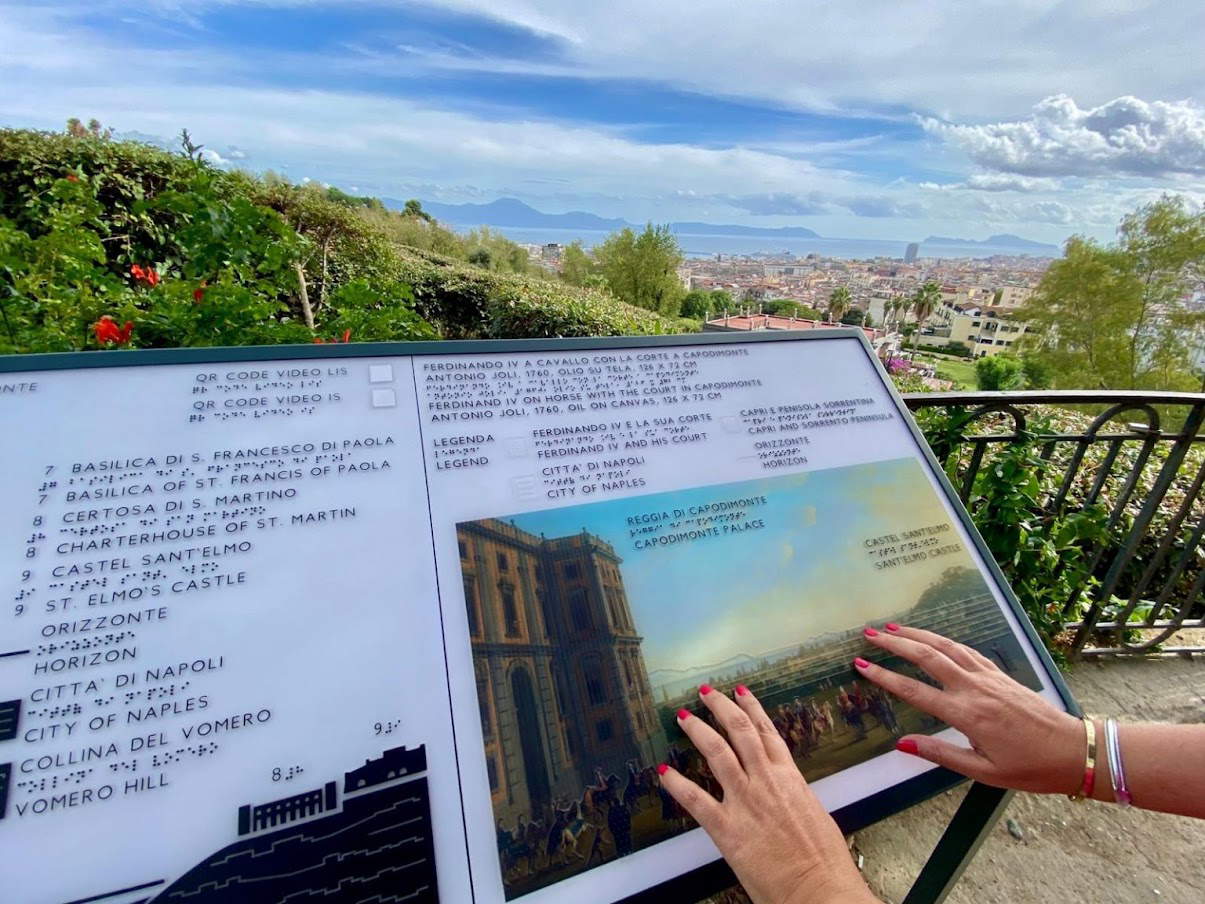
The floor plan has been placed on the website in pdf format, so that blind people can download and print it with printers suitable for the relief procedure, allowing them to learn about the tour itinerary even from a distance. Another panel, called Skyline Belvedere, bears a reproduction of Antonio Joli’s 1760 painting Ferdinand IV on Horseback with the Court at Capodimonte and offers a comparison of today’s view of Naples with that depicted in the work. Again, a qr code links to an LIS video dedicated to the Belvedere at Capodimonte.
One panel is already available at the Reggia, while a second will be placed soon. They provide orientation and access information to the museum and, in addition to the accessible graphic apparatus in Braille and black, are accompanied by qr codes with audio descriptions of the museum and the Capodimonte Royal Palace.
The initiative was presented in the presence of a number of associations involved in the field of disability and inclusion, including the Lega del Filo d’Oro, the Italian Union of the Blind and Visually Impaired with the Naples territorial section and the Regina Margherita Library of the Blind in Monza, Famiglie in Rete Aps, the Tulipano social cooperative, SAAD, Noived Napoli and the Paolo Colosimo Institute. The project was explained by the official architect Chiara Figliolia, PNRR single project manager, designer and director of works, as well as responsible for the graphic design and panels together with Pasqualina Uccello, Promotion and Communication officer, responsible for Accessibility, URP and Heritage Education. Text revision was handled by Maria Laura Chiacchio, Maria Rosaria Sansone and Emma Catharina Dejong for America Friends of Capodimonte. The panels were made by Archimedia, with contributions from Euphorbia for the scented essences and the Antica Fonderia Artistica di G. Di Giacomo for the bronze reproductions. At the same time, rehabilitation and resurfacing work was carried out on the avenue from Porta Piccola to the museum entrance, and two electric vehicles were purchased to transport the public with special needs, further reinforcing the commitment to inclusive hospitality.
|
| Capodimonte more accessible: tactile-olfactory panels arrive in the Real Bosco |

Warning: the translation into English of the original Italian article was created using automatic tools. We undertake to review all articles, but we do not guarantee the total absence of inaccuracies in the translation due to the program. You can find the original by clicking on the ITA button. If you find any mistake,please contact us.



















 IT
IT FR
FR DE
DE ES
ES CN
CN


