





With the closing ceremony held last Saturday, January 10, the curtain finally came down on Agrigento Italian Capital of Culture for the year 2025. The ceremony for the handover of the title to the city of L’Aquila provided an opportunity for an initial review of the results achieved, a balance sheet that nevertheless appears deeply divided between the satisfaction of local authorities and the stern remarks that have come from the accounting judiciary and parliamentary chambers. As reported in a detailed analysis published by Irene Milisenda in Il Sole 24 Ore, the Agrigento experience leaves behind a climate of uncertainty, in which successes linked to international visibility clash with obvious organizational and structural difficulties. The field account offered highlights the suffering of an advanced organizational machine amid many difficulties. Maria Teresa Cucinotta, president of the Agrigento 2025 Foundation, described a journey that began extremely uphill, having taken office at an already advanced stage and with an almost nonexistent structure. The initial lack of a headquarters and dedicated staff forced those in charge to work feverishly to transform the original ideas into tangible projects, a commitment that led to the implementation of initiatives even in territories far from the capital, such as the island of Lampedusa. Despite the fatigue and doubts openly admitted by Cucinotta herself, the Foundation claims to have lived up to its national commitments, guaranteeing the continuity of some activities for the following year as well.
The mayor of Agrigento, Francesco Micciché, gave an overall positive assessment, speaking of foundations laid for future development and stressing the importance of having reopened forgotten urban spaces and increased the city’s international notoriety. However, this vision of the first citizen is not shared by representatives of the productive categories. The president of Confesercenti Sicilia, Vittorio Messina, noted that although there has been tourism induced, the economic impact has fallen short of entrepreneurs’ expectations. The main criticism aimed at the political class concerns the lack of a medium- to long-term strategy and the absence of adequate infrastructure that should have accompanied the cultural events. Without structural coordination, the risk highlighted is that the event will remain an isolated peak of attendance without turning into a real stable development engine.
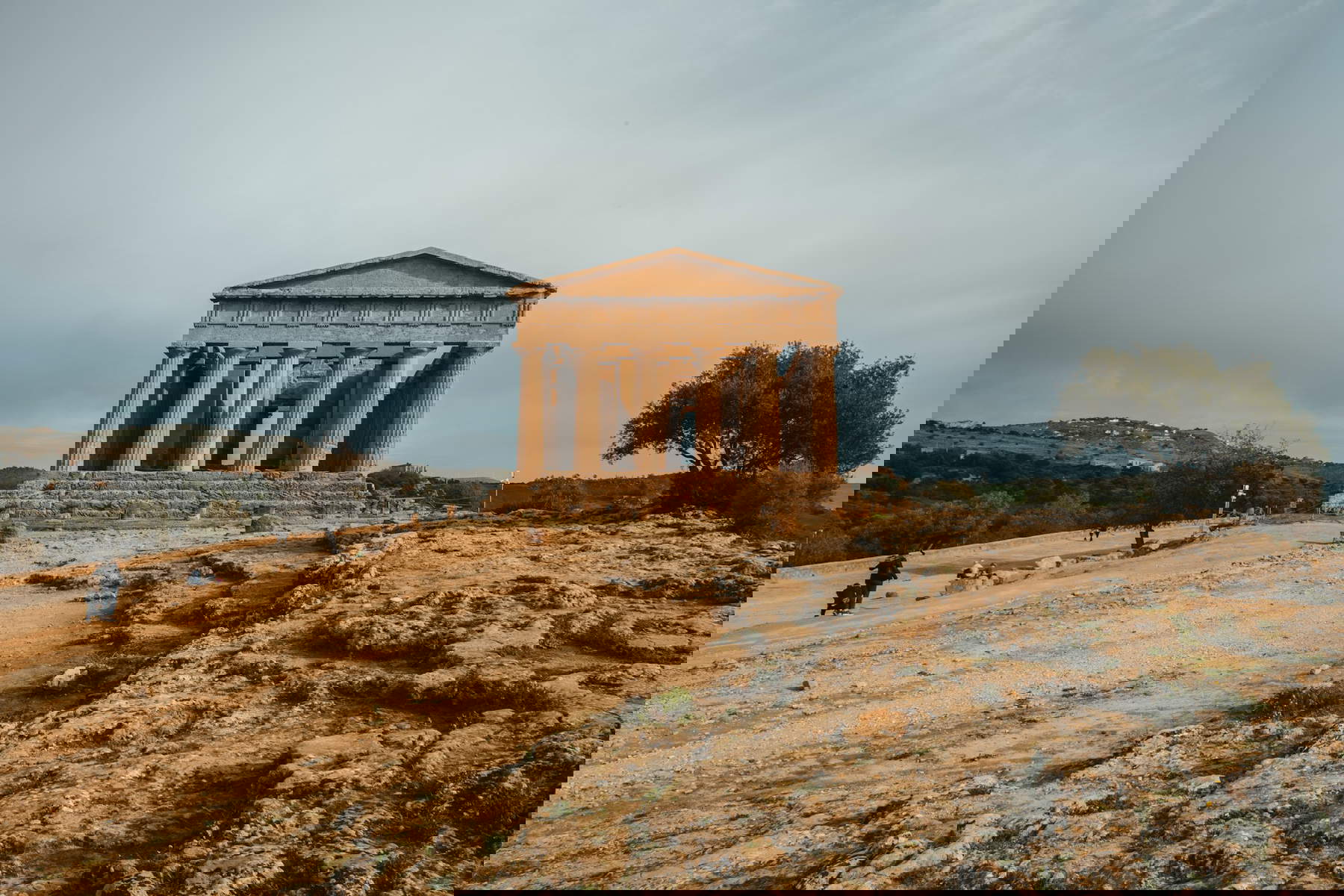
Even more severe was the analysis of Federalberghi Agrigento. President Francesco Picarella denounced how the potential of the Capital of Culture title remained largely unexpressed due to unclear direction and often late promotion. The lack of effective communication has prevented hospitality and commercial operators from building integrated offers, generating a climate of distrust also fueled by concomitant emergencies, such as the severe water crisis that has affected the area. In this context, economic benefits would be concentrated only in limited areas, leaving out much of the local productive fabric. Critical voices also came from the municipal opposition, such as that of former mayor Calogero Firetto, who spoke of a wasted opportunity and of a management that constantly chased the emergency instead of planning with preventive care.
Despite the controversy over management and economic fallout, a total of 1,110 initiatives were surveyed, ranging from art exhibitions to the promotion of reading. Among the most significant cultural legacies cited by Il Sole 24 Ore were the opening of the multimedia museum Metaphorà, intended to tell the millennial history of Agrigento, and the inauguration of the Coral Museum in Sciacca, projects created with the aim of strengthening the territory’s cultural identity and creating a bridge between local traditions and contemporary artistic expressions.
For Agrigento, with the celebration phase over, there remains the challenge of analyzing the final data that will be made public in the coming months, to determine whether the benefits declared by the institutions have actually overcome the criticalities highlighted by auditors and economic categories. The lesson of this year seems clear: the designation as Capital of Culture represents an immensely valuable recognition, but its success depends crucially on the ability to coordinate between the various levels of the state, the solidity of the infrastructure and the speed of a bureaucracy that cannot always keep up with the ambitions of cultural projects.
On the political level, the project’s management has been hotly contested through an immediate-response question submitted to the Chamber of Deputies a few Monday, Feb. 2. Representatives of the Democratic Party, with first signatory Giovanna Iacono, raised sweeping criticisms, calling the initiative “a failure on the implementation and organizational level, characterized by delays, deficiencies in controls, deviations from the candidacy dossier and absence of measurable results in terms of development, cohesion and territorial attractiveness.” According to the parliamentary act, the total investment of about six million euros, initially promoted as a driver for the socio-economic revitalization of the area, has not produced the desired lasting legacy: “in the face of 44 programmed interventions, of which only four have been concluded, and the persistent inability to spend that has led to the blocking of ministerial resources, the Court of Auditors found the absence of suitable elements to demonstrate the achievement of the qualifying objectives of the program, attesting that the title of Italian Capital of Culture has passed on Agrigento without leaving a concrete and lasting legacy.” And again, “despite the seriousness of the assessments of the accounting judiciary,” the PD says, “the Executive has downplayed the critical issues that have emerged, defending a manifestly inadequate management, even in the face of repeated parliamentary solicitations.” The signatories of the question (in addition to Giovanna Iacono, they include Irene Manzi, Matteo Orfini and Mauro Berruto) therefore recalled the deliberations of the Control Section of the Court of Auditors for the Sicilian Region, which highlighted serious criticalities, speaking of a clear mismatch between the promises contained in the candidacy dossier and the reality of the interventions carried out. The opposition pointed out that the city has suffered the passage of the title without being able to capitalize on the opportunity in terms of territorial cohesion and concrete development.
The government’s response, entrusted to Undersecretary Gianmarco Mazzi, sought to downplay the scope of the accusations, first clarifying the contours of state funding. The direct contribution from the Ministry was indicated as one million euros, while the rest of the figure cited in the question would come from different funding sources. The Executive defended the rigor of the control procedures, stating that each disbursement was subject to timely audits of reporting. In particular, it was clarified that the payment of the various tranches of funding took place only after the update on the progress of the work and that the final balance remains suspended pending the final report of the City of Agrigento. For the Ministry, the Court of Auditors’ observations do not represent a definitive rejection, but a contribution to refining future monitoring mechanisms for the program. The Municipal Administration, the government also assures, has communicated that the projects will be completed according to the updated timetable, and the Ministry will continue to ensure that the planned interventions are completed and produce concrete results for the territory.
“The Ministry of Culture, in any case,” Mazzi concluded, “will continue to rigorously exercise its supervisory functions ensuring transparency, accountability and proper use of public resources so that the ’Italian Capital of Culture’ program remains a credible, effective and structural benefit-oriented tool for the communities involved.”
Iacono, in her reply, said she was dissatisfied with Undersecretary Mazzi’s response, reiterating how, even according to the Regional Control Section for Sicily of the Court of Auditors, the program had inconclusive and overall negative outcomes. The deputy also said that she would have hoped for the opening of a discussion on this issue by Undersecretary Mazzi, given that the program “Agrigento Italian Capital of Culture for 2025” in her opinion would not have brought any benefit to the inhabitants of the city, and consequently condemned what she said were minimizations, carried out by the government representative to defend the municipal administration. In short, according to Iacono, after this experience, there will be no benefit left for the city, the province and Sicily. And a year after the first warnings of disaster, the tenor of the comments is still the same. A flop announced?
|
| Agrigento capital of culture 2025, a disaster: the case reaches Parliament |

Warning: the translation into English of the original Italian article was created using automatic tools. We undertake to review all articles, but we do not guarantee the total absence of inaccuracies in the translation due to the program. You can find the original by clicking on the ITA button. If you find any mistake,please contact us.




























 IT
IT FR
FR DE
DE ES
ES CN
CN


