



by Redazione 16/02/2026



Categories: News / Disclaimer
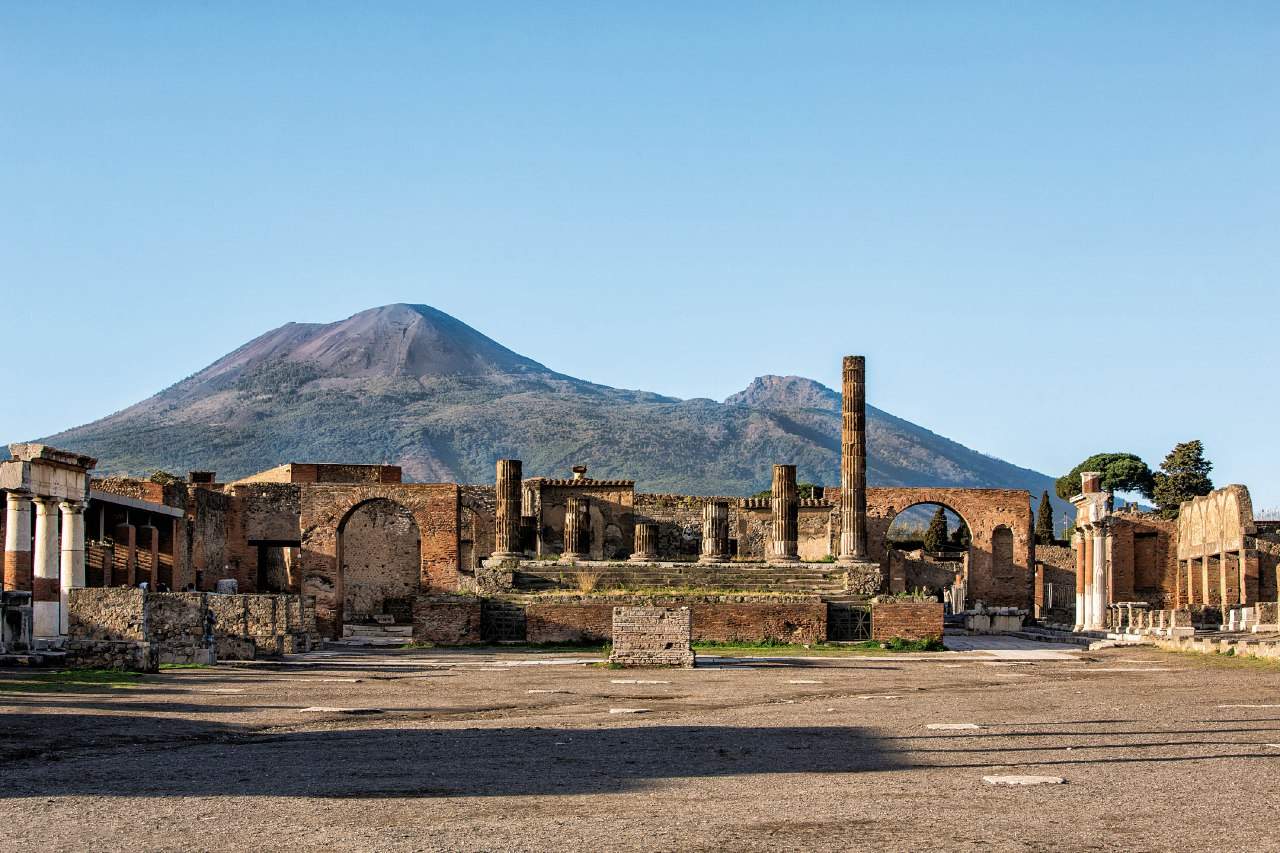
Pompeii's tour guides are protesting the Archaeological Park's decision to eliminate the permanent post that has been in operation for many years. However, it is time for the institute to bring its internal service in line with that of other parks and museums.

Pompeii ’s tour guides are up in arms against the Archaeological Park headed by Gabriel Zuchtriegel following the decision to cancel the guides’ permanent post inside the excavations, which had existed for 15 years. According to the guides, the communication reportedly came in verbal form on Christmas Eve and then became final on January 6. Meanwhile, a minimum of context: the permanent garrison had been in place since July 1, 2010. The permanent post, reads the disposition of the Deputy Commissioner for the Emergency of the Archaeological Area of Naples and Pompeii (who at the time had authority over what was happening in the park), served to “organize and regulate guide services for the benefit of visiting tourists,” and to collect daily “requests for guide services from visitors.” In essence, the station was to offer a service to all those who arrived at the Pompeii excavations and wanted a guide. The Park’s argument, however, is that the situation in 2010 was emergency.
“The garrison inside the site,” reads a note from the Pompeii Archaeological Park, “was born in 2010 in an emergency situation to regulate the interaction between visitors and private guides, who act on their own and are in possession of the respective qualification. Since then, the situation has changed profoundly: the emergency has been overcome.” The park also appeals to an Antitrust decision dating back to 2018: the body had challenged the posts in Pompeii and other sites, which were subsequently eliminated, “leaving Pompeii’s garrison as the only remaining one of its kind,” recalls the Park, which also points out the fact that museums and archaeological parks perform by law, according to ’Article 117 of the Cultural Heritage Code, also provide cultural and educational services, either through ministerial professional figures, such as “Assistants to fruition, reception and supervision,” or through partnerships and concession contracts, which always follow strict selection procedures and public evidence. “In general, especially as a result of the Covid-19 pandemic,” the Park’s memo continues, “demand for the service has greatly declined, as many visitors already arrive with the guide booked online or through an agency. The free exercise of the guiding profession in this and other forms is still guaranteed, as in all other cultural and archaeological sites.”


From the park’s side, however, also comes a jab at private guides acting through the post: “In Pompeii there has been a proliferation of complaints related to the garrisoning of private guides within the site (lack of transparency, poor quality of the visit and declared language skills, lack of fiscal invoicing), on which, however the Park, despite several interlocutions with the people concerned, could not intervene in a decisive manner, since the guides are freelancers to all intents and purposes, only a part of whom belong to various professional associations that can act as interlocutors. The Park, therefore, was being identified with a private service that in reality was beyond its competence and whose presence within the site - as well as the costs borne by the public body - now appeared to lack the necessary conditions for the release of public space to private operators.”
Also at the root of the decision to cancel the post is the Park’s new regulations, which were passed by the Board of Directors in 2025 and which, in incorporating the various legal and cultural developments in the field, therefore, no longer provide for the garrison within the site. In addition to this, the Park has equipped itself to guarantee an educational service for the public, “without thereby precluding the presence of private guides within the site,” the institute points out, “thus overcoming an anomaly and bringing the arrangement of the educational and guided tour service in line with that of other national and international museums and parks. For visitors, this in no way translates into an interruption of a public service, but rather into greater transparency in dealing with the choice of cultural offerings between public and private that they want to take advantage of.”
The change, according to director Gabriel Zuchtriegel, “will be good for everyone, including the guides. When I started in Paestum, I was held against me for having worked as a guide before, as if that was disqualifying. Instead, it is a difficult, beautiful, and important job, and the Park will continue to work to ensure that guides who work with great professionalism find the best possible conditions. Just in these weeks a refresher and training course for guides is being held at the Park, which is very well attended, and this makes us happy.”
The tour guides, however, are not up for it. In fact, the union FLAICA UNITI CUB, together with the movement “The guides are WE!” have declared a state of agitation in the category. According to the acronym, “the posts of the tour guides, which have been active for decades, find their basis in Article 15 of Campania Regional Law No. 11/1986, which identifies the Pompeii excavations among the sites targeted by permanent tourist garrisons. For decades they have provided an essential public service, ensuring qualified and multilingual reception for visitors. The closure of the stations also appears contrary to the Technical Specifications of the Integrated Museum Services of the Archaeological Park of Pompeii, which expressly provides for the management of the guided tour stations, as well as the principles of the free profession enshrined in Law No. 190/2023.” Following the closure, the union points out, “the tour guides were removed from the entrances of the site and invited to operate outside the perimeter of the Park, in a territorial context in which municipal ordinances are in force that in fact prevent the exercise of the professional activity, resulting in a serious violation of the right to work.” FLAICA therefore calls for the immediate restoration of tour guides’ stations inside the Pompeii Archaeological Park, the reinstatement of the priority box reserved for tour guides, the abolition of the obligation for tour guides to stand in line with other visitors to collect their entrance ticket, the overcoming of the obligation to physically collect the entrance ticket, and the opening of an urgent confrontation with the category representatives. At the same time, the union has formally requested the intervention of the Campania Region’s Department of Tourism, the Ministry of Culture and the Ministry of Tourism, “so that conditions of legitimacy, balance and protection of work are restored at a site that is a heritage site and a public good of the community.”
The climate, however, is far from relaxed. The daily newspaper Il Mattino reported a letter filled with insults and threats sent to director Zuchtriegel, who has already indicated his intention to press charges over what happened. The associations leading the protest have already distanced themselves from this episode, but remain firm in their desire to rebel against the Park’s decision. According to the president of the Campania Tourist Guides Association, Susy Martire, “the ultimate goal is the park’s profit,” she told regional Ansa. “After Zuchtriegel’s words what was a suspicion has become a certainty. After ticketing, audioguides and bookshop, now the same concessionaire will take over the guided tours. In short, it is clear how everything has as its only goal the internalization of services. An entire category is besmirched by lying about the lack of transparency of fees. Apart from the fact that these are deregulated, but at the very entrances to Pompeii it was we category representatives who demanded for transparency that the recommended rates for a two-hour visit be posted.”
“As we had agreed together several times at the tables,” the category representatives again told Ansa, “the park was supposed to check whether the regulations of the post were being respected and to suspend, in the case of repeated violations, the people responsible, but not to eliminate by also harming those who were providing an excellent service. So excellent that the year before he himself had signed a tender specification in which he also included the guided tour service at the entrances. It is regrettable that the management did not understand the role of the guides in the park, who have always been sentinels able to help and point out problems to those working in the offices. After all, it is we who proudly present Pompeii to the world and who try to hide the critical issues of the archaeological park.”
The protest was also joined by Confguide Confcommercio, which comments on the situation as follows through its representative Paolo Mazzarella: “What is alarming in your statement are the two fundamental points that stand out: first, that this act presents itself as the prologue to a broader project of internalizing guide services; second, even more serious, is the discredit that with his words, Zuchtriegel attempts to cast on an entire category of professionals, which in Campania alone numbers more than two thousand, certainly not all of whom can be accused of the inferences he insinuates. It is strange, if not suspicious, that just one year after the entry into force of the national law reorganizing the profession, which finally creates a national list of licensed guides under the aegis of the Ministry of Tourism and definitively sanctions that only those who are included have the authorization to explain cultural places to visitors, from the other side a high official of the Ministry of Culture makes moves to delegitimize guides and their role in the preservation is popularization of our extraordinary heritage.” At the moment, however, the Park remains firm in its decision.
|
| Pompeii, tour guides in revolt against the closure of their post in the park |
Warning: the translation into English of the original Italian article was created using automatic tools. We undertake to review all articles, but we do not guarantee the total absence of inaccuracies in the translation due to the program. You can find the original by clicking on the ITA button. If you find any mistake,please contact us.