



by Anna de Fazio Siciliano 05/02/2026



Categories: Opinions / Disclaimer
Twenty years after its founding, the Mimmo Rotella House of Memory becomes an opportunity to reflect on the relationship between contemporary art, territory and cultural participation in Calabria. What processes can we activate for it to have a stronger impact on the city and the territory? How could it dialogue even more easily with its users? Anna De Fazio Siciliano's reflection.
We are in Calabria, a land of millennia-old history and traditions, and in the footsteps of Mimmo Rotella, an artist of international prominence born in Catanzaro in 1918. His creative “genius,” recognized among the most extraordinary minds on the contemporary art scene, has never ceased to shine; on the contrary, he has continued to experiment until his last years with different artistic techniques, from decollage and retro d’affiche, to Art-typo, from Mec-Art processes, to blanks. We find ourselves right in his hometown of Catanzaro, where he resides in the small but precious House of Memory, which is almost completely out of sight among the narrow streets branching off the main street, precisely in vico dell’Onda 1. But why have we come so far? What was there that we could not see and understand in other places and other museums in Rotella?
The opportunity that visiting Calabria offers us is to once again open a glimpse into the artistic dimension of Southern Italy. First of all, from this place, we have the opportunity to re-immerse ourselves in the works of the master, but not only. We can rediscover his fascination, relive his artistic adventure, and then, starting from here, we can embark on a more in-depth investigation of the performance of the case-museums, to understand how these realities, often private and endowed with scarce resources, live and breathe, what role they play in preserving and transmitting even the most recent memories. In a word, we are at the Mimmo Rotella House of Memory, to better understand their functioning of realities and approach them to highlight them, raise their possible critical issues, and help improve them to make our service useful to the community.


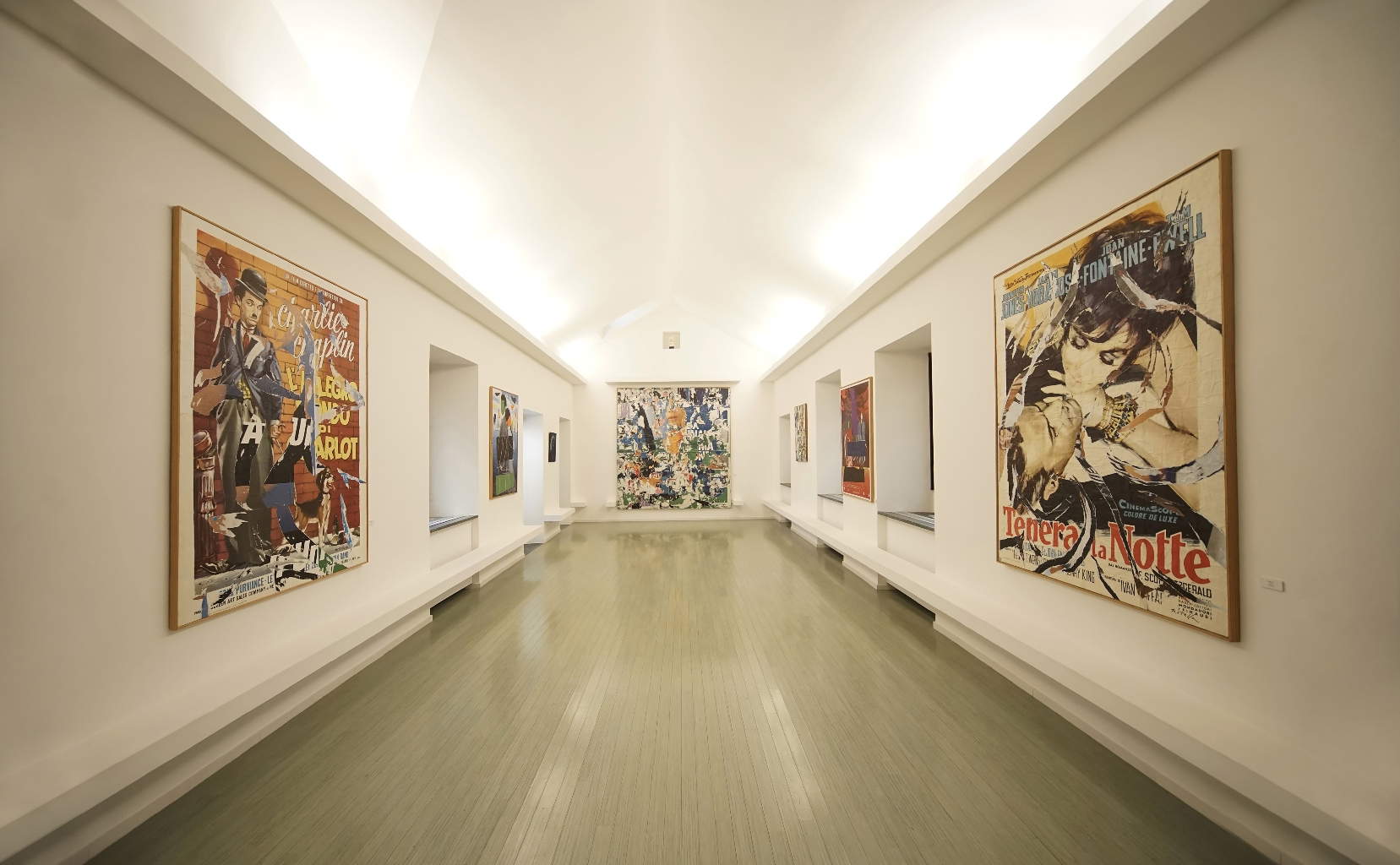
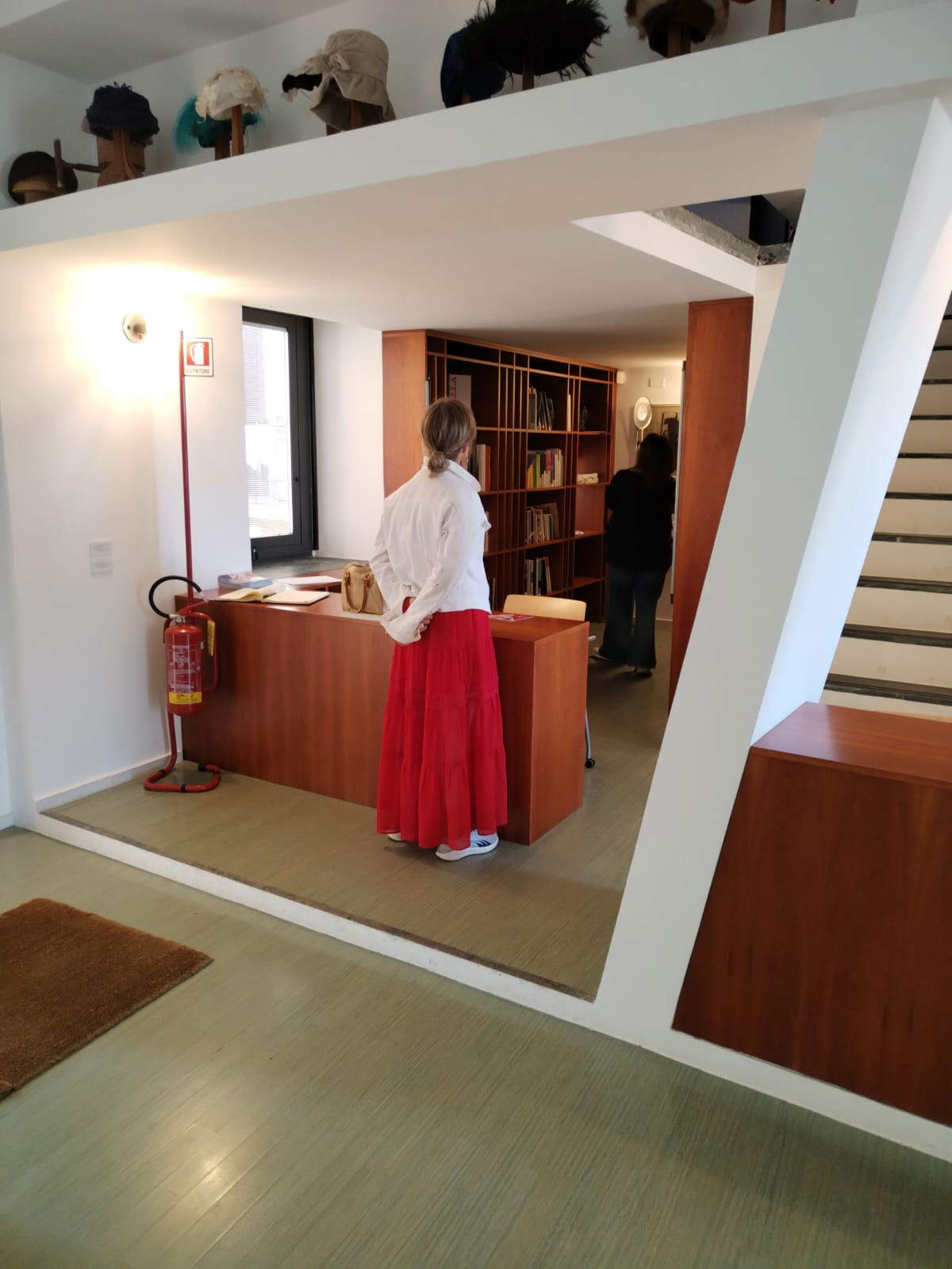
What are the functions and goals of a house-museum? Being able to carry them out is sometimes a fascinating and really complex challenge. Inside their walls much more should happen than a simple exhibition of works or objects: a house-museum should be a crossroads of emotions, reflections and cultural connections. A living place that stimulates dialogue between past and present, between art and community, between citizens and artists, a place where cultural short-circuits can be triggered that can shake up and renew the social fabric. Imagine what could happen inside them if, as in this case (the information comes to us from the custodian of the place), in addition to the rich programming provided, there were also interactive exhibitions, creativity workshops, meetings with artists, seminars, master classes. And, even more important would be to imagine what could happen out there, beyond its perimeter, if this small museum, just as it was in the artist’s will, managed to become a more effective point of reference for the community, if it was able to awaken local pride and spread a message of beauty and memory throughout the territory, starting from the regional capital. Perhaps starting with educational paths that would involve not only the younger generation represented by the students of the Academy of Fine Arts (whose headquarters is not far from here at all) but also tourists and users of all other ages. What value would they bring to the visit, the city and their lives, enriching it more by experiencing art on a daily basis?
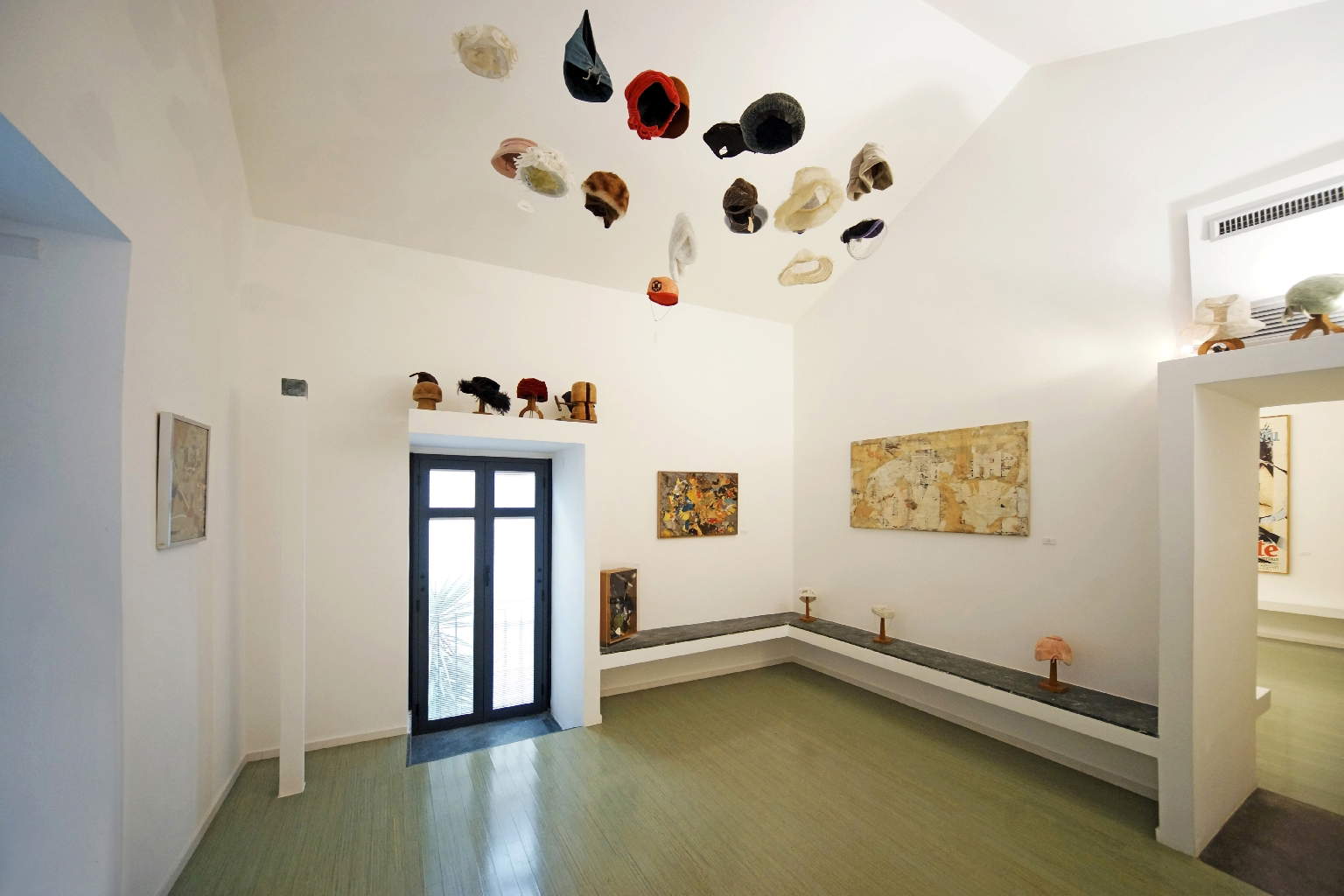
The House of Memory project, founded by the artist himself a year before his death in 2006, finds its soul in the space itself. The small museum was born from an intuition: to transform the rooms of Rotella’s house, also used as a workshop by his mother, Teresa Curcio, a hat milliner much loved by the ladies of Catanzaro “bene,” into a place of art and memory. The reworking of the space, overseen by architect Marcello Sestito, has created an environment that combines intimacy with a scientific profile.
If, in the aftermath of its opening, the museum’s primary goal was to create a landmark in Rotella’s town, a “memory center” capable of nurturing local art and culture, a center that, through the artist’s multifaceted oeuvre, could radiate into the territory, bringing beauty, stimulation and reflection, to this day we wonder if Rotella’s house museum has succeeded in winning this not easy bet.
Its real success depends on the ability to make it live, to make it breathe as a dynamic organism capable of engaging and inspiring, of transforming memory into an engine of cultural innovation. But making a positive and lasting impact on civil society often requires a very long process. However, we cannot help but say that this place, which identifies itself as a private, nonprofit foundation, has not sown a “seed” in the territory, with limited resources, over the course of two decades. Despite the “impediments” that a land like Calabria, felt to be marginal and difficult to reach, often presents, it is slowly shaping itself as a cultural collector where contemporary art, even in its complex decipherment, has been able to intertwine with the community.
There has been no shortage of exhibitions, including those dedicated to other artists, such as Aaron Demetz, Cesare Berlingeri, Chiara Dynis and others, and neither have the visits by educational institutions and Academy students. The new curatorial programming is entrusted to an expert on Rotelli’s work, such as Alberto Fiz; a feather in the cap for our house-museum. Although the spaces of the museum, difficult to set up because they are cramped, have been exploited in the best possible way, with works on the walls and educational panels well in view, and although the history of Mimmo Rotella is correctly documented and summarized, the visit to the House of Memory solicited us some questions that we insert here, in the expectation that a discussion can be opened. Namely, we wondered how well the museum reality was received by residents. How was it perceived that its birth took place only in 2005, that is, when Rotella was already well advanced in years and only at the end of a career that saw the artist travel from America to France with a long stay in Rome. Again for this house-museum, we wondered when the results that had been set can be said to have been achieved. And if, on the contrary, there are still obstacles to overcome, what they are and how they could be overcome. Was the often difficult deciphering of contemporary art a deterrent? And finally, most important question: can the enjoyment of the collection be said to be satisfactory? Does the area “respond” to the museum’s proposals? And how?
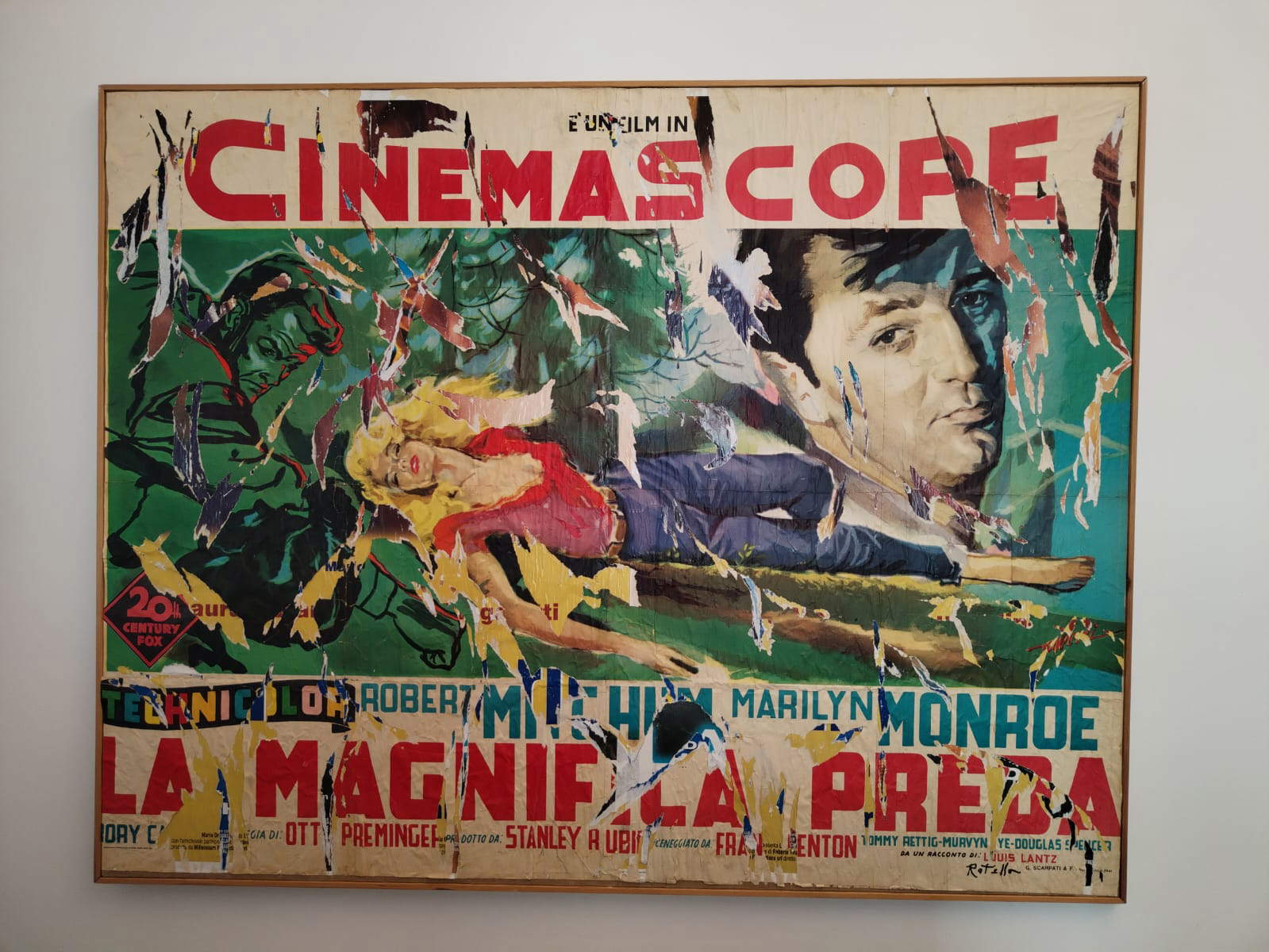
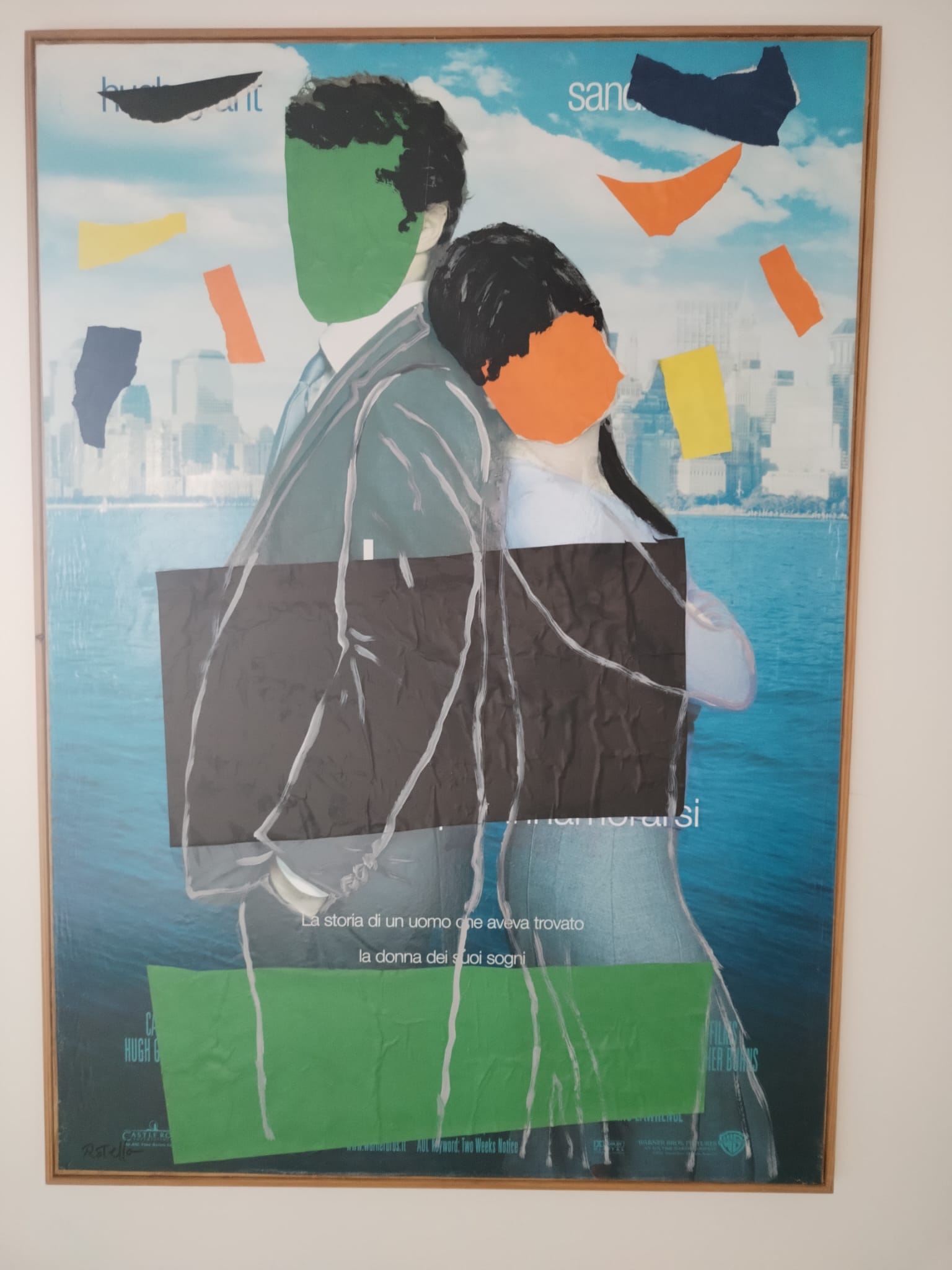
The House of Memory in Catanzaro twenty years after its birth is a fairly well-known reality, not considered “peripheral” like many small museums in Calabria. Without numbers in hand (it was not possible to have them) but, while considering them (alas) “meager” compared to the figures of other Italian museums, and similar compared to those of other Calabrian museums (including the MARCH in Reggio Calabria), Rotella’s house does not seem poorly attended: it is a place where, as we said, several exhibitions have been inaugurated, in addition to the important one held in 2019 to celebrate the centenary of Rotella’s birth.
So what remains to be done? What processes can we activate for it to have a stronger impact on the city and the territory? How could it dialogue even more easily with its users? Always keeping in mind that one of the goals of Mimmo Rotella’s artistic “revolution” consisted precisely in tearing from the walls that indifference that seems to be on the rise in our society in recent decades. With his original works and an absolutely subversive language, Rotella wanted to activate an “overthrow” of society, aiming to shake the collective “insensitivity” from its foundations. Through the force of his protest and tear, he wanted to awaken dormant consciences, transforming art into an act of rebellion and deep social reflection.
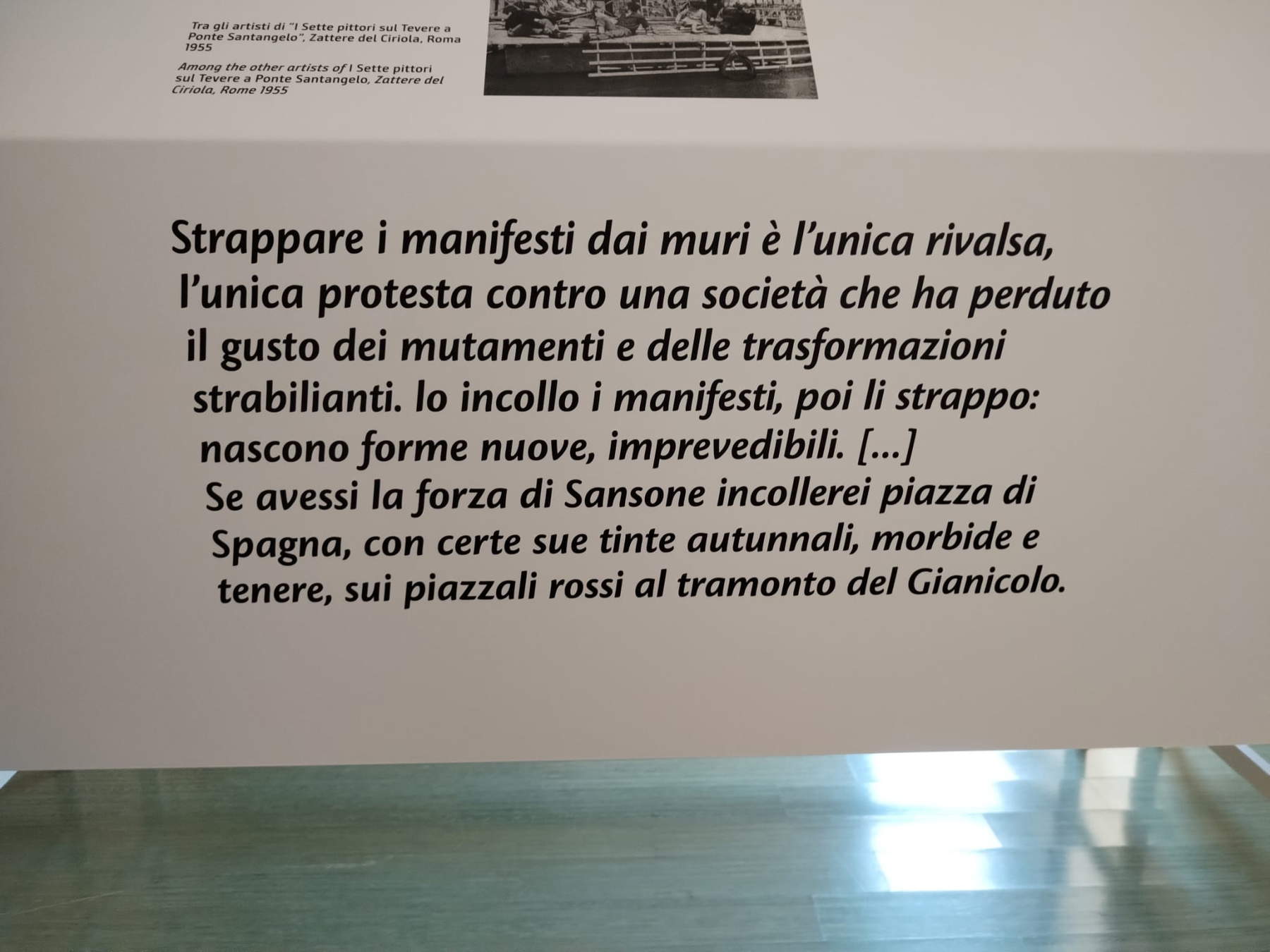
In short, can we really say that Rotella has “come home,” or is it too early to say so and instead, Rotella is still “out of place”? Does he still live, as he claimed in a society “that has lost its taste for change and mind-blowing transformations” ? The intent of this article is not necessarily meant to be polemical: instead, we would like to stimulate a discussion to really produce a “tear” to the disinterest and apparent immobility of things, to positively alter a status quo that often in Calabria appears unchangeable when not irreversible.
Warning: the translation into English of the original Italian article was created using automatic tools. We undertake to review all articles, but we do not guarantee the total absence of inaccuracies in the translation due to the program. You can find the original by clicking on the ITA button. If you find any mistake,please contact us.