



by Noemi Capoccia 23/12/2025



Categories: Ancient art / Disclaimer
In Antwerp, the Phoebus Foundation is unearthing the portrait of Cosimo III de' Medici at age eight by Flemish painter Justus Suttermans, facing complex challenges related to old treatments and a medium altered over time.

Halfway through her fellowship at The Phoebus Foundation, Brazilian restorer Aline Assumpção is working on the Portrait of Cosimo III de’ Medici as a Child, a work by Flemish painter Justus Suttermans, also known in Italy by the Italianized name “Giusto,” (Antwerp, 1597 - Florence, 1681). Dated 1649, when Cosimo was just eight years old, the painting testifies to Suttermans’ role as court painter to the Medici family and his ability to combine Italian and Flemish painting traditions. The artist depicts the young duke immersed in a delicate play of light and shadow, revealing the softness and sensitivity of his stroke.
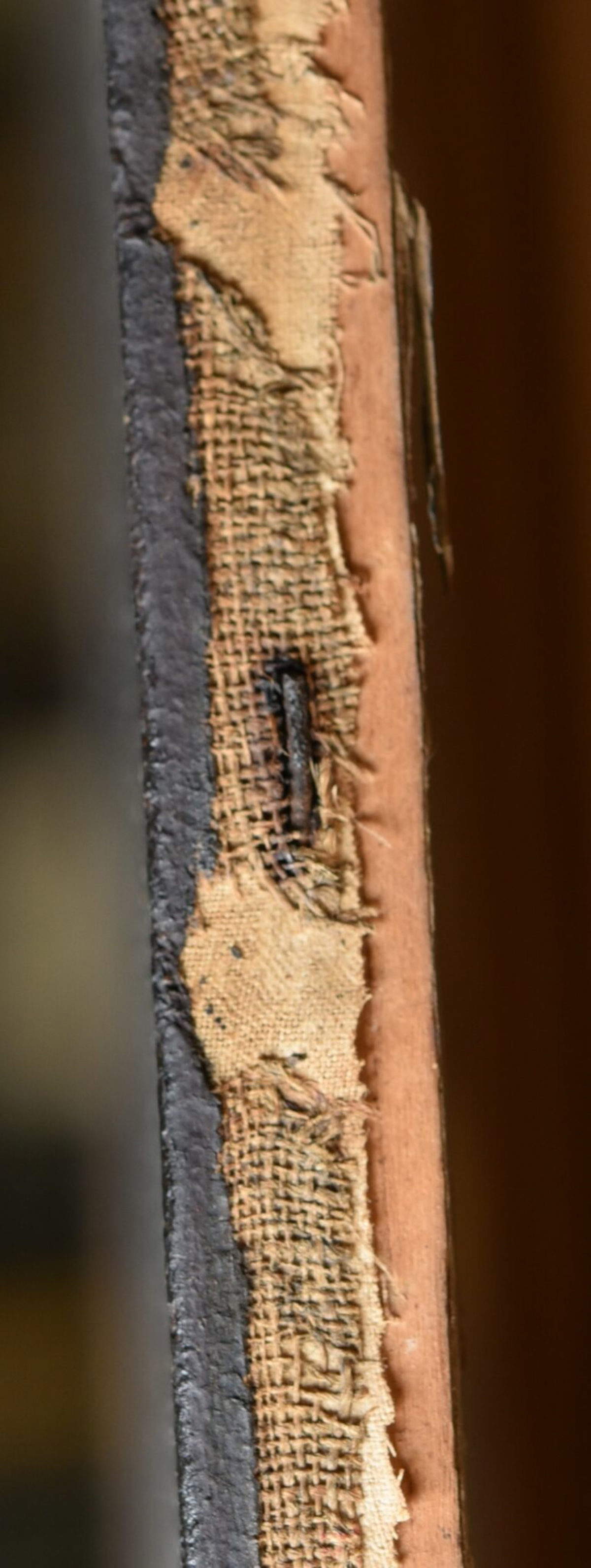
The portrait had heavily oxidized varnish that had obscured the composition and blurred the original chromatic nuances. Previous restoration work had left retouches and additions, while a canvas reinforcement had altered the work’s original dimensions, adding six centimeters of linen along the bottom edge and slightly changing its proportions. Traces of earlier nailing reveal that the canvas was originally stretched on a smaller frame. Curiously, the reinforcement consists of four pieces of linen sewn together to form a kind of patchwork, a solution whose motivation remains uncertain, other than the possible unavailability of a canvas of the desired size. Given the obvious deformation of the support, structural intervention became necessary.


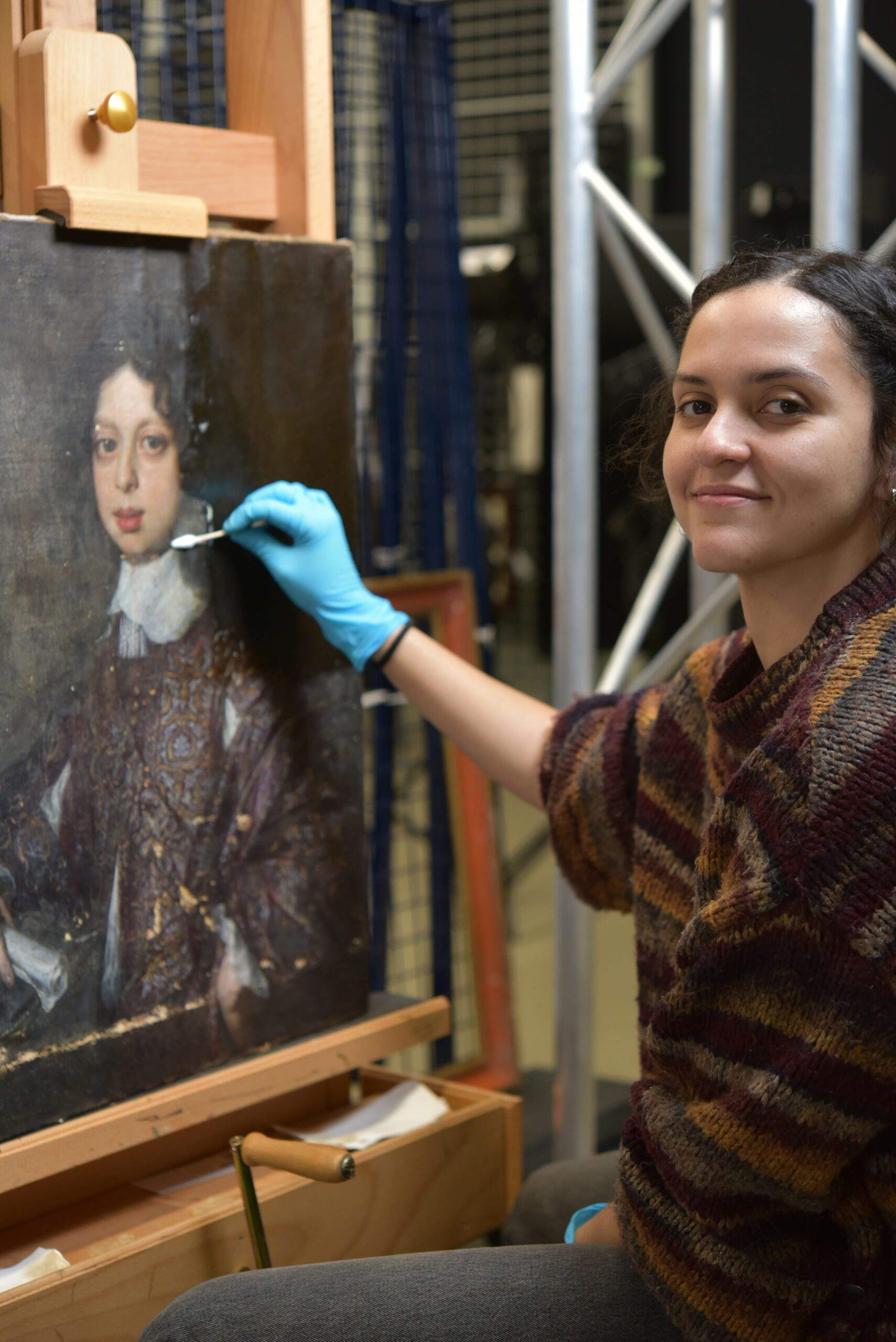
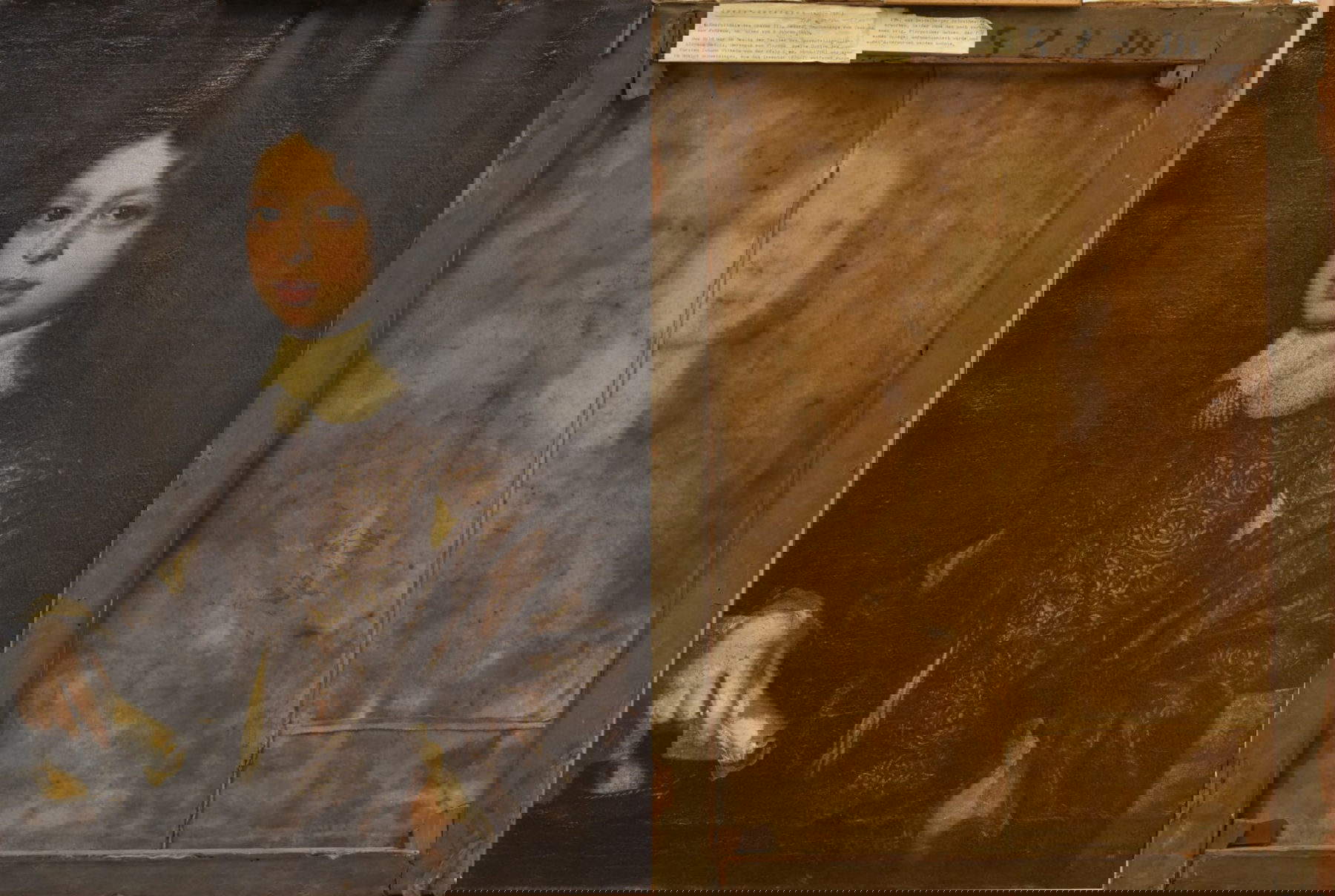
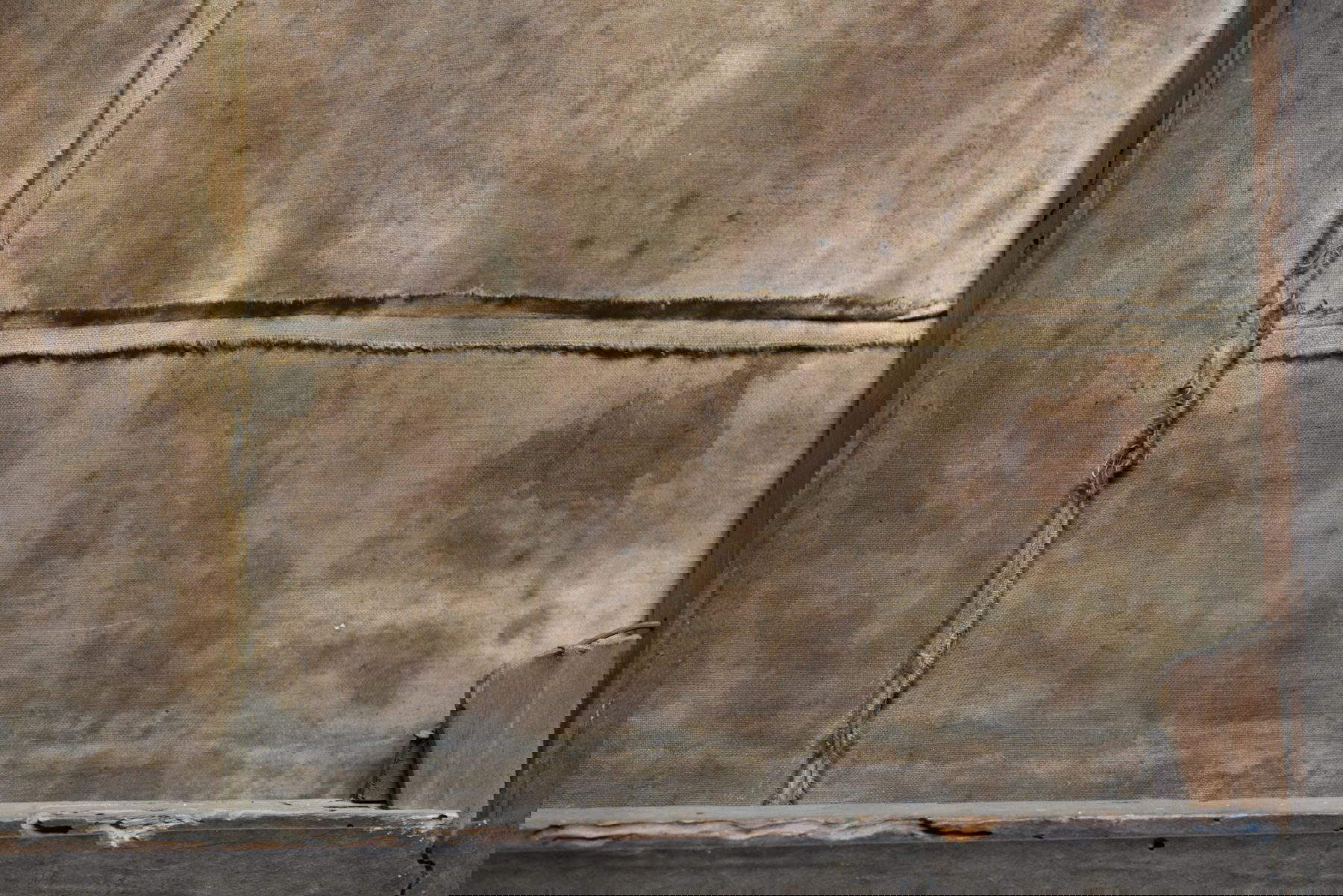
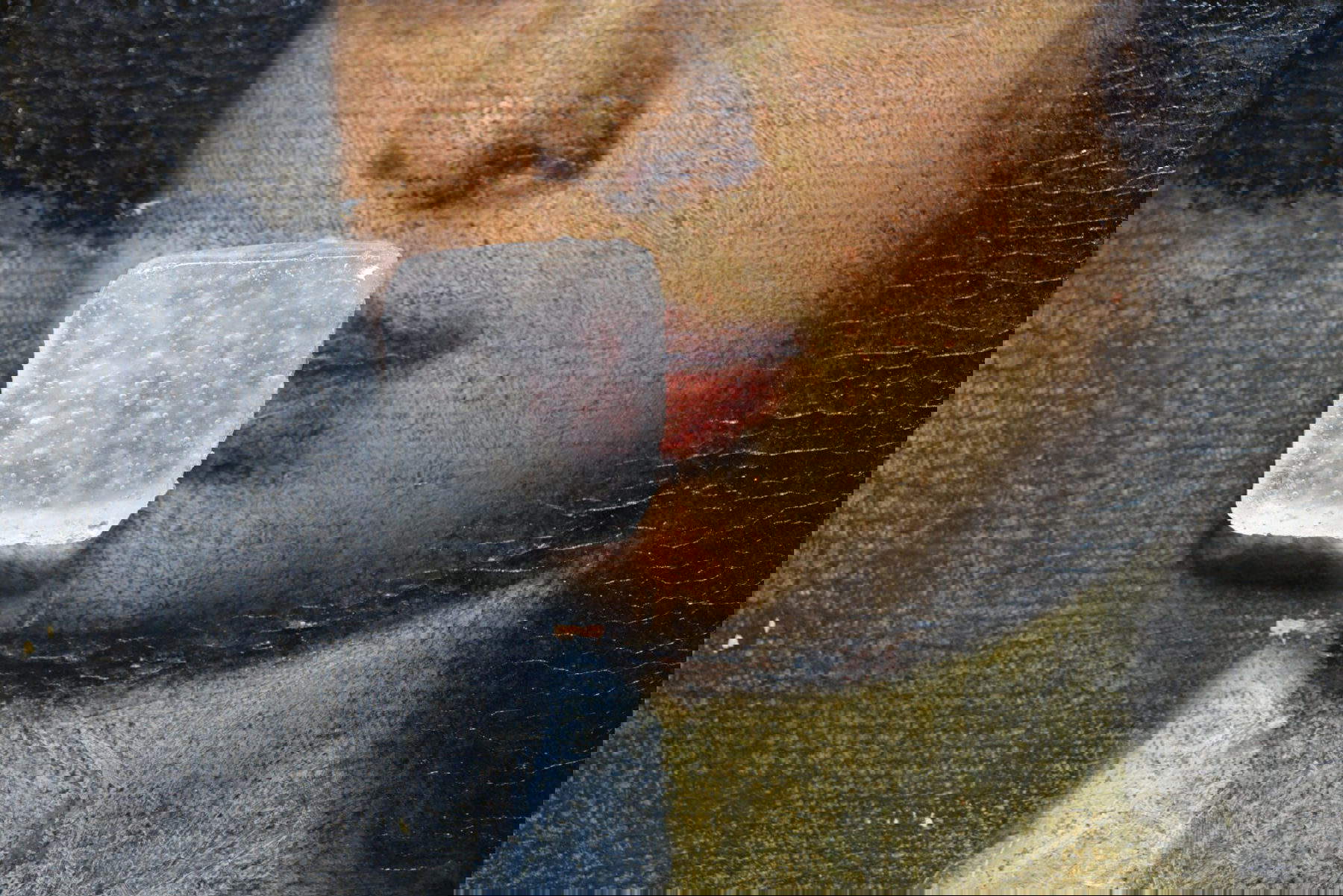
The finely woven reinforcing canvas contrasts with the coarser warp of the original canvas. This structural tension, combined with visible seams and inadequate attachment to the frame, had generated further deformation. Removing the yellowed paint and previous retouching required extreme delicacy: the original, loosely woven canvas was thinly cracked and porous in texture, so solvents risked penetrating and hardening the material. To avoid damage, the operation was controlled by removing the varnish only on the surface without going through the support.
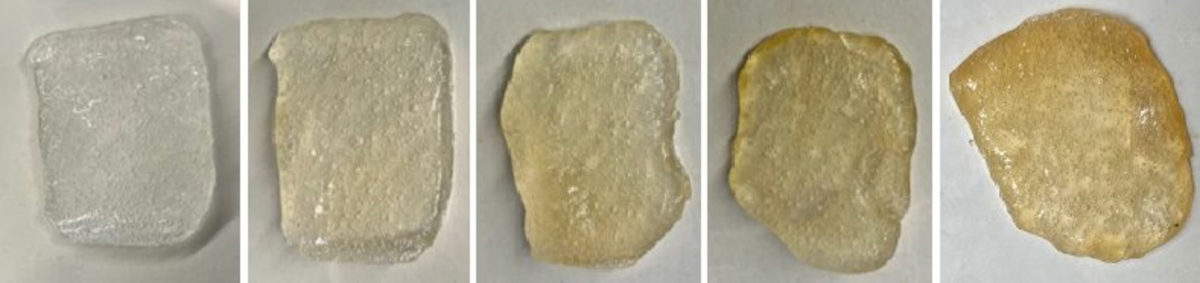
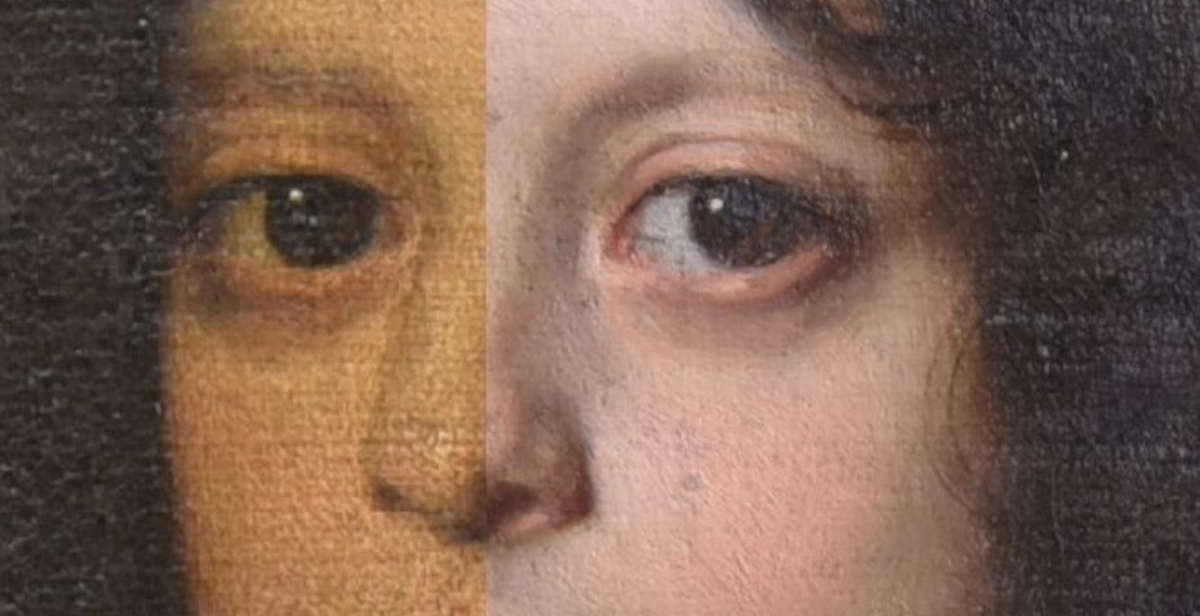
For cleaning, PVA-Borax gels enriched with agar (a natural gelling agent) were used, forming a double net system allowing for an extremely controlled action, along with Evolon, a microfiber that regulates solvent activity. The process gently softened the varnish layer and revealed decorative details in young Cosimo’s clothing and the subtleties of Suttermans’ brushwork. During the preparation of the treatment, The Phoebus Foundation consulted Simon Bobak, a London-based restorer specializing in structural conservation, with whom they discussed the specific challenges of several works underway in the studio.
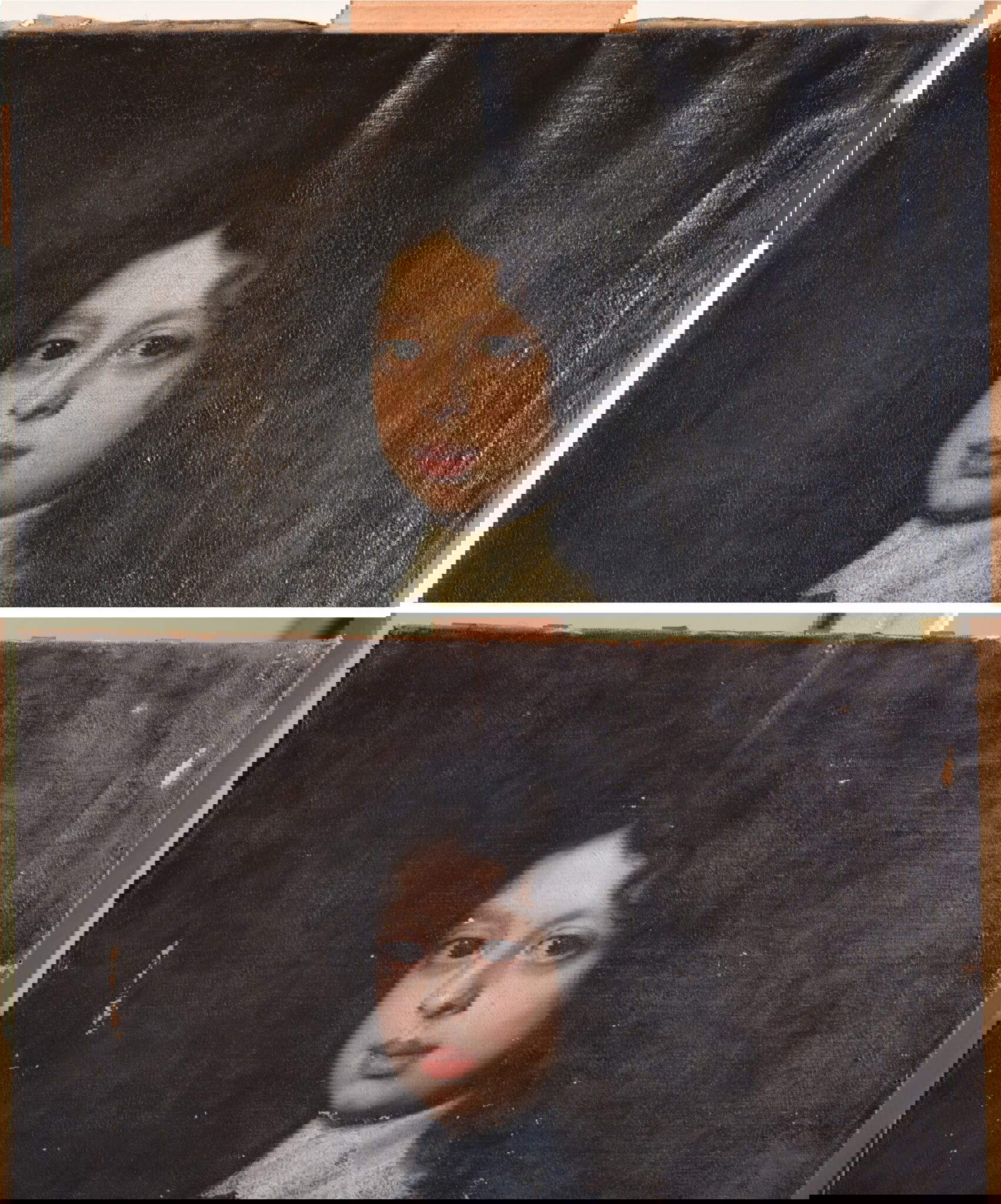
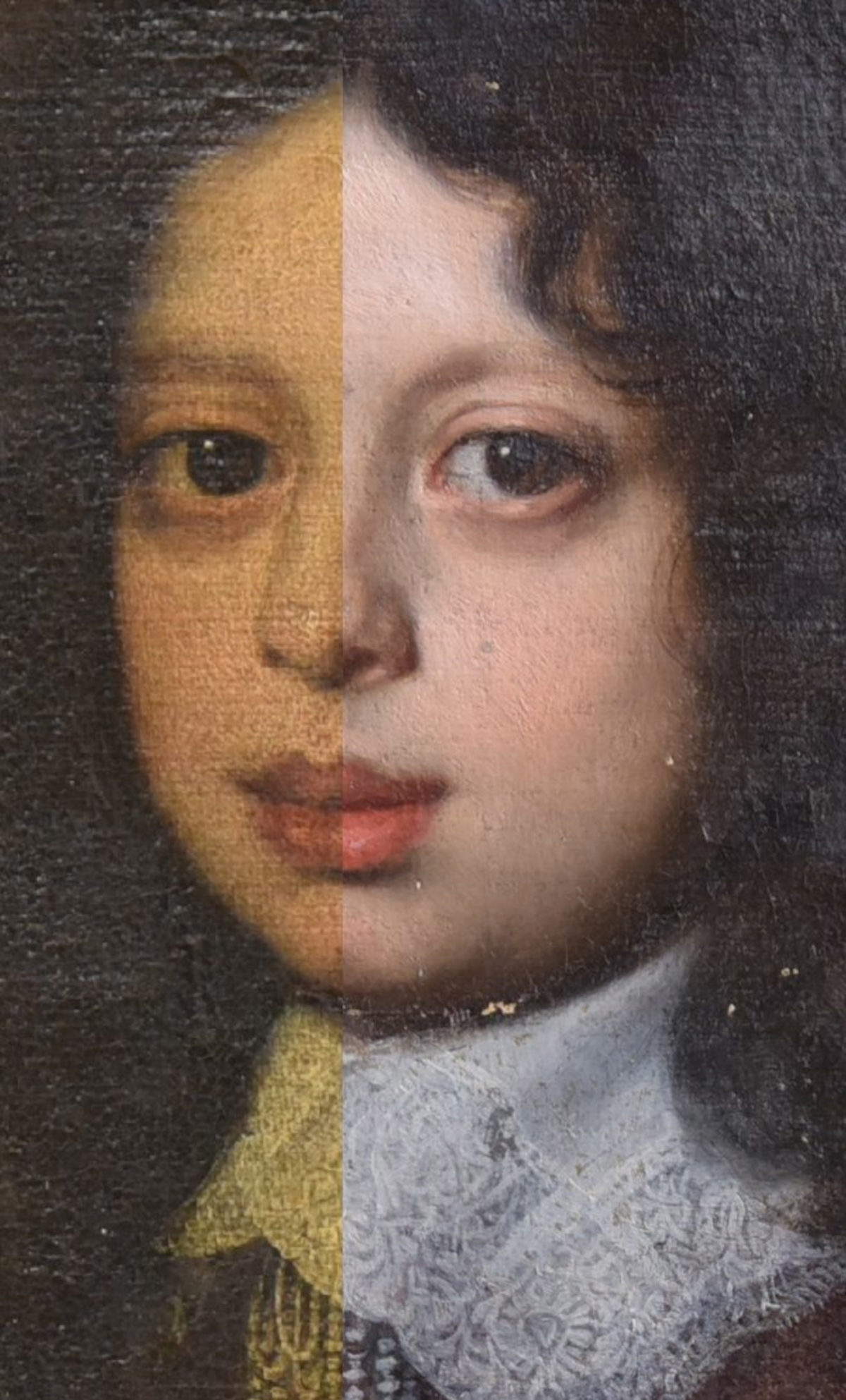
For the portrait of Cosimo as a child, the guiding principle was minimal and localized intervention. The top edge of the canvas was secured only by two nails. Through the careful use of weights and gentle humidification, the deformations were gradually reduced and the surface stabilized. Next, the upper edge was detached from the frame and reinforced with a strip of thin linen. Local correction improved the deformations and could ensure the structural integrity and visual consistency of the work. The restoration is still in progress. After cleaning, a protective varnish will be applied to isolate the pictorial layer before the next steps, which will include filling in losses, pictorial reintegration, and final varnishing to complete the treatment. The operation aims to restore the original legibility and sharpness of the work, while preserving the authenticity of the materials and techniques used by Suttermans, without altering the historical imprint of the previous interventions.
The Portrait of Cosimo III de’ Medici as a Child represents a complex case of conservation, in which the delicacy of the original support, the modifications undergone over time and the previous treatments require extremely precise and localized intervention strategies. Assumpção’s work illustrates the difficulties and solutions that characterize the conservation of historical paintings, combining scientific expertise and artistic sensitivity.
 |
| Antwerp, Phoebus Foundation is recovering a portrait of Cosimo III de' Medici by Suttermans |
Warning: the translation into English of the original Italian article was created using automatic tools. We undertake to review all articles, but we do not guarantee the total absence of inaccuracies in the translation due to the program. You can find the original by clicking on the ITA button. If you find any mistake,please contact us.