




by Redazione 20/02/2026



Categories: Debunking / Disclaimer
Have twenty new works by Michelangelo really been discovered? Not exactly: no details have emerged and nothing can be established for sure at the moment. What's new about Michelangelo's legacy? Almost all of it was already known. Here's everything there is to know about the case.

Have twenty new works by Michelangelo Buonarroti really been discovered, kept in a secret room, as so many newspapers are saying these hours? Not really: let’s go in order. The news starts from a study by an independent researcher, Valentina Salerno, affiliated with a “study center” called “Michelangelo Museum” of which there is no trace, apart from a Facebook page referring to an outreach project based at 27 Via Mecenate in Rome, where M-lab, a space dedicated to the great Renaissance artist, opened last December 8. Salerno’s research, published on Academia.edu, challenges the traditional Vasarian story of the burning of the drawings, according to which Michelangelo, in his dying days, set fire to the sheets he had in his hands that he felt did not live up to his reputation. In fact, the historiographical narrative, crystallized for centuries by Giorgio Vasari’s Lives, describes a Michelangelo Buonarroti who, nearing the end and tormented by a very high fever, allegedly set much of his personal artistic output, including sketches, cartoons and models, on fire. The investigation conducted Valentina Salerno proposes a radically different perspective, suggesting that the celebrated artist did not destroy his legacy, but rather orchestrated a sophisticated concealment plan to protect his creations. However, as will be seen, there is no big news, since it was already known to scholars that part of Michelangelo’s legacy was divided among some of his collaborators.
In any case, interpreting Buonarroti’s biography as a work of concrete actions, Salerno, who took nine years to finish his work, analyzed the movements and relationships of the characters who surrounded the master in his last days, treating them almost like subjects of a judicial investigation. The focus of the story resides in the residence of Macel de’ Corvi, Michelangelo’s house-atelier located near the Trajan Column. When bailiff Antonio Amati, sent by the pontiff under pressure from Florentine authorities, searched the home at dawn on Feb. 19, he found an anomalous situation. Although the house had been a center of frenzied production for decades, filled with sketches, wax models, and working tools, the house, as can be seen from a map in the Buonarroti Inventory kept at the State Archives in Rome, was presented with a desultory emptiness: there were only three large unfinished sculptures, a few cartoons, and a large fortune in gold and silver coins. Salerno’s thesis argued that it was technically impossible for a man in his late nineties, in the grip of a debilitating illness, to have burned such a vast amount of materials, many of them non-combustible, such as plaster casts, half-finished stones and metal castings, in a domestic fireplace.


Evidence of a possible secret agreement emerges from the folds of notarial documents drawn up by notary Francesco Tomassino (in the documents mentioned as Franciscus Thomassinus), who noted several irregularities during the inspection of the house. They mention seals tampered with by Tommaso de’ Cavalieri, Michelangelo’s friend and longtime lover, smoky statements about the date when the master’s illness began, and the presence of sealed furniture that was not inspected because it was declared to belong to a third party. These “gray areas” suggest a feverish activity that occurred between the artist’s death and the arrival of the authorities, aimed at moving valuable material through the secret passages with which the house was equipped. So far, however, this is material already known to scholars.
Michelangelo, according to the scholar, would have concocted a “plan for his departure” (as Salerno calls it), in her view dictated by the need to circumvent ius sanguinis, the hereditary law of the time that would have handed over all his artistic estate to his nephew Leonardo Buonarroti. The relationship between the two was strained and marked by mistrust, as evidenced by letters in which the master accused his relative of being interested only in his future inheritance (Salerno cites a letter, published in various venues, in which the artist addresses less than friendly words to his relative). On the contrary, Buonarroti had deep trust in his Roman circle, composed of devoted pupils and friends such as the aforementioned Tommaso de’ Cavalieri. It is precisely the latter who emerges as the main guardian of the deceased’s real wishes, a powerful and learned protector capable of managing the complex transition of assets without arousing official suspicion.
“The documents preserved in the State Archives of Rome,” Salerno explains in the research, “were put in relation with a series of heterogeneous sources (from epistolary letters to noble funds, from papal bulls to period almanacs, passing through the study of prints, coins and engravings, paintings, family trees and real estate, inherent to the subjects and ecclesiastical orders involved). After these in-depth studies, it was possible to synthesize within them a line of concatenation of data and results that makes it possible to support the thesis at hand in a rapid and precise manner, the key steps that led Michelangelo’s artistic legacy into the hands of his favorite pupils and friends were reconstructed.”
Crystallizing, “as in a photograph,” Salerno explains, what was in the Buonarroti house on the date of his death, Feb. 19, 1564, in Rome, remains the well-known inventory, already mentioned, complete with anomalies recorded by notary Francesco Tomassino. Then there is to be added the testamentary bequest of Daniele Ricciarelli da Volterra (April 4, 1566), in which Salerno notes further anomalies, beginning with the name of the executor, which the researcher identifies for the first time: this would be Giovanni Francesco Lottini, canon of St. Peter’s, a Volterran like the artist. “Lottini,” Salerno explains, would appear several times in this affair in key roles, along with Tomaso and the ’second generation’ pupils who are named beneficiaries of this will: Michele Alberti, Feliciano da San Vito, and Blasio Betti." Also among the anomalies is the presence in the inventory of some books on architecture and Latin classics that some scholars had already traced back to Michelangelo’s missing library.
A third document is the will of Giacomo Rocchetti (or Jacopo Rocchetti, a pupil of Daniele da Volterra) kept at the State Archives in Rome: Rocchetti was in possession of several drawings traceable to Michelangelo. Daniele da Volterra, in his will, had bound his three heirs (his pupils) in an indissoluble manner, under penalty of forfeiture of the inheritance and economic penalties. According to Salerno, this circumstance leads one to believe that the object of the bequest were materials of very considerable artistic, economic and emotional value, so much so that Giacomo Rocchetti and Michele Alberti (another pupil beneficiary of Daniele da Volterra’s will) decided to unite their families, marrying one the sister of the other (Daniele’s will, moreover, mentions Michele Alberti’s own sister as the beneficiary of any marriage dowry). Ricciarelli therefore, through the formulas drafted in the deed by the notary Thomassinus, imposes several obligations on his three pupils and heirs, which Salerno calls “a pact of indissolubility and inalienability of the workshop property.” Giacomo’s daughters and Michele’s granddaughters, “no longer being bound by the constraints imposed on the previous generation,” the scholar continues, “since the keepers of that pact are now deceased, will inherit hundreds of drawings, this time inventoried as being in Michelangelo’s hand.”
Finally, a decisive element in this reconstruction according to Salerno is the discovery of unpublished notarial acts dating back to 1572, related to the figure of Blasio (Biagio) Betti, one of Daniele da Volterra’s heirs. These documents, the only unpublished ones from Salerno’s study, found among the papers of the State Archives in Rome, describe the passage of a physical key intended to open a mysterious cubicle where very precious goods were kept. This room, accessible only through the simultaneous use of several keys held by different pupils, was governed by an indissolubility pact that forbade the sale of the works. The fact that hundreds of Michelangelo’s drawings began to appear in the pupils’ inventories only many years later, upon the death of the original custodians, confirms that the material had never been destroyed. That this entire entourage inherited several sheets, however, was well known to scholars. The only novelties would concern the story of the burning, which according to interpretation would then have been a version of convenience, accepted by all to avoid diplomatic incidents and to allow Michelangelo’s Romanentourage to retain the master’s drawings and models , and the existence of a locked cubicle that would go some way toward corroborating Salerno’s reconstruction. The point is that Macel de’ Corvi’s residence, located in a working-class neighborhood of sixteenth-century Rome that no longer exists, was demolished, along with the entire neighborhood, at the time the Vittoriano was built, so hopes of finding a secret room in Michelangelo’s home are, at the very least, misplaced. An analysis of the unpublished documents, Salerno writes, “shows that the room in question contains goods, in great probability traceable to Michelangelo; in fact, its existence predates the death of Daniele Ricciarelli, and the goods are so precious that they are kept locked up with care worthy of a treasure. The three keys are mentioned in the deed by means of an actual chronicle by the notary, who reconstructs their existence, the changes of hands and the rules of their use, Thomassinus recalls that they were secretly and quickly recovered and exchanged among the pupils at dawn on the morning of Daniele’s death.”
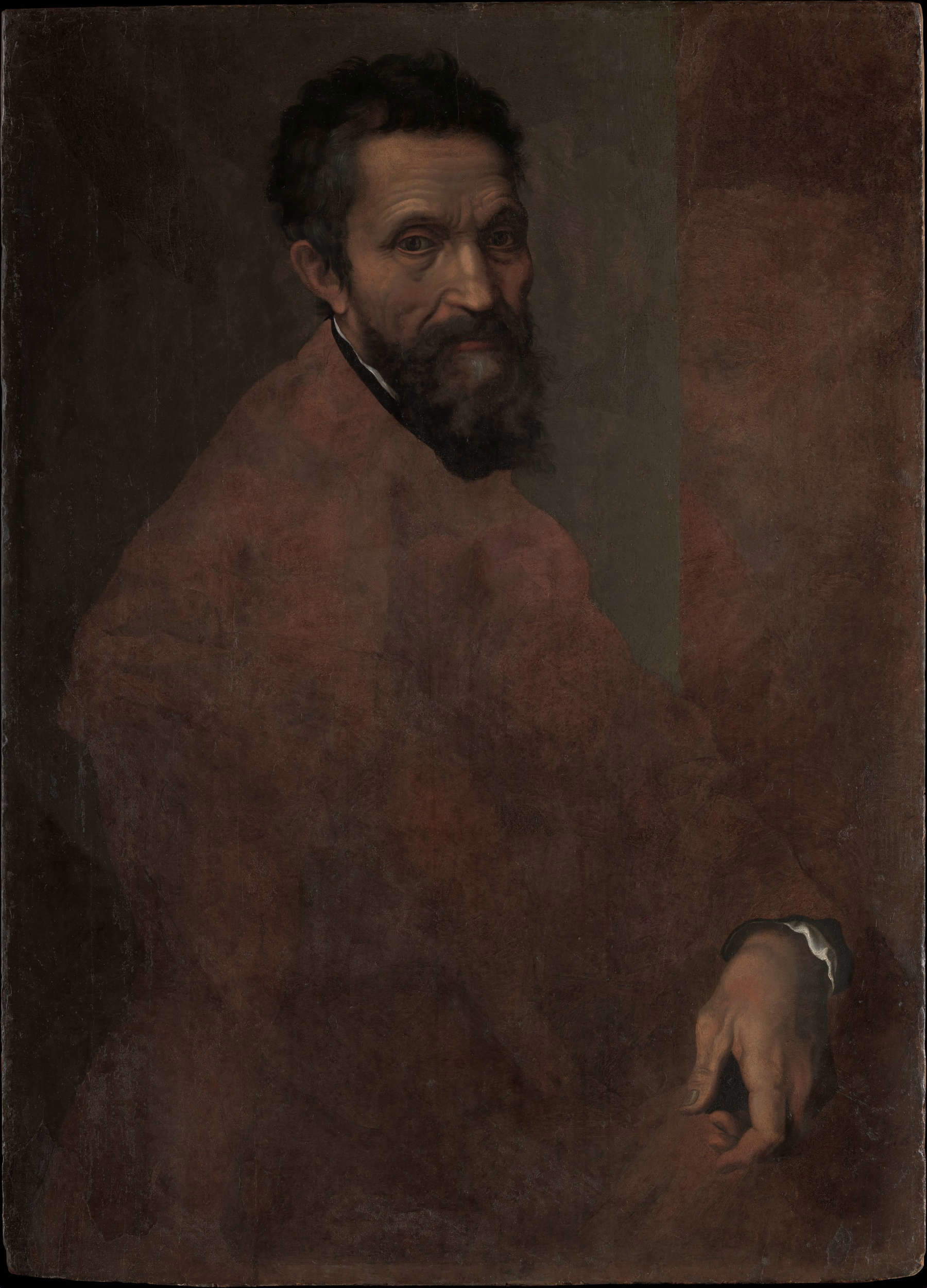
However, it was already known, as anticipated, that many of Michelangelo’s works survived his passing and were divided among different subjects. It is worthwhile, therefore, to report some excerpts from the most up-to-date works. The day after the master’s death, wrote scholar Marcella Marongiu in a paper she published in the proceedings of the scholarly conference Tommaso de’ Cavalieri arbitro del gusto nella Roma della seconda metà del Cinquecento, held in 2020 at the Gallerie Nazionali d’Arte Antica of Palazzo Barberini in Rome, “were Daniele da Volterra and Tommaso de’ Cavalieri, at the behest of Governor Alessandro Pallantieri, to take charge of drawing up the inventory of the artist’s property remaining in the house of Macel de’ Corvi, in order to protect Leonardo Buonarroti’s rights of succession; for this, already a few days earlier, Tommaso de’ Cavalieri had had a chest sealed with the denarii in the presence of two witnesses. The events described here, known from the report enclosed with the inventory, are confirmed by a letter from Daniele da Volterra to Giorgio Vasari, sent a month later, in which particular prominence is given to the ’cartons’ left in Michelangelo’s house but intended by him for his closest friends: Tommaso de’ Cavalieri claimed and obtained a ”cartone grando, dove sono designati et schizzata la figura di Nostro Signore Jesu Cristo et quella della gloriosa Vergine Maria sua madre,“ while ”Certain small drawings of those Nuntiate, et del Christo che ora nell’orto, he had donated them to Jacopo suo [Rocchetti], e compagno di Michele [Alberti] se vene ricorda,“ that is, to Daniele da Volterra’s collaborators in his last decade of activity. Daniele and Tommaso are, again, remembered together in a letter from Giorgio Vasari to Leonardo Buonarroti, as Michelangelo’s designated executors for the realization of his own burial. If the common presence of Daniele and Tommaso at Michelangelo’s bedside, and their subsequent engagement as guardians of his property, cannot alone be interpreted as evidence of a bond between them, a relationship of friendship and mutual trust is what is evident from the partitioning of the cartons, which Daniele seems to have been personally responsible for, just as he later took charge of distributing wine to Michelangelo’s friends, on behalf of Leonardo Buonarroti.” And again: “At the height of the mid-1960s,” Michelangelo and Daniele da Volterra “enjoyed a certain prestige, due in part to the fact that upon Michelangelo’s death Rocchetti inherited from him two of the artist’s most beautiful ’cartoons’-the Annunciation and the Oration in theOrchard now in the Uffizi - and a significant number of preparatory studies must have been received while the master was still alive, judging from the information obtainable from the inventory drawn up at his death, which listed over a hundred drawings in Michelangelo’s hand, and a painting from the ’cartoon’ with the Oration in the Garden. For his part, Michele Alberti had been designated by Daniele da Volterra, along with Feliciano da San Vito and Biagio Betti, as executor and heir to the drawings, models, and tools in his workshop. Of the tremendous possibilities that came to Rocchetti and Alberti from the possession of Michelangelo’s and Daniele’s drawings are mirrored by the words of Giorgio Vasari, who in Ricciarelli’s biography, after praising the heirs of the Volterrano as promising artists, added piquantly a kind of strongly critical postscript to them. Reinforcing the role of Michele Alberti and Jacopo Rocchetti in the Capitoline artistic milieu should not have been secondary the privileged relationship entertained with the two artists by Leonardo Buonarroti: the latter, in fact, upon his uncle’s death, had commissioned Daniele da Volterra, along with Jacopo del Duca and Jacopo Rocchetti, to create Michelangelo’s tomb, using the sculptures from Julius II’s tomb that remained in the Florentine studio (the Victory in the Palazzo Vecchio and the four Prigioni now in the Galleria dell’Accademia in Florence), a project that later failed due to the opposition of Vasari, who wished to obtain the sculptures for Cosimo I; after Daniele’s death, Michele Alberti and Feliciano da San Vito (probably with Rocchetti) were commissioned by Leonardo to renect Michelangelo’s bronze heads left unfinished by Daniele da Volterra. Finally, Jacopo Rocchetti had teamed up with Jacopo del Duca and Marco Antonio Ortensi - the latter as financial backer - to make a bronze tabernacle, based on a design by Michelangelo, as a funerary memorial to Buonarroti to be placed in Santa Maria degli Angeli in Rome: an undertaking that arose as a consequence of the failure of the project of Michelangelo’s Florentine tomb that Leonardo Buonarroti had entrusted to Daniele assisted by the two Jacopo.”
Why, at this point, was the news spread that twenty unpublished works by Michelangelo would be discovered? It all stems from the Messenger article that first gave an account of Valentina Salerno’s research. This is what the piece signed by Franca Giansoldati reads: “Thanks to painstaking work - which lasted about ten years - a young independent researcher from Rome, Valentina Salerno, has reconstructed in detail what happened in the very last period of the life of the greatest artist of the time. By consulting, collecting and comparing documents from five hundred years ago, preserved in various Italian and foreign archives, including the State and Vatican Archives, it was possible to determine the entire historical chain proving the authenticity of at least twenty new works, hitherto unknown or not attributed with certainty to the Renaissance genius. Out of silence has emerged the documentary line contained in dozens of wills, inventories and notarial acts, some of them unpublished, that demonstrate the path made by objects believed lost. Sculptures, drawings and sanguine that have come down to the present day and are often not cataloged as originals.”
In the research published on Academia.edu , however, there is no mention of any hitherto unknown works. According to information reported by the Roman newspaper, the archpriest of St. Peter’s Basilica, Mauro Gambetti, has assembled a scientific committee that includes several Michelangelo experts, including Hugh Chapman, Barbara Jatta, Pietro Zander, Alessandro Cecchi and Cristina Acidini. We reached out to Cristina Acidini herself to get some more information: the scholar implicitly confirmed the existence of a committee (although she did not confirm its composition, nor did she tell us what it is specifically dealing with). Acidini only told us that she had gone to the Vatican as part of the organization of an exhibition on the dome (in 2026, in fact, the 400th anniversary of the dedication of St. Peter’s Basilica will be celebrated) and that she had only then come across Valentina Salerno’s research. “I was there,” she told us, “for the exhibition and the drawings, and I listened to what Dr. Salerno had to say. I am not involved in that research. On the committee, Dr. Cecchi and I suggested the loan of some drawings from the Casa Buonarroti for the possible exhibition on the dome, of which Michelangelo was the designer. We heard from the researcher a report on her research.”
As for the alleged discovery, Acidini cuts short: “I think it is excessive to speak of a discovery: a clue is proposed to start new research.” When asked for further details on possible new attributions, the scholar did not give us an answer. At the moment it is therefore premature to speak of discoveries, since no details have emerged: we do not know whether new works have actually been found, we do not know which sheets have possibly known changes of attribution, nor do we know which objects thought to be lost would have been recovered. The only reference to a concrete work relates to the drawing sold at auction a few days ago, a study for a foot of the Libyan Sibyl, one of the figures in the Sistine Chapel, which was sold at Christie’s in New York for $27.2 million. The sheet had been in private hands for centuries, undocumented and unknown to scholars. It was only discovered in early 2025. The auction house had already speculated on a possible link to Daniele da Volterra’s legacy, since the auction catalog essay traced the sheet’s history back to the Tuscan artist himself, who may have been in possession of it, and may have passed it on to his pupil Michele Alberti: we move into the realm of hypothesis, however, because the first historically ascertained owner is the Swiss collector Armand François Louis de Mestral de Saint-Saphorin, who owned the sheet in the 18th century: from his collection it then flowed by hereditary sequence to the last owner, in turn the heir of the previous owner, Hélène Lilane de Mestral von Steiger, a descendant of the first certain collector. The hypothesis that the sheet should be traced back to Michele degli Alberti is to be found in the inscription “Michelangelo Buana Roti” (Michelangelo Bona Roti) affixed to the sheet, and common on other drawings by the master: in sixteenth-century handwriting, it cannot be traced back to Michelangelo’s hand, but to a possible collector who anciently owned his sheets. As early as 2007, scholar Paul Joannides proposed identifying the “Bona Roti Collector,” as he called him, with Michele Alberti, since Alberti was already known to have come into possession of the master’s sheets.
Should we therefore expect new discoveries in the future? Probably, as Christie’s discovery of the million-dollar paper shows, after all. But they might emerge quite independently of Valentina Salerno’s study. As for the twenty works mentioned by the Messenger, however, in the absence of details it is unfortunately not possible to comment further.
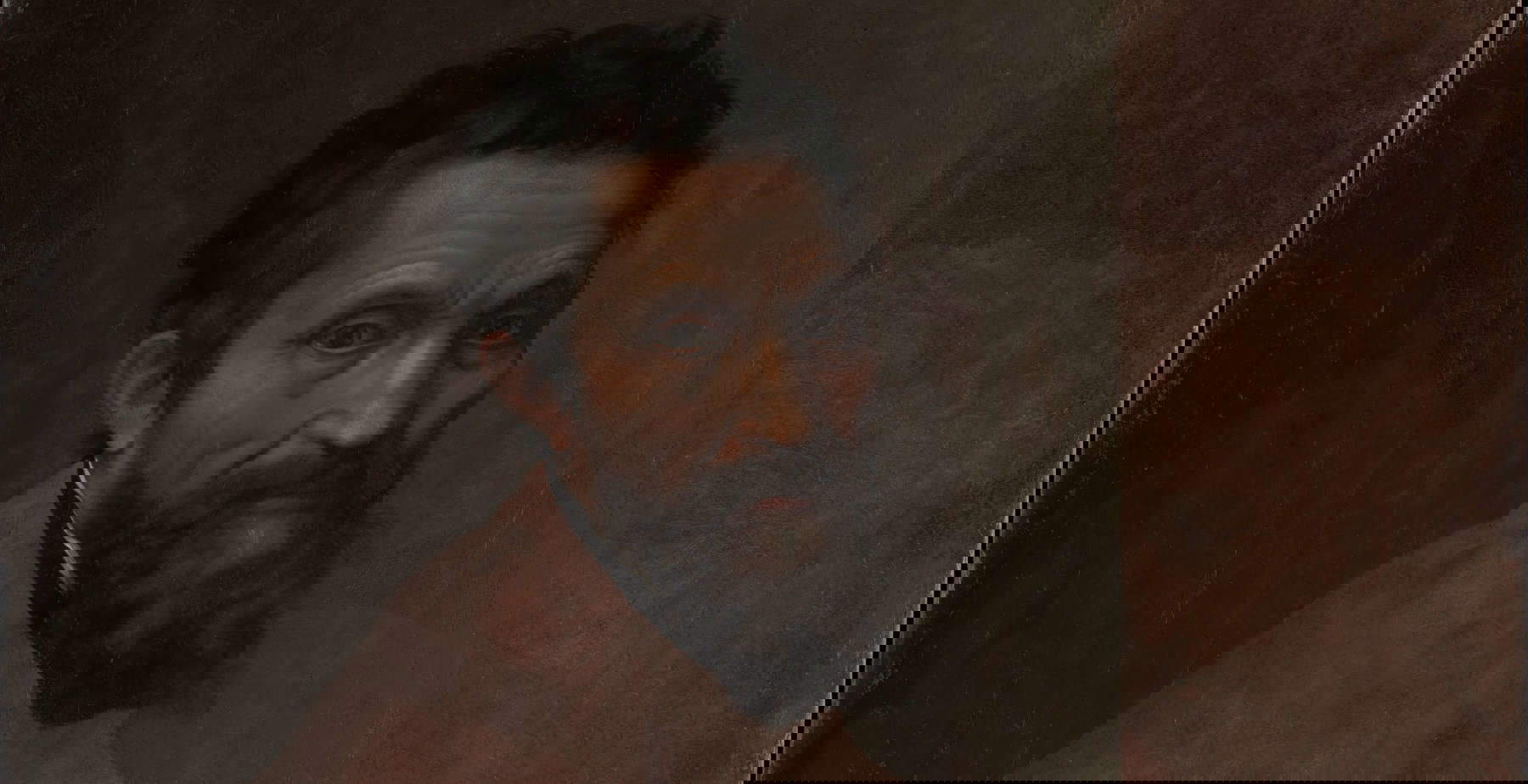 |
| 20 new works by Michelangelo discovered? Not quite. Here's what we know |
Warning: the translation into English of the original Italian article was created using automatic tools. We undertake to review all articles, but we do not guarantee the total absence of inaccuracies in the translation due to the program. You can find the original by clicking on the ITA button. If you find any mistake,please contact us.