



by Noemi Capoccia 14/02/2026



Categories: Interviews / Disclaimer
Created for the Mosaic Biennial, Nicola Montalbini's Floor at Porta Adriana has ignited a debate between citizens, the City Council and the Superintendence. Despite mobilization to keep it in situ, the work will be moved. We interviewed the artist to understand the future of this work, but also to reflect with the artist on the role of public art today. The interview is by Noemi Capoccia.
In recent months, there has been much talk in Ravenna about the Floor that Nicola Montalbini (Ravenna, 1986) created for the Biennale del Mosaico Contemporaneo: installed at Porta Adriana, his mosaic has quickly transcended the exhibition dimension to enter the daily life of the city. The mosaic floor ignited a discussion involving citizens, merchants, institutions and the Soprintendenza. It united issues of heritage protection, civic participation, and language issues: it is indeed a contemporary work, but part of the city demanded its permanence at the site. However, despite the city’s mobilization and requests, the Superintendence rejected the idea of keeping the work at Porta Adriana, and shaped the case into a highly resonant public debate. We caught up with the artist to hear his views. Nicola Montalbini was born, lives and works in Ravenna, a city with which he maintains an ongoing and layered dialogue. After training in painting and sculpture at the Academy of Fine Arts in Bologna, he developed a research that crosses drawing, installation and intervention in public space, with a constant attention to what usually remains at the margins of the gaze. Alongside his graphic work, Montalbini tackles a personal reworking of history, with projects dedicated to Ravenna and the city’s religious architecture. The interview is by Noemi Capoccia.
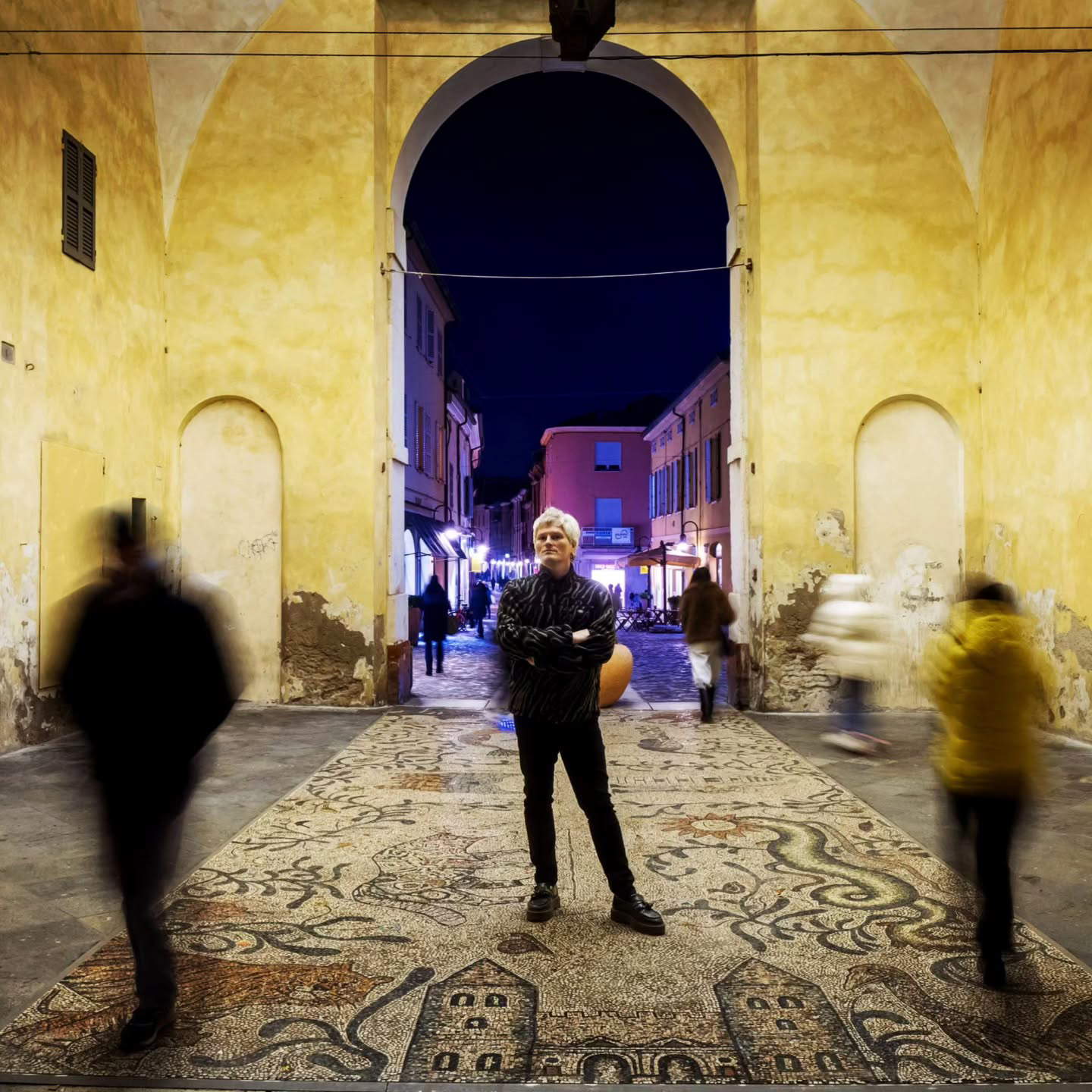
NC. The Pavimento di Porta Adriana in Ravenna began as a temporary work, but in a few days it became a lived and even discussed place. At what moment did you realize that the work was escaping the dimension of a simple installation and entering the daily life of the city?


NM. I realized it from the evening of the opening, when many people, noticing the end date in the plaque bearing the title and criticism of the work, began to ask me, “But how, won’t something like this stay here forever?”
Many citizens perceived the Floor as something that already belonged to Ravenna. What value do you place on the appropriation? Do you consider it a success of the work or an additional responsibility for the artist?
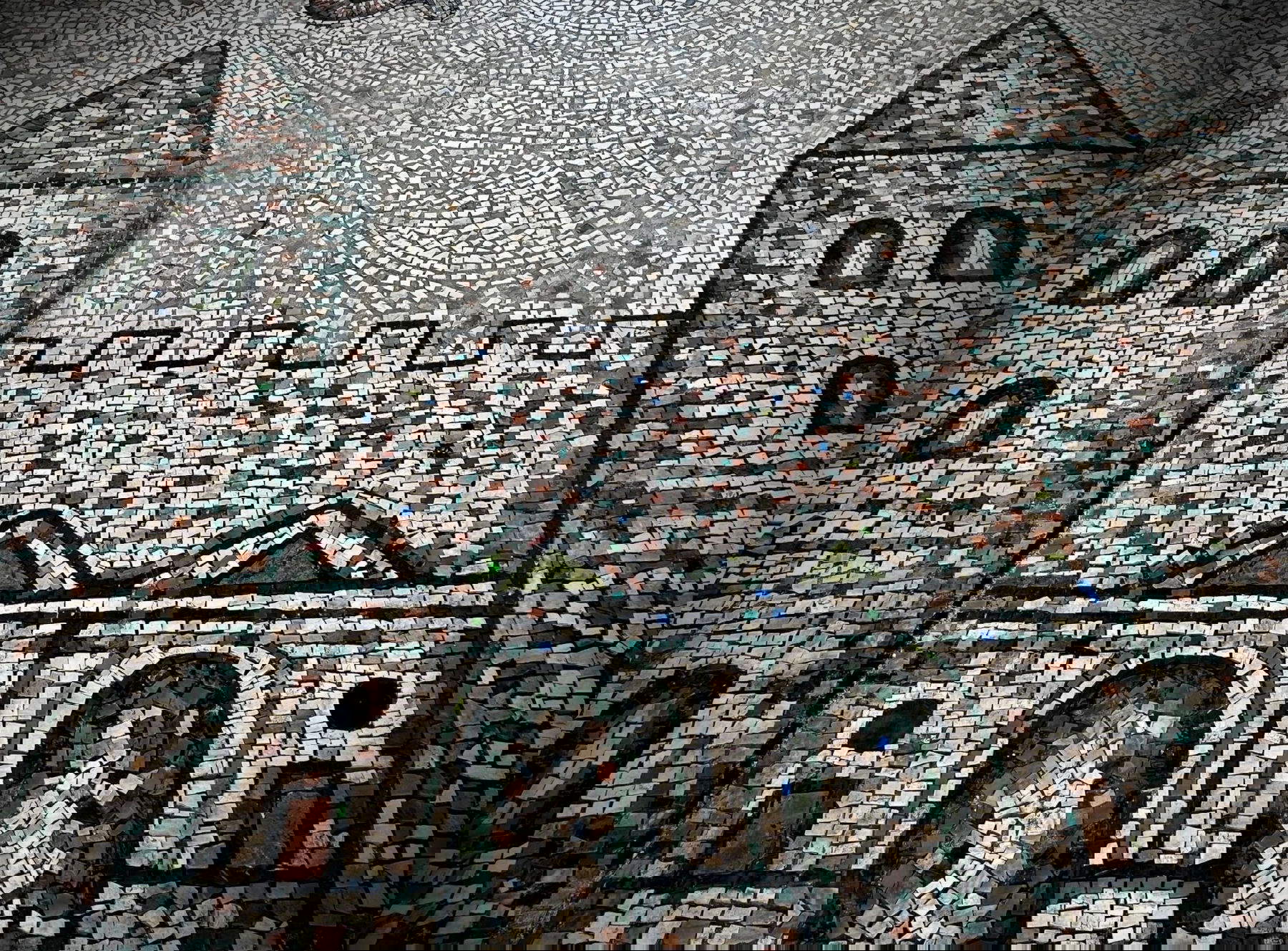
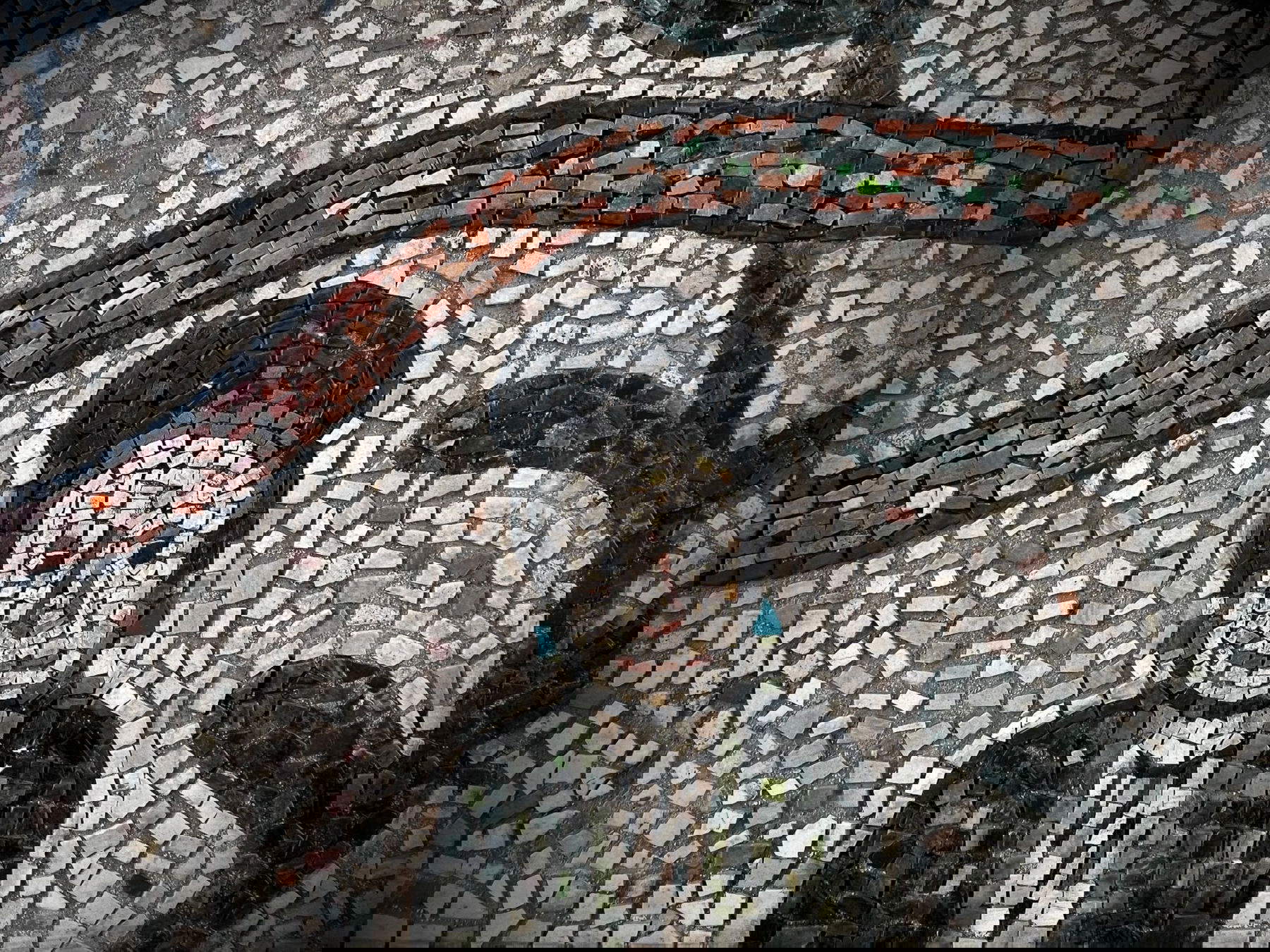
I think the triggering of relationships and recognition between the Floor and many people who inhabit the city is the result of a mysterious magnetism that touches buried chords. The Floor is inhabited by monstrous and playful figures that speak the language of this buried lagoon, but also the language of the mosaics of the Mediterranean basin. It is a pavement, and Ravenna is a city that carries in its belly its past, concealed by subsidence. Our mosaics are largely parietal, lysergic and distant. A floor you experience it, inevitably, and you find yourself in it.
In a city like Ravenna, where the mosaic is often associated with a monumental and musealized dimension, His intervention proposed a different idea: everyday and narrative. Was this an intention thought out from the beginning?
This is where the confrontation with the ancient comes in, this strange creature that arouses feelings of veneration, admiration and inevitably distance. The mosaics that glaze the insides of our basilicas, in their sparkle also communicate a sidereal distance with the world down here. If we think of the floors of medieval churches, monsters often dwell there. Swept, trampled, soiled, lived in. Here, let’s say I looked at the great ancient and medieval floors because they are squeezed with life, the only places where monstrosity, sanctity, play, months and seasons, mermaids, legends and entanglements can live, as parallel yet inhabitable dimensions.
The Superintendent’s decision has reopened a thought about the relationship between preservation and contemporaneity. Where do you think the boundary between heritage protection and its openness to the present lies today?
The topic is complex and my words can only be food for thought. “Protection,” comes from the Latin tueri, meaning “to defend.” One would need to understand on a case-by-case basis what the historical emergencies that dot the places we inhabit should be defended against. Often protection makes a monument a stationary object in time whose purity is preserved. Setting the discourse this way, it goes without saying that any expression that alters that purity necessarily becomes a threat. But often historic buildings are the result of stratifications that have altered their connotations and appearance through the centuries.Even today we are indebted to a view of preservation that originated in the late nineteenth century, when, in an attempt to restore ancient buildings, in truth the traces and encrustations that had accumulated over time were erased, and the final purity was the result of an idealistic and dreamy gaze that reinvented the past. The approach to preservation is a controversial issue, even for those in the field, and suffers from approaches crystallized on ancient eras, which sometimes prevail over others. Recognition by a certain community does not enter the margins of this framework and therefore does not allow for real reflection by the ministerial branch. I hope, not for my own glory or egotistical gain, that the case of the Floor can be the subject of a high-profile study on the potential and limits of the relationships between communities, artists, preservation institutions and public spaces. As long as what we call art remains within containers deputized to enshrine its visual and economic value, then even the most radical provocation runs the risk of being a lesson. But when a visual object enters the connective tissue of a space, and alters its connotations, like a virus, a mutant agent, an anarchic rhizome, then evolution can be unpredictable. Mosaic does this, always has. It is written in its genome of impossibly reunited fragments.
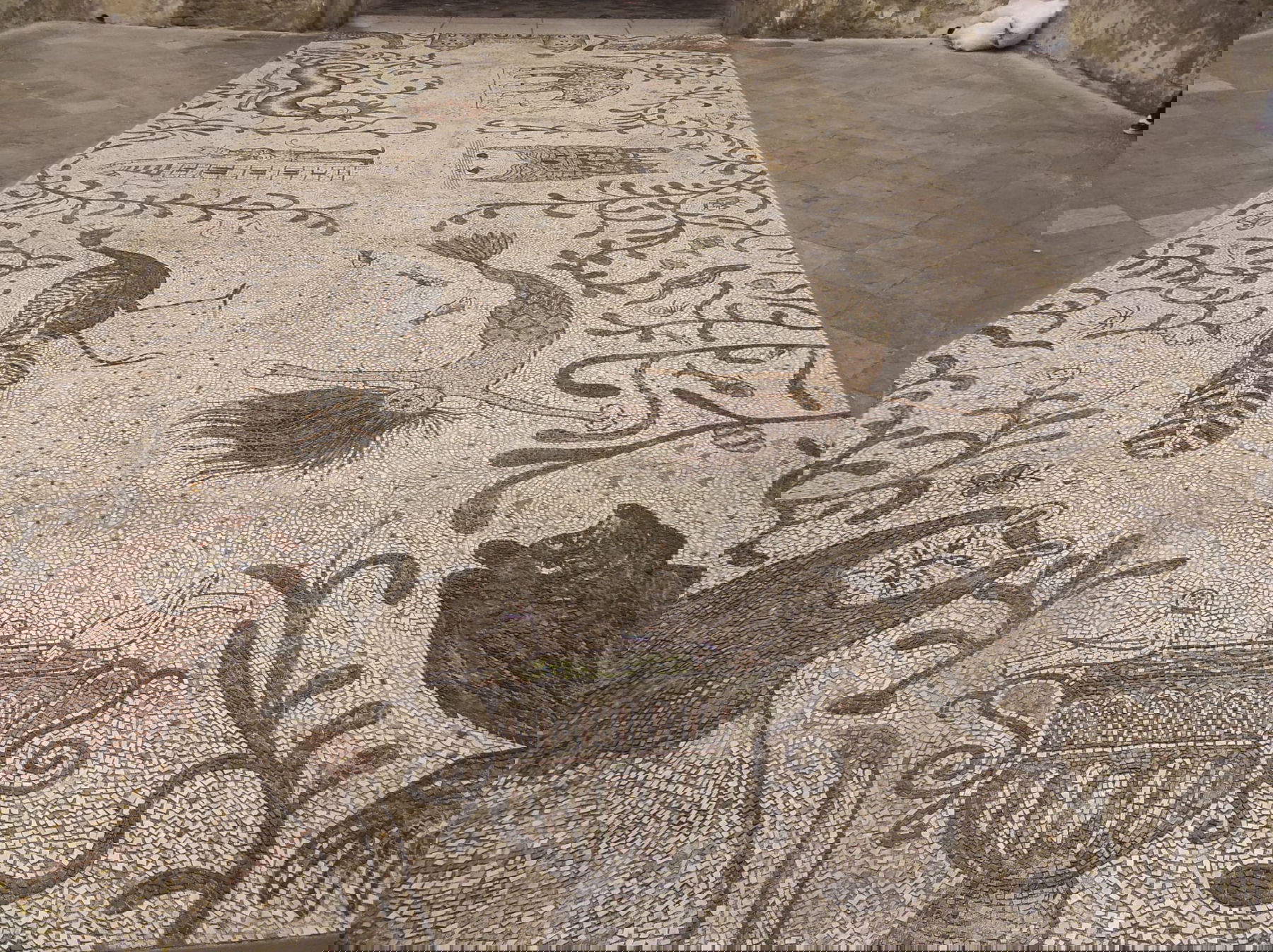
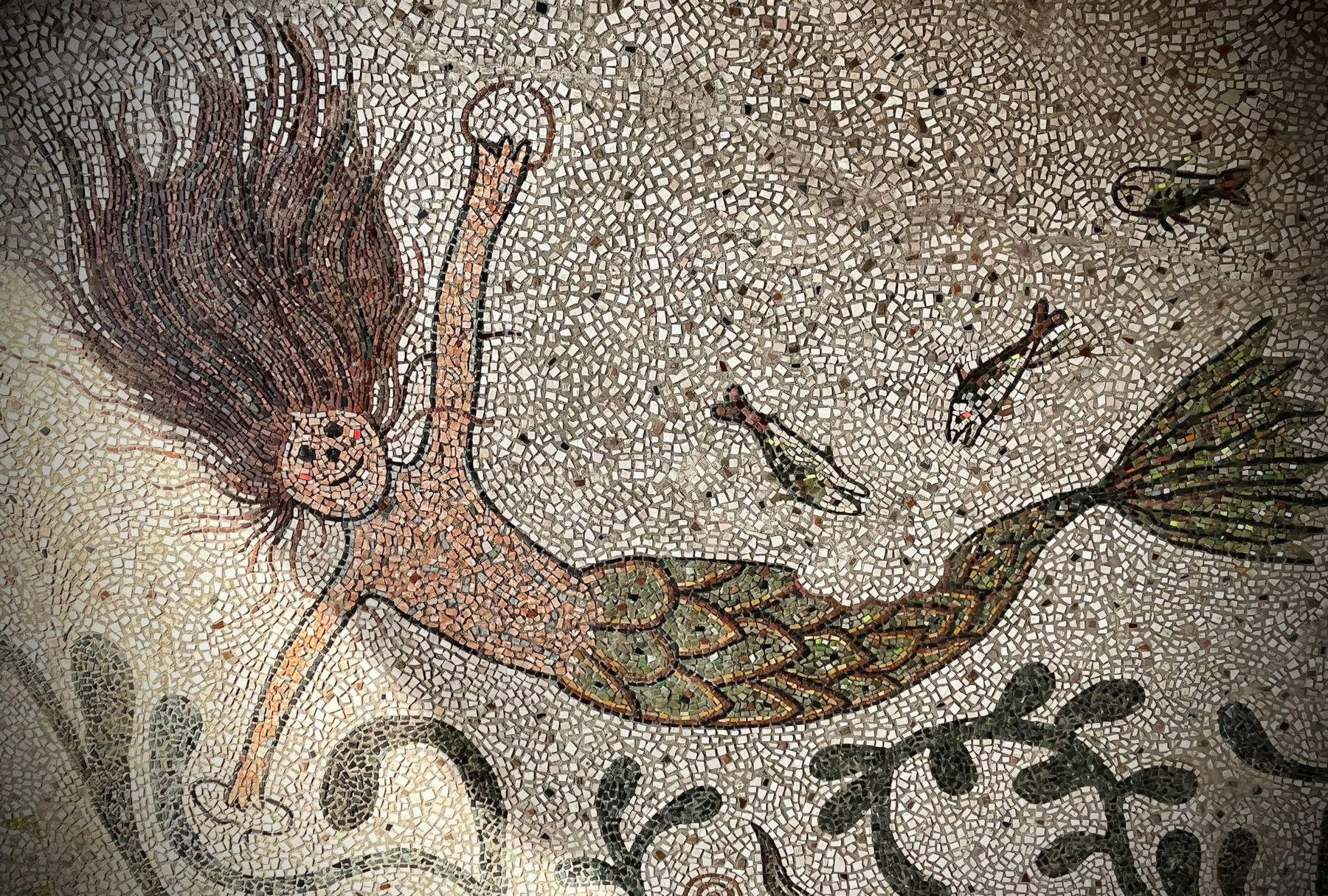
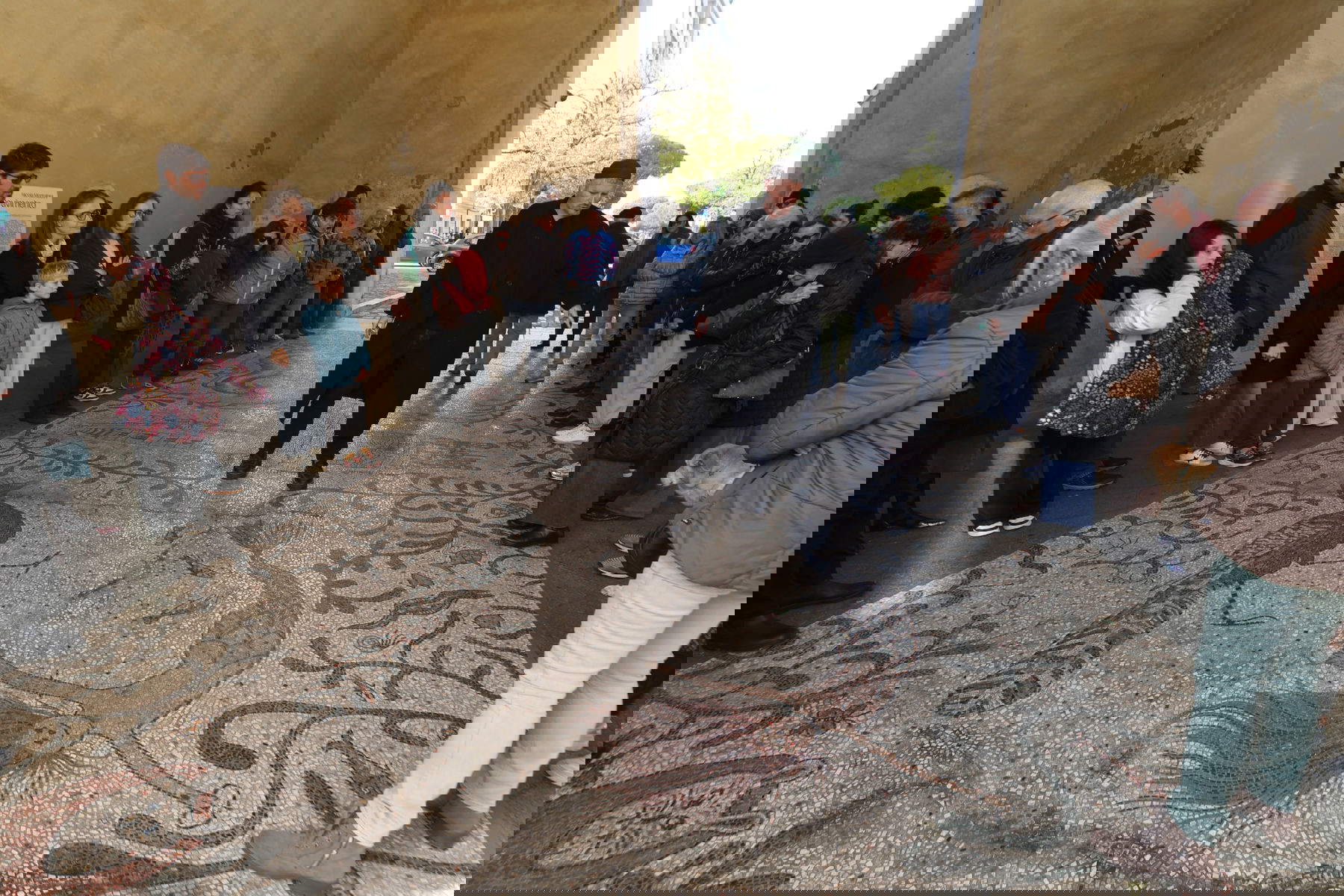
In an effort to keep The Floor at Porta Adriana, the City Council has put forward multiple proposals, even going so far as to have a motion voted unanimously in the City Council. How have you experienced, in the past few weeks, the administration’s support?
I experienced it well with amazement and estrangement. With the administration, which I thank for the support, we have always moved in a coordinated way. The City Council unanimously expressed its willingness to keep the Pavement in Porta Adriana, and the administration forwarded two requests to the Superintendence.
After the removal of the Pavement, what developments do you see for the future of the work?
The Pavement was born as a temporary creature, but not ephemeral. Given the rejection of the requests made to the Superintendence, remaining the owner of the work, I could choose many paths. Dismember the work, and forget it. Musealize it. Perhaps sell it and make a profit from it. All these options, however, sound outdated and out of time to me. Emanating from a spirit that does not belong to me. The Floor has left the Gateway, and together with the administration we are working on creating a new space that will accommodate the Floor. As a temporary work, the Floor has suffered from the constraints of place. By moving it will merge into a new place. I know that some people will turn up their noses, because a visual link had been created between the Floor and the Gateway. But I am not going to wage any war against the Superintendency, albeit in disappointment of the verdict. Being disappointed does not justify being necessarily hostile. I choose to find a solution with the administration so that the Pavement creates a new, non-museum space, totally public at all hours of the day and night, in a central area. After all, if we turn the question on its head, doesn’t the same limitation of preservation that denies permanent dialogue between a work that speaks the language of today and a historic place also reveal the conceptual limitation that a contemporary work needs the historic framework to be validated? Little boys and girls, for months now, have been giving me drawings they made on the Floor: the ice cream cat, the mermaid Electra, the worm Palagio. This is what I think about when I visualize the next mutation of the Floor.
Real and imaginary figures coexistin the Pavimento, but also quotations from the mosaic tradition. How do you construct a balance that holds memory and personal narrative together?
Because actually it’s my whole life I’ve been building parallel rooms in which I store many things. They are galleries that I inhabit, where I store what I collect. Ghosts, memories, old toys, fragments, spaceships and useless treasures Mosaic is the only possible language for the Floor precisely because it connects offal and gives us the illusion of unity. In the end, the Floor is more like the creature assembled by Doctor Frankenstein. A collection of scattered limbs, of corpses, that come to life with a spark. It is a portal that opens onto the upside down of this city.
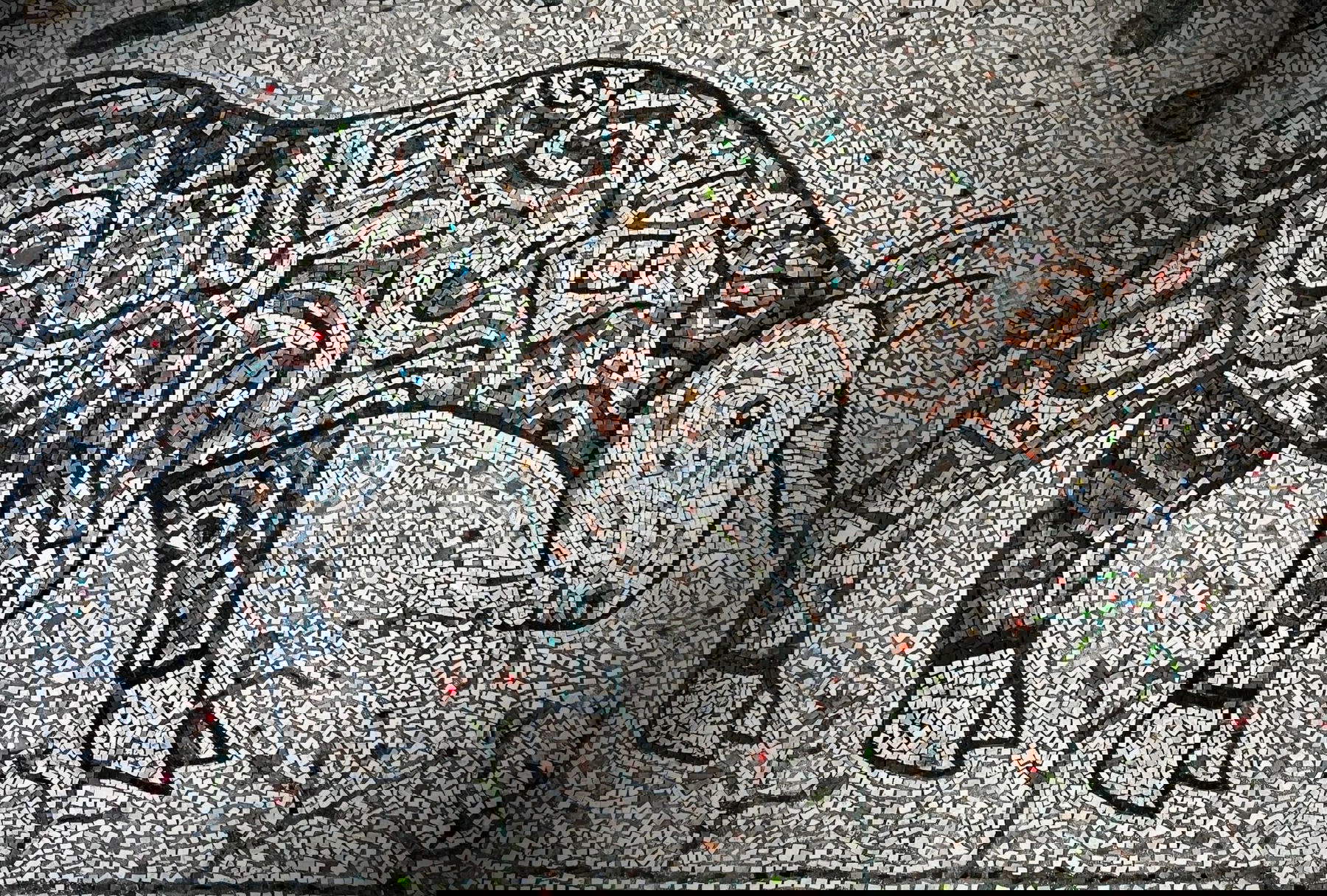
Looking at the history of mosaic in Ravenna, which works or mosaic cycles do you feel are closest to your way of thinking about the image?
First of all, I would like to draw attention to the fact that there is little pavement evidence in Ravenna. Subsidence and the alluvial nature of the ground have swallowed up the old pavements. With the exception of the Via D’Azeglio complex at the Domus dei Tappeti di Pietra, the mosaics of the so-called Palace of Theodoric, and the mosaic fragments in San Vitale, I was confronted with the mosaics of Aquileia and Pesaro Cathedral, my favorite rooms that I lived in and frequented for years. Then there was the great mosaic made by Nedo del Bene in the Capitol cinema in 1963. It was dismembered a few years ago. In the Floor there is a fish taken from that great fairy mosaic. In Ravenna there exists, albeit fragmentary and displayed on the wall, the great medieval mosaic cycle of St. John the Evangelist. They are wonderful mosaics. It was made in 1213, and it is the last known floor. I reconnected with those mosaics as if to resume a conversation interrupted centuries ago. The unicorn comes from there.
In your work, the relationship with public space is central. What role do you think the artist should play within the city today? Author, mediator, storyteller or something else?
I speak for myself, without labels and pretensions. On the role of the artist, I have mixed thoughts. We have called the most disparate things “art,” and each era has had its say. For my own account, this city and its stories, have merged with my perception, long ago. I look with interest at the removed, the concealed, the disappeared. I pick up many things on the street. Sometimes I feel like a kind of sorcerer, who is comfortable standing on the threshold.
Warning: the translation into English of the original Italian article was created using automatic tools. We undertake to review all articles, but we do not guarantee the total absence of inaccuracies in the translation due to the program. You can find the original by clicking on the ITA button. If you find any mistake,please contact us.